Home Blog Page 2824

Future SRPs to specify unit cost in measure against ‘shrinkflation’

PHILIPPINE STAR/MIGUEL DE GUZMAN

THE Department of Trade and Industry (DTI) said that it will start to indicate unit cost in the suggested retail price (SRP) bulletin and launch an artificial-intelligence (AI)-powered price monitor application to guide consumers.

“Because the DTI wants to address consumer concerns with respect to shrinkflation, our strategy is to add a new feature to the SRP bulletin,” Consumer Protection Group Assistant Secretary Amanda F. Nograles said Friday.

“Through this, we will add a third column that will be the unit cost. We will now require the manufacturers to indicate the unit cost so that consumers can easily compare them,” Ms. Nograles said. 

Shrinkflation refers to the practice of holding prices steady while reducing volumes, in effect raising prices.

She said that manufacturers welcomed this compromise because the DTI had initially proposed to address shrinkflation by standardizing product weights or volumes.

The DTI is also trying to fast-track the launch of the e-Presyo application, which will serve as an online guide for consumers to check the prices of products within each area.

“For the E-Presyo app, the information will be crowdsourced, meaning manufacturers, retailers, consumers, and price monitors can input the prices of the products,” she said. — Justine Irish D. Tabile

DBS sees inflation tying BSP’s hands on rate action until Q4

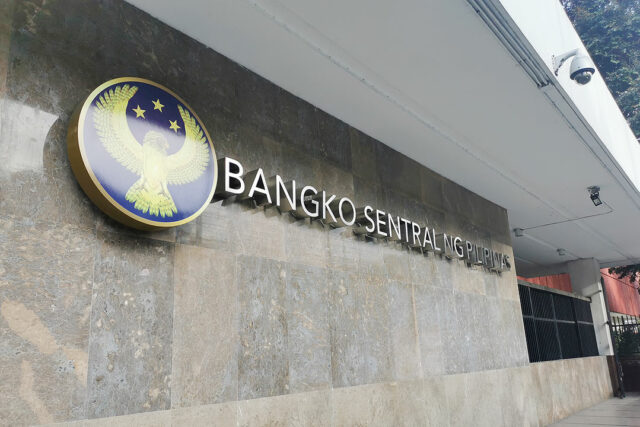
Bangko Sentral ng Pilipinas main office in Manila. — BW FILE PHOTO

ELEVATED inflation will likely prompt the Bangko Sentral ng Pilipinas (BSP) to delay its rate-cutting cycle to the fourth quarter, DBS Bank Ltd. said.

“Factoring in these drivers, we revise our 2024 inflation forecast to 3.7% year on year. Rising inflation and its impact on inflationary expectations, in the midst of a tight labor market is likely to keep the BSP from loosening financial conditions this quarter and the next,” it said in a report.

The BSP expects inflation to average 3.8% this year. In March, headline inflation accelerated for a second straight month to 3.7% from 3.4% in February.

The central bank has said that inflation may temporarily accelerate above the 2-4% target over the next two quarters.

“Global cues by way of a delayed start to the US rate cut cycle and resultant peso volatility will also prompt the BSP to maintain a defensive posture,” DBS said.

“In all, domestic and global risks are likely to keep the central bank from front-loading policy easing. We see an extended pause and delay our rate cut expectations to the fourth quarter of 2024,” it added.

The Monetary Board kept its key rate unchanged at a near 17-year high of 6.5% at its April meeting.

From May 2022 to October 2023, the BSP raised borrowing costs by 450 basis points. — Luisa Maria Jacinta C. Jocson

Building permit approvals fall 5.5% in February 

PHILSTAR FILE PHOTO

APPROVED building permits fell 5.5% year on year in February, a reversal from the 12.5% growth posted a year earlier, the Philippine Statistics Authority (PSA) said in a report.

Preliminary PSA data indicated that building projects covered by the permits numbered 13,100, equivalent to 3.61 million square meters of floor area.

Construction projects represented by the permits were valued at P43.27 billion, up 40.3% from a year earlier.

“(The drop in approved building permits) is driven by inflationary pressures and the persistence of high interest rates constraining developers from boosting construction activity,” John Paolo R. Rivera, president and chief economist at Oikonomia Advisory & Research, Inc., said in a Viber message.

In February, inflation accelerated to 3.4%, the strongest reading since the 3.9% posted in December.

Permits for residential projects, which accounted for 63.7% of the total, fell 9.4% to 8,345.

  These projects were valued at P19.34 billion, against the P16.03 billion a year earlier.

Meanwhile, single homes made up 85.1% of the residential category with approved permits declining 15.3% to 7,104.

Applications for apartment buildings grew 50.9% to 1,088 while applications for duplex or quadruplex homes were up 59.6% and totaled 142.

Nonresidential projects, on the other hand, totaled 3,177, up 1.4% from a year earlier, accounting for 24.3% of the total.

Nonresidential permits were valued at P19.47 billion, up 59.4% from a year earlier.

Meanwhile, approved commercial construction applications made up 69% of all nonresidential projects, down 2.1% to 2,192.

Institutional building permits rose 27.6% to 523, while industrial permits dropped 14.6% to 229.

Approved agricultural projects totaled 131, down 9.7%, while other nonresidential projects totaled 102, up 41.7%.

Alteration and repair permits amounted to 1,034, down 2.8% from a year earlier and were valued at P3.52 billion.

Mr. Rivera said the slowdown in approved building permits is expected to continue as interest rates remain high with no indication of easing.

The Bangko Sentral ng Pilipinas kept its benchmark rate at 6.5% for three consecutive meetings in February.

The PSA said that construction statistics are compiled from the copies of original application forms of approved building permits as well as from the demolition and fencing permits collected every month by the agency’s field personnel from the offices of local building officials nationwide. — Karis Kasarinlan Paolo D. Mendoza

Sticky inflation seen hampering recovery PHL spending recovery

PHILIPPINE STAR/MICHAEL VARCAS

CONSUMER SPENDING has yet to return to its pre-pandemic growth track amid sticky inflation and “smaller policy support” for households, according to Moody’s Analytics.

“Goods consumption trends have seen greater variation. In most economies in the region, it never surged above the pre-pandemic trend the way it did in the US,” Moody’s Senior Economist Stefan Angrick and Associate Economist Jeemin Bang said in a report.

“More recent data show (that) goods consumption is slowing in New Zealand, South Korea, the Philippines and Australia; sticky inflation and reduced policy support are weighing on household spending,” it added.

Inflation in the Philippines dropped to its lowest level at 2.4% in 2020 as the coronavirus pandemic dragged down consumer spending, accelerating to 6% last year amid price hikes and global headwinds.

In March, headline inflation accelerated for the second straight month to 3.7% amid rising food costs.

“Weak spending is driven by the persistence of high interest rate that is used to manage inflation due to supply-side constraints,” Oikonomia Advisory & Research, Inc. president and chief economist John Paolo R. Rivera said by Viber.

Last week, Bangko Sentral ng Pilipinas (BSP) Governor Eli M. Remolona, Jr. signaled the possibility of delayed rate cuts due to inflation risks.

The BSP kept its benchmark interest rate at 6.5% for a fourth straight meeting in April. The Monetary Board raised borrowing costs by 450 basis points from May 2022 to October 2023.

“To increase household spending, policies to enhance income-generating capacities of households must be given emphasis such as creating a conducive economy for investments that will create jobs,” Mr. Rivera said.

The government must also address supply-side constraints especially in agriculture to help ease inflation, he added.

Rizal Commercial Banking Corp. Chief Economist Michael L. Ricafort said reduced tariffs on commodities and conditional cash transfer programs for the poor should help increase household spending.

“Goods typically make up a smaller share of private consumption than services, so weaker goods consumption won’t completely derail these economies as long as services consumption stays on course. But weaker goods spending is a headwind at a time when growth is already hard to come by,” according to the report.

The Philippines targets gross domestic product (GDP) of 6-7% target this year. They fell short of official growth expectations at 5.5% in 2023.

Within the region, Taiwan was the only Asia-Pacific country that enjoyed a rise in goods consumption due to the high demand for IT (information technology) goods.

Moody’s also noted that services spending in the Philippines and Thailand have yet to rebound from the pandemic, mainly due to the slow tourism recovery.

“Services spending in the Philippines and Thailand remain far below the pre-pandemic trend, reflecting a high degree of pandemic scarring on both economies,” the report said.

Services consumption is “almost back to normal” among high-income developed countries like South Korea, Taiwan, and Australia, but still lags in New Zealand and Japan.

Moody’s reported that the availability of vaccines, longer social distancing measures helped other countries recover earlier.

Mr. Ricafort said that state spending in tourism-related infrastructure, like airports, seaports, public transportation, and toll roads would bolster recovery in the sector and ensure growth in the services sector. — Beatriz Marie D. Cruz

Achieving transfer pricing certainty

IN BRIEF:

• Results from the 2024 International Tax and Transfer Pricing Survey highlighted the need for robust transfer pricing policies given new international tax risks.

• Among pressing concerns include effective tax rate stability, particularly with the implementation of the Base Erosion and Profit Shifting (BEPS) Pillar Two global minimum tax, changes in local and international tax policies, and technological advancements.

• To solidify their positions, tax and transfer pricing professionals should decrease risk by centering processes around standard data, concretize dispute resolution mechanisms, and engage with the C-Suite.

Global tax reforms are leading to double taxation risks, which are significantly altering businesses’ approaches to transfer pricing certainty and operational transfer pricing needs. Other key concerns include inflation, increased focus on enforcement by tax authorities, environmental, social, and governance (ESG) pressures, advancements in transfer pricing related technologies, such as generative artificial intelligence (GenAI) and transfer pricing dispute resolution tools, and changes in supply chain.

EY recently released the results of the 2024 International Tax and Transfer Pricing Survey, which sampled 1,000 senior tax and finance professionals from large companies in 47 jurisdictions across 19 industries. The survey, which was conducted by an independent provider, highlighted the increasing need for businesses to implement robust transfer pricing policies given new international tax risks.

This article will tackle the concerns, challenges, and considerations that were identified by surveyed tax and finance professionals.

THE ROLE OF TRANSFER PRICING
Historically, transfer pricing has followed a linear approach that comprises planning, implementation, compliance, and controversy. With the changing landscape, tax and transfer pricing professionals need to engage more strategically with the broader business, considering the rapid increase in double taxation risks and external pressures.

Tax audits are expected to increase and intensify, with transfer pricing identified as a top risk area. Tax authorities are now going beyond traditional, functional interviews by processing more details about taxpayers’ global operations, including how tax obligations and business activities align in specific jurisdictions.

The data accessed by tax authorities in this evolving tax controversy landscape can be utilized by GenAI and related technologies, allowing them to conduct the audit and process data more effectively. Public regulatory filings, social media profiles, news articles and intellectual property registrations are some sources of information that tax authorities can analyze to evaluate risks and challenge a taxpayer’s position.

In the Philippines, the Bureau of Internal Revenue (BIR) identified the creation of a Transfer Pricing Office as a priority program for 2024. The new office will be expected to monitor compliance with transfer pricing documentation requirements, including the preparation and maintenance of local files, master files, and country-by-country reports (CbCR). These will be done pursuant to the minimum standards of the BEPS Action Plans as basis for strategic decision making and managing tax compliance risks. Consequently, the BIR will be keeping a keen eye on cross-border transactions to ensure fair and accurate allocation of costs and profits.

STANDARDIZING DATA TO MANAGE TAX CONTROVERSY
Traditional transfer pricing operations are labor-intensive, especially those focused on compliance. Reconciliations and adjustments should ensure that intercompany pricing policy continuously occurs throughout the year, and not just by the end. Gathering the required data for fact-finding, such as financials, taxes, and supply chain information for open years, becomes a challenge when sourced from multiple systems and jurisdictions. This is particularly evident in tax audit cases because taxpayers are expected to respond within a limited period.

Increased technology adoption can enable traditional operations and compliance functions in this changing landscape. Taxpayers must plan ahead to harness the power of data, systems, and technology. Investing in data strategy system improvement and advanced operational transfer pricing technology or partnering with a service provider who has built these capabilities can facilitate transfer pricing certainty.

Likewise, tax and transfer pricing professionals may resort to GenAI tools to align the group’s transfer pricing policies while identifying and addressing tax risks. This will revolutionize how professionals prepare, analyze, and present data to ensure that their positions are clear, defensible, and easily understood. With the rollout of Pillar Two and disclosure of CbCR in a number of tax jurisdictions, businesses must standardize their internal data to efficiently manage tax authority controversy and Pillar Two calculations.

The Philippines has recently accepted the invitation from the Organization for Economic Co-operation and Development (OECD) to join the Inclusive Framework on BEPS, but the country has yet to see local adoption of the Pillar Two rules. To be proactive, tax and transfer pricing professionals should start standardizing their internal transfer pricing data.

TRANSFER PRICING CERTAINTY THROUGH DISPUTE RESOLUTION PROGRAMS
Transfer pricing certainty can be realized through various factors, such as increasing interest in advance pricing agreements (APA), mutual agreement procedures, and other dispute resolution programs by tax administrations. In some tax jurisdictions, the International Compliance Assurance Program (ICAP) is considered a pre-filing and dispute resolution mechanism. Moreover, the ICAP coordinates between a multinational enterprise (MNE) group and multiple tax administrations through the effective use of transfer pricing documentation, including the MNE group’s CbCR to improve multilateral tax certainty.

In the Philippines, there have been discussions on the upcoming release of the APA Guidelines to fortify transfer pricing implementation. APA is a mechanism where the tax authority and the taxpayer would agree in advance on the appropriate set of criteria (e.g. transfer pricing method, comparables and appropriate adjustments) to ascertain the transfer prices of controlled transactions over a fixed period of time. Tax and transfer pricing professionals foresee that unilateral APAs will be useful to manage transfer pricing related controversy.

HOW CAN PROFESSIONALS PREPARE FOR THE NEW REALITY?
Tax and transfer pricing professionals highlight escalating concerns regarding double taxation and broader tax and legislative changes, emphasizing the emergence of a new era where businesses are seeking more certainty in their transfer pricing positions.

Some measures that companies can take include: focusing on transfer pricing certainty, mapping out future and current dispute resolution mechanisms, centralize processes around standard data to decrease risk, prepare for increasing application of data to define the company’s transfer pricing approach. These measures, naturally, will require the cooperation and support of the company’s C-level executives.

REALIZING TRANSFER PRICING CERTAINTY
Tax and Finance departments should prioritize transfer pricing certainty through standardized data, modified processes, and technology adoption to facilitate dispute resolution. Tax and transfer pricing professionals should collaborate more closely with the C-suite in making business decisions to enhance certainty from the outset of any business changes and to effectively navigate the evolving regulatory environment.

Internally, tax and transfer pricing policies should align with the organization’s broader public image. Externally, pre-filing and dispute resolution programs should be considered.

Preparation is also key. Taxpayers that invest in modern transfer pricing approaches will be adequately equipped to engage with tax authorities in future controversies and better support their positions. Finally, tax and transfer pricing professionals must recalibrate and adapt their strategies in response to the changing global tax and economic landscape.

This article is for general information only and is not a substitute for professional advice where the facts and circumstances warrant. The views and opinion expressed above are those of the author and do not necessarily represent the views of SGV & Co.


Ana Katrina C. De Jesus is a Tax Principal of SGV & Co.

US think tank cites unusual Chinese moves near Palawan before war games

ARMED FORCES OF THE PHILIPPINES

By Kyle Aristophere T. Atienza, Reporter

A US think tank on Sunday said it had spotted unusual movements of Chinese maritime militia vessels in the South China Sea, days before the start of military drills with the United States beyond the Philippines’ 12-nautical mile territorial waters.

Two Chinese maritime militia ships were spotted just 24 nautical miles from the Philippines’ Palawan coastline on April 21, said Raymond M. Powell, director of SeaLight, a maritime transparency project at Stanford University’s Gordian Knot Center for National Security Innovation.

“It’s very hard to say why they chose to do this,” he said in an X message. “It may have been intended to send a message as the Balikatan exercise kicks off, or to probe the Philippines’ responses. It was a very unusual maneuver — nothing I’ve seen them do before.”

The two large Qiong Sansha Yu ships left China’s military base at Mischief Reef on Saturday, two days before the Philippines and the US hold their annual war games.

The Chinese ships had turned back in the direction of Mischief Reef after loitering outside the Philippines’ contiguous zone, Mr. Powell said.

China last week expressed “grave concern” over the deployment of an American medium-range missile system to the Philippines before the military drills, saying it increases “the risk of misjudgment and miscalculation.”

“China strongly opposes the US deploying medium-range ballistic missiles in the Asia-Pacific and strengthening forward deployment at China’s doorstep to seek unilateral military advantage,” Chinese Foreign Ministry spokesman Lin Jian said.

The joint military drills from April 22 to May 10 would be conducted in northern Luzon due its proximity to Taiwan, which China considers as a renegade province, Balikatan 2024 Executive Agent Colonel Mike Logico had said.

“The purpose of the armed forces — why we exist — is really to prepare for war,” he said on Thursday. “There’s no sugarcoating this. With or without China, let’s say for example in a parallel universe China did not exist, we would still be doing these exercises.”

On Saturday, National Security Council Assistant Director General Jonathan Malaya said the Balikatan drills are not a preparation for war but a means to boost the Philippines’ deterrence capability.

“War is not on the table, let me just make that very clear,” he said. “War is not one of the instruments of national policy of the Philippines. Just because we have Balikatan doesn’t mean we’re going to war. The only way to preserve peace is to have a strong deterrence capability.”

Citizens’ movement P1NAS earlier said the deployment of the missile launchers on Philippine soil was “openly signaling hostile intent against China, giving the US the capability to launch attacks on China’s homeland from our own territory.”

China claims the South China Sea almost in its entirety, including areas that are within the Philippines’ exclusive economic zone (EEZ).

The Philippines in February 2023 launched an assertive maritime transparency campaign that seeks to expose what it calls Chinese aggression within its EEZ in the South China Sea. It was launched with an initial focus on Second Thomas Shoal, where Manila grounded a World War II-ear ship in 1999 to assert its sovereignty.

Manila has accused Chinese coast guard vessels backed by maritime militia ships of dangerous maneuvers including firing water cannons to block Philippine resupply mission to BRP Sierra Madre, the grounded ship.

About 5,000 Filipino soldiers and 11,000 US servicemen will participate in this year’s Balikatan war games. For the first time, it will be held beyond the Philippines’ 12-nautical mile territorial waters, according to the Philippine military.

Fourteen countries will be observing the drills — Brunei, Canada, France, Germany, Great Britain, India, Indonesia, Japan, Malaysia, New Zealand, Republic of Korea, Singapore, Thailand and Vietnam.

“There are so many countries that want to sign visiting forces agreements [with the Philippines],” Mr. Malaya said. “Even New Zealand, which is very far from us, wants to have military exchanges with us to help us strengthen our defenses.”

Bagong Alyansang Makabayan on Sunday said it would hold a protest rally near the presidential palace in Manila on Monday to condemn the war games.

“After two decades of Balikatan, it has done nothing but undermine the country’s sovereignty aside from disrupting the livelihoods of local communities,” Bayan Secretary-General Raymond Palatino said in a Facebook Messenger chat.

Manila lauds G7 rejection of sweeping China claims

PHILSTAR FILE PHOTO

THE PHILIPPINES on Sunday said it shares the Group of Seven (G7) vision of a stable and secure Indo-Pacific region and stands firm against any actions that undermine international security and stability.

“We want to see a South China Sea of peace, stability and prosperity, and the cessation of interference, obstruction and harassment of the Philippines’ legal activities within our recognized maritime entitlements,” the Department of Foreign Affairs (DFA) said in a statement.

“We appreciate the G7’s support in rejecting China’s baseless and expansive claims, and their call for China to cease its illegal activities, particularly its use of coast guard and maritime militia in the South China Sea that engage in dangerous maneuvers and the use of water cannons against Philippine vessels,” it added.

The agency also said it appreciates the G7’s reaffirmation that the 2016 arbitral award is a significant milestone and a useful basis for the peaceful management and resolution of differences at sea.

China has rejected the ruling by the United Nations-backed tribunal in the Hague.

In a communiqué dated April 19 that was released after the group’s Foreign Ministers’ Meeting in Italy, the G7 said it is “seriously concerned” about the situation in the South China Sea and opposed China’s moves in blocking freedom of navigation in the waterway.

The group is composed of Canada, France, Germany, Italy, Japan, the United Kingdom and United States. The European Union is a “nonenumerated member.”

“There is no legal basis for China’s expansive maritime claims in the South China Sea, and we oppose China’s militarization, coercive and intimidation activities in the South China Sea,” the G7 said.

Tensions between the two neighbors have worsened in the past year as China’s coast guard continues to block resupply missions to the shoal, where the Philippines grounded a World War II-era ship in 1999 to assert its sovereignty.

A United Nations-backed tribunal in 2016 said China’s claim to nearly the entire South China Sea has no legal basis, but Beijing has largely ignored the ruling and continued its island-building activities.

The DFA said the Philippines is keen on working with the G7 on efforts to support economic growth in the Philippines and the Indo-Pacific region.

Last week, the agency urged China to reflect on its aggressive actions in the South China Sea, adding that the Philippine decision to boost ties with Japan and the US at a recent summit was a “sovereign choice” for the country.

Earlier this month, Philippine President Ferdinand R. Marcos, Jr. met with US President Joseph R. Biden and Japanese Prime Minister Fumio Kishida in the nations’ first trilateral summit in Washington.

They committed to boost ties in maritime security amid China’s growing assertiveness in the waterway.

The Philippine President earlier said the three-way summit was not directed at anyone and only seeks to boost relations among the three nations. — J.V.D. Ordoñez

Filipino fishermen blame sand mining for declining catch

XAVIER SMET-UNSPLASH

By Chloe Mari A. Hufana

FILIPINO fisherfolk on Sunday decried declining fish catch due to black sand mining in Cagayan province in northern Philippines.

“Due to the large amount of black sand extracted in Aparri, Cagayan, the land has been eroded,” Martin V. Solares, chairman of the Municipal Fisheries and Aquatic Resources Council, told a news briefing. “The fishes are disturbed; they’re no longer entering our nets and their offspring are dying.”

He said fish catch has dwindled to as low as three kilos daily from 300 kilos in 2012. Some of his fellow fishermen have shifted to construction work, he added.

Mr. Solares said the miners left two years ago but there are still remnants of black sand mining in his area that make it difficult for them to go back to normal. About 15,000 fishermen are affected by the mining.

At the briefing, Alyansa Tigil Mina campaign officer Bernie D. Llarin cited reports about a facility being set up in Cagayan for processing black sand for exports.

He told BusinessWorld later by telephone that in San Felipe, Zambales, 17 ships were dredging the river almost daily in March.

Dredging ships partly owned by Chinese companies have navigational systems that run over the fishing nets of the fisherfolk, Mr. Llarin said.

Dredging involves removing sediments and debris from the bottom of the lake, river, harbors and other bodies of water.

“One time in Zambales, we saw fishermen repairing their nets because of damage from the ships,” he said.

Mr. Llarin said the greatest challenge Zambales fisherfolk face is the declining fish catch, just like the fishermen in Cagayan. “Now, it’s hard to catch anything.”

Fisherfolk also have had to fish farther away from shore to avoid excavating ships, which means more gasoline and time.

About 100 houses had been damaged by soil erosion caused by dredging, he added, citing the Zambales Ecological Network.

Mr. Llarin said the provincial and local governments of Zambales have done little for the almost 18,000 fishermen in San Felipe, San Narciso and Botolan in Zambales.

Affected fisherfolk have petitioned the regional office of the Environmental department to stop the river dredging, he added.

Fernando L. Hicap, chairman of Pamalakaya, called for a halt to all reclamation activities, noting that the destruction of the marine ecosystem threatens the country’s food security of the country.

“The impact on the marine ecosystem is irreversible,” he said in a text message. “If this continues, it’s not far-fetched that we’ll be relying on imported fish. In fact, the volume of our imports is increasing every year.”

Gov’t urged to prioritize power grid projects

JUDGEFLORO

By Kenneth Christiane L. Basilio

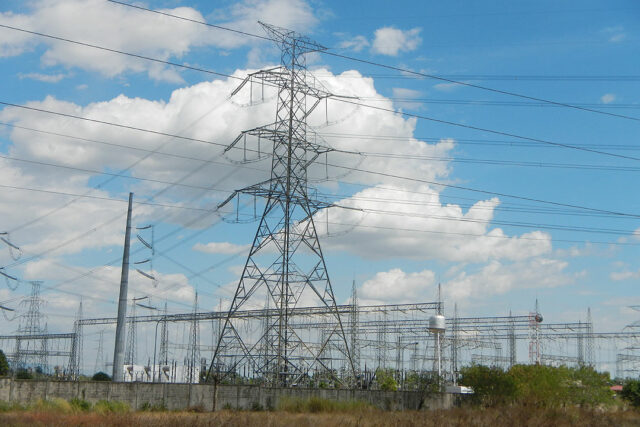
ADDRESSING weaknesses in the power sector — as exposed by the past week’s red and yellow alerts issued by the National Grid Corporation of the Philippines (NGCP) — must be prioritized by the government, a coalition of energy consumers and stakeholders said over the weekend.

Nic Satur, Jr., chief advocate officer of Partners for Affordable and Reliable Energy, said these incidents must move the government to prioritize the implementation of delayed NGCP grid projects, particularly in areas hit by last week’s power supply problems.

“Red and yellow alerts in the Philippine energy sector indicate critical issues with power supply,” Mr. Satur said in a statement sent to BusinessWorld. “These alerts are crucial indicators of the stability and reliability of the energy infrastructure.”

He was referring to last week’s NGCP alerts in the Luzon and Visayas grids due to thin power supply as operating margins for electricity output were insufficient to meet its regulating requirement.

To mitigate weaknesses in the energy sector, Mr. Satur echoed a previous proposal made by Bienvenido S. Oplas, Jr., president of think tank Minimal Government Thinkers, urging the government to implement delayed NGCP grid projects such as the Visayas Voltage Improvement Project and the Cebu-Lapu-Lapu Transmission Project to improve electricity access in the region.

“Finishing long-delayed NGCP projects will ensure that areas with power deficits can access surplus energy from other regions, stabilizing the grid,” he said.

The NGCP did not immediately respond to a request for comment from BusinessWorld.

The energy advocate stressed that the country have to contend with red and yellow power alerts every summer due to “unscheduled power plant shutdowns, lack of firm ancillary services, (and) overall insufficient power supply significantly worsened by the El Niño phenomenon.”

The reliance of the country on imported energy resources such as fuel and coal exposes the country to “frequent issuance of red and yellow alerts,” he added.

He said accelerating the adoption of nuclear energy into the country’s power generation mix could enhance the grid’s capacity to meet electric consumer demand. “(It is) a stable and reliable energy source that does not depend on external market conditions,” he said.

Mr. Satur also recommended that the government increase the overall power generation to seven to eight terawatt hours (TWh) every year until 2026 and by eight to nine TWh subsequently until 2030, a proposal also raised by Mr. Oplas.

“To combat the recurring energy alerts, there is a pressing need to increase overall power generation,” he said. “This expansion is essential to keep up with the anticipated gross domestic product growth and the increasing energy demands of the population.”

The Energy Regulatory Commission (ERC) should also look to prohibit the use of battery energy storage systems due to their “limitations and unreliability in critical situations,” he said.

Coordinated traffic solutions urged

PHILIPPINE STAR/ RUSSEL PALMA

THE GOVERNMENT should coordinate efforts to ease traffic congestion, especially in the Philippine capital to minimize disruption to businesses, according to the American Chamber of Commerce of the Philippines (AmCham).

“Heavy traffic and uncoordinated traffic policies can definitely be disruptive to the conduct of business. It contributes to higher costs in the movement of goods and negatively affects the well-being of the workforce,” Ebb Hinchliffe, AmCham Philippines executive director, told BusinessWorld in a Viber message on Sunday.

His remarks came on the heels of the Metropolitan Manila Development Authority’s (MMDA) banning of e-bikes, e-tricycles, and other light vehicles on major roads. Three days after its implementation last week, President Ferdinand R. Marcos, Jr. ordered a grace period of one month until May 18 to properly inform those affected before it is implemented.

Mr. Hinchliffe said that while heavy traffic may mean high economic activity, there should be sound policies that mitigate it.

The MMDA said road apprehensions will continue, but no traffic violation tickets will be issued until May 18.

In a phone call with BusinessWorld, British Chamber of Commerce Executive Director and Trustee Christopher James Nelson said there is a waste of productive time spent sitting in Metro Manila traffic.

He voiced out the need for an overall traffic plan, not just for Metro Manila, but for other major cities in the country.

“There are conflicting policy directions between National Government Agencies–especially in the case of DoTr (Department of Transportation), DPWH (Department of Public Works and Highways), and MMDA,” AltMobility PH Director Ira F. Cruz said in a Viber message to BusinessWorld.

He said the DoTr has an Active Transport Office that promotes active transportation in the country. While DPWH has guidelines that “downgrade bike lanes as the lowest level on roads where bike lanes are most needed.”

Mr. Cruz said his group welcomes Mr. Marcos’ order to create a comprehensive plan to mitigate traffic.

“The ban on e-trikes is simply an example of a piece-meal “solution.” What we need now is a comprehensive plan that will start chipping away at the country’s transportation issues,” he added.

He suggested the President tap the DoTr as the leader of this plan and involve non-governmental organizations and transport industry representatives.

MOVING FORWARD
Mr. Hinchliffe said his organization recommends “the promotion of walkability and the use of non-motorized forms of transportation through the provision of pedestrian facilities and networks of greenways and bikeways as well as the implementation of smooth intermodal transport systems.”

While Mr. Nelson said the Philippines is the gateway to Southeast Asia, so the government must invest in infrastructure.

“[Foreign businesspeople’s] first view is the airport, and then obviously it’s [their] transport into [their] hotel or accommodation. So, an improved transportation system would definitely give a better view [of the Philippines],” he added.

He said that an improved transportation system in the Philippines can be more appealing to foreign investors.

“Traffic management and improvements in roads, and forms of public transport or transport is a critical arm, and it will assist economic growth,” he added. — Chloe Mari A. Hufana

Marcos seeks support vs hunger

BW FILE PHOTO

PRESIDENT Ferdinand R. Marcos, Jr. has called on local government units (LGUs) to help his administration enforce a partnership program that seeks to fight hunger by helping local producers.

In Memorandum Circular No. 47, he called for a whole-of-government approach to fight hunger and achieve nutrition security in the Philippines.

He asked all government agencies and local government units to support the implementation of the Enhanced Partnership Against Hunger and Poverty program, one of the Task Force on Zero Hunger’s banner projects.

The program seeks to link community-based groups with markets and provide credit assistance to support food production, processing and distribution.

The task force was first established through an executive order issued by his predecessor and was reorganized last year. — Kyle Aristophere T. Atienza

DoTr eyeing EDSA motorcycle lane

PHILIPPINE STAR/EDD GUMBAN

THE DEPARTMENT of Transportation (DoTr) is studying the dedication of a motorcycle lane along Epifanio de los Santos Avenue (EDSA) to help ease traffic congestion along the major highway.

“We already have a busway and on the right side we have a bicycle lane. We are looking at putting up a motorcycle lane in EDSA, next to the bicycle lane,” Transportation Secretary Jaime J. Bautista said in a media release on Sunday.

The DoTr along with other relevant government agencies, including the Metropolitan Manila Development Authority (MMDA), are now studying the feasibility of the proposal.

Mr. Bautista said the traffic congestion in Metro Manila costs the Philippine economy about P3.5 billion daily, citing a study of Japan International Cooperation Agency (JICA).

He said that the worsening traffic congestion could hurt the country’s economy by about P9 billion daily in 2030.

“This is the economic cost of traffic, the additional fuel, additional cost, lost opportunity for growth,” Mr. Bautista said.

Earlier this month, President Ferdinand R. Marcos, Jr. said the government will fast-track railway projects to address traffic congestion.

Further, the Department of Public Works and Highways (DPWH) outlined its traffic decongestion plan which focuses on the improvement and expansion of the national road network by building additional by-passes, diversion roads, expressways, flyovers, interchanges and underpasses. — Ashley Erika O. Jose