Home Blog Page 2686

Helicopter carrying Iranian President Raisi crashes, search under way

STOCK PHOTO | Image by jorono from Pixabay

 – A helicopter carrying Iranian President Ebrahim Raisi and his foreign minister crashed on Sunday as it was crossing mountain terrain in heavy fog, an Iranian official told Reuters, and rescuers were struggling to reach the site of the incident.

The official said the lives of Mr. Raisi and Foreign Minister Hossein Amirabdollahian were “at risk following the helicopter crash”, which happened on the way back from a visit to the border with Azerbaijan in Iran’s northwest.

“We are still hopeful but information coming from the crash site is very concerning,” the official told Reuters, speaking on condition of anonymity.

State TV quoted an official as saying at least one passenger and one crew member had been in contact with rescuers.

A Turkish drone identified a source of heat suspected to be the helicopter’s wreckage and had shared the coordinates of the possible crash site with Iranian authorities, Anadolu news agency said on X.

Iranian Supreme Leader Ayatollah Ali Khamenei, who holds ultimate power with a final say on foreign policy and Iran’s nuclear program, sought to reassure Iranians, saying there would be no disruption to state affairs.

Iranian state media said bad weather caused the crash and was complicating rescue efforts. State news agency IRNA said Mr. Raisi was flying in a US-made Bell 212 helicopter.

The chief of staff of Iran’s army ordered all resources of the army and the elite Revolutionary Guards to be put to use in search and rescue operations.

Earlier, the national broadcaster had stopped all regular programming to show prayers being held for Mr. Raisi across the country.

In the early hours of Monday, it showed a rescue team, wearing bright jackets and head torches, huddled around a GPS device as they searched a pitch-black mountainside on foot amid a snowy blizzard.

“We are thoroughly searching every inch of the general area of the crash,” state media quoted a regional army commander as saying. “The area has very cold, rainy, and foggy weather conditions. The rain is gradually turning into snow.”

Neighboring countries expressed concern and offered assistance in any rescue. The White House said US President Joe Biden had been briefed on reports about the crash. Turkey said it had assigned a drone, a helicopter, vehicles and a rescue team after a request by Iranian authorities. The European Union offered emergency satellite mapping technology.


HARDLINER, POSSIBLE SUCCESSOR TO KHAMENEI

The crash comes at a time of growing dissent within Iran over an array of political, social and economic crises. Iran’s clerical rulers face international pressure over Tehran’s disputed nuclear program and its deepening military ties with Russia during the war in Ukraine.

Since Iran’s ally Hamas attacked Israel on Oct. 7, provoking Israel’s assault on Gaza, conflagrations involving Iran-aligned groups have erupted throughout the Middle East.

Mr. Raisi, 63, was elected president in 2021, and since taking office has ordered a tightening of morality laws, overseen a bloody crackdown on anti-government protests and pushed hard in nuclear talks with world powers.

In Iran’s dual political system, split between the clerical establishment and the government, it is Mr. Raisi’s 85-year-old mentor Khamenei, supreme leader since 1989, who holds decision-making power on all major policies.

For years many have seen Mr. Raisi as a strong contender to succeed Khamenei, who has endorsed Mr. Raisi’s main policies.

Mr. Raisi’s victory in a closely managed election in 2021 brought all branches of power under the control of hardliners, after eight years when the presidency had been held by pragmatist Hassan Rouhani and a nuclear deal negotiated with powers including Washington.

However, Mr. Raisi’s standing may have been dented by widespread protests against clerical rule and a failure to turn around Iran’s economy, hamstrung by Western sanctions.

Mr. Raisi had been at the Azerbaijani border on Sunday to inaugurate the Qiz-Qalasi Dam, a joint project. Azerbaijan’s President Ilham Aliyev, who said he had bid a “friendly farewell” to Raisi earlier in the day, offered assistance in the rescue. – Reuters


New Taiwan president to take office facing angry China

TAIWAN President-elect Lai Ching-te, of Democratic Progressive Party (DPP), holds a press conference, following his victory in the presidential elections, in Taipei, Taiwan, Jan. 13, 2023. — REUTERS

 – Lai Ching-te took office as Taiwan’s new president on Monday, facing an angry and deeply suspicious China that believes he is a “separatist”, and a fractious parliament with an opposition champing at the bit to challenge him.

Mr. Lai was sworn in at the Japanese-colonial-era presidential office in central Taipei, taking over from Tsai Ing-wen, having served as her vice president for the past four years.

Mr. Lai will express goodwill towards China in his inauguration speech on Monday morning, and call for both sides of the Taiwan Strait to pursue peace, according to a senior official briefed on the matter.

Beijing views proudly democratic Taiwan as its own territory, and has never renounced the use of force to bring the island under its control. Mr. Lai has offered talks, which have been rebuffed, and says only Taiwan’s people can decide their future.

Taiwan has faced ongoing pressure from China, including regular air force and navy activities close to the island, since January’s election victory by Mr. Lai, who is 64 and widely known by his English name, William.

Taiwan’s defense ministry, in its daily report on Monday about Chinese military activities in the previous 24 hours, said six Chinese aircraft had crossed the Taiwan Strait’s median line, which previously served as an unofficial boundary but that China says it does not recognize.

At least one of the aircraft got within 43 nautical miles (80 km) of the northern Taiwanese port city of Keelung, according to a map provided by the ministry.

In attendance at the ceremony are former US officials dispatched by President Joe Biden, lawmakers from countries including Japan, Germany and Canada, and leaders from some of the 12 countries that still maintain formal diplomatic ties with Taiwan, such as Paraguay President Santiago Pena.

Last week, China’s Taiwan Affairs Office said Mr. Lai, whom it called the “Taiwan region’s new leader” had to make a clear choice between peaceful development or confrontation.

Chinese state media did not immediately report on Lai’s swearing in.

Late Sunday, widely read state-backed Chinese newspaper the Global Times said Mr. Lai could become “more and more provocative” once he takes office.

“So in the long term, the state of cross-straits relations will not be optimistic,” it said in an online commentary.

Mr. Lai’s domestic challenges loom large too, given his Democratic Progressive Party (DPP) lost its parliamentary majority in the January election.

On Friday, lawmakers punched, shoved and screamed at each other in a bitter dispute over parliamentary reforms the opposition is pushing. There could be more fighting on Tuesday when lawmakers resume their discussions. – Reuters

North Korea to boost nuclear deterrence after US test, KCNA says

MICHA BRANDLI-UNSPLASH

 – North Korea said on Monday a recent subcritical nuclear test by the United States adds new tension to the international nuclear arms race and vowed to take measures necessary for improving its nuclear deterrence posture, state KCNA news agency said.

The US Department of Energy has said its National Nuclear Security Administration conducted a subcritical experiment at its Nevada test site to collect data to support the reliability and effectiveness of nuclear warheads.

“To cope with the strategic instability in the region and the rest of the world caused by the US unilateral action, (we) cannot but reconsider the measures necessary for the improvement of the overall nuclear deterrence posture within the range of its vested sovereign right and possible options,” KCNA said.

It did not elaborate on what measures it would consider.

Subcritical nuclear tests do not involve a nuclear explosion and do not trigger a fissile chain reaction. The United States is a signatory to the global nuclear test ban treaty and ended nuclear explosion tests in 1992.

North Korea has conducted six underground nuclear tests and is believed to be ready for a seventh, although South Korean officials have said there are no indications of an imminent test.

North Korea is under UN Security Council sanctions for its nuclear tests and for ballistic missile development. – Reuters

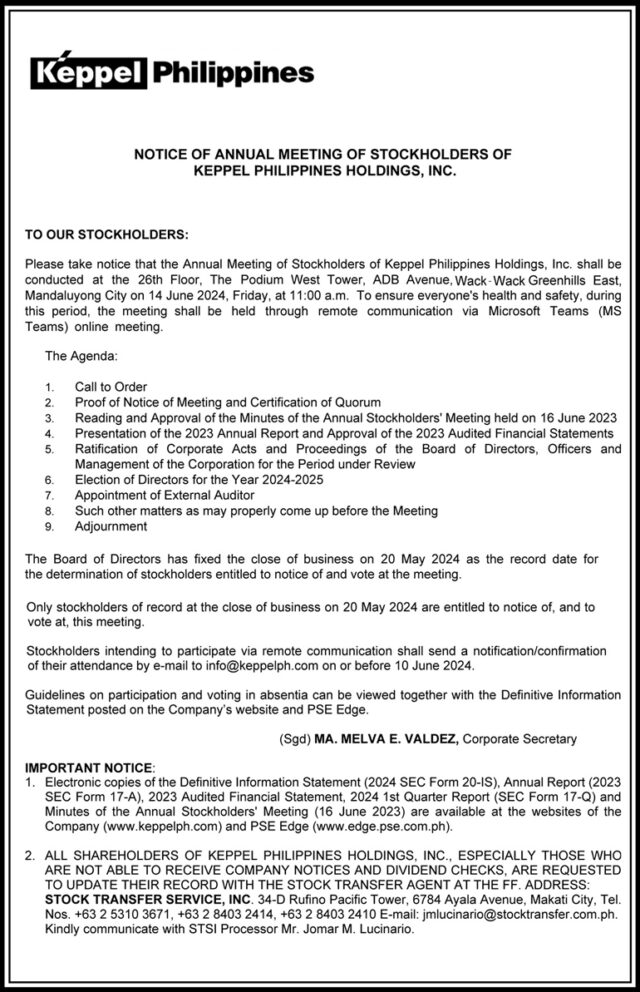
Keppel Philippines Holdings to hold annual stockholders’ meeting remotely on June 14


Spotlight is BusinessWorld’s sponsored section that allows advertisers to amplify their brand and connect with BusinessWorld’s audience by publishing their stories on the BusinessWorld Web site. For more information, send an email to online@bworldonline.com.

Join us on Viber at https://bit.ly/3hv6bLA to get more updates and subscribe to BusinessWorld’s titles and get exclusive content through www.bworld-x.com.

BSP has room to ease before Fed

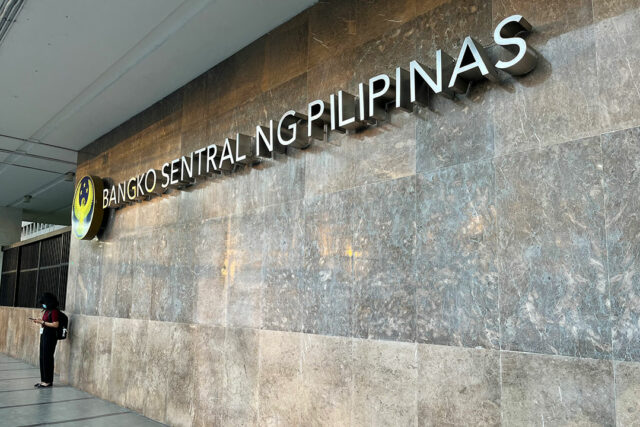
Bangko Sentral ng Pilipinas main office in Manila — BW FILE PHOTO

By Luisa Maria Jacinta C. Jocson, Reporter

THE BANGKO Sentral ng Pilipinas (BSP) still has room to cut rates before the US Federal Reserve, analysts said, but warned of such a move’s impact on the peso.

Last week, BSP Governor Eli M. Remolona, Jr. signaled that the central bank could start rate cuts as early as August, even as he expects the US central bank to begin easing in September.

“It is a positive signal, indicating that the BSP believes the Philippine economy is well-positioned to handle a slight divergence from the Fed’s monetary policy stance,” Security Bank Corp. Chief Economist Robert Dan J. Roces said in a Viber message.

Last week, the Monetary Board (MB) maintained its target reverse repurchase (RRP) rate at a 17-year high of 6.5% for a fifth straight meeting. However, Mr. Remolona said the BSP may cut rates in August, possibly by 25 basis points (bps).

“Such a scenario is not impossible if domestic inflation remains under control, but it risks both higher imported inflation down the road and capital flight, especially in times of high geopolitical tensions,” Makoto Tsuchiya, economist at Oxford Economics, said in a note.   

Bank of the Philippine Islands Lead Economist Emilio S. Neri, Jr. said that the possibility of the BSP cutting ahead of the Fed cannot be ruled out.

“If local inflation dynamics improve so dramatically that it outweighs the exchange rate pass through impact of a series of reserve requirement ratio (RRR) and RRP cuts, the BSP MB may have room to cut ahead of the Federal Open Market Committee (FOMC),” Mr. Neri said in a Viber message.

Mr. Roces noted that the BSP governor’s willingness to consider rate cuts ahead of the Fed “suggests that the BSP is either more confident in the stability of the domestic economy and the anchoring of inflation expectations, or that it may be worried about the potential impact of prolonged elevated rates to the economy.”

The economy grew by 5.7% in the first quarter, better than 5.5% in the previous quarter but slower than the 6.4% expansion a year earlier.

The government is targeting 6-7% growth for the full year.

IMPACT ON PESO
However, Mr. Roces said if the BSP cuts rates ahead of the Fed, the challenge is “to carefully balance the benefits of lower rates with the risks of capital outflows and currency depreciation.”

“When a central bank lowers interest rates while other major central banks maintain higher rates, it can make the currency less attractive to foreign investors seeking higher yields,” he said.

“This could lead to capital outflows and depreciation pressure on the peso because of a narrower interest rate differential. 2022 comes to mind, when the Fed hiked and we didn’t and sent the peso to near P60,” he added.

Mr. Remolona has said he is not worried about cutting ahead of the Fed and its potential impact on the peso, noting that there would only be a bit of pressure on the currency.

Mr. Roces said Mr. Remolona’s statement indicates that the BSP sees the impact on the peso as “manageable.”

“This view may be based on factors such as the Philippines’ strong economic fundamentals, that the peso’s current depreciation may be just temporary, adequate foreign exchange reserves, and the potential for the rate cut to stimulate domestic growth and attract foreign investment in the longer term,” he added.

The peso closed at P57.62 against the dollar on Friday, depreciating by 15.5 centavos from its P57.465 finish on Thursday.

Week on week, the peso also weakened by 20 centavos from its P57.42 finish on May 10. The peso sank to the P57 level in mid-April, mainly driven by the conflict in the Middle East.

“If forthcoming US inflation and growth data increasingly improve the odds of Fed cuts, BSP can also cut ahead of the Fed without necessarily causing too much exchange market pressure,” BPI’s Mr. Neri said.

On the other hand, some analysts said that the BSP is still unlikely to cut before the Fed.

“We continue to expect the BSP to only cut after the Fed. Our baseline scenario is for the Fed to begin its easing cycle in the fourth quarter of 2024, starting with a 25-bp rate cut,” HSBC economist for ASEAN (Association of Southeast Asian Nations) Aris D. Dacanay said in a report.

HSBC sees the BSP cutting rates by 25 bps in the fourth quarter to end the year with a benchmark rate of 6.25%.

In a commentary, Nomura Global Markets Research said a cut by BSP in August is “still unlikely,” citing persistent inflation and the current account deficit.

Nomura Global Markets said this suggests a need for BSP to “keep interest rate differentials supportive of the currency and keep imported inflation in check.”

The BSP last week reiterated its outlook that inflation could temporarily overshoot the 2-4% target range from May to July due to positive base effects.

“Overall, we do not believe BSP turned decisively dovish (last week), much less opened the door to rate cuts in the near term. We would put more weight on the hawkish policy statement,” Nomura said.

Mr. Remolona had said that he was “less hawkish” but still noted that risks to the inflation outlook remain on the upside.

Nomura expects the BSP to cut rates by a total of 50 bps this year, starting with a 25-bp cut in October.

RRR CUT
Last week, Mr. Remolona also said that he is seeking to reduce the RRR to 5% from the current 9.5%.

The BSP reduced the ratio for big banks and nonbank financial institutions with quasi-banking functions by 250 bps to 9.5% in June 2023.

The central bank has brought down the RRR for universal and commercial banks to a single-digit level from a high of 20% in 2018.

Rizal Commercial Banking Corp. Chief Economist Michael L. Ricafort said that the BSP may reduce its RRR once it also starts policy easing.

“Any further cut in RRR could infuse more liquidity into the financial system in terms of more loanable funds for banks that could also reduce intermediation costs and help further spur loan or credit growth and demand, which, in turn, would help further stimulate more business and economic activities,” he said in a Viber message.

Mr. Ricafort said that a cut of one percentage point could infuse roughly P146 billion into the banking system as this would mean more loanable funds by the largest banks.

The RRR is the percentage of bank deposits and deposit substitute liabilities that banks cannot lend out and must set aside in deposits with the BSP.

PHL needs at least 6.1% growth to meet target, say analysts

The Philippine economy expanded by 5.7% in the first quarter of 2024. — PHILIPPINE STAR/WALTER BOLLOZOS

By Beatriz Marie D. Cruz, Reporter

THE PHILIPPINE ECONOMY must grow by an average of 6.1% for the rest of the year to meet the lower end of the government’s 6-7% target, the Department of Finance (DoF) said over the weekend.

“We need 6.1% [growth] for the rest of the year to actually reach the 6% target. I think that’s very achievable,” Finance Undersecretary and Chief Economist Domini S. Velasquez said during a forum organized by the Economic Journalists Association of the Philippines and San Miguel Corp.

The Philippine economy expanded by 5.7% in the first quarter, slightly faster than 5.5% in the previous quarter, but below the government’s 6-7% target band.

For the coming months, the DoF expects higher spending and declining inflation to drive growth.

“We expect that consumption will increase as inflation continues to moderate,” Ms. Velasquez said.

Household consumption, which accounts for about 80% of GDP, grew by 4.6% in the January-to-March period, the slowest since the coronavirus pandemic. It was also weaker than 5.3% in the fourth quarter and 6.4% in the same period last year.

“Once we have a bit of stable inflation, we do think that this will increase and it will prop up growth because those are the heavy lifters of growth,” Ms. Velasquez said.

Calixto V. Chikiamco, Foundation for Economic Freedom (FEF) president, said first-quarter consumption was hampered by rising prices of food.

“The government needs to tackle the high food prices, which are discouraging consumption, and also forcing the BSP (Bangko Sentral ng Pilipinas) to maintain higher interest rates for longer, despite slowing inflation,” he said in a Viber message.

Last week, the BSP’s Monetary Board maintained its target reverse repurchase (RRP) rate at a 17-year high of 6.5% for a fifth straight meeting.

However, he noted a proposed amendment to the Rice Tariffication Law authorizing the NFA to directly import rice “will only exacerbate the deficit but will also be ineffective.”

The House of Representatives is expected to approve the measure on third reading this week.

To tame food prices, Mr. Chikiamco called on the government to further cut rice tariffs to 10% from 35%, and expand the Minimum Access Volume for corn, chicken and pork.

SPENDING
Government spending is expected to pick up for the rest of the year, Ms. Velasquez said, after slowing to 1.7% in the first quarter.

Faster exports and an improving job market should also sustain the economy’s growth prospects, Ms. Velasquez also noted.

“China is showing signs of recovery which will benefit the Philippines. Additionally, the global outlook for the technology sector is positive, which will benefit exports of semiconductors,” she said.

Ms. Velasquez said the Philippines will also benefit as global sales of semiconductors are projected to increase this year.

However, she noted that growth in the manufacturing sector is being hampered by high power costs, which would be addressed by the passage of the CREATE MORE (CREATE to Maximize Opportunities for Reinvigorating the Economy) bill.

Under CREATE MORE, corporations will be granted a 200% deduction for power costs incurred during the Income Tax Holiday period.

Security Bank Corp. Chief Economist Robert Dan J. Roces said the government should ramp up infrastructure spending, attract more private sector investments, and support high potential sectors like agriculture and manufacturing to reach their targets.

“The government can bolster its spending to contribute to growth by prioritizing high-impact infrastructure projects, improving budget execution, encouraging public-private partnerships, providing targeted support to key sectors, and investing in social infrastructure,” he said in a Viber message.

There are currently 185 infrastructure flagship projects worth P9.14 trillion in the pipeline, according to the National Economic and Development Authority.

However, Ateneo de Manila economics professor Leonardo A. Lanzona said the government appears to be focusing on inflation as the main constraint to growth.

“But that is not true. Growth can be achieved even in the midst of inflation which to some extent can be a consequence of growth,” he said in a Facebook Messenger chat.

He cited Japan and Singapore, which implemented policies to support domestic production particularly in high-tech industries, which helped grow their respective economies amid high inflation and interest rates.

“The Philippines is an interesting case since economic growth was lower than expected and yet inflation remained high. This suggests the beginnings of stagflation,” Mr. Lanzona said.

“The incapacity of the institutions to adapt to changing conditions and the insistence that things are ‘business as usual’ has led to poor policies and the failure to maximize the full potential of the Filipino.”

Finance department says no plan to further raise sin tax rates

PHILIPPINE STAR/ MIGUEL DE GUZMAN

THE DEPARTMENT of Finance (DoF) is not planning to raise taxes on “sin” products but is closely looking into the mounting tax losses due to illegal importation of cigarettes.

“We will not impose any hike except for the existing [rates,]” Finance Undersecretary and Chief Economist Domini S. Velasquez said at a forum hosted by the Economic Journalists Association of the Philippines and San Miguel Corp. at the weekend.

The government imposes so-called “sin” taxes or excise taxes on certain goods such as alcoholic beverages and tobacco products in order to discourage consumption.

Ms. Velasquez said the DoF is not keen on increasing tax rates that may stoke inflation. Instead, she said the department is “really zeroing in on how to improve administrative efficiency.”

Signed into law in January 2020, Republic Act No. 11467 increased the excise tax on electronic cigarettes and alcoholic products to fund the Universal Health Care (UHC) law.

For instance, the ad valorem tax was increased to 22% of the net retail price of distilled spirits. The specific tax was raised to P42 per proof liter in 2020, to P47 per proof liter in 2021, to P52 in 2022, to P59 in 2023, and to P66 in 2024.

Under the law, the tax rate for tobacco products would be increased by 5% yearly starting Jan. 1, 2024.

“Higher sin taxes could lead to some increase in inflation but the weight in the inflation/CPI (consumer price index) basket is relatively smaller,” Rizal Commercial Banking Corp. Chief Economist Michael L. Ricafort said in a Facebook Messenger chat.

Excise tax collection contributes around 12% to the Bureau of Internal Revenue’s overall collection. Aside from alcohol and tobacco, excise taxes are imposed on petroleum and minerals, among others.

Data from the DoF showed the sin tax collection reached P65.3 billion in 2022, 23% higher than the previous year.

DoF’s Ms. Velasquez said the department is looking into the rampant smuggling of cigarettes into the country, which has resulted in millions in revenue losses for the government.

“One of the things being looked at is possibly illicit cigarette trade. This could possibly be one of the gaps in terms of tax collections,” Ms. Velasquez said in a Viber message.

Mr. Ricafort said the government should ensure “greater enforcement of the law also versus smuggling and other illegal activities that also reduce the government’s tax revenue collections.”

He said the government should strengthen measures against tax evasion, run after tax cheats, and encourage tax payment compliance.

Earlier this month, the BIR seized 227,351 packs of illicit cigarettes during a raid of warehouses in Brooke’s Point, Palawan. The BIR estimated the illegal importers of these cigarettes were responsible for P150.7 million in tax liabilities. — B.M.D.Cruz

Philippines implements single electronic invoicing system for imports

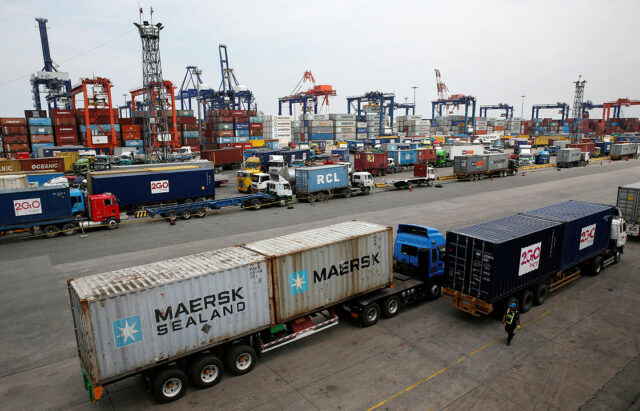
Trucks are seen in a container port in Manila, Philippines May 25, 2016. — REUTERS

THE PHILIPPINE government has enforced a single electronic invoicing system for all imported commodities, as it explores nonmonetary measures to address rising food prices.

Under Administrative Order (AO) No. 13 signed by President Ferdinand R. Marcos, Jr. on May 13, the country will implement digital and integrated pre-border technical verification and cross-border electronic invoicing for all imported commodities entering the country.

A single electronic invoicing system is necessary to “effectively monitor international trade transactions of all imported goods,” according to the order.

It would also “strengthen national security, safeguard consumers’ rights, and protect the environment against sub-standard and dangerous imported goods,” the order read.

The new system, which the Bureau of Customs (BoC) shall implement within two years, will be enforced gradually. The first phase covers agricultural goods including fresh and frozen meat, fish and other aquatic resources, cereals, fruits, vegetables, and feeds.

The second phase covers non-agricultural goods with health and safety issues, while the last phase will cover other goods with misdeclaration to avoid duties and taxes.

The AO also created a Committee for Pre-border Technical Verification and Cross-border Electronic Invoicing, which will be chaired by the Finance secretary.

The committee’s members include the secretaries of the departments of Agriculture, Trade, energy, Health, Environment and Natural Resources, and Information Communications Technology.

Committee members also include the BoC commissioner, director-general of Philippine Drug Enforcement Agency, and two non-voting representatives from duly recognized industry associations to be appointed by the chairperson upon the committee’s recommendation.

Funding for the order’s implementation would be charged against the available appropriations of the BoC and other members of the committee, according to the order.

The new system followed the issuance of an AO mandating the Agriculture department as well as the Trade and Finance agencies to further ease procedures for agricultural imports and remove non-tariff barriers.

Non-tariff barriers are policy measures that restrict trade such as quotas, import licensing systems, regulations and red tape, among others, according to AO 20.

Inflation accelerated for a third straight month to 3.8% in April from 3.7% in March. It also marked the fifth straight month that inflation settled within the BSP’s 2-4% target range.

Food inflation rose to 6.3% in April from 5.7% in March.

Inflation averaged 3.4% in the January-April period, below the central bank’s 3.8% full-year forecast. — Kyle Aristophere T. Atienza

DoF seen handling VAT claims in more ‘taxpayer-friendly’ way

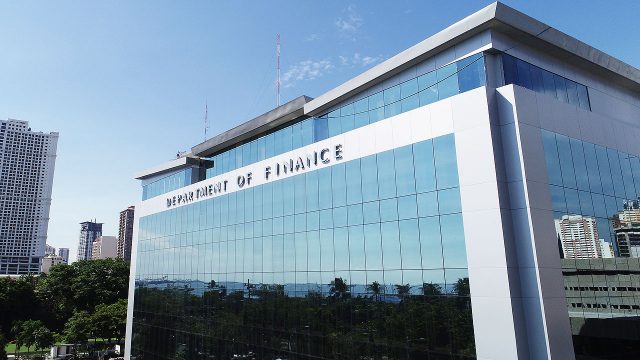
DOF.GOV.PH

By John Victor D. Ordonez, Reporter

THE Department of Finance (DoF) Revenue Operations Group taking responsibility to handle value-added tax (VAT) refund claims may result in quicker processing and address delays under the Bureau of Internal Revenue (BIR), according to a tax professional.

“The experience of the taxpayers right now is that the BIR process is slow or tilted in favor of denying the tax refunds,” Eleanor L. Roque, tax principal of P&A Grant Thornton, said in a Viber message.

She said the DoF may employ more efficient and taxpayer-friendly measures in processing VAT claims, cutting down delays previously seen with the BIR.

Senator Sherwin T. Gatchalian has filed a bill proposing to transfer the responsibility of processing VAT refunds to the Revenue Operations Group from the BIR, which has fielded many complaints from companies with stalled refund claims.

Senate President Juan Miguel F. Zubiri has said the Japanese companies threatened to leave the Philippines after finding it difficult to secure refunds.

The American Chamber of Commerce of the Philippines, Inc. has said VAT refunds for jet fuel purchases take as long as five years to resolve.

Under the Senate bill, the Finance Secretary will be in charge of approving refund claims for creditable input taxes, instead of the internal revenue commissioner.

The measure also ensures businesses are entitled to a VAT zero-rating on local purchases, provided they operate at 70% capacity.

Registered export enterprises are also given duty exemptions on imports of raw materials and spare parts for capital equipment.

“The BIR’s task is to collect taxes so processing refunds or approving refunds is not ingrained in the BIR DNA,” Ms. Roque said. “It’s just against their interests to approve refunds.”

DoE could grant power plants bigger allowance for outages

PIXABAY

THE Department of Energy (DoE) said it is looking into allowing a longer plant shutdown period for maintenance.

“We should allow also the plants sufficient time to do their maintenance work. We’re comparing the amount of time that we allow the plants to undertake those,” Energy Secretary Raphael P.M. Lotilla told reporters last week.

Mr. Lotilla said cited the case of Japan, which allows longer maintenance periods.

“They will be able to take a deep dive to really inspect the different parts of the plant,” he said.

The reliability index implemented since 2020 allows the Energy Regulatory Commission (ERC) to set the maximum days of planned and unplanned outages per year, varying by generating plant technology.

A power plant that runs on pulverized coal can be out of operation for 44.7 days. This comprises 27.9 days of planned outages and 16.8 days of forced or unplanned outages.

A power plant running on circulating fluidized bed technology should not be out of service for more than 32.3 days —including 15.4 days of planned outage and 16.9 days of unplanned outage.

Geothermal plants are only allowed to be out for 19.7 days, with six days for planned outages and 13.7 days unplanned.

In 2023, the ERC imposed approximately P60 million worth of penalties against generation companies for exceeding their outage maximums.

“Preventive maintenance is very important. And just like in aircraft, you have to have regular maintenance to be carried out and enough time to carry out the maintenance,” Mr. Lotilla said.

Jose M. Layug, Jr. president of the Developers of Renewable Energy for Advancement, Inc., said that allowing power plants longer maintenance periods would “ensure that these aging power plants get the needed operational servicing for better performance.”

“While this may not solve the short-term supply issue, this may help the power plants perform better in the long run,” he said in a Viber message.

The ERC reported that five power generation companies exceeded the unplanned outage allowance as of April 30.

These are Masinloc unit 1 coal-fired thermal power plant and Sem-Calaca Power Corp. coal plant 2 in Luzon. 

In the Visayas, those exceeding the limits are the Mahanagdong geothermal power plant unit 2, Malitbog geothermal power plant unit 1, and Palm Concepcion Power Corp. unit 1. — Sheldeen Joy Talavera

11 sites operated by YTS ordered blocked for alleged piracy, copyright infringement

ELEVEN DOMAINS and subdomains operated by YTS have been issued site-blocking requests for alleged piracy and copyright infringement by the Intellectual Property Office of the Philippines (IPOPHL).

In a statement sent over the weekend, the intellectual property (IP) rights watchdog said that the 11 sites associated with YTS have violated Section 216 of the Intellectual Property Code of the Philippines and Memorandum Circular 23-025, or the Rules on Voluntary Administrative Site Blocking.

“A thorough examination reveals that all of the aforementioned websites are hosting pirated versions of movies or TV shows, allowing users to access these illegal copies by downloading them through links on the same website or by streaming them online,” according to the IPOPHL IP Rights Enforcement Office ruling.

The 11 sites — yts.mx, yts.rs, yts.do, ytsuproxy.to, yts.dirproxy.com, yts.unblocked.love, ytssss.jamsbase.com, yts.lt, yts.ag, yts.am, and torrents.yts.rs. — were found to have been using various methods to distribute copyrighted material.

“The websites under complaint are also listed in WIPO Alert, a data-sharing platform on piracy of the World Intellectual Property Organization,” IPOPHL said.

YTS is the official home of YIFY, “one of the world’s most prolific sites involved in the illegal replication and distribution of copyright content.”

“Millions of netizens visit this website, so this is a major win for the creative industry. We encourage more stakeholders to come forward, file a complaint, and further disrupt access to piracy websites,” IPOPHL Director General Rowel S. Barba said.

According to IPOPHL, the issuance stemmed from a complaint filed by the Motion Picture Association, which reported the site in 2015 to house 4,500 infringing motion picture titles.

“This site blocking order and forthcoming blocking actions will have a substantial impact on the Philippine piracy landscape. We will continue to work closely with the Philippines’ government and creative industry in the fight against the scourge of digital piracy,” the MPA said in a statement.

IPOPHL said that it has given the administrators of the sites five days to protest the decision as they could not be contacted before it served the site-blocking request to the National Telecommunications Commission (NTC) and internet service providers (ISPs) on May 14.

On May 16, the NTC issued a memorandum order directing all ISPs to immediately block the websites and report the actions they have taken within five days.

As of Saturday, the IPOPHL said that almost all signatories to the site-blocking memorandum of understanding (MoU) have cut access to the sites.

In September, IPOPHL signed an MoU with Globe Telecom, Inc., Smart Communications, Inc., PLDT Inc., Sky Cable Corp., and DITO Telecommunity Corp., which asks the ISPs to voluntarily block sites upon IPOPHL’s request. — Justine Irish D. Tabile

Employee-oriented strategies that make the Philippines’ leading and most trusted employers

Photo from Freepik

Company success is now measured not only by financial performance but also by its reputation as an employer. Leading organizations stand out by excelling in their industries while prioritizing employee well-being and fostering a culture of trust and support.

The focus on being a trusted employer has become a crucial factor in attracting and retaining top talent, driving innovation, and ultimately ensuring long-term and sustainable success. As businesses and employees adapt to these changes, several key trends are emerging, redefining how work is conceptualized, structured, and experienced.

As Statista’s Philippines’ Best Employers 2024 ranking reflect, the top companies in the country have successfully implemented strategies to attract and retain employees. These companies have demonstrated their commitment to creating a positive work environment, fostering employee growth, and building a strong company culture.

Importance of work-life balance

Achieving a harmonious balance between work and personal life is crucial for maintaining the well-being and productivity of employees in today’s work culture. It significantly impacts mental and physical health, job satisfaction, and overall quality of life across different industries.

McKinsey & Company’s report highlights that work-life balance and compensation are key factors affecting employee experience. Leading employees prioritize caring leaders, meaningful work, and safe workplace environments, emphasizing the importance of a holistic approach to employee satisfaction.

Recognizing the importance of work-life balance, top employers in the Philippines implement policies and initiatives that support their employees’ well-being. Companies like Google, Unilever, and Microsoft have implemented flexible work arrangements, generous leave policies, and wellness programs to support their employees’ physical and mental health.

The Gen Z and Millennial Survey by Deloitte also highlights that maintaining a positive work-life balance is a top consideration for these generations when choosing an employer. The survey indicates that flexible work options, such as part-time jobs and job-sharing, are highly valued by younger employees. It also addresses the impact of work-life balance on mental health and stress levels among employees.

A path to career growth

According to employee enablement platform Zavvy, replacing a trained employee can cost up to 200% of their annual salary — emphasizing the need for continuous training and development to retain valuable talent. Providing e-learning training opportunities can increase retention rates by 60%, as employees appreciate the flexibility and autonomy to learn at their own pace.

However, 59% of the employees claim to be self-taught, indicating a lack of formal training in many organizations. Only about one-third of employees are satisfied with their job-specific training, and one in three employees believe their company’s training processes are outdated.

Millennials, who now make up the majority of the active workforce, are eager for leadership training, with 60% of surveyed millennials expressing a desire for such opportunities. According to Global Leadership Forecast, effective leadership development programs as an inclusive approach to career development is 4.2 times more likely to outperform restrictive practices.

Despite this, less than 5% of companies implement leadership development universally, presenting a significant opportunity for improvement. The University of Phoenix’s Career Optimism Report highlights a significant concern regarding the lack of optimism about career development opportunities. According to the findings, 29% of workers express a lack of access to upskilling or training.

To address low employee engagement scores and growing disengagement, organizations must prioritize scalable and actionable employee development strategies, according to McKinsey. This includes having regular career development conversations, creating a short-term action plan, and ensuring transparent interactions.

Furthermore, redefining career development to focus on growth within current roles, rather than solely on promotions, can also help broaden development opportunities and cater to employee aspirations.

Redefining employee experience

Strong company culture and values are commonly linked to significant benefits for businesses. Companies that prioritize these aspects often find themselves at a competitive advantage, not only in terms of market performance but also in employee satisfaction, retention, and overall workplace harmony.

When employees feel aligned with their company’s values and culture, they are more engaged and motivated to perform at their best. Engagement drives productivity, as employees are more likely to go above and beyond in their roles, leading to higher efficiency and innovation.

According to Workhuman iQ data, the higher an employee rates their company culture, the lower the chances are that they will leave the organization. When organizations put company policies in place that elevate an employee’s experience, employees feel secure and supported in their role. This highlights the widespread recognition among employees of the pivotal role that company culture plays in organizational performance.

Respect, fairness, trust, integrity, and teamwork are the most important attributes of a strong company culture according to a survey by employee app Speakap. Sharing the organization’s mission, vision, and values has the greatest impact on employee alignment with the company culture. Moreover, ongoing job guidance and support also make employees feel more connected to the company.

According to the latest Philippines’ Best Employers, the Bureau of Fire Protection (BFP), the Supreme Court, and Maersk have built cultures that prioritize teamwork, collaboration, and a sense of purpose. These companies create a sense of belonging and shared mission that drives employee satisfaction and retention.

In addition, companies known for their strong culture and values attract top talent. Prospective employees are often drawn to organizations where they believe they will fit in and thrive. Additionally, a positive culture reduces turnover rates as employees are more likely to stay with a company where they feel valued and understood. This stability is beneficial for maintaining institutional knowledge and continuity within the organization.

In contrast, toxic workplace behavior is the biggest predictor of employee burnout symptoms and intent to leave, according to McKinsey. More than 60% of negative workplace outcomes are due to toxic workplace behavior.

According to a separate survey by the said professional services firm, almost two-thirds of employees stated that the COVID-19 pandemic prompted them to contemplate their life’s purpose, prioritize what is most important to them, and consider what is worth prioritizing. Although work plays a significant role in people’s lives, today’s employees are no longer willing to remain in unfulfilling jobs or work for employers that do not treat employees, people, or the planet well. — Mhicole A. Moral