Home Blog Page 2645

PhilHealth can afford premium cuts

PHILIPPINE STAR/MICHAEL VARCAS

SENATE President Francis G. Escudero on Tuesday said the Philippine Health Insurance Corp. (PhilHealth) can afford to bring down its mandatory contribution rates as its reserve fund has reached nearly P500 billion and its yearly subsidies, which he said should be used lower the premium rates and for more medical services.

“For me, it is better to use this fund to help our countrymen through additional medical services and to lower the premiums they have to pay,” he said in a statement in Filipino.

“There is more or less P500 billion that they can use to absorb to pay for these premiums.”

The Senate president noted that government provides a yearly subsidy of about P70 billion to PhilHealth to carry out its National Health Insurance Program, which covers the premiums of indirect contributors, poor Filipinos and senior citizens.

In August, the Senate passed on final reading a bill that seeks to cut PhilHealth premiums to 3.25% next year from 5% this year under the Universal Healthcare Act.

The measure, if signed into law, would set PhilHealth premium contribution at 3.25% this year for those with a monthly income of P10,000 to 50,000, with incremental increases of 0.25% each year

Senator Joseph Victor “JV” G. Ejercito, who sponsored Senate Bill No. 2620, initially sought a 4% premium rate this year but senators decided to set it at 3.25% since it would be difficult to refund payments made by PhilHealth members since January. 

The agency started hiking its monthly contribution rate in 2019 so that it can sustain the benefits given to its members. The contribution rates this year will stay at 5% from 2.75% five years ago.

PhilHealth spent P75.8 billion for its benefit payouts last year, almost half of the amount paid by state insurer in 2022 at P143 billion and P140 billion in 2021, PhilHealth Executive Vice-President Eli Dino D. Santos told congressmen in May. — John Victor D. Ordoñez

Corruption tops Filipinos’ concerns

JESUS MONROY LAZCANO-UNSPLASH

MORE Filipinos now see corruption as the top pressing issue the government should urgently act on, overtaking economic concerns such as inflation and poverty, according to a September survey conducted by PUBLiCUS Asia, Inc..

In a statement, the pollster said 18% of Filipinos view corruption as an issue requiring immediate action from President Ferdinand R. Marcos, Jr. It overtook inflation, economic, and poverty concerns, with 15%, 12%, and 11% of Filipinos seeing the issue as a leading problem, respectively.

“While the public’s concerns remain largely consistent, there is a notable shift in the ranking of these issues,” PUBLiCUS Asia, Inc.said. “Corruption now tops the list, reflecting a growing frustration with governance and accountability across different sectors of society.”

The pollster noted that economic issues remain to be a “persistent issue” for Filipinos despite ranking lower than corruption. “Rising costs of essential goods continue to strain household budgets… underscoring the public’s desire for policies that directly address their day-to-day challenges.”

Inflation slowed to a seven-month low in August due to a moderate rise in food and a decline in transport costs. Consumer prices rose by 3.3% from 4.4% in July and 5.3% a year earlier, the Philippine Statistics Authority said in early September.

PUBLiCUS interviewed 1,500 Filipinos on Sept. 15 to 19, with an error margin of 3%. — Kenneth Christiane L. Basilio

Roque’s plea vs QuadComm denied

PCOO.GOV.PH

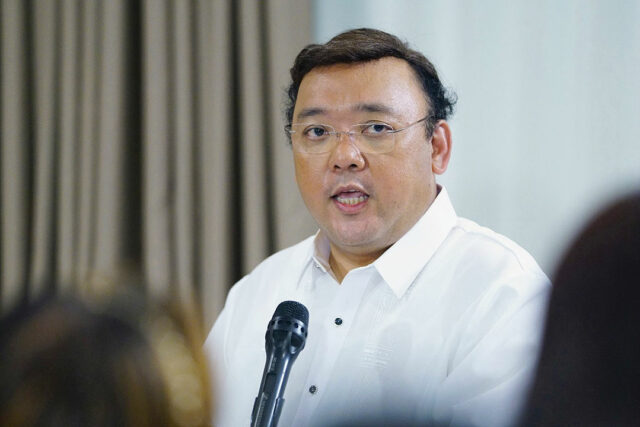
THE Supreme Court (SC) junked a former Presidential Spokesman’s writ of amparo plea against the House of Representatives Quad-Committee, citing the limitations of the writ.

In a press briefing on Tuesday, SC Spokesperson Camille Sue Mae L. Ting said former president Rodrigo R. Duterte’s spokesman Herminio “Harry” L. Roque, Jr.’s petition for the writ of amparo is incorrect as such writ is only reserved for extralegal killings and enforced disappearances, none of which are present in this case.

Mr. Roque’s daughter Hacintha filed the case before the top court alleging the Quad-Committee’s contempt and detention orders threatened Mr. Roque’s rights to life, liberty, and security.

He did not immediately respond to a Viber message seeking comment.

The tribunal ordered the committee to comment on Mr. Roque’s petition for prohibition within ten days.

The committee ordered the ex-spokesman’s arrest and detention after being cited for contempt the second time for failing to submit subpoenaed documents necessary to the panel’s probe in relation to Philippine Offshore Gaming Operators.

It found evidence linking Mr. Roque to Lucky South 99, an illegal operation in Porac raided last June. — Chloe Mari A. Hufana

BARMM studying Malaysia’s programs

COTABATO CITY — Planners in the Bangsamoro Ministry of Transportation and Communications are studying the viability of applying the public service programs of Malaysia in the autonomous region.

Bangsamoro Transportation and Communications Minister Paisalin P. Tago told reporters in Cotabato City on Tuesday that he and his subordinate-officials were so impressed with Malaysian policies on airport and seaport management, which can be applied in the autonomous region.

Mr. Tago led the team that toured Malaysia last week and met Malaysian officials who, in dialogues, shared to them governance and public service insights.

“We are keen on adopting some of their governance and public services thrusts for regional application,” Mr. Tago told reporters.

While in Malaysia, Mr. Tago, Deputy Minister Muhammad Ameen Abbas, and other officials met with their counterparts from the Malaysian Ministry of Transportation, the Tabung Haji, and the International Institute of Advanced Islamic Studies.

The Tabung Haji is an agency focused on facilitating savings, through investments, for the yearly pilgrimage of Malaysians to Makkah in Saudi Arabia. It also has programs promoting finance, health, property and information technologies. — John Felix M. Unson

Baguio’s congressional race begins

BAGUIO CITY — A multi-cornered fight at Baguio City’s congressional race is beginning to shape up with former lawmaker Nicasio Aliping, cashing in on his bid on the first day of filing of candidacies here.

At past 9 a.m., independent bet Mr. Aliping seeks to redeem himself after he, together with public works contractors, was sued for illegal tree cutting and earth moving activities at the Mt. Sto. Tomas Forest Reserve in Tuba in 2016. He was acquitted in 2022 and is again seeking his return into Congress.

Expected to bid in the five or six-cornered Baguio’s congressional race is Gladys Vergara, daughter of former Baguio City long-time Congressman Bernardo M. Vergara, who served the city for 12 years as Mayor then lawmaker.

The younger Vergara, present chairperson of the Baguio Tourism Council, is scheduled to formally file her bid on Oct. 7.  She said, “there is a big clamor from the people of Baguio for her to become the city’s lone district legislator”.

Also among those reported to seek congressional seat were long-time Baguio City Mayor and Congressman Mauricio G. Domogan, incumbent councilor Isabelo “Poppo” Cosalan, Soledad Go, wife of Incumbent and third-termer representative Marquez Go, and incumbent Councilor Benny O. Bomogao. — Artemio A. Dumlao

Marcos orders DoE shift to permit processing in parallel

PRESIDENT Ferdinand R. Marcos, Jr. said the Department of Energy’s (DoE) method of expediting power project approvals can be fine-tuned further by resorting to simultaneous permit processing, avoiding the waiting time caused by sequential approvals.

Mr. Marcos made the remarks at a Palace meeting about the DoE’s Energy Virtual One-Stop Shop (EVOSS), according to the Presidential Communications Office.

“Well, you continue to work on the permitting process,” he told DoE officials. “So, we try to get as close as possible to the simultaneous processing.”

In his third address to Congress, the President ordered the DoE to entrust to a digital one-stop shop its permit approval process for power projects.

As of Sept. 27, the DoE reported that at least 56 of 103 energy-related processes had been folded into EVOSS, which was rolled out in 2020.

The government is aiming for 100% integration of all energy-related application processes into EVOSS by June 2028.

At a Cabinet meeting, Mr. Marcos also told Energy Secretary Raphael P.M. Lotilla to inform agencies in advance about the DoE’s impending endorsement of a project to allow them to start their own permitting process right away.

The Energy Regulatory Commission said last year that EVOSS would cut the processing time for quasi-judicial rulings to 270 calendar days from more than a year previously.

Last week, the DoE said it has issued endorsements to eight renewable energy (RE) projects and one battery energy storage system.

The Board of Investments on Sept. 26 said it had endorsed P3.74 trillion worth of RE projects for green-lane treatment as of Sept. 25. The investment promotion agency said 114 RE projects had been endorsed to the One-Stop Action Center for Strategic Investments since February 2023.

The Philippines is trying to boost the share of RE in the energy mix to 35% from the current 22%, eventually rising to 50% by 2040.

Energy Undersecretary Sharon S. Garin has said battery technology is evolving fast enough for the Philippines to meet its RE targets. She said the agency was looking to attract more battery system companies to introduce their systems in the Philippines, which will help RE projects overcome the intermittent nature of their power sources. — John Victor D. Ordoñez

Nearly half-million doses of ASF vaccine due by mid-Oct.

REUTERS

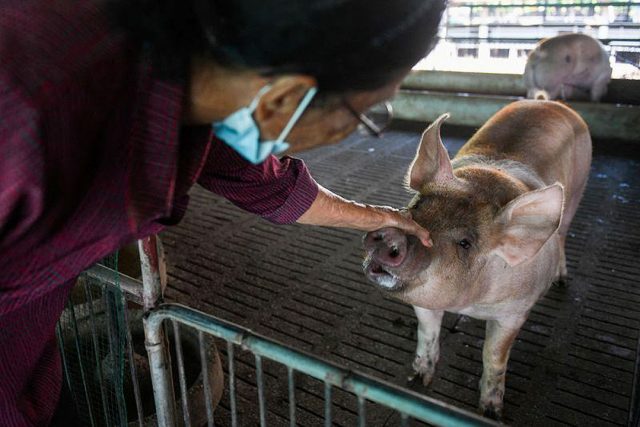
THE Department of Agriculture (DA) said on Tuesday that it is expecting to deploy 490,000 doses of the African Swine Fever (ASF) vaccine by mid-October.

“By Oct. 17-19, the (Bureau of Animal Industry) will issue a notice to proceed with the 490,000 doses that were procured,” Assistant Secretary and Spokesperson Arnel V. de Mesa told reporters.

The DA has allocated P350 million for the initial government-run trial, sufficient to fund about 600,000 vials of the ASF vaccine from Vietnam.

“With those doses, hopefully, we can offer additional protection to our pigs,” he added.

Mr. De Mesa said that despite the ongoing outbreak, the meat supply is expected to be sufficient until the year-end holidays.

“Our requirements this holiday season were programmed during the second quarter of the year,” he added.

Pork imports during the first half increased 10.7% to 316.99 million kilograms.

“The imported meats are starting to arrive or have already arrived,” he said.

“Although we still have ASF within affected areas, this would be easily compensated for by supply coming in from other countries,” Mr. De Mesa added.

As of Sept. 20, 125 municipalities across 31 provinces had active ASF cases, the BAI reported.

The DA has set up checkpoints to monitor the movement of hogs outside active ASF areas. It is allowing healthy hogs within ASF-affected areas to travel after proper verification. — Adrian H. Halili

Doubts raised about crypto taxability in proposed digital-services VAT law

REUTERS

By Kenneth Christiane L. Basilio, Reporter

THE GOVERNMENT is likely to run into difficulty in trying to apply a digital-services value-added tax (VAT) to cryptocurrency traders, analysts said.

While acknowledging that the upcoming law could plausibly apply to crypto-related services, the analysts said the overseas crypto exchanges that comply with the law could simply pass on the cost of VAT to their users, raising the transaction cost and discouraging frequent trading.

Arlone Abello, executive director of Philippines Association of Crypto Traders, also warned in an e-mail that the impact of the tax on crypto trading could make optimistic tax revenue projections fail to materialize.

“Since VAT is typically passed on to consumers, traders may experience an increase in the cost of their transactions, as platforms adjust their pricing to accommodate the tax,” he said.

The tax on cryptocurrency transactions could steer users away from “compliant” exchanges registered with the government to skirt additional costs, Enrico P. Villanueva, a senior lecturer at the University of the Philippines Los Baños Economics Department, said in an X message.

“These can be double whammy for Filipino cryptocurrency users who will either be taxed heavily if they transact locally, or risk losing regulatory protection if they shift to unregistered platforms,” he said. 

It could even lead to the Philippines “losing its competitive edge as a hub for fintech” if other countries provide favorable tax regimes to foreign cryptocurrency service providers, Mr. Abello said. 

“Enforcing VAT collection on nonresident cryptocurrency exchanges will be challenging, especially with platforms that operate outside of formal regulatory frameworks,” he added. “The government may need to collaborate with international authorities or leverage blockchain’s inherent transparency to track transactions more effectively.”

Albay Rep. Jose Ma. Clemente S. Salceda has said that the National Government (NG) could earn up to P6 billion in VAT annually from taxing foreign cryptocurrency platforms.

He was speaking ahead of the expected signing this month of a measure imposing a 12% VAT on digital services by companies based outside the Philippines.

Mr. Salceda, however, cited the need to clarify whether the government can collect VAT on trading commissions or total transaction value.

“It is a digital product provided by non-resident service providers to Philippine residents. So, it should be covered by VAT,” he told BusinessWorld via Viber.

“Right now, the revenue gain could be as much as P6 billion, depending on the framework that we will use,” he added. “The main contention is whether the revenue is the service provided – and therefore, only commission is VATable – or the revenue is the whole transaction value.”

Mr. Salceda last week filed a resolution seeking hearings on the possibility of collecting digital VAT from cryptocurrency service providers based overseas. The House ways and means committee is also looking at possible additional fees that could be charged by the Securities and Exchange Commission (SEC), with discussions on the matter set in November.

“Nonresident exchanges focused on cryptocurrency may be subjected to VAT on the transaction fees they are charging users,” Jomel N. Manaig, a junior partner at tax and corporate law firm Du-Baladad and Associates, said in an e-mail.

The government has a “potent weapon” against cryptocurrency exchanges with questionable track records, Mr. Manaig said, citing regulators’ ability to block Philippine access to their platforms.

Nevertheless, the government should “actively understand cryptocurrency” before drafting regulations, he said. “Simply making rules to regulate cryptocurrency based on current — and often outdated — standards and systems would inevitably lead to loopholes and unreasonable compliance requirements.”

About 11 million Filipinos own cryptocurrency assets valued at P35 billion, with transaction value estimated at P106 billion, according to House Resolution No. 2029, which Mr. Salceda filed last week.

Mr. Salceda said the House committee is also working with the SEC to formulate a “policy framework” that would allow cryptocurrency platforms to operate in the Philippines while also providing Filipinos with regulatory protection.

“While it is impossible to fully onboard all cryptocurrency platforms into the Philippine regulatory ambit, consumers have some guarantee that their hard-earned assets are protected by Philippine law for platforms that choose to be regulated,” he added.


Net external liabilities fall 6.5% quarter on quarter at end-June

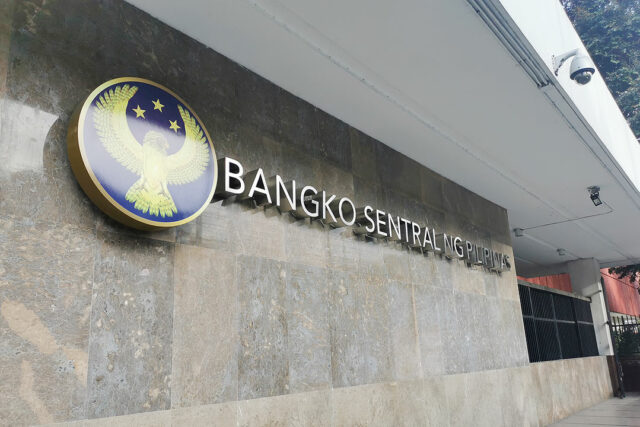
Bangko Sentral ng Pilipinas main office in Manila. — BW FILE PHOTO

THE Philippines’ net external liability position declined 6.5% at the end of June, the Bangko Sentral ng Pilipinas (BSP) said.

Citing preliminary data, the BSP said the international investment position (IIP) was a net external liability of $55.2 billion at the end of June, down 6.5% from the $59.1 billion net liability at the end of March.

“This development was driven by the 1.7% contraction in the country’s external financial liabilities, which outpaced the 0.5% decline in external financial assets,” the BSP said.

The IIP is an indicator of the value and composition of a country’s financial assets and liabilities. It gauges an economy’s external exposure.

External financial liabilities dropped 1.7% to $298.7 billion at the end of June, from $303.9 billion a quarter earlier.

“This development was primarily attributable to the recorded declines in net foreign portfolio investments (FPI) in the form of equity securities to $34.8 billion (by 11.3% from $39.2 billion) and net foreign direct investment (FDI) in the form of equity capital to $58.2 billion (by 6.5% from $62.2 billion), mainly on account of downward valuation adjustments.”

Year on year, external financial liabilities rose 6.4% from $280.7 billion.

The BSP attributed this to the “collective increases in the nonresidents’ net outstanding loans extended to residents by 16.1%, nonresidents’ net outstanding direct investments in debt instruments by 10.9%, and nonresidents’ net outstanding investment in portfolio debt securities by 11.2%.”

Other sectors accounted for 59% or $176.3 billion of total external financial liabilities at the end of June. The rest were held by the National Government and banks, with financial liabilities worth $78.9 billion (26.4%) and $39.8 billion (13.3%), respectively.

The BSP held 1.3% of all external financial liabilities at $3.8 billion.

Meanwhile, external financial assets dipped 0.5% to $243.5 billion at the end of June from $244.8 billion at the end of March.

The BSP attributed the decline in financial assets to the combined decreases in the outstanding value of residents’ net portfolio investments in foreign debt securities to $31.4 billion (by 6.2% from $33.4 billion), net direct investments in debt instruments to $41.9 billion (by 1.7% from $42.6 billion), and residents’ net placements of foreign currency and deposits in foreign banks to $14.4 billion (by 3.1% from $14.9 billion). — Luisa Maria Jacinta C. Jocson

Xiamen-based companies express interest in PHL investments — BoI

XINHUATHAI.COM

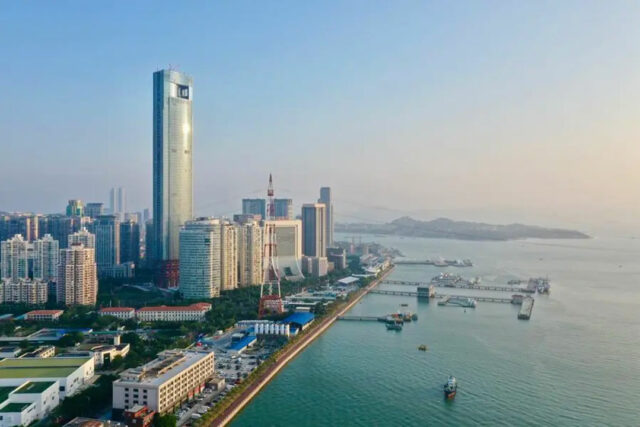
FIVE companies from Xiamen in southern China have expressed interest in investing in Philippine electric vehicle (EV) manufacturing, infrastructure, green metals, and mining projects, the Board of Investments (BoI) said.

In a statement on Tuesday, the BoI said that the companies indicated their interest in investing in the Philippines during a roundtable meeting in Xiamen last month.

A roundtable was also conducted in Beijing in conjunction with the ASEAN-China Center, the Power Battery Applications Committee of China Industrial Association of Power Sources, the China Overseas Development Association, and the RCEP Industry Cooperation Committee.

The BoI led a six-day investment promotion roadshow in China to attract investment that it hopes will position the Philippines as a regional hub for smart and sustainable manufacturing.

“Throughout the six days of the Investment Promotion Roadshow, we generated significant interest from various sectors,” Trade Undersecretary and BoI Managing Head Ceferino S. Rodolfo.

“Events like this showcase the Philippines’ proposition as the regional hub for smart and sustainable manufacturing and services industries that will ultimately generate green and sustainable jobs,” he added.

The BoI led the delegation at the 2024 China International Fair for Investment and Trade (CIFIT), which was focused on international investment promotion and economic and technological cooperation.

“For this year’s CIFIT, the Philippines highlighted the country’s investment promotion strategy and advantages as an investment destination for Chinese enterprises,” said the BoI.

“From Sept. 8 to 11, the Philippine booth saw a significant stream of visitors with business interests in renewable energy, new energy vehicles, food manufacturing, solar photovoltaic manufacturing, and trading activities,” it added.

Throughout the mission, the BoI and the Philippine Trade and Investment Center in China engaged with a total of 21 companies in renewable energy equipment manufacturing, EV manufacturing, and agribusiness.

So far this year, China was the 7th largest investment source for the BoI. It accounted for P1 billion of the investment approvals in the nine months to September, up 237% from a year earlier. — Justine Irish D. Tabile

China’s AIIB commits $100 million to support Asia-Pacific net-zero projects

REUTERS

BEIJING-BASED Asian Infrastructure Investment Bank (AIIB) has committed $100 million to help Asia-Pacific countries adopt low-carbon technologies and practices.

The AIIB said in a statement that $75 million was committed to the Actis Asia Climate Transition Fund, while $25 million will go towards co-investment.

“This marks AIIB’s first climate transition-themed fund dedicated to emerging Asia and highlights the Bank’s commitment to sustainable development and climate change mitigation in the region,” it said.

The fund will be invested in renewable energy infrastructure, energy solutions, and sustainable transportation in the region.

In particular, the commitment will support climate transition initiatives in India, Indonesia, Malaysia, China, the Philippines, Thailand, and Vietnam.

“Our commitment to the Actis Asia Climate Transition Fund underscores AIIB’s dedication to financing sustainable infrastructure and fostering low-carbon solutions in Asia,” AIIB Acting Vice-President Rajat Misra was quoted as saying.

“This partnership aligns with our climate strategy and sets a precedent for future investments aimed at achieving net-zero emissions while promoting gender equality in the energy sector.”

Separately, the Department of Finance (DoF) said the AIIB pledged to support Philippine infrastructure projects.

“The DoF was able to secure the Bank’s commitment to support the Philippine government in accessing grants through the Multilateral Cooperation Center for Development Finance (MCDF) Finance Facility with the AIIB as an implementing partner,” it said in a statement.

The MCDF is a multilateral financial mechanism promoting high-quality infrastructure and connectivity investments in developing countries.

The AIIB also affirmed the Philippine government’s call to assign specific country officials to improve its partnerships, the DoF said.

“Recognizing that project implementation delays equate to development denied, we request even stronger support from the Bank through regular comprehensive portfolio reviews to assist the government,” Finance Undersecretary Joven Z. Balbosa was quoted as saying. 

The DoF also cited the need for AIIB project teams to promptly identify project implementation issues, come up with potential solutions and strategies, and facilitate closer monitoring and coordination among relevant stakeholders.

Big-ticket projects supported by the AIIB include the Manila Flood Management project and the Bataan-Cavite Interlink Bridge. The bank co-finances these projects with the World Bank and the Asian Development Bank (ADB), respectively.

The government is also processing AIIB loans for key infrastructure projects like the Laguna Lakeshore Road Network Project – Phase 1 and the Metro Manila Rail Transit Line 4 (MRT4) Project, both co-financed with the ADB.

The bank also supports the Facility for Accelerating Studies for Infrastructure (FAST-Infra), which is expected to be signed this year. FAST backs the formulation of a transport infrastructure master plan. — Beatriz Marie D. Cruz

Dairy breeder herd to be expanded via imports

REUTERS

THE National Dairy Authority (NDA) said on Tuesday that it is looking to expand the herd at its stock farms ahead of plans to boost overall dairy animal numbers.

“The NDA will be aggressively importing cattle for our stock farms for the herd to multiply under the care of NDA. The acclimatized offspring of these dairy cattle will be the ones to be distributed to our dairy farmers,” Administrator Marcus Antonius T. Andaya said in a statement.

Mr. Andaya added that five new stock farms are set to be completed by the end of the year with operations set to launch by early 2025. They will be located in Nueva Ecija, Bohol, Bukidnon, Cotabato and Agusan Del Sur.

The NDA said that the new stock farms will eventually help increase the domestic dairy herd to about 80,000 head.

He said that the NDA is also focusing on increasing milk yields and providing training for farmers.

The NDA aims to increase dairy production to 80 million liters per year by 2028, equivalent to about 5% of milk demand. The agency operates in 68 provinces, assisting almost 2,500 farmers and 1,324 dairy organizations.

The Philippines can meet less than 1% of its milk demand through domestic production, with the remainder needing to be imported.

Dairy imports are forecast to increase 7.3% in 2024 to 2.49 million metric tons of milk equivalent, according to a report by the Food and Agriculture Organization of the United Nations.

In the first half, dairy imports rose 12.9% to 1.65 million metric tons. The Philippines typically imports skim milk powder, followed by other milk powders and ready-to-drink milk. — Adrian H. Halili