Home Blog Page 2397

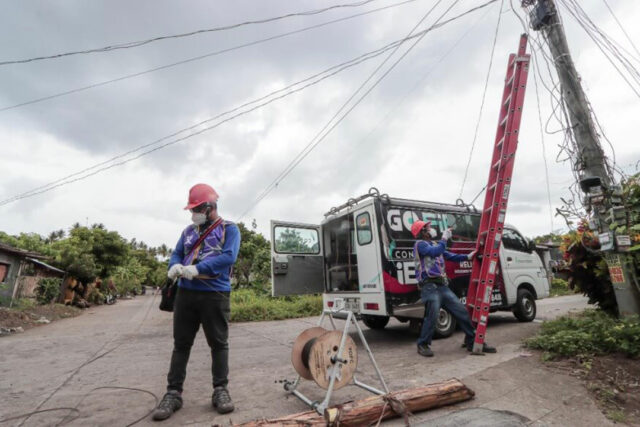
Dennis Uy plans to build $2-B Tech City in Pampanga

DENNIS ANTHONY H. UY

By Justine Irish D. Tabile, Reporter

TECH TYCOON Dennis Anthony H. Uy is set to file with the Philippine Economic Zone Authority (PEZA) this month the application for the development of an information technology (IT) hub, which is envisioned to be the Philippines’ Silicon Valley.

“They are set to file their application with PEZA within the month. That’s a big-ticket investment,” PEZA Director-General Tereso O. Panga told BusinessWorld in a Viber message.

In May, Mr. Panga announced that Mr. Uy, the chief executive officer of Converge Information and Communications Technology Solutions, Inc., proposed to develop a Tech City special economic zone (ecozone) in a 117-hectare land between Mexico and Angeles in Pampanga.

Mr. Panga said the project aims to create an ecosystem for technology, innovation, and tech-related sectors by attracting downstream tech companies.

In a separate interview, Mr. Uy said that he estimates the cost of the Tech City project to come out at around $2 billion.

“The whole project, I think, is easily $2 billion. It is a very big project,” Mr. Uy said in an interview with BusinessWorld.

“[The investment] will cover mostly the infrastructure because you need the buildings, road access, and structures, including the information and communication technology [infrastructure],” he added.

According to the businessman, the masterplan for the Tech City has already been handed over to him. This will allow the company to start ground development for the project.

“I think next year we can start already… we will be able to do the road access, drainage, all these things,” he said.

“We will go out to bring all these tech companies to help… there’s a lot of potential in Taiwan, Korea, and China, and even in Malaysia,” he added.

Despite being a personal venture, he said that Converge will put up a data center and a headquarters in the economic zone to meet internal requirements.

“And then hopefully if we are able to go through with our plans of building up air-traffic controller education there,” he added.

The latest data from PEZA showed there are a total of 427 operating ecozones, or ecozones with at least one existing and operating PEZA-registered business enterprise.

These operating ecozones are home to 4,382 locator companies, PEZA said.

Filipino students show high level of math anxiety — PISA

Students line up to enter Araullo High School in Manila, Jan. 15, 2024. — PHILIPPINE STAR/EDD GUMBAN

By Kyle Aristophere T. Atienza, Reporter

THE PHILIPPINES was among countries with the highest levels of mathematics anxiety among 15-year-old students, according to an international learning assessment by the Organisation for Economic Co-operation and Development (OECD), which flagged growing negative feelings towards the subject from 2012 to 2022.

Experts said the growing mathematics anxiety among Filipino students threatens the country’s manufacturing ambitions, which will rely heavily on engineers.

Results of the fifth edition of the 2022 Programme for International Student Assessment (PISA) also showed the Philippines was among 10 economies with the lowest levels of self-efficacy among students aged 15 years old. 

OECD: Low-performing Filipino students lags in math, reading proficiencyIn a report released on Wednesday, OECD said most education systems that had the lowest levels of self-efficacy also show the highest levels of mathematics anxiety.

These countries include three Southeast Asian countries — Cambodia, the Philippines and Malaysia, and seven Latin American countries — Argentina, Brazil, Chile, Costa Rica, the Dominican Republic, Guatemala and Mexico.

On average, 65% of students among OECD countries worry about getting poor marks in mathematics, 55% feel anxious about failing in mathematics, and 40% of students reported feeling nervous, helpless or anxious while solving mathematics problems or doing homework. 

“These shares were even higher in Brazil, Brunei Darussalam, El Salvador, Indonesia, Malaysia, the Philippines and Thailand,” OECD said, as it noted a sharp rise in mathematics anxiety from 2012 to 2022 in most PISA-participating countries and economies.

In an earlier edition of PISA, 16% of Filipino students attained at least Level 2 proficiency in mathematics, significantly lower than the 69% average across OECD countries.

Almost no Filipino students were top performers in mathematics, meaning that they attained Level 5 or 6 in the PISA mathematics test.

In the latest report, OECD said low math performers or those who perform below Level 2 showed higher levels of mathematics anxiety than skilled students or those who perform at Level 3 or above.

“This suggests that while anxiety is an obstacle to lifelong learning for all learners, it is even more so for those who also struggle with basic skills,” it said.

“Skilled students who have a solid foundation and strong mathematical skills will be able to build on those and be less likely to experience high levels of anxiety about mathematics,” it added.

In the assessment, 39.4% of Filipino participants said they ask questions when they do not understand the math material being taught, lower than the 46.8% global average.

The number of Filipino students who try to connect new material to what they have learned in previous mathematics lessons hit 39.4%, which was also below the global average of 45.6%.

In the assessment, 50.7% of Filipino participants said they ask questions more than half of the time when they do not understand the mathematics material.

About 80% of Filipino students said they wanted to do well in mathematics, slightly lower than the 89.3% global average.

The results also showed that 38.8% of Filipino students said they “do not agree that some people are just not good at mathematics, no matter how hard they study,” higher than the 34.5% average.

“There is no clear association between mathematics performance and knowing what job students want to do in the future,” OECD said. “However, a difference emerges in terms of the type of job students want to do based on their performance.”

It said more skilled performers than low performers expect to do highly paid jobs, noting that the Philippines presented the “widest gap” with 79% of its skilled performers and 32% of its low performers wanting to become managers or professionals.

On average, 48% of skilled performers and 25% of low performers among OECD countries wanted to become a manager or professional.

“Mathematics is crucial for manufacturing since this sector is conducive to scale economies that can be achieved through learning by doing and problem solving, skills that are honed in mathematics,” said Leonardo A. Lanzona, an economics professor at the Ateneo de Manila University. 

“I think the anxiety stems from a lack of preparation and an inability to relate the mathematical problems to their daily life, making mathematics a purely conceptual subject,” he said in a Facebook Messenger chat.

The OECD said the link between anxiety and mathematics can be detrimental to lifelong learning, adding that students who develop negative feelings towards mathematics may be less likely to opt for further education that includes the subject.

“They may avoid reskilling opportunities that involve mathematics as well,” it said.

The OECD said reducing students’ mathematics anxiety is a key policy challenge in improving students’ readiness for life-long learning.

“All major economic sectors will be adversely affected by these results in the long term,” said Emy Ruth S. Gianan, who teaches economics at the Polytechnic University of the Philippines.

In particular, growing mathematics anxiety among students threatens prospects for sectors that demand more technology-driven innovations including agriculture, manufacturing and services sectors, she noted.

The OECD said compared to 2012, students in most PISA-participating countries and economies reported higher levels of mathematics anxiety.

More students also reported feeling helpless doing mathematics problems or homework on average across OECD countries than in 2012.

“On the contrary, there was only a slight increase in students worrying about their marks and no change in the share of students worrying that it would be difficult for them in mathematics classes,” OECD said. “This result is worrying.”

Students are developing increasingly negative attitudes about learning mathematics. This may impact not only their performance but their readiness for lifelong learning. This finding also suggests that young people’s well-being has deteriorated, and policies are needed to support students’ mental health.

Among countries, South Korea showed the biggest improvement, showing an 11-percentage-point drop in shares of students reporting that they felt nervous doing mathematics problems. It was followed by Singapore and Thailand.

In the assessment, 78.3% of 15-year-old students said they “love learning new things in school,” above the global average of 50.1%.

About 70% of students said they wanted schoolwork that is challenging, higher than the 46.9% global average.

The OECD said governments and schools should craft “tailored support” early on to build confidence among students and enable them to develop resilience and adaptability, “which are crucial for academic success and personal well-being.”

It also called for strong teacher-student relationships, which contribute to reducing student anxiety and improving academic outcomes.

“Education systems should focus on equipping students with critical digital literacy skills to help them discern the quality of information and promote responsible online behavior,” it added.


Gov’t to launch ‘GBonds’ on GCash

BW FILE PHOTO

THE Department of Finance said the government is set to launch “GBonds” on electronic wallet platform GCash in December, as it seeks to make investing more accessible.

“For we envision a future where investing in government bonds is no longer a luxury but a new normal for Filipinos — with just a few swipes away and as easy as ordering their favorite food delivery. This empowers our people to effortlessly secure their future, all from the comfort of their homes,” Finance Secretary Ralph G. Recto said in a statement on Wednesday.

He urged GCash, the Philippine Digital Asset Exchange (PDAX), Inc., and regulators to speed up the process of launching GBonds “to bring the government closer to achieving financial inclusion for Filipinos.”

“[A]s we push for greater retail participation and digital transformation, let me assure you that the economic team will continue fostering a stronger economy that provides favorable conditions for growth and investment,” he said.

Currently, GCash has over 94 million registered users.

G-Xchange is the operator of GCash. The parent firm of GCash, Globe Fintech Innovations, Inc., is an affiliate of listed telecommunications company Globe Telecom, Inc.

JG Summit profit falls 39% to P3.1B; CEO optimistic for Q4

JG SUMMIT OLEFINS CORP.

CONGLOMERATE JG Summit Holdings, Inc. saw a 39% drop in third-quarter net income to P3.1 billion, but its president remains optimistic about ending the year on a “good footing.”

“We expect a better fourth quarter to finish the year on a good footing. This will also establish a stronger base as we pursue initiatives to sequentially drive better top line growth and margins across our operating units,” JG Summit President and Chief Executive Officer  (CEO) Lance Y. Gokongwei said in a statement to the stock exchange on Wednesday.

JG Summit’s third-quarter consolidated revenue increased by 1.4% to P89.1 billion from P87.9 billion last year.

“This was caused by larger losses from JG Summit Olefins Corp. (JGSOC) with the prolonged trough in the global petrochemical industry cycle, lower sugar profits from Universal Robina Corp. (URC) due to price corrections and high-priced inventories, and reduced average fares from Cebu Air, Inc. (CEB) to stimulate demand during the typical lean period in Philippine aviation,” the conglomerate said.

Mr. Gokongwei said that most of the conglomerate’s businesses were affected by weaker consumer sentiment that has “dampened demand for products and services.”

“We are seeing the propensity of consumers towards value food and beverage products, the seasonally weaker quarter for travel, and the prolonged industry downcycle for petrochemicals impacting our latest results,” he said.

For the first nine months, JG Summit recorded a 16% increase in net income to P17.9 billion, while core profit rose by 39% to P20.3 billion.

The conglomerate’s top line surged by 10% to P277 billion from P251.3 billion last year on healthy demand for travel and leisure activities, a higher preference for value food and beverage products, and increased utilization rates in the group’s petrochemical plants.

The food segment led by URC recorded an 18% decline in attributable net income to P8 billion due to the discontinuation of its China business and lower foreign exchange gains versus last year.

URC’s top line rose by 1% to P118.9 billion, led by its international operations and the double-digit growth in its ready-to-drink beverage business.

For the real estate and hotels business, Robinsons Land Corp. (RLC) had slower growth in core and net income to P9.3 billion due to the higher share of minority owners in the earnings of subsidiary RL Commercial REIT, Inc.

RLC’s top line expanded by 4% to P29.3 billion, while earnings before interest, taxes, depreciation, and amortization rose by 7% to P17.8 billion.

For the airline business, CEB saw a 33% decline in net profit to P3.4 billion due to higher depreciation and financing costs related to its growing fleet.

Core profit also fell by 32% to P3.2 billion.

Revenue surged by 11% to P74.5 billion amid the 13% increase in passengers flown as of end-September.

The petrochemicals business led by JGSOC widened its net loss to P11.4 billion amid “unfavorable global market conditions.”

Revenues surged 53% from a low base in 2023, carried by “higher plant run rates along with the full adoption of the pricing tool from its business-wide transformation program.”

Meanwhile, JG Summit’s equity share in Manila Electric Co.’s nine-month net income rose by 19% to P8.7 billion on record high sales volumes plus higher contributions from its power generation and retail electricity supply businesses.

For Singapore Land Group (SLG), JG Summit’s nine-month results account for the first-half performance only, given SLG’s semiannual regulatory reporting frequency. Equity earnings from SLG rose by 15% to P1.3 billion on a stronger hotel business and higher rental income.

Dividends received by JG Summit from PLDT Inc. slipped by 11% to P2.3 billion due to the absence of the special dividends declared in 2023.

JG Summit received P373 million in cash dividends from the Bank of the Philippine Islands (BPI) given the effectivity of the BPI and Robinsons Bank merger earlier in the year.

On Wednesday, JG Summit shares fell by 3.23% or 75 centavos to P22.45 apiece. — Revin Mikhael D. Ochave

Converge Q3 income jumps to P2.92B, capex guidance lowered

CONVERGE ICT

LISTED fiber internet provider Converge ICT Solutions, Inc. saw its attributable net income for the third quarter (Q3) increase by 40.4% to P2.92 billion, driven by higher revenues.

For the July-to-September period, Converge’s gross revenues grew by 17.2% to P10.42 billion from P8.89 billion a year ago, the company’s financial statement showed.

Broken down, revenues from its residential business climbed by 16% to P8.81 billion, while enterprise business registered a 25% increase to P1.61 billion.

Gross expenses, on the other hand, went up by 12.1% to P6.13 billion from P5.47 billion in the previous year.

“This sustained upward growth trend is reflective of our effort to make internet access more affordable and inclusive for a broader segment of the market,” Converge Chief Executive Officer and Cofounder Dennis Anthony H. Uy said.

“We are encouraged that our initiatives continue to bear fruit, with our partnerships with tech companies empowering us to strengthen our capabilities and our projects with the government contributing to bridge the digital divide,” he added.

For the nine months ending in September, Converge’s attributable net income improved by 29% to P8.21 billion compared to the P6.37 billion reported last year.

Revenues were higher by 14.1% to P29.9 billion from, driven by the “consistently strong performance of its residential, enterprise, and wholesale businesses.”

For the January-to-September period, the residential business accounted for P25.4 billion in the company’s revenues, up 13.2%.

“For the remainder of the year, our focus is to continue exploring innovative ways to enhance satisfaction across our diverse customer base,” Converge Chief Operations Officer Jesus C. Romero said.

As of the end of September, the company said it had a total of 2.46 million subscribers, comprising 2.22 million postpaid subscribers and 241,848 prepaid subscribers.

For its enterprise business, revenues rose by 19% to P4.5 billion, as all segments registered double-digit growth during the period, including the wholesale segment which remained strong with 16.6% growth year on year.

“We’re encouraged by the steady rally of the company. With this, all signs point us hitting the 12-14% revenue guidance for 2024,” Converge President and Cofounder Grace Y. Uy said.

DELAYED EXPANSION ACTIVITIES
The company’s capital expenditure (capex) for the first nine months ended at P7.5 billion, Converge Chief Finance Officer Robert A. Yu said during a briefing.

“We expect to spend less than what we had initially guided due to the constant rains and floods during the latter half of the year, delaying some of our port rollouts and expansion activities,” he said.

“From P15 billion-17 billion, we now expect to only spend about P11 billion-13 billion, with the difference getting delayed to next year,” he added.

In October, Converge announced its partnership with streaming service Netflix to offer internet and Net-flix entertainment plans.

The new Converge Netflix bundle will be offered to its existing FiberX customers.

At the local bourse on Wednesday, shares in the company climbed by 3.01% to close at P16.44 each. — Sheldeen Joy Talavera

LT Group profit rises to P7.03 billion, driven by banking, liquor segments

PHILSTAR FILE PHOTO

LUCIO C. TAN-LED conglomerate LT Group, Inc. recorded a 12.5% increase in its third-quarter attributable net income to P7.03 billion from P6.25 billion last year, led by its banking and liquor segments.

Third-quarter revenue improved by 12.2% to P34.03 billion from P30.33 billion last year, LT Group said in a recent regulatory filing on Wednesday.

For the first nine months, LT Group saw a 3% increase in attributable net income to P19.82 billion from P19.25 billion in 2023. Revenue rose by 12.8% to P95.16 billion versus P84.33 billion a year ago.

Among segments, Philippine National Bank (PNB) accounted for P8.44 billion, or 43% of the nine-month income, followed by the tobacco business at P7.91 billion, or 40%.

The liquor business, led by Tanduay Distillers, Inc. (TDI) and Asia Brewery, Inc. (ABI), contributed P1.51 billion and P714 million, respectively, or 8% and 4% each.

Eton Properties Philippines, Inc. shared P497 million, or 2%, Victorias Milling Co. contributed P277 million, or 1%, and other income reached P478 million, or 2%.

For the banking segment, PNB’s net profit under a pooling method rose by 11% to P15.06 billion.

Gross interest income grew by 15% to P50.13 billion, while gross interest expenses climbed by 28% to P13.65 billion. Net interest rose by 10% to P36.48 billion.

The tobacco business, led by PMFTC, Inc., saw a 12% decline in net income to P7.94 billion. PMFTC’s cigarette volume dropped by 12% to 15.8 billion sticks, while overall industry volume fell by 5% to 30.4 billion sticks.

“These declines were primarily attributed to consumer affordability challenges, rising illicit trade, and the increasing popularity of vaping products,” LT Group said.

For the liquor business, TDI recorded a 31% increase in net income to P1.51 billion. Liquor and bioethanol volumes rose by 6% and 1%, respectively..

Revenue climbed by 15% to P24.61 billion, while the cost of sales rose by 12% to P21.05 billion.

The nationwide market share for TDI’s distilled spirits fell to 32% in September from 32.6% in the same month last year. TDI has a 70.7% market share in Visayas and a 79.7% share in Mindanao.

In October, TDI sold its investment in Asian Alcohol Corp. to Prior Holdings Corp. for P1.8 billion, payable with interest over a four-year period with an upfront payment of P480 million.

ABI recorded a 59% jump in net income to P715 million as revenue surged by 8% to P13.79 billion.

The Cobra energy drink brand maintained its market leadership with a 55% share as of end-September, while the Absolute and Summit bottled water brands had the third-largest share at 17%.

For the property segment, Eton grew its net income by 44% to P499 million. Leasing revenue surged by 4% to P1.59 billion on higher lease rates.

The property company’s leasing portfolio comprises 288,000 square meters, with approximately 192,000 square meters dedicated to office space. On Wednesday, LT Group stocks fell by 0.59%, or six centavos, to P10.14 per share. — Revin Mikhael D. Ochave

Nickel Asia’s income drops 24.2%, hopes boost from new mines

NICKELASIA.COM

NICKEL ASIA Corp. saw its third-quarter attributable net income drop by 24.2% to P1.44 billion from P1.9 billion a year ago due to lower sales.

Revenues fell by 8.01% year on year to P7.69 billion from P8.36 billion due to the lower sale of nickel ore and limestone, the company said in a disclosure on Wednesday.

The company said the sale of ore and limestone decreased to P7.09 billion, 6.6% lower compared to P7.59 billion in the same period a year ago.

Revenues from services dropped 48.6% to P296.94 million from P577.68 million the prior year.

Meanwhile, revenues from its power generation rose 53.6% to P296.76 million from P193.18 million last year.

Nickel Asia chief executive officer Martin Antonio G. Zamora expects the operation of mines in Palawan and Eastern Samar to boost revenues in the coming years.

“This year, we achieved our objective of operating Manicani in Eastern Samar and Bulanjao in Palawan. We are optimistic that these new nickel mines will drive volume and revenue growth in the coming years,” Mr. Zamora said in a separate press release.

He said that Nickel Asia has completed infrastructure enhancements in Dinapigue, Isabela, “paving the way for higher production.”

Nickel Asia owns five mines: Rio Tuba in Palawan, Taganito and Tagana-an in Surigao del Norte, the Cagdianao mine in Dinagat Islands, and the Dinapigue mine in Isabela. These are operated by its subsidiaries.

The company extracts saprolite, which is shipped to Japan and China for the processing of ferronickel and nickel pig iron. It also mines limonite ore, which is processed in Coral Bay and Taganito processing projects.

Meanwhile, the company’s energy subsidiary Emerging Power, Inc. is targeting to achieve a renewable energy capacity of one gigawatt by 2028, as part of its sustainability initiatives.

“By the second quarter of next year, Greenlight Renewables Holdings, Inc., our joint venture with Shell Overseas Investments B.V., will complete construction of the first phase of its solar project in Leyte, with an initial capacity of 120 megawatts peak (MWp),” Mr. Zamora said.

He added that the first phase of the CAWAG solar project in Subic, Zambales will begin operations by the fourth quarter of next year. It has a capacity of 70 MWp.

Nickel Asia shares fell 0.9% or three centavos to close at P3.32 apiece on Wednesday. — A.H. Halili

Ayala Corp. president banking on new units to drive growth

Ayala Corp. President and Chief Executive Officer Cezar P. Consing — GLOBE.COM.PH

AYALA Corp. is banking on its new business units for sustainability and growth, as its nine-month net income has been supported by its core businesses, according to its president.

“We continue to manage our younger businesses to get them to sustainable trajectories in the near term. We strive to build a simpler, more collaborative, and more connected Ayala,” Ayala Corp. President and Chief Executive Officer (CEO) Cezar P. Consing said in a statement to the stock exchange on Wednesday.

Mr. Consing said this as Ayala Corp. recorded a 5% increase in its nine-month net income to P34 billion.

Core net income rose by 19% to P36.7 billion, led by its core units Bank of the Philippine Islands (BPI), Ayala Land, Inc. (ALI), Globe Telecom, Inc., and AC Energy & Infrastructure Corp.

“Ayala’s growth is being sustained by the strong performances of our core businesses,” Mr. Consing said.

For the banking segment, BPI saw a 24% increase in net income to P48 billion as total revenue surged by 25% to P125.8 billion. Net interest income rose by 22% to P93.9 billion, while noninterest income climbed by 32% to P31.9 billion.

Operating expenses grew 22% to P59.4 billion due to higher manpower, technology, marketing, and volume-related costs.

The property business led by ALI recorded a 15% increase in net income to P21.2 billion on resilient property demand and robust consumer activity. Revenue jumped by 27% to P125.2 billion.

Property development revenues increased by 34% to P76.6 billion on higher bookings across all residential segments, while residential reservation sales increased by 17% to P100.5 billion due to strong demand in the premium segment.

Leasing and hospitality revenues rose by 8% to P33.2 billion, while revenue from service businesses surged by 54% to P12.8 billion.

For the telecommunications segment, Globe recorded a 6% increase in net income to P20.6 billion, while core net income surged by 19% to P17.6 billion.

Earnings before interest, taxes, depreciation, and amortization (EBITDA) rose by 7% to P64.9 billion.

The energy segment led by ACEN saw a 24% jump in net income to P8.1 billion, led by newly operational plants that boosted attributable renewable energy. Core attributable EBITDA expanded by 30% to P14.3 billion.

Ayala Healthcare Holdings, Inc. widened its net loss to P417 million due to costs related to the ramp-up of its cancer hospital in Taguig City. Revenue surged by 11% to P6.9 billion.

AC Industrial Technology Holdings, Inc. narrowed its net loss to P5.1 billion on lower impairments. Core net loss widened to P921 million on softer demand in electronics manufacturer Integrated Micro-electronics, Inc.

Meanwhile, ALI listed its follow-on P8 billion ten-year sustainability-linked bond (SL-Bond) on the Philippine Dealing & Exchange Corp., which has an original interest rate of 6.1334% per annum.

The recent listing brings ALI’s total SL-Bond issuance to P14 billion. The bonds are linked to specific sustainability performance targets.

The latest bond issuance is part of the P50-billion securities program rendered effective in June 2023. The proceeds will be used to finance capital expenditure and debt refinancing requirements.

“The success of this sustainability-linked financing program, novel as it may be in the country, shows that the Philippine investing community realizes that sustainable finance is integral to the urgent pursuit of sustainability,” ALI President and CEO Anna Ma. Margarita B. Dy said during the listing ceremony.

The latest issuance brought ALI’s sustainability-linked financing program to P28 billion with an average tenor of nine years.

“We will continue to pursue large, impactful projects that will improve the quality of life of the Filipinos. Among such developments are the One Ayala Integrated Transport Hub and the transit connectivity and pedestrianization of the Makati central business district, of Bonifacio Global City, and Nuvali and our other estate developments,” Ms. Dy said.

ALI tapped BDO Capital & Investment Corp., BPI Capital Corp., Chinabank Capital Corp., East West Banking Corp., First Metro Investment Corp., Land Bank of the Philippines, RCBC Capital Corp., and SB Capital Investment Corp. as the joint lead underwriters and bookrunners for the issuance.

On Wednesday, Ayala Corp. shares fell by 0.15% or P1 to P657 per share, while ALI stocks dropped by 0.98% or 30 centavos to P30.25 apiece. — Revin Mikhael D. Ochave

Privacy body seeks GCash users’ help in probing unauthorized transactions

PHILIPPINE STAR/WALTER BOLLOZOS

THE National Privacy Commission (NPC) has issued a call to individuals who may have been affected by unauthorized transactions on the GCash platform.

“We urge individuals who may have been affected by this incident to reach out to the NPC through info@privacy.gov.ph and provide relevant information to assist with our investigation,” the NPC said in a statement on Wednesday.

According to the agency, it received an e-mail from GCash on Nov. 11 stating that “there was no data leakage or personal data breach” in the incident, which involved unauthorized transactions.

“Although GCash has stated that there was no compromise of customer credentials or data in the incident, the NPC will still conduct an independent investigation in line with its mandate to administer and implement the Data Privacy Act of 2012,” said the NPC.

It said that the investigation will verify GCash’s reports and ensure the electronic wallet’s accountability in protecting users’ personal information.

However, the privacy body said that its authority is focused on the protection of personal data; thus, monetary concerns should be directed to the appropriate financial regulatory agency.

On Monday, the Bangko Sentral ng Pilipinas (BSP) said that it would investigate the incident after several GCash users reported unauthorized deductions from their accounts.

The probe aims to identify possible vulnerabilities and review the e-wallet’s compliance with regulations and policies, the BSP said.

GCash said in a statement on Sunday that it had fixed the system issues that caused the incident.

“GCash has completed the necessary wallet adjustments for its affected users,” it said.

“Rest assured that customer accounts are safe, and customer account security will always be our top priority,” it added. — J.I.D. Tabile

D.M. Wenceslao profit climbs 8.4%, expects LRT Extension to boost market reach

DMWAI.COM

D.M. Wenceslao & Associates, Inc. (DMW) saw a 31.1% increase in its third-quarter attributable net income to P449.98 million from P343.22 million a year ago, driven by higher rental revenue.

Third-quarter revenue improved by 12.7% to P897.72 million from P796.59 million last year, DMW said in a stock exchange disclosure on Wednesday.

Rental revenue reached P857.31 million, up by 29.6% from P661.31 million in 2023.

For the first nine months, DMW grew its attributable net income by 8.4% to P1.37 billion from P1.26 billion last year.

“The Philippine real estate sector is on an upward trajectory, supported by stable inflation and declining interest rates. In Parqal, we’re witnessing firsthand the impact of these macroeconomic tailwinds, with customer spending and foot traffic at year-high levels,” DMW Chief Executive Officer Delfin Angelo C. Wenceslao said.

Revenue declined by 3.4% to P2.72 billion from P2.81 billion last year due to lower sales of condominium units.

Recurring revenues, encompassing land, building, and ancillary rentals, jumped 33% to P2.4 billion.

Commercial building revenue surged by 52% to P1.1 billion, driven by strong demand from logistics and traditional occupiers.

Mr. Wenceslao said the start of the Light Rail Transit-1 (LRT Line 1) Cavite Extension Phase 1 this month will provide a boost to the company’s market reach.

The Transportation department previously said the five stations of the LRT-1 Cavite Extension project that will open include Redemptorist Station, MIA Station, Asia World Station, Ninoy Aquino Station, and Dr. Santos (Sucat) Station.

“This big-ticket infrastructure project will provide seamless access to Aseana City for up to 600,000 passengers daily, connecting an estimated eight million residents across cities traversed by LRT Line 1. This significantly broadens Aseana City’s labor market reach and consumer base,” he said.

On Wednesday, DMW shares rose by 0.36% or two centavos to P5.52 per share. — Revin Mikhael D. Ochave

NAIA operator to post monthly performance report

PHILSTAR FILE PHOTO

THE NEW NAIA Infra Corp. (NNIC) announced plans to post its monthly performance report to enhance transparency.

The report will contain detailed operational metrics and “clearly attribute the root causes of any flight and baggage delays to the responsible stakeholders,” the company said in an e-mailed statement on Wednesday.

The initiative forms part of the goal to further enhance passenger experience and strengthen accountability at the Ninoy Aquino International Airport (NAIA), the airport operator said.

NNIC has launched a transparency initiative that will provide travelers with real-time updates and clear information on flight and baggage delays through the airport’s public address system.

“By providing direct, accurate information, passengers will receive the full picture, without resorting to getting second-hand, unverified information from social media and other sources,” the company said.

“This approach also alleviates congestion at service counters, allowing airport staff to focus on resolving issues quickly and efficiently,” it added.

NAIA’s social media channels will provide timely operational updates to make important information accessible on official platforms, it said.

“In the coming months, NNIC will implement infrastructure and system upgrades across NAIA in collaboration with airport stakeholders to further improve efficiency, streamline passenger flow, and enhance the travel experience.”

The company also said that it will work closely with the Bureau of Immigration on biometric system upgrades and collaborate with airlines to support investments in additional baggage handling equipment and workforce enhancements.

In July, the company procured a new explosive detection system to be integrated into the baggage handling system at Terminal 3 to ensure continued security and efficiency. The new system is expected to arrive and be installed by early 2025. — Sheldeen Joy Talavera

A climate breakthrough has rarely looked bleaker

FREEPIK

HAS THERE ever been a grimmer backdrop to the world’s most concerted attempt to avert global warming?

COP29 — the annual conference for the United Nations Framework Convention on Climate Change — is happening this year in Baku, Azerbaijan, one of the birthplaces of the modern oil industry and (according to civil liberties group Freedom House) among the most oppressive societies on the planet.

Leaders from China and the US, which account for about 45% of the planet’s carbon footprint, won’t be attending — and President Joe Biden is in any case the lamest of lame ducks after the Republican sweep in last week’s elections. Almost every other major economy in Asia and the Americas will be absent, thanks to an Asia-Pacific Economic Cooperation summit in Peru this week, while the leaders of Germany, France, and the European Commission are also staying home.

There have been other tough summits. COP28 in Abu Dhabi foreshadowed this year’s event by resembling a trade fair for the oil industry. Still, it happened in a far more benign political environment, before the anti-climate wave seen in recent European and US elections.

The 2009 event in Copenhagen collapsed in disarray, but 15 years ago the world had more wiggle room to avoid disaster. About a quarter of all emissions since 1850 have happened since Copenhagen. We’ve only got seven years left of polluting at current rates to retain an even chance of keeping warming below 1.5 degrees Celsius.

The wavering global commitment is particularly worrying because the coming 12 months will be vital for setting the next decade of climate policies. The latest set of Nationally Determined Contributions, or NDCs — plans by countries to show how they’ll reduce their emissions up to 2035 — are due to be delivered by the end of February. So far only one nation has submitted its latest blueprint: the United Arab Emirates.

It’s common for both climate denialists and campaigners to present such targets as meaningless verbiage. However, just as elected politicians are surprisingly good at keeping their manifesto promises, governments are pretty serious about achieving their greenhouse goals.

The Kyoto Protocol, the 1997 pact that’s widely seen as a byword for the meaninglessness of such agreements, was actually pretty successful. Signatories cut their emissions by 22% between 1990 and 2012, far better than the 5% they were aiming for. Economic collapse in the former Soviet Union’s sphere of influence was a major factor in that outperformance, but Western Europe and Oceania, by and large, hit or exceeded their goals.

The main reason Kyoto failed to rein in global emissions was that it didn’t cover emerging nations, something remedied in the 2015 Paris Agreement. The national plans that form one of the main mechanisms of that deal also have a decent record. In 2017, forecasts indicated that without climate policies global emissions would hit 65 billion metric tons of carbon dioxide by 2030. That figure is now expected to be 57 billion metric tons.

This is still far too high to avert catastrophic global warming, but it falls only about 2 billion metric tons short of the main targets governments have set for themselves. The problem is that those objectives result in emissions about 14 billion metric tons higher than we need to keep the world on track for even 2°C of warming. Implementation of climate plans isn’t the problem — it’s their insufficiency to address the scale of the crisis we’re facing. It’s politics, not logistics or physics, that’s stopping us from tackling climate change.

That’s what is most worrying about the listlessness and pettiness on display in the world’s response to COP29. Politics has always had a decisive impact on the trajectory of global emissions, and right now we are pointing 180 degrees in the wrong direction.

Need one piece of absurdity? The US has more restrictions on importing Malaysian solar panels made with Chinese materials than it has on importing Indian diesel made from Russian crude oil.

Direct global subsidies for fossil fuel use last year was $620 billion, roughly nine times the $70 billion that was spent encouraging consumers to switch to clean power, according to the International Energy Agency. Even in the European Union, supposedly the paragon of green politics, fossil fuels received more direct support than renewable power in 2022.

Factor in the way that coal, oil, and gas don’t have to pay for the damage they do to human health and the climate, and the support they’re getting from governments is 10 times higher.

Clean power has won the technical and financial arguments that made it look a non-starter a couple of decades ago. But the roadblock thrown up by wrongheaded politics is far from being  lifted. If you’re hoping that Baku will provide a solution to these problems, you’re looking in the wrong place.

BLOOMBERG OPINION