Home Blog Page 2182

S. Korea plans to overhaul airport ‘localizers’ after fatal Jeju Air crash

RESCUE WORKERS take part in a salvage operation at the site where an aircraft crashed after it went off the runway at Muan International Airport in Muan, South Korea, Dec. 29, 2024. — REUTERS

SEOUL — South Korea plans to improve the structures housing the antenna that guide landings at its airports this year following December’s fatal crash of a Jeju Air plane, which skidded off the runway and burst into flames after hitting such a structure.

The transport ministry, which has been inspecting safety conditions at airlines and airports since the Boeing 737-800 jet crashed at the southwestern Muan airport, announced the move to change the so-called “localizer” structures on Monday.

Seven domestic airports, including Muan, were found to have embankments or foundations made of concrete or steel that needed to be changed, the ministry said in a statement.

It added that it would prepare measures to improve the structures by this month and aim to complete the improvements by the end of 2025.

The government has also finished its inspection of six domestic airlines flying Boeing 737-800s, and found violations at some operators including exceeding the period of inspection pre- and post-flight, and non-compliance with procedures to resolve plane defects or passenger boarding.

The transport ministry did not immediately respond to a request for comment on whether Jeju Air089590.KSwas among the airlines where violations were found. A Jeju Air spokesperson could not be immediately reached.

A special safety inspection of the country’s major airport facilities will also take place between Jan 13-21, the ministry statement said. — Reuters

Tibet quake highlights earthquake risk for dams on roof of the world

A Tibetan woman in Nepal circles a monastery as she offers prayer in memory of those killed in the recent earthquake, at the Tibetan Refugee Camp in Lalitpur, Nepal Jan. 8, 2025. — REUTERS

BEIJING — Tibet’s earthquake of magnitude 6.8 that killed 126 and damaged four water reservoirs this week highlights the risks from a hydropower building spree by Asian giants China and India in one of the world’s most remote, quake-prone regions, experts say.

Some 68 major dams in the Himalayan region exploit the enormous hydropower potential of high-altitude lakes and rivers — just a fifth of which has been tapped, researchers say, but face seismic risks.

Another 101 are in the stages of being planned or built.

Even before the quake centered on Tingri county, the northern gateway to the Mount Everest region, experts had voiced concern about both nations’ hydropower ambitions there, exemplified by China’s plan for the world’s largest hydropower dam.

The project, more than three times the size of the Three Gorges Dam, the world’s largest, is set to provide 34 gigawatts of clean energy vital to China’s aim of peak carbon emissions before 2030.

“A strong earthquake could cause direct damage,” Fan Xiao, a former chief engineer in the geology and mineral bureau of Sichuan in southwestern China, wrote in an article in October 2022 on the province’s Motuo project approved in late December.

Fan, who warned the project was in an area prone to strong earthquakes, did not respond to Reuters questions on messaging app Wechat about the article.

Hydropower projects in the remote mountainous area highlight the tension between the risks of building there and the enormous demand for clean power in China and India, the world’s No. 1 and No. 3 emitters of greenhouse gases respectively.

Earthquakes have damaged dams in the past, particularly by setting off landslides and rockfalls. A massive earthquake in Nepal in 2015 shuttered almost a fifth of its hydropower for more than a year, research published in 2018 showed.

Building more dams in the Himalayas is not sustainable, said C P Rajendran, a geologist at India’s National Institute of Advanced Studies, citing ecological concerns and the earthquake risk from the weight of gigantic reservoirs on faultlines.

AGEING RESERVOIRS
China’s water resources ministry has raised concerns about ageing reservoirs, more than 80% built between the 1950s and 1970s.

However, it did not respond to a faxed request for comment and has not detailed the reservoirs damaged in the Tibet quake.

The Motuo project has been rigorously tested for disaster prevention and mitigation, China’s foreign ministry has said.

Tectonic activity in the region could make the site hazardous though analysis is needed to determine specific risks at the site on the upper reaches of the Yarlung Zangbo river, said Wolfgang Schwanghart, a Potsdam University expert who studies the formation and changes of the earth’s surface.

His research in 2018 showed about a quarter of the region’s projects were at risk of moderate to severe damage in a future earthquake.

China says the dam will play a major role in reaching carbon peaking and neutrality goals and will stimulate the economy and create jobs.

Hydropower generation is more reliable and flexible than intermittent wind and solar, and helps with the urgent need to transition away from polluting coal.

But Fan said the project was unnecessary, given the low hydropower demand in sparsely populated Tibet and the high costs of transmitting it elsewhere.

Some mega-dam building in China may be motivated more by economics than energy needs, he said.

“The gross domestic product brought by huge hydropower projects, as well as the increase in investment and tax revenue, is a great temptation for the government and related interest groups,” Fan added. — Reuters

Philippines files protest over Beijing’s ‘escalatory actions’ in South China Sea

PHILIPPINE STAR/EDD GUMBAN

MANILA – The Philippines on Monday called on Beijing to desist from “escalatory actions” at a South China Sea shoal and said a protest has been lodged over the presence of Chinese coast guard, militia and navy in its exclusive economic zone.

The protest stems from the presence of two coast guard vessels on Jan. 5 and Jan. 10 in and around the disputed Scarborough shoal, one of which was a 165 m (541ft) long boat referred to by the Philippines as “the monster”. It said a Chinese navy helicopter was also deployed in the area.

“The escalatory actions of these Chinese vessels and aircraft disregard Philippine and international laws,” said the Philippines’ national maritime council, an inter-agency group tasked with upholding the country’s interests at sea.

“China should direct its vessels to desist from conducting illegal actions that violate Philippines’ sovereign rights in its EEZ,” it said in a statement.

China’s embassy in Manila did not immediately respond to a request for comment. China says the Scarborough Shoal is its territory and has accused the Philippines of trespassing.

Tensions between China and the U.S. ally the Philippines have escalated the past two years, with frequent run-ins between their coast guards in the South China Sea, which China claims sovereignty over almost in its entirety.

The statement came just hours after Philippine President Ferdinand Marcos Jr. had a virtual call with U.S. President Joe Biden and Japanese Prime Minister Shigeru Ishiba where the three leaders discussed China’s conduct in the South China Sea.

China’s expansive claims overlaps with the EEZs of Brunei, Indonesia, Malaysia, the Philippines and Vietnam. The disputed waterway is a strategic shipping route through which about $3 trillion of annual commerce moves.

A 2016 ruling of an international arbitral tribunal said Beijing’s claims, based on its historic maps, have no basis under international law, a decision China does not recognise. — Reuters

Bezos sees no threat from Musk-Trump ties in space race

JEFF BEZOS, president and CEO of Amazon and owner of The Washington Post. — REUTERS

CAPE CANAVERAL, Florida – Jeff Bezos said he does not think SpaceX CEO Elon Musk will use his close ties with U.S. President-elect Donald Trump to undercut his space company Blue Origin, adding he feels “very optimistic” about the incoming administration’s space agenda.

“Elon has been very clear that he’s doing this for the public interest and not for his personal gain. And I take him at face value,” Bezos, founder of Blue Origin which rivals SpaceX in the space industry, told Reuters in an interview on Sunday.

Bezos spoke with Reuters in Cape Canaveral, Florida where he will watch the debut launch of Blue Origin’s New Glenn, a 30 story-tall rocket that is expected to chip away at SpaceX’s market dominance and kick start Blue Origin’s long-delayed entrance in the satellite launch business.

Musk, who spent more than a quarter billion dollars to help elect Trump, has had the president-elect’s ear on space matters.

Last month he said the U.S. should send missions straight to Mars instead of going to the moon first, fueling industry concerns of a major shakeup to NASA’s space exploration program.

“My own opinion is that we should do both – we need to go to the moon and we should go to Mars,” Bezos said, when asked if he was concerned about changes to NASA’s moon program.

“What we shouldn’t do is start and stop things. We should continue with the lunar program for sure,” Bezos said.

Trump in his second term as president is expected to make sweeping changes to NASA’s moon program and focus heavily on sending missions to Mars.

Amazon has donated $1 million to Trump’s inauguration fund and will stream the event on its Prime Video service. Bezos, Amazon’s founder and executive chairman, has met with Trump but told Reuters “we really haven’t talked about space.”

Blue Origin, founded by Bezos in 2000, has a $3 billion contract with NASA to land humans on the moon later this decade after missions by SpaceX’s Starship, Musk’s fully reusable rocket in development that is designed to put humans and cargo on both the moon and Mars. — Reuters

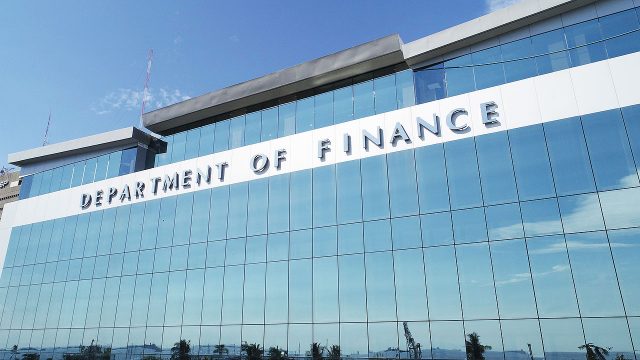
DoF clarifies determination of the National Tax Allotment shares for LGUs

DOF.GOV.PH

The Department of Finance (DoF) has reaffirmed its commitment to transparency and strict compliance with the Supreme Court (SC) decision and relevant laws in determining the National Tax Allotment (NTA) shares for local government units (LGUs).

“We assure our LGUs that we are strictly adhering to transparency and accountability, especially with the principles set by the Supreme Court, in implementing the Mandanas-Garcia ruling. Nothing is shortchanged. We are very much welcome and open to having continued dialogues with our LGUs to help them strengthen their fiscal capacities and optimize resource utilization to deliver more and better services to Filipinos,” Finance Secretary Ralph G. Recto said.

The 2019 Mandanas-Garcia ruling of the SC, which took effect in 2022, increased the NTA shares of LGUs to 40% of all national taxes beyond those collected by the Bureau of Internal Revenue (BIR). This adjustment was intended to enhance the fiscal autonomy of LGUs by granting them a more substantial share of the national tax base.

In its decision, the SC ordered the Secretary of the DoF, the Secretary of the Department of Budget and Management (DBM), the Commissioners of the BIR and the Bureau of Customs (BoC), and the National Treasury, to include all national tax collections in the computation of the NTA base, “except those accruing to special purpose funds and special allotments for the utilization and development of the national wealth.”

In determining the deductions, the DoF is guided by the SC decision including Section 29 (3), Article VI and Section 7, Article X of the 1987 Constitution.

The Finance chief is set to meet the League of Cities this coming week to discuss the computation of the NTA.


Spotlight is BusinessWorld’s sponsored section that allows advertisers to amplify their brand and connect with BusinessWorld’s audience by publishing their stories on the BusinessWorld Web site. For more information, send an email to online@bworldonline.com.

Join us on Viber at https://bit.ly/3hv6bLA to get more updates and subscribe to BusinessWorld’s titles and get exclusive content through www.bworld-x.com.

China steps up policy measures to defend fragile yuan

REUTERS

SHANGHAI – China stepped up its policy measures on Monday to defend a weakening yuan by relaxing rules to allow more offshore borrowing and sending verbal warnings as the Chinese currency hovered around 16-month lows against a strong dollar.

The yuan has faced renewed depreciation pressures, weighed down by a triple-whammy of a broadly stronger greenback, falling Chinese yields and rising trade tensions with other economies.

The People’s Bank of China (PBOC) announced on Monday that borrowing limits would be raised to allow corporates to borrow more from abroad.

The ratio under its macro-prudential assessments (MPA) – determining the maximum a company can borrow relative to its net assets – would be raised to 1.75 from 1.5, with immediate effect.

The move was to “further improve the macro-prudential management of cross-border financing, continue to increase the sources of cross-border funds for enterprises and financial institutions, and guide them to optimise their asset-liability,” the PBOC said in a statement jointly issued with the foreign exchange regulator.

Separately, the China Foreign Exchange Committee planned to resolutely keep the yuan exchange rate basically stable at reasonable and balanced levels, the central bank said in another statement.

The committee is a forum under the sponsorship of the central bank and the foreign exchange regulator.

The committee also said that monetary authorities will increase FX market resilience and strengthen market management. They will also correct pro-cyclical market activities, deal with behaviours that disrupt market orders and prevent exchange rate overshooting risks.

And in Hong Kong, PBOC Governor Pan Gongsheng told the Asia Financial Forum on the same day that “China has the confidence, conditions and ability to maintain stable operation of the foreign exchange market.”

China will keep the yuan exchange rate basically stable at reasonable and balanced levels,” Pan reiterated.

These measures are “sending a signal to stabilise the yuan,” said Ken Cheung, chief Asian FX strategist at Mizuho Bank.

“But the actual impact on capital flows and exchange rate is relatively limited, due to the low cost of domestic financing.”

Cheung said regulators will continue to mainly use the daily midpoint fixing to stabilise the currency and guide market expectations.

China’s onshore yuan traded at 7.3315 per dollar as of 0247 GMT on Monday, not far from a 16-month low of 7.3328 hit on Friday. It has lost more than 3% to the dollar since U.S. President-elect Donald Trump won the election in November.

The central bank has been setting its official midpoint guidance on the firmer side of the key 7.2 level and stronger than market projections since mid-November. Traders and analysts widely interpret this as a sign of rising unease over recent yuan declines.

The PBOC said last week that it will sell 60 billion yuan worth of six-month yuan bills in Hong Kong on Jan. 15, the most since the central bank started such bill sales in the financial hub in 2018.

Selling these yuan bills will mop up liquidity in the market to reduce speculative bets against the yuan. — Reuters

Biden calls for immediate ceasefire in call with Netanyahu, White House says

US PRESIDENT Joseph R. Biden (left) meets with Israeli Prime Minister Benjamin Netanyahu (right) in Tel Aviv, Israel, Oct. 18, 2023. — MIRIAM ALSTER/POOL VIA REUTERS FILE PHOTO

WASHINGTON – U.S. President Joe Biden spoke on Sunday with Israeli Prime Minister Benjamin Netanyahu, the White House said, as U.S. officials race to reach a Gaza hostage and ceasefire deal before Biden leaves office on Jan. 20.

Biden and Netanyahu discussed efforts underway to reach a deal to halt the fighting in the Palestinian enclave and free the remaining hostages there, the White House said in a statement after the two leaders spoke by telephone.

Biden “stressed the immediate need for a ceasefire in Gaza and return of the hostages with a surge in humanitarian aid enabled by a stoppage in the fighting under the deal,” it said.

Netanyahu updated Biden on progress in the talks and on the mandate he has given his top-level security delegation now in Doha in order to advance a hostage deal, Netanyahu said in a statement.

The two leaders also discussed “the fundamentally changed regional circumstances following the ceasefire deal in Lebanon, the fall of the Assad regime in Syria, and the weakening of Iran’s power in the region,” the White House said.

Biden’s national security adviser Jake Sullivan told CNN’s “State of the Union” program earlier on Sunday that the parties were “very, very close” to reaching a deal, but still had to get it across the finish line.

He said Biden was getting daily updates on the talks in Doha, where Israeli and Palestinian officials have said since Thursday that some progress has been made in the indirect talks between Israel and militant group Hamas.

“We are still determined to use every day we have in office to get this done,” Sullivan said, “and we are not, by any stretch of imagination, setting this aside.”

He said there was still a chance to reach an agreement before Biden leaves office, but that it was also possible “Hamas, in particular, remains intransigent.”

During their call, Netanyahu also thanked Biden for his lifelong support of Israel and “the extraordinary support from the United States for Israel’s security and national defense,” the White House said.

Israel launched its assault in Gaza after Hamas fighters stormed across its borders in October 2023, killing 1,200 people and taking more than 250 hostages, according to Israeli tallies.

Since then, more than 46,000 people have been killed in Gaza, according to Palestinian health officials, with much of the enclave laid to waste and gripped by a humanitarian crisis, and most of its population displaced.

Vice President-elect JD Vance told the “Fox News Sunday” program in an interview taped on Saturday that he expects a deal for the release of U.S. hostages in the Middle East to be announced in the final days of the Biden administration, maybe in the last day or two.

President-elect Donald Trump, a staunch supporter of Israel, has strongly backed Netanyahu’s goal of destroying Hamas. He has promised to bring peace to the Middle East, but has not said how he would accomplish that. — Reuters

How one California man tried saving his block from wildfire

FLAMES rise from a beachfront home along the road to Malibu, as powerful winds fueling devastating wildfires in the Los Angeles area force people to evacuate, California, U.S. Jan. 8, 2025. — REUTERS

ALTADENA, California – Flames were licking his fence, he was choking on smoke, and bullets were whizzing by his leg. Despite it all, Tristin Perez never left his Altadena home during the deadly Eaton fire.

The 34-year-old carpenter felt he had no choice but to stay despite the life-threatening conditions. A police officer told him and his neighbors to evacuate early on Wednesday morning as the fire raced down the hillside above them.

Instead, Perez insisted on trying to save his property and his neighbors’ homes along El Molino Avenue. But he didn’t even have a garden hose. He ripped the filters from two water pitchers and doused the ground, his wooden fence and every ember he could reach.

“Your front yard is on fire, palm trees lit up – it looked like something out of a movie,” Perez told Reuters in an interview in his driveway. “I did everything I could to stop the line and save my house, help save their houses.”

His one-story yellow duplex survived. So did two more homes next door. Across the street, entire houses burned to the ground. A single brick chimney stood alone in the wreckage.

“When you look across the street… If I wasn’t here, that is what would have happened,” he said. “I felt so bad for them. It’s absolutely awful.”

Perez mourned the losses here. He moved to Altadena three years ago and rented his two-bedroom unit. He fell in love with the tranquil and tight-knit community of about 40,000 people north of Los Angeles, where neighbors are friendly and look out for each other.

As of late Saturday, officials said the Eaton fire was 15% contained, and that the fire threat remains high across the Los Angeles area. Overall, six simultaneous blazes that have ripped across Los Angeles County neighborhoods since Tuesday have killed at least 16 people and damaged or destroyed 12,000 structures.

Eleven of them were killed in the Eaton fire here. The death toll is expected to grow when firefighters are able to conduct house-to-house searches.

In Altadena, fire crews were walking house to house with shovels, looking for hot spots that were still burning. Sheriff’s deputies patrolled the streets and blocked residents from returning to their homes at checkpoints.

FAST-MOVING FLAMES
Perez provided a harrowing account of how the Eaton fire rapidly intensified early on Wednesday. The first indication something was wrong came on Tuesday evening. His neighbors were outside staring at a faint glow far in the distance.

“To be honest, I didn’t really consider it too much of a threat just because it was way out there,” he said.

Then the winds began to howl and blow toward them. The fire was coming right at them at alarming speed. “It looked like it was sprinting down a football field. It was flying,” Perez said.
Then he and his neighbors lost sight of the flames. Perez said that was the most nerve-wracking part of the night.

That soon changed. Looking up his street 200 yards away, entire homes and businesses were engulfed in flames. Perez told his neighbors to leave. “I was willing to go to the end. I saw the firefighters, everybody was already shorthanded, so I wanted to do my part,” he said.

Fire and law enforcement officials discourage people from staying at their homes during wildfires because it can put residents and first responders in danger.

But Perez felt he had a shot to fight off the flames because there was an empty, mostly dirt lot between him and the advancing fire. The downside was that his neighbors on the north side also stored boxes of ammunition on their property.

Soon explosions began erupting. Breathing became unbearable. Perez felt something whiz past his leg while standing in his yard. The fire had ignited the bullets stored next door, posing fresh danger.

“Bullets flying, gas tanks exploding, embers raining down, you can’t see anything,” Perez said.

He kept dousing his property for hours through the night. His home is still standing. Many others weren’t as fortunate as thousands of structures were destroyed around him.

‘HOW TO REBUILD’
Around the corner, Pablo Scarpellini stared at the burned ruins of his wife’s Spanish immersion preschool, Rayuela. The entire building had collapsed, and a small playground slide sat half-melted in the back.

“It’s devastating,” Scarpellini told Reuters. “But I’ve cried so much the last few days, now my vision is more of hope and trying to visualize how to rebuild it.”

He said his wife, Liliana Martinez, the preschool’s founder and director, was scrambling to find an alternative for her 15 students. “We’re doing as much as we can to relocate the kids,” he said.

Perez, wearing a black tank top and shorts, swept tree limbs and brush out of his driveway on Saturday while the front corner of his yard smoldered. His white picket fence had melted in several spots. Two palm trees in his front yard bore black scars at the top.

Perez has no power or running water. Firefighters stationed at a nearby hardware store let him use their equipment to charge his phone so he could tell a few family members and friends that he had survived. A downed power line was draped across his street as utility workers surveyed the widespread damage.

While firefighters made progress containing the Eaton fire through the weekend, Perez said he is preparing for the threat to return if the winds shift.

“Lord forbid anything happens, I will be ready,” he said. Perez also plans to volunteer for the community cleanup in the months ahead to help local restaurants and businesses reopen.
“This isn’t the end of Altadena. This is just turning the next chapter.” — Reuters

US, Japan, Philippines vow to deepen cooperation, Manila says

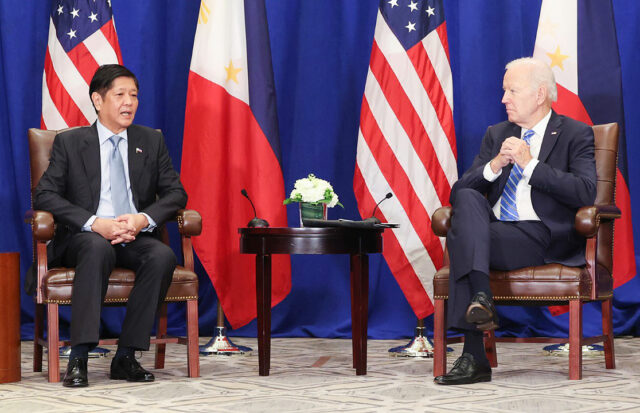
PRESIDENT Ferdinand R. Marcos, Jr. and US President Joseph R. Biden hold a bilateral meeting on September 22, 2022 in New York, USA. — OFFICE OF THE PRESS SECRETARY

MANILA (UPDATE) – Japan, the Philippines and the United States vowed to further deepen cooperation under a trilateral arrangement in the face of rising tensions in Asia’s waters, the three countries said following a call among their leaders.

Japanese Prime Minister Shigeru Ishiba, Philippine President Ferdinand Marcos Jr. and outgoing U.S. President Joe Biden met virtually on Monday morning Asian time. Marcos’ communications office said the leaders “agreed to enhance and deepen economic, maritime and technology cooperation”.

The call followed a first-of-its-kind summit meeting of Marcos, Biden and then Japanese Prime Minister Fumio Kishida in Washington last April to uphold international law and regional stability.

Biden, who will step down next Monday, was quoted as saying in Manila’s readout he is “optimistic” his successor, U.S. President-elect Donald Trump, would see the value of continuing the partnership.

“Simply put, our countries have an interest in continuing this partnership and institutionalizing our cooperation across our governments so that it is built to last,” Biden said.

Marcos said he is “confident” the three countries will sustain the gains in deepening their diplomatic ties.

The White House said in a statement the three leaders discussed China’s “dangerous and unlawful behaviour in the South China Sea” and agreed on the importance of continued coordination in the Indo-Pacific region.

Japan’s foreign ministry separately said in a statement the three leaders have opposed “unilateral attempts to change the status quo by force” in the East and South China Seas, without mentioning Beijing.

Japan and the Philippines – bound by bilateral defence treaties with the U.S. -are also both involved in separate territorial disputes with China in the East and South China Seas, respectively.

Marcos’ office said Biden also commended the Philippine leader for his diplomatic response “to China’s aggressive and coercive activities in the South China Sea”.

The Philippines last year ratified a military agreement with Japan that would ease the entry of soldiers into each other’s country for joint military exercises. The three countries’ coast guards also staged joint exercises in 2023.

A 2016 ruling of an international arbitral tribunal voided Beijing’s sweeping claims for the South China Sea, saying they had no basis under international law, a decision China rejects.

Tensions between China and the Philippines have escalated in the past two years over run-ins between their coast guards in the South China Sea. — Reuters

PHL growth seen above 6% until 2026

Balloon vendors walk through a street in Quezon City, Jan. 1, 2025. — MIGUEL DE GUZMAN, THE PHILIPPINE STAR

By Luisa Maria Jacinta C. Jocson, Reporter

THE PHILIPPINES’ gross domestic product (GDP) is expected to accelerate this year and in 2026 amid strong domestic demand, the United Nations (UN) said.

In its latest World Economic Situation and Prospects report, the UN said it expects the Philippine economy to expand by 6.1% in 2025 and 6.2% in 2026.

“The Philippines is one of the strongest growth performers among East Asian economies,” UN Department of Economic and Social Affairs Economic Affairs Officer Zhenqian Huang said in a follow-up e-mail.

“The anticipated sustained growth reflects robust domestic demand, ongoing public investments, and the positive effects of recent investment policy reforms, along with a vibrant labor market and a growing services sector.”

The UN’s forecasts are both within the government’s 6-8% growth target for this year and the next.

It noted that GDP growth likely averaged 5.6% in 2024, below the government’s 6-6.5% target.

For 2025, the Philippines is projected to be the second-fastest growing economy in the region, just after Vietnam (6.5%) and ahead of Cambodia (6%), Malaysia (4.6%), Thailand (3.1%) and Singapore (2.6%).

“In 2025 and 2026, economic growth in the Philippines is expected to be fueled by strong investment activity and robust private consumption,” Ms. Huang said.

“Monetary easing amid lower inflation will support domestic demand in the near term,” she added.

The Bangko Sentral ng Pilipinas (BSP) began its easing cycle in August, cutting interest rates by a total of 75 basis points (bps) last year. This brought the target reverse repurchase rate to 5.75%.

BSP Governor Eli M. Remolona, Jr. has signaled further cuts this year, citing that there is “still room to ease.”

Full-year inflation settled at 3.2% in 2024, in line with the BSP’s own forecast.

It also marked the first time that annual inflation fell within the central bank’s 2-4% target since 2021, when inflation averaged 3.9%.

Ms. Huang also noted “robust” remittance flows, which will help boost household spending.

Latest data from the central bank showed that cash remittances grew by 3% year on year to $28.3 billion in the January-October period.

“Despite ongoing fiscal consolidation, improved government revenue collection over the past decade has enabled sustained public spending on essential infrastructure to unlock long-term potential,” she said.

Latest data from the Bureau of the Treasury (BTr) showed the National Government’s (NG) budget deficit stood at P1.18 trillion in the 11-month period. Revenues jumped by 15.16% year on year to P4.11 trillion.

“Additionally, the global demand for AI (artificial intelligence)-related electronic products is expected to boost merchandise trade, while services trade will benefit from the ongoing recovery in international tourism.”

On the other hand, Ms. Huang flagged downside risks to the growth outlook.

“Increasing trade tensions, including the possibility of higher tariffs, could undermine merchandise trade performance,” she said.

US President-elect Donald J. Trump, who is set to take office next week, has pledged to impose a 10% universal tariff as well as a 60% tariff on Chinese goods.

“Current account deficits since the end of the pandemic make the economy susceptible to exchange rate volatility, especially if there are unexpected monetary policy shifts by major developed country central banks.”

She also noted how the country is vulnerable to climate shocks and natural disasters, which could lead to “significant economic and social losses.”

A recent study by the Asian Development Bank (ADB) showed the Philippines could potentially lose 18.1% of its GDP by 2070 due to climate change under a high emissions scenario.

Meanwhile, the UN expects headline inflation to remain steady at 3% this year until 2026.

“Inflation in the Philippines has been relatively benign and is projected to remain within the central bank’s target range in the near term,” Ms. Huang said.

This year, the BSP expects inflation to average 3.3%. Its risk-adjusted forecast is at 3.4%.

The downtrend in inflation will be mainly driven by easing price pressures on food, she said.

“While inflation is not a major policy concern at the moment, inflationary pressures are unlikely to dissipate entirely… Potential higher tariffs from trading partners, disruptions to supply chains and trade routes, and climate-related disasters could reignite upward pressure on prices,” Ms. Huang said.

Debt service bill surges in Nov.

BW FILE PHOTO

THE NATIONAL Government’s (NG) debt service bill surged year on year in November as both interest and amortization payments rose, data from the Bureau of the Treasury (BTr) showed.

The NG’s debt service bill soared by 65.3% to P93.704 billion in November from P56.674 billion in the same month a year ago.

Month on month, debt servicing fell by 56.8% from P216.85 billion in October.

The debt service refers to payments made by the National Government on its domestic and foreign debt.

Interest payments accounted for the bulk or 71% of debt payments in November.

Data from the BTr showed interest payments jumped by 37.3% to P66.653 billion in November from P48.548 billion in the previous year.

Interest paid on local debt spiked by 38.8% to P48.929 billion in November from P35.257 billion in the same month in 2023.

Domestic interest payments were composed of P29.512 billion in fixed-rate Treasury bonds, P16.872 billion in retail Treasury bonds and P2.017 billion in Treasury bills (T-bills).

Interest paid to foreign creditors rose by 33.4% year on year to P17.724 billion in November from P13.291 billion.

Treasury data showed amortization payments more than tripled (232.9%) to P27.051 billion in November from P8.126 billion in the same month last year.

Principal payments on domestic debt skyrocketed to P18.297 billion from P96 million in the year prior.

On the other hand, principal payments on external debt increased by 9% to P8.754 billion from P8.03 billion in 2023.

11-MONTH DEBT SERVICE
In the January-November period, the NG debt service bill jumped by 27.3% to P1.95 trillion from P1.53 trillion in the same period last year.

Amortization payments climbed by 29.2% to P1.25 trillion as of end-November from P967.09 billion a year ago. It accounted for 63.9% of the overall debt service bill.

Broken down, principal payments on domestic debt stood at P1.02 trillion, while external payments were recorded at P230.973 billion.

Meanwhile, interest payments rose by 24.3% to P705.334 billion in the 11-month period from P567.655 billion a year ago.

Interest payments on domestic debt amounted to P502.389 billion, while those on external debt stood at P202.945 billion.

“The sharp year-on-year increase in the NG’s debt servicing bill could be attributed to higher debt maturities,” Rizal Commercial Banking Corp. Chief Economist Michael L. Ricafort said in a Viber message.

He also cited relatively elevated interest rates and a weaker peso that drove up foreign debt payments.

The peso closed at P58.62 against the greenback at the end of November, depreciating by 52 centavos from its P58.1 finish as of end-October.

The local unit also fell to the record low P59-a-dollar level twice during the month, on Nov. 21 and 26.

“This also reflected the wider NG budget deficit for the period that required more NG borrowings, especially some short-term borrowings such as Treasury bills,” he added.

Separate BTr data showed the budget gap more than doubled to P213 billion in November from P93.3 billion a year ago.

This brought the 11-month fiscal deficit to P1.18 trillion, wider than the P1.11-billion shortfall last year. It also represented 79.29% of the P1.5-trillion deficit ceiling for 2024.

“NG debt increased sharply since the COVID-19 (coronavirus disease 2019) pandemic since 2020 and some of which already started to mature, thereby leading to higher debt servicing costs,” Mr. Ricafort added.

Latest data from the BTr showed the NG’s outstanding debt rose to a fresh high of P16.09 trillion as of end-November.

The debt stock is expected to have reached P16.06 trillion at the end of 2024 and to P17.35 trillion for this year. — Luisa Maria Jacinta C. Jocson

DBP says it will seek regulatory relief this year

BW FILE PHOTO

THE DEVELOPMENT Bank of the Philippines (DBP) will again request for regulatory relief this year as it seeks to boost its capital position.

“Just for comfort, we will seek regulatory relief. The same regulatory relief we sought last year,” DBP President and Chief Executive Officer Michael O. de Jesus told reporters late on Friday.

“Even though I said we will meet all the capital ratios, we still would seek comfort.”

The DBP is currently working with the Bangko Sentral ng Pilipinas (BSP) on this request, he added.

The DBP and Land Bank of the Philippines (LANDBANK) had sought regulatory relief from the central bank following their contributions to the Maharlika Investment Corp. (MIC).

DBP and LANDBANK were mandated to contribute P25 billion and P50 billion, respectively, as the initial seed capital for the MIC. The state lenders remitted their contributions in September 2023.

“It’s annual. Some ratios are for four years, some are every year. There are like three, so the annual, we will seek relief for that, the capital adequacy ratio (CAR), I think,” Mr. De Jesus said.

In a recent report, the International Monetary Fund (IMF) called for the restoration of capital for the two state banks after their contributions to the Maharlika fund.

The IMF noted the importance of capital restoration and exiting regulatory relief “as soon as possible.”

However, Mr. De Jesus assured that the bank will meet its capital requirements and book a higher net income for 2024 compared to the year prior.

“This year, you will see, we will meet all the minimum capital ratios based on the results of 2024. Having said that, we need to increase our capital. There’s no question.”

“That’s why we’re working with the Congress now on the amendment to the DBP charter,” he added.

The Senate bill seeking to amend the DBP’s charter was approved on final reading in September, while the House version is still up for second reading approval. Under the measure, the bank’s authorized capital stock will be raised to P300 billion from P35 billion.

“We will meet the minimum, but of course we don’t just want to meet the minimum, we want to exceed it, so we need to increase our capital. I’m not saying it has to be done this year, but over time,” he added.

“Increasing the authorized capital is good. The charter hasn’t been amended in more than 30 years. This would be very good for the institution, so we can fulfill our mandate of developmental banking.”

The new charter would also allow the state bank to conduct an initial public offering (IPO). However, Mr. De Jesus said DBP is unlikely to go for an IPO this year. 

“Definitely not this year. Before you tap the markets, you want to increase the value, make sure it’s run well.”

The DBP will also be requesting for dividend relief this year, Mr. De Jesus said.

“We’ll also seek that for this year. Every year. We’ve been doing that dividend relief for the past, I think six, seven years so we can build our capital. We seek that from Malacañang.”

In 2023, President Ferdinand R. Marcos, Jr. signed an executive order exempting both banks from their dividend obligations as compensation for providing seed capital to the MIC.

LANDBANK: NO NEED FOR EXTENSION
Meanwhile, LANDBANK said it is not planning to request for an extension of regulatory relief.

“We have had a discussion before that the regulatory relief was actually good for two or three years and that was really viewed from our perspective as a buffer,” LANDBANK President and Chief Executive Officer Lynette V. Ortiz told reporters on Friday.

She said there is “no need” for the relief extension amid the bank’s sound financials.

“We have no need for that, and this is despite the P32 billion of dividends that we remitted to the government just last year. All of that was taken into consideration — P50 billion of Maharlika, P30 billion of dividends. And if you see the financials, of course, you still meet our Common Equity Tier 1 and CAR.”

She also noted that the state bank made “decent” income this year.

“This year, we’ve also done a lot of assessments around risks, risk management. Our balance sheet is very prudent and so we’ve had to ensure that our risks, our provisions, are done well and sufficient.” 

“The numbers relative to the year before are slightly lower. But if you look at it line by line, our loans, our investments, remain very strong.”

The bank is also looking to tap into the debt markets this year, with a special focus on sustainability.

“What we’d like actually is to really further grow our green portfolio, our sustainability portfolio, and we want to match it with bonds that are either green, blue, or sustainable,” she added. — Luisa Maria Jacinta C. Jocson


ADVERTISEMENT
ADVERTISEMENT