Home Blog Page 2163

Net external liabilities fall 6.5% quarter on quarter at end-June
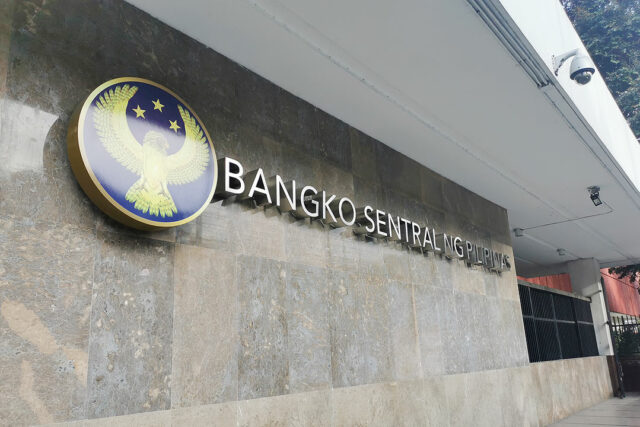
Bangko Sentral ng Pilipinas main office in Manila. — BW FILE PHOTO

THE Philippines’ net external liability position declined 6.5% at the end of June, the Bangko Sentral ng Pilipinas (BSP) said.

Citing preliminary data, the BSP said the international investment position (IIP) was a net external liability of $55.2 billion at the end of June, down 6.5% from the $59.1 billion net liability at the end of March.

“This development was driven by the 1.7% contraction in the country’s external financial liabilities, which outpaced the 0.5% decline in external financial assets,” the BSP said.

The IIP is an indicator of the value and composition of a country’s financial assets and liabilities. It gauges an economy’s external exposure.

External financial liabilities dropped 1.7% to $298.7 billion at the end of June, from $303.9 billion a quarter earlier.

“This development was primarily attributable to the recorded declines in net foreign portfolio investments (FPI) in the form of equity securities to $34.8 billion (by 11.3% from $39.2 billion) and net foreign direct investment (FDI) in the form of equity capital to $58.2 billion (by 6.5% from $62.2 billion), mainly on account of downward valuation adjustments.”

Year on year, external financial liabilities rose 6.4% from $280.7 billion.

The BSP attributed this to the “collective increases in the nonresidents’ net outstanding loans extended to residents by 16.1%, nonresidents’ net outstanding direct investments in debt instruments by 10.9%, and nonresidents’ net outstanding investment in portfolio debt securities by 11.2%.”

Other sectors accounted for 59% or $176.3 billion of total external financial liabilities at the end of June. The rest were held by the National Government and banks, with financial liabilities worth $78.9 billion (26.4%) and $39.8 billion (13.3%), respectively.

The BSP held 1.3% of all external financial liabilities at $3.8 billion.

Meanwhile, external financial assets dipped 0.5% to $243.5 billion at the end of June from $244.8 billion at the end of March.

The BSP attributed the decline in financial assets to the combined decreases in the outstanding value of residents’ net portfolio investments in foreign debt securities to $31.4 billion (by 6.2% from $33.4 billion), net direct investments in debt instruments to $41.9 billion (by 1.7% from $42.6 billion), and residents’ net placements of foreign currency and deposits in foreign banks to $14.4 billion (by 3.1% from $14.9 billion). — Luisa Maria Jacinta C. Jocson

Xiamen-based companies express interest in PHL investments — BoI

XINHUATHAI.COM

FIVE companies from Xiamen in southern China have expressed interest in investing in Philippine electric vehicle (EV) manufacturing, infrastructure, green metals, and mining projects, the Board of Investments (BoI) said.

In a statement on Tuesday, the BoI said that the companies indicated their interest in investing in the Philippines during a roundtable meeting in Xiamen last month.

A roundtable was also conducted in Beijing in conjunction with the ASEAN-China Center, the Power Battery Applications Committee of China Industrial Association of Power Sources, the China Overseas Development Association, and the RCEP Industry Cooperation Committee.

The BoI led a six-day investment promotion roadshow in China to attract investment that it hopes will position the Philippines as a regional hub for smart and sustainable manufacturing.

“Throughout the six days of the Investment Promotion Roadshow, we generated significant interest from various sectors,” Trade Undersecretary and BoI Managing Head Ceferino S. Rodolfo.

“Events like this showcase the Philippines’ proposition as the regional hub for smart and sustainable manufacturing and services industries that will ultimately generate green and sustainable jobs,” he added.

The BoI led the delegation at the 2024 China International Fair for Investment and Trade (CIFIT), which was focused on international investment promotion and economic and technological cooperation.

“For this year’s CIFIT, the Philippines highlighted the country’s investment promotion strategy and advantages as an investment destination for Chinese enterprises,” said the BoI.

“From Sept. 8 to 11, the Philippine booth saw a significant stream of visitors with business interests in renewable energy, new energy vehicles, food manufacturing, solar photovoltaic manufacturing, and trading activities,” it added.

Throughout the mission, the BoI and the Philippine Trade and Investment Center in China engaged with a total of 21 companies in renewable energy equipment manufacturing, EV manufacturing, and agribusiness.

So far this year, China was the 7th largest investment source for the BoI. It accounted for P1 billion of the investment approvals in the nine months to September, up 237% from a year earlier. — Justine Irish D. Tabile

China’s AIIB commits $100 million to support Asia-Pacific net-zero projects

REUTERS

BEIJING-BASED Asian Infrastructure Investment Bank (AIIB) has committed $100 million to help Asia-Pacific countries adopt low-carbon technologies and practices.

The AIIB said in a statement that $75 million was committed to the Actis Asia Climate Transition Fund, while $25 million will go towards co-investment.

“This marks AIIB’s first climate transition-themed fund dedicated to emerging Asia and highlights the Bank’s commitment to sustainable development and climate change mitigation in the region,” it said.

The fund will be invested in renewable energy infrastructure, energy solutions, and sustainable transportation in the region.

In particular, the commitment will support climate transition initiatives in India, Indonesia, Malaysia, China, the Philippines, Thailand, and Vietnam.

“Our commitment to the Actis Asia Climate Transition Fund underscores AIIB’s dedication to financing sustainable infrastructure and fostering low-carbon solutions in Asia,” AIIB Acting Vice-President Rajat Misra was quoted as saying.

“This partnership aligns with our climate strategy and sets a precedent for future investments aimed at achieving net-zero emissions while promoting gender equality in the energy sector.”

Separately, the Department of Finance (DoF) said the AIIB pledged to support Philippine infrastructure projects.

“The DoF was able to secure the Bank’s commitment to support the Philippine government in accessing grants through the Multilateral Cooperation Center for Development Finance (MCDF) Finance Facility with the AIIB as an implementing partner,” it said in a statement.

The MCDF is a multilateral financial mechanism promoting high-quality infrastructure and connectivity investments in developing countries.

The AIIB also affirmed the Philippine government’s call to assign specific country officials to improve its partnerships, the DoF said.

“Recognizing that project implementation delays equate to development denied, we request even stronger support from the Bank through regular comprehensive portfolio reviews to assist the government,” Finance Undersecretary Joven Z. Balbosa was quoted as saying. 

The DoF also cited the need for AIIB project teams to promptly identify project implementation issues, come up with potential solutions and strategies, and facilitate closer monitoring and coordination among relevant stakeholders.

Big-ticket projects supported by the AIIB include the Manila Flood Management project and the Bataan-Cavite Interlink Bridge. The bank co-finances these projects with the World Bank and the Asian Development Bank (ADB), respectively.

The government is also processing AIIB loans for key infrastructure projects like the Laguna Lakeshore Road Network Project – Phase 1 and the Metro Manila Rail Transit Line 4 (MRT4) Project, both co-financed with the ADB.

The bank also supports the Facility for Accelerating Studies for Infrastructure (FAST-Infra), which is expected to be signed this year. FAST backs the formulation of a transport infrastructure master plan. — Beatriz Marie D. Cruz

Dairy breeder herd to be expanded via imports

REUTERS

THE National Dairy Authority (NDA) said on Tuesday that it is looking to expand the herd at its stock farms ahead of plans to boost overall dairy animal numbers.

“The NDA will be aggressively importing cattle for our stock farms for the herd to multiply under the care of NDA. The acclimatized offspring of these dairy cattle will be the ones to be distributed to our dairy farmers,” Administrator Marcus Antonius T. Andaya said in a statement.

Mr. Andaya added that five new stock farms are set to be completed by the end of the year with operations set to launch by early 2025. They will be located in Nueva Ecija, Bohol, Bukidnon, Cotabato and Agusan Del Sur.

The NDA said that the new stock farms will eventually help increase the domestic dairy herd to about 80,000 head.

He said that the NDA is also focusing on increasing milk yields and providing training for farmers.

The NDA aims to increase dairy production to 80 million liters per year by 2028, equivalent to about 5% of milk demand. The agency operates in 68 provinces, assisting almost 2,500 farmers and 1,324 dairy organizations.

The Philippines can meet less than 1% of its milk demand through domestic production, with the remainder needing to be imported.

Dairy imports are forecast to increase 7.3% in 2024 to 2.49 million metric tons of milk equivalent, according to a report by the Food and Agriculture Organization of the United Nations.

In the first half, dairy imports rose 12.9% to 1.65 million metric tons. The Philippines typically imports skim milk powder, followed by other milk powders and ready-to-drink milk. — Adrian H. Halili

Minority legislators seek to realign P673B in confidential, intel funds

BW FILE PHOTO

MINORITY LEGISLATORS at the House of Representatives called for P673 billion worth of budget realignments to support agriculture programs and wage subsidies.

The Makabayan bloc proposed to reduce allocations for so-called confidential and intelligence funds to generate funding for the desired programs.

The legislators were lobbying for the changes to the proposed P6.352-trillion budget for next year, proposing also to realign funding from unprogrammed appropriations for foreign-assisted projects and road development projects of the Department of Public Works and Highways.

The proposal was submitted last week to a House small committee, which is responsible for overseeing individual amendments to the budget bill.

The Makabayan bloc members are Party-list Reps. Arlene D. Brosas, Raoul Danniel A. Manuel, and France L. Castro.

The proposed realignments “serve the best interests of our people,” according to a document outlining the proposed reallocations obtained by BusinessWorld.

The House approved House Bill No. 10800 or the General Appropriations Bill on final reading last week, ahead of its month-long break and 58 days after receiving the spending plan from the executive branch.

It adopted committee amendments to the spending plan during plenary deliberations while creating a small committee to address individual amendments to the budget bill, allowing the chamber to meet its self-imposed September deadline.

The Department of Agriculture, Sugar Regulatory Administration, and the National Food Authority (NFA) are to receive P390 billion in additional funding under Makabayan bloc’s budget proposal. Of this, P242 billion will go towards agricultural production subsidies for farmers, with P101 billion to fund the procurement of palay (unmilled rice) by the NFA.

“In order to help the farmers and fisherfolk affected by increasing costs of farm inputs, rising fuel prices, and calamities and typhoons, we propose to allocate funding for production subsidies,” according to the document.

The government’s rice development program’s budget would more than double under the Makabayan proposal to P90 billion from P31.39 billion.

The Labor, Trade and Migrant Workers departments are to collectively receive an additional P100.7 billion to boost wage subsidies and cash assistance programs under the proposal.

The Makabayan legislators backed an additional P40 billion for the Department of Trade and Industry to support wage subsidies for small businesses. The proposed subsidy program is to help keep small businesses stay afloat by providing P8,000 per worker.

“The Wage Subsidy Program for MSMEs (micro-, small- and medium-sized enterprises) in the 2025 budget (would) shoulder up to 70% of the minimum wage of workers in such enterprises,” according to the proposal.

The legislators also proposed P47.6 billion for the Labor department for a one-time cash assistance program worth P20,000 for the unemployed, as well as an additional P58.8 billion for the Health department to increase funding for public hospitals.

“To deliver the much-needed services to the people and to address the high household out-of-pocket expenses, we need to give sufficient budgets to the public hospitals,” the legislators said. — Kenneth Christiane L. Basilio

SB Corp., PFA tout franchising as path to creating more jobs


THE Department of Trade and Industry (DTI) said its financing unit, the Small Business Corp., has partnered with the Philippine Franchise Association (PFA) to promote franchising as a means of boosting entrepreneurship and job creation.

Acting Trade Secretary Cristina A. Roque said a memorandum of agreement (MoA) signed with the PFA aims to encourage micro, small, and medium enterprises to explore franchising.

“The best way to recover, bounce back, and grow is to get into franchising … with franchising, the chances of success are higher than failure because (the business concept) has been tested,” she added.

As part of the partnership, SB Corp. President and Chief Executive Officer Robert C. Bastillo said the company will be launching new loan programs this month, including a franchise funding facility.

“We will announce that (the facility) is open and that anybody can avail of our loan programs. And since we signed this MoA, it will speed things up,” Mr. Bastillo said.

“The guidelines are ready, so all we have to do really is launch it. And our plan is that during the launch, we will invite 50 potential franchisees, and process (their loan applications) on the same day,” he said.

“We will have our credit committee here as well to deliberate on the approval within the same day,” he added.

According to Mr. Bastillo, SB Corp. is ready to allocate up to P1 billion for the franchise funding program.

PFA Chairman Chris Lim said the partnership will help the Philippines achieve its goal of being a middle-income country by 2040.

“We love this MoA because it really tackles the different aspects that can help us do this. Firstly is education, not just locally but also for our overseas Filipino workers (OFWs), where I think there’s a lot of untapped value,” he said.

“We want to really create jobs for OFWs so they can come back here to be with their families,” he added.

He said SB Corp. funding will go a long way in addressing the lack of access capital for many entrepreneurs.

“We also know that the DTI mentors a lot of suppliers all over the Philippines. And we want to be able to link up with them, together with franchisors and franchisees,” he said.

“The last part of the MoA was really (about) how we can develop more global Filipino brands… because we know that it will also bring in investments and dollar income,” he said. — Justine Irish D. Tabile

PHL sustainable finance framework leaves room for interpretation — IEEFA

RAWPIXEL/FREEPIK

THE Philippine framework on sustainable finance is prone to subjective interpretations in the absence of quantitative criteria, according to the Institute for Energy Economics and Financial Analysis (IEEFA).

According to a report written by Ramnath N. Iyer, IEEFA’s sustainable finance lead for Asia, the Philippine and Malaysian frameworks take a largely “principles-based approaches.”

“The absence of any quantitative criteria risks rendering assessments based on such taxonomies insubstantial and unlikely to be considered internationally interoperable,” according to the report.

The frameworks contain classifications such as “high emitting, transitioning, or low emitting,” making them subject to interpretation, IEEFA said.

“Consequently, market players may have disagreements due to the ambiguous guidelines,” according to the report.

The taxonomy for sustainable finance lays down criteria for determining the sustainability attributes of various economic and financing activities, classifying them as eligible or ineligible, the IEFFA said.

“The growing awareness and use of sustainable finance in recent years has led to demands for organized methodologies or taxonomies to classify ‘sustainable’ activities, the financing of which could then qualify as sustainable finance,” it said.

The report examined taxonomies or documents that substitute for taxonomies in Asia, primarily in Singapore, Hong Kong, Indonesia, Thailand, the Philippines, Malaysia, South Korea, China, as well as the Association of Southeast Asian Nations (ASEAN) taxonomy.

The Philippine taxonomy covers the energy, transport, waste, industry, and agriculture sectors, the IEEFA said.

Compared to Singapore, which was considered to have the most comprehensive taxonomy, other countries such as the Philippines, Malaysia, and Indonesia have adopted “less rigorous approaches.”

The report said that Singapore’s taxonomy covers “a broad range of sectors with detailed technical criteria to help assess the eligibility of any activity.”

The ASEAN Taxonomy for Sustainable Finance, along with the frameworks of Singapore, Thailand, Indonesia, and the Philippines, implemented a three-tiered system to categorize activities into green (compliant), amber (transitioning), and red (non-compliant).

“A comprehensive taxonomy needs quantitative or logical criteria based on accepted science to classify activities into different categories for clarity, credibility, and avoidance of greenwashing,” the report said.

The IEEFA said that “well-designed taxonomies can effectively guide investments toward environmentally beneficial activities and foster a sustainable financial ecosystem, ensuring the transition to a greener economy is accelerated, effective, and equitable.” — Sheldeen Joy Talavera

UN estimates funding need of $743M to achieve PHL dev’t framework goals

PHILSTAR FILE PHOTO

THE United Nations (UN) said it needs about $743 million until 2028 to support human capital investments, job-quality improvements, and accelerated climate action in the Philippines.

The targeted projects fall under the 2024-2028 UN Sustainable Development Cooperation Framework, which is designed to help the Philippines achieve its national development priorities.

“The current value of the framework sits at around… $743 million, so this is what we call like the required resources to do the work that has been set up,” Matija Kovač, head of office at the UN Resident Coordinator, said at a briefing on Tuesday.

“At this stage, a little bit less than half is actually secured,” he added.

Mr. Kovač noted that the estimate cited is the funding requirement as of April and is subject to revision by year’s end.

The framework focuses on three strategic priorities: human capital development; sustainable economic development, decent work, innovation; and climate action, environmental sustainability, and disaster resilience.

For 2024, the Philippines will need $231 million, with $179 million available and $52 million yet to be sourced.

The country will need $158 million in 2025, $143 million in 2026, $120 million in 2027, and $92 million in 2028.

Between 2024 to 2028, the UN has obtained around $342 million to fund the implementation of its country strategy, Mr. Kovač said.

The UN estimates that around 30% of the secured funding comes from multi-partner funds, while 28% comes from bilateral sources like Australia, Japan and South Korea, 20% sourced from multilateral partners, and 10% from core and domestic resources.

“This is an investment and we are mobilizing resources, and although we still have a gap, the likelihood of getting these figures is very high,” Gustavo González, UN Resident Coordinator and Humanitarian Coordinator, told the briefing.

Leila Saiji Joudane, Country Representative for the UN Population Fund Philippines, said the UN has secured 72% of the $120 million for human capital development projects.

This will fund better healthcare access; school feeding; alternative learning systems, and comprehensive sexuality education; child protection systems; and public services and digitalization, among others.

Ms. Joudane cited the importance of investing in human capital development, with 60% of the Philippine population deemed in the “productive” age cohorts. — Beatriz Marie D. Cruz

Peso drops vs dollar on Powell comments

BW FILE PHOTO

THE PESO weakened against the dollar on Tuesday following cautious comments from the US Federal Reserve chief and amid the conflict in the Middle East.

The local unit closed at P56.145 per dollar on Tuesday, declining by 11.5 centavos from its P56.03 finish on Monday, Bankers Association of the Philippines data showed.

The peso opened Tuesday’s session weaker at P56.20 against the dollar. Its intraday best was at P56.09, while it dropped to as low as P56.32 versus the greenback.

Dollars exchanged surged to $2.22 billion on Tuesday from $1.29 billion on Monday.

The peso dropped as the dollar was stronger after cautious remarks from Fed Chair Jerome H. Powell and amid the escalating conflict in the Middle East, a trader said by phone.

Mr. Powell’s comments were in contrast to the Bangko Sentral ng Pilipinas’ (BSP) chief’s dovish tone, which put pressure on the peso, Rizal Commercial Banking Corp. Chief Economist Michael L. Ricafort said in a Viber message.

The US dollar rallied broadly on Tuesday after Mr. Powell pushed back against bets on more supersized interest rate cuts, Reuters reported.

Mr. Powell adopted a more hawkish tone in a speech at a conference in Tennessee, saying the world’s biggest central bank would likely stick with quarter-percentage-point interest rate cuts moving forward.

“This is not a committee that feels like it is in a hurry to cut rates quickly,” he said.

Traders remain certain that the Fed will cut again at the next policy setting meeting in November, but slashed expectations for a 50-basis-point (bp) reduction to 35.4% from 53.3% a day earlier, according to CME Group’s FedWatch Tool.

The Fed kicked off its easing cycle with a larger-than-expected half-point reduction last month, bringing its target rate to the 4.75%-5% range.

The dollar index rose 0.1% to 100.87 as of 0403 GMT, after pushing 0.3% higher on Monday, when it posted a third successive monthly decline, with a near 1% fall in September.

The dollar was up 0.3% at 144.01 yen, after whipsawing from as high as 146.495 yen on Friday to as low as 141.65 yen on Monday.

Meanwhile, BSP Governor Eli M. Remolona, Jr. last week said the Monetary Board could slash benchmark interest rates by 50 bps more this year via two 25-bp cuts each at its next two meetings scheduled for Oct. 16 and Dec. 19.

The BSP kicked off its easing cycle in August, cutting its policy rate by 25 bps to 6.25% from the over 17-year high of 6.5%.

For Wednesday, the trader sees the peso moving between P56 and P56.50 per dollar, while Mr. Ricafort expects it to range from P56.05 to P56.25 — A.M.C. Sy with Reuters

Stocks rebound after strong factory activity data

BW FILE PHOTO

PHILIPPINE SHARES recovered on Tuesday on strong factory activity data and also buoyed by gains on Wall Street overnight.

The Philippine Stock Exchange index rose (PSEi) by 1.48% or 107.67 points to end at 7,380.32 on Tuesday, while the broader all shares index climbed by 1.14% or 44.68 points to 3,963.36.

“Local shares ended Tuesday in positive territory, supported by the strong performance of Philippine factories,” Regina Capital Development Corp. Head of Sales Luis A. Limlingan said in a Viber message.

The S&P Global Philippine Manufacturing Purchasing Managers’ Index (PMI) rose to 53.7 in September from 51.2 in August. A PMI reading above 50 means improved operating conditions from the previous month, while a reading below 50 shows deterioration.

The September manufacturing PMI was the highest in over two years or since the 53.8 posted in June 2022.

“The local market bounced back this Tuesday… The positive spillovers from Wall Street amid the rate cut cues from US Federal Reserve Chair Jerome H. Powell helped the market in its rise today,” Philstocks Financial, Inc. Senior Research Analyst Japhet Louis O. Tantiangco said in a Viber message.

US markets closed higher on Monday. The Dow Jones Industrial Average Index rose 0.041% or 17.15 points to 42,330.15; the S&P 500 Index gained 0.42% or 24.31 points to 5,762.48; and the Nasdaq Composite Index increased 0.38% or 69.58 points to 18,189.17.

Investor focus has centred around the pace of rate cuts from the Fed after the US central bank kick-started an easing cycle last month with a 50-basis-point (bp) cut, Reuters reported.

Mr. Powell indicated on Monday that the US central bank would likely stick to quarter-percentage-point cuts henceforth after new data boosted confidence in economic growth and consumer spending.

“Investors appreciated the possibility of reserve requirement ratios (RRR) being brought down to 0% within Bangko Sentral ng Pilipinas (BSP) Governor Eli M. Remolona, Jr.’s term,” Mr. Tantiangco added.

The BSP last month announced that it would reduce the RRR for universal and commercial banks and nonbank financial institutions with quasi-banking functions by 250 bps to 7% from 9.5% effective on Oct. 25.

All sectoral indices closed higher on Tuesday. Property rose by 2.36% or 69.17 points to 2,999.80; holding firms surged by 1.75% or 107.73 points to 6,257.88; financials went up 1.44% or 33.08 points to 2,330.70; services gained 0.92% or 20.71 points to end at 2,251.97; industrials climbed by 0.67% or 65.60 points to 9,776.28; and mining and oil inched up by 0.6% or 52.13 points to 8,727.76.

Value turnover declined to P6.04 billion on Tuesday with 1.13 billion shares changing hands from the P7.22 billion with 1.1 billion issues traded on Monday.

Advancers outnumbered decliners, 124 to 73, while 60 names were unchanged.

Net foreign buying rose to P463.82 million on Tuesday from P87.71 million on Monday. — R.M.D. Ochave with Reuters

CSB Blazers barely defeat SSC-R Stags, 96-94, in overtime thriller

BLAZER’S Tony Ynot in action

Games on Friday
(Filoil EcoOil Arena)
12 p.m. – Mapua vs AU
2:30 p.m. – LPU vs UPHSD

IF THERE EVER was a win where one still feels bad, this one has got to be it for coach Charles Tiu and his College of St. Benilde (CSB)Blazers.

“This is probably the worst win in my life,” said Mr. Tiu following his team’s 96-94 overtime escape against a stubborn San Sebastian College-Recoletos (SSC-R) on Tuesday that kept College of St. Benilde at the helm in NCAA Season 100 at the Filoil EcoOil Arena.

“I’m really, really mad. That’s an embarrassment. We’re a joke right now. You give up 31 turnovers.. We’re lucky we got away with the win,” said Mr. Tiu, whose charges improved to 6-1.

Mr. Tiu’s anger can be sourced to his wards blowing a 26-point third-quarter lead that almost led to their defeat.

As punishment, Mr. Tiu said he would put his players into hell during Friday’s resumption of practice.

“We’ll practice hard and kill them tomorrow (Friday) probably,” he said.

Tony Ynot stepped up in overtime where he scored five of his team-best 23 points, which he garnished with eight rebounds and the same number of assists that somehow made up for his six turnovers.

“We relax in the fourth quarter,” said an apologetic Mr. Ynot.

Apart from Mr. Ynot, Justine Sanchez and Jhomel Ancheta helped save what had been a terrible day for the Blazers.

After Raymart Escobido nailed a booming triple that gave SSC-R a 94-92 lead with a little over a minute to go, Mr. Sanchez responded with a bucket of his own to tie it at 94 while Mr. Ancheta, back after a one-game ban, parted the red sea and scored on a lay-up with six seconds to go that proved to be the dagger.

The Stags had one chance to snatch the win after Mr. Escobido found himself on the exact same area where he buried a triple a few plays earlier but he went cold feet and bumbled his attempt as time expired.

SSC-R fell to 2-6. — Joey Villar


The scores:

First Game

CSB 96 – Ynot 23, Liwag 17, Sanchez 8, Torres 8, Eusebio 7, Turco 6, Morales 6, Ancheta 5, Cometa 4, Ondoa 4, Cajucom 3, Jarque 3, Sangco 2, Oli 0

SSC-R 94 – Escobido 29, Are 20, R. Gabat 12, Felebrico 9, Aguilar 9, L. Gabat 4, Ricio 3, Barroga 2, Velasco 2, Suico 2, Lintol 2, Pascual 0, Cruz 0

Quarter scores: 31-20; 58-37; 78-61; 87-87 (OT); 96-94

UP tests mettle of UST; red-hot UE faces Ateneo

Games on Wednesday
(Smart Araneta Coliseum)
11:30 a.m. – UST vs UP (women)
1:30 p.m. – UE vs Ateneo (women)
4:30 p.m. – UST vs UP (men)
6:30 p.m. – UE vs Ateneo (men)

TWO of the hottest teams step on the gas to solidify their places inside the magic four at the tailend of the UAAP Season 87 men’s basketball first elimination round.

Host and unbeaten University of the Philippines (UP) tests the mettle of the retooled University of Santo Tomas (UST), while red-hot University of the East (UE), on a three-game rampage, want no let-up against the struggling Ateneo de Manila University side on Wednesday at the Smart Araneta Coliseum.

The Maroons, at 5-0, are the only unbeaten team in the league with double-digit wins against all opponents, making them the heavy favorites at 4:30 p.m. even against the Tigers (3-2) who have shown growth by leaps and bounds from a bottom-place finish last season.

For their part, the Warriors (3-2) at 6:30 p.m. eye to add the Blue Eagles (1-4) to their kill list headlined by the reigning champion De La Salle University Archers, whom they stunned with a 75-71 win last week.

But UP is for more than just taming Santo Tomas, priming itself up for a heavyweight finals rematch with second-running La Salle this weekend to end the first round.

“We’re not gonna put our minds on undefeated situation, but rather, we’re just gonna tackle what is infront of us,” said coach Goldwin Monteverde

“That’s UST. But knowing them now, compared from last year, with a good program, definitely, they’re better now. And I think each position, they have materials to really compete.”

Sharing the spotlight are the Warriors, who despite losing ace Rey Remogat to offseason transfer, have proved their capability none bigger than a giant win against the reigning champions.

Aside from that, UE also claimed the scalp of contender and last year’s semifinalist National University, 57-51, for a good momentum entering the Eagles’ nest.

“I consider my boys still young but the boys are starting to have that winning character. We cannot afford to relax, especially we’re gonna face Ateneo,” vowed UE mentor Jack Santiago.

Underdogs and out of form following their losses against La Salle and Far Eastern University, respectively, Santo Tomas and Ateneo are unfazed especially with teams starting to jockey for playoff positions. — John Bryan Ulanday