Home Blog Page 2160

Bridging the Gap: The Bataan-Cavite Interlink Bridge

A 3D render of the Bataan-Cavite Interlink Bridge | Source: The Office of Congressman Albert S. Garcia, 2nd District of Bataan

By Almira Louise S. Martinez

IN 1987, the idea of building a link from Southern to Central Luzon was first proposed by Felicito “Tong” C. Payumo, former chair of the Subic Bay Metropolitan Authority and then-Bataan representative.

“Back then, it was a lofty dream that’s very abstract, it seemed impossible,” 2nd District of Bataan Congressman Albert S. Garcia said in an interview.

The bridge did not push through before due to several factors.

“That time the technology, the money, and the need weren’t clearly spelled out,” Mr. Garcia told BusinessWorld.

In 2018, the Japan International Cooperation Agency (JICA) released an updated report on the economic impact of traffic congestion in Metro Manila. It stated that P3.5 billion is lost every day due to the time wasted in traffic.

Mr. Garcia said the JICA report inspired him to revisit the idea of the bridge, now called the Bataan-Cavite Interlink Bridge (BCIB).

During former President Rodrigo R. Duterte’s administration, the BCIB project underwent a feasibility study as one of the 100 infrastructure projects listed under the flagship list of the Build, Build, Build (BBB) program.

The 32.15-kilometer bridge spanning across Manila Bay, connecting the provinces of Bataan and Cavite, is projected to boost regional economic integration and development.

“It has the highest economic return rate among all the BBB projects… even now at 34%,” Mr. Garcia said.

According to the Department of Public Works and Highways (DPWH), the challenges faced by the project were rooted in the difficulties encountered during the COVID-19 pandemic.

“The stringent lockdowns and health protocols significantly delayed data gathering… complicated logistics and coordination efforts,” the DPWH said in a statement.

Transitioning into the administration of President Ferdinand R. Marcos, Jr., the BCIB project was placed under the Infrastructure Flagship Projects of the Build Better More program.

With an initial cost of $3.91 billion, the bridge is envisioned as a ‘world-class’ infrastructure, given its complexity and magnitude, the DPWH said.

To fulfill the initial budget, the government utilized a multi-tranche financing scheme under which the Asian Infrastructure Investment Bank approved the $1.14-billion loan.

In 2023, the Asian Development Bank, co-financing the project, green lit the $2.11-billion loan for the bridge.

The Philippine government would cover the remaining $664.23 million in the estimated project cost.


IMPACTS OF THE BRIDGE
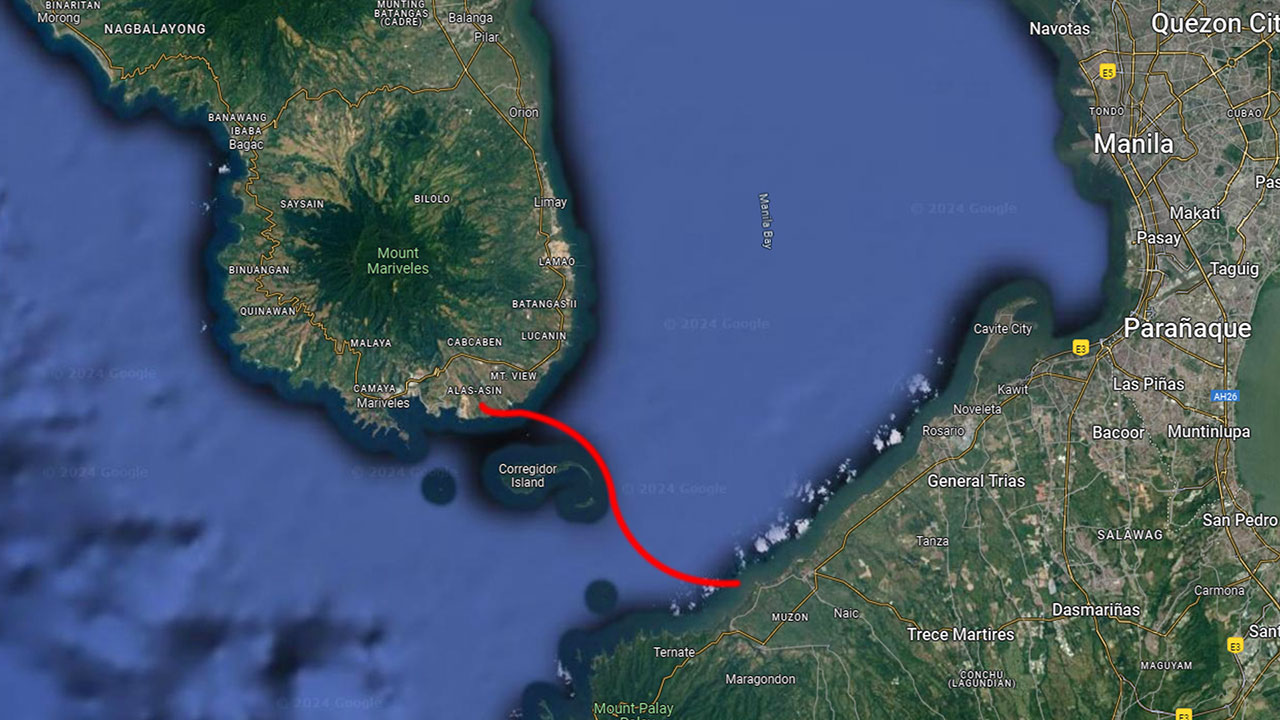
AN APPROXIMATION of the path of the Bataan-Cavite Interlink Bridge

The four-lane road link will minimize disparities in public service access and available economic opportunities between Metro Manila and other regions in Luzon.

Danica, a hotel receptionist in Balanga, Bataan, believes that the bridge will help businesses in the province.

Makakatulong po siya sa business namin kasi mas mapapadali po ang pagpunta ng mga turista [It will help businesses here by making us more accessible to tourists],” she said.

When the bridge is completed, Ms. Danica said local businesses should strive to improve their facilities and strategies to keep up with new competitors.

“The bridge will open up a lot of doors for Bataan,” Mr. Garcia said.

“It will make us more accessible to 50 million tourists in the entire island of Luzon.”

The local economy is also expected to be stimulated through job opportunities, regional developments, business ventures, and infrastructure improvements, according to the DPWH.

Apart from Cavite and Bataan, the Philippine Economic Zone Authority said the neighboring economic zones — Clark and Subic, would also feel the “transformative impacts” of the mega bridge.

“Shorter travel times between major economic zones will streamline supply chains, leading to cost savings for businesses.”


ENVIRONMENTAL CONSIDERATIONS

AdobeStock Photo


Biodiversity in the province was one of the main concerns discussed in the 2023 DPWH environmental impact assessment of the bridge.

According to the study, one of the most significant risks of the project is the injury and disturbance of protected marine mammals.

To avoid this, Mr. Garcia said provisions and technologies will be introduced during the construction to avoid damage to biodiversity.

“They will use curtain walls while drilling to avoid noise pollution and avoid other environmental impacts,” he said.

On weather resilience, the DPWH said the BCIB project is meticulously designed given its nature as a marine bridge.

“This monumental structure is built with a 100-year design life ensuring resilience against extreme events and harsh environmental conditions.”


DECONGESTING NCR

Vehicles and motorcycles are stuck in traffic along EDSA in this file photo. — PHILIPPINE STAR/WALTER BOLLOZOS

One of the main goals of the BCIB is to decongest Metro Manila by reducing the travel time between the provinces of Cavite and Bataan.

“It will significantly cut down travel time… from five (5) hours down to 45 minutes thereby easing the traffic congestion in Metro Manila as well as in South Luzon and North Luzon gateways,” the DPWH said.

By utilizing SCTEX, Roman Expressway, BCIB, travelers can easily reach Calabarzon to save time and money, Mr. Garcia said.

“Normal travel of commuters, tourists, deliveries, logistics that doesn’t need to pass through Metro Manila can bypass it.”

Aside from traffic decongestion, Mr. Garcia said the bridge will help solve the overpopulation in Metro Manila.

“Those losses, the P3.5 billion a day, is a product of unplanned growth and unmanaged in-country migration.”

Once the bridge is constructed, Bataan expects migration due to the economic activity happening in the region.

“If we’ll be connected to a very populous area like Calabarzon and NCR, along with all the economic opportunity, growth in migration is inevitable,” Mr. Garcia said.

He added that the province is meticulously crafting a master plan to avoid creating the same ‘mistake’ as Metro Manila.

“So we prosper, we increase the quality of life, we increase the economic activity and hopefully no traffic, no pollution, more green spaces, and better work-life balance.”

The detailed engineering design and bidding of the project was done last July, according to Public Works Undersecretary Maria Catalina E. Cabral during the Build Better More Infrastructure Forum.

The BCIB is expected to be fully operational by 2029.

15 years after Ondoy: Flood safety still out of reach?

PHILIPPINE STAR/MIGUEL DE GUZMAN

By Edg Adrian A. Eva

WHEN the Southwest Monsoon (Habagat) was enhanced by Typhoon Carina, it devastated large parts of Luzon. Many Filipinos were haunted by memories of Ondoy, a typhoon that caused record-breaking levels of flooding in Metro Manila.

Rhea Perez, a mother of three and a resident of Barangay Gulod, Novaliches, Quezon City, is no stranger to flooding as she grew up near the Tullahan River.

“With Ondoy before and then this, it’s really been traumatic for us,” Mrs. Perez said in Filipino during an interview.

“We were already awake at 4 a.m. putting aside our belongings,” she said.

“We got scared that the flood rose quickly. By the time we were rescued, the water had already reached the second floor,” Ms. Perez said.

As she returned to their home after the flooding, she remembered their experience with Typhoon Ondoy, as most of their belongings have been washed away by the flood.

“We were back to zero again,” she said.

LOOKING BACK AT TYPHOON ONDOY
The rainfall and flooding caused by Typhoon Ondoy in September 2009 have become a benchmark for subsequent floods in Metro Manila, according to Philippine Atmospheric, Geophysical and Astronomical Services Administration (PAGASA).

The storm inundated 80% of the capital, affecting Pasig, Quezon City, Manila, Caloocan, Muntinlupa, and Marikina, as well as nearby provinces.

The Marikina River’s water level rose to 23 meters above sea level, exceeding the 16-meter threshold that prompts evacuation of nearby residents.

Floodwaters as high as 20 feet (6 meters) were observed in areas of Marikina, Pasig, and Quezon City.

Typhoon Ondoy affected 993,227 families and resulted in 464 deaths, 529 injuries, and 37 people remaining missing, according to the National Disaster Risk Reduction and Management Council (NDRRMC).

An estimated P11 billion in damages to infrastructure and agriculture was caused by the typhoon.

CHALLENGES
• Urban congestion

The subsequent flooding in Metro Manila is attributed to the capital’s urban congestion, according to Armando Alli, an architectural consultant and environmental planner.

“The area on which the National Capital Region (NCR) sits is a massive 640.0 square kilometer floodplain. It is not actually ideal for very high-density human settlements,” Mr. Alli said.

Another issue pointed out by Mr. Alli is that urban congestion manifestations, such as structures near waterways and waste management problems, have further exacerbated the capital’s problem of flooding.

• Plastic waste

About 356,371 metric tons of “mismanaged plastic wastes” are dumped into 466 rivers across the country each year, according to a peer-reviewed study published in the Science Advances journal.

Notably, Pasig River ranks as the world’s top contributor, accounting for 6.43% of global plastic pollution.

“Require businesses to shift away from single-use plastics by adopting reuse and refill systems, and utilizing reusable materials,” Marian Ledesma, Zero Waste Campaigner of Green Peace said in a written interview.

• Water from the mountains

According to urban planner Felino A. Palafox, Jr., the region’s waterways can no longer handle the volume of rainwater flowing from nearby mountains.

“More than 4,600 cubic meters per second flowed down from the denuded mountains but the capacity of Pasig River is 600 cubic meters during Ondoy,” Mr. Palafox said.

The remaining 4,000 cubic meters of excess flood water flowed into residential areas in Metro Manila, he said.

• PHL in typhoon belt

According to PAGASA, the Philippines’ ongoing struggle with flooding is largely attributed to its geographical location within the “typhoon belt” found in the Western Pacific.

“The geographical location of the Philippines really makes it more vulnerable,” PAGASA Hydrologist Rosalie C. Pagulayan said in Filipino.

On average, up to 20 tropical cyclones enter the Philippine Area of Responsibility each year, with about 8 or 9 of these making landfall in the country.

• Climate Change

PAGASA warns that extreme meteorological events may become more frequent due to climate change.   

“That’s what our climatologists always say — we could experience extreme climatic events,” Ms. Pagulayan said.

The Philippines is in the forefront of disaster risks among 193 countries from the effects of climate change, according to World Risk Index.

This study indicates that the impact of climate change is also worsening due to the lack of societal capacities and resources in the Philippines.

FLOOD CONTROL PROJECTS
A pressing concern for communities constantly plagued by these floods is how much longer they need to endure this.

DPWH Secretary Manuel Bonoan admitted that there is no single nationwide master plan for flood control in Metro Manila, but more than 5,000 completed flood projects are intended to provide immediate relief and protection for low-lying areas.

“Our decentralized strategy allows us to customize solutions for each major river basin, considering their unique geographical, hydrological, and environmental conditions,” Mr. Bonoan said.

One significant flood control project is the ongoing P351-billion plan for flood management in Greater Metro Manila.

According to the World Bank, the notable measures include construction of the Upper Marikina River Catchment Area, construction and modernization of pumping stations along critical waterways and improved solid waste management for the drainage systems.

The project completion is at 30% and is facing delays due to various factors, including environmental, social, and other issues, Mr. Bonoan said.

Mr. Palafox suggested that a similar concept to the water impounding structure in BGC (Bonifacio Global City) could be applied to some major roads in Metro Manila.

“Let’s say underneath roads like EDSA, you put a big cistern, collect the water before they flow down,” he said.

“We can have a six series of rainwater harvesting in the circumferential roads.”

IS THERE STILL HOPE?
Despite the daunting challenges facing the country’s flood management efforts, the NDRRMC remains hopeful, believing that the nation can become flood-resilient — if only we can get our act together.

The government is prioritizing and investing in engineering, science-based, and long-term solutions to effectively address the country’s flooding issues.

Mr. Alli believes that achieving flood resilience within 18 to 25 years is possible, but only if we commit to a concerted effort across multiple administrations.

“It has to be a very well-coordinated and sustained effort using a combination of natural and artificial solution that must put politics in the backburner,” Mr. Alli said.

PHL firms need to embrace AI to stay ahead in the digital era — experts

RAWPIXEL.COM-FREEPIK

By Revin Mikhael D. Ochave, Reporter

ADOPTING artificial intelligence (AI) is essential for companies to stay competitive and drive growth, as it enhances operational efficiency, customer engagement, and innovation, according to experts.

National Economic and Development Authority Secretary Arsenio M. Balisacan said in July that the Philippine economy stands to gain P2.6 trillion annually if local businesses adopt AI in their operations.

“I believe that we will see higher adoption of AI in the near future, as more and more companies realize the benefits and opportunities of AI, as well as the risks and challenges of not using AI,” Microsoft Philippines Chief Executive Officer Peter D. Maquera said in an e-mail interview.

Philippines lands 31<sup>st</sup> in AI responsibility index

He said that Microsoft Philippines uses various AI programs to automate tasks such as scheduling meetings, creating reports, and finding information.

The company also uses a cloud-based platform that provides access to AI models improving customer engagement, product development, and innovation, as well as a machine-learning platform addressing business needs such as demand forecasting, sentiment analysis, and fraud detection. The solutions can also be accessed by local businesses to support the growth of their operations.

“Our motivation in considering the use of AI for our business is to create more value for our customers, partners, and employees, and to contribute to the social and economic development of the Philippines,” he said.

Mr. Maquera said that Microsoft Philippines has seen improved profitability and reduced operating costs through AI solutions, which have enabled the company to create more value for customers and partners. These solutions have also attracted more customers and increased their satisfaction and loyalty.

INCREASED ADOPTION, INTERNAL APPLICATIONS
Lee Carlo B. Abadia, technology consulting principal at the professional services firm SyCip Gorres Velayo & Co. (SGV), said that increased AI adoption is expected among Philippine companies.

“We see better adoption in the next year or so, but more for internal tasks centered on boosting productivity related to reporting or facilitating the ease of decision-making for leaders,” he said in an e-mail interview.

He said that companies can use AI to foster better employee engagement, helping employees complete tasks more efficiently.

However, he noted that the largest barrier to adoption is the fear of jobs being replaced. He said that companies should promote a human-AI partnership in operations, focusing on making tasks more efficient rather than reducing labor costs.

Mr. Abadia also said that SGV’s AI assistant tool, EYQ, aids in ideating, researching, and consolidating information, allowing the firm to focus more on formulating client recommendations.

“The tool boosts productivity by augmenting the capabilities of our people in crafting and improving solutions, considering more information in less time,” he said. “It is not intended for rightsizing activities but to provide value faster.”

Sara Venturina, chief data officer of mobile wallet GCash, said in an e-mail interview that the company has been using AI to develop more relevant products and personalized services. Internally, GCash will launch an AI-powered work assistant to improve productivity and is testing a contact center AgentCopilot to enhance customer service.

She added that while GCash has used AI to streamline internal systems, it has not undergone any rightsizing of manpower, as the company continues to grow and scale up support.

She projected that more businesses will adopt AI to keep up with the fast-paced and data-driven market.

Philippines lags in 2023 Asia-Pacific AI readiness ranking

FUTURE PROSPECTS, CHALLENGES
Alex A. Ustaris, chief technology officer of PHINMA Education Holdings, Inc., said that local companies and organizations will catch up on AI adoption soon.

Cloud-based platforms and mobile technology could push forward AI-enabled services in the Philippines, he noted.

He also said that PHINMA Education will use AI to transform how its students learn and how its employees work.

“AI will help us provide customized learning for each student and scale the learning process so that we can make more lives better through education,” he said.

PHINMA Education has already increased quality leads by 15% and reduced manpower costs for manual tasks through AI initiatives, according to the company.

Mr. Abadia said that universities and businesses should integrate AI into their curricula and on-the-job training programs to enhance local adoption.

Additionally, both the public and private sectors should identify areas where AI can be applied and pursue proof-of-concept projects to build momentum, he also said.

Microsoft’s Mr. Maquera stressed the need for investments in AI education and training, infrastructure, and partnerships to boost AI adoption in the Philippines.

“AI is the new electricity, the new internet, the new platform that will power the next wave of innovation and growth for businesses and society,” he said.

According to Microsoft’s latest AI Readiness Index, the Philippines ranks eighth out of 10 ASEAN countries in terms of AI readiness, with a score of 47 out of 100. The main challenges include a lack of skills, data, and infrastructure, as well as low awareness, trust, and regulation of AI.

Alex Takeda Lagata, Jr., global business director of Tokyo-based AI firm rinna Co., Ltd., said the government and private sector should push for increased AI awareness in the Philippines.

He noted that businesses may be hesitant to adopt AI due to public stigma but emphasized that inaction could lead to lost opportunities.

Hybrid is the future of work

NELLY ANTONIADOU-UNSPLASH

By Chloe Mari A. Hufana, Reporter

LOCKDOWNS spawned by the coronavirus pandemic forced people to adopt a flexible working life. They also showed that a considerable amount of work that took place in the office can continue when it’s closed.

Work life and home life melded together under the work-from-home setup, and now that the pandemic is gone, the hybrid setup appears to be the way forward, with many employers and employees agreeing to maintain this flexibility.

“This system enables employees to have the best of both worlds,” according to Jobstreet Singapore. “When they need a break from the office and the commute, they can work from home.”

“Hybrid work arrangements open up job generation opportunities for people who need the flexibility in their work setup for better work-life balance,” Jack Madrid, president and chief executive officer of the IT & Business Process Association of the Philippines (IBPAP), told BusinessWorld in a Viber message.

He noted how the hybrid setup had helped decongest Metro Manila traffic, known globally for being one of the worst.

Being able to work from home on some days means doing away with daily commute times, increasing worker productivity and benefiting their health and well-being, he said. “It provides better talent retention and by expanding talent pools, it results in stronger diversity and inclusion.”

At the start of the COVID-19 pandemic in 2020, about 2.9 million cars passed through major Philippine highways in the capital region, according to the Metropolitan Manila Development Authority (MMDA).

In 2021 and 2022, when lockdown restrictions were slowly being lifted, MMDA recorded 3.19 million and 3.53 million. Last year, it recorded the highest annual average daily traffic at 3.6 million, beating pre-pandemic levels. 

“The future of work is about flexibility,” Mr. Madrid separately said by telephone. “You listen to what your customer needs. You listen to what your employer needs, and you listen to the voice of the employee.”

“You have to balance the interests and objectives of the customer, the employer — in this case, it’s IBPAP — and the employee,” he added.

IBPAP doesn’t necessarily cut costs by allowing hybrid work because its more than 400 members still have to pay office rent.

“The location of where the work gets done is not important,” Mr. Madrid said. “What’s more important for me are the results. If you can do it outside the office, good. If you can only do it in the office, then you have to go to the office. Everyone has a different job. So, the future is about flexibility.”

Mikaela Katrina D. Coco, a 24-year-old multimedia producer for Chapters PH, creative content creator, said a hybrid setup is best for balancing work and life.

“It provides more opportunities for work-life balance and saves time and resources compared with reporting to work every day,” she said in a Facebook Messenger chat. “Since I work in media production, I don’t have fixed work hours.

Hybrid work, however, might not be for everyone.

Quintin V. Pastrana, president and head of Business Development at WEnergy Power Pilipinas, Inc., said his company has a traditional, in-office setup, but incorporates different activities in between office hours to help employees.

While WEnergy allowed employees to work from home thrice a week during the pandemic, the traditional face-to-face setup works best for his lean team, he said by telephone. They went back to a full office setup in mid-2022.

“It’s difficult [to have a remote setup] because we’re a very flat organization,” he said. “So, a lot of it is multitasking. And you cannot multitask in front of a desktop or laptop at home.”

Mr. Pastrana said the company requires a lot of collaboration among employees that is better done face to face. “That collaboration is in our DNA as a company… [It can get] stifled with a work-from-home setup, [where] there’s not a lot of interaction.”

Despite a full office setup, WEnergy employees still enjoy flexible hours, he said. “If somebody has a traffic issue, we can start at 10 a.m. So, those things will make a difference in terms of micro-flexibility. I think that is also a function of what we’ve learned from the pandemic.”

Mr. Pastrana said the company closed more deals when people were working in the office. “Those things make a difference.”

“A more nuanced approach to a hybrid setup doesn’t necessarily mean work from home. It just means building in a lot more balanced activity within the workday. And in our case, we have a very set schedule in terms of when the activity day is, which is Friday,” he said.

“Team lunch is on Tuesday.”

STATE OF REAL ESTATE
Hybrid work did affect the demand for office real estate, Joey Roi H. Bondoc, research director at Colliers Philippines, told BusinessWorld by telephone.

“At the height of the pandemic in 2020 and 2021, at some point during that period, vacancies in the flexi-space market peaked at about 40%, mainly because people were not allowed to go out,” he said. “As a result of flexi workspace vacancies during that period, I think the work-from-anywhere setup resulted in an increase in demand for these co-working facilities,” he added. 

Mr. Bondoc noted that before the pandemic, companies used to rent three floors of office space, but under the so-called new normal, they are down to just one floor. Colliers expects Metro Manila’s office vacancy rate to widen to 19.6% by yearend from 19.3% in 2023.

The rise of hybrid and remote work setups also gave way to the rise of co-working spaces. Colliers found that people prefer co-working spaces inside malls for convenience.

Mr. Bondoc said Colliers is seeing a rising trend of state agencies occupying more properties in the metro. For instance, the National Bureau of Investigation is occupying an entire building in the Bay Area in Pasay City.

“They are transferring to newer office spaces but at lower lease rates,” he said. “They are taking advantage of the vacancies in the market.”

Mr. Bondoc said Colliers continues to advise clients about where they should invest amid headwinds in the local property market.

“If you’re a mall, a residential developer or an office building developer, you need to innovate and renovate, otherwise you will evaporate,” he said. For developers and property firms, we believe that recalibration is important to quell extinction.”

Companies should also learn to adapt.

“If you’ve decided to be a hybrid organization, activating the office component isn’t simply a matter of unlocking the doors and dusting away the cobwebs,” according to a blog post from peoplemanagingpeople.com. “You’ve got to manage your office in a different way. It’s not the place where people come to do work anymore.”

Shifts and turns: The imperatives for Philippine businesses

PHILIPPINE STAR/MIGUEL DE GUZMAN

By Ron F. Jabal

THE global business landscape has been dramatically reshaped by a series of unprecedented challenges. The coronavirus disease 2019 (COVID-19) pandemic served as a major catalyst, accelerating trends that were already in motion while introducing new dynamics that have irrevocably altered how companies operate. The rapid advancements in artificial intelligence (AI) are changing the way we do business, even creating new work paradigms.

Thus, it has become imperative for businesses to not only adapt to these changes but to actively shape the future. The post-pandemic era, defined by the integration of artificial intelligence (AI) and the reimagining of work, truly presents opportunities, risks, and challenges. It is therefore critical to explore and review how Philippine businesses have been transforming and how they must continue to evolve over the next decade.

THE POST-PANDEMIC LANDSCAPE: A CATALYST FOR CHANGE
The COVID-19 pandemic was more than just a health crisis; it was a wake-up call that forced businesses to rethink their strategies, operations, and priorities. As the world ground to a halt, companies that were quick to pivot and adapt found themselves not just surviving but thriving in an altered environment. The pandemic exposed the vulnerabilities in global supply chains, highlighted the importance of digital infrastructure, and underscored the need for agility in business operations.

For Philippine businesses, the pandemic accelerated the adoption of digital technologies. Companies that had previously been slow to embrace digital transformation were suddenly thrust into a world where online platforms became the primary mode of operation. Retailers, for example, shifted to e-commerce models almost overnight, while service providers adopted remote work arrangements. This rapid shift was not without challenges, but it laid the groundwork for a more digitally integrated economy.

EMBRACING AI AND THE FUTURE OF WORK
As we look ahead, the role of artificial intelligence in business cannot be overstated. AI is no longer a futuristic concept; it is here, and it is transforming industries across the board. From automating routine tasks to providing deep insights through data analytics, AI is enabling companies to operate more efficiently and effectively.

In the Philippines, the integration of AI is still in its early stages, but the potential is immense. AI-driven solutions can help businesses enhance customer experiences, optimize supply chains, and improve decision-making processes. However, the widespread adoption of AI also raises important questions about the future of work. As machines take on more tasks, what will happen to the human workforce? This is a critical issue that businesses must address as they navigate the road ahead.

The future of work is not just about technology; it is about people. The pandemic has fundamentally changed how we work, with remote and hybrid work models becoming more common. This shift has implications for everything from employee productivity to company culture. As businesses in the Philippines adapt to these new work arrangements, they must find ways to balance the benefits of flexibility with the need for collaboration and connection.

As we consider the future of Philippine businesses over the next decade, several scenarios emerge that will shape the landscape in significant ways. These scenarios are not predictions, but they highlight potential trends and challenges that businesses must be prepared to navigate.

Digital Transformation as a Continuous Process: The rapid digitalization prompted by the pandemic is just the beginning. Over the next decade, businesses will need to view digital transformation as an ongoing process, continuously integrating new technologies and refining their digital strategies. This will require not just investment in technology, but also in upskilling employees to thrive in a digital-first environment.

AI-Enhanced Decision Making: As AI becomes more sophisticated, it will play an increasingly central role in business decision-making. Companies that leverage AI to analyze data, predict trends, and optimize operations will gain a competitive edge. However, they must also address the ethical considerations of AI, including issues of transparency, bias, and data privacy.

The Evolution of Work: The future of work will be defined by flexibility. Remote and hybrid work models are likely to become permanent fixtures, but businesses will need to navigate the challenges of managing distributed teams, maintaining company culture, and ensuring employee well-being. The gig economy will also expand, offering workers more flexibility but also raising concerns about job security and benefits.

Sustainability as a Business Imperative: Environmental sustainability will move from being a corporate responsibility to a business imperative. Companies will need to adopt green practices not just to comply with regulations, but to meet the growing demand from consumers and investors for sustainable products and services. This will involve everything from reducing carbon footprints to embracing circular economy models.

Resilient Supply Chains: The disruptions caused by the pandemic highlighted the fragility of global supply chains. In the coming years, businesses will need to build more resilient supply chains that can withstand shocks, whether from pandemics, geopolitical tensions, or natural disasters. This may involve diversifying suppliers, investing in local production, and leveraging digital technologies to improve supply chain visibility and agility.

Cybersecurity as a Top Priority: As businesses become more digital, they will also become more vulnerable to cyberthreats. Cybersecurity will need to be a top priority, with companies investing in advanced security measures, training employees on best practices, and developing robust incident response plans. Protecting customer data and maintaining trust will be critical in an increasingly interconnected world.

The Rise of Regional Trade: Geopolitical shifts and the rise of regional trade agreements will reshape global trade dynamics. Philippine businesses will need to navigate these changes by exploring new markets and forging strategic partnerships. The Regional Comprehensive Economic Partnership (RCEP), for example, presents opportunities for businesses to expand their reach within Asia, but it also brings competitive challenges.

The Consumer of the Future: Consumer behavior is evolving, with a growing emphasis on convenience, personalization, and digital experiences. Businesses will need to stay ahead of these trends by offering seamless, omnichannel customer journeys. The next decade will also see the rise of the conscious consumer, who prioritizes ethical and sustainable products. Companies that fail to adapt to these shifting preferences risk losing relevance.

Health and Well-being as a Business Focus: The pandemic has placed a spotlight on health and well-being, not just for individuals but for businesses as well. Companies will need to prioritize the health and well-being of their employees, customers, and communities. This will involve providing comprehensive healthcare benefits, supporting mental health, and fostering a culture of wellness. Businesses will also play a critical role in addressing public health challenges, from vaccine distribution to promoting healthy lifestyles.

Innovation as a Driver of Growth: Innovation will be the key to staying competitive in a rapidly changing world. Businesses will need to foster a culture of innovation, encouraging employees to think creatively and take risks. This will require investing in research and development, embracing new business models, and staying attuned to emerging trends. Companies that prioritize innovation will be better positioned to seize new opportunities and drive long-term growth.

TRANSFORMING FOR A BETTER FUTURE
The scenarios outlined above represent both opportunities and challenges for Philippine businesses. To navigate these future trends successfully, companies must embrace a mindset of continuous transformation. This involves staying ahead of technological advancements, understanding and responding to evolving consumer behaviors, and fostering a culture of innovation and resilience.

To thrive in the AI-driven future, businesses will need to make strategic investments in technology and talent. This includes adopting cutting-edge technologies such as AI, machine learning, and blockchain, as well as upskilling and reskilling the workforce to meet the demands of the digital economy. Companies that prioritize innovation and invest in human capital will be better positioned to adapt to changing market conditions and drive long-term growth.

Collaboration will be key to navigating the complexities of a fragmented world. Businesses in the Philippines should seek partnerships with other companies, government agencies, and nongovernmental organizations to address common challenges and achieve shared goals. Additionally, embracing inclusive business models that prioritize diversity, equity, and social impact will be crucial in building trust and ensuring long-term sustainability.

The ability to adapt quickly to changing circumstances will be a critical success factor for businesses over the next decade. This requires cultivating a culture of agility and flexibility within organizations, where decision-making processes are streamlined, and teams are empowered to respond swiftly to new challenges. Businesses that can pivot and innovate in response to unforeseen events will be better equipped to thrive in an unpredictable world.

As businesses navigate the future, they must do so with a commitment to ethical and responsible practices. This includes addressing the ethical implications of AI, ensuring data privacy and security, and promoting transparency in business operations. Companies that prioritize ethical considerations and act with integrity will build stronger relationships with stakeholders and contribute to a more just and equitable society.

RIDING THE TRAILS OF TRANSFORMATION
The next decade presents a transformative journey for Philippine businesses. The scenarios above highlight the critical areas where companies must focus their efforts to remain competitive and drive positive change. As the business community navigates the post-pandemic landscape, embraces AI, and redefines the future of work, there is a unique opportunity to create a better, more inclusive, and sustainable future for all Filipinos.

By riding on the trails of transformation, businesses can not only adapt to the challenges of a rapidly changing world but also lead the way in shaping a brighter and more prosperous future. The road ahead may be complex and uncertain, but with the right strategies, investments, and a commitment to continuous improvement, Philippine businesses can turn these challenges into opportunities and achieve lasting success.


Dr. Ron F. Jabal, APR, is the CEO of PAGEONE Group (www.pageonegroup.ph) and the founder and president of the Reputation Management Association of the Philippines (www.rmap.org.ph). Please correspond to ron.jabal@pageone.ph or rfjabal@gmail.com

Philippine students are in deep trouble

Students answer test questions at a state high school in Manila. — REUTERS

By Kenneth Christiane L. Basilio, Reporter

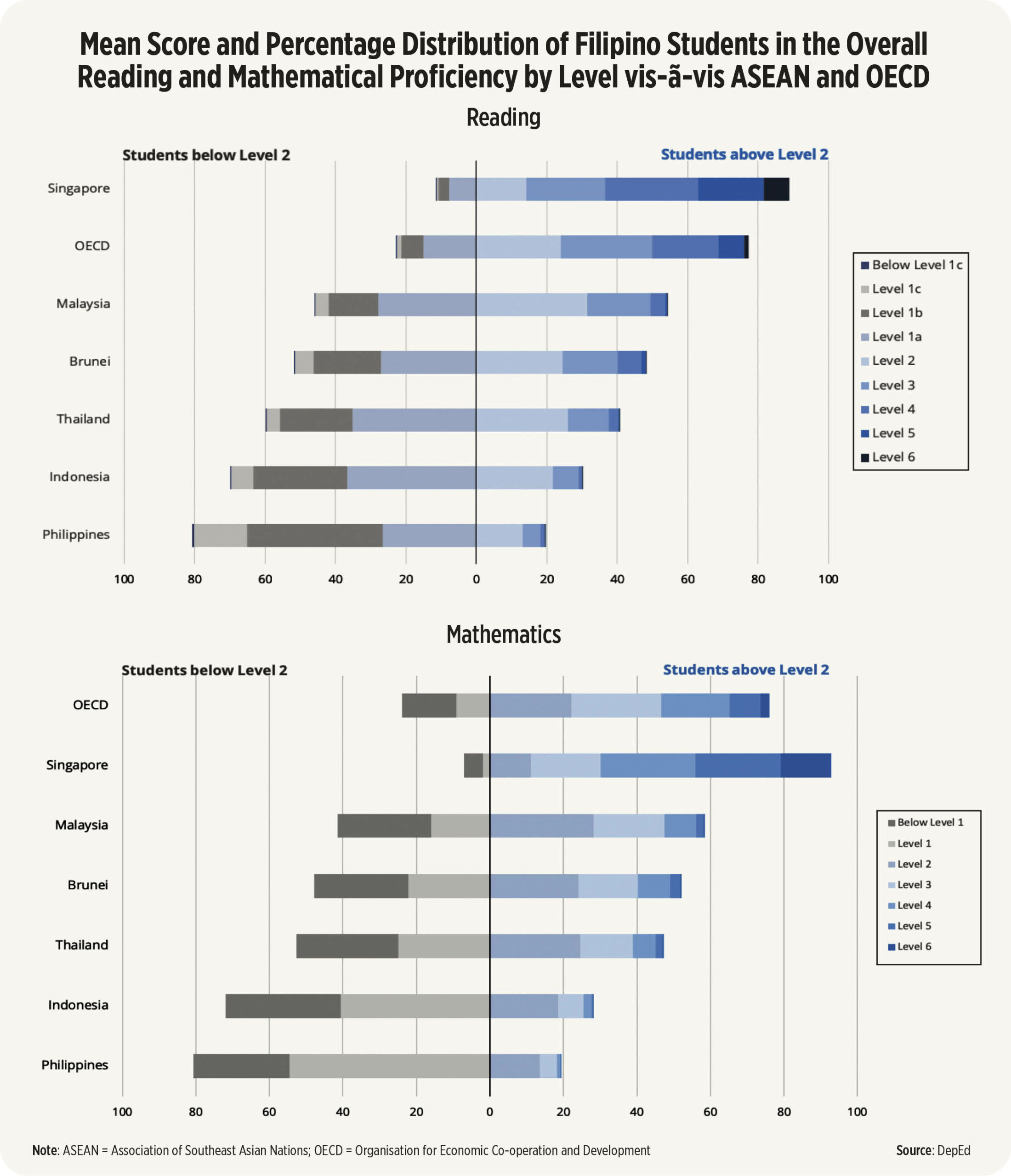
THE PHILIPPINE education system is walking on thin ice, with nine of 10 Filipinos unable to read and understand a simple age-appropriate text at age 10, according to the World Bank.

The coronavirus pandemic made that worse as the country endured the longest school closure among 122 countries, along with highly unequal access to the internet and digital learning resources.

The government should address this crisis if the Philippines wants to realize its growth potential. Failure to do so would lead to economic stagnation, according to an education expert.

Reforming the country’s education system is no small task, and the state should look at slowly improving the sector, Elvin Ivan Y. Uy, executive director of the Philippine Business for Social Progress, said in an interview.

“If we are unable to properly capacitate, educate, and develop our human capital, then the Philippines will be caught in a middle-income trap,” he said. “For education, the hope is you are improving every day, every year. You can at least say that this school year is better than the last… it shows that there is progress.”

The Philippines’ human capital indicators are “lackluster” compared with other countries, the World Bank said in a report in June. A Filipino child could only achieve half of their productive potential by the time they reach 18 years, it said.

“The Philippines is currently missing out on almost half of its human capital potential,” the multilateral lender said. “The Philippines has the lowest human capital index, which warns of the constraints to productivity of the next generation of workers given the prevailing rates of mortality, schooling achievements, and health outcomes.”

“The next five to 10 years will define whether we can maximize our demographic dividend window by 2049,” Mr. Uy said.

Filipino students were among the world’s weakest in math, reading, and science, according to the 2022 Program for International Student Assessment. The Philippines ranked 77th out of 81 countries and performed worse than the global average in all categories.

Institutional neglect is largely to blame for the failures of the system, said Justine B. Raagas, executive director of the Philippine Business for Education.

“Despite various reforms and initiatives, the country continues to grapple with issues such as low student performance in international assessments, insufficient resources, overcrowded classrooms and a lack of qualified teachers,” she said in an e-mail.

NEW CURRICULUM
Vice-President and former Education Secretary Sara Duterte-Carpio introduced in August 2023 the so-called Matatag  (stable) curriculum, focusing on subjects that will produce “competent, job-ready, active and responsible citizens,” according to the Department of Education (DepEd).

The curriculum will be implemented in batches, starting with kindergarten, grades 1, 4, and 7 in the school year 2024-2025. It will be fully implemented by 2026-2027.

Pasig Rep. Roman T. Romulo said the curriculum, which seeks to “decongest” competencies and subjects, would improve education quality.

“Under the Matatag curriculum, we will not only limit competencies but also subjects,” Mr. Romulo, also a co-chairperson of the Second Congressional Commission on Education (EDCOM II), said in an interview in mixed English and Filipino.

“We will focus on functional literacy and numeracy, which is what we really need because if you look at it, we score low in reading comprehension and in numeracy,” he added. 

Matatag claims to decongest the old curriculum by 70%, while still ensuring that the heavier weight of the learning areas would be on English, Filipino, Science, Mathematics, and Technical Livelihood Education.

Education authorities should assess the new curriculum to determine if it’s effectively addressing learning losses, Ms. Raagas said.  She added that it should be “adaptable to local contexts,” allowing local school authorities to have a say in what should be included in the syllabus. 

“The curriculum should be adaptable to local contexts, allowing schools and teachers flexibility, while decentralizing decision making to empower local authorities,” she said.

Ms. Raagas said the Education department is too centralized, hindering its ability to quickly enforce policy interventions.

DepEd’s authority should be cascaded to local governments, she added, noting that strengthening local education boards would make community-based learning programs possible.

The Education department is already “functionally decentralized,” Mr. Uy, a former DepEd assistant secretary, said. “When I say functional, responsibilities from what used to be at the national or regional level were already transferred to the field or school level.”

The problem lies with funding sources for regional and local school boards, he said, noting that DepEd failed to decentralize fiscally.  “The funds are still controlled by the National Government,” he added.

DepEd’s proposed budget for 2025 increased by 4.2% to P745.8 billion, while the budget for education as a sector inched up by 0.9% to P977.6 billion, according to a summary from the Budget department. The latter covers the Education department, Commission on Higher Education, Technical Education and Skills Development Authority, and state universities.

Education’s share in the 2025 budget fell to 15.4% from 16.8% this year.

“It’s not just the amount, but the quality of spending [that we have to consider],” Socioeconomic Planning Secretary Arsenio M. Balisacan said in an interview. “If we can improve the quality of spending, even a small amount can do a lot.”

COLLEGE WOES
The college education system also faces issues, including incompetency among graduates and the lack of emphasis on soft skills, Ms. Raagas said.

“One significant issue is the lack of collaboration between industry and academia, resulting in graduates who are not adequately prepared for the workforce,” she said. There’s also a problem with redundant competencies — many skills taught in senior high school are repeated in college, wasting valuable time and resources.”

In a report to the House of Representatives, the Commission on Higher Education (CHED) said three of 10 Filipino college students who were supposed to graduate this year dropped out.

About 37% of students dropped out in 2021-2022. The college dropout rate spiked to 41.03% the following school year before settling at 29.4% in 2024, according to CHED data.

CHED has started enforcing key policies that could improve higher education, chairman Prospero E. de Vera III said in an interview.

He said CHED now requires state universities and colleges to submit a certificate of program compliance, which the agency could review to check if their degree complies with minimum education standards.

Mr. De Vera is also pushing internationalization efforts. “If our universities are willing to benchmark and compare themselves with the top universities in the world and adopt good practices, they will definitely improve what they are doing in teaching and research.”

Internationalization would also let graduates of Philippine schools find jobs overseas, he added.

“If the curriculum for nursing in a Philippine university is the same as the curriculum in universities abroad, then they could find employment [easily],” Mr. De Vera said.

A joint education master plan crafted by the government and business stakeholders would benefit the education sector as a whole, Ms. Raagas said.

“A combined government-business master plan could enhance curriculum relevance, ensure proper resource allocation, and foster public-private partnerships for innovative programs,” she said. “This collaboration would make sure graduates have the necessary skills and knowledge to succeed, boosting the country’s economic development.”

Mr. Uy said a long-term learning master plan would help chart the direction of the country’s educational system.

Having a joint master plan would produce students with the skills needed in the job market, Ms. Raagas said.

“Universities can be informed about the competencies their graduates need so they can change the curriculum to ensure that students are industry- or work-ready upon graduation,” Mr. De Vera said.

“The problem is that if the industry has no input in the curriculum, graduates will need retraining. So we need to adjust the curriculum to meet the needs of the industry.”

Mr. Romulo said he’s pushing for businesses to have more say in technical-vocational (tech-voc) skill training programs. “There needs to be a bigger role because the tech-voc track is about skills training,” he said.

Data integration is the game changer for Philippine healthcare

VJOHNS1580 - PIXABAY

By Patricia B. Mirasol, Multimedia Producer

THE application of robotics and artificial intelligence (AI) in clinical operations in the Philippines has already started, but according to healthcare stakeholders, the real game-changer is data integration.

Data integration is the process of combining data from different healthcare sources, including electronic medical records (EMRs) and medical devices.

“We can go on and on with AI applications here, but there is value in having an EMR,” said Einstein C. Rojas, a board member of the Philippine Alliance of Patient Organizations, and an innovation ecosystem consultant for an international company.

“One of the most basic problem-solution fits that data analytics can do is when you go to a hospital,” he said in an Aug. 6 Zoom interview. “The first thing they ask you to do is fill up a form — but this form [asks for] your basic information that you already gave to other hospitals.”

Mr. Rojas noted the usefulness of a nationwide data integration model, wherein “a patient holds his/her data, and then simply allows the [healthcare provider] to access it during checkup, treatments, or emergency cases.”

The worldwide health records market size was estimated at $32.23 billion in 2023 and is anticipated to grow at a compound annual growth rate of 4.43% from 2024 to 2030, according to Grand View Research.

Government initiatives to encourage healthcare IT usage is a key driver to this market, the market research and consulting company said.

In Asia-Pacific, Singapore and Australia have already enacted nationwide EMR systems that provide healthcare providers access to patients’ medical records.

Singapore’s National Electronic Health Record (NEHR) system, in particular, is an enabler for the island-state’s vision of “One Patient, One Health Record.”

Accenture, a global professional services company, worked with MOH Holdings, the holding company of Singapore’s public healthcare assets, to create the NEHR system using a common application architecture, common data standards, and privacy and security guidelines.

Clinicians have a holistic picture of each patient’s history, as the system provides a summary care record for each patient including problem lists, medications, discharge and event summaries, allergies, immunizations, investigations, and procedures.

Hospitals in the Philippines, including the University of the Philippines-Philippine General Hospital (UP-PGH), are likewise embarking on their own journeys in healthcare innovations. In the works is a more efficient EMR system.

Based on a 2019 study by the Philippine Health Research Registry, the average pre-consultation time of new patients in the UP-PGH’s outpatient department is over an hour, or 72.84±43.39 minutes. The average total service time, meanwhile, is 8.70±6.99 minutes.

“We have a very different patient experience here. We go visit a doctor and have a 5- to 10-minute checkup that you waited two hours for,” Mr. Rojas told BusinessWorld.

Mr. Rojas, whose wife is currently pregnant, says an average checkup with an obstetrician-gynecologist at a tertiary hospital entail “arriving at 8 a.m. for a 9 a.m. clinic, getting listed at around 15th most of the time, [then] waiting two hours at the minimum.”

“Imagine an EMR with an appointment setting, where you have a period to go to a consultation, so you don’t have to wait,” he said. “It saves time, it saves stress, it definitely saves costs from the hospital and doctor.”

There are various factors that eat up a doctor’s time, Dr. Gerardo D. Legaspi, the PGH medical director, said.

Nearly half (49%) of their resident doctors’ time is spent inputting health information, Mr. Legaspi said in a July 23 interview.

“We are partnering with AIM [the Asian Institute of Management] to develop a local speech-to-text program…, so that the actual interview can proceed without the resident typing, and then you retrieve it and actually have a summary afterwards,” he said. “That’s the kind of AI we want to use for patient care.

PERSONALIZED HEALTH PLANS THROUGH DATA
Even primary care providers recognize technology’s role in the implementation of healthcare in the country.

Centralizing data is crucial when assessing patients, according to Karl Aaron G. Dimaano, general manager and chief operating officer of HealthFirst, multispecialty outpatient clinic and Unilab subsidiary.

Data has been consolidated in its four-storey Williams Building, he said during the facility’s June 7 launch. A patient who consults across different outpatient services will have a single record instead of multiple.

Utilizing technology in data collection has helped “facilitate the collection of real-time health data, enabling more accurate monitoring and management of patient conditions,” HealthFirst medical director Dr. Robert T. Castro said.

It has allowed organizations to gain insights into disease patterns and health trends, he said.

Chronic disease programs can likewise be tailored through health metrics profiling, Mr. Castro added in an Aug. 8 e-mail.

“By analyzing data such as blood pressure, glucose levels, BMI [body mass index, which is used to estimate one’s body fat], and lifestyle factors, we create personalized health plans that address the specific needs of each employee,” Mr.Castro said.

“This approach enhances overall workforce health, reduces absenteeism, and boosts productivity.”

CENTRALIZED DATABASE
The Medical City (TMC) has been investing in infrastructure in order to implement its technology-related solutions, according to group chief information officer Jojo C. Dionaldo.

He shared that the network’s initiatives include a superapp with features such as a doctor’s consult queueing system as well as access to each patient’s digital twin.

This is in line with TMC’s focus on preventative healthcare, Mr. Dionaldo said in a July 26 Zoom interview.

“With a digital twin,” he said, “we can map [your body] and tell you that, in five or ten years, if your habits and your [diagnostic] findings do not change, then you will have this kind of sickness.”

TMC, with six hospitals and 64 clinics in its network, is working to create a centralized database to “unify and harmonize all our EMRs” by the end of 2025, Mr. Dionaldo told BusinessWorld.

“The moment we make that successfully implemented across our hospitals and clinics, we will have been able to achieve an EMR which has never been implemented in the Philippines — and in Southeast Asia — in that scale,” he said.

“The government or the Department of Health [DoH] can use this as a benchmark or a reference,” he added.

The global adoption of ESG for inclusive and sustainable growth

FREEPIK

Initially driven by ethical considerations, Environmental, Social, and Governance (ESG) has evolved into a core component of corporate strategy, risk management, and long-term value creation.

Companies are increasingly recognizing the significance of sustainability in their operations. In fact, the latest “KPMG Global ESG Due Diligence” report revealed that ESG has become a top priority over the past 12 to 18 months, a trend expected to continue.

Similarly, the “2024 Sustainability Organization Survey” by KPMG mentioned the growing commitment of organizations to ESG, with 90% of organizations planning to increase their ESG investments over the next three years.

The report also stated that 43% of these companies recognize the need for specialized roles focused on sustainability to ensure that ESG considerations are integrated into decision-making processes across the organization.

The demand for advanced software solutions tailored to ESG management is also increasing, with 40% of companies using ESG-specific software to improve data collection, analysis, and reporting. Meanwhile, 38% are investing in employee training programs to equip their workforce with the knowledge and skills necessary to support ESG initiatives and foster a culture of sustainability within their organizations.

According to the “2023 ESG Global Study” conducted by Capital Group, global adoption of ESG investment has reached a new high, with 90% of investors identifying as adopters, up from 89% in 2022 and 84% in 2021.

However, while the overall adoption rate is rising, the proportion of “conviction investors,” those who consider ESG central to their investment strategies, remains at 26%. The study also notes that 57% of investors believe incorporating ESG analysis can uncover attractive investment opportunities, and 45% think it is likely to improve long-term investment results.

Meanwhile, nearly three-quarters of ESG adopters prefer active investment strategies, allowing for better engagement and a more comprehensive view of company ESG profiles.

Disconnection between perception and preparedness

Despite increasing investment in ESG, a significant disconnect remains between organizations’ perception of their ESG readiness and their actual preparedness. The KPMG ESG Assurance Maturity Index shows that while 83% of organizations believe they are ahead of their peers in ESG reporting, nearly half still rely on spreadsheets for managing ESG data — a method lacking the robustness and scalability needed for comprehensive ESG management.

The reliance on outdated tools, according to the report, highlighted the gap in data management capabilities. As the complexity and volume of ESG data grow, so does the need for more sophisticated data management systems that can integrate sustainability goals with broader business objectives.

Furthermore, the maturity levels of companies in ESG also remain low. In fact, 75% of respondents are still in the early stages of ESG maturity, making them less prepared for ESG assurance. The lack of readiness is evident with only 25% of companies feeling confident in their ESG policies, skills, and systems to achieve assurance.

Investors also often struggle with defining a meaningful and actionable scope, obtaining high-quality data from target companies, and quantifying potential ESG findings. The KPMG report, however, noted that solutions are beginning to emerge.

For instance, there is now greater clarity on which ESG topics should be included, with a shift to focusing on value. Moreover, there is an increasing opportunity for sellers and sell-side advisors to add value through higher-quality ESG vendor documentation.

The latest “KPMG Global ESG Due Diligence Study” said that budgets remain low for ESG due diligence compared to other workstreams, such as financial, commercial or legal. This limits ESG specialists’ ability to perform in-depth analysis across the many complex environmental, social and governance topics that investors seek.

Another KMPG report mentioned that 44% of companies cite high initial costs as a major barrier to ESG. Many firms struggle to allocate adequate budgets for developing robust ESG frameworks, which hampers their progress.

Interestingly, beginners in ESG are facing between four to five main challenges, while more mature companies encounter slightly fewer with around three to four.

The rapid investment in ESG

ESG integration is becoming prominent across various industries as environmental concerns, social justice issues, and governance standards grow increasingly important to stakeholders.

According to a 2023 research by McKinsey & Company, companies that actively pursue ESG goals alongside traditional growth and profitability metrics tend to generate better returns for their shareholders. The study analyzed performance data from the world’s 10,000 largest companies between 2016 and 2022, and discovered that companies excelling in both ESG and financial performance, also known as “triple outperformers,” achieve an annual excess Total Shareholder Return (TSR) that is two percentage points higher than their peers who focus only on financial metrics.

This finding is particularly significant given the challenges of the past five years, which include the COVID-19 pandemic, high inflation, geopolitical tensions, increasing climate events, and the emergence of generative AI. Despite these challenges, companies with a strong focus on ESG were more likely to achieve or exceed the 10% annual revenue growth benchmark. In fact, more than half of the triple outperformers studied were able to accomplish this feat.

The research also indicates that the benefits of ESG-focused strategies are not limited to large and established corporations. Companies of various sizes and sectors can leverage ESG to enhance their growth prospects and resilience in the face of global challenges.

Leading investors are also using ESG to identify risks and unlock financial value. According to KPMG, they are incorporating ESG considerations into their investment theses, ensuring that ESG risks and opportunities are thoroughly understood and managed.

The focus on ESG is particularly evident in areas like decarbonization, recycling and circularity, and supply chain management. With improved ESG, investors can drive revenue growth, reduce costs, and mitigate risks to further enhance the overall value of their investments.

On the other hand, increasing regulatory requirements and pressure from customers and investors are compelling companies to adopt ESG frameworks. According to software-led risk management solutions provider Alcumus, 55% of companies cited regulation as a key reason for integrating ESG practices, while 54% pointed to pressure from investors and customers.

The same report also mentioned that about 60% of companies said that gaining an improved image is a significant benefit of ESG adoption, highlighting the reputational advantages associated with sustainable practices.

George Richards, Partner and Head of ESG Reporting and Assurance of KPMG in the UK, noted that forward-thinking companies are leading the charge by integrating ESG principles into their core operations to create significant value for their organizations.

“One of the potential benefits [of ESG is] that it allows the company to show how they will operate not only profitably in the long term, but also sustainably, in a much more credible way,” he said. — Mhicole A. Moral

Echelon conference debuts in PHL this September

e27, Brainsparks back the startup event happening at SMX Convention Center

In a groundbrreaking collaboration, e27, renowned as Asia’s leading tech and startup media platform, joins forces with Brainsparks, a Philippine-based venture capital company, to present the inaugural Echelon Philippines 2024, scheduled to take place on Sept. 26 and 27 at the SMX Convention Center.

Echelon, an annual startup and tech conference in the Asia-Pacific region headquartered in Singapore, is one of the largest and most acclaimed events of its kind. With over 90,000 attendees across its past 10 editions, Echelon is known for its impressive reach and impact within the tech industry. Notably, after a decade of successful installments, the conference is making its highly anticipated debut in the Philippines, marking a significant milestone in its growth and expansion.

Echelon Philippines 2024, a dynamic convergence of startup leaders, visionary entrepreneurs, and forward-thinking investors, will foster regional partnerships, investments, and business matching. The conference aims to showcase insights from thriving and emerging sectors, unveiling new avenues for growth and stimulating entrepreneurship. Additionally, it seeks to cultivate fresh talent, arming them with the necessary tools and resources to navigate existing markets and drive growth.

In addition, the conference will feature fireside chats, panel discussions, and keynote speeches from esteemed local and international speakers with the likes of Angeline Tham, co-founder & chief executive officer (CEO) of Angkas; Adriel Yong, Head of Investments of Ascend Network; Jojo Malolos, CEO of Paymongo; ER Rollan, founder and CEO of Growsari; Mario Domingo, Global Chief Technology Officer of UBX Philippines; Visa Kannan, managing partner of Saison Capital; Gregorio Mantaring, director of JG Digital Equity Ventures; Amanda Cua, founder and CEO of Backscoop; Jay Fajardo, executive director of Ideaspace; Carlo Chen-Delantar, co-founder of Gobi-Core Philippine Fund; Rene Cuartero, co-founder and CEO of AHG Lab; John Aguilar, founder and host of The Final Pitch; and many more.

In addition to the insightful speakers, the conference will feature a diverse range of exhibitors who will showcase their distinctive products and services, opening up a realm of possibilities for attendees. Among these exhibitors are BuildHub, Smile API, InsightGenie, Gateway of Asia, AHG Lab, Zoho, Plug and Play, and Founders Launchpad. Each exhibitor brings their unique offerings, providing attendees with opportunities to explore innovative solutions and connect with industry experts.

Echelon Philippines 2024 promises to be a pivotal event, showcasing not only the most recent technological advancements but also offering crucial support for the growth of the local startup ecosystem.

One of the highlights of this event will be the Startup Pitch Competition, dedicated to spotlighting the most promising startups in the Philippines. This segment will provide a platform for local innovators to showcase their solutions to real-world problems faced by the country.

Secure your tickets for Echelon Philippines 2024 at https://e27co.e27.co/ECPH.

The digital shift: Transforming PHL education through cloud-based edtech

COMPARE-FIBRE-UNSPLASH

By Harrison Kelly

THE DIGITAL TRANSFORMATION of education accelerated by nearly a decade due to the coronavirus pandemic, but the rapid shift didn’t come without cost. In the Philippines, the road to fully embracing digital education is filled with both challenges and opportunities.

Beyond issues related to infrastructure or funding, many institutions are still grappling with student expectations and their own technological limitations. These challenges are often rooted in the outdated notion that technology for collaboration, accessibility, and learning is less important now that we’ve returned to physical classrooms. However, returning to in-person learning does not diminish the importance of digital tools; instead, it highlights the need for a more integrated approach, often referred to as hybrid or blended learning.

For instance, some universities adopted a blended learning model, which combines face-to-face (f2f) and online teaching to ensure continuity beyond the pandemic. Other universities, like Ateneo de Manila University, implemented similar methods, such as the hybrid flexible or hyflex learning model, which integrates simultaneous f2f and synchronous online instruction. This approach has evolved to enhance flexibility, support academic excellence, deliver accessibility, and build institutional resilience.

This shift to blended learning methods prompted many institutions to opt for free, self-hosted learning management system (LMS) platforms, with the option to add services and tools at a cost. This led them to invest substantial sums in hardware, training, and technical support to stay updated with the trends shaping the new educational landscape.

Today, many of those institutions are facing roadblocks because their self-hosted LMS lacks scalability. This limits their ability to respond swiftly to new opportunities or adapt to changing market conditions.

Another consequence is that while the self-hosted LMS approach allowed universities to survive during a crisis, it has also placed their students at a disadvantage. Students in these institutions are often less equipped with flexible and interactive options than their peers who are studying at universities that have already migrated to cloud-based LMS solutions.

These more modern learning management systems offer the flexibility and scalability necessary to support the diverse learning pathways required for lifelong learning and provide skill-based learning opportunities.

EVOLVING TOWARDS A TECHNOLOGY-ENRICHED LEARNING ENVIRONMENT
In 2022, the World Bank noted that in Philippine higher education, “…a cultural transformation is needed to use technology for better service delivery, as digital transformation is more than just digitizing and digitalizing services.”

The emphasis here is on the word “transformation” — a shift in mindset that recognizes technology as a fundamental component of modern education and not just a temporary solution to a temporary problem.

For higher education institutions (HEIs), adapting to evolving technological demands is no longer an option but a necessity. While significant advancements have been made in integrating educational technology (edtech) into classrooms, many institutions in the Philippines are still playing catch-up. Edtech has the potential to increase performance, foster inclusivity, ease the burden on teachers, and offer more personalized learning experiences to students. However, the adoption of these technologies varies widely across the country.

The geographical peculiarities of the Philippines and existing infrastructure gaps add further challenges to achieving accessible and equitable education. The 2023 United Nations Educational, Scientific, and Cultural Organization Global Education Monitoring Report highlights that despite the Philippines embracing technology in education, there is a significant shortage of computers in schools, particularly in rural areas. Many students struggle to go online from home, exacerbating educational access issues.

As educators strive to keep pace with the latest trends and emerging technologies, they must also contend with outside obstacles such as climate change, social inequality, and inconsistent internet connectivity — factors that continue hindering students across the country. A technology-enriched learning approach, where technology is incorporated to complement learning every day in the classroom and to extend it outside of it, is more critical than ever to future-proof the education system against these challenges.

This approach ensures that institutions are using technology to support students during disruptions, provide flexibility and mobility, and offer timely assistance to those who need it most and not only as a stopgap measure. This approach also fosters a lifelong learning culture, which is essential for bridging the skills gap and preparing students for the global workforce.

While some institutions still use their LMS primarily as a repository for course materials, leading universities and vocational education institutions in the Philippines and worldwide are leveraging these platforms in far more dynamic ways. They use data and analytics to make informed, data-driven decisions, personalize education, and identify at-risk students. These capabilities combine the best of technology and education, providing timely interventions and support, so that all students have the opportunity to succeed.

IMPROVING MOBILE LEARNING WITH OFFLINE ACCESS
In the Philippines, according to an Instructure survey, 50% of students use their mobile phones to access their institution’s LMS. Mobile learning has truly become indispensable for students, and this statistic underscores the importance of optimizing mobile learning experiences.

Despite improvements in mobile data affordability, the Philippines still lags other Southeast Asian countries in terms of network performance. Even with near-universal 4G (fourth-generation)  coverage, broadband speeds are lower, particularly in rural areas where slower internet speeds pose significant challenges that make it crucial to meet the needs of students who may not always have access to stable connections.

From interactive apps to collaborative platforms, mobile learning has democratized education by breaking down geographical barriers and making quality learning materials accessible to a global audience. Recognizing this trend, colleges and universities are increasingly optimizing their course designs for mobile apps, ensuring that both blended and online courses are accessible on mobile devices.

However, the success of mobile learning in the Philippines hinges on more than just accessibility — it also depends on ensuring that students can access learning materials offline. This feature, which is usually available in an LMS’ mobile app for students, is particularly crucial in regions where internet connectivity is unreliable. By enabling offline access, institutions can help ensure that all students, regardless of location, can engage with their coursework and succeed academically.

THE FUTURE OF EDUCATION IN THE ERA OF AI
The future of education in the Philippines depends on the country’s ability to embrace and fully integrate digital tools into its educational framework and approach the challenges and opportunities created by generative artificial intelligence (AI). It’s crucial to move away from the initial fear around AI and move towards taking advantage of its potential to significantly impact education, particularly when integrated into an LMS.

We need to be sure AI literacy is taking place in every institution to ensure staff and students have the knowledge and skills necessary to understand, evaluate, and use generative artificial intelligence systems and tools safely and ethically.

It is essential for institutions to recognize that digital transformation is not a one-time fix but an ongoing process. As the educational landscape continues to evolve, so too must the strategies and tools employed by educators. While the challenges are significant, so are the opportunities. By adopting cloud-based edtech solutions that integrate AI with a human-centered approach, fostering a technology-enriched learning environment, and optimizing mobile learning experiences, Philippine educational institutions could overcome many of its challenges and create a more inclusive, equitable, and effective education system.


Harrison Kelly is the managing director for Asia-Pacific at Instructure.

PHL gov’t must boost pool of cybersecurity talent, beef up digital infrastructure to attract investors

THE PHILIPPINE GOVERNMENT needs to ramp up cybersecurity education and set up globally recognized training centers to grow its small pool of local cybersecurity talent, which will help boost the country’s resilience against cyberattacks to attract more foreign investors, according to analysts.

“We need to make cybersecurity a standard track in all universities,” Dominic Vincent D. Ligot, founder of Cirrolytix and artificial intelligence, technology, and research consultant for the Information Technology (IT) and Business Process Association of the Philippines, told BusinessWorld in an e-mail.

“This means industry expertise should be tapped by the academia — all of practical knowledge in cyber is outside school and we need to bring it back in.”

Surfshark: Philippines 28<sup>th</sup> most breached country in Q2 2024He said most of the country’s cybersecurity experts are trained outside of schools and are usually sponsored by companies that sell cybersecurity products.

“If the optic from local companies and the public sector is that cyberattacks include a heavy administrative burden, it starts to make other countries more attractive investment destinations,” Mr. Ligot said.

“In addition to a talented labor pool, we need to show our infrastructure and enforcement mechanisms are solid.”

In 2022, the Philippines only had about 200 cybersecurity professionals compared to Singapore’s 2,000 experts, Department of Information Communications Technology Secretary (DICT) Ivan John E. Uy earlier said, noting that 80% of Filipino cyber experts work overseas.

Mr. Uy said cybersecurity experts in the private sector earn about P200,000 a month, while those in the government are only paid P50,000.

The Philippines needs more globally recognized cybersecurity certification programs to keep Filipino experts from taking their talents elsewhere, Allan S. Cabanlong, regional director for Southeast Asia at Global Forum on Cyber Expertise and a former DICT assistant secretary, said by telephone.

“We also need better talent-matching for our experts and boost demand for them since our certified professionals usually go abroad,” he said. “The problem is the government’s defense infrastructure is weak, and the monitoring and detection capabilities are not that good.”

“The government needs to institutionalize digital literacy in basic and secondary education, not just to educate students but also to trigger their interest in taking cybersecurity and other information technology-related courses,” Ronald B. Gustilo, national campaigner for Digital Pinoys, said in a Viber message.

According to Fortinet’s 2024 Global Cybersecurity Skills Gap Report released in August, 77% of organizations in the Philippines said the cybersecurity skills shortage creates additional risks for their organizations, with 94% of firms experiencing a breach in the past year.

The survey was conducted among 25 IT and cybersecurity decision makers in the Philippines from various industries like technology, manufacturing, and financial services.

“More organizations are increasingly linking security breaches to the cybersecurity skills gap, with 94% of organizations in the Philippines recognizing this issue, up from 92% in the last report. This emphasizes the urgent need for organizations in the Philippines to continue addressing the cybersecurity skills shortage to strengthen their security posture,” Alan Reyes, country manager at Fortinet Philippines, said in a statement.

“Our latest report shows that organizations are actively making efforts to bridge this gap, such as diversifying their candidate pools, which the Philippines is showing significant improvement. As organizations in the country continue this effort, they should also invest in training and certifications for their IT and security teams, educate employees about threats and best practices in cyberspace, and implement the right technologies to enhance resilience,” Mr. Reyes said.

The report showed that executives and boards of directors are increasingly prioritizing cybersecurity, with 80% of respondents saying their boards were more focused on security in 2023 than the year before and 94% saying board sees cybersecurity as a business priority.

More than 90% of respondents (94%) said they prefer to hire candidates who hold cybersecurity certifications, but 84% said it is difficult to find candidates with technology-focused certifications. Meanwhile, 98% of respondents said they would pay for an employee to obtain a cybersecurity certification.

“As the cyber workforce shortage persists, some organizations are diversifying their recruitment pools to include candidates whose credentials fall outside traditional backgrounds — such as a four-year degree in cybersecurity or a related field — to attract new talent and fill open roles. Shifting these hiring requirements can unlock new possibilities, especially if organizations are also willing to pay for certifications and training,” Fortinet Philippines said.

“The increasing frequency of costly cyberattacks, combined with the potential of severe personal consequences for board members and directors, is resulting in an urgent push to strengthen cyber defenses across enterprises,” it added.

Meanwhile, Congress should also ensure that next year’s national budget would upgrade the cybersecurity defenses of government agencies, Mr. Gustilo added.

“There should be a clause that the funds will not be allocated for other purposes and can be replenished should the need for the improvement of cybersecurity infrastructure arise,” he said.

“Cyber readiness should be a line item in every agency’s budget for next year,” Cirrolytix’s Mr. Ligot added. “This should include an education and training budget for cyber, an engineering budget to make systems threat-ready, and enforcement mechanisms to incentivize readiness and penalize abuse.”

President Ferdinand R. Marcos, Jr. this year adopted the National Cybersecurity Plan (NCSP) 2023-2028 to help address the rising number of cyber threats in the Philippines. Crafted by the DICT, the NCSP 2023-2028 outlines the country’s policy direction and operational guidelines for a secure cyberspace. 

Aside from NCSP, the DICT amended its Cloud First Policy in 2020 to provide “clearer directives on policy coverage, data classification, and data security.” This policy mandated government departments and agencies to prioritize cloud computing solutions.

In a congressional hearing in April, the DICT reported 282 cyberattacks against government organizations between January and March 2024, adding that 90% of these were resolved. It said 811 early-stage hacking attempts were detected and neutralized by the agency’s National Security Operations Center as of April. This translates to over 74% of total hacking attempts.

The DICT’s Project Security Operations and Network Analysis Research also scanned over 2,000 online assets, exposing 30,682 vulnerabilities.

According to the DICT, the Department of Transportation, the National Economic Development Authority, and the Philippine National Police-Information Technology Management Service are the agencies most frequently targeted by cyberattacks.

The Philippine National Police’s Anti-Cybercrime Group also reported that there were 4,469 cybercrime incidents in the country in the first quarter of 2024, up 21.84% from the previous three-month period.

Last year, the Philippine Health Insurance Corp. was hit by Medusa ransomware, with more than 600 gigabytes of data stolen by hackers.

“The Philippines is one of those countries that is being attacked very often.” Israel Ambassador to the Philippines Ilan Fluss told BusinessWorld in an interview. “If critical infrastructure in water supply, energy supply, banking systems are not protected properly, it could hurt these critical services that are crucial to your population.”

Tomer Heyvi, head of Israel’s economic mission to the Philippines, said Israel could help the Philippines enhance its cybersecurity defenses as many of its startups specializing in security software are looking to enter the country.

“We (Israel government) have a lot of knowledge in cybersecurity especially from military service applying tech in the civilian sphere,” he said. “If hackers are succeeding in some hacking attempts on different government websites, social media, I believe using these innovative technologies it would be beneficial for the Philippines.”

Dotan Sagi, chief executive officer of Israeli software development company Cinten, said the Philippines should invest in tech accelerators to train Filipinos in writing code and innovation.

“If the government invests in accelerators, hubs for young people that can work and understand the tech way of thinking and how to build a startup, it will be easier to work here,” he said. — John Victor D. Ordoñez

Students from Southeast Asia win 2024 FedEx/JA International Trade Challenge Asia Pacific

L-R: Maziar Sabet, president and CEO of JA Asia Pacific; the top 3 winning teams; and Kawal Preet, president for Asia-Pacific at FedEx

Express transportation company Federal Express Corp., together with Junior Achievement (JA), announced the winners of the 2024 FedEx/JA International Trade Challenge Asia Pacific finals held at a live event in Singapore.

This year’s competition attracted over 4,500 students from 10 markets including Hong Kong SAR, India, Indonesia, Japan, Malaysia, the Philippines, Singapore, South Korea, Thailand, and Vietnam.

60 students gathered in Singapore for the Asia-Pacific finals and were tasked to create a market entry strategy for a product that contributes to a circulatory economy, with Turkey being the target market. With growing discourse among consumers on how products affect the environment and the role corporations should play in shaping a sustainable future, the challenge was particularly relevant. Students were paired into teams of two from different markets to foster cross-cultural understanding. The student teams then pitched their idea to a panel of judges made up of Singapore’s leading entrepreneurs and small business owners.

The first-place winners were Team CJ, consisting of Cheryl Lim Xin Yi from Singapore and Julia Jasmine Binti Jufri from Malaysia. They impressed the judges with their innovative idea of creating biofilm from seaweed.

The two runner-up teams were Team Circuvate and Team ONE. Team Circuvate, which included Wesley Ng Yu De from Singapore, developed bioplastic plates funded entirely through advertisements for football stadiums. Team ONE, composed of Rysa D. Sumalinog from the Philippines and Clarisse Chee Qian Ying from Singapore, proposed turning food waste into traditional Turkish carpets.

“We are thrilled to be selected as the winners of the competition. It’s a great honor and privilege to contend with top talent in the region. Taking part in the competition has truly been an eye-opening experience. It helped us understand that any great venture needs bold thinking, thorough planning and great collaboration with peers and industry experts. Winning this competition gives us the confidence to continue exploring what’s possible on our path to becoming future entrepreneurs,” said Misses Yi and Jufri of the winning team.

Judges of the competition, comprised of entrepreneurs and business leaders, were impressed by the organization of the competition and the efforts made by the students.

“The experience has been eye-opening — to see the young minds showcasing their problem-solving skills and presenting their solutions so eloquently. It has been quite thought-provoking and immensely enjoyable,” Alex Fan, co-founder of Sunday Bedding Pte. Ltd., said.

“I was incredibly blown away by the presentations and the thoughtfulness behind each proposal, especially with the knowledge that they were all done in only 2 days. It was also great to see learning and exchange of knowledge between the participants,” said Kloe Ng Co, founder of Out of the Box Education, Inc.

“I am impressed by the students’ presence and poise; especially given the short time they had to complete their analysis and prepare their presentations. They radiate confidence and thoughtfulness. Rather than judging, I see this experience as a co-creation, and through our interactions, I have no doubt they will bring something incredible to the world,” Ryion Pun, co-founder of Guishi Pte. Ltd., said.

“The fact that each participant was paired with someone they didn’t know made this even more impressive. This competition is a boiler room of entrepreneurial experiences and insights. JA Asia Pacific and FedEx did a masterful job facilitating this competition and giving our youth the experience of competing at a regional level,” said Reza Behnam, founder of Digital Direction.

The FedEx/JA International Trade Challenge program is jointly organized by FedEx and JA Asia Pacific, a member of JA Worldwide. In the last 18 years, nearly 50,000 students across Asia-Pacific have been introduced to the world of business, economics and international trade through this program which incorporates classroom learning and practical teamwork exercises.

Kawal Preet, president for Asia-Pacific at FedEx, reiterated the company’s belief that the power of innovation and connectivity can change the world, as epitomized by the International Trade Challenge.

“These brilliant young minds are not just learning about international trade; they are addressing real-world problems with creativity and insight. As these young leaders break down barriers and build bridges across borders, they are exemplifying the FedEx ethos of connecting people and possibilities,” she said.