Home Blog Page 2118

PPP deal for Laguindingan airport upgrade signed
PHILSTAR FILE PHOTO

By Kyle Aristophere T. Atienza, Reporter

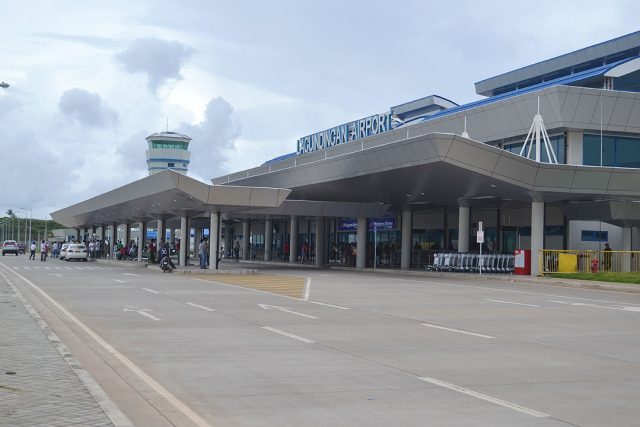
THE PHILIPPINE government on Monday greenlighted a public-private partnership (PPP) project that seeks to turn Mindanao’s second-busiest airport into an international gateway, from which it expects a 3% share in gross revenue.

The Transportation department said it would advance more projects this year, including one that will build an international airport and set up a container terminal in the central Philippine province of Cebu.

President Ferdinand R. Marcos, Jr. on Monday witnessed the signing of the 30-year concession agreement for the upgrade and maintenance of the Laguindingan airport in northern Mindanao, which was awarded earlier this month to Aboitiz InfraCapital.

Aboitiz, the Department of Transportation (DoTR) and Civil Aviation Authority of the Philippines were the signatories.

Under the P12.75-billion project, the company will upgrade, expand, operate and maintain the airport in two phases, the first of which is expected to increase its capacity to 3.9 million.

The second phase will further increase the gateway’s passenger capacity to 6.3 million, Mr. Marcos said.

“This also shows our commitment to invest in the development of Northern Mindanao,” he said in a speech.

“Expectedly, the improvement of the airport will significantly boost tourism, create jobs, increase business presence and ultimately aid in achieving our goal of economic growth.”

Aboitiz InfraCapital’s deliverables under the agreement include the reconfiguration of existing terminal space to improve processing capacity, the construction of a passenger terminal building, as well as repair and maintenance activities that would fix “airport capacity shortage,” the DoTR said in a statement.

“Opportunities for investments, trade and tourism are expected to pour in Northern Mindanao and its adjacent cities.”

Transport Undersecretary Roberto C.O. Lim said the government would receive fixed payments worth P47 million in the first year “and in subsequent years, it will be growing.”

“And then we have a revenue share of 3% of gross revenues,” he separately told a palace briefing after the signing ceremony. “We expect to receive P3.766 billion over the concession period. That is the expected revenue for this project.”

Transport Secretary Jaime J. Bautista said the privatization would “lead to making this airport an international airport.”

“So with the implementation of this PPP project, there will be international flights and we will request Philippine carriers to fly out of Laguindingan to other Asian countries,” he said.

“We will also request the other airlines of other countries to fly to Laguindingan. The objective is to make this as a regional, international airport.”

The PPP Center told BusinessWorld last month that five more projects worth P28 billion are expected to be awarded this year and by early 2025.

The Aboitiz Group’s infrastructure arm also secured an original proponent status for the operations and maintenance of the Bohol-Panglao International Airport for 25 years.

Mr. Bautista said the government seeks to begin the Swiss challenge for the PPP project for the Bohol-Panglao airport by Nov. 11.

“If there will be no challenger, it’s possible that we can award this before the end of the year.”

INFRA DEVELOPMENT
Under the Swiss challenge, the government will allow other companies to challenge the proposal of Aboitiz.

The Bohol airport opened in 2018 after decades of plans, replacing the Tagbilaran Airport to respond to the province’s increased passenger traffic.

Mr. Bautista said the government is also planning to begin construction of the proposed Cebu International Container Terminal, which is funded by the Export-Import Bank of Korea, by the end of the year.

“We will do the notice of awardee in a few weeks. And maybe the agreement, we can sign before the end of the year also.”

The Finance department signed a $172.64-million loan agreement with the Korean bank for the project.

The DoTR earlier said the proposed container port, which will be equipped with four quay cranes, is targeted for completion by 2028.

In his state of the nation address in July, Mr. Marcos said the government aims to complete 350 airport and seaport projects by 2028.

Mr. Bautista said the government is expecting the start of operations of the Light Rail Transit (LRT) Line-1 extension by mid-November.

The government also expects to start construction of the proposed Taguig International Exchange, which had an estimated cost of P5.2 billion at the time of approval, this year, he added.

The DoTR earlier said Ayala Land, Inc. (ALI), a unit of Ayala Corp., will build the multimodal passenger terminal, which has been stalled since 2016.

The project seeks to connect passengers to city buses and other public utility vehicles, and other systems such as the North-South Commuter Railway project.

In December, Mr. Marcos signed the PPP Code, which amended the Build-Operate-Transfer (BOT) law to create a unified legal framework for all PPPs at the national and local levels.

“Let us draw inspiration from this second successful airport privatization project to advance our nation’s infrastructure development,” Mr. Bautista said of the PPP project for the Laguindingan airport.
PAGASA: Kong-rey now a severe storm, may become a typhoon in next 24 hours

PAGASA.DOST.GOV.PH

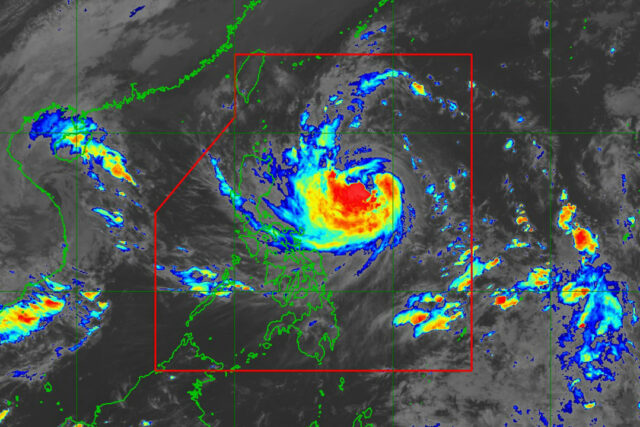
THE STATE weather bureau on Monday said Kong-rey (local name: Leon) has intensified into a severe tropical storm and could become a typhoon in the next 24 hours.

In a 5 p.m. bulletin, the Philippine Atmospheric, Geophysical and Astronomical Services Administration (PAGASA) said Kong-rey was expected to rapidly intensify into a typhoon as its passes over the Philippine Sea.

“There is an increasing chance that Leon will reach super typhoon category during its period of closest approach to Batanes,” PAGASA said.

The intensification of the storm prompted the agency to raise tropical wind signal No. 1 over areas in Luzon and the Visayas.

PAGASA has placed Ilocos Norte, Ilocos Sur, La Union, Pangasinan, Apayao, Kalinga, Abra, Mountain Province, Ifugao, Benguet, Cagayan including Babuyan Islands, Isabela, Quirino, Nueva Vizcaya, Nueva Ecija, Tarlac, Zambales, Bataan, Pampanga, Bulacan, Metro Manila, the northern portion of Rizal, and the northern portion of Cavite under signal No. 1.

Signal No. 1 was also hoisted over the eastern portion of Northern Samar and northern portion of Eastern Samar.

The storm was last seen 725 kilometers east of Echague, Isabela province, and was moving west northwestward at 15 kilometers per hour (kph).

The storm was packing maximum sustained winds of 100 kph and a gustiness of up to 125 kph.

Kong-rey  is the second storm to hit the Philippines this October, after Severe Tropical Storm Trami, locally named Kristine, last week.

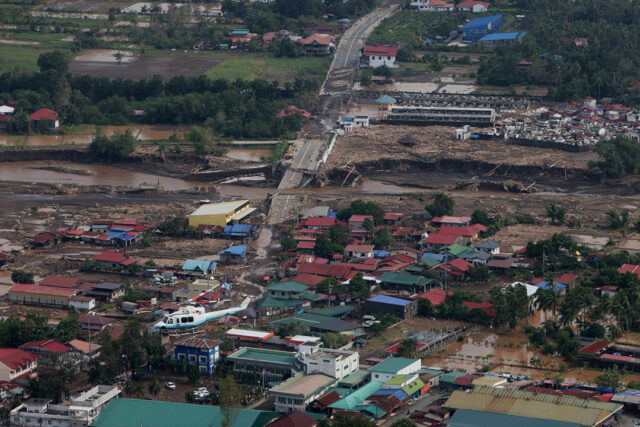
Kristine had caused intense rainfall and flooding over several provinces, prompting 158 areas to declare a state of calamity.

About 100 people have died and more than half-a-million were forced to flee, according to the National Disaster Risk Reduction and Management Council. — Adrian H. Halili

Senate to tackle flood control in plenary budget debates — Escudero

NOEL B. PABALATE/PPA POOL

THE SENATE is expected to scrutinize state flood control programs when it starts plenary debates on the proposed P6.352-trillion national budget for 2025 after the onslaught of severe tropical storm Trami, locally known as Kristine, according to the Senate president.

“Theoretically, rising seas and higher flood waters must lead to rising appropriations and a higher budget for climate adaptation, of which, I must emphasize, flood control is but one component,” Senate President Francis “Chiz” G. Escudero said in a statement on Monday.

“We will not only exact accountability but also make sure the 2025 budget will provide preventive measures to avoid a recurrence as well as adequate rehabilitation and response in case of a similar calamity in the future.”

At least 100 people have died as severe tropical storm Trami battered the country, the National Disaster Risk Reduction and Management Council said in a statement on Sunday night, noting that more than half a million people have been displaced by the storm, while 36 are still missing.

Trami, described by Greenpeace Philippines as the “third highly devastating” weather event to hit the Philippines in 2024 alone, flooded over a hundred areas in Calabarzon, Mimaropa, Bicol, Western Visayas, Eastern Visayas, Zamboanga Peninsula, and the Bangsamoro. 

Under the proposed budget for next year, approved by the House of Representatives on final reading last month, P303 billion is allotted to flood control projects under the Department of Public Works and Highways.

About P353 billion was set aside for building flood control projects this year.

The Senate president earlier said the chamber is aiming to start plenary debate on the proposed national spending plan by the second week of November once it is sponsored by around Nov. 6.

The Senate would then target to approve the P6.352-trillion national budget for 2025 by the second week of December at the latest, in time to submit it to the Palace before Congress adjourns.

Based on data from the Philippine Atmospheric, Geophysical and Astronomical Services Administration, a total 11 tropical cyclones entered the Philippine Area of Responsibility last year.

The Philippines, which faces an average of 20 typhoon yearly, also remained as the most disaster-prone country for the 16th consecutive year, according to the latest World Risk Index.

“Disaster response should not depend on people’s resiliency alone, but also on government response,” Mr. Escudero said. — John Victor D. Ordoñez

Stop fuel price hikes, gov’t told

PHILIPPINE STAR/MIGUEL DE GUZMAN

THE Department of Energy (DoE) and Energy Regulatory Commission (ERC) should look at preventing fuel price hikes in parts of the country under a state of calamity after being battered by Severe Tropical Storm Trami (Local name: Kristine), a congressman said on Monday.

The DoE and ERC could suspend the administrative and regulatory fees being charged to oil companies to temporarily halt the increase of fuel products in typhoon-affected regions, Quezon Rep. Reynante U. Arrogancia said.

“We call upon the Department of Energy and Energy Regulatory Commission to stop by whatever legal means available the imposition of any fuel price increases in the areas under state of calamity devastated by Typhoon Kristine,” he said in a statement.

Typhoon Trami inundated Bicol and Calabarzon regions with flooding last week, affecting 6.7 million Filipinos nationwide and leaving 97 dead in its wake, according to the National Disaster Risk Reduction and Management Council’s (NDRRMC) situational report published on Oct. 28.

A total of 160 cities and municipalities have declared a state of calamity due to the typhoon, the same NDRRMC report stated.

“It would be the height of corporate callousness and inhumanity for the oil companies to inflict higher fuel prices on the provinces, cities, and towns flooded by [Typhoon] Kristine,” Mr. Arrogancia said.

He urged consumer groups to file a petition before Philippine courts, calling for a temporary restraining order against any fuel price increases by at least 30 to 60 days. “If a constitutionality case can be made to force the oil firms to stop their fuel price hikes, then that legal path must be pursued.” — Kenneth Christiane L. Basilio

DILG charter amendment eyed

PHILIPPINE STAR/ MICHAEL VARCAS

A CONGRESSMAN on Monday said Congress could amend the Department of Interior and Local Government’s (DILG) charter to include disaster management among its mandates, helping improve inter-agency coordination and disaster mitigation efforts.

Party-list Rep. Rodolfo M. Ordanes also said including disaster management responsibilities under the DILG would be cheaper instead of creating a new, standalone executive agency.

“We do not need a new department to take charge of disaster risk reduction and management (DRMM). We only have to amend the Charter of the Department of the Interior and Local Government by including a DRRM mandate and line bureau with DRRM responsibilities,” Mr. Ordanes said in a statement.

“This way, the DILG Secretary is going to be directly responsible and accountable. The DILG Secretary can coordinate and manage DRRM of all (local government units). Any of the DILG bureaus and offices can be given specific DRRM tasks,” he added. — Kenneth Christiane L. Basilio

CAAP on high alert ahead of holiday

BW FILE PHOTO

The Civil Aviation Authority of the Philippines (CAAP) said it is deploying additional personnel across all airports as it anticipates air travelers to increase by 10% for the upcoming All Souls’ Day and All Saints’ Day.

“CAAP has heightened security across all 44 CAAP airports from Oct. 25 to Nov. 10,” CAAP said in a media release on Monday.

Last year, CAAP recorded 2.1 million passengers traveling from October to November, up 10.5% from the 1.9 million passengers in the same period a year earlier.

The operator of the Ninoy Aquino International Airport (NAIA), New NAIA Infra Corp. (NNIC), said it is teaming up with various stakeholders at NAIA in preparation for the expected passenger influx for the upcoming All Souls’ Day and All Saints’ Day.

NNIC also said that it is in discussion with transportation service providers to increase the number of available vehicles for passengers. 

Data from Manila International Airport Authority showed that it has recorded a total of 33.69 million passengers as of August; of this, 18.07 million are domestic passengers while 15.62 are international passengers.

Earlier, Philippines AirAsia, Inc. (AirAsia Philippines) said it had logged more than 50,000 seats sold for the travel period of Oct. 30 to Nov. 3.

Meanwhile, budget carrier Cebu Pacific, operated by Cebu Air, Inc., said it is anticipating one million passengers for the upcoming All Souls’ Day and All Saints’ Day alone.

Over the weekend, flag carrier Philippine Airlines announced that it is expecting NAIA’s Terminal 2 to get busier beginning Nov. 5 as three other airlines are set to transfer their domestic flights to Terminal 2.

Earlier this month, NNIC said that Terminal 4 of NAIA is scheduled for renovation and upgrade starting Nov. 6.

With this, Cebu Pacific will relocate the operations of its regional brand Cebgo to Terminal 2 from Terminal 4 effective Nov. 7; while AirSWIFT Transport, Inc. will also transfer its operations to Terminal 2 starting Nov. 5.

Boutique airline Sunlight Air will also move its operations to Terminal 2 starting Nov. 6, according to the company’s social media advisory. — Ashley Erika O. Jose

PHL expands program vs hunger

NOEL B. PABALATE/PPA POOL

THE Philippine government on Monday expanded a 2016 program against hunger by enjoining more national agencies as well as international organizations.

Under the joint memorandum circular for the Enhanced Partnership Against Hunger and Poverty (EPAHP), the government formed a coalition of 34 national agencies and international organizations in line with its “zero hunger” goal.

The circular created a 14-member steering committee, which will be chaired by the Department of Social Welfare and Development (DSWD), to ensure coordination and accountability for the program’s implementation.

The United Nations (UN) World Food Programme and the UN Food and Agriculture Organization (UNFAO) were among the signatories of the circular, which set guidelines to harmonize efforts against hunger. 

“The EPAHP is a convergence program of the national government that aims to help mitigate hunger, ensure food and nutrition security and reduce poverty in urban and rural communities, including marginalized communities,” the DSWD said in a statement.

The partnership was launched in 2016 when the DSWD, Department of Agriculture, and the Department of Agrarian Reform united to start the Partnership Against Hunger and Poverty.

The program expanded in 2019 and evolved into the current EPAHP.

In his speech at the ceremonial presentation of the circular, President Ferdinand R. Marcos, Jr. said providing credit and insurance assistance and directly connecting community-based organizations (CBOs) to government feeding programs will be the core of the partnership’s approach.

The DSWD said its anti-hunger programs include the Supplementary Feeding Program (SFP), regular meals for Centers and Residential Care Facilities, the Bangsamoro Umpungan sa Nutrition Program Food Voucher Program, and the Walang Gutom Program.

Under the SFP, the agency, in partnership with the LGUs, is providing food in addition to the regular meals to children currently enrolled in child development centers and Supervised Neighborhood Play, as part of the DSWD’s contribution to the early childcare and development program of the government

“As of May 2024, more than P200 million worth of sales and contracts between 122 CBOs and government feeding programs have been generated by strengthening those organizations,” the Presidential Communications Office said.

“The government is also leveraging technology through a Digital Mapping System developed by the UNFAO, allowing connections between organizations and prospective markets, including the feeding programs of the DSWD,” it added.

Self-rated poverty rose to 58% in June from 46% in March, the highest rate since the 49% in June 2008, according to a recent Social Weather Stations poll. Hunger rose to 17.6% in June from 14.2% a month earlier.  — Kyle Aristophere T. Atienza

Gender funding up 16% — DBM

UNSPLASH

THE National Government (NG) has allocated more funding for gender and development (GAD) under the Marcos administration, the Department of Budget and Management (DBM) said.

“In terms of the share of the GAD in our National Government budget, it has been increasing from 3% in the previous administration to as much as 16% in the present administration,” Budget Secretary Amenah F. Pangandaman said during the International Conference on Women, Peace and Security on Monday.

“We are happy with that development. However, there are still a lot of issues that we have to look into.”

This is in line with Republic Act (RA) No. 9710 or the Magna Carta of Women, which mandates all state agencies and corporations, as well as local government units, to allocate at least 5% of their yearly budget for gender-related programs, projects, and activities.

Around 65% of government agencies have been implementing gender-sensitive infrastructure projects, Ms. Pangandaman said.

“The recent number shows that in 2022, some P4 billion has been allocated for infrastructure budget that is gender-responsive,” Ms. Pangandaman said.

She also noted that around P2.1 billion as allocated in 2022 for social protection including women, youth, and children.

For 2024, the national budget has allocated P83 billion for gender and development, internally displaced persons, and disaster relief assistance. This is an 8.9% increase from the P76.2 billion earmarked last year, according to a document posted at the DBM’s website.

The Budget chief added that the newly enacted Public Financial Management Roadmap for 2025 to 2028, centers on climate, disaster, and gender.

“We are now starting on working on this platform to be able to improve the compliance of our gender budget to our national budget not just in the National Government but also in our local government units,” she said.

Ms. Pangandaman also noted that RA 12009, the New Government Procurement Act, which seeks to modernize and address bottlenecks in the country’s procurement process, includes a gender perspective.

The government has been working on the Implementing Rules and Regulations for the law, which is expected to take effect next year.  Around 60% of the NG’s budget goes to procurement, according to Ms. Pangandaman.

The Philippine government expects to generate financial support and to gain the best practices for its women, peace, and security agenda from participating countries at the conference.

“At this time when women face nontraditional security concerns — such as threats to health security, cybersecurity, and climate change, among others — it is crucial for us to recognize that the future landscape of women, peace and security is no longer confined within the traditional borders of countries and cultures,” Ms. Pangandaman said. — Beatriz Marie D. Cruz

Filipino freelancers’ rights bill filed

GLENN CARSTENS PETERS-UNSPLASH

A BILL protecting Filipino online freelance workers by including them into the fold of the Philippine labor code to grant them basic rights provided to traditional workers, has been filed at the House of Representatives.

Filipino freelancers will be guaranteed the right to equitable compensation no less than the country’s minimum wage rate, under House Bill (HB) No. 10930, filed by Las Piñas Rep. Camille A. Villar on Sept. 18.

It will also mandate online work platforms to enroll Filipino freelancers to the country’s state benefits providers, such as Philippine Health Insurance Corp. (Philhealth), Social Security System (SSS), and the Home Development Mutual Fund.

“Since most gig workers in the Philippines are classified as independent contractors, they are technically not covered by the Labor Code of the Philippines. Therefore… they don’t enjoy the basic rights, benefits, and protection that traditional workers do,” the bill’s introductory note stated.

There are about 1.5 million Filipinos registered on international online work platforms, according to the measure, noting that the country is “among the fastest-growing gig market in the world.

“Online platform workers shall have the right to self-organize to collectively bargain and negotiate with online platform providers, and to engage in peaceful concerted activities,” the bill stated, protecting the rights of freelancers to unionize.

Online work platforms are also required to provide a contract for every working engagement involving Filipinos, it added. — Kenneth Christiane L. Basilio

SC asked to nullify Taguig ordinance

PHOTO BY MIKE GONZALEZ

A FORMER Associate Justice of the Supreme Court (SC) on Monday asked the high court to nullify an ordinance passed by the Taguig City Council last month that expanded the number of councilor seats in the city to twelve from eight.

Former Associate Justice Dante O. Tiñga said the move was illegal and overstepped the council’s authority.

According to him, the ordinance, enacted on Sept. 16, would increase Taguig’s council seats to a total of 24 across its two councilor districts from 16.

He contended that this adjustment requires a law passed by Congress, as local councils are not empowered to unilaterally increase councilor seats.

He cited three main points: the resolution did not undergo the Constitution’s prescribed three readings, and it lacks the president’s signature. He also cited a decision, in which the SC ruled in the case of Ang Nars Party-List, et al. v. The Executive Secretary (2019), declaring that even a Joint Resolution approved by both Houses of Congress and signed by the President as “void and unconstitutional” as it amended a provision of an earlier law.

The petition also named the Commission on Elections (Comelec) as a respondent for promulgating the ordinance through a resolution, alongside both chambers of Congress for endorsing it via a concurrent resolution.

“The action of the Comelec was based on the Sangguniang Panlungsod ordinance and the sense of the Senate and the House of Representatives via a concurrent resolution. Meaning, we did not act based on capriciousness, arbitrariness, and in a despotic manner but in ensuring that the electorate of the 10 barangays are not disenfranchise[d],” Comelec Chairman George Erwin M. Garcia told reporters in a Viber message.

“In several instances, the SC gave us leeway or elbow room just to ensure equal opportunity for all in the conduct of orderly and peaceful elections.”

Taguig City Mayor Maria Laarni “Lani” L. Cayetano did not immediately respond to a text message seeking comment. — Chloe Mari A. Hufana

Arrest of 3 NDFP consultants meant to spoil peace talks

BAGUIO CITY — The negotiating panel of the National Democratic Front of the Philippines (NDFP) claimed that the arrest of three of their consultants by government security forces was deliberate and are meant to “create hostile conditions to obstruct the peace negotiations.”

The arrests of NDFP consultants Simon Fiaryao Naogsan, Sr., Porferio Tuna, Jr., and Wigberto Villarico, the NDFP negotiating panel on Monday said in a statement, “undermine the peace process and violates the basic principles of mutual respect and accountability.”

“These consultants have dedicated their lives to representing the Filipino people’s interests and are integral in the resumption of peace negotiations.”   

Their arrest, it added, “serve only to foster growing distrust and heightened tensions at a time when space for dialogue is critical.”

The NDFP negotiating panel stressed that the arrest of the three consultants “is yet another in a string of blatant violations by the Government of the Republic of the Philippines (GRP) of the Joint Agreement on Safety and Immunity Guarantees (JASIG), signed to provide both parties to the negotiations the conducive conditions to engage without the threat of arrest, killing or harassment.”

The NDFP panel rebuked National Security Council Spokesperson Jonathan E. Malaya’s declaration that JASIG is no longer in effect, saying “(the) effectivity of these agreements cannot be simply rescinded through a mere press conference or media statement.”

The NDFP panel insisted that “such agreements are the product of formal negotiations and mutual commitment, rooted in both national and international legal principles, and cannot be undone unilaterally or casually.”   

The termination of an agreement like JASIG requires formal procedures as stipulated in the document signed by both parties in 1995, the NDFP panel added.

Mr. Malaya’s declaration that Mr. Villarico is not an NDFP consultant was also refuted by the NDFP Panel, saying, “in fact, Wigberto Villarico is an NDFP consultant, regularly engaged by the NDFP Negotiating Panel as a key representative from the Southern Tagalog region.  His role is crucial in representing concerns of farmers and workers in the region and in advancing the substantive items in the negotiations including in the process of drafting the Comprehensive Agreement on Social and Economic Reforms.”

The NDFP Panel also denounced how NDFP consultants and negotiators “(are) repeatedly subjected to arbitrary arrests, extrajudicial killings, and torture,” thus, leading them to believe, “the GRP has made a mockery of its own supposed commitment to peace.”

While the NDFP Panel reiterated its openness to resume negotiations, it said “how can we possibly engage in meaningful negotiations when our negotiators and consultants are subjected to arrests, killings, and torture.”   

“This issue is both a practical and political obstacle to the ongoing talks, as it threatens not only the safety of the NDFP consultants, negotiators and staff but also undermines the very foundation of trust and dialogue necessary for any productive peace negotiation to continue,” Julie de Lima, NDFP Negotiating Panel chairperson said. — Artemio A. Dumlao

Customs intercepts smuggled fuel Davao Oriental

PHILSTAR FILE PHOTO

THE Customs bureau recently seized five trucks carrying around 238,000 liters of smuggled fuel in Davao Oriental.

In a joint operation with the Philippine Army, the Bureau of Customs (BoC) found five lorries carrying 238,000 liters of unmarked diesel on Oct. 22. The BoC had yet to disclose the value of the unmarked fuel.

Customs authorities use a unique chemical marker to indicate that imported and locally refined petroleum products have been paid the appropriate taxes. This would help avoid smuggling and misdeclaration of fuel products.

“Based on the intelligence information from the 10th Infantry Division, fuel suspected to be unmarked was being smuggled in Tarragona, Davao Oriental. Several tanker trucks were observed in the area, raising suspicion of smuggling activities,” the agency said.

Authorities received reports that a vessel, identified as Aquaman 3, moved offshore following the transfer of fuel into lorry trucks headed toward Mati in Davao Oriental. The lorries were caught at a checkpoint.

Tests conducted on all fuel samples showed a 0% relative marker level, which meant that the fuel products were transported without the proper marking from Customs authorities.

This is referred to as the “paihi” modus, in which larger tankers off-load fuel to smaller vessels to escape tax payments.

Under its Fuel Marking Program, the bureau has marked around 9.89 billion liters of fuel in the first half, translating to P121.72 billion in duties and taxes, according to its mid-year report. — Beatriz D. Marie Cruz