Home Blog Page 2036

Slaying Limits in Finance: A New Vision for Rural Banking

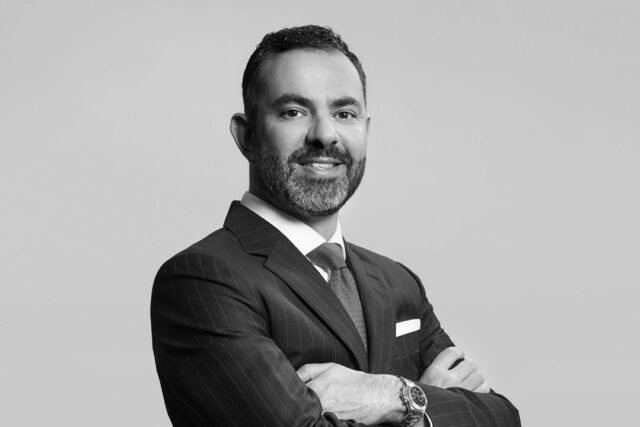
Elenita Dela Rosa, founder and CEO of ECo Global Consulting, Inc., was proclaimed the Small Business Entrepreneur at the recent EY Entrepreneur Of The Year 2024 Philippines awards banquet.

Elen Dela Rosa has always been a pioneer in technology, driven by a passion for innovation and a commitment to making a difference. Her journey began in high school at Manila Science High School, where an advanced computer laboratory curriculum ignited her love for computer science. Despite securing a scholarship to study chemical engineering at Ateneo, she chose instead to pursue computer engineering at MAPUA, driven by her affinity for computers and technology. Her decision to follow her passion over a scholarship paid off, as she joined Finastra, one of the largest global fintech companies, as a trainee programmer right out of college. Over the next 21 years, she worked her way up to become the Global Director of Product Management and Product Development, representing the Philippines on an international stage as the only female Filipino leader among her global peers.

Elen’s time at Finastra was transformative, as she traveled extensively across key financial hubs like London, Singapore, Tokyo, and Sydney, building a global network and gaining an expansive view of the international banking landscape. However, her career took a pivotal turn when venture capital investments led to a change in the company’ s product strategy and direction at Finastra. This change propelled her to pursue her dream of contributing directly to the Philippine economy by founding her own company, one that would harness and develop local talents and offer a supportive and dynamic work culture. In 2013, with her own savings, Elen launched ECo Global Consulting, an IT solutions provider specializing in core banking systems.

ECo Global faced an uphill climb in its early days, a small player in a market dominated by global giants. The company secured its first project in Bahrain in 2014 and then expanded to Singapore, marking the beginning of its international footprint. Elen’s relationships, meticulously built over her career, were instrumental in these initial contracts, underscoring her belief in the power of personal connections in business. Driven by a clear sense of purpose, Elen personally pitched to banks, gradually building ECo Global’s reputation as a trusted solutions provider.

Yet, it was in 2019 that ECo Global truly hit its stride, signing its first major Philippine client and developing the SurePass Test Automation tool. This milestone inspired Elen to take a bold leap with her newest innovation: ECOSLAi. ECOSLAi, a transformative, plug-and-play core banking and lending platform, is designed to empower rural banks, cooperatives, and microfinance institutions, enabling them to compete in a rapidly digitizing financial landscape. As a product, ECOSLAi embodies Elen’s vision for an inclusive financial ecosystem in the Philippines, one that is both scalable and secure, bridging the gap for rural banks to deliver digital services that rival their urban counterparts. The technology suite offers advanced features like interoperability, scalability, and a cost-effective framework, making it possible for rural banks to transform their operations while keeping costs lean. With ECOSLAi, Elen envisions a future where rural banks not only survive but thrive—where they can deliver personalized, efficient services to clients and ensure compliance to regulatory requirements.

The COVID-19 pandemic, which forced businesses to adopt remote operations, ironically fast-tracked ECo Global’s growth, as banks became more open to remote deals. The company leveraged this shift, leading projects that ranged from corporate channel integrations to comprehensive core banking upgrade, all while furthering the development of ECOSLAi. By 2023, ECo Global held a soft launch for ECOSLAi at the Hong Kong FinTech Festival as one of six Philippine delegates. This product was also showcased at major events like the Digital Pilipinas Festival 2023, where Elen addressed the importance of “Enabling Provincial Digital Ecosystems,” and the Indonesia FinTech event in Jakarta.

Today, ECo Global’s clients span Asia, Middle East and Europe, with ECOSLAi poised to redefine rural banking in the Philippines. Elen’s entrepreneurial spirit and dedication to her team are reflected in the company’s core values. ECo Global is known for its strong focus on employee well-being, as evidenced by its wellness programs, Great Place to Work® certifications, and a notably low attrition rate. Elen fosters a workplace where employees thrive, motivated by programs that reward physical activity and support personal and technical development, including industry standard certification and continuous upskilling. By integrating social responsibility into its business model, ECo Global also contributes to various educational foundations and community outreach programs.

Despite ECo Global’s impressive growth, Elen remains focused on her ultimate goal: to bring financial accessibility to every corner of the Philippines. With ECOSLAi, she’s not just aiming to digitalize rural banking; she’s providing a pathway for rural banks to achieve financial resilience and broader economic inclusion. Her plans for 2024 reflect this vision, as ECo Global pilot ECOSLAi with two rural banks, expand its network of strategic partners and deliver affordable technology solutions to make ECOSLAi even more accessible.

Elen’s hard work and advocacy have been recognized after being selected as one of the finalists of EY Entrepreneur Of The Year 2024 Philippines and this year’s Small Business Entrepreneur.

In a world where venture capital often dictates the trajectory of tech companies, Elen’s journey is a testament to her values and purpose. She has built ECo Global from the ground up, choosing to sustain growth without outside investors so she can align with partners who share her commitment to community upliftment. As she continues to transform rural banking through ECOSLAi, Elen is paving the way for a new era of inclusive finance, empowering underserved communities and reshaping the landscape of the Philippine economy.


Spotlight is BusinessWorld’s sponsored section that allows advertisers to amplify their brand and connect with BusinessWorld’s audience by publishing their stories on the BusinessWorld Web site. For more information, send an email to online@bworldonline.com.

Join us on Viber at https://bit.ly/3hv6bLA to get more updates and subscribe to BusinessWorld’s titles and get exclusive content through www.bworld-x.com.

NG debt hits record P15.89 trillion

BW FILE PHOTO

THE NATIONAL Government’s (NG) outstanding debt rose to a fresh high of P15.89 trillion as of end-September, but the Bureau of the Treasury (BTr) said this level is still “manageable.”

Data from the BTr on Wednesday showed that outstanding debt jumped by 2.2% to P15.89 trillion as of end-September from P15.55 trillion as of end-August.

“The total outstanding debt had a minimal increase of 2.2% compared to the end-August 2024 level due to the net availment of new external and domestic debt,” the BTr said in a statement.

National Government outstanding debtYear on year, the debt stock increased by 11.4% from P14.27 trillion a year ago.

“Nevertheless, the NG’s strategic focus on local fundraising allows the government to limit external risk exposure to only 31.19% of its debt portfolio, while enabling the development of the local bond market and providing Filipinos with quality investment vehicles to grow their savings,” the Treasury said.

The bulk, or 68.81% of the total debt stock, came from domestic sources.

As of end-September, outstanding domestic debt inched up by 1.3% to P10.94 trillion from P10.79 trillion in the previous month. Government securities accounted for nearly all of domestic debt.

Year on year, domestic debt increased by 12.3% from P9.73 trillion.

“This (increase) was mainly driven by P145.11-billion net issuance of new government securities, which was slightly offset by a P460-million decrease in the value of US dollar-denominated securities due to the appreciation of the Philippine peso,” the BTr said.

Meanwhile, external debt rose by 4.2% to P4.96 trillion at end-September from P4.76 trillion at end-August, the BTr said. It also jumped by 9.3% from P4.53 trillion in the same period a year ago.

The uptick in foreign debt was due to the P200.89 billion in net foreign borrowings, including the P140.99 billion or $2.5-billion issuance of triple-tranche US dollar-denominated global bonds, BTr said. The transaction was finalized in September.

“Nevertheless, favorable foreign exchange adjustments contributed a substantial decrease of P2.43 billion in the overall external debt.”

The peso closed at P56.017 against the US dollar at the end of September, appreciating by 16.2 centavos from its P56.179 finish at the end of August.

External debt comprised of P2.32 trillion in loans and P2.64 trillion in global bonds.

Broken down, government securities consisted of P2.25 trillion in US dollar bonds, P215.23 billion in Euro bonds, P59.11 billion in Japanese yen bonds, P56.02 billion in Islamic certificates and P54.77 billion in peso global bonds.

Meanwhile, the NG’s guaranteed obligations at end-September increased by 2.4% to P372.86 billion from P364.03 billion as of end-August. It also picked up by 2.9% from P362.22 billion in the same period in 2023.

“This was mainly driven by the P12.3 billion in new guarantees for the Power Sector Assets and Liabilities Management Corp. (PSALM) and the National Food Authority (NFA), as well as P940 million in upward revaluation of third currency-denominated guarantee,” the Treasury said.

“Net repayments of P3.95 billion and P460 million downward revaluation of US dollar-denominated guarantees tempered the increase,” it added.

Rizal Commercial Banking Corp. Chief Economist Michael L. Ricafort said in a Viber message that the increase in debt was mainly due to increased borrowings to plug the budget deficit.

For the first nine months of 2024, the budget deficit narrowed by 1.35% to P970.2 billion from P983.5 billion a year ago.

“Some maturity of government securities in October 2024 and seasonally lower NG borrowings towards the end of the year in view of the Christmas holiday season could at least temper the rise in additional NG debt,” Mr. Ricafort said.

At the end of June, the NG’s debt as a share of gross domestic product (GDP) was at 60.9%, still above the 60% threshold deemed by multilateral lenders as manageable for developing economies. It aims to lower the debt-to-GDP ratio to 60.6% by the end of 2024.

The NG’s debt stock is expected to hit P16.06 trillion at the end of 2024, with P10.92 trillion coming from domestic sources and P5.13 trillion from foreign sources. — Beatriz Marie D. Cruz

Domestic demand key to insulating PHL from US trade risks

DONALD J. TRUMP wearing a traditional barong Tagalog during his visit to Manila on Nov. 12, 2017. — REUTERS

By Kyle Aristophere T. Atienza, Reporter

THE PHILIPPINES needs to boost domestic demand to insulate its economy from a potential setback on multilateralism, which is likely to happen if Donald J. Trump returns to power in the United States, according to economists.

“It’s not only the Philippines which will be adversely affected should the US pivot away from multilateralism, something of a certainty under a Trump presidency,” Diwa C. Guinigundo, country analyst for the Philippines of GlobalSource Partners, said in an e-mail.

The United States’ trading partners “will suffer from the consequences of a fundamentally closed trading system — higher tariffs will actually reduce US imports and growth, while its trading partners will have compressed markets, lower trading gains and economic growth,” he said.

Mr. Trump, the Republican candidate, faces Democratic rival and Vice-President Kamala Harris in the Nov. 5 presidential elections.

If he wins, Mr. Trump has said he will impose a 10% tariff on imports from all countries and 60% tariff on imports from China.

Philippine Finance Secretary Ralph G. Recto last week said a potential Trump presidency poses risks to global growth as increased protectionism could weaken global trade.

“We are concerned that there will be a setback on multilateralism, particularly in trade as well… We know that the driver of global growth is more trade. So, that is a concern,” Mr. Recto said at a briefing of the Intergovernmental Group of Twenty-Four (G24) Board of Governors in Washington, D.C. on Oct. 22.

Mr. Recto said the Philippines is counting on its relationship with the US to encourage firms to do more offshoring to the Philippines.

“If the US adopts a more protectionist stance, the Philippines, as a net exporter with a $2.3-billion trade surplus in goods trade with the US in 2023, could be negatively affected,” George N. Manzano, who teaches trade at the University of Asia and the Pacific, said in an e-mail.

“An across-the-board tariff increase by the US would adversely impact Philippine exports.”

But Mr. Manzano said it is an advantage for the Philippines that electronic products account for a huge chunk of its exports to the US, thanks in large part to a 1990s World Trade Organization (WTO) agreement that eliminated all import duties on many information technology products.

“Approximately 67% of the Philippines’ goods trade with the US in 2023 was in the electronics sector, which currently benefits from duty-free access, likely due to the Information Technology Agreement (ITA) under the WTO,” he said.

Electronic products accounted for 52.9% of the country’s total exports in August, with total earnings of $3.57 billion, according to the statistics agency.

The United States was the top destination of Philippine-made goods in August with an export value of $1.22 billion, accounting for 18.1% of the total. This was followed by Hong Kong ($942.56 million), Japan ($935.33 million), People’s Republic of China ($849.38 million), and Republic of Korea ($332.64 million).

IMPACT ON BPO SECTOR
“The Philippines could likely be more affected in the business process outsourcing (BPO) area considering our comparative advantage in this sector relative to other Southeast Asian countries,” said Mr. Guinigundo, a former central bank deputy governor.

The IT and Business Process Association of the Philippines (IBPAP) is aiming to generate $38 billion in revenues and increase the headcount to 1.82 million this year. The group is targeting to generate as much $59 billion and employ 2.5 million by 2028.

However, the IT-BPM sector is under pressure due to a talent and skills gap, rising operating costs, and increased global competition.

Fitch Solutions’ BMI unit said earlier this month that the Philippine BPO sector is at a disadvantage amid the growing shift to artificial intelligence, noting a possible reshoring of call centers to “even developed economies cost effectively.”

“This is no win-win situation. Everybody would ultimately lose,” Mr. Guinigundo said, “China’s retaliatory response could in fact worsen this scenario.”

Mr. Trump’s recent policy remarks, including his famous America first policy and an emphasis on burden sharing, have stoked concerns that Washington could adopt an inward-looking and an isolationist approach.

During his presidency, Mr. Trump withdrew from various global institutions including the Paris Climate Agreement and the Trans-Pacific Partnership.

On the economic front, Mr. Trump has been citing the need to raise tariffs for the US to usher in an era of “manufacturing renaissance.”

On the other hand, Ms. Harris, the Democratic candidate, has vowed to “strengthen, not abdicate” America’s “global leadership.”

“The president of the United States must not look at the world through the narrow lens of ideology, petty partisanship, or as an instrument for their own ambitions,” read a recent X post by Ms. Harris, who is expected to uphold the Biden government’s strategy of cementing a network of US allies and partners to confront shared challenges.

Mr. Marcos has pursued closer ties with the United States amid China’s intrusions into Philippine waters, giving it access to four more military bases under the 2014 Enhanced Defense Cooperation Agreement.

US-Philippine ties on the economic front have also reached new highs, with a business delegation led by US Commerce Secretary Gina Raimondo in March vowing to help the Philippines set up a wafer fabrication plant and double the number of its semiconductor plants.

Weeks later, the US announced a plan to put up an economic corridor on the main island of Luzon, following a trilateral meeting among Mr. Marcos, Mr. Biden, and Japanese Prime Minister Fumio Kishida.

The project, a “key deliverable” under the Partnership for Global Infrastructure and Investment component of the US-led Indo-Pacific Economic Framework, will be pursued by Washington with the help of Japan.

Mr. Manzano said the US would likely be compelled to step up its ties with Asia-Pacific countries “to keep pace with the increasing influence of China in the Southeast Asian region.”

“The US will continue to deepen its relationship with the Philippines. President Marcos is inclined to deal more with the US than with China given the developments in the West Philippine Sea,” he said.

A report by Moody’s Analytics in July said the Asia-Pacific region faces the risk of an abrupt shift in US trade policy in case of a Republican sweep in the US presidential election.

But it expects “minimal retaliation” from the Philippines against potentially higher US tariffs given its strong defense ties with Washington.

Among Asia-Pacific economies, Moody’s said only China is likely to retaliate considering its ongoing trade with the US since 2018, when Mr. Trump slapped investment controls and tariffs on hundreds of billions of dollars’ worth of Chinese products due mainly to alleged unfair trade practices by Beijing.

Mr. Guinigundo said amid the trade risks, the Philippines needs to prioritize boosting domestic demand and enhancing trade with the ASEAN+3, which includes Japan, China and South Korea.

“Two things which may not completely offset possible trade shocks: one is to promote domestic demand, and two is to further stimulate our trade in both goods and services with our ASEAN+3 partners.”

Mr. Guinigundo said promoting domestic demand is anchored on lower inflation and higher economic growth driven by personal consumption and investments.

“The latest prognosis is quite positive because price movements have started to ease while GDP (gross domestic product) growth may be as targeted — between 6% and 7%,” he said.

He noted the Philippines has improved trade ties with its neighbors.

“Expanding the liberalized list and lowering tariffs can help in this direction,” he added. “Moreover, higher intra-ASEAN+3 financial linkages could further stimulate regional trade.”

Should there be a shift in US trade and foreign policies, Mr. Guinigundo said Manila should continue to improve its investment climate “to ensure private US business will continue to increase their stake here.”

“Trump’s public policy could restrict international trade only to a certain extent. If the Philippines is able to convince US businessmen and investors that the Philippines is good for business in the long term, they will and they will come,” he said.

“Let’s continue to ensure there is good governance here, corruption is under control, there is rule of law and respect for property rights and ease of doing business,” he added.

Meanwhile, Leonardo A. Lanzona, who teaches economics at the Ateneo de Manila University, said the Philippines is unlikely to suffer much from a potential protectionist trade policy in the US because the Southeast Asian nation has not benefited significantly from free trade.

“Trade works well if institutions are also reformed to encourage competition and greater efficiency. None of these has happened, resulting in a moribund manufacturing sector,” he said in an e-mail.

“Industries and elite power continued to drain the economy of its energy and vigor. Whether or not Trump wins, the overseas Filipino workers will remain our saving grace.”

Households reliant on remittances may be more vulnerable to shocks

Families enjoy a day at Luneta Park in Manila. — PHILIPPINE STAR/WALTER BOLLOZOS

By Luisa Maria Jacinta C. Jocson, Reporter

FILIPINO HOUSEHOLDS’ heavy reliance on remittances could leave them more vulnerable during economic shocks, according to a Bangko Sentral ng Pilipinas (BSP) discussion paper, citing the low savings and investments among families.

The paper, authored by BSP Assistant Governor Veronica B. Bayangos and Research Associate Cymon Kayle Lubangco, said that households dependent on remittances could be at risk of external headwinds.

“A substantial decline in remittances would have serious consequences at both the macroeconomic and household levels. Vulnerable remittance-receiving households could face reduced access to education and healthcare, negatively affecting their quality of life,” the paper said.

“Local communities that rely heavily on remittances could experience economic disruptions. For instance, during the COVID-19 (coronavirus disease 2019) pandemic, families of overseas Filipino workers (OFWs) saved and invested less.”

BSP data showed the percentage of households that used remittances as savings dropped to 31.7% in the fourth quarter of 2021 from 33.4% in the same quarter of 2020. However, this improved to 32.1% in the first quarter of 2024.

Households that used remittances for investments also fell to 6.2% in the first quarter of 2024 from 11% in the third quarter of 2021.

“In our analysis, we find that OFW households prioritize immediate consumption over saving and investing,” the paper said.

In the first quarter of this year, the bulk (96.6%) of surveyed OFW households used their remittances for food and household needs.

“The saving rate for cash remittances peaked in 2009, where an average of 13.1% of cash remittances were allocated for savings. Since 2009, the average saving rate for cash remittances among OFW households has slightly declined to around 9.0-10.0%.”

“Despite slower remittance growth, data show that many households and rural communities still rely on remittances for their livelihood,” it added.

The BSP paper showed that migrant households’ immediate consumption is geared towards nonfood spending compared with non-migrant households.

“These nonfood commodities are largely welfare-inducing commodities such as health, education, and housing. The allocation towards productive consumption goods shows that remittances are treated as transitory income,” it added.

Unemployment and wages also impact remittance receipts, highlighting the “altruistic motivation of sending remittances,” according to the paper.

“However, given the global effect of such shocks, this may also expose remittance-receiving households to risks if their overseas Filipino members cannot send remittances due to the economic conditions in their respective host countries,” it said.

HOUSEHOLD SPENDING
Meanwhile, the BSP paper also showed that cash remittances “significantly affect household spending.”

“The inflow of remittances is positively influenced by the number of OFWs abroad, the unemployment rate, and the depreciation of the peso. Conversely, higher regional wages and bank transaction costs reduce remittances,” it said.

Latest data from the BSP showed cash remittances grew by 2.9% to $22.22 billion in the January-August period from $21.58 billion a year earlier.

The United States accounted for nearly half or 41.3% of overall remittances in the first eight months. This was followed by Singapore (7%), Saudi Arabia (6.1%), the United Kingdom (4.9%) and Japan (4.8%).

The BSP paper said that remittances are a key contributor to the economy as these “augment foreign currency reserves, alleviate pressure on the exchange rate, and reduce the need for foreign borrowing.”

“They also support capital market development, enabling recipients to accumulate productive assets and invest in financial instruments, while enhancing human capital. Remittances can also alleviate government financial burdens for social welfare programs.”

The central bank noted that as household income rises, consumption likewise increases.

It cited studies showing that household spending increases as migrants send home money to support their families, which is prominently seen in countries with “high unemployment and debt-laden households.”

However, the paper also noted that remittances have remained somewhat stable despite shocks such as the COVID-19 pandemic.

“Several factors explain the resilience of remittance flows to the Philippines during extreme economic conditions, such as the COVID-19 pandemic. Overseas Filipinos (OFs) are a diverse group, and their ability to remit varies with employment stability,” it said.

“OFs in essential sectors, such as healthcare, likely continued sending remittances, while those in more vulnerable sectors experienced declines.”

New Maersk facility a boost to Philippines’ logistics ambitions — Marcos

President Ferdinand R. Marcos, Jr. receives a small-scale model of the Maersk Optimus Distribution Center from Maersk Contract Logistics Global Head Dominic Gates and Head of Philippines Siow Phing Timoty Tan during the opening of the center in Calamba City, Laguna, Oct. 30, 2024. — PHILIPPINE STAR/NOEL B. PABALATE

DENMARK-BASED A.P. Moller-Maersk has opened a $4.8-billion (P280-billion) distribution facility in Calamba City that President Ferdinand R. Marcos, Jr. said would help decongest Manila and unlock economic potential in the countryside.

This is a significant investment in the Southeast Asian nation’s transport and storage sector, whose market size is projected to grow to P1.16 trillion by 2027, Mr. Marcos said in a speech at the opening of the Maersk Optimus Distribution Center on Wednesday. 

“This strategic location in Calamba aligns with our efforts to decongest Manila and to unlock the economic potential in the countryside,” he said.

Calling it one of the Philippines’ largest logistics centers, Mr. Marcos said the Laguna facility would bolster import and export activities in Southern Luzon, including the Bicol Region.

“With the grand opening of the Maersk Optimus Distribution Center, our logistics system would be a step closer to becoming a powerful force — bridging our islands, breathing life into our industries, our businesses, bringing together our people on a path towards sustained development,” he said.

The Maersk facility has a 70,000-pallet position capacity racking system with cantilever and a 3,281-square meter (sq.m.) mezzanine area for value-added services such as bundling, repacking and stickering, according to the Presidential Communications Office.

The facility has 73 docks to accommodate all truck sizes, a 500-sq.m. battery room that can accommodate 28 units of reach trucks at a single time, and a one-glance room for live monitoring of operations.

Economists said the new logistics center will help in boosting economies of scale in a region notable for the presence of manufacturing sites.

The region has 31 world-class industrial estates and economic zones, most of which are known for semi-processed industrial raw materials and industrial components, according to a regional profile from the Trade department.

“The new logistics facility would be strategic in Calabarzon (Cavite, Laguna, Batangas, Rizal and Quezon) where there are many industrial parks, economic zones, and foreign locators,” said Rizal Commercial Banking Corp. Chief Economist Michael L. Ricafort, noting that manufacturers in the region have huge logistical needs.

Mr. Ricafort said Calabarzon is a “strategic logistical hub,” given its proximity to Metro Manila and lower rental and lease rates that would reduce operating costs for companies.

Terry L. Ridon, convenor of infrastructure and investment think tank InfraWatch, said the new logistics center is “one of the best examples of how to decongest Metro Manila,” and may attract more manufacturers to set up shop in Calabarzon.

“We look forward to more firms setting up shop in areas outside Metro Manila, not only to decongest the capital region, but also to spur local economic growth and provide jobs to communities within these economic hubs.”

John Paolo R. Rivera, a senior research fellow at the Philippine Institute for Development Studies, said the Maersk facility may encourage more investors in the region.

“It will industrialize the region, further creating jobs,” he said via Messenger chat.

Leonardo A. Lanzona, an economics professor at the Ateneo de Manila University, said the growth in the logistics sector may not give a significant boost to the manufacturing sector since it “primarily facilitates the import and distribution of finished goods, with less focus on supporting local manufacturing activities.”

“While a theoretical link between skills and manufacturing exists, much of the logistics growth could be driven by the Philippines’ role in global supply chains, focused on transporting goods rather than producing them,” he said via Messenger chat.

“The Philippines in fact has a small base of related industries that would support manufacturing growth, such as suppliers for parts or raw materials,” he added. “Without these, manufacturing companies may find it difficult to operate competitively, even with improved logistics.”

Localized supply chains remain the key to having a powerful manufacturing base, he noted.

Meanwhile, Mr. Ricafort said he expects more foreign companies to set up shop in Calabarzon since it has a steady supply of workers with many colleges and universities present in the region.

He also cited the region’s accessibility to cheap housing communities.

For the first year of its operation, the Maersk facility in Calabarzon is expected to employ 1,000 workers. It’s also projected to create indirect employment for 1,000 people from micro, small and medium enterprises.

“The Maersk Optimus Distribution Center is expected to create employment for one thousand people in its surrounding communities and indirect employment for another thousand individuals — from vendors and service providers to truckers and beyond,” Mr. Marcos said in his speech. — Kyle Aristophere T. Atienza

Tung Lok Seafood: Third time’s the charm

SALTED EGG CRAB

By Joseph L. Garcia, Senior Reporter

TUNG LOK SEAFOOD, a Singaporean import, opened its third branch (actually its fourth; we’ll explain in a bit) at the Greenhills Mall in August, but they had a grand opening with San Juan’s mayor Francis Zamora on Oct. 25. It’s our second time to try it out at a Tung Lok (we were also present at the S Maison opening last year, but dare we say they’ve gotten even better?

DINING ON 17 DISHES
The Greenhills opening left us stuffed: 17 dishes across four courses. Some people at our table had announced quitting some time before the rice, but we still caught them nibbling. The meal opened with cured cherry tomatoes, fruitier and juicier than if it were fresh (which meant it wasn’t much to our liking; our healthier companions polished it off). They did set aside their diets for the Pork Bakkwa with salad, thin strips of pork barbecue hung over a rack, with dry ice creating a fog, concealing the salad. The Crispy Fish Skin, flavored with salted egg powder was such a hit that they had to replenish our bowl (and it was promptly finished, too).

The Dimsum selections were those found in many other Chinese restaurants: Pork Siu Mai, Chicken Feet, Steamed Pork Spareribs — just with more depth of flavor, we suppose (but then, the luxurious surroundings may have contributed to that bit of praise; the gilding on the plates was so bright they sometimes gave a glare). We do have a bit of unreserved praise for the har gow (known as hakaw in these shores): it had a delicate taste matched by its delicate appearance, the rosiness of the shrimp just peeking from the translucent skin, strong enough to hold the whole thing together, a testament to the kitchen’s talents.

We also give praise to the Fish Collagen Soup: it had a sweetish opaque broth, with a silky and delicate mouthfeel (despite the angry-red grouper’s skin). It proved to be a nice relaxing break from all the flavors — just as well because we were served a spicy Laksa noodle next. The coconut-based broth, with prawns floating in it, was very fragrant, but comparatively mild in its taste compared to its scent. No matter: not every meeting with spicy food has to be a bout.

The heavyweights came next: their hero products, crabs.

According to Mango Tree Philippines President and CEO Eric Teng, who brought the restaurant here back in 2023, the Singapore mother company’s crabs are always on top 10 lists for Singapore’s crab offerings (it being a famous dish).

Gloves are available upon request, the better to crack open the stubborn crustaceans. The Salted Egg Crabs were terribly indulgent; very fatty by themselves, with the addition of the salted egg paste and all that oil — they’re delicious, but, for your doctor’s sake, eat them sparingly (we did not). Its sibling, a Black Pepper Crab, was more balanced and elegant, with the crabs presented by themselves, just slathered with a sweet-spicy dark sauce.

While the Three Cup Chicken (chicken braised in rice wine, soy sauce, and sesame oil, and other nice things) was mostly ignored by our companions at the table (except by myself), and so was the Sauteed Spinach with Three Kinds of Egg (as is, salted, and century). Their loss: while they do lack the zing and pizazz from the crabs, they provided a nice interlude, and the spinach was especially relaxing.

We thought the meal had calmed down by then — as per Chinese etiquette, rice is to be served last, just to make sure the guests were full. We were wrong: the rice dish was Glutinous Rice with stuffed crab steamed over it. Impressive, definitely, but after the several flavors of the evening, we stuck to plain rice (but not before pouncing on a shell or two, as well as the flavorful rice itself).

Dessert was relatively tame with Honeycomb Cake, a cake flavored with molasses that just so happened to be shaped like honeycomb (it was like a more delicate brown puto).

FOR THE FAMILY
As mentioned above, this is Tung Lok Seafood’s third/fourth branch. Their first branch in the Philippines, which opened in 2022, was Tung Lok Signatures in City of Dreams. “More high-end stuff,” Mr. Teng told BusinessWorld, describing that restaurant. Tung Lok Signatures was later converted into a seafood restaurant — “We wanted more family-oriented (fare), so we chose to go with (Tung Lok) Seafood,” said Mr. Teng, but later it was closed in favor of this Greenhills restaurant.

Other Tung Lok Seafood branches are in S Maison and Gateway 2.

“We always go into a market not really thinking that it’s going to be a big success right away. We want to wait for the customers to find familiarity with us first,” he said about opening four restaurants in two years. “It’s picking up steam; it’s picking up traction.”

In Singapore, Tung Lok was founded by Andrew Tijoe in 1984. Mr. Tijoe is a scion of the Tijoe family behind Charming Garden. Tung Lok means “happy together” in Cantonese. The restaurant has 40 branches all over Asia, in Indonesia, China, Japan, and Vietnam, and of course, its home country, Singapore.

“We wanted to present a version of Chinese cuisine that is not commonly found, which is Singaporean style,” said Mr. Teng. The seafood is locally sourced but executed a la Singapore. “We’re lucky that we are in one of the seafood capitals of the world. We have the best, freshest crabs, that we can get live,” he said.

“We try not to change,” he said when asked if anything is altered for Filipino tastes. “The goal is always to stay true to the DNA. We don’t want to think that it needs changing. That’s the whole point of getting a franchise.”

Mr. Teng’s other ventures include the local franchises of Mango Tree, Mango Tree Cafe, Sen-ryo, and Genki Sushi. Each restaurant he brings is significant to a member of the Teng family — his own is their Italian brand, Rossini: “I like pizza,” he says. “My mom is from Thailand,” he said about bringing Mango Tree here. “I love Thai food. Thai food to me isn’t really Thai food — it’s food.”

“As for the sushi, my kids love sushi, and we were approached by Genki Sushi. And we really like them, we like working with them,” he said about the Genki sushi brand.

As for Tung Lok: “When I’m in Singapore, I eat in Tung Lok. When I’m with friends there, I tend to invite them to Tung Lok,” he says. On a personal note, “My mom likes Thai food, but my dad likes Chinese food… this is for my dad.”

NEW CONCEPTS
In about a month, Mr. Teng is going to open Fatima, a Filipino halal (food in agreement with Muslim methods of preparing food) restaurant in the Promenade of the Greenhills Shopping Center, San Juan.

“There are 12 million Muslims in the country — 10% of our population. [Yet] you can hardly find a halal restaurant,” he said. He also talked about the dilemma of introducing foreign Muslim friends to Filipino food like adobo and sinigang — which are decidedly not halal (the vinegar-braised stew and the soured soup dish are usually executed with pork). “We wanted a halal restaurant where I can offer them sinigang or adobo, but in a halal version.”

Mr. Teng is also the current president of Resto PH, the association of Restaurant Owners of the Philippines. “I think it’s my responsibility to see where the gaps are, in terms of where we have underserved consumers.”

Tung Lok Seafood is located at the Ground Level, Greenhills Mall at the Greenhills Shopping Center, Ortigas Ave., San Juan City.

Uy seeks to advance $600-M air traffic control proposal

COMCLARK Chief Executive Officer Dennis Anthony H. Uy — CONVERGEICT.COM

COMCLARK Network and Technology Corp. is hoping to secure the original proponent status (OPS) next week for its $600-million unsolicited proposal to manage the country’s air navigation, traffic, and control system, the company’s top official said.

“Hopefully, let’s wait until next week. I am just waiting. We are just waiting for them,” ComClark Chief Executive Officer Dennis Anthony H. Uy told reporters on Tuesday when asked whether the company had secured the OPS for its unsolicited proposal.

The project has an estimated cost of P29.82 billion under a design, build, finance, and operate contractual arrangement, according to the Public-Private Partnership (PPP) Center.

The project is still under evaluation by the Civil Aviation Authority of the Philippines (CAAP).

PPP Center Executive Director Cynthia C. Hernandez said that while there is an unsolicited proposal for managing the country’s air traffic control, the air traffic services-air navigation services project is also being considered for a solicited project.

This project involves the financing, design, construction, operations, and maintenance of air traffic services and air navigation services of the country’s airspace and international airspace managed by the Philippines.

The proposal covers the construction, upgrading, and operation of air navigation services facilities, including Air Traffic Service (ATS) and Communications, Navigation, Surveillance/Air Traffic Management (CNS/ATM) facilities, the PPP Center said.

“We are taking over the existing CAAP operations. We will bring more technology and we will bring more consultant experts on how to improve our air traffic,” Converge’s Mr. Uy said.

Senator Rafael T. Tulfo has expressed his opposition to the proposal to privatize the operations of the country’s communications, navigation, and surveillance/air traffic management system under the PPP scheme.

“The privatization of CNS/ATM functions poses serious national security risks and exposes us to foreign interference since private companies may be entered into through equity participation by nationalized investors, including big government-backed corporations in China,” Mr. Tulfo said in a previous statement.

Mr. Tulfo said he would file a Senate resolution to investigate the proposal and explore other options to improve the country’s air traffic control system without involving a private operator or removing government control.

Mr. Uy assured that security concerns are addressed as the company will collaborate with the Philippine Air Force.

“What about security concerns? The Air Force addresses the security concerns. Currently, our air traffic controller is operated by CAAP and with the Air Force. There will be no change, I am trying to bring separation for the regulation and operations,” Mr. Uy said.

Transportation Undersecretary for Aviation and Airports Roberto C.O. Lim said that the Department of Transportation is considering either creating an independent agency or forming a joint venture with government corporations under a PPP scheme to privately manage and operate the Philippines’ air traffic management system.

Currently, the World Bank and the International Finance Corp. are conducting a study on the management of the country’s air traffic control.

The plan to create a separate entity to manage the country’s air traffic control system will unload CAAP of its conflicting role, the Transportation department said, adding that it wants CAAP to focus solely on being a regulator. — Ashley Erika O. Jose

The long culinary history of pumpkins — from ancient Mexican soups to modern spiced lattes

FREEPIK

OCTOBER heralds the beginning of pumpkin season. Over the course of the month, they will be used for a variety of non-culinary purposes. In Belgium, they are hollowed out for boat races, and in Ludwigsburg, Germany, thousands of multi-colored pumpkins are used to make seasonal sculpture parks. At the end of the month, they will be carved up with a ghoulish grin to celebrate Halloween, a tradition that is becoming increasingly popular across the globe.

Despite being harvested until December, for many, Halloween will mark the end of pumpkin season with the decorations unceremoniously binned. Studies show that just over half of the pumpkins bought in the UK each year (18,000 tons of them) go to waste uneaten. Many people don’t even realize that pumpkins are edible.

But it hasn’t always been this way: pumpkin carving is actually a fairly recent tradition, practiced in the US since around the 1890s. Before becoming the symbol of Halloween, pumpkins had a very long history as a foodstuff.

Like tomatoes, maize, and potatoes, the pumpkin is indigenous to the Americas, with the earliest evidence of pumpkin consumption dating as far back as 8,000 BC in Oaxaca, Mexico.

Pumpkins have come a long way since then, as Indigenous American communities carefully adapted the wild pumpkin into successively bigger and better-tasting varieties. These weren’t all the bright orange we’re familiar with: white, green, and yellow varieties were also common, mixed in with squashes (a genetically identical relation).

In pre-colonial America, there were a host of different ways to prepare the vegetable, as pumpkin historian Cindy Ott explains. She wrote that Indigenous communities ate pumpkins in soups, roasted them on embers, made them into sauces, and baked them into a “bread.”

Pumpkins and squash were commonly grown and eaten with maize and beans; a combination sometimes called the “three sisters.”

THE RISE OF THE ‘POMPION’
The pumpkin only came to Europe in the 1500s, following the invasion of the Americas. This new vegetable wasn’t as much of a surprise to Europeans as we might expect: gourds, cucumbers, and melons are from the same family as pumpkins, Curcubitaceae, and the plants all look very similar, with trailing vines and large golden flowers.

In European languages, the new plant was given the name of these more familiar foods, so that in English and French it became the pompion (another name for melons), in Italian the zucca, and in German the kürbis (both names for gourds).

All these overlapping names caused some confusion. In 1640, botanist John Parkinson wrote of “gourds or millions, or pompions, or whatsoever else you please to call them.”

The recipes that pumpkins are best known for in today’s Anglo-American cuisine come from this era of food history. “Pumpion” pies started to appear in English recipe books in the 1660s, but they weren’t much like today’s versions.

An early printed recipe was written by Hannah Woolley, an English writer who published books on household management, in 1672. It instructs the reader to fry egg-coated slices, mix these with raisins, sugar, and fortified wine then place the mixture in a pie dish on top of apples. A little different maybe, but it doesn’t sound too bad.

The apple association stayed strong in England. Another method, recorded in 1735, was to scoop out the pulp, mix it with chopped apples and sugar, bake this in the hollowed pumpkin, then eat it spread on bread. The author was careful to note that this meal was “too strong for persons of weak stomachs, and only proper for country people who use much exercise” — so be careful if you try this at home.

The pie recipes followed a longer tradition of sweet-and-savory pies which were popular in England at the time. This is also where we get the typical “pumpkin spice” from. These pies were made with artichokes, sweet and ordinary potatoes, and even earlier with parsnips, skirrets, and eryngoes (once popular root vegetables). They were mixed with the go-to expensive spices of the day: cinnamon, nutmeg, mace, cloves, ginger, and sugar. Maybe we should be calling it the “skirret spice latte.”

As Europeans steadily colonized America over the 17th century, they brought with them their familiar recipes, including spiced pies. Here, in the home of pumpkins, they had an abundance to make them from.

The steady rise of Halloween in the globalized age suggests our current waste issue will get worse before it gets better. Reviving the egg-apple-pumpkin pie might not be the solution, but there are plenty of other ways we can use these versatile vegetables. Remembering that pumpkins had millennia of history as a food before they were a decoration is one step on the way.


Serin Quinn is a PhD candidate, Department of History, University of Warwick.

Megawide completes airport operations exit, commits to strengthening infrastructure focus

THE COMPLETION of this transaction allows Megawide to focus on its property development and precast and construction solutions units. — ABOITIZINFRACAPITAL.COM

MEGAWIDE Construction Corp. has completed the divestment of its equity stake in Mactan Cebu International Airport to Aboitiz InfraCapital, Inc. for P7.76 billion, fully exiting from the airport’s operations.

The company divested its remaining 33.3% equity stake in Aboitiz GMR Megawide Cebu Airport Corp. (AGMCAC) to Aboitiz InfraCapital, the company said in a disclosure to the stock exchange on Wednesday.

This move gives Aboitiz InfraCapital full control of the airport. It follows the 2022 agreement where Megawide and its partner, GMR Airports International BV, executed a share subscription and transfer agreement with Aboitiz InfraCapital.

“On this date, (Megawide) assigned, sold, transferred, and conveyed, absolutely and irrevocably unto Aboitiz InfraCapital all of its remaining 2.64 billion outstanding capital stock in GMCAC to Aboitiz InfraCapital,” Megawide said.

The completion of this transaction allows Megawide to focus on its property development and precast and construction solutions (PCS) units, Megawide President and Chief Executive Officer Edgar B. Saavedra said.

“Precast and Construction Solutions (PCS) unit — which serves as our unique competitive advantage against other industry players — and our other infrastructure projects, including the Parañaque Integrated Terminal Exchange (PITX),” Mr. Saavedra said, highlighting the strategic shift towards enhancing the company’s core business areas.

This final closing is also expected to free up Megawide’s outstanding current liabilities while also boosting its liquidity position, the company also said.

Megawide is a listed construction and engineering company. It is the operator of PITX and is currently constructing Malolos-Clark Railway Package 1 and Metro Manila Subway Project Contract Package 104.

Earlier this week, the Philippine government and Aboitiz InfraCapital formally signed the contract for the operations and maintenance of the P12.75 billion Laguindingan International Airport.

The group is expected to take over the airport in Misamis Oriental in April next year.

Aboitiz InfraCapital also holds the original proponent status for the operations and maintenance of the P4.5-billion New Bohol-Panglao International Airport, which is currently undergoing a Swiss Challenge. — Ashley Erika O. Jose

Halloween cocktail stars kalabasa

PUMPKINS have been a universal Halloween icon but while carving cultivated squash is not much of a Filipino tradition, beverage specialist Angelica Suzzane Castro-Gonzales believes this spooky season is the opportune time to turn the spotlight on our very own humble kalabasa.

She developed Pumpkin Grazier, an original fusion of whiskey and homemade pumpkin pineapple spiced syrup, with a blend of lemon juice and egg whites.

“I have devised a concept which emphasizes the unique identity of beverages, with a particular focus on incorporating pumpkin as the centerpiece of my drink,” she said in a statement.

Currently the assistant outlet manager of Madison Lounge and Bar in Hilton Manila, she said integrating locally sourced kalabasa not only elevates the flavor profile, but likewise supports the farmers in the country. “It fosters a sense of community and sustainability,” she added.

“The subtle natural sweetness derived from the pumpkin spiced syrup harmonizes beautifully with the vibrant notes of pineapple, creating a delightful symphony of flavors,” she explained.

Ms. Castro-Gonzales, who is also a professor at the De La Salle-College of Saint Benilde School of Hotel, Restaurant and Institution Management, recommended adding a dash of pumpkin pineapple spiced powder plus a garnish of dehydrated pineapple.

“The carefully curated blend of spices adds a nuanced kick that complements the richness of whiskey,” she said.

She was recently nominated for the Mabuhay Awards and was chosen as a top finalist in tourneys such as the Diageo World Class Bartending Competition. Her accolades include being named Hilton Manila’s Hospitality Hero of the Year and winning various mixology championships.


PUMPKIN GRAZIER

Ingredients:
45 ml Whiskey
30 ml Homemade pumpkin pineapple spiced syrup
30 ml Lemon
1 Egg white
Garnish: Pumpkin pineapple spiced powder and dehydrated pineapple for garnish

For the homemade pumpkin spiced syrup:
160 gm Fresh kalabasa
5 gm Allspice
200 gm Sugar
200 gm Water
2 pcs Star anise
1 pc Cinnamon stick

Procedure:
For the homemade pumpkin spiced syrup:
1. Peel and grate the fresh kalabasa.
2. Boil the water.
3. Add the grated squash, spices, and sugar.
4. Ensure all ingredients are blended.
5. Set aside and strain.
For the Pumpkin Grazier:
1. Chill a rock glass, then add the pumpkin spice powder.
2. In a cocktail shaker, fill in all the ingredients and shake vigorously.
3. After shaking, double strain.
4. Top with garnish and enjoy.

Rene Redzepi reveals the future of the World’s Best Restaurant Noma

ITS BEEN six years since the food world’s most famous, brightest names assembled in Copenhagen to plot the future of their industry. But on May 25, 2025, chef Rene Redzepi and the nonprofit organization MAD will reconvene them for the return of its seminal symposium. What’s more, the chef says, the event’s theme also reveals the future he envisions for his famed restaurant, Noma, which he’s said would close for good in 2025.

“First COVID, then huge inflation which created huge problems and bankruptcies and division in the restaurant world, I wanted to see how can we come together,” Mr. Redzepi tells Bloomberg exclusively about why he’s resurrecting the MAD Symposium, which was started by the non-profit MAD organization in 2011 in a bright red circus tent on Copenhagen’s waterfront. The two-day event for 600 people features talks, demos and seminars, and not least, the opportunity to connect. Although chefs are the most notable attendees, there’s a wide range of participants from scientists to botanists and environmentalists.

The theme of next year’s MAD is Build to Last, says Mr. Redzepi, putting an emphasis on the present tense. “This year will be about how we plan with a long-term vision.”

The event is designed to address some of the restaurant community’s biggest issues, from financial pressures, to social reckoning movements like #MeToo and mental and physical health concerns; past themes have included Tomorrow’s Kitchen, which focused on the future of cooking, and Mind the Gap, which addressed gender issues.

“We’ll focus on how do we create resilient business, how do we stay healthy and creative over the course of our careers, how can we work with food to ensure a healthy planet,” says Melina Shannon DiPietro, executive director of MAD of the symposium. “There will be so many smart, incredibly driven people, we have real opportunity here.”

Attendees can include the general public though food and drink professionals get preference. Everyone has to fill out an application. “It’s brief. Not a college application,” laughs Shannon DiPietro.

She says they are finalizing the ticket price which includes (good) food and drinks. The price of the last MAD, in 2018, was 3,500 Danish kronner (about $507 today). Shannon DiPietro adds that some speakers are confirmed but the line-up won’t be announced until the event.

Past symposiums have had a pronounced influence on the mainstream dining world. After attending an early MAD which included food waste talks, Mark Rosati the former culinary director for Shake Shack, Inc., says that after attending 2014 MAD, he became attuned to food waste and started using burgers’ lettuce trimmings for the Chicken Shack sandwiches. Chef Daniel Patterson and Kogi BBQ’s Roy Choi, who met at a MAD conference, went on to present their revolutionary spot Locol, which offers both job training opportunities and good quality fast food in the low-income Watts neighborhood in Los Angeles.

Mr. Redzepi says there are two ground rules for the symposium: ask speakers to dare to say the things they don’t usually say; and for the focus to be on something he and the Noma crew want to learn, too. “The symposium has to be something that we want to learn. In the case of Noma, that is to create a lasting generational foundation and structure that ensures that we stay creative and impactful for a lifetime.”

And that leads to the highly anticipated question: What’s happening with his Noma flagship, a five-time winner on the World’s 50 Best list. “Noma will exist as a pop-up entity,” says Mr. Redzepi. “It will be open once a year, in Copenhagen or somewhere else in the world.” It’s already a model that has proven successful with pop-ups in locations like Tokyo and Tulum.

Noma Projects will carry on whether or not the restaurant is operational, rolling out products like Mushroom Garum and Corn Yuzu Hot Sauce. “It was designed to be the financial foundation, that in itself is not easy,” says Mr. Redzepi, given it makes only small batches of condiments from ingredients that they can source. It will never scale up to a Rao’s pasta sauce, part of a $2.7-billion acquisition by Campbell Soup Co.

Mr. Redzepi, speaking from Japan for his vaunted Noma Kyoto residency, where the tickets are going for €840 ($908) plus service, said that even before the pressures of the pandemic, when he opened a burger spot to cover costs, he was working on a big change for his restaurant. “I wanted to operate a restaurant with pop-up energy, where you spend a year in preparation, with field trips and collaborations with artists. You open for a moment and then it goes away, almost like performance art.”

“People think its pretentious,” he continues, but “you go there to feel something but then you can’t feel it again — it’s gone. I’m excited for the restaurant to operate like that.”

As for logistics, pop-ups could go for a couple weeks, or they could be for four months. “We’re working it out,” says Mr. Redzepi. One thing is confirmed: the restaurant will be open for MAD, May 25-26, although it’s not yet determined whether it will be open to the public.

In fact, Redzepi isn’t revealing a closing date for Noma; he’s keeping things fluid. Following Kyoto, the restaurant will reopen in Copenhagen for a new season starting Jan. 21. Reservations will open on Nov. 11, at 3 p.m. local time on the website; Noma newsletter subscribers will get a link at least 24 hours ahead.

“Our seasonal menu will evolve more fluidly and frequently, showcasing the latest innovations from our test kitchen and fermentation lab,” confirms Lena Hennessy, Noma’s chief operating officer. “As we embark on a new chapter and plan for the future of our organization, our goal remains the same: to make an even bigger and more positive impact on the world of food.” It’s a tall order given how much impact the small, Copenhagen restaurant has already had on the world.

Still, Mr. Redzepi is uncharacteristically optimistic. “I’m more excited about the future than I’ve been in a long time,” he says. “Genuinely, I am.” — Bloomberg

Creador to invest P20B in Philippines over next 5 years

CREADOR PHILIPPINES Country Head and Managing Director Omar Mahmoud

MALAYSIAN private equity firm Creador plans to invest up to P20 billion in the Philippines over the next five years as the company solidifies its presence in the region, its country head said.

In a statement on Wednesday, Creador Philippines Country Head and Managing Director Omar Mahmoud said the company is “actively seeking new investment opportunities” with a focus on ticket sizes worth P2-4 billion.

“We aim to identify promising companies that can benefit from our expertise in helping companies accelerate their growth; that wish to leverage our in-house value creation team to enhance their business operations; or wish to prepare for a pivotal event such as an initial public offering or strategic sale, all with the overriding objective of Creador establishing itself as one the leading players within the Philippine investment landscape,” Mr. Mahmoud said.

Creador said the Asian Development Bank has committed $75 million to the company’s Fund VI while the International Finance Corp. recently announced a possible commitment of up to $50 million.

Other limited partners include some of the world’s largest insurance companies, pension funds, university endowments, and sovereign wealth funds.

Creador’s Fund VI, launched in April, exceeded its $750-million hard cap and is in the process of raising the amount to satisfy demand.

Creador has investments in the Philippines, including a P4- billion investment in financial institution Asialink Finance Corp. in February.

It also invested in other companies such as hard discount retailer Dali Everyday Grocery, ride-hailing service Angkas, digital bank UNO, and credit bureau CIBI.

“These investments underscore Creador’s commitment to supporting the growth of dynamic businesses in the Philippine market and are in addition to the firm helping Malaysian companies like MR.DIY and Tealive to establish a physical presence in the country,” it said.

Founded in 2011, Creador is a private equity firm in South and Southeast Asia. The company has established a presence in the region by backing high-growth companies. It has a team of ten investment professionals based in the Philippines. — Revin Mikhael D. Ochave