Home Blog Page 1943

Crop insurance payouts for victims of ‘Kristine’ to total P666.5 million

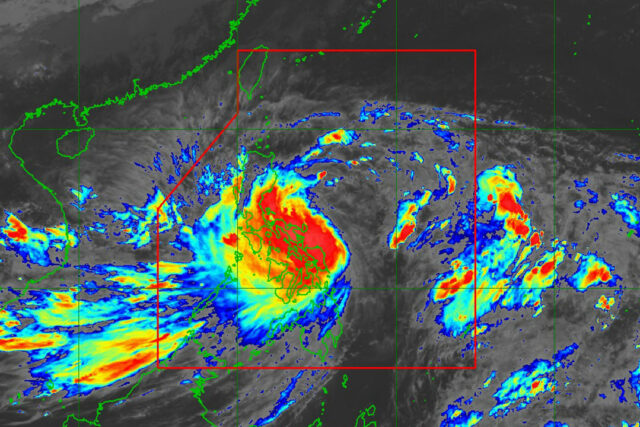
PAGASA.DOST.GOV.PH

TROPICAL DEPRESSION Kristine could trigger indemnification payments for farmers of at least P666.5 million, the Department of Agriculture (DA) said.

In a statement, the DA said that the Philippine Crop Insurance Corp. (PCIC) estimated that 86,066 farmers across 10 regions were affected by the storm.

More than half of the affected PCIC-insured farms are from Central Luzon, the Bicol Region, and Mimaropa.

“The damage was primarily in rice, high-value crops, and fisheries. Expected insurance payments were estimated at P413.6 million for rice, P167.9 million for high-value crops, and P27.7 million for fisheries, PCIC President Jovy C. Bernabe said.

Agriculture Secretary Francisco P. Tiu Laurel, Jr. instructed the PCIC to expedite the processing of the insurance claims to help farmers recover.

“The pace of recovery for agriculture after a disaster like this will be determined by how quickly the government can provide inputs and financial assistance to farmers and fisherfolk,” Mr. Laurel  said. 

Mr. Laurel also called on the PCIC to prepare for potential damage that might be inflicted on by Super Typhoon Leon.

In a bulletin posted on Nov. 1, the government weather service, known as the PAGASA, said Leon has weakened into a severe tropical storm and exited the Philippine Area of Responsibility (PAR).

“Although the weather bureau projects that Leon will not make landfall in any part of the country, it had gale-force winds extending over 600 kilometers from its center and could generate storm surges of up to 12 meters high, which may cause significant damage to the farming and fishery sectors,” DA said.

The Philippines experiences about 20 tropical cyclones each year.

 PAGASA has logged about 12 tropical cyclones entering the Philippine Area of Responsibility. Two are expected to enter PAR this month. — Justine Irish D. Tabile

Toyota’s Beyond Zero campaign heats up at PIMS

Toyota Motor Philippines President Masando Hashimoto explains Beyond Zero to PIMS visitors. — PHOTO BY KAP MACEDA AGUILA

By Kap Maceda Aguila

“ALL OVER the world, Toyota is taking steps to help reduce the negative impacts to people and the environment to zero. This is achieving zero,” began Toyota Motor Philippines (TMP) President Masando Hashimoto during Toyota’s turn at presenting at the Philippine International Motor Show (PIMS).

The company’s messaging has long been consistent with the pronouncements of Toyota Motor Corp. Chairman Akio Toyoda himself, who has long espoused what he calls a “multi-pathway” to eventual carbon neutrality. Famously pilloried for the erroneous notion that he is against electric vehicles, Mr. Toyoda had, in fact, declared an inclusive approach — one that takes into consideration the readiness of markets for electrification in its many forms. At PIMS, TMP showcased some of the vehicles that enshrine this vision.

“Guided by this global philosophy, we seek ways to improve lives and society for the future. It is represented by this icon that you can see on a growing number of our products. If you drive a Toyota car with this badge, you are already part of the solution,” added Mr. Hashimoto. The icon he spoke of is a blue badge that calls to mind the horizon you see when look out of a plane.

Beyond Zero, explained the executive, is not just about seeking to achieve zero carbon, but to “add value beyond it.” Toyota’s innovations in support of Beyond Zero are classified into three silos of innovations: electrification, diversification, and intelligence. Yes, note that electrification is only part of the grand plan.

Expanding the breadth of Toyota’s influence here is Toyota Mobility Solutions Philippines, which offers products and services such as Toyota RentaCar and Fleet360 that challenge the way we look at mobility and should ultimately guide us toward efficiency and sustainability.

The TMP head explained that, in the country, “Toyota makes multi-pathway a reality with a diverse range of products that suit the needs of our customers. Our internal combustion engine vehicles, both gasoline and diesel, are always made “ever-better” to be as fuel-efficient as possible. We offer the widest range of electrified vehicles, with HEVs and BEVs from both Toyota and Lexus brands enabling widespread adoption. This is key to achieving the carbon-reducing benefits of xEVs.”

Debt yields end mostly higher on US elections

YIELDS on government securities (GS) traded in the secondary market ended mostly higher last week amid cautiousness ahead of the US presidential elections.

GS yields, which move opposite to prices, went up by an average of 6.96 basis points (bps) week on week, according to PHP Bloomberg Valuation Service Reference Rates data as of Oct. 31 published on the Philippine Dealing System’s website.

Philippine financial markets were closed on Friday (Nov. 1) for All Saints’ Day.

At the short end of the curve, rates of the 91-, and 364-day Treasury bills (T-bills) increased by 12.88 bps (to 5.3267%) and 7.16 bps (5.8008%), respectively. Meanwhile, the 182-day T-bills inched down by 0.58 bp to yield 5.7955%.

At the belly, yields on the two-, three-, four-, five-, six-, and seven-year Treasury bonds (T-bonds) climbed by 5.5 bps (to 5.6418%), 5.38 bps (5.6886%), 5.16 bps (5.7301%), 4.52 bps (5.7608%), and 3.47 bps (5.8094%), respectively.

Lastly, at the long end of the curve, rates of the 10-, 20-, and 25-year debt papers went up by 4.92 bps (to 5.8771%), 14.06 bps (6.0488%), and 14.08 (to 6.0479%), respectively.

GS volume traded stood at P11.95 billion on Oct. 31, lower than the P39.31 billion recorded a week prior.

Dino Angelo C. Aquino, vice-president and head of fixed income at Security Bank Corp., said the GS market was mostly defensive last week.

“Uncertainty regarding the US Federal Reserve’s rate cut path along with the upcoming US elections dampened the mood locally,” Mr. Aquino said in an e-mail.

A bond trader said GS yields mostly moved sideways with an upward bias as a lack of local catalysts led the market to track US Treasuries’ movements, especially following the release of key US economic data last week.

Benchmark 10-year Treasury yields rose on Friday as investors digested a weak US jobs report, Reuters reported.

Treasury yields initially tumbled after the jobs data, which showed the US economy barely added any jobs in October, though the numbers were heavily disrupted by industrial action and hurricanes. The US unemployment rate, however, held steady at 4.1%, offering assurance that the labor market remained on a solid footing.

Traders are now pricing in 99% odds of a 25-bp cut at the Fed’s Nov. 6-7 meeting, up from 93% before the data, and an 83% probability of a 25-bp reduction at both its November and December meetings, up from 71% earlier on Friday, according to the CME Group’s FedWatch Tool.

The focus will now turn to the US presidential election, with polls pointing to a knife-edge race. Polls, both nationally and in the seven closely divided states, show Republican Donald Trump and Democratic Vice President Kamala Harris in almost a dead heat with days to go before Election Day.

For this week, GS yield movements will likely depend on the US election results and bets before the Fed’s policy meeting, both analysts said.

“We expect some volatility [this] week given the US elections on Nov. 5. The market has already priced in a possible Donald Trump win as US yields jumped 60 bps higher since the Fed reduced rates last month,” Mr. Aquino said.

“Once the election risk subsides, the market may see a relief rally as focus will likely shift back to the macro picture, wherein rate cuts remain the base case for both the Fed and the BSP (Bangko Sentral ng Pilipinas),” he added.

The bond trader said October Philippine inflation data to be released on Tuesday (Nov. 5) could also be a catalyst for the market.

A BusinessWorld poll of 11 analysts yielded a median estimate of 2.4% for the October consumer price index, within the BSP’s 2-2.8% forecast for the month.

If realized, October inflation would be faster than the 1.9% in September but slower than the 4.9% in the same month a year ago. — Charles Worren E. Laureta with Reuters

Style (11/04/24)


M&S does fall

FOR AUTUMN, Marks & Spencer (M&S) offers cozy knitwear, sophisticated outerwear, and versatile casualwear. Womenswear sees items in reworked tweed, metallic glimmers, lightweight felted wools, and iridescent sequins. The key colors for the season are vibrant shades such as forest green, blood orange, and purples, alongside gray, black, and white tones, with neutral hues taking center stage. Styles are given more life with ombre stripes, oversized woven patterns, and autumnal sparkles. In the Edit range, key pieces include jersey tops, spring macs, cropped jackets, and tailored maxi skirts. New fabrics bring a glossy approach to daywear, enhancing tailoring with clever knitwear. In Casualwear, the lineup offers sporty separates, cable knit jumpers, basic slip dresses, and boyfriend biker jackets. For denim lovers, expect reinvented styles from midi skirts to crease-front jeans. Must-have accessories include find large scarves, brushed beanie hats, and statement bags enhanced with metallic details. The key colors for men are subdued hues like gray and midnight blue, balanced with neutral shades of soft nude and dark down. With the Smart Edit range, featured pieces include grindle fabric designs, 3D-textured long sleeve knitwear, and comfort stretch innovations. Styles are accentuated with intricate textured weave patterns. In Casualwear, there are relaxed silhouettes and easy transitional layering pieces with grindle checks, graphic tees with autumnal prints, and loose fit chinos. In the Loungewear collection, think of lounge cardigans and soft slip-on mules, ideal for lounging at home. Accessories for men include a selection of backpacks and cross-body bags, men’s belts in classic black, brown, and navy finishes, and leather loafers. Follow Marks and Spencer at facebook.com/MarksandSpencerPH and Instagram @marksandspencerph to get the latest updates and promos.


Sky-high lashes by barenbliss

BARENBLISS introduces its latest product, the Roll to High Mascara, designed to give sky-high lashes. The mascara’s fiber-infused formula provides a lightweight lift and length for those who want their lashes to look defined without the weight. Just one coat delivers full-bodied lashes with a feather-light feel, ideal for creating a fresh, natural look suitable for everyday wear. When it’s time to dial up the drama, Roll to High steps up with an extra coat or two. This achieves a more voluminous look that lasts all night. The mascara’s 24-hour long-lasting formula is water- and sweat-proof. The Roll to High mascara is now available for P399 on the barenbliss TikTok Shop, Shopee, Lazada, and at Watsons stores.

China pivot from US farm imports bolsters it against trade war risks

REUTERS

BEIJING/SINGAPORE — China’s push to shift its food import sources since 2018 has put it in a better position to impose tit-for-tat tariffs on US farm goods with less harm to its food security if trade friction with Washington flares after the US presidential election.

The threat of a trade war looms for China, the world’s top importer of farm products such as soybeans and corn, with Republican candidate Donald Trump floating blanket 60% tariffs on Chinese goods in a bid to boost US manufacturing.

His opponent Kamala Harris, a Democrat, is also expected to confront China on trade.

Since Mr. Trump was in the White House, China has slashed its dependence on US farm goods in a concerted effort to beef up national security, including food self-sufficiency.

The pivot began in 2018, when Beijing slapped 25% tariffs on imports of US soybeans, beef, pork, wheat, corn, and sorghum, retaliating against duties imposed by the Trump administration on $300 billion worth of Chinese goods.

The move led to a reshaping of global agriculture trade flows, despite Mr. Trump and then-Chinese Vice-Premier Liu He signing a pact in January 2020 under which Beijing promised to boost purchases of US goods and services, including farm products.

Instead, China has decreased US purchases, buying more grain from Brazil, Argentina, Ukraine, and Australia, even as it boosts domestic production.

“Beijing feels much safer knowing the US has less leverage over China’s food security in the event of a major conflict,” said Even Pay, agriculture analyst at Beijing-based consultancy Trivium China.

“That reduction is by design,” she said.

This year, the share of China’s soybean imports from the US has dropped to 18%, from 40% in 2016, while Brazil’s share has grown to 76% from 46%, according to Chinese customs data.

For corn, Brazil overtook the US as China’s top supplier in 2023, just one year after Beijing approved purchases from the South American agricultural powerhouse.

Meanwhile, Chinese livestock companies have been reducing use of soymeal in feed — a move to ease reliance on imported soybeans — while Beijing has approved genetically modified soybean and corn varieties to boost output.

China’s agriculture ministry did not immediately respond to a request for comment.

A spokesperson for Mr. Trump did not directly comment on the drop in China’s reliance on US farm exports, but pointed to Trump’s comments that tariff is “a beautiful word” and “we will take in hundreds of billions of dollars into our treasury and use that money to benefit the American citizens.”

Ms. Harris’ campaign website says the Democratic candidate “will not tolerate unfair trade practices from China or any competitor that undermines American workers.”

In anticipation of post-election tensions, Chinese buyers have boosted agricultural imports, including American soybeans and corn, traders and analysts say.

Imports of soybeans, used mainly for animal feed, are up 8% in the first nine months of the year, with barley purchases increasing 63% and sorghum shipments climbing 86%.

“This time is different. China is well stocked up on most of its needs,” said a trader at an international trading company in Singapore which sells grains and oilseeds to China and declined to be named as they were not authorized to speak with media.

“There won’t be any supply shock immediately and it will give China time to plan and redirect purchases,” he said.

US soybean export premiums are at their highest in 14 months, as grain merchants race to ship a record harvest ahead of the election.

While Beijing would prefer to avoid targeting food staples in a tit-for-tat trade war, it may be forced to do so, said Wendong Zhang, an assistant professor and agricultural economist at Cornell University in Ithaca, New York.

“China’s retaliation would be proportional in terms of trade value and with the goal to inflict economic and political cost, which tends to lead to retaliation on agricultural products.”

China’s overall trade surplus with the US totaled $33.33 billion in September alone, limiting its options to retaliate.

“China… can reduce its exposure to US goods only to some extent. There are only limited places where you can get these products from,” Dennis Voznesenski, an analyst at Commonwealth Bank of Australia.

Polls show Ms. Harris and Mr. Trump to be neck and neck, although Mr. Trump leads in most agricultural heartland states even though the last trade war was a blow to US farmers and led Mr. Trump’s administration to pay them about $23 billion in compensation, according to the Government Accountability Office.

About half of American soybeans, the top US export to China, are shipped to the country, accounting for $15.2 billion of trade in 2023, according to the US Census Bureau.

Soybean and corn prices are trading near four-year lows amid ample world supplies, fueling worry among US farmers.

“We are very concerned. We are not the only soybean producer in the world. South America is producing an awful lot of soybeans,” said Mark Tuttle, a soybean farmer in northern Illinois. “If we were to institute more tariffs, that would be very detrimental to our situation.” — Reuters


SMPC shares fall on Q3 earnings, ex-date

SEMIRARAMINING.COM

SEMIRARA Mining and Power Corp. (SMPC) saw its shares fall last week after it reported earnings results for the third quarter.

The energy company was the 16th most actively traded stock last week, with a total of 9.86 million shares worth P315.28 million changing hands from Oct. 28 to Oct. 31, as All Saints’ Day on Nov. 1 cut the trading week short, data from the Philippine Stock Exchange showed.

Shares of the company closed at P32.50 apiece, 3.4% lower than the P33.65 close a week prior.

For the year, the stock’s price rose 7.4% from its P30.25 close on the last trading day of 2023.

Analysts attribute the week-on-week decline to the release of the company’s third-quarter earnings and its dividend ex-date on Oct. 28.

For the third quarter, SMPC posted a net income of P3.1 billion, down 8.3% from P3.4 billion in the same period last year.

“Our third-quarter results also reflect the seasonal impact of the rainy season on coal shipments and electricity prices, both of which we were able to partially offset through focused cost management and operational efficiency initiatives,” SMPC President and Chief Operating Officer Maria Cristina C. Gotianun said in a statement on Oct. 30.

“[Last week, the company’s] stock moved cautiously, reflecting investor sentiment adjusting to these earnings amid concerns over softer coal prices and global demand dynamics,” Arielle Anne D. Santos, equity analyst at Regina Capital Development Corp., said in an e-mail.

SMPC’s coal average selling price dropped by 15% to P2,811 per metric ton (MT), while total shipments grew by 16% to 2.9 million MT in the third quarter.

“Despite this dip in net income, the 16% rise in coal shipments and the strong export demand could signal recovery potential going forward,” Jervin De Celis, equity trader at Timson Securities, said in an e-mail.

The company’s ex-dividend date last Oct. 28 further pushed the stock down, Peter Louise D. Garnace, equity research analyst at Unicapital Securities, Inc., said in an e-mail.

Stocks of the company bought on or after Oct. 28 would not receive dividends.

Moving forward, analysts expect the energy company to generate higher coal shipments in the fourth quarter amid winter restocking activities.

“We look forward to [SMPC’s] expansion plan as it earmarked over P291-billion capex in the next five years to operate its two existing mines — Narra and Molave,” Mr. Garnace added.

Mr. De Celis sees SMPC’s net income for the fourth quarter at P3.19 billion and full-year earnings at P18.7 billion.

This week, he placed his support at P31.70 and resistance at P34.

“Support is seen at P33.50. Resistance is at P34.40. Consolidation around support may be more likely [this week], as the market digests recent earnings and anticipates further clarity in demand recovery,” Ms. Santos said.

Mr. Garnace pegged his support at P31 and resistance at P33.85. — Karis Kasarinlan Paolo D. Mendoza

Vaccination protects children, adults vs pneumonia

CDC-UNSPLASH

Pneumonia is the third leading cause of death across all ages and is the most common cause of death among children under five years of age in the Philippines. In 2023, pneumonia was the fifth leading cause of death in the country. From 2009-2023, moderate and high-risk pneumonia in both adults and children have been among the top 10 medical cases reimbursed by the Philippine Health Insurance Corp. (PhilHealth).

People at risk for pneumonia also include adults over the age of 65; people with preexisting health problems such as asthma, chronic obstructive pulmonary disease, or diabetes; smokers; and people with a weakened immune system due to a chronic condition, chemotherapy, or an organ transplant.

Older people have a higher risk of getting pneumonia, and are more likely to die from it if they develop the infection, warns the American Thoracic Society (ATS), an international professional and scientific society that focuses on respiratory and critical care medicine. Pneumonia can develop in patients already in the hospital for other reasons. Hospital-acquired pneumonia has a higher mortality rate than any other hospital-acquired infection, the ATS said.

Pneumonia is an acute respiratory infection of the lungs that is most commonly caused by viruses or bacteria. Depending on the severity of the infection, signs and symptoms of pneumonia may include cough; shortness of breath; fever, sweating and shaking chills; fatigue; chest pain; nausea, vomiting or diarrhea; and confusion, especially in older adults.

The lungs are made up of small sacs called alveoli, which fill with air when a healthy person breathes. When an individual has pneumonia, the alveoli are filled with pus and fluid, which makes breathing painful and limits oxygen intake. These infections are generally spread by direct contact with infected people, the World Health Organization explains.

Pneumococcal pneumonia is the most common type of bacterial pneumonia. It is caused by bacteria that live in the upper respiratory tract, and it can spread to others through coughing or close contact. Symptoms include high fever; excessive sweating and shaking chills; coughing; and difficulty breathing, shortness of breath and chest pain.

If pneumonia is caused by bacteria, a doctor may prescribe antibiotics. Most cases of pneumonia require oral antibiotics. Rest and plenty of hydration can also help people recover quicker. Hospitalization is recommended for severe cases of pneumonia.

The World Health Organization (WHO) offers the following tips to reduce the risk of pneumonia for people of all ages.

Get vaccinated. Pneumonia puts a heavy economic burden on patients and their families, in terms of out-of-pocket payments for medical consultations, medicines, and hospitalization, as well as lost productivity due to sick leaves at work and disruption of school attendance. Getting the right vaccines against pneumonia can prevent or minimize the socioeconomic impact of the disease.

Even with treatment, some people with pneumonia, especially high-risk individuals, may experience life-threatening complications, including bacteria in the bloodstream, difficulty breathing, fluid accumulation around the lungs, and lung abscess. These complications often require costly treatments and prolonged hospitalization. Studies show that pneumococcal vaccination, especially of high-risk individuals, is associated with fewer hospitalizations for pneumonia, fewer deaths, and direct medical care cost savings.

Influenza or the flu is a common cause of pneumonia, especially among younger children, the elderly, pregnant women, or those with certain chronic health conditions. Pneumonia as a flu complication tends to be more severe and potentially fatal, according to the American Lung Association. The US Centers for Disease Control and Prevention (CDC) recommends annual flu vaccination to help prevent pneumonia.

The Philippine College of Chest Physicians (PCCP) recommends vaccination as the best protection against pneumonia. Pneumococcal vaccines prevent severe disease, hospitalization, and death due to pneumonia, stressed the country’s acknowledged authority in pulmonary medicine.

Immunization against Hib, pneumococcus, measles, influenza, and whooping cough (pertussis) is the most effective way to prevent pneumonia, the WHO said. These vaccines are provided for free by the Department of Health (DoH) through the National Immunization Program (NIP). The CDC recommends adults 19-64 with chronic lung disease, chronic heart disease, and diabetes, and all adults 65 or older talk to a doctor about pneumococcal vaccination.

Meanwhile, it is important to wash your hands frequently, especially when caring for others who are sick or after blowing your nose, to keep germs from spreading. There is also a need to address environmental factors. Reduce indoor air pollution by providing affordable clean indoor stoves and for individuals to stop smoking.

Maintaining a healthy lifestyle is also crucial. A healthy diet, rest, and getting regular exercise will help you stay well. Adequate nutrition is also key to a strong immune system.

As the National Health Service in the UK stated, “vaccination gives the best protection against pneumococcal infections.”


Teodoro B. Padilla is the executive director of Pharmaceutical and Healthcare Association of the Philippines which represents the biopharmaceutical medicines and vaccines industry in the country. Its members are in the forefront of research and development efforts for COVID-19 and other diseases that  affect Filipinos.

Small car takes ambitious flight

PHOTO BY DYLAN AFUANG

BYD Cars PHL spreads wings with Seagull entry offering, growth plans

By Dylan Afuang

BYD CARS PHILIPPINES is poised to boost its success even further. The Seagull — the China-headquartered brand’s mini subcompact hatchback, and now its entry-level model here — plays a vital role in the growth plans of the ACMobility-led distributor.

Measuring 3,780-mm long, 1,715-mm wide, and 1,580-mm tall, and positioned below the Dolphin, the Seagull GLX is the sole variant and retails at an introductory price of P898,000.

“(The model’s sub-P1-million tag) allows us to target the first-time car buyers, which is a very important segment in the industry, as it is in the motorization phase,” ACMobility Head of Automotive Retail and Distribution Antonio “Toti” Zara III announced during the vehicle’s public unveiling in Parañaque City.

Being one of BYD’s battery-electric vehicles (BEVs), the Seagull is powered by a single electric motor (74hp, 135Nm of torque) that drives the front wheels. The motor draws charge from a lithium-ion phosphate, 30-kWh BYD Blade battery, which is supposed to be more durable and safe than standard EV batteries and has a quoted range of up to 300km.

A portable charger and a 7-kW wall box charger come as standard with the EV here. The Seagull’s key features that are expected to attract younger clientele include an angular exterior styling, a 10.1-inch infotainment touchscreen that can be rotated horizontally or vertically, wireless Apple CarPlay and wireless Android Auto, and even an optional karaoke feature.

“If you look at the total electrified vehicle sales in the (country)… (of) hybrid-electric vehicles (HEVs) and new-energy vehicles (NEVs, the umbrella term for electrified vehicles), BYD is the number two brand in the Philippines, Mr. Zara continued, referring to 2023 auto sales figures.

“Now the success of BYD Cars Philippines thus far has been driven by the team’s ability to bust the myths surrounding BEV ownership,” the official said. The company has done so when it offered “competitively-priced BEVs,” and promoted the fuel and maintenance savings consumers can benefit by owning a BYD BEV over an ICE vehicle.

Aside from these, the brand is “in the process of busting the myths on range anxiety,” Mr. Zara continued. He cited the recent local entry of the Sealion plug-in hybrid SUV that boasts a 1,000-km quoted driving range. By the end of 2024, 100 ACMobility EV chargers around the country are expected to be operational, Mr. Zara promised.

“I’m sure you can guess who’s (the) number one (NEV brand locally),” the executive added in jest. “(But) I predict that BYD will challenge for that top spot.”

To achieve this, alongside introducing the affordable Seagull, the brand plans to expand its nationwide dealership network.

“In building the brand, it’s important that we build a comprehensive dealer network,” Mr. Zara said. “We are expanding the network from the current eight dealers, to 25 dealers by the end of the year for the growing customer base of BYD.”

The Seagull’s exterior color choices include Sprout Green, Delan Black, and Apricity White. The hatchback also comes with a six-year vehicle or 150,000-km warranty, whichever comes first. Separate warranties for the electric components include an eight-year battery or 150,000-km warranty for the battery and electric motor, respectively.

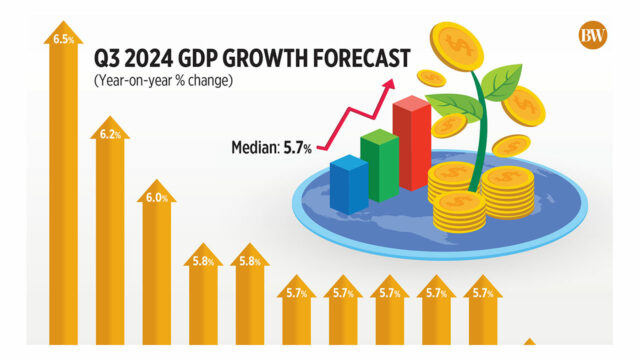
Q3 2024 GDP growth forecast

THE PHILIPPINE ECONOMY likely slowed in the third quarter as household spending remained muted after the central bank cut interest rates in August. Rea the full story.

Q3 2024 GDP growth forecast

Peso likely to move sideways as markets wait for election results

BW FILE PHOTO

THE PESO may stay at the P58 level against the dollar this week as markets await the results of the US presidential vote.

The local unit closed at P58.10 versus the dollar on Thursday, rising by 13 centavos from its P58.23 finish on Wednesday, Bankers Association of the Philippines data showed.

Week on week, the peso went up by 22 centavos from its P58.32-per-dollar finish on Oct. 25.

Philippine financial markets were closed on Friday (Nov. 1) for All Saints’ Day.

“The peso may initially trade in consolidation near the P58 figure ahead of the US election and future price movement will be based on the results,” the first trader said in a phone interview.

“The local currency is likely to seek direction on the tentative results of the US elections and volatility can be expected in the foreign exchange market,” the second trader likewise said in an e-mail.

The foreign exchange market could also take cues from the US Federal Reserve’s policy meeting on Nov. 6-7, Rizal Commercial Banking Corp. Chief Economist Michael L. Ricafort said in a Viber message.

A double dose of potentially market-moving events arrives in the coming week as Americans vote on their next president and the Federal Reserve offers more insight on the path of interest rates at its monetary policy meeting, Reuters reported.

The Nov. 5 vote culminates an election cycle that has captivated the country and sparked swings in corners of financial markets. Among these has been the waxing and waning of the so-called Trump trade, a bevy of asset price moves reflecting sentiment that Republican Donald Trump is gaining momentum in his race against Democrat Kamala Harris for the US presidency.

Those trades have included a rise in the US dollar and a sell-off in Treasuries possibly fueled by strong economic data and a bitcoin surge.

Still, polls remain deadlocked and bets leaning toward Mr. Trump were narrowing at the end of last week. Some investors expect volatility to accompany this week’s vote, no matter the result.

Thursday’s Fed decision on monetary policy looms as another risk. Fed funds futures trading shows the market expects the US central bank to cut its benchmark policy rate by a modest 25 basis points, LSEG data showed, after easing rates in September for the first time in four years.

For many investors, the focus will be on guidance from Fed Chair Jerome H. Powell, including whether the central bank might consider pausing its rate-cutting cycle at future meetings in light of strong economic data.

Friday’s monthly employment report, the last key piece of data before the Fed meeting, ran counter to that trend as it showed job growth almost stalled in October. The data, however, was clouded by aerospace industry strikes and hurricanes that impacted the response rate for the payrolls survey.

The release of October Philippine consumer price index (CPI) data could also affect peso-dollar trading this week, Mr. Ricafort added.

A BusinessWorld poll of 11 analysts yielded a median estimate of 2.4% for the October CPI, within the BSP’s 2-2.8% forecast for the month.

If realized, October headline inflation would be faster than the 1.9% in September but slower than the 4.9% in the same month a year ago.

The first trader sees the peso moving between P58 and P58.50 per dollar this week, while Mr. Ricafort expects it to range from P57.90 to P58.40. — A.M.C. Sy with Reuters

PHL shares may drop further before US vote, Fed

BW FILE PHOTO

PHILIPPINE SHARES could decline this week as cautiousness prevails ahead of the US presidential election and the US Federal Reserve’s policy meeting.

On Thursday, the benchmark Philippine Stock Exchange index (PSEi) dropped by 1.88% or 137.28 points to close at 7,142.96, while the broader all shares index fell by 0.98% or 39.37 points to 3,957.21.

This was the PSEi’s lowest close in more than six weeks or since it ended at 7,104.20 on Sept. 16.

Week on week, the PSEi declined by 2.34% or 171.27 points from the 7,314.23 close on Oct. 25.

Philippine financial markets were closed on Friday (Nov. 1) for All Saints’ Day.

“Caution and risk-off sentiment permeated most of the week’s trades ahead of the crucial US election and Fed rate decision,” online brokerage firm 2TradeAsia.com said in a market note.

“The local market exhibited bearish movements in last week’s trading, breaking below its 50-day exponential moving average and even the 7,150 support level as it extended its decline,” Philstocks Financial, Inc. Senior Research Analyst Japhet Louis O. Tantiangco said in a Viber message.

For this week, negative sentiment may continue to prevail in the market, he said.

“We may not see a strong ascent yet as the market is still expected to deal with certain headwinds. The peso’s weakness, now already at the P58-per-dollar level, if sustained, is still expected to weigh on the market,” Mr. Tantiangco said.

On Thursday, the peso closed at P58.10 per dollar, climbing by 13 centavos from P58.23 on Wednesday. Week on week, the peso rose by 22 centavos from its P58.32 finish on Oct. 25.

“Investors are also expected to monitor the upcoming US elections, the results of which will have a big impact on the global economy. Investors are also expected to watch out for the Philippines’ October inflation data. An inflation print which falls within the Bangko Sentral ng Pilipinas’ 2%-2.8% forecast, especially one which is biased to the lower end, is expected to give sentiment a boost,” he added.

Mr. Tantiangco said the PSEi may retest the 7,150 level this week as its support, while its resistance it at 7,400-7,500 range.

For his part, Rizal Commercial Banking Corp. Chief Economist Michael L. Ricafort put the market’s support at 7,000-7,050 and resistance at 7,600-7,800.

2TradeAsia.com placed the PSEi’s support at 6,800-7,000 and resistance at 7,500.

“Global marts are expected to hyper-fixate on Western events [this] week as guesswork on the US elections conclude just in the for the Fed to deliver what is expected to be its penultimate rate cut for the year,” it said.

“Expect funds to move into defensive positions as the next few weeks are rife with events that markets have to parse and digest, regardless of how supportive or adverse new data are to fundamentals,” the online brokerage added. — R.M.D. Ochave

Senate, House resume sessions after one-month break; budget is priority

BW FILE PHOTO

CONGRESS resumes sessions on Monday after a monthlong break, with Senate President Francis “Chiz” G. Escudero vowing to fast-track the passage of priority bills including next year’s budget before they go on another break on Dec. 21.

“The budget bill is No. 1 on our list, No. 2, the priority bills that we haven’t approved and third, local bills that we are trying to finish before this Congress ends,” he told DZBB radio on Sunday.

Meanwhile, Senate Minority Floor Leader Aquilino Martin “Koko” L. Pimentel III said lawmakers should ensure priority projects have firm funding next year and don’t rely on unprogrammed funds.

This comes after the Supreme Court last week blocked the transfer of P29.9 billion — the last tranche of the Philippine Health Insurance Corp.’s (PhilHealth) P90 billion in excess funds — to the national Treasury.

“During the budget process, the important projects should be prioritized by putting them in the programmed appropriations,” he told BusinessWorld in a Viber message.

The excess PhilHealth funds would have been used to support unprogrammed appropriations worth P203.1 billion, which would support state health, infrastructure and social service programs.

Economists earlier said this could cause delays in government projects that have not been allotted specific funds.

Mr. Pimentel said the tribunal did not consider the effect of its injunction on state projects since this is irrelevant to the lawsuit filed by three groups. The senator is part of one group that questioned the PhilHealth fund transfer.

The High Court’s Public Information Office said the injunction was effective immediately. Oral arguments for the three consolidated lawsuits challenging the transfer was set for Jan. 14.

The Senate is set to start plenary debates on next year’s proposed P6.352-trillion national budget on Nov. 6. It seeks to approve the spending plan by the second week of December at the latest.

“Budget allocation must be guided by prudent financial management,” Michael Henry Ll. Yusingco, a fellow at the Ateneo de Manila University Policy Center, said in a Facebook Messenger chat. “Having a bloated unprogrammed fund column is not good fiscal management.”

Senator Joseph Victor “JV” G. Ejercito earlier said his colleagues would ask PhilHealth to justify its plea for a bigger budget next year after declaring P89.9 billion as excess funds, while millions of poor Filipinos find it hard to pay their medical bills.

The Senate in August passed on final reading a bill that would cut PhilHealth premiums to 3.25% next year from 5% this year under the Universal Health Care Act.

It would set PhilHealth premium contributions at 3.25% this year for those with a monthly income of P10,000 to P50,000, with incremental increases of 0.25% each year.

“Pending and new infrastructure projects will not hit roadblocks as the government may still utilize other funding sources such as new appropriations,” Terry L. Ridon, a public investment analyst and convenor of think tank InfraWatch PH, said via Messenger chat.

PhilHealth started hiking its monthly contribution rate in 2019 so that it could sustain the benefits given to its members. The contribution rate this year will stay at 5% from 2.75% five years ago.

It spent P75.8 billion on benefit payouts last year, almost half of the amount it paid in 2022 at P143 billion and P140 billion in 2021, PhilHealth Executive Vice-President Eli Dino D. Santos told congressmen in May.

“The goal is to produce a national budget where all items are duly funded,” Mr. Yusingco said.

Meanwhile, the Commission on Appointments is expected to hear the appointments of 48 officials, including recently installed Cabinet members of the Marcos administration, Surigao del Sur Rep. Johnny T. Pimentel said in a statement.

The body would hold confirmation hearings on Interior Secretary Juanito Victor “Jonvic” C. Remulla, Jr., Trade Secretary Ma. Cristina Aldeguer-Roque and Civil Service Commission Chairperson Marilyn B. Barua-Yap, he said. Fifteen generals and 30 Foreign Affairs officials are also up for confirmation, Mr. Pimentel said.

“We had 48 new appointees pending confirmation as of Oct. 30,” Mr. Pimentel, an assistant minority leader of the body, said.

Mr. Remulla, the younger brother of Justice Secretary Jesus Crispin C. Remulla, in October replaced Benjamin “Benhur” C. Abalos, Jr., who is eyeing a Senate seat in the 2025 midterm elections.

Ms. Roque sat as acting secretary of the Department of Trade and Industry on Aug. 2 after ex-Trade Secretary Alfredo E. Pascual resigned on Aug. 1.

Ms. Yap took her oath as chairperson of the Civil Service Commission on Oct. 25 after former head Karlo Alexei B. Nograles stepped down earlier that month to pursue his bid to become Davao City mayor. — John Victor D. Ordoñez and Kenneth Christiane L. Basilio