Home Blog Page 1920

Employment is sexy at Gucci

GUCCI is celebrating its double G logo’s 50th anniversary this year, which uses the initials of its founder, Guccio Gucci. The luxury house’s Fall/Winter 2025 fashion show for Milan Fashion Week last week showed its hold on fashion and the times through a presentation on a runway shaped like their double G. Academy Award-winning composer Justin Hurwitz opened the show, conducting an orchestra through a score he penned himself.

BusinessWorld was invited to watch the show’s livestream on Feb. 25.

The lineup of styles for women and men was drawn up by its design studio as the Kering-owned Italian label awaits its next designer.

The first look was rather drab: a fur coat conceals a gray skirt with a pale purple top, the only pop of color coming from a top-handled yellow bag. We want to contrast it with a finale look, but by the show’s engineering, it simply did not exist. Models continued to walk through the runway’s circuit as the first look came out again, perhaps due to the show’s theme, “Continuum.” As a release explained: “A continuum of craft, taste and culture that passes through time, the fashion house is one that has many owners and guardians: craftspeople and artisans, creative directors and designers, communicators and customers, each with their own histories entwined.”

In 2020, Gucci’s Fall/Winter fashion show showed extravagant eras on the precipice of failure: the 1900s before World War I; the 1930s going into World War II. The world pandemic that caused a lockdown followed soon after. The world doesn’t look too well with this new presentation of Gucci, showing traditional men’s suiting and serious, sober looks for women.

A lot of the looks presented are reminiscent of the sober but sexy designs of the house’s past Creative Director Tom Ford, who ran Gucci from 1995 to 2004. Mr. Ford’s lean into suiting and hard shapes in accessories would have been perfect for the financial disaster of 2008: then, young professionals co-opted workwear looks for leisure (perhaps to show off employment during an economic crisis; or to economize by combining wardrobes for work and play). We saw this in several looks for Gucci’s 2025 Fall/Winter show: think sexy office looks like a brown shirtdress with one of the house’s horsebits, nubby tweed coats and suits (though opulent fur still made a statement), a pink suit with a red scarf trailing behind, a sack coat, a burnt orange velvet dress with a pussy bow (this is less Tom Ford though, but more Frida Giannini during her 2006 to 2015 tenure), oversized gray blazers, and yin-and-yang turtleneck looks in all black and all white for the men.

“Today, the collection could be seen as foundational, that says something of Gucci in its codes and beliefs both past, present and future; things that have meant something to many, adopted and adapted in their own way,” said a statement.

Kering is in the process of revamping Gucci, its biggest label, and earlier this month announced the abrupt departure of designer Sabato de Sarno after less than two years. De Sarno shifted Gucci’s focus to more classic, minimalist designs, and emphasized a glossy red color in his collections.

Speaking to journalists before the show, Gucci Chief Executive Stefano Cantino did not give precise timing for the upcoming change of creative director, and said executives were focused on “working for the good of the brand.”

Previously one of the industry’s biggest success stories, with fast growth between 2016 and 2020, the century-old label fell behind when shoppers’ tastes shifted away from the baroque, gender-fluid designs by Alessandro Michele. Analysts do not expect a rebound until next year. — Joseph L. Garcia with a report from Reuters

EdCom II Year Two Report: Persistent misreading of the Philippine basic education situation

PHILIPPINE STAR/WALTER BOLLOZOS

The EdCom II Year Two Report entitled “Fixing the Foundations: A Matter of National Survival” persistently misreads the Philippine basic education situation. As stated in our previous column, “EdCom II Year One Report: Misreading the Philippine Education Situation” (March 11, 2024), we do not have a crisis in Philippine education. We have a crisis in Philippine public education. Philippine private education is doing fine.

This distinction between the performance of the private and public school is persistently lost in the EdCom (Congressional Commission on Education) Report. The most glaring example of this is in the EdCom Report on vouchers. The EdCom Report concludes that “The voucher system offers a possible, although limited solution for classroom decongestion.” The basis for this assertion is that once the existing vacant seats in the private schools estimated at 121,036 are filled, then the voucher alternative is exhausted.

But the voucher provision is based on the evidence provided quite fully in the report that private schools outperform public schools. Through the voucher system, the private school are better positioned to build classrooms cheaply and speedily, thus closing the estimated classroom gap of 165,000 classrooms without the government setting aside special funds for school buildings. By the way, in 2022, no new classrooms were constructed from new appropriations. Only 847 classrooms or 12% of the required number were slated to be completed by December 2024.

In the bill filed by Senator Sherwin Gatchalian, entitled “Government Assistance to Private Basic Education Act” which sought to extend the coverage of vouchers from Senior High School to Junior High School, Grade School, and Kindergarten, he noted that:

“Based on the study, accommodating an estimated 7.3 million excess learners in public schools over the next 30 years would cost the government a total of P3.7 trillion or P124 billion annually. Meanwhile, funding a voucher program over the same period would cost P2.6 trillion or P86 billion annually. Hence, through the E-GASTPE [Expanded Government Assistance to Students and Teachers in Private Education] Program, the government would save P1.1 trillion.”

Not only will the voucher program save substantial money for the government, the students availing of the voucher program will be grouped in optimal size classes, study in well-maintained classrooms (only 30% of public schools are well maintained), be adequately provided with learning materials (only 35% of public schools have adequate learning materials), taught by empowered teachers and administered by ever-present principals (only 45% of public schools have principals). Moreover, they will have learned more — private school students outperform public school students (43% vs. 17%) in the Philippine Science High School National Competitive Examination and yet only 12% of our students study in private schools.

Serious as this oversight is, it pales in comparison with the basic flaw of the report.

For this we have to use medical analogy. When a doctor examines a sick patient, he goes through a rigorous process of diagnosis (what ails the patient?), prognosis (what happens to the patient if we do nothing?) and prescription (how do we cure the patient?).

The diagnosis is the most crucial step as a wrong diagnosis will result in a wrong prescription which will not heal and may even cause harm to the patient.

The most common mistake of an incompetent doctor is to treat the symptoms rather than the disease, thus allowing the sickness to persist or to worsen. Moreover, when a doctor prescribes a profusion of medicines that is a sign that the doctor does not know what ails the patient.

Unfortunately, the entire report on basic public education focuses on the symptoms, i.e., congested classrooms, dilapidated school buildings, lack of teaching materials, mismatched teachers, lack of principals, rather than on the sickness itself. From this wrong diagnosis, EdCom then proceeds to prescribe prescription upon prescription to cure these symptoms.

To compound the error, the report relies on the patient — the bureaucrats of the Department of Education (DepEd) — to cure themselves, i.e., administer the medicine the report recommends. And yet, the report devotes only a minuscule portion on the management capabilities of the bureaucrats running the Central Office of DepEd and their findings are not encouraging.

“As for DepEd, in many respects, the agency continues to be a highly centralized bureaucracy. Moreover, years of centralized governance have fostered an extremely hierarchical culture wherein ‘no policy or practice in the lower levels of the hierarchy may change or take place unless there is an explicit DepEd memo from the Central Office that allows it’ (Bautista et al., 2010, p. 59). This diminishes the subsector’s capacity for innovation and slows responsiveness to actual needs and problems.”

Even if by some miracle, the bureaucrats of DepEd possess the outstanding management capabilities and the willingness to cure the symptoms, we still will not cure what ails the patient.

The sickness is this: DepEd regulates the private schools while other groups operate them. In the case of public schools, DepEd is both the regulator and operator. When asked why private schools perform better than public school, a private school president replied, “DepEd imposes strict standards on us but does not impose them upon itself.” DepEd the regulator does not impose on DepEd the operator strict standards such as optimal class sizes, well-maintained classrooms, well-stocked teaching materials, empowered teachers and ever present principals.

The prescription is simple. Remove the operating function from DepEd while retaining its regulatory authority over the public schools.

There is a precedent for this in higher education. There was a time when the then Department of Education, Culture and Sports, now Commission on Higher Education (CHED), was the regulator and sole operator of public colleges (with the exception of the University of the Philippines), which are now called State Universities and Colleges (SUCs). But several local governments felt that the needs of their citizens were not being met by these SUCs. So, through legislation or ordinances, they established pamantasans, now called Local Universities and Colleges (LUCs).

The LGUs operate them but CHED regulates them. EdCom reports that for the 10-year period from AY 2011 to AY 2021, while enrollment in SUCs grew by 72.9%, enrollment in LUCs grew by 168.0%. This is compelling evidence that the pamantasans can effectively operate the public grade schools and high schools.

The operations of the public elementary and high schools could be devolved to several entities.

For one, there is the Charter School system in the United States where public schools are managed under a Public-Private Partnership arrangement with private organizations, both profit and non-profit. Marginal public schools could be managed by Non-Government Organizations while viable public schools could be managed by the large private schools.

For another, there are the 137 pamantasans presently operating colleges. The public grade schools and high schools could be absorbed and made part of the pamantasan. This would place under one organization responsibility for the education of children in a community, from early childhood to college.

Lastly, again following the American model are the local school boards. In the United States, the public schools are operated by the county school boards. Our local school boards, who are already organized, determine the annual supplementary budgetary needs of public schools within their respective jurisdiction and then administer and manage their share of public educational institutions expenditures from the proceeds of the special levy on real property which constitutes their Special Education Fund. From this basic responsibility could be added the administration of the public elementary and high schools in their locality. As administrators, they would put the interests of their local community’s youth first. Through the policies they adopt, the school board members will ultimately be responsible for the success or failure of public education in their locality.

All three alternatives are not mutually exclusive and in fact should be adopted in combination.

EdCom proposes decentralization instead of devolution:

“A highly centralized top-down process persists in DepEd despite well-intentioned efforts to decentralize the agency’s structure through RA 9155. This outcome underscores the importance of careful and thoughtful design of decentralization reform. More importantly, Laguda et al. (2024) argue that ‘the Department of Education should spearhead efforts to fully realize the vision of shared governance and decentralization outlined in RA 9155, in view of the agency’s primary authority in basic education.’”

The idea behind decentralization is to separate the operating and regulating responsibility within DepEd with the Field Offices operating the public schools and the Central Office regulating the Field Offices. This would involve the Central Office ceding operational control to the Field Offices. Unfortunately, more than 50 years of bitter experience as fully documented all over the EdCom Report has shown that the bureaucratic overlords of the Central Office have never yielded and will never yield even an iota of authority to the peasants in the Field Offices.

DepEd cannot heal itself.

For this very reason, devolution can only occur through an act of Congress or by executive action by the President.

We close with the medical analogy. EdCom timidly prescribes bandages; regrettably what is required is radical surgery to save the patient, the public basic education system.


Dr. Victor S. Limlingan is a retired professor of AIM and a fellow of the Foundation for Economic Freedom. He is presently chairman of Cristina Research Foundation, a public policy adviser and Regina Capital Development Corp., a member of the Philippine Stock Exchange.


Q&A: ‘It teaches us a lot about buyers’

Cars, merchandise, and everything BAIC, Chery, Foton, and Lynk & Co are available up close. — PHOTO BY KAP MACEDA AGUILA

United Asia Automotive Group, Inc. Chief Marketing Executive Lyn Manalansang-Buena on the wisdom of mall displays

Interview by Kap Maceda Aguila

AN INITIATIVE that started last year, UAAGI (United Asia Automotive Group, Inc.) On the Move, billed as “a multi-brand automotive extravaganza,” kicked off its 2025 edition with a staging at the Fashion Hall of SM Megamall recently. But while a dealership is an ideal venue for experiencing a brand, its automobiles, and everything it stands for, there has to be a deliberate effort to go to the location. This means only those looking to buy or those coming in for a PMS schedule are the usual suspects. The mall display, on the other hand, as we learned from our interview with UAAGI Chief Marketing Executive and Senior Vice-President Lyn Manalansang-Buena, has unique advantages — lending itself as a vital tool for a marque looking to increase awareness as well as generate sales.

Here are excerpts from our exclusive interview with her.

VELOCITY: Can you tell us what UAAGI On the Move is all about?

Lyn Manalansang-Buena: UAAGI On the Move is a consolidated one-stop shop, an extravaganza of all the brands under the umbrella of the United Asia Automotive Group, Inc. This is the maiden road show for 2025, and it features all of our brands on display. We have cars, after-sales services, merchandise from each brand, test rides, and surprises and freebies for everybody who will visit and make a purchase of any of our cars. To top that off, we also have a music festival.

For people who are still not aware of the brands under the group, please give us a rundown, and perhaps the segment of the market they’re targeting.

Let me start off with Foton Motors Philippines. We have Foton pickup trucks, the Tunland, the Thunder, the Outback. We also have vans and, of course, we have a lot of commercial vehicles. Next is Chery. We like to say there’s more to our cars. We have a lot of crossovers. We have a PHEV (plug-in hybrid electric vehicle). We have hybrid cars, eight-seaters, and seven-seaters that offer great value for money. We also have BAIC, a very new brand here that has been very successful fairly recently because we launched a model called the B30e — a hybrid 4×4 model that hit the market by storm. There are so many B30 fans right now. Apart from that, we also have other products: the B40, X55, B80, and B60. Lastly, we have Lynk & Co, a Swedish heritage brand that is manufactured in China, and is positioned as a premium automobile to those who really want a rewarding car experience.

The idea of a mall display is something that’s being used not just by car brands but a lot of companies across industries. What do you see in this medium that makes it very important to your brands?

Well, Filipinos are a mall-going lot, and we tend to hang out in mall venues. Families go to malls during Sundays after church. They eat at a restaurant, which happens to be in a mall. So for me, it’s a great opportunity to showcase our cars and learn about the behavior of the market; to see if they like what we have to offer, and also observe them during days where they’re relaxed, and offer them the great products that we have.

Is there important insight you get from these visitors who may not necessarily be in the market for a new car? Do these activities help you better read the public?

Absolutely, definitely. In mall displays, what we like to think is, if we don’t get to engage them heavily, they’re not really on the path to purchase yet. At the very least, we have awareness, and awareness counts a lot — especially for the brands that we have. We have two new brands barely a year old, really. So this is very important, and it also teaches us a lot about buyers, their behavior, their preferences. The next time we show up, we’re better; we can make better offers, make better after-sales support systems. You know, we also get them to like our pages, engage in social media. At the end of the day, nothing is lost: We’ve been able to engage with them, and we can see and learn about their preferences.

Where might we see UAAGI On the Move next?

We plan to have four road shows this year. I can’t mention the next venues yet, but they will be big lifestyle malls and business centers. We’re also going to try and see if we could go to other areas; regions and provinces to bring our cars closer to our target audience.

Yields on BSP securities end slightly higher

BW FILE PHOTO

YIELDS on the Bangko Sentral ng Pilipinas’ (BSP) short-term securities inched higher on Friday even as total demand picked up, with the one-month bill still undersubscribed.

The central bank’s securities fetched bids amounting to P141.859 billion on Friday, higher than the P130-billion offer and the P133.598 billion in tenders for the P160 billion auctioned off the prior week.

Still, the BSP awarded just P122.659 billion in bills last week, below the amount on the auction block, as the one-month tenor was undersubscribed.

Tenders for the 28-day BSP bills reached just P42.659 billion, below the P50-billion offer and the P48.253 billion in bids for the P70 billion placed on the auction block a week earlier. The central bank accepted all tenors submitted.

Banks asked for yields ranging from 5.789% to 5.89%, narrowing from the 5.774% to 5.894% band previously. This caused the average rate of the one-month securities to increase by 1.33 basis points (bps) to 5.8252% from 5.8119%.

Meanwhile, bids for the 56-day bills amounted to P99.2 billion, higher than the P80-billion offering and the P85.345 billion in tenders for a P90-billion offer the previous week. The BSP made a full P80-billion award of the two-month bills.

Accepted rates for the two-month tenor were from 5.846% to 5.94%, also narrower than the 5.8% to 5.988% margin seen in the prior auction. With this, the average rate of the securities rose by 0.97 bp to 5.8866% from 5.8769%.

The central bank reduced last week’s total offering of BSP bills (BSPB) compared to the previous auction volume, BSP Deputy Governor Francisco G. Dakila, Jr. said in a statement.

“Total tenders for the Feb. 28 BSPB auction increased to P141.859 billion from P133.598 billion in the previous week. The 28-day BSPB auction had a bid-to-cover ratio of 0.85 times, while the 56-day BSPB was 1.24 times oversubscribed.”

The central bank uses the BSP securities and its term deposit facility to mop up excess liquidity in the financial system and to better guide market rates.

The BSP bills were calibrated to not overlap with the Treasury bill and term deposit tenors also being offered weekly.

Data from the central bank showed that around 50% of its market operations are done through the short-term BSP bills.

Short-term instruments offer more stability and predictability, the BSP earlier said. These are also considered “high-quality liquid assets” and grant more flexibility for banks versus the term deposits, which are not tradable. — Luisa Maria Jacinta C. Jocson

MGen expects to surpass RE target ahead of 2030

MERALCO PowerGen Corp. (MGen), the power generation subsidiary of Manila Electric Co. (Meralco), expects to surpass its 1,500-megawatt (MW) renewable energy (RE) target well before 2030, citing a strong project pipeline.

In the next two years, MGen’s RE portfolio is expected to reach 3,397 MW, a substantial increase from its current net sellable capacity of 334.5 MW, according to the company.

With the anticipated expansion, MGen President and Chief Executive Officer Emmanuel V. Rubio signaled plans to scale up further.

“We’re setting a new target,” he said at Meralco’s briefing last week but did not provide further details.

MGen, through its renewable energy unit MGen Renewable Energy, Inc. (MGreen), expects to add at least 82 megawatts alternating current (MWac) of capacity this year from three solar plants.

MGreen recently energized the 19.8-MW Bongabon Solar Power Project in Nueva Ecija. It is also developing a 50.1-MWac solar plant in Cordon, Isabela, and expanding an existing solar facility in Baras, Rizal, by 12.6 MWac.

By next year, solar projects with a combined capacity of 2,200 MWac are expected to come online, including the 450-MW Lasso Solar Project and Phase 1 of the MTerra Solar Project, which will add 1,750 MWac.

By 2027, MGen expects an additional 750 MWac from Phase 2 of the MTerra Solar Project, further strengthening its portfolio.

For other technologies, MGen is set to deliver an additional 73 MW by 2028 from the expansion of its existing coal-fired power plant in Toledo, Cebu.

With a current net sellable capacity of 800 MW, the company is projected to reach 1,570 MW by 2030 through the gas-fired power projects of its subsidiary, PacificLight Power Pte. Ltd., in Singapore.

As part of its strategic investments in liquefied natural gas (LNG), MGen is expanding its latest portfolio of 2,475 MW with the expected completion of a 432-MW expansion of Excellent Energy Resources, Inc. by 2029.

This follows MGen’s investment in the country’s largest and most expansive LNG facility in partnership with San Miguel Corp. and Aboitiz Power Corp.

In 2024, MGen delivered a total of 15,300 gigawatt-hours of energy, a 7% increase from the previous year.

“As we closed another year of significant strategic growth and operational excellence, MGen remains committed to delivering reliable and sustainable energy solutions. The successful expansion of our conventional and renewable portfolios, alongside major acquisitions and strategic partnerships, strengthens our position as a leader in the power generation industry,” Mr. Rubio said.

Meralco’s controlling stakeholder, Beacon Electric Asset Holdings, Inc., is partly owned by PLDT, Inc. Hastings Holdings, Inc., a unit of PLDT Beneficial Trust Fund subsidiary MediaQuest Holdings, Inc., has an interest in BusinessWorld through the Philippine Star Group, which it controls. — Sheldeen Joy Talavera

Privatization rules tweaked to encourage unsolicited bids

THE Department of Finance’s Privatization and Management Office (PMO) said revised rules for auctioning government assets will now allow unsolicited bids, which are deemed better suited to small properties that are accessible to more bidders.

Approved by the Privatization Council (PrC) on Sept. 6, the guidelines were published on the PMO website on Feb. 27 and the Official Gazette on Feb. 24.

“Any interested party may submit an unsolicited proposal that includes the description of the property, price offer, terms of payment and other details necessary to evaluate the proposal,” the guidelines said.

Finance Undersecretary Catherine L. Fong said in January that unsolicited offers are well-suited for the 28,000 titles in the database, which include properties as small as 200 square meters, making the acquisition process attractive to ordinary citizens.

PMO has a P101.01-billion privatization revenue goal for 2025, more than double the P42.12-billion target in the previous year.

The PMO now recognizes four methods of asset disposal — public auction, negotiated sale, unsolicited proposal and government-to-government transactions.

The rules for unsolicited proposals require the offeror — whether an individual or entity — to submit at least 10% of the offer price or the market value of the asset, whichever is higher, as bid security. This bid security can be applied towards the purchase of the asset

The disposition entity (DE) will publish the request for comparative offers to invite others to place bids as well.

Any failure by the winning offeror to follow the terms and conditions set by the PrC will result in the forfeiture of its deposit, with the DE free to proceed to a public action of the asset.

“Present occupants of a residential property may purchase the Asset following the rules under Chapter 3 – Unsolicited Proposal of these Guidelines,” it said.

The guidelines also include the accreditation process of real estate brokers who wish to assist in the sale of properties and their broker’s fee if their services enabled the disposition of an asset.

For winning bids priced at P100 million or less, broker’s fees are set at 5%, while for assets above P100 million but below P500 million the rate is 4%. For assets of P500 million or above, the rate is 3%.

The rules was signed by Finance Secretary Ralph G. Recto, National Economic and Development Authority Secretary Arsenio M. Balisacan, Budget Secretary Amenah F. Pangandaman, Trade Secretary Ma. Christina A. Roque and Justice Secretary Jesus Crispin C. Remulla. — Aubrey Rose A. Inosante

India March temperatures pose risk to wheat crop

REUTERS

NEW DELHI — India will have above-average temperatures in March across most regions following a warmer February, the weather office forecast on Friday, conditions that could threaten winter-sown crops such as wheat, chickpea and rapeseed.

Both maximum and minimum temperatures will be above average in most areas in March, D.S. Pai, a senior scientist at the state-run India Meteorological Department, told reporters.

India, the world’s second-largest wheat producer, is counting on a bumper harvest in 2025 to avoid expensive imports, after three consecutive years of poor crop yields.

But higher temperatures could cut yields for the fourth straight year, trim overall wheat production and force authorities to lower or remove the 40% import tax to facilitate overseas shipments by private traders to tide over shortages.

Reuters reported Thursday that India was poised to enter the summer season with one of the warmest Marches on record, and above-average temperatures through most of the month threaten to cut yields of the maturing wheat crop.

Heatwave days are expected over most parts of central regions, some adjoining northern areas of southern India and parts of northeastern and eastern regions, Mr. Pai said.

Indian farmers primarily grow wheat in the northern states of Uttar Pradesh, Punjab, Haryana and the central state of Madhya Pradesh.

India was forced to ban wheat exports in 2022 after a sharp rise in temperatures in February and March that year shrivelled the crop.

Indian wheat prices jumped to a record high this month due to dwindling supplies. — Reuters

Milan Fashion Week: Prints and punk at Versace, Prada questions femininity, Emporio Armani focuses on fun, Diesel goes ultra-low

MILAN — Versace mixed prints, sharp tailoring, and punk in its latest collection on the catwalk at Milan Fashion Week, as speculation mounted over a possible sale of the Italian luxury label.

Designer Donatella Versace opened the autumn-winter 2025 show held at a Milan tram depot with three puffy creations – including a ball gown – that were adorned in leopard as well as the brand’s house prints. (See the show here: https://tinyurl.com/bdv6ek7e )

A selection of sharp black trouser suits, dresses, and jackets, often with pointy shoulders, came next.

Printed silk shirts or short skirts contrasted with black tops or bottoms. For the men, the shirts were worn with black leather trousers.

Triangular pockets stood out on brightly colored jackets, and there were plenty of slinky dresses for the evening. Accessories included studded gloves and caps that added a punky twist.

“This is a collection of Versace Superheroes,” Donatella Versace said of the show held on Friday night. “Our house codes are recognized all over the world and make us so strong. I love clothes to empower, to give strength and confidence. Everyone should have a little Versace attitude. With this collection I am not following any rules. Only the rules of the Versace DNA.”

Owner Capri Holdings bought Versace in 2018 and it is exploring a possible sale of the brand, according to sources close to the matter.

Fellow Italian fashion group Prada is among the interested parties and has been granted access to Versace’s financial data, a source told Reuters. On Thursday, its designer Miuccia Prada said numerous fashion companies are potentially interested.

Earlier in the week, Italian fashion group Only The Brave (OTB)’s founder Renzo Rosso told Italian newspaper MF that he was interested in buying the brand.

PRADA
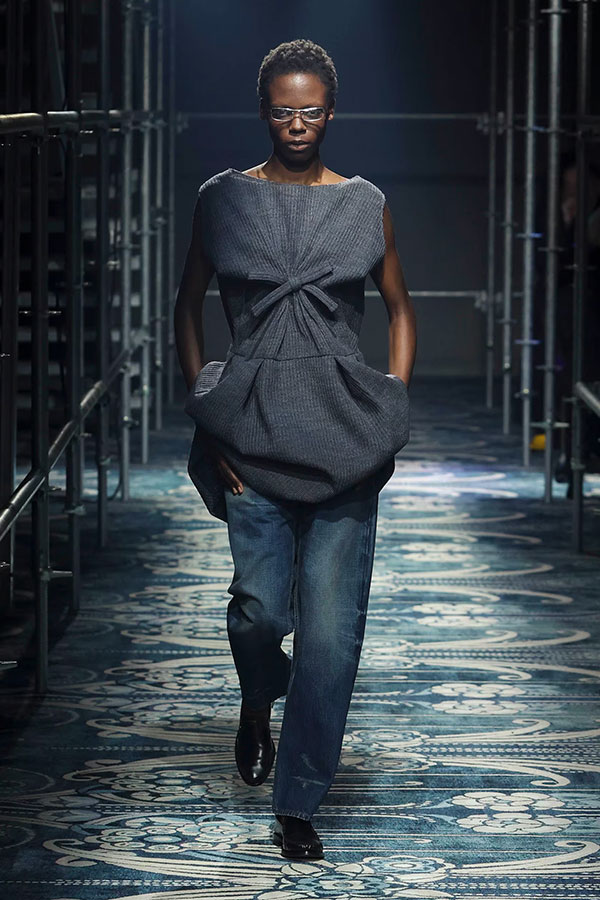
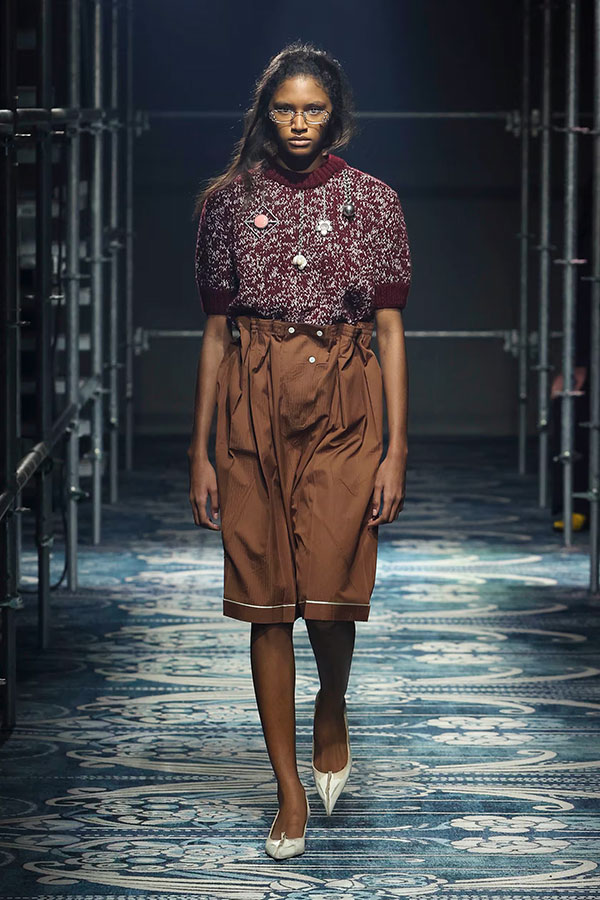
Italian luxury label Prada said its womenswear collection at Milan Fashion Week on Thursday aimed to question what femininity is today, how it can be defined. (See the show here: https://tinyurl.com/yckf7eer )

Models walked among metal scaffolds on patterned carpets at Prada’s catwalk show, wearing loose dresses and clothes with raw seams exposed.

Miuccia Prada and Raf Simons called the fall/winter 2025 womenswear “Raw Glamour” in the press notes.

EMPORIO ARMANI
Emporio Armani presented a fall/winter collection dominated by black, with red, green and blue elements. (See the show here: https://tinyurl.com/2s4c7tzk )

Giorgio Armani said he was inspired for his second line by play and fun, themes recalled by the playing cards that recur as details, according to the show press notes.

DIESEL
Diesel, renowned for its denim and casual wear, showcased a range of ultra-low-waist jeans and skirts, boucle jackets, and plastic-coated garments against a vivid backdrop of giant graffiti on the second day of the Milan Fashion Week. (See the show here: https://tinyurl.com/yc3busdt )

Models sporting striking all-white or black contact lenses strutted amidst 3.2 kilometers of graffiti-adorned fabrics crafted by some 7,000 artists. The vibrant materials were also draped around human-shaped inflatables at the center of the venue.

Creative director Glenn Martens, who recently took on the same role at Maison Margiela, presented Diesel’s autumn-winter collection dominated by shades of grey. Both Diesel and Maison Margiela are part of the family-owned fashion conglomerate OTB.

Milan Fashion Week, which ran until March 3, is the third stop in the month-long global fashion calendar which also features shows in New York, London and Paris. — Reuters

Surveys: Believe them or not?

FREEPIK

SENATORIAL preference surveys are proliferating these days as May 12 draws near and impeachment issues hover in the minds of politicians. Some survey reports are sending shock waves among the thinking public because candidates over the age of retirement (i.e., aged 69-79) and new aspirant-celebrities with nary any experience in law-making land in the top 12 among the 66 aspirants.

How is a survey done in the first place? In the academe, the survey is the most popular method to use in scientific research or thesis writing. Young people from high school until graduate school are all too familiar with this.

According to 2025 data from the Commission on Elections (Comelec), the total voting population is 68.8 million Filipinos. The survey agencies get sample sizes running from 1,200 to 2,400 of the total voting population, but when reported on the media generalize this as all Filipino voters from the tip of North Luzon to the tail of South Mindanao. With such miniscule sample sizes, the sampling technique should be multi-stage representing Luzon, Visayas, and Mindanao. From these areas, we go to the next stage — identify the 18 regions, then select from among the provinces per region, down to the cities, municipalities and finally the barangays. At the selected barangays (from a total of 42,029 barangays), random sampling of voters could be done.

If relevant demographic variables are factored in, the sampling becomes more rigorous — to include the status of the voter’s registration, age, sex or gender orientation, occupation, income, religious affiliation, education, and socioeconomic class (whether belonging to class A, B, C, D or E). Conducting a scientific survey is meaningful if data disaggregation is made.

However, this entire process will cost millions of pesos and require a huge survey team. Considering all the variables mentioned, the survey sheet will be packed with questions that may consist of three to five pages. This can exhaust the energy of the surveyors and even the respondents. Add to this is complying with research ethics, that is, to get the respondents to sign “confirmed consent” that will establish their willingness to answer the questions.

Not all the picked samples have the time or willingness to participate in surveys. Here comes the temptation to do non-probability convenience sampling or to pick only those willing to answer.

How the questions are phrased is another aspect to look into to ensure objectivity — they should not contain questions leaning towards any candidate. Does the questionnaire cover all the 66 candidates or selected candidates only?

What about candid reactions such as: “Kelan po ang election?,” “Sino ang mga tumatakbo?,” “Hindi ko pa iniisip kasi matagal pa” (When is the election?, Who is running?, I have not thought of it yet as the elections are still far away.) Are these captured in the datasets because these reactions are so interesting that they should be subjected to interpretations too. Extrapolation is another possibility in producing survey reports where statisticians work on existing datasets, utilize regression analysis to add new variables and make election forecasts.

Comelec data shows that 63% of the 2025 voters are Gen Zs and Millennials aged 18 to 44. Getting the pulse of these two generations is significant enough and will fit better in the tiny sample sizes. To quote the classic line of our hero Jose Rizal “ang kabataan ay ang pag-asa ng bayan” (the youth is the hope of the nation). So why not focus on the pag-asa ng bayan? Focusing on these age cohorts may also give us clues about their behaviors: are the noontime, game shows, and teleserye (TV series) the sources of information and entertainment of these young people? Do these age cohorts pin their hopes on retire-able senators despite there being no laws associated with their names, notwithstanding their educational background or lack thereof?

Two survey agencies have disclosed that there are commissioned surveys. When a survey is uncommissioned, the agency keeps a list of “subscribers” who can gain access to their complete datasets for a fee. Whether commissioned or uncommissioned, there must be transparency in the methods because the topic is of public concern, of national interest — the future officials of this country who are policymakers and recipients of salaries emanating from people’s taxes.

We in the academe are mandated to do research, following the epistemological philosophy: to know the truth surrounding an issue. Otherwise, surveys are tools for propaganda which we know are part and parcel in battles for power.


Maria Catalina M. Tolentino, PhD is an associate professor at University of the Philippines School of Labor and Industrial Relations. She teaches research methods and was a recipient of professorial chairs and centennial faculty grants.

All about auto insurance

Getting peace of mind on the road doesn’t happen by accident. — PHOTO BY KAP MACEDA AGUILA

What to keep in mind when choosing protection

HAPPY MOTORING is all about peace of mind. You must be confident in the car you are driving, that it is reliable enough to get you to where you are going. You need to make sure that the route you are taking will get you there the fastest, safely, and comfortably. Know where you can make pit stops as needed and where to seek help in case of an emergency. Going places seems easy enough but no matter how well prepared you are, there is always the possibility that not everything will go as planned. Speaking of which, do you have an eye on the weather?

Yes, accidents do happen. A Statista report on road traffic incidents in Metro Manila shows that incidents climbed from 77,950 in 2010 to a high of 121,770 in 2019. Mobility restrictions during the COVID-19 pandemic saw this number halved to 65,030 in 2020, but is now back on the rise. In 2023, the number of recorded incidents rose to 85,950; from January to November of 2024, the number stood at 62,720.

This underscores the importance of having proper motor vehicle insurance for when you might figure in any of those road incidents. Whether you’re a new car owner or a seasoned driver, having the right car insurance is essential for financial security and the aforementioned peace of mind. Accidents, theft, and other surprises can happen anytime — making insurance coverage a necessity rather than an option. I don’t mean just the Compulsory Third Party Liability insurance mandated by law. That is certainly not nearly enough to provide you with adequate protection.

A comprehensive insurance plan can include coverage for own damage, theft, acts of God, excess body injury, third-party property damage, and passenger injury. The premium you will be charged will depend on your desired coverage, the age of your vehicle, place of use, and amount of deductibles, among others. “Deductibles” refer to the ascribed minimum portion of repair cost that the owner covers out of pocket. If the repair amount is less than the deductible, the owner shoulders the entire expense; if the repairs exceed the deductible amount, the insurer covers the excess.

It is important to remember, though, that it’s not just the amount of your coverage that counts. I would even say that the reliability of your insurer matters even more. AXA Philippines — a venture of AXA SA of France, First Metro Investment Corp. (FMIC), and GT Capital Holdings (GTCAP) — is one of the country’s leading insurance providers. AXA SA is the fourth largest financial services company by revenue in France and the eighth largest French company. FMIC, on the other hand, is part of the GTCAP group, one of the leading business conglomerates in the Philippines with diversified business interests in banking, automotive, property and utilities. Surely, this partnership offers rock-solid credentials when it comes to assuring peace of mind.

AXA Philippines Officer-in-Charge for Commercial Sales and Chief of Partnerships and Employee Benefits Johanna Janeo emphasizes the importance of choosing a trusted insurance partner. “You want to know that your insurer comes through when you need it to,” she told this writer. Ms. Janeo cited several reasons for motorists to be discerning in their choice of vehicle insurer. “Among others, reliable car insurers should offer financial security and stability, efficient claims processing and customer support, flexible coverage options and regulatory compliance, and consumer protection,” she continued.

A report by Shoppable.ph in 2024 listed other major motor vehicle insurance companies in the Philippines. They include Bank of the Philippine Islands-MS Insurance, Malayan Insurance, and Prudential Insurance, among the larger non-life insurers. But there are others that focus more particularly on automotive insurance as well, such as Standard Insurance, Stronghold Insurance Company, People’s General Insurance, and Commonwealth Insurance. It is always advisable to do some research before deciding on your insurer. It will save you a lot of grief should the time come when you figure in an unfortunate accident.

A car buyer is free to choose any insurer. Often, however, auto dealers have preferred partners. The Toyota Insure Program (TIP), for example, works with a select basket of insurance companies that include AXA Philippines, Malayan, Standard, Stronghold and People’s. These insurers are selected based on standards of service that meet customer expectations. Ms. Janeo maintained, “There are good reasons to get your insurance directly from your auto dealer. Among others, you enjoy the benefits of a convenient and hassle-free process — akin to a one-stop shop — and you also have access to a seamless after-sales support for claims and repairs.”

Ms. Janeo also offers some tips to make the claims process easier. “If you make sure to document everything, coordinate with authorities, know your policy details, report claims promptly and stay contactable, filing an insurance claim should be hassle-free,” she explained.

But what excites Ms. Janeo even more are the new products that AXA is rolling out. In line with promoting road safety and rewarding responsible drivers, AXA Philippines and Toyota Motor Philippines (TMP) offer Connected Toyota Insure (CTI) — the first Pay-How-You-Drive car insurance product in the country. Available under the Toyota Insure Program, this innovative policy is designed to help drivers save on insurance premiums based on their driving behavior.

Through Toyota’s myToyota Connect, a connected device in your car tracks driving scores, monitoring habits such as acceleration, braking, and cornering. Safer driving can result in lower renewal premiums, while riskier behavior may limit access to discounts. Beyond cost savings, CTI provides peace of mind with 24/7 claims assistance, access to quality repair at Toyota dealers, and exclusive AXA Motor Club perks.

Car insurance is more than just a legal requirement. It’s an investment in safety, financial security, and overall driving peace of mind. By choosing a reliable insurance provider and exploring innovative solutions, drivers can enjoy comprehensive protection and rewards for safe driving habits.

HMO industry swings to profit in 2024

PHILSTAR FILE PHOTO

THE HEALTH maintenance organization (HMO) industry returned to profitability in 2024 amid higher revenues, data from the Insurance Commission (IC) showed.

The sector’s net income stood at P979.8 million as of end-2024, a turnaround from the P4.27-billion net loss in 2023, according to IC data based on the unaudited financial statements submitted by 28 companies.

“This is explained by the higher increase in the sector’s total revenue compared to its total expenses,” Insurance Commissioner Reynaldo A. Regalado said in a statement on Friday.

Total revenues increased by 20.12% to P79.37 billion from P66.08 billion driven mainly by a 18.42% growth in membership fees to P75.62 billion — making up 95.3% of the total.

Meanwhile, total expenses rose by 11.44% to P78.39 billion from P70.35 billion as healthcare benefits and claims paid grew 10.08% to P61.06 billion.

“We also noted from the submissions, that the HMO sector’s total assets, total invested assets, total equity, total capital stock, and total liabilities upswung across the board during the quarter under review,” Mr. Regalado said.

Total assets expanded by 23.85% to P75.13 billion at end-2024 from P60.66 billion.

“The 21.38% increase in cash equivalents, a marked 273.08% rise in deposit to healthcare providers (net), and a 27.51% increase in membership fees receivable (net) contributed to this growth,” the IC said.

Total invested assets, which comprised 23.77% of total assets, increased by 0.92% to P17.86 billion on higher cash equivalents and government securities.

Meanwhile, total liabilities climbed by 26.44% to P63.73 billion amid increases in membership fee and claims reserves.

Total equity rose by 11.14% to P11.4 billion last year from P10.25 billion.

HMOs’ total capital stock went up by 4.43% year on year to P9.18 billion.

PRE-NEED INDUSTRY
Meanwhile, the pre-need industry saw its net income jump by 146.93% last year despite lower plan sales, separate IC data showed.

The sector’s combined net income rose to P5.15 billion in 2024 from P2.09 billion in 2023, IC data from the unaudited financial statements of 16 companies showed.

“The increase was largely driven by the 68.04% spike in the total income earned from investments in trust funds and a 120.23% surge in other income,” Mr. Regalado said.

Meanwhile, premium income inched down by 0.38% to P22.64 billion from P22.73 billion as only eight out of 17 companies reported increases in premiums collected.

Pre-need plans sold decreased by 6.61% to 699,621 in 2024 from 749,154.

This, as sales of life or memorial plans went down by 6.67% to 698,791. This made up 99.88% of the total plans sold by the pre-need sector.

The industry’s combined assets expanded by 8.12% to P164.71 billion on higher investments in trust funds, which made up 84.79% of total assets.

Meanwhile, liabilities rose by 5.89% to P136.73 billion from P129.12 billion.

“Notably, seven out of eight companies that recorded asset growth likewise experienced a rise in liabilities,” the IC said.

The sector’s net worth increased by 20.54% to P27.98 billion from P23.22 billion.

Total capital stock declined by 4.63% year on year to P3.91 billion in 2024 from P4.1 billion the year prior. — AMCS

Mineral production up 1.28% by value in 2024 led by gold

NICKELASIA.COM

THE value of the mining industry’s metallic mineral production rose 1.28% to P252.9 billion in 2024, driven by gold, according to the Mines and Geosciences Bureau (MGB).

Gold accounted for nearly half of the total at P126.36 billion, which was up 19% from the 2023 total.

The value of raw nickel ore fell 15% to P56.67 billion in 2024, the MGB said.

It said the value of mixed nickel-cobalt sulfide fell 21% to P37.37 billion.

The MGB said copper output was valued at P27.24 billion, up from P25.41 billion in 2023; silver at P2.91 billion from P1.86 billion previously; and chromite at P1.75 billion from P1.51 billion.

The growth of Philippine mineral output lagged gross domestic product growth of 5.6% in 2024, Rizal Commercial Banking Corp. Chief Economist Michael L. Ricafort said.

“This could have been weighed down by mostly softer economic data in China, the world’s second biggest economy and the world’s biggest importer of oil, metals, and other major commodities,” he said via Messenger chat.

He said gold was propelled by record world prices, which rose 27% in 2024  after a 13.1% rise in 2023.

Meanwhile, Mr. Ricafort said the 15% decline in the value of raw nickel ore was due to the decline of global prices to a four-year low.

Nickel prices declined 7.9% in 2024. — Kyle Aristophere T. Atienza