Home Blog Page 1917

Gov’t upsizes T-bill award amid robust demand

BW FILE PHOTO

THE GOVERNMENT hiked the volume of Treasury bills (T-bills) it awarded on Monday as rates were below secondary market levels on growing expectations that the Bangko Sentral ng Pilipinas (BSP) will resume its easing cycle next month following slower-than-expected February inflation.

The Bureau of the Treasury (BTr) raised P30.8 billion from the T-bills it auctioned off on Monday, higher than the P22-billion plan, as total bids reached P90.598 billion, more than four times as much as the amount on offer and higher than the P85.474 billion in tenders recorded on Feb. 24.

The strong demand prompted the government to double the accepted noncompetitive bids for the 91- and 182-day securities to P5.6 billion and to P6.4 billion for the 364-day T-bill, the Treasury said in a statement.

Broken down, the Treasury borrowed P9.8 billion via the 91-day T-bills, higher than the P7-billion plan, as tenders for the tenor reached P35.628 billion. The three-month paper was quoted at an average rate of 5.178%, declining by 10.5 basis points (bps) from the 5.283% seen at the previous auction, with the BTr only accepting bids with this yield.

The government also made a P9.8-billion award of the 182-day securities, above the programmed P7 billion, as bids stood at P30.05 billion. The average rate of the six-month T-bill was at 5.48%, 13 bps lower than the 5.61% fetched last week, with accepted rates ranging from 5.49% to 5.568%.

Lastly, the Treasury raised P11.2 billion via the 364-day debt papers, more than the P8 billion placed on the auction block, as demand for the tenor totaled P24.92 billion. The average rate of the one-year debt inched up by 0.3 bp to 5.773% from 5.77% previously, with bids accepted carrying yields of 5.755% to 5.779%.

At the secondary market before the auction, the 91-, 182-, and 364-day T-bills were quoted at 5.2702%, 5.5681%, and 5.7941%, respectively, based on PHP Bloomberg Valuation Service (BVAL) Reference Rates data provided by the Treasury.

The government upsized its T-bill award on Monday as average rates were all lower than prevailing secondary market yields amid robust demand, the Treasury said.

“The latest Treasury bill average auction yields again slightly corrected lower for the second straight week after slightly rising for three straight weeks after the latest inflation unexpectedly eased to 2.1%, a pleasant surprise near the lower end of the BSP’s inflation target of 2-4%,” Rizal Commercial Banking Corp. Chief Economist Michael L. Ricafort said in a Viber message.

This could support a 25-bp cut in borrowing costs as early as next month, he said.

“Demand was strong due to renewed interest in positioning given the recent decline in inflation. Looking forward, there are chances of another rate cut in April,” a trader said in a phone interview.

Philippine headline inflation slowed to 2.1% in February from 2.9% in January, the government reported last week. This was the slowest monthly print in five months or since the 1.9% in September 2024.

This was also below the BSP’s 2.2%-3% forecast for the month and the 2.6% median estimate in a BusinessWorld poll of 18 analysts.

The Monetary Board will next meet to discuss policy on April 3.

Analysts said slower February inflation gives the BSP room to resume its rate-cut cycle at next month’s meeting following its surprise pause at last month’s review.

BSP Governor Eli M. Remolona, Jr. last month said the central bank is still in easing mode, signaling the possibility of up to 50 bps worth of cuts this year.

The Monetary Board has delivered 75 bps in reductions to borrowing costs since it began its easing cycle in August 2024, with the policy rate now at 5.75%.

The trader added that investors swamped the offer as they sought to lock in returns ahead of the upcoming cuts in banks’ reserve requirement ratios (RRR) by month-end, which would free up about P300 billion in liquidity.

Effective March 28, the RRR of universal and commercial banks and nonbank financial institutions with quasi-banking functions will be cut by 200 bps to 5% from 7%. Digital banks’ ratio will go down by 150 bps to 2.5%, while the ratio for thrift lenders will be lowered by 100 bps to 0%.

Rural and cooperative banks’ reserve ratio has been at 0% since October, which was the last time the BSP cut reserve requirements.

The RRR is the portion of reserves that banks must hold onto to ensure they can meet liabilities in case of sudden withdrawals. A lower ratio means banks have more liquidity, which they can use to fund their loans.

On Tuesday, the BTr will offer P30 billion in reissued 10-year Treasury bonds (T-bonds) with a remaining life of seven years and six months.

The Treasury is looking to raise P147 billion from the domestic market this month, or P22 billion from T-bills and P125 billion from T-bonds.

The government borrows from local and foreign sources to help fund its budget deficit, which is capped at P1.54 trillion or 5.3% of gross domestic product this year. — A.M.C. Sy

Mober opens 3,000-sq.m. EV charging hub in Pasay

GREEN LOGISTICS SERVICES provider Mober Technology Pte., Inc. (Mober) said it aims to charge up to 200 electric vehicle (EV) trucks per day with the opening of its Pasay Central Charge hub.

“For this central hub, we have invested around P14 million,” Mober Chief Executive Officer Dennis O. Ng told reporters on the sidelines of the facility’s inauguration on Monday.

Located in Pasay City, the facility spans 3,000 square meters (sq.m.) and has a 56-port capacity to serve Mober’s mixed fleet of e-vans and e-trucks.

Equipped with 50 7-kilowatt (kW) direct current chargers and two 60-kilowatt-hour (kWh) fast-charging units, Central Charge enables Mober to streamline operations and minimize vehicle downtime.

“At Mober, we’ve been committed to finding solutions to infrastructure challenges since our transition to EVs in 2021. Central Charge demonstrates our vision to pave the way for a cleaner, more efficient future for our clients and solidify the Philippines’ place at the forefront of sustainable logistics in Southeast Asia,” Mr. Ng said.

Mober is exploring the installation of solar photovoltaic panels and a 500-kWh battery energy storage system at Central Charge to reduce its carbon footprint.

The opening of the new facility follows the launch of the company’s first charging hub on Zamora Street, Pasay City, in 2023. That hub spans 800 square meters and has 30 charging units.

Meanwhile, Mr. Ng said the company is looking to establish a network of charging points across southern Luzon by the end of this year.

Last year, Mober announced its partnership with BDO Unibank, Inc. to finance the acquisition of 60 new EV trucks to expand its commercial fleet.

The partnership with BDO follows the company’s successful securing of a $6-million blended investment from the South East Asia Clean Energy Facility II, managed by Singapore-based fund manager Clime Capital.

Mober aims to scale up its fleet to over 500 EVs by 2026.

Meanwhile, Senator Sherwin T. Gatchalian said it might be more appropriate to exempt EVs and hybrid EVs from the motor vehicle user’s charge (MVUC) until 2028 or 2030 rather than provide subsidies.

MVUC is a fee collected by the government to help fund the maintenance of national and provincial roads and mitigate vehicle-related air pollution.

“After this event, I realized that instead of giving subsidies, why not exempt EVs and hybrids from MVUC? Because we already exempted them from excise taxes. And it’s time-bound — it’s not going to be perpetual,” he told reporters in a separate interview.

Last year, the National Economic and Development Authority approved the extension of tax breaks for two- and three-wheeled battery EVs, plug-in hybrid EVs, and hybrid EVs until 2028.

Under the Comprehensive Roadmap for the Electric Vehicle Industry, the business-as-usual scenario targets a 10% EV fleet share by 2040, while the clean energy scenario sets a target of at least 50%.

“It’s quite challenging. So, we need to provide as many incentives as possible for people to adopt EVs,” Mr. Gatchalian said. — Sheldeen Joy Talavera

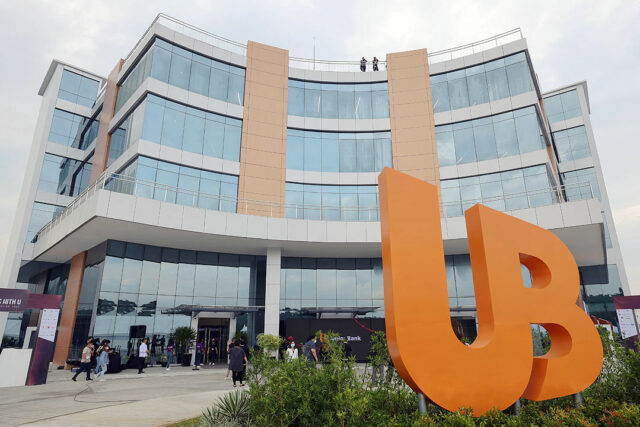
UnionBank expects strong AUM growth

PHILIPPINE STAR/KRIZ JOHN ROSALES

THE WEALTH management arm of Union Bank of the Philippines, Inc. (UnionBank) expects sustained growth in its assets under management (AUM) despite market volatility.

“There is volatility now, but I think it’s relatively more stable because you at least know which direction the winds are blowing in. I think there has been some improvement in the equity markets, and that is helping out in terms of customers having more options. That is driving better momentum in terms of throughputs and volumes that are coming into the market,” UnionBank Wealth Management Sales Network Head Gautam Sharma told BusinessWorld at an event last month.

“Clients’ risk appetite has improved this year, and that is helping in terms of taking a wide variety of products to them.”

Mr. Sharma said their AUMs grew by about 10% year on year in 2024.

“We’ve had a fairly robust growth of double digits in both our revenues in our number of acquisitions and in our AUM, it’s close to 10%. It’s been a pretty healthy growth that we’ve seen across all our business metrics last year, and we started very strong this year as well,” he said.

“So, I think in advisory business, which is what we are in, in wealth management, clients wanting to do more products, being open to more ideas, being open to rebalance their portfolios, which have been static for a long time, are very good signs. And we’ve been seeing tailwinds from that.”

UnionBank’s wealth segment also expects customer growth to be driven by its restructuring, Mr. Sharma said.

“I think we are looking to beat the record of the last three years in terms of the total number of Elite and Access customers that we get through. Earlier, we were restricted in the three wealth branches through which we used to expand. Now, it’s the whole power of all our branches that’s helping us grow our wealth base,” he said.

UnionBank last month unveiled its enhanced Wealth Management Center at its The Ark branch in Makati City.

UnionBank Chief Marketing Officer Albert Raymond C. Cuadrante said the bank may open another center in Bonifacio Global City.

“This (The Ark) is on pilot. Depending on how this does, the next will probably be BGC for the same model,” he said.

He added that the bank could finish renovating all its branches by 2026, with 150 out of 198 branches already done.

“There are some branches that we are still thinking about whether we will relocate to better locations or close,” Mr. Cuadrante said.

UnionBank is also looking to open more branches in the provinces this year as well as in “big, urban cities which are not too saturated,” such as in Calabarzon (Cavite, Laguna, Batangas, Rizal, and Quezon), Cebu, or Cagayan de Oro, he added. — Aaron Michael C. Sy

PLDT Enterprise, Coca-Cola renew partnership

PLDT ENTERPRISE, the corporate arm of PLDT Inc., has renewed its partnership with Coca-Cola Europacific Aboitiz Philippines (CCEAP) as its digital and connectivity provider.

“This renewed collaboration marks another milestone in the decades-long relationship between PLDT Enterprise and Coca-Cola, solidifying PLDT’s role as the beverage giant’s trusted telecommunications and digital solutions partner,” PLDT said in a media release on Monday.

Under this partnership, PLDT Enterprise will provide CCEAP with end-to-end fixed, wireless, and information and communications technology (ICT) services to support its operations and enhance business productivity.

CCEAP operates 18 manufacturing plants across the Philippines, PLDT said, adding that the company relies heavily on a robust digital infrastructure for its operations.

“Through PLDT Enterprise’s extensive portfolio of mobility, connectivity, and ICT solutions, the company has been able to accelerate its digital transformation initiatives, ensuring seamless communication and efficient distribution networks,” PLDT said.

PLDT said that through its ICT and cybersecurity services, CCEAP has adopted its “continuity and managed security services,” strengthening the company’s cybersecurity framework.

At the local bourse on Monday, shares of PLDT rose by P10, or 0.72%, to close at P1,401 apiece.

Hastings Holdings, Inc., a unit of PLDT Beneficial Trust Fund subsidiary MediaQuest Holdings, Inc., holds a majority stake in BusinessWorld through the Philippine Star Group, which it controls. — Ashley Erika O. Jose

There’s never been a better time to be anti-American

A CARNIVAL FLOAT of US President Donald Trump during the Rose Monday parade on March 3 in Dusseldorf, Germany. — BLOOMBERG-HESHAM ELSHERIF/GETTY IMAGES EUROPE

THE Trump administration is boosting a powerful force in global affairs: anti-Americanism.

Canadians have taken to booing the American national anthem and Panamanians to burning US flags. The British tabloids have tarred and feathered Vice-President JD Vance for insulting British troops. A carnival float in Dusseldorf, Germany, displayed giant puppets of Donald Trump and his Russian counterpart, Vladimir Putin, shaking hands while squeezing Ukrainian President Volodymyr Zelenskiy between them into a bloodied pulp. A sign on the float read “Hitler-Stalin Pact 2.0.” Back at home, the Washington Post has published a guide on how to navigate hostility abroad (“dress neutrally, not patriotically”).

There has never been a better time to be anti-American. Trump embodies everything critics of the US have always warned about, multiplied several times over. Yankee arrogance? He and Vance, in the Oval Office, shamelessly bullied the leader of a nation victimized by the Russian president’s aggression. Yankee imperialism? Trump bragged to a cheering Congress that he will take over Greenland “one way or another.” Yankee incompetence? His tariffs are destabilizing global stock markets and downgrading his own economy.

A YouGov poll published March 4 shows positive feelings toward the US have fallen by between six and 28 points since Trump was elected. The smallest decline (from 48 to 42) is in Italy. The biggest (from 48 to 20) is in Denmark, where, unsurprisingly, people are annoyed by his intention to annex part of their territory. There is currently nowhere in Europe where more than half the population has a positive feeling about the US.

These numbers are likely to worsen significantly as the mass deportation of migrants starts and when the tariffs take an increasing toll on the global economy.

Is there anything more to rising anti-Americanism than just anti-Trumpism? I think so. There is intensifying hostility to America’s enthusiasm for throwing its political and cultural weight around — a fervor that long predates Trump and is driven as much by the country’s command of the world’s most powerful technologies as it is by its politics. Living with America is like rooming with badly behaved teenagers who demand constant attention and think they have solved the mysteries of the universe.

America’s last great cultural export before Trump won the election — wokery — has infuriated people on the right and center with its weaponization of cultural tensions. Its social media sites — particularly Facebook and X, formerly Twitter — are increasingly seen as agents of division and distraction rather than, as they once liked to brand themselves, creators of a global village.

Equally, there’s never been a worse time to be pro-American. Champions of the US have traditionally defended the nation (and excused its failures) on three grounds: that, as the world’s greatest power, the US provides stability and security; as the world’s leading liberal democracy, it defends and spreads liberal democracy around the world; and that it is an engine of free-market capitalism.

Those justifications are turning into dust. The US is becoming a source of global instability — most obviously because of Trump’s behavior but also because of the growing habit of swinging between extremes (President George W. Bush’s crusading democracy promotion to Trump’s isolationism). America’s internal politics are now so erratic as to make it an unreliable long-term partner no matter who occupies the White House. Under Trump, the US is groveling to the world’s biggest enemy of liberal democracy, Putin, and injecting massive instability into global markets.

During the last upsurge of anti-Americanism under Bush, pro-Americans at least had something to fight for: the idea that the US was toppling a vicious dictator and spreading democracy in the Middle East. But what can they fight for today? Nobody outside the US embraces its tariffs. And nobody outside the axis of autocracy backs Trump’s strongman-first foreign policy. Even people who make nice with Trump, such as UK Prime Minister Keir Starmer, do so through gritted teeth.

Anti-Americanism is likely to be transformative in domestic European and international politics if Trump continues with the incendiary acts of his first seven weeks. The sentiment is already eroding the domestic support of populist politicians who have aligned themselves with him.

Nigel Farage, the leader of Britain’s Reform Party and a man who has traded on his position as Trump’s best friend in the UK, has backtracked on his suggestion that Zelenskiy was “rude” to Trump and denounced Vance as “wrong, wrong, wrong” on British troops. Both the Labor and Conservative parties think Farage’s closeness to Trump could prove to be an electoral problem for Reform. The Canadian Conservative Party, which has enjoyed a massive lead in the polls over Prime Minister Justin Trudeau’s Liberals for two years, has seen its advantage evaporate since January, with a Conservative victory in October’s election no longer a foregone conclusion.

One of the reasons why sensible great powers present themselves as benign defenders of the global order is to prevent smaller powers from ganging up against them. Trump’s America has decided to do the opposite. Western powers are forging alliances that exclude (or at least don’t include) the US. The European Union, particularly in Germany, is beginning to take its military destiny in its hands after decades of passivity. The EU has struck trade deals with Latin America and Malaysia and has made various side accords with Canada and China. A number of its allies regard the US, in the words of the political scientist Michael Beckley, as “a rogue superpower, a mercantilist behemoth determined to squeeze every ounce of wealth and power from the rest of the world.”   

Even as America weakens alliances that it has spent the post-World War II era cultivating, the axis of autocracy is doing the opposite. Russia and China have pledged lasting friendship. What used to be called nonaligned powers are queuing up to join the BRICS group of emerging-market nations. The US can no longer assume that other liberal powers will automatically come to its side because of shared interests and culture. Nor can it assume that, when push comes to shove, nonaligned powers will choose America over China.

The genie of anti-Americanism is now not only out of the bottle but doing immense damage to the country’s long-term interests. Even if Trump proves to be an aberration, as seems increasingly likely as aversion to his policies spreads at home and abroad, it will take many years to regain the trust of the free world.

BLOOMBERG OPINION

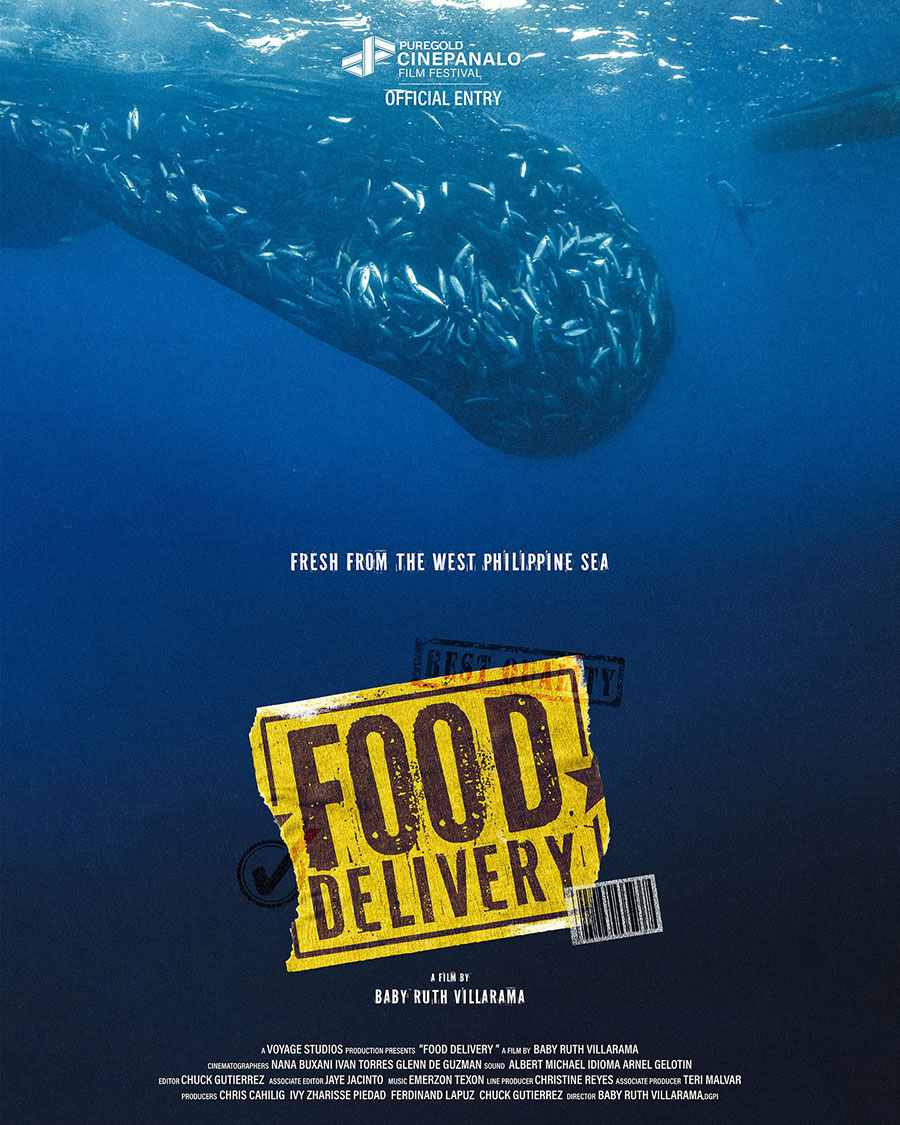
Tracing the difficult path of food delivery at sea

A STILL from the documentary Food Delivery.

Documentary follows West Philippine Sea fisherfolk, naval forces

FOOD DELIVERY: Fresh from the West Philippine Sea is a documentary film about Filipino fishermen and naval soldiers at the frontlines of the fight for national sovereignty, told through their struggle to get food to and from the distant isles in the highly contested West Philippine Sea (WPS).

Baby Ruth Villarama, an award-winning documentary filmmaker known for her acclaimed 2016 film on overseas Filipino workers (OFWs), Sunday Beauty Queen, now turns her attention to overlooked stories at the local shores of a global issue.

“Ultimately, we have to communicate that these little islets that we have are ours, and they’re actually very crucial in terms of our security, our maritime territory, and also our economic power,” she told BusinessWorld in a video call.

China claims sovereignty over the entirety of the South China Sea, a vital waterway for over $3 trillion in annual ship-borne commerce, despite much of it also being claimed by various Southeast Asian countries, including the Philippines which calls the area under its jurisdiction the West Philippine Sea.

This has led to Filipino fishermen working near Scarborough Shoal and other islets being monitored and sometimes harassed by Chinese ships, as Philippine naval forces are also stationed there to keep watch.

For Food Delivery, produced by Voyage Studios, the goal is to offer a deeper perspective of this hot topic largely seen on the news, Ms. Villarama said.

“It never came into my radar to do such a story because I feel like we’re nautical miles away from what’s happening,” she added. “When news came pouring in on my feed about WPS, sentiments on pro-China policy, and people being a bit confused about it all, I thought that there’s something that we can do. I just didn’t know what.”

She explained that her producer, Chuck Gutierrez, pushed her to look for an angle. Because their film pitch was for the CinePanalo Film Festival, which is backed by the Puregold supermarket chain, this sparked an idea.

I thought the story can revolve around food, because we’re all connected by it, and it’s the fisherfolk who feed us who are the most affected by the situation. When I did further research, I learned that the Armed Forces of the Philippines (AFP) is also having a hard time delivering food to the soldiers stationed in these shoals,” she said.

After getting their pitch approved by Puregold CinePanalo, Ms. Villarama and her crew then filmed with fisherfolk from October to December and with the AFP stationed near the WPS in January.

A LEARNING EXPERIENCE
One of their sources was Arnel Satam, the Subic-based fisherman with a small motorized wooden boat who was chased away from his usual fishing waters by the Chinese Coast Guard back in 2023.

He showed them the beauty and freedom of his work out at sea, the act of catching fish called simbada in their community, and the brotherhood of fisherfolk — all of which Ms. Villarama described as “a beautiful dance.”

“We capture the process of fishing, and how fish is sent to hotels in Manila, Pangasinan, Laguna, Cavite, all over,” she told BusinessWorld. “We have about 5,000 fisherfolk based in Subic, and we only get to know their story if there’s a mishap or incident at the WPS,” she said.

“To witness their life, their choices, and the things that make them happy is the most priceless experience,” she added.

From Subic Bay they have to travel over 270 kilometers of ocean to get to the fishing grounds around Scarborough Shoal, which takes approximately 14 hours.

“They would be out there for two months just catching fish, until a service boat comes to get their catch for the day and bring it back to the fish port of Subic to deliver,” said Ms. Villarama. “We went with them until Scarborough and then opted to go back on the service boat while they went on farther out to continue fishing.”

The documentary crew spent a total of 30 days with the fisherfolk, staggered over various small trips ranging from five days to two weeks.

Throughout filming, the presence of China could be felt — a drone was monitoring the fishing boats, and a Chinese Coast Guard ship was following from afar.

“It’s like a dot in the day. In the dark, it’s like a star,” Ms. Villarama said of the Chinese ship. “There’s no fear, but it’s annoying because there’s somebody uninvited in your backyard that’s not supposed to be there.”

WAR OF NARRATIVES
To get the side of the story following the Armed Forces of the Philippines and the Philippine Coast Guard (PCG), the Food Delivery team pitched the film as their way to “contribute to the narrative of the WPS.”

“When we received the news that we were part of the official lineup of the [CinePanalo] festival, that’s when we confirmed that we can help them with the war they’re trying to win, which is the war of narratives,” Ms. Villarama said.

Food Delivery: Fresh from the West Philippine Sea will premiere on March 14 at Gateway Mall in Quezon City, but its festival run until March 25 will not be the end of its journey. There are plans to have the documentary screened at schools and universities.

Ms. Villarama likened the goal to the campaign of her previous film, Sunday Beauty Queen, which got a lot of media coverage and gained independent champions, from politicians to OFW communities to non-government organizations.

“It’s very important that we bring the film to students because I heard that in China, as early as six years old, they are taught the nine-dash line. For us, we have to teach the conviction to respect the 200-nautical mile exclusive economic zone,” she explained, describing the claims of both countries over the area.

In arbitration proceedings against China before a United Nations-backed tribunal in 2016, the Philippines was able to validate its claim over the West Philippine Sea. Its main basis was the 1734 Pedro Murillo Velarde map showing the Scarborough Shoal and Spratly Islands as part of the Philippines.

Ms. Villarama told BusinessWorld that, despite that triumph, China’s bullying tactics are difficult to fight against. While Food Delivery can be described as “Nat Geo with a Pinoy heart,” its ambition stretches beyond being informative.

“We have a few PCG and AFP naval ships, and 200 Chinese ships hovering around our territorial waters. So how do we deal with that? The big question is, how do you handle a bully?” she said.

“I don’t want to be messianic about it, because we’re only doing a small part. Collectively, we have to rise together. With our film’s focus on food, I hope we can at least inspire fellow Filipinos, as well as other countries.” — Brontë H. Lacsamana

Family dynamics, lack of literacy impede Filipinas’ financial stability

FREEPIK

WOMEN in the Philippines believe they are now more financially secure compared to the previous generation, but low literacy and family dynamics continue to hamper their stability, a study by Sun Life Asia showed.

Some 60% of Filipinas feel their financial security has improved compared to their mothers’ generation, but traditional family dynamics and responsibilities held by women at home prevent them from achieving financial stability, according to a study by Sun Life Asia titled “Women’s Wealth in Focus: Building Confidence and Security.”

This was lower than the regional average of 65%. The country with the highest rate of financial security from women was Vietnam (75%), followed by Indonesia (71%) and Singapore (66%). Trailing the Philippines were Hong Kong (59%) and Malaysia (59%).

The company interviewed over 3,000 female respondents in the Philippines, Hong Kong, Indonesia, Malaysia, Singapore, and Vietnam.

“The survey highlights the Filipinas’ growing focus on savings and financial independence. While women are committed to their financial futures, there’s a clear knowledge gap regarding available resources and the importance of early financial planning,” Sun Life of Canada (Philippines), Inc. (Sun Life Philippines) Chief Client Experience and Marketing Officer Maria Carla Gonzalez-Chong said in a statement on Monday.

“Seeking expert advice can help address concerns about unforeseen financial risks. This approach not only helps protect against unexpected costs but also ensures that women can maintain their desired lifestyles while working towards long-term financial security,” Ms. Gonzalez-Chong said.

The findings showed that 36% of mothers said they are stressed about managing the needs of their children and parents, which Sun Life Philippines said shows the multi-generational responsibilities that many women carry.

“While 52% of women are saving for their parents’ current or future elderly care, only 16% of women with children expect full support from their children as they age. This may reflect a growing desire among women to cultivate their own financial resilience, opting to prepare for their future care needs independently rather than relying on their children,” it said.

The study also showed that 71% of Filipina respondents said their knowledge of financial and investment products is at the basic or beginner level, reflecting the lack of financial literacy, Sun Life Philippines said.

“When asked to give estimates on key financial knowledge points, majority are able to share the exchange rate between their local currency and the US dollar (79%), balance of credit card debt (66%), and current interest rates in the Philippines (57%),” it said.

“However, there are still some gaps in financial literacy, particularly seeing that 53% with mortgages are unable to estimate their remaining balance and 53% are not able to share the average annual return of their investments. Moreover, 68% face challenges in finding financial products tailored to their unique needs.” — Aaron Michael C. Sy

Cirtek Holdings suspends dividends on all preferred shares to manage liquidity

FOUNDED IN 1984, Cirtek Holdings Corp. (CHC) specializes in technology product development. — CIRTEKHOLDINGS.COM

By Revin Mikhael D. Ochave, Reporter

LISTED TECHNOLOGY COMPANY Cirtek Holdings Philippines Corp. has suspended cash dividends on all its preferred shares to manage liquidity and ensure the sustainability of its operations.

The move was approved during a special meeting of the company’s board on March 7, Cirtek said in a regulatory filing on Monday.

“The board of directors of Cirtek… approved the suspension of payment of the declared cash dividends until further notice for all Cirtek’s preferred shares as part of the company’s strategy to manage liquidity and to preserve its resources to ensure long-term sustainability of its business,” it said.

Cirtek said the suspension applies to its preferred A shares, preferred B-1 shares, preferred B-2 subseries A shares, preferred B-2 subseries B shares, preferred B-2 subseries C shares, and preferred B-2 subseries D shares.

Despite this, Cirtek said it remains committed to fulfilling its obligations. “This includes payment of all dividends due on all preferred shares of the corporation and payment of all arrears of dividends outstanding by reason of the suspension, on future dates to be set by the corporation,” it said.

Cirtek declared the cash dividends for the preferred shares on Jan. 20. The cash dividends for the preferred A shares amounted to $0.000012196 per share, totaling $8,537.01, while dividends for the preferred B-1 shares were P0.06125 per share, amounting to P4.29 million.

Dividends for the preferred B-2A shares reached $0.0228125 per share, totaling $1.53 million, while the preferred B-2B shares had dividends of $0.025 per share, amounting to $500,000. Dividends for the preferred B-2C shares were P1.7678125 per share, totaling P29.94 million, while the preferred B-2D shares had dividends of P0.968825 per share, totaling P27.73 million.

Sought for comment, AP Securities, Inc. Research Head Alfred Benjamin R. Garcia said in a Viber message that Cirtek’s move signals the company is in “survival mode.”

He said Cirtek’s cash pile has dropped significantly over the past two years, from $44 million to $15 million, and the company has been cash flow negative in 21 out of the past 36 quarters.

“This is a sign of a company in trouble, and if the company has come to the point that it suspends dividends on preferred shares, we are not optimistic that a turnaround will happen in the near future,” he said.

DragonFi Securities, Inc. Equity Research Analyst Jarrod Leighton M. Tin said in a Viber message that Cirtek’s decision is “a concerning development” that suggests potential liquidity issues.

He said a closer examination of Cirtek’s financials reveals a cash balance of approximately $15.1 million as of the third quarter of 2024, which is less than half of its fiscal year 2023 cash position of $36.7 million, an alarming decline.

He added that this signals deteriorating cash flow, raising doubts about the company’s ability to meet its dividend obligations. “Given these red flags, we recommend that preferred shareholders consider liquidating their holdings, as Cirtek’s ability to sustain dividend payments appears to be compromised,” he said.

For the first nine months of 2024, Cirtek recorded a 35% decline in net income to $5 million, as revenue fell 21% to $48.5 million due to lower contributions from its business units. Cirtek is engaged in the production of semiconductor devices, antenna solutions, and other technology products.

On Monday, Cirtek shares dropped by 1.74%, or two centavos, to P1.13 apiece.

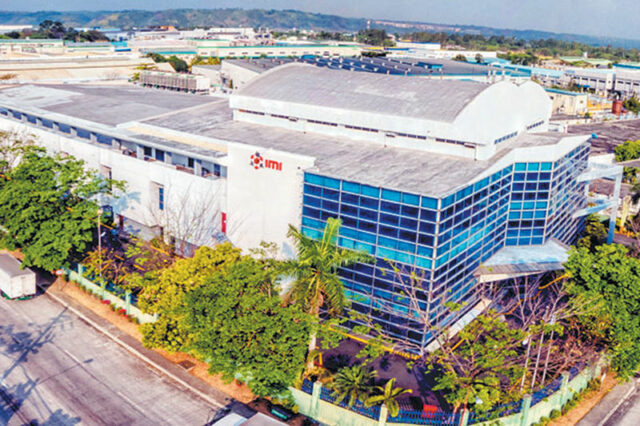
IMI targets growth in industrial, medical sectors

GLOBAL-IMI.COM

AYALA-LED electronics manufacturing services (EMS) provider Integrated Micro-Electronics, Inc. (IMI) said it is targeting growth in the industrial and medical electronics markets.

“IMI has long been recognized as a global leader in automotive electronics. One of our goals now is to extend this expertise and absolute commitment to quality into new markets, including the industrial and medical sectors,” IMI Chief Executive Officer Louis Sylvester Hughes said in a statement to the stock exchange on Monday.

“We believe that this direction will allow us to unlock more opportunities for sustainable and profitable growth for IMI,” he added.

IMI produces electronics for the automotive, industrial, power electronics, communications, and medical segments.

In addition, IMI is exploring the warehousing and logistics support services business to strengthen its financials after its board approved an amendment to its primary purpose.

On March 7, IMI’s board approved the amendment of its primary purpose to include the provision of warehousing and logistics support services, specifically “importation/procurement, storage, deposit, and inventory management of goods for subsequent sales, transfers, or dispositions to clients, interested establishments, agencies, and/or export enterprises.”

“This is to consider additional activities for potential future transactions beyond pure manufacturing and to accommodate requests from customers,” IMI said.

The amendment will be subject to stockholders’ approval at IMI’s annual meeting on April 22.

For 2024, IMI reduced its attributable net loss by 53% to $49.79 million from $105.63 million in 2023, driven by restructuring initiatives.

Revenue declined by 17.2% to $1.10 billion in 2024 from $1.33 billion in 2023, as its wholly owned subsidiaries continued to be affected by “prolonged recovery challenges in the automotive and industrial markets.”

IMI recorded a $13.3-million net loss from its 50%-owned subsidiary VIA Optronics, including one-time expenses of approximately $4.3 million for headcount rationalization and the delisting process from the New York Stock Exchange.

“2024 was a transformative year for IMI as we took decisive steps to position the company for sustainable growth in a rapidly evolving market. While the restructuring efforts resulted in one-time expenses, they were essential to creating a leaner, more agile organization,” Mr. Hughes said.

IMI previously announced the closure and rationalization of its facilities in California, Malaysia, Singapore, Japan, and Chengdu, China, to optimize its global footprint.

“We are already starting to see positive results from our initiatives, and we look forward to seeing the full effect of these actions in the years to come,” Mr. Hughes said.

Ayala Corp. Chief Financial Officer Alberto M. de Larrazabal recently said the conglomerate remains committed to IMI despite its losses, citing its efforts to return to profitability.

On Monday, IMI shares closed unchanged at P1.50 apiece. — Revin Mikhael D. Ochave

Overhaul of PhilHealth is long overdue

FACEBOOK.COM/PHILHEALTHBICOL

During the third round of oral arguments on the petition challenging the transfer of the excess funds of the Philippine Health Insurance Corp. or PhilHealth, Supreme Court Associate Justice Antonio Kho told Department of Health Assistant Secretary Albert Domingo, “Probably, it’s time to overhaul PhilHealth and change the board for not complying with what the law requires. Apparently, in your own words, it’s the fault of the administration, the last administration, or the previous administration, and it’s the fault of the PhilHealth board.”

That is what I have been suggesting in this column starting in August 2020 — that PhilHealth needed an upgrade to administer universal healthcare (UHC). As Ricardo Morales, then PhilHealth president and chief executive officer, said as a way of explaining why the irregularities in the state insurance firm could not be fixed, “Even if you put Superman in my place, he might not be able to cope with the task.”

The World Health Organization (WHO) estimated that developing economies would take 15 years to put in place a strong, efficient, well-run, and sufficiently funded healthcare system. That is why it advised our legislators to target the achievement of UHC by 2030. But legislators running for re-election rushed the crafting of a bill instituting universal healthcare so that they could present UHC in the elections of 2019 as their gift to the Filipino people — never mind if the infrastructure for UHC was not ready and PhilHealth was not capable of managing the program. Senators JV Ejercito, Cynthia Villar, Nancy Binay, and Sonny Angara must have said, Bahala na si Batman (Batman will handle it).

The Universal Health Care Act, RA 11223, automatically enrolled all Filipino citizens in PhilHealth — 110 million Filipinos spread all over the archipelago, from Batanes to Sulu. That is the colossal defect of RA 11223.

In the United Kingdom, all aspects of medical services for all residents are covered by the National Health Service (NHS), which runs hospitals and employs doctors. All medications associated with hospital visits are free of charge. The NHS is funded through taxation.

PhilHealth, a government corporation attached to the Department of Health for policy coordination and guidance, was not configured to run a complex and far-flung operation. First, not one of the members of the board of directors had substantive experience in the insurance business, much less in health insurance, to be able to formulate and promulgate policies for the sound administration of the program.

Dr. Ted Herbosa, Chairman of PhilHealth’s board of directors, has made statements that reflect a total ignorance of the operating system of PhilHealth and its management. He chided the management of PhilHealth for keeping or investing its money instead of spending it for the people’s health needs.

An insurance company is paid the premium up front. It sets aside a portion of the aggregate premiums paid by the people who are insured, as a reserve for future claims of financial loss. The actuary estimates how much of the funds should be kept as a reserve. An insurance company makes the amount in excess of the reserve grow by judicious placement in the money market. That is the job of the insurance company’s fund manager. And PhilHealth has a fund manager, except that the man is fund manager in name only.

Dr. Herbosa has also said that they were struggling to implement universal healthcare partly because indigent patients and ordinary workers were opting for private rooms instead of charity wards where they could enjoy full PhilHealth coverage.

An ordinary worker earning the minimum wage contributes at least P668 a month to PhilHealth or at least P8,000 a year. His employer contributes as much on his behalf. With P16,000 he can buy insurance from a private company that would entitle him to a private room in a private hospital and full coverage of the hospital bill. Dr. Herbosa is wrong to begrudge an ordinary worker asking for private room accommodation.

By their line of questioning, the members of the Court seem to have a better grasp of the operating system of PhilHealth and the necessary upgrade than the members of the board of PhilHealth.

Second, the management team does not have the experts or specialists who are key to the viability of the organization: a formally trained actuary, an accomplished fund manager, and a medical director.

The actuary is responsible for assessing future financial risk in healthcare. He calculates the cost of healthcare based on reported health data like the Department of Health’s morbidity rates and the rate of increase of the cost of medicines and services. He should have at least a master’s degree in Actuarial Science and at least one year’s experience in dealing with the measurement and management of risk in the healthcare field.

The fund manager is responsible for making the funds, the aggregate premiums paid by the people insured, grow by implementing investment strategies. The typical fund manager possesses a minimum of a bachelor’s degree in economics, finance, and business. He may have gone through advanced studies in financial management.

The medical director assists in the development of health insurance policies, analyzes medical data to identify risk factors and trends that could impact underwriting decisions, works with the actuary to develop risk profiles, and provides expert opinions on the cost of complex medical conditions or treatments.

He serves as a liaison between healthcare providers and the insurance company. He formulates the policies in the hiring of claims adjusters and develops their training program. He must be a Doctor of Medicine with experience working in a clinical setting and as an administrator.

PhilHealth’s lack of such specialists or experts was shamefully laid bare to the public during the televised hearing of the Good Government and Public Accountability Committee of the House of Representatives on Dec. 17, 2024.

Rep. Raoul Manuel asked how the Insurance Contract Liability of P1.15 trillion as of June 30, 2024 was computed. The Vice-President for Actuarial Services and Risk Management Sector explained that basically it is the estimate of total claims paid the member during his lifetime plus cost of servicing that member minus the member’s contributions up to the age of 60, the net amount adjusted to its present value. Rep. Stella Quimbo immediately interjected that the formula is for life insurance, not for health insurance. The law requires PhilHealth to keep funds in reserve enough to pay for claims in the next two years.

In reaction to the observation that Justice Kho made during the Supreme Court hearing that PhilHealth does not base its budget on the health needs of Filipinos, Mr. Domingo said, “Mathematically, it’s the premium rate. The way that the premium rate is determined unfortunately is not actuarially fair.”

The comments of Rep. Quimbo and Mr. Domingo cast doubt on PhilHealth having a health insurance actuary.

When Rep. Joel Chua asked the Senior Vice-President for the Fund Management Sector in what account the government subsidy is entered, whether in savings, time deposit, or current, the fund manager did not answer. Instead, he said the subsidy is used to pay claims and the excess is invested. That triggered a flurry of interpellations from several congressmen. It turned out the direct contributions made by the members (the premiums paid) were invested because the fund manager considers the reserve fund excess funds.

For two hours and 40 minutes the fund manager struggled to explain his understanding of excess fund, reserve, direct contributions, subsidy, and investment. At one point he went on a lecture of the structure of a balance sheet, complete with hand gesture, to the obvious resentment of the lawmakers. The visibly exasperated Rep. Quimbo admonished him not to confuse the committee members. She even warned to make him take the oath as he changed his statements several times.

During the second round of oral arguments on the transfer of PhilHealth funds before the Supreme Court, Associate Justice Amy Lazaro-Javier presented the Commission on Audit reports on PhilHealth in 2021 showing PhilHealth had bigger liabilities than assets. She asked: “Has PhilHealth paid all the recorded and recognized claims before it transferred the funds to the Treasury?” In response, the PhilHealth fund manager said they have not paid all claims but transferred the money to Treasury just the same because PhilHealth has stable financial health. “The corporation has the capacity to continue its operations given that the corporation has an investment portfolio enough to cover requirements of the corporation in terms of benefit payments,” said he — to the perplexity of the members of the Court.

Rep. Jude Acidre asked how the benefit packages are determined. The Executive Vice-President and Chief Operating Officer, an attorney, said he asks an expert. He admitted the last time the packages were expanded was in 2012. As a lawyer, he should know that the law says that when PhilHealth has excess funds, PhilHealth should either expand the benefit packages or lower the rate of contribution.

The recent appointment of Dr. Edwin Mercado as president of PhilHealth can be considered as the start of the overhaul that is badly needed. His academic credentials and his 35 years of work experience with a national chain of healthcare facilities well qualify him for three of the key positions in PhilHealth — chief executive officer, fund manager, and medical director. But he should not function as medical director too.

Dr. Mercado should devote all his time to the administration of PhilHealth. Managing an organization with 17 regional offices, five branches, and 101 local offices strategically located nationwide and more than 7,800 employees demands no less.

PhilHealth needs to hire a health insurance actuary, an accomplished fund manager, and a medical director.


Oscar P. Lagman, Jr. was the country manager of a multinational health insurance company. As a solo consultant, he set up the health insurance line of two multinational general insurance firms. In between those two engagements, he, as head of Healthcare Consulting of the largest consulting firm, conducted a management audit of the biggest HMO. He was program director and sole lecturer of the executive development program for 50 officers of PhilHealth in 2007.


Fear of legalese keeps Filipino animation creatives from protecting their property rights

ANIMATORS Marla Rausch, Ronnie Del Carmen, and Rianne Hill Soriano discuss the topic of IP rights in the animation industry.

3 artists discuss what is holding the industry back

THE ANIMATION industry in the Philippines is rich with talented animators, digital artists, and creators of various forms of entertainment, but protecting their intellectual property (IP) rights remains under-explored, said Filipino creatives working in the industry today.

To end National Arts Month, the Intellectual Property Office of the Philippines (IPOPHL) brought together three Filipino animators to talk about the need for awareness of IP rights in the local animation landscape.

The IP LIVE TALK session, titled “Copyright ownership in an animation production,” was streamed live on Feb. 24, with the full recording posted online a few days after.

Speaking as president of the Creative Content Creators Association of the Philippines (SIKAP) and as founder of post-production company Animation Vertigo, Marla D. Rausch said, “The Philippines has this fear of contracts, legalese, and lawyers, because it’s all hard to understand. It gets frightening to deal with, but we have to encourage our creatives to do so, because it protects us.”

She said that, by determining “deliverables, specific roles, and the expectations of both parties in contributing to the creation of a work,” it is easier to deter one party from taking advantage of the other.

Ronnie Del Carmen, a Filipino animator, director, and storyteller who has previously storyboarded and co-directed works for Warner Brothers, Dreamworks, Pixar, and Netflix, said that contracts are a whole other story for big studios.

“Mostly, I’m kind of outside any IP issues because it’s a work-for-hire situation where you’re an employee of the company,” Mr. Del Carmen said. “Everything inside your head, in a work-for-hire context, belongs to the studio. You sign away those rights. You just work for them and make their films. None of us have ownership of characters or designs.”

However, he advised that animators have a “carve-out” of characters and stories that are excluded from the company’s ownership. “These are for works that existed before joining. You have to pay attention to the contract and specify properties that belong to you, so you can work on them on your own without studios touching them,” he explained.

Representing the independent filmmaker side was Rianne Hill Soriano, president of Tuldok Animation Studios. She talked about how distribution and merchandise require artist-centered discussions.

“For example, when we have events as Tuldok, the filmmaker retains the copyright for the works they’ve done with us. It’s only ethical to inform them if we’re showing their film at an event,” she said.

Ms. Soriano also specified that when Tuldok gets grants to make a film, they ensure that they own everything as well. “With regards to exploring possibilities for IP, like making characters into toys and selling them at Toy Con, we’ve been discussing it in terms of share of rights and the fair percentage for the character designer,” she said.

Ms. Rausch recalled some sneaky contracts that Animation Vertigo has encountered as a work-for-hire service — something animators have to be wary of.

“I’ve seen contracts where anything you use, including scripts, programs, and tools that helped create the product, is also owned by the company. At that point, you look to your lawyer and ask to have it struck out of the contract, so that the only deliverable is the animated scene and no other asset,” she said.

COPYRIGHT LAW
In the Philippines, Republic Act 8293 is what governs the IP system. Under it is the Copyright Law, which protects Filipino creators.

“One unique thing about copyright as an IP is the fact that it vests from the moment of creation,” said Emerson Cuyo, director of IPOPHL’s Bureau of Copyright and Related Rights, at the talk.

“This means there is technically no need to register your copyright over your creation — but there are advantages to registering your work. It is for creatives, creators, animators, and artists in jurisdictions like the Philippines where the voluntary system of copyright registration is very lacking,” he explained.

Ms. Soriano observed that an idea must be a tangible form of expression in order to be copyrighted — and the earlier this can be done, the better.

She said that screenplays are an early form of a film that must fall under copyright, to deter others from stealing any ideas. This is why she has printed her screenplay with watermarks containing its copyright registration number, as “a form of defense.”

“It’s relatively easy to prove that a film belongs to someone, but it’s trickier with ideas that are pitched somewhere,” Ms. Soriano said. “Most of us do this for funding, grants, indie film festivals, and screenwriting competitions, and there’s the possibility that anything you share can be stolen. That’s one way to ensure nothing happens.”

Mr. Del Carmen concluded by emphasizing caution. “Once you are handed a piece of paper to sign involving something you made, that’s your cue to get a lawyer. You might be asked to surrender rights. You have to be diligent and vigilant about what you own,” he said.

For Ms. Rausch, consulting legal experts within SIKAP or IPOPHL is easy. Guidance with registering any form of IP is also available through the organizations, which can help with monetizing their IP.

“By registering our works, we can prove to people who might want to license or create merch or adaptations from your IP, that you are truly the owner and that you will receive compensation,” she explained.

The full talk is free to view on IPOPHL’s Facebook and YouTube pages. Animators can register their works via ipophl.gov.ph. — Brontë H. Lacsamana

Wise eyeing first PHL bank partnership

WISE PHILIPPINES hopes to secure this year its first partnership with a local bank for the use of its cross-border payments infrastructure.

“I think that’s always the objective, but we should give credit that banks take time as well. These are big projects for them, we should give them time,” Wise Chief Executive Officer Kristo Käärmann said at a media briefing on Monday.

Wise Philippines Country Manager Areson I. Cuevas said their platform can help banks lower their transfer fees.

“We would like to speak with more banks, but no timeline yet. The Wise platform, I think that’s probably a discussion for another time in Philippines. It’s a very successful feature where banks who want to improve their own international payments, to make them cheaper or faster, will use our services in the background. So, it’s like a white label within the bank,” he said.

Mr. Cuevas said depositors are already able to transfer funds from their bank accounts to Wise Philippines via InstaPay.

Wise Philippines also hopes to eliminate hidden foreign exchange fees as Filipinos continue to globalize with the rise of the gig economy, and to help overseas Filipino workers (OFWs).

According to a study commissioned by Wise, Filipinos unknowingly lost approximately P8.37 billion to hidden foreign exchange (FX) fees in 2023.

“The reason why we’re having this research and sharing it with you is to make sure that a lot more Filipinos get to learn about hidden costs,” Mr. Cuevas said.

According to the study, 72% of the respondents said they “somewhat” or “fully” understand international payment costs, yet only 18% fully recognize the impact of hidden FX markups.

The study also found that 57% believe they understand the cost of payments but they actually don’t, while 25% are unaware of the true cost of remittances.

“The findings, drawn from independent studies by Edgar, Dunn & Co. and YouGov, emphasize the need for greater fee transparency in cross-border payments, and better consumer awareness of hidden fees,” Wise Philippines said.

Money lost to hidden fees affect Filipinos with cross-border financial needs, including parents sending funds for overseas education, OFWs, gig economy workers, and their families, it said. 

Foreign exchange service providers should provide a clear breakdown of the costs associated with every transaction, show the foreign exchange mark-up or the difference between the prevailing central bank reference/guiding rate and the exchange/conversion rate, and to stop using misleading terms like “free” and “0% commission,” which often hide extra charges or markups in the fine print, Wise Philippines added. — A.M.C. Sy

ADVERTISEMENT
ADVERTISEMENT