
How PSEi member stocks performed — March 9, 2026

Here’s a quick glance at how PSEi stocks fared on Monday, March 9, 2026.


Here’s a quick glance at how PSEi stocks fared on Monday, March 9, 2026.

By Erika Mae P. Sinaking, Reporter
THE PHILIPPINES is stepping up diplomatic efforts to secure a nonpermanent seat on the United Nations Security Council (UNSC), a move the government said would amplify Manila’s voice in global peace and security discussions and help advance regional interests.
President Ferdinand R. Marcos, Jr. arrived in New York on Sunday for a working visit to the United Nations General Assembly from March 9-10, where he sought to advance the Philippines’ candidature for a nonpermanent seat on the UNSC.
“This candidature is about shared responsibility. It is about ensuring that the voice of the Philippines — and of developing countries — is heard at the highest forum of global peace and security,” Mr. Marcos said in his pre-departure speech, based on a statement on Monday.
Palace Press Officer Clarissa A. Castro said in a news briefing that winning the seat would enable the country to help shape international decisions on peace and security.
“Membership in a nonpermanent seat will give the Philippines a voice in helping shape global agendas or aspirations,” Ms. Castro said in Filipino.
“It will also allow us to provide suggestions on decisions on international peace and security issues. This is not only in the interest of our country — it is also in the interest of our region,” she said.
The UNSC is the UN’s most powerful body, with the authority to adopt binding resolutions on peace and security.
The five permanent members — China, France, Russia, the UK and US — hold veto power; while 10 nonpermanent members are elected for two-year terms and enjoy voting rights but not veto privileges.
The election will be held in June, and candidates must secure a two-thirds majority vote from member states that are present and voting. The Philippines, which previously served on the council in 1957, 1963, 1980-1981, and 2004-2005, is seeking the Asia-Pacific seat for the 2027-2028 term.
UNSC RELEVANCE
Herman Joseph S. Kraft, a political science professor at the University of the Philippines Diliman, said while a non-permanent membership comes with both prestige and responsibility.
“All members of the UNSC get to discuss issues that have international significance, often having access to information and insights that other members of the UN General Assembly do not necessarily know about,” Mr. Kraft told BusinessWorld via e-mail.
He added that nonpermanent members can also hold the rotating presidency of the council. “Most importantly, it gets to vote on how the UN should act on these matters.”
Mr. Kraft, however, said the current geopolitical environment may complicate the role of smaller states in the council.
“The relevance of the UNSC is under question as the great powers seem to be reshaping the international order to the detriment of smaller states,” he said. “It is still important to be able to be in a platform that would allow the Philippines a voice in how that process evolves.”
He said that Manila could face diplomatic dilemmas, particularly given its alliance with the United States and disputes with China in the South China Sea.
A council seat could provide Manila with a platform to push its foreign policy concerns, lawyer and political analyst Jesus Nicardo M. Falcis III said.
“A seat on the UNSC, even if nonpermanent, gives us a direct channel to voice out and lobby for our own concerns and foreign policy goals,” Mr. Falcis told BusinessWorld in a Facebook Messenger chat.
He cited issues such as the protection of Philippine maritime rights in the South China Sea and efforts to reduce tensions in regional and global conflicts.
Jose Mario D. de Vega, a part-time instructor specializing in international relations at the Philippine Normal University, likewise sees the UNSC seat as a wider platform to highlight the Philippines’ position in the sea dispute, but questioned the consistency of Manila’s foreign policy posture.
“If his regime is truly for peace, then how will he explain the existence of the various US military installations here?” Mr. de Vega said, referring to the Philippines’ security arrangements with the United States.
He also raised the possibility that geopolitical tensions, including disputes in the Taiwan Strait, could expose the Philippines to security risks because of the presence of US facilities in the country.
He also said that the bid could raise questions about Manila’s commitment to international legal institutions, citing the Philippines’ withdrawal from the International Criminal Court.

PARTY-LIST Rep. Leila M. de Lima and Catholic priest Flaviano Antonio L. Villanueva on Monday filed criminal complaints against 18 individuals claiming to be former soldiers and their legal counsel over their bribery claims.
Ms. de Lima and Mr. Villanueva filed libel, cyberlibel complaints before the Department of Justice (DoJ) and separate perjury complaints in the National Bureau of Investigation (NBI) against the ex-Marines and their lawyer, Levi Baligod.
The case stemmed from a joint sworn affidavit executed by the group alleging that Ms. de Lima was among several lawmakers who received suitcases of cash ranging from P30 million to P70 million. These alleged transactions reportedly took place following a meeting with former lawmaker Elizaldy S. Co and former Speaker Rep. Ferdinand Martin G. Romualdez.
The affidavit also linked Ms. de Lima and Mr. Villanueva in an alleged bribery scheme involving International Criminal Court (ICC) personnel.
“I never received any such money from any of these ex-Marines and from any of those other persons stated in their sworn statement. So, I hope you listen, ask yourselves and your conscience. Crime does not pay and lying under oath is a crime,” Ms. de Lima told reporters in an ambush interview at the DoJ in Filipino.
“It is clear to us that our complaints have basis. So, all that the proper authorities like the NBI and the DoJ have to do is just do their job properly,” she added.
For his part, Mr. Villanueva said that the legal action was taken on behalf of the homeless and the victims of extrajudicial killings to stand up for the truth. He said the bribery allegations were a calculated move to intimidate witnesses and undermine the ICC handling the case of former Philippine President Rodrigo R. Duterte.
“They want to insist that the witnesses are paid off,” Mr. Villanueva told reporters, adding that the timing of these claims was meant to destroy the integrity of the investigation.
In a statement sent to reporters, Mr. Baligod said it is within their rights to file the complaint, noting they will file their answer at the directive of the National Prosecution Service.
In a separate filing, Bureau of Corrections (BuCor) Director General Gregorio Pio P. Catapang, Jr. lodged criminal complaints for libel and perjury against the same respondents.
In the same sworn affidavit, the BuCor chief allegedly acted as a “bagman,” facilitating the transport of large sums of cash derived from purported criminal activities and kickbacks.
Mr. Catapang denied the claims, specifically refuting the accusation that he delivered eight suitcases of cash to any individual. “I said it is not true because first of all, I do not have that kind of money,” he said in an interview.
He maintained that BuCor funds are allocated for construction and essential services rather than anomalous projects, noting that the bureau is not involved in Department of Public Works and Highways scandal.
“My conscience is clear. True justice must arise from due process, not from the sensationalism of trial by publicity,” he said.
Earlier, National Security Adviser Eduardo Año and former Senator Antonio F. Trillanes IV, who were also targeted by the allegations, lodged criminal complaints against the group.
“At this stage, the complaints will still have to be evaluated if sufficient for the conduct of preliminary investigation,” Justice spokesperson Raphael Niccolo L. Martinez told reporters in a Viber group chat.
He added that any decision regarding the consolidation of these cases would only occur after the preliminary probe is concluded and if the complaints are deemed sufficient to proceed to trial. — Erika Mae P. Sinaking

NINETY more overseas Filipino workers (OFWs) arrived in the Philippines on Sunday evening, the Department of Migrant Workers (DMW) said on Monday, amid its repatriation efforts since the Middle East war broke out.
On board Emirates Airline EK 334, 90 OFWs, including 33 that availed the government’s repatriation offer, returned from the United Arab Emirates (UAE), the agency said in a statement. The batch also includes OFWs stranded in Dubai.
This brings the total number of repatriated Filipinos to more than 400 as of March 8, including 399 OFWs and 12 dependents. The department started repatriation efforts on March 5, less than a week since the United States and Israeli forces launched coordinated airstrikes on Iranian targets on Feb. 28.
There are an estimated 2.41 million Filipinos living in Middle Eastern countries, led by the United Arab Emirates with 975,000, followed by Saudi Arabia at 813,00, Qatar at 250,000 and Kuwait with 211,000, according to the Department of Foreign Affairs. There are about 800 Filipinos in Iran and 31,000 in Israel.
Meanwhile, President Ferdinand R. Marcos, Jr. has directed major telecommunications providers in the country to roll out free communication services for OFWs stationed in the Middle East and their families in the Philippines.
In a social media announcement on Monday, Mr. Marcos said this initiative is part of a broader effort to provide “further assistance” to the estimated 2.5 million Filipinos living in the region.
He said the government’s “Libreng Tawag Program” covers several countries, including Iran, Iraq, Bahrain, Kuwait, Oman, Qatar, the UAE, and Saudi Arabia.
“Our public telecommunications entities will also set up free call stations in selected business centers located in major malls to help families stay in touch with their loved ones abroad,” Mr. Marcos said.
“Through these efforts, we want to ensure that our kababayans can remain connected with their families, offer comfort to one another, and confirm their safety without additional financial burden,” he added.
This has prompted local telecommunication companies to expand their communication assistance for Filipinos in the Middle East.
In separate media releases on Monday, PLDT Inc. and Globe Telecom, Inc. said they are extending free call and connectivity services for Filipinos in the Middle East.
PLDT said it is extending all free services and is setting up free call stations in select PLDT and Smart stores in malls.
The Manuel V. Pangilinan-led telecommunications company said the free calls will be available until March 15, and will be made available through its one-stop marketplace, TinBo (Tindahan ni Bossing) which is available for users in Bahrain, Kuwait, Iran, Iraq, Israel, Oman, Qatar, Saudi Arabia, and the UAE.
In the Philippines, customers can make free calls to the Gulf states, Israel, and Iran until March 15 for PLDT Home and Enterprise customers.
“The PLDT Group encourages Filipinos in affected regions to stay vigilant, follow local advisories, and stay in touch with Philippine embassies and consulates. These efforts are in line with the PLDT Group’s mission to deliver meaningful connections that uplift lives and empower every Filipino, and its support for the government’s overall digitalization and nation-building agenda,” PLDT said.
Meanwhile, Globe said it has provided roaming packages for customers in affected countries like Israel, Bahrain, Kuwait, Oman, Qatar, the UAE, and Saudi Arabia.
It said that the complimentary package includes 15 minutes of incoming and outgoing calls, 15 text messages, and 1 gigabyte worth of data valid for seven days.
Hastings Holdings, Inc., a unit of the PLDT Beneficial Trust Fund subsidiary MediaQuest Holdings, Inc., holds a majority stake in BusinessWorld through the Philippine Star Group, which it controls. — Erika Mae P. Sinaking and Ashley Erika O. Jose
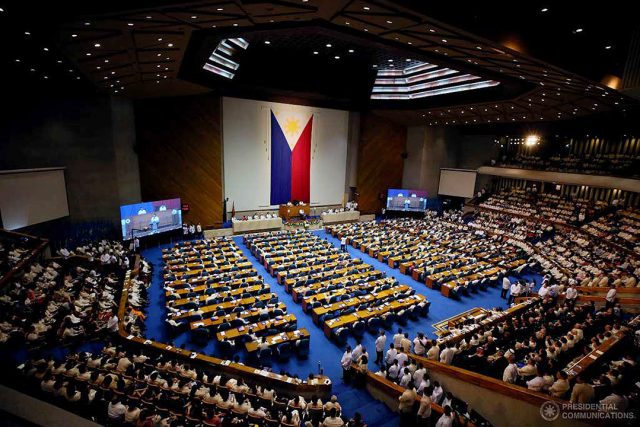
A GROUP of party‑list lawmakers on Monday said they are preparing a “plenary offensive” to push for a version of the anti‑dynasty bill they deem fit for approval in the House of Representatives, vowing to aggressively pursue a broader ban on political families.
In a statement, Akbayan Party-list lawmakers said they will push for an anti-dynasty bill aligned with the 1987 Constitution, rejecting efforts to pass a version of the proposal that could still allow political families to proliferate.
“Our proposed recommendations seek to strengthen the measure by closing loopholes long exploited by political families to remain in power and by expanding the scope of the proposal,” Party-list Rep. Percival V. Cendaña said in a statement, joined by fellow lawmakers Jose Manuel Tadeo “Chel” I. Diokno, Dadah Kiram Ismula and Dinagat Islands Rep. Arlene Bag-ao.
Lawmakers are currently assessing bills aimed at curbing political dynasties, with a Senate bill seeking to bar second-degree relatives from running or succeeding immediately. The House last week approved a similar measure that analysts have said is weaker and allows families to monopolize seats across the government.
The House Suffrage and Electoral Reforms Committee passed an unnumbered substitute bill that would bar spouses and relatives up to second-degree consanguinity and affinity from occupying elective posts simultaneously but leaves out a provision that would prohibit successive postings.
The Akbayan Party-list lawmakers said they will push for a political ban up to fourth-degree relatives and bar succession among family members. They will also seek to include party-list groups in the scope of a proposal to prohibit dynasties.
Amendments to include criminal charges against politicians seeking to entrench their families in the political system were among the group’s recommendations, urging that such acts be considered an offense under the country’s election code.
“A strong and effective anti-political dynasty law is essential to strengthening Philippine democracy,” Ms. Bag-ao said. “It must ensure that public office is not confined to a few powerful families but remains open to ordinary citizens who wish to serve.”
President Ferdinand R. Marcos, Jr. has made limiting political dynasties a priority after public criticism over alleged misuse of billions of pesos in congressional district funds earmarked for Public Works projects, making it part of his governance reform agenda.
Such a bill has long been pushed in Congress but has repeatedly faltered for a lack of support from a legislature dominated by political families. Eight of 10 lawmakers belong to dynasties, according to a report by the Philippine Center for Investigative Journalism. — Kenneth Christiane L. Basilio

THE Senate on Monday approved on third and final reading a proposal to regulate debt collection practices in the Philippines to protect debtors from abuse and harassment.
Senators unanimously passed Senate Bill No. 1744, with 20 voting in favor and none against the proposal that seeks to ban money lenders from using coercion and harassment tactics to collect repayment.
“With the passage of this measure, we take a significant step toward ensuring that financial access in our country is not built on fear and intimidation, but on fairness, accountability and respect for human dignity,” Senator Emmanuel Joel J. Villanueva said in a statement.
Money lenders are prohibited from threatening harm or using profanity when dealing with debtors, with public shaming deemed an unauthorized act, including repeated attempts to contact borrowers, according to the bill.
Lending companies that fail to comply with the bill’s provisions face administrative fines of up to P1 million, while debtors may pursue civil damages of up to P30,000 against collectors found in violation.
“This measure is not about encouraging people to evade their obligations,” Mr. Villanueva said. “While paying debt is an obligation, having debt is not a sin.” — Kenneth Christiane L. Basilio

THE House of Representatives’ second‑largest political party urged complainants in Vice‑President (VP) Sara Duterte‑Carpio’s impeachment efforts to present new evidence, warning that a weak case was unlikely to gain their support, its chairman said on Monday.
Antipolo Rep. Ronaldo V. Puno said the National Unity Party (NUP) does not want to reduce the impact of the impeachment process by backing what it described as weak cases and will call for “stronger proof” for Ms. Duterte’s ouster proceedings.
“We will closely observe the hearings and carefully evaluate the evidence that will be presented,” he said in a statement. “We hope the committee will reveal stronger proof and, if warranted, the proverbial ‘smoking gun’ that would justify elevating the matter to the Senate.”
“The NUP does not want to send a weak case to the Senate only for it to be summarily dismissed,” he added, noting that a flimsy complaint could “weaken the credibility of the impeachment process and diminish the gravity of this constitutional mechanism.”
The House Justice Committee last week found two out of four complaints against Ms. Duterte were sufficient in substance, moving them to the next step of the impeachment process that will determine whether the charges should be elevated to the Senate for trial.
The Vice-President faces a range of accusations, including claims she misused hundreds of millions of pesos in secret funds under the Office of the Vice-President and the Education department during her tenure as its secretary.
Filings made also include accusations she amassed wealth disproportionate to her income, efforts to destabilize the government and plotting to assassinate President Ferdinand R. Marcos, Jr., his wife and former Speaker Ferdinand Martin G. Romualdez, charges which Ms. Duterte has denied. — Kenneth Christiane L. Basilio

THE Philippines’ anti-graft court has issued a writ allowing the government to potentially seize the assets of a resigned lawmaker embroiled in a multibillion-peso graft scandal, which would be used as repayment for civil damages if he is found guilty in the case against him.
In a 13-page resolution dated March 4, the Sandiganbayan Fifth Division sided with government prosecutors’ motion to include 16 properties of former Party‑list Rep. Elizaldy S. Co, worth a total of P215 million, for possible repayment of damages tied to a faulty dike project.
Mr. Co and the co-accused “willfully misapplied public funds through falsified narrations and thereby caused undue injury to the government,” the prosecution’s motion read.
Lawyer Ruy Alberto S. Rondain, Mr. Co’s counsel, did not immediately reply to a Viber message seeking comment.
Mr. Co, who previously headed the House of Representatives Appropriations Committee, is at the center of a multibillion-peso graft scandal linked to anomalous flood control deals, with accusations that he allowed the system of kickbacks to persist while heading the budget panel. He has since left the country and has not returned. — Kenneth Christiane L. Basilio

THE Bureau of Customs (BoC) said on Monday that the Port of Cebu generated 3.53 billion in revenue collections in February, surpassing the target set for the month.
In a social media post, the BoC said that the port exceeded the assigned target of P3.39 billion.
“This resulted in a positive deviation of P145.1 million, or 4.28% above the target, reinforcing the port’s steady contribution to the bureau’s overall revenue generation efforts,” it said.
According to the bureau, this marked the third consecutive month that the port has exceeded its monthly target under District Collector Alexandra Yap-Lumontad.
“These results demonstrate that with efficient processes and commitment, we can continue to deliver strong revenue performance while facilitating legitimate trade,” she said.
In a separate release, the BoC said that the Port of Iloilo also surpassed its revenue target for February after collecting P296.44 million last month.
This exceeded the month’s target of P233.21 million by 27.11%, or P63.23 million.
For the first two months, the port recorded P679.45 million in revenue collections, which also surpassed the January-to-February target of P584.65 million by 16.21%. — Justine Irish D. Tabile
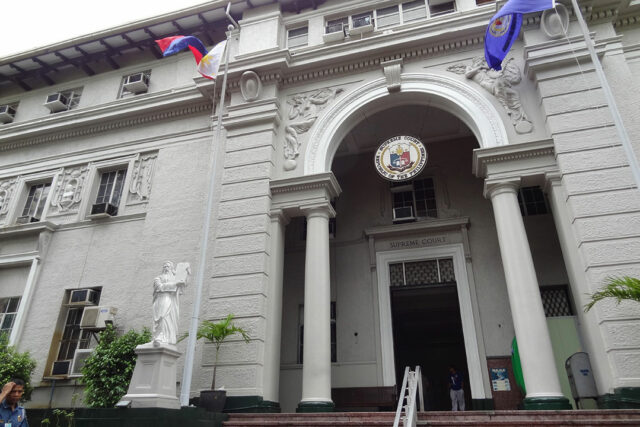
THE Supreme Court (SC) has affirmed the P2-million fine imposed by the Securities and Exchange Commission (SEC) on Abacus Coal Exploration and Development Corp. for committing material deficiencies and misstatements in its audited financial statements for 2008 and 2009.
In a 13-page decision promulgated on Oct. 22, 2025, and made public on Monday, the High Court’s third division denied the petition for review filed by the coal firm, ruling that it failed to record significant assets and equity despite obtaining regulatory approval for a capital increase.
The court noted that the firm neglected to list coal mining rights worth roughly P2.7 billion as assets on its balance sheet, which resulted in a massive understatement of its actual value. Instead, the company chose to disclose the details only within the notes of its financial statements, a move the court found “insufficient” to meet legal transparency standards.
Associate Justice Maria Filomena D. Singh, writing for the court, said that such omissions “undermine the reliability of financial disclosures” and defeat the purpose of reporting rules.
“The values of these line items should be reported in order to aid its user or future investors in making sound decisions,” the decision read. The SEC had previously determined that the company’s reporting failure led to significant “material misstatements” by ignoring the impact of its increased capital stock. Abacus Coal argued it acted in good faith, but the tribunal said “the information disclosed in the Notes do not satisfy the requirements prescribed under the law.”
The finalized P2-million penalty covers two years of noncompliance. — Erika Mae P. Sinaking

COTABATO CITY — Guns are silent for two days now at the border of Nabalawag and Midsayap towns in Cotabato, after scenes of deadly clashes last week between heavily armed Moro groups squabbling for control of strategic spots in the area.
Officials of the Army’s 602nd Infantry Brigade and the 6th Infantry Division (ID) separately told reporters on Monday, that the feuding groups, one identified with Nabalawag Mayor Renz Tukuran and the other, led by a certain Commander Kuntay, immediately disengaged and scampered away when soldiers came in on Friday to secure the areas where they figured in gunfights that displaced no fewer than 2,000 villagers. The clashes also killed two villagers, according to local officials.
Personnel of Army units under the 602nd Infantry Brigade, led by Brig. Gen. Ricky P. Bunayog, seized last week more than 20 assault rifles, grenade launchers, a K3 machine gun and an 81-millimeter mortar left by gunmen from both sides as they fled hastily when they sensed then that soldiers were approaching their locations from different directions.
Mr. Bunayog and his immediate-superior, Major Gen. Jose Vladimir R. Cagara, separately told reporters that nine of the combat weapons were found in the house of Mr. Tukuran.
Mr. Cagara, also commander of the 6th ID’s anti-terror Joint Task Force Central, said all of their pacification efforts in the conflict-stricken barangays at the boundary of Midsayap and Nabalawag are closely coordinated with the Coordinating Committee on the Cessation of Hostilities of the Moro Islamic Liberation Front (MILF).
A big group from the Joint Peace and Security and Team, or JPST, composed of policemen, soldiers and members of the MILF, was also deployed in the area to prevent a repeat of last week’s gunfights between the two groups. — John Felix M. Unson

A HOUSE of Representatives committee approved on Monday a measure to abolish the travel tax, citing the need to relieve the burden on travelers.
The House Ways and Means Committee approved an unnumbered substitute bill consolidating six measures seeking to remove the travel tax, a decades-old levy imposed under a Presidential Decree that had been designed to curb overseas travel at a time when the Philippines was seeking to conserve foreign exchange and promote domestic tourism.
The substitute bill will now head to the House Appropriations Committee, which will evaluate the measure’s funding provisions before being discussed on the House floor.
“We cannot allow our system of collecting funds for the government’s important programs to become regressive,” Marikina Rep. Miro S. Quimbo, who heads the House Ways and Means Committee, told the panel. “Our tax system must remain progressive.”
The proposal to cut the travel tax, which collects P1,620 from economy class air passengers and P2,7000 from first class passengers flying overseas, was designated a priority bill by President Ferdinand R. Marcos, Jr.
The levy was first imposed by Republic Act No. 1478 in 1956 and later amended through Presidential Decree No. 1183 in 1977. Exempt from travel tax are overseas Filipino workers, Filipino permanent residents overseas who stayed less than a year in the Philippines, and children aged two years and below.
Legislators have overwhelmingly backed moves to scrap the travel tax, saying the levy has outlived its purpose and now hampers travel for Filipinos, despite concerns from government agencies that rely on it as a steady source of funding.
“For flights scheduled on or after the date of effectivity, the collection authority shall immediately refund any previously paid travel taxes to the passenger,” according to the unnumbered substitute bill, a copy of which was obtained by BusinessWorld.
Under the current law, 50% of the proceeds from the travel tax collection go to the Tourism Infrastructure and Enterprise Zone Authority, with 40% earmarked for the Commission on Higher Education for tourism-related education programs. The National Commission for Culture and the Arts takes up the remaining 10%.
“The survival of these programs should not be dependent on the number of travelers or the amount of taxes that we collect from them,” Mr. Quimbo said. “They are far too important to be dependent on unpredictable numbers.”
The bill proposes that government agencies affected by the tax cut and whose projects may be jeopardized be funded through the national budget “to ensure the continuity of programs and projects previously funded by travel tax collections.” — Kenneth Christiane L. Basilio
