Home Blog Page 1897

Ireland donates $16 million to Brazil’s Amazon Fund

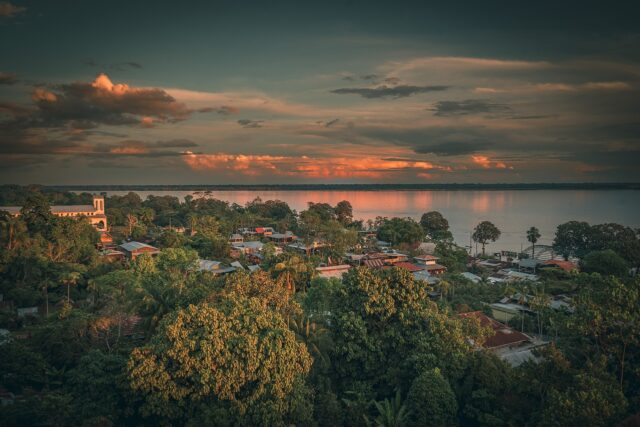
STOCK PHOTO | Image by Justus from Pixabay

Ireland announced on Wednesday a donation of 15 million euros ($16.3 million) to Brazil’s Amazon Fund, the Brazilian government said.

The donation to the fund, which aims to stop deforestation and preserve the world’s largest tropical rainforest, will be made over the next three years, Brazil’s Environment Ministry said in a statement.

The donation is Ireland’s first to the fund, raising the list of donors to eight countries, the statement added.

The Amazon fund, which is managed by Brazil’s development bank, supports the prevention, monitoring and combat of Amazon deforestation and fosters sustainable development.

It has funded 123 projects with a total investment of 3.1 billion reais ($534.6 million), the ministry said.

Norway, Germany, United States, the United Kingdom, Denmark, Switzerland and Japan have also donated to the fund.

The announcement of Ireland’s donation was made in a meeting in Sao Paulo between Brazil’s Environment Minister Marina Silva and Ireland’s Transportation Minister Sean Canney, according to the statement. – Reuters

Britain warns Iran sanctions could be reimposed as UN Security Council meets

Britain-Flag
The British union flag flutters on the Victoria Tower at the Houses of Parliamen, in London, Britain Dec. 30, 2020. — REUTERS/TOBY MELVILLE

 – Britain warned on Wednesday that it would trigger a return of U.N. sanctions on Iran, if needed, to prevent it from getting a nuclear weapon as the Security Council met to discuss Tehran’s expansion of its stock of uranium close to weapons grade.

Iran has denied wanting to develop a nuclear weapon.

However, it is “dramatically” accelerating enrichment of uranium to up to 60% purity, close to the roughly 90% weapons-grade level, the U.N. nuclear watchdog – the International Atomic Energy Agency – has warned.

Western states say there is no need to enrich uranium to such a high level under any civilian program and that no other country has done so without producing nuclear bombs. Iran says its nuclear program is peaceful.

“We are clear that we will take any diplomatic measures to prevent Iran acquiring a nuclear weapon, that includes the use of snapback (of sanctions), if needed,” Britain’s deputy U.N. Ambassador James Kariuki told reporters ahead of the meeting.

The closed-door meeting was called by six of the council’s 15 members – the U.S., France, Greece, Panama, South Korea and Britain.

Iran’s U.N. mission accused the United States of seeking to weaponize the U.N. Security Council “to escalate economic warfare against Iran,” adding in a post on X: “This dangerous abuse must be rejected to protect the council’s credibility.”

The U.S. mission to the U.N. said in a statement after the council meeting that Iran was “the only country in the world without nuclear weapons producing highly enriched uranium, for which it has no credible peaceful purpose.”

It accused Iran of defying the Security Council and violating IAEA obligations, calling on the council to “be clear and united in addressing and condemning this brazen behavior.”


‘SEIZE THE LIMITED TIME’

U.S. President Donald Trump last month restored a “maximum pressure” campaign on Iran in a bid to stop Tehran from building a nuclear weapon. But he also said he was open to a deal and was willing to talk to Iran’s President Masoud Pezeshkian.

Mr. Trump wrote a letter to Iran calling for nuclear talks, which was delivered on Wednesday, but Iran’s Supreme Leader Ayatollah Ali Khamenei rejected holding negotiations.

China will hold a meeting on Friday in Beijing with Russia and Iran on the Iranian “nuclear issue”, its foreign ministry said, with both nations sending their deputy foreign ministers.

“We still hope that we can seize the limited time we have before the termination date in October this year, in order to have a deal, a new deal so that the JCPOA can be maintained,” China’s U.N. Ambassador Fu Cong told reporters ahead of the Security Council meeting.

“Putting maximum pressure on a certain country is not going to achieve the goal,” he said.

Iran reached a deal in 2015 with Britain, Germany, France, the U.S., Russia and China – known as the Joint Comprehensive Plan of Action – that lifted sanctions on Tehran in return for restrictions on its nuclear program.

Washington quit the agreement in 2018 during Mr. Trump’s first term as U.S. president, and Iran began moving away from its nuclear-related commitments.

Britain, France and Germany will lose the ability to trigger the so-called snap back of all international sanctions on Iran on October 18 when the 2015 U.N. resolution on the deal expires. Trump has directed his U.N. diplomats to work with allies to snap back international sanctions and restrictions on Iran.

Under the complex two-month JCPOA dispute resolution process, the European parties to the deal effectively have until early August to trigger a snapback of U.N. sanctions on Iran. – Reuters

ICC takes Philippines’ Duterte into custody to face murder charges for drug war killings

FORMER PRESIDENT RODRIGO R. DUTERTE — PCOO

ROTTERDAM – Former Philippine President Rodrigo Duterte was taken into custody by the International Criminal Court on Wednesday following his arrest in Manila on murder charges linked to his “war on drugs” in which thousands of purported dealers and users were killed.

The ICC said in a statement Duterte was “surrendered to the custody of the International Criminal Court. He was arrested by the authorities of the Republic of the Philippines…for charges of murder as a crime against humanity”.

The 79-year-old arrived at Rotterdam airport on a chartered plane earlier on Wednesday. He will be brought before an ICC judge in The Hague in the coming days for an initial appearance, the statement said. He was transferred to a detention unit on the Dutch coast.

Duterte, who led the Philippines from 2016 to 2022, will face allegations of crimes against humanity for overseeing death squads in his anti-drugs crackdown. He could become the first Asian former head of state to go on trial there.

The ICC arrest warrant says that as president, Duterte created, funded and armed the death squads that carried out murders of purported drug users and dealers.

Speaking in a video shot during his arrest in Manila on Tuesday, Duterte asked: “What is the basis for my detention? What is the crime committed?”

An official who read Duterte his rights told him that it was on the basis of a warrant from the ICC accusing him of murder, to which Duterte replied: “It must be murders,” indicating it must be plural.

About 20 anti-Duterte protesters gathered earlier outside the ICC in The Hague with banners, including one that said: “We demand justice and accountability, Rodrigo Duterte is a war criminal!”.

A protester held a big cardboard mask depicting Duterte as a vampire.

“This is great news for Filipino people,” anti-Duterte protester Menandro Abanes said of Duterte’s arrest and transfer to the court. “I’m here to show my appreciation to (the) ICC for doing its job to end impunity.”

Another protester, Mary-Grace Labasan, said: “Actually, he is lucky, because he is experiencing the due process of law compared to the victims who were just being shot and killed without any due process.”

A handful of pro-Duterte protesters also gathered at the court building.

“They handed our president to foreigners,” protester Janet Suliman said. “They brought shame to our (country).”

Back home, for families of Philippine drug war victims, Duterte’s arrest has revived hopes for justice.

The war on drugs was the signature campaign platform that swept the mercurial Duterte to power in 2016. During his six years in office, 6,200 suspects were killed during anti-drug operations, by the police’s count.

Activists say the real toll was far greater, with many thousands more slum drug users, some of whom were on community “watch lists” after they signed up for treatment, gunned down in mysterious circumstances.

‘BIG MOMENT’ FOR ICC

Lawyers and academics said the arrest and transfer were a big moment for the ICC, which is targeted by U.S. sanctions and does not have any police of its own to arrest people.

“This is an opportunity for the court to show that it can deal with a big case and can have arrests,” said Iva Vukusic, an assistant professor of international history at Utrecht University.

Other notable fugitives are Israeli Prime Minister Benjamin Netanyahu, who is accused of being criminally responsible for acts including murder, persecution and using starvation as a weapon of war in the Gaza conflict, and Russian President Vladimir Putin, accused of the war crime of illegally deporting hundreds of children from Ukraine. Both deny the allegations.

In recent months the ICC prosecutor has also requested arrest warrants for senior Afghan and Myanmar leaders.

HABEUS CORPUS

The former president’s daughter Sara Duterte, the country’s vice president, boarded a morning flight to Amsterdam, her office said, but it did not say what she intended to do there or how long she planned to stay in the Netherlands.

Silvestre Bello, a former labour minister and one of the former president’s lawyers, said a legal team would meet to assess options and seek clarity on where Duterte would be taken and whether they would be granted access to him.

Duterte’s youngest daughter, Veronica, plans to file a habeas corpus request with the Philippine Supreme Court to compel the government to bring him back, Salvador Panelo, his former chief legal counsel, said.

The arrest marks a stunning change of fortunes for the influential Duterte family, which forged a formidable alliance with Marcos to help him win a 2022 election by a huge margin.

But Marcos and his vice president have since had a bitter fallout, culminating in Sara Duterte’s impeachment last month by a lower house led by loyalists of Marcos.

His arrest “means that international justice is not just a Western construct. It’s not just a Western idea. It’s universal,” said Gilbert Andres, a lawyer representing families of victims of drug-related killings. — Reuters

BSP could cut by 50 bps this year

High-rise buildings are seen in Manila, Dec. 23, 2024. — PHILIPPINE STAR/RYAN BALDEMOR

THE Bangko Sentral ng Pilipinas (BSP) has “greater motivation” to reduce borrowing costs further, analysts said, with expectations of up to 50 basis points (bps) worth of rate cuts this year.

“As we look at our gross domestic product (GDP) figures and inflation rates, we can see that there’s more of a greater motivation for the central bank to actually cut rates now,” Regina Capital Development Corp. Equity Analyst Alexandra G. Yatco said on Money Talks with Cathy Yang on One News.

In a report, Bank of America (BofA) Global Research said it expects a total of 50 bps worth of easing this year.

“We currently see one 25-bp cut in the second quarter and then one more in the fourth quarter, bringing the overnight borrowing rate to 5.25% by end-2025,” it said.

“Central banks across ASEAN (Association of Southeast Asian Nations) have adopted a wait-and-watch approach, looking for periodic opportunities to ease monetary conditions to mitigate growing uncertainty, emanating from US trade policy, a steady yet slow China, and falling inflation.”

Despite keeping the benchmark rate steady at 5.75% last month amid “global trade uncertainties,” BSP Governor Eli M. Remolona, Jr. said they are still on an easing mode.

He signaled that a rate cut is still on the table at the Monetary Board’s next rate-setting meeting on April 10.

“With capital outflows dominating capital markets, central banks have stepped up to inject liquidity both to domestic money markets and foreign exchange markets, while tactically cutting policy rates as and when they can,” BofA said.

“We expect this behavior to continue for some time, especially since real rates remain high, growth is uninspiring, and currencies are under pressure.”

BofA said central banks in the region will look to cut rates given the opportunity, as long as this does not disrupt domestic and external stability parameters

“Despite the meandering path central banks have chosen to take, the macro backdrop and our baseline forecasts still point towards broadly stable growth rates, low inflation, and stable fiscal positions,” it added.

BofA expects Philippine inflation to remain within the central bank’s 2-4% target band. So far, headline inflation has averaged 2.5% in the first two months.

“Most importantly, real rates remain high across all economies, giving space to cut rates and ease monetary conditions if needed,” it added.

Meanwhile, BofA said ASEAN banks are expected to “slowly diverge from the Fed.”

“As such, with significant uncertainty, we expect ASEAN central banks to keep balancing between global factors such as US policy rates and the (US dollar index), and domestic growth and inflation backdrop.”

This could make the path of monetary policy “more erratic and uncertain, resulting in increased policy divergence between the Fed and the ASEAN economies, contrary to previous business cycles.”

TARIFF CONCERNS
Meanwhile, BofA also flagged the potential impacts from retaliatory tariffs on the Philippines.

“The concerns around tariffs seem to be affecting the growth side more than the inflation front. As the export demand falls or global trade slows, ASEAN economies could be at a greater risk of a growth slowdown than the risk of an immediate inflationary spiral.”

“Thus, economies such as Philippines and Thailand where domestic demand has remained sub-par could face further headwinds on the external front requiring a more initiative-taking policy,” it added.

Reuters reported President Donald J. Trump’s increased tariffs on all US steel and aluminum imports took effect on Wednesday, stepping up a campaign to reorder global trade in favor of the US and drawing swift retaliation from Europe.  (Related story “Global trade war looms as Trump’s metal tariffs kick in”).

“For the Philippines, the benefit of being a domestic-oriented economy and having a less binding relationship with the US provides it some respite, but tariffs on Philippine exports to the US, especially if aimed at electronics, could diminish its surplus with the US and worsen its overall trade deficit.”

The Philippines’ trade-in-goods deficit widened to $5.09 billion in January, the widest deficit in three months. — Luisa Maria Jacinta C. Jocson

BSP to ensure PHL will stay out of ‘gray list’

BW FILE PHOTO

THE BANGKO SENTRAL ng Pilipinas (BSP) said it is working to ensure that the country will not return to the Financial Action Task Force’s (FATF) “gray list,” citing the need to crack down on digital technology threats.

“Just because we are off the gray list does not mean that we are done. We have to make sure we do not get back into the gray list,” BSP Governor Eli M. Remolona, Jr. said at a forum on Tuesday.

“In the past, we go in, we go out. This time, we are determined to stay out of the gray list,” he added.

The FATF last month removed the Philippines from its list of jurisdictions under increased monitoring for “dirty money” following a successful on-site visit and completion of the recommended action plan.

The country was on the FATF’s gray list for over three years or since June 2021.

The dirty money watchdog noted the Philippines’ progress in addressing the strategic anti-money laundering and countering the financing of terrorism and proliferation financing deficiencies.

The BSP chief said they are undergoing a national risk assessment after the country’s exit from the gray list.

“Part of that means looking at our risks again. We look at the whole economy to figure out what else can lead to risks of money laundering, what else can lead to terrorism financing and so on.”

The FATF’s next assessment of the country is slated for 2027. “We want to make sure that we pass that evaluation,” Mr. Remolona said.

The assessment will have the FATF verify that the measures are sustained and still in place.

In 2002, the FATF blacklisted the Philippines for having no legal anti-money laundering framework. It was removed from the blacklist a year later after the passage of the Anti-Money Laundering Act.

Mr. Remolona said they are closely monitoring innovations in technology amid the numerous threats in the digital space.

“Digital technology is evolving, and digital technology is the preferred means for money laundering actors to take money in,” he said.

“We have to look at digital technology and what it’s doing. These guys are very innovative as you know, right? It’s essentially an arms race between us and them so we have to keep up with the arms race. That’s why we’re doing risk assessment.”

Earlier data from Moody’s Investors Service showed that from 2018 to 2023, the Philippines was among the top five countries in Southeast Asia with money laundering activity events added over the five-year period.

The number of money laundering events added in the Philippines jumped by 45% from 2022 to 2023.

The Anti-Financial Account Scamming Act was signed into law last year. It aims to protect consumers from financial cybercrimes by penalizing violations.

Malacañang also last year issued an executive order mandating all government offices to adopt the National Anti-Money Laundering, Counter-Terrorism Financing, and Counter-Proliferation Financing Strategy 2023-2027.

“In the meantime, we can reap the benefits of our delisting from the FATF gray list. That delisting renews investor confidence,” Mr. Remolona said.

“It paves the way for the restoration of correspondent bank relationships. It helps our overseas Filipino workers (OFWs), but it is more than that. It helps to convince foreign investors to come in. Makes it easier for foreign banks to deal with our banks.”

The central bank earlier said exiting the gray list will help support OFWs by making remittances and cross-border payments faster and more affordable. — Luisa Maria Jacinta C. Jocson

Duterte arrest seen to ‘disturb’ PHL markets

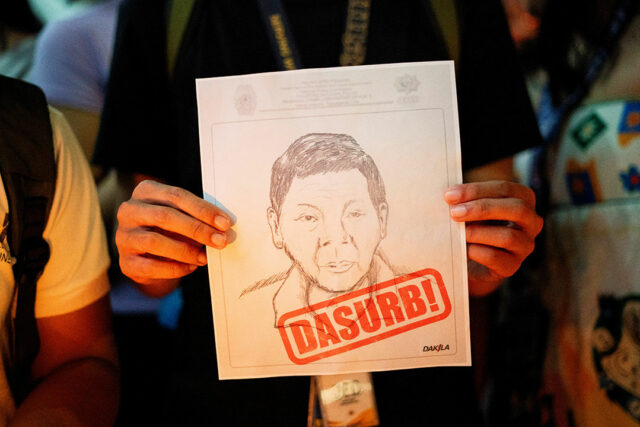
A protester in Quezon City holds a placard with a sketch of former Philippine President Rodrigo R. Duterte during a rally following his arrest, March 11, 2025. — REUTERS

By Revin Mikhael D. Ochave, Reporter

THE ARREST of former Philippine President Rodrigo R. Duterte for crimes against humanity may “disturb” financial markets as it reflects increasing political instability in the country, analysts said.

GlobalSource Country Analyst Diwa C. Guinigundo said Mr. Duterte’s arrest may affect financial markets in the short term.

“Short run, maybe the financial markets will be disturbed. It can be upset,” he told reporters on the sidelines of the Management Association of the Philippines (MAP) event on Wednesday. “But over time, over time, people will realize that something can be done here in the Philippines. We don’t tolerate this kind of offenses.”

Mr. Duterte was flown to The Hague on Tuesday, just hours after he was arrested over a warrant issued by the International Criminal Court (ICC). The former president is facing a case involving alleged crimes against humanity over his anti-drugs crackdown that killed thousands.

“There’s an effect because it is seen as political instability. This might scare off foreign investors,” DragonFi Securities, Inc. Equity Research Analyst Jarrod Leighton M. Tin said in a Viber message.

On Wednesday, the bellwether Philippine Stock Exchange index (PSEi) slipped by 0.18% or 11.29 points to 6,195.26. It traded as low as 6,123.88 intraday before ending higher.

Unicapital Securities, Inc. Research Head Wendy B. Estacio-Cruz said in a Viber message there could be increased market volatility as the arrest of a former head of state “is an unprecedented event in the Philippines, introducing a high degree of political uncertainty.”

“The political instability can erode investor confidence, leading to reduced foreign and domestic investments. This may translate to slow economic growth, as seen historically. This may also result in an unpredictable business environment, which can deter investment and negatively impact corporate profitability,” she said.

Mr. Duterte, who was president from 2016 to 2022, could become the first Asian former head of state to be tried at the ICC.

AP Securities, Inc. Research Head Alfred Benjamin R. Garcia said the current market performance is just a knee-jerk reaction to these events.

“But of course we’ll have to see how this situation will develop over the coming weeks,” he said in a Viber message.

CONCERN
BDO Capital & Investment Corp. President Eduardo V. Francisco told reporters that the current political situation is a cause of concern for investors.

“The investment community and the investors, generally, like stability and peace. Ideally, we wish that all this fighting between the Marcoses and the Dutertes becomes quiet because it’s really causing concerns, even for foreign investors,” he said.

Regina Capital Development Corp. Equity Analyst Alexandra G. Yatco said the development is a possible deterrent for investors.

“There’s political tension and instability that was triggered by Mr. Duterte’s arrest as well as recession fears by Trump’s tariff policies. This is a potential deterrent for investors to pour their money into the Philippines as investors look for more stable environments,” she said during the Money Talks with Cathy Yang program on One News on Wednesday.

In his presentation during the MAP meeting, Mr. Guinigundo cited the disunity of the “UniTeam” alliance — between the Marcos and Duterte families — as one of the domestic risks facing the economy. He also cited food security, and fiscal and debt sustainability as other risks.  

“If (the arrest) attracts a big crowd, this is something that would upset and disturb the financial markets… We believe that if this continues, this is something that we really have to be prepared for,” Mr. Guinigundo said.

Aries A. Arugay, chair at the Department of Political Science at the University of the Philippines Diliman, said that Mr. Duterte’s arrest is on track to becoming a “key electoral issue.”

“The ICC arrest could possibly heighten political risk a little bit. We still have yet to see whether the repercussions will spill over to political instability, but I think so far, the government in power right now seem to be monitoring developments and will try to reduce and mitigate political risk as much as it can,” he said during the Money Talks with Cathy Yang program on One News on Wednesday.

The midterm elections will be held on May 12.

‘LIFE GOES ON’
Meanwhile, the Philippine Chamber of Commerce and Industry (PCCI) Chairman George T. Barcelon said it may be “too early to tell” if Mr. Duterte’s arrest will affect business sentiment.

“Life goes on. In our case, on the business side, we are very actively trying to attract (business) missions from other countries so that they invest in us, and we export our Filipino products,” he told reporters on Wednesday.

He said that the Corporate Recovery and Tax Incentives for Enterprises to Maximize Opportunities for Reinvigorating the Economy (CREATE MORE) Act will help the Philippines attract more foreign investments despite these disruptions.

“Business will continue. Business will always look at where the country can give you an advantage. I think with CREATE MORE, that gives us broader leeway in attracting foreign investments,” said Mr. Barcelon.

“We just hope that there will be less disruptions and we hope that with what has transpired, in the mind of the business sector, we’re still open about being optimistic,” he added.

Sought for comment on the issue, Trade Secretary Cristina A. Roque said that the focus right now of the Department of Trade and Industry is to attract foreign investments.

“The focus of the department is really to actually attract foreign trade and investments and to really grow the industries and to really grow the economy. So that is where we are focused right now,” she added.

Meanwhile, Philippine Dealing and Exchange Corp. (PDEx) President and Chief Executive Officer Antonino A. Nakpil told reporters in a separate interview that bond listings are expected to continue amid recent political instability.

“For the old regulars, they’ve been through the cycles. Our untold story is actually the power of the domestic investors. They’ve been powering a lot. I’d rather have domestic investors (than foreign investors) because they don’t run away,” he said.

Year-to-date, PDEx has logged P65.7 billion worth of bonds from five listings, Mr. Nakpil said.

He added that two more listings are expected in March, consisting of the P10-billion bond offer of listed real estate company DoubleDragon Corp. and the P5-billion sustainability-linked bonds of property developer Cebu Landmasters, Inc.

PDEx is expecting to have up to P600 billion in bond listings this year, higher than P360 billion last year. — with Aubrey Rose A. Inosante and Justine Irish D. Tabile


Energy dep’t readies large-scale renewable energy auction

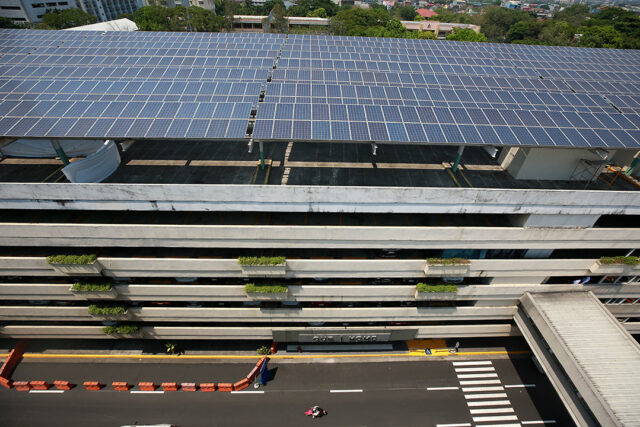
ROWS of solar panels are seen on the roof deck of a mall’s parking building in Quezon City. — PHILIPPINE STAR/ MIGUEL DE GUZMAN

By Sheldeen Joy Talavera, Reporter

THE DEPARTMENT of Energy (DoE) is set to offer a total of 10,478 megawatts (MW) of renewable energy (RE) capacity, which includes some that will be paired with battery energy storage systems (BESS), under the fourth round of the green energy auction (GEA-4) program.

The DoE is planning to auction off 3,940 MW of ground-mounted solar capacity, 48 MW of roof-mounted solar capacity, 3,000 MW of floating solar capacity, and 2,390 MW of onshore wind capacity, based on the notice of auction posted on its website.

The government will also offer integrated RE and energy storage system (IRESS) totaling 1,100 MW in solar generation capacity, along with undisclosed storage capacity.

A BESS is a type of energy storage system that uses batteries to store electrical energy from the grid and releases it when needed to augment supply or improve power quality.

The GEA program (GEAP) aims to promote RE as one of the country’s primary sources of energy through competitive selection. RE developers compete for incentivized fixed power rates by offering their lowest price for a certain capacity.

The DoE is targeting to install 7,523 MW in RE capacity in Luzon, 2,143 MW in Visayas, and 812 MW in Mindanao.

The projects resulting from the auction are scheduled to come online between 2026 and 2029. The supply contract for winning RE projects will be for 20 years, starting from the commercial operation date of the plant.

“The release of the TOR (terms of reference) for GEA-4 underscores the Philippines’ commitment to transitioning to clean energy while ensuring energy security. By ensuring a transparent and competitive selection process for renewable energy projects, we are accelerating the shift toward a more sustainable, secure, and resilient energy system,” Energy Undersecretary Rowena Cristina L. Guevara said in a statement.

The TOR sets out the technical, financial, and commercial requirements that will govern project selection, ensuring a transparent and competitive bidding process.

The DoE said that it will release updated GEAP guidelines to clarify the qualifications of eligible suppliers and ensure fair pricing mechanisms for projects under the program.

Under the new guidelines, qualified suppliers must either hold an RE service contract or possess a certificate of authority issued under the Revised Omnibus RE Guidelines.

“GEA-4 is expected to drive substantial investment in renewable energy, reinforcing its role as a key pillar of the Philippines’ energy transition,” the DoE said.

As a flagship government initiative, the program is seen to contribute to the country’s goal of achieving a 35% share in the power generation mix by 2030.

Asked to comment, Toby Allan C. Arce, head of sales trading at Globalinks Securities and Stocks, Inc., said that offering such a large capacity in a single auction “sends a clear and strong message to investors about the Philippine government’s dedication to renewable energy development.”

“This large-scale opportunity could attract both local and international investments, showcasing the RE sector as a lucrative and stable avenue for growth,” Mr. Arce said in a Viber message.

“It further positions the country as a regional leader in green energy, potentially fostering long-term partnerships and technology transfer,” he added.

Last month, the DoE announced that GEA-3 attracted 7,500 MW worth of bids, exceeding the auction goal of 4,650 MW. The auction round covered pumped-storage hydro, impounding hydro, and geothermal.

An auction round dedicated to offshore wind projects is also set to launch in the third quarter of 2025, stepping up towards the Philippines’ goal to attain offshore wind power generation by 2028.

AirAsia Philippines revives IPO plans

BW FILE PHOTO

By Ashley Erika O. Jose, Reporter

AIRASIA PHILIPPINES has revived its initial public offering (IPO) plans, targeting a public listing within the next 12 months to fund its expansion, according to the company’s top executive. 

“My confidence in the Philippines has grown because finally the airports are being sorted out. I think now with the airport development that is happening in Manila, we can start to see Manila as one of our important hubs,” AirAsia Group Chief Executive Officer (CEO) Anthony Francis Fernandes said during a briefing on Wednesday. 

Capital A Berhad, the owner of the AirAsia Aviation Group, recently secured approval from the Malaysian stock exchange for its regularization plan to exit its PN17 status, a classification issued by the Malaysian bourse for companies in financial distress.

As part of its restructuring, Capital A will focus on non-aviation businesses while retaining an 18% stake in aviation. Its aviation business will be under AirAsia X Berhad (AAX).

“We are exploring having a direct listing on the Philippine Stock Exchange. We might be looking at selling 20-30% once aviation is sorted out,” Mr. Fernandes said, adding that the company is more interested in a public listing than selling to a private investor.

AAX earlier announced a mutual agreement with Capital A to extend the timeline for completing the proposed acquisition of the group’s aviation business. 

Last year, Capital A Berhad disclosed that it had entered into a non-binding agreement with its unit, AirAsia X, for the sale of its aviation businesses — AirAsia Berhad and AirAsia Aviation Group Ltd. 

AirAsia Philippines’ planned listing on the local bourse would help fund its expansion, as the company is banking on the country’s growth trajectory.

“We’re going to be modernizing the fleet with our orderbook. We have taken 14 planes this year. Some of those planes will be coming to Manila,” Mr. Fernandes said, adding that aside from Manila, the company is also expanding its hubs in Cebu.

He said AirAsia aims to strengthen Manila as a hub and attract travelers to use it as a transit point for other destinations.

“Geographically, the Philippines really suits beautifully. So, my vision is that even Japanese, Koreans, and Chinese would fly down to Manila and use us to the west coast of America and east coast of America and other [destinations],” he said.

Asked for comments, Globalinks Securities and Stocks, Inc. Head of Sales Trading Toby Allan C. Arce said AirAsia has a strong brand in Asia, and an IPO would be attractive to potential investors. 

“AirAsia Philippines’ plan to go public is intriguing… It signals its ambition to expand and solidify its position in the regional markets,” Mr. Arce said in a Viber message on Wednesday.

However, Mr. Arce noted that it would be better for AirAsia Philippines to assess market sentiment before proceeding with the IPO.

“IPOs often generate interest during periods of market optimism. If investor sentiment around travel and leisure stocks remains high, it could draw substantial interest,” he said. 

“For an AirAsia IPO to succeed, it would first need to establish a strong record and trajectory of profitability,” China Bank Capital Corp. Managing Director Juan Paolo E. Colet said in a Viber message.

He added that investors would also want to see sustained growth in tourism and the economy to support the airline sector’s fundamentals.

“An IPO would be more viable when equity market conditions are more attractive. Given current circumstances, perhaps the earliest window for them to list is 2026,” Mr. Colet said.

MPIC sets P116-B capex for 2025

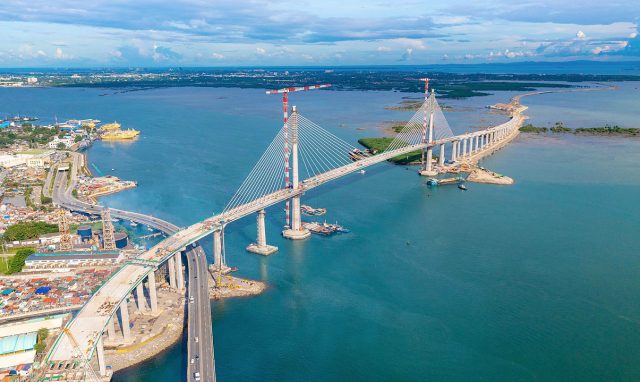
CEBU-CORDOVA LINK EXPRESSWAY (CCLEX) — CCLEX.COM.PH

PANGILINAN-LED Metro Pacific Investments Corp. (MPIC) is earmarking around P116 billion in capital expenditures (capex) for 2025, up 15% from the previous year, a company official said on Wednesday.

“For 2025, it’s an increase of about 15% year on year,” MPIC Chief Finance, Risk, and Sustainability Officer Chaye A. Cabal-Revilla said during a media briefing in Pasig City on Wednesday.

“The biggest share will go to our three core businesses — power, toll roads, and water,” she added.

MPIC deployed P101 billion in capex in 2024.

According to Ms. Cabal-Revilla, the 2025 capex will fund the expansion of Manila Electric Co.’s (Meralco) distribution facilities, the further development of solar power plants, and service improvements at Maynilad Water Services, Inc. It will also support projects of Metro Pacific Tollways Corp. (MPTC).

She said MPIC is targeting low-double-digit growth this year.

“Even if there’s turmoil in the country, you still need water, you still need power, you still need to traverse our toll roads. If you’re sick, you still need to go to our hospitals,” she added.

MPIC reported a 41% increase in attributable net income to P28.2 billion for 2024 from P19.9 billion in 2023, driven by non-recurring gains from its real estate business and lower interest expenses.

Consolidated core net income rose 21% to a record-high P23.6 billion, while operating revenue increased 19.2% to P73.12 billion.

Among MPIC’s core businesses, power contributed 69% or P19.7 billion of total net operating income, followed by toll roads at P6.3 billion and water at P6.2 billion.

MPIC’s holdings saw a 16% rise in contribution from operations to P28.4 billion in 2024, driven by Meralco’s energy sales, higher billed volumes at Maynilad, and increased traffic on toll roads, complemented by higher tariffs.

“Our strong full-year earnings reflect exceptional performance across our businesses, with the power, toll roads, and water sectors driving double-digit growth in earnings. This success is a result of strong volumes and the positive impact of long-overdue tariff adjustments,” MPIC Chairman, President, and Chief Executive Officer Manuel V. Pangilinan said.

Meralco posted a 21% increase in reported net income to P45.9 billion in 2024, as revenue rose 6% to P470.4 billion on higher energy sales.

The toll roads segment, led by MPTC, saw a 28% rise in 2024 reported net income to P6.5 billion, driven by a reduction in the acquisition consideration for the Jakarta-Cikampek Elevated (Japex) toll road, which was contingent upon tariff hike approvals.

Toll revenue climbed 16% to P31.6 billion, supported by higher toll rates and traffic growth in the Philippines.

Maynilad recorded a 40% increase in 2024 core net income to P12.8 billion, benefiting from lower operating expenses. Revenue rose 23% to P33.5 billion.

“As we continue to invest heavily in service quality and operational efficiency, we remain focused on improving the lives of our customers while growing our sales and core profitability, ultimately creating long-term value for our investors,” Mr. Pangilinan said.

MPIC is one of the three key Philippine units of Hong Kong-based First Pacific Co. Ltd., alongside Philex Mining Corp. and PLDT Inc.

Hastings Holdings, Inc., a unit of PLDT Beneficial Trust Fund subsidiary MediaQuest Holdings, Inc., holds a majority stake in BusinessWorld through the Philippine Star Group, which it controls. — Revin Mikhael D. Ochave

Best dinner of the year

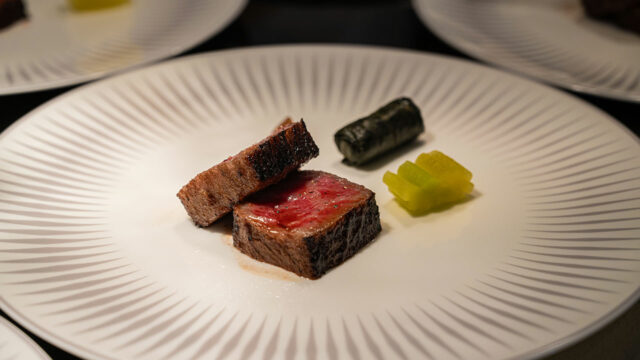
A FRAGRANT DISH: Miyazaki grilled wagyu beef with celtuce, onion puree, and a mushroom ragout.

Solaire celebrates anniversary with top international chefs

By Joseph L. Garcia, Senior Reporter

SOLAIRE Resort Entertainment City marks its 12th anniversary by bringing in some of the world’s best chefs (we’re talking Michelin stars, baby). One such encounter with the guest chef for the March 9 dinner, Sun Kim of Meta in Singapore was hands down, the best meal this writer has had this year (we’ve been invited to meet Solaire’s other guest chef, Heinz Beck, with three Michelin stars, so that might change).

Meta in Singapore usually sits in the upper rungs of Asia’s 50 Best List, and earned its first Michelin star under Mr. Kim in 2017. He’s glad to report that they received their second star last year. In a group interview with Mr. Kim on March 6 at Solaire’s Waterside for a lunch preview of the dinner, Mr. Kim remembers his first star. “I don’t think I was actually ready for the Michelin star. Michelin is a very big achievement. I tried my best to improve and tried my best to evolve.”

Understandably, expectations were very high for the preview lunch, but Mr. Kim exceeded all expectations, and then some. This writer had the sensation that one course was excellent, only to be topped again by the next one.

DINING IN SILENCE, REVERENCE
The first course was a sashimi of tuna with cuttlefish, seaweed, yuzu, and myoga (Japanese ginger). This was paired with a Dry Riesling 200 from Allan Scott in New Zealand. The myoga provides a contrast of texture with the tender tuna, while the wine pairing adds zest. Sliced thinly, the sashimi was dressed in a very subtle sesame oil, sprinkled with seaweed and flowers but arranged just so to look like a flower itself. With the dressing, the light floral notes of the wine are expressed. We noted that the diners were silent and reverent through this course, and after everybody had their last bite, there was a burst of noise from the joy this dish provided. 

The next dish was a rice ball topped with Hokkaido scallops, dressed with parsley and aged soy sauce, and topped with a little luxurious dollop of caviar. This was paired with a Roussanne Blanc Clos de Centenaires 2020 by Jean-Luc Baudet, from the South of France. The wine had a scent like fresh hay, accenting the lighter aspects of the dish’s ingredients. On its own, it’s very elegant, with a touch of earthiness, despite being made of seafood.

Next came a chawanmushi (savory egg custard) with spanner crab, seafood broth, and a dash of chili oil. This was paired with a chardonnay, The First Lady 2022, from the Warwick Estate in South Africa. The chardonnay was especially delicate, like the sugar shell around a candied piece of fruit. The dish, meanwhile, had a similarly delicate texture, but the crab and the seafood broth gave it a deeply intense flavor, while the wine added a little sparkle.

The next course was a Jeju abalone porridge with lily bulb, and chicken heart — apparently, this is a Meta signature. We were justified in our excitement: the porridge is light but intensely flavored with ginger and herbs, with an added bite from the lily bulb, and despite its grilling, the abalone tasted and felt buttery. This was paired with a Paul & Remy 2020 Tempranillo from the Chapillon Estate in Spain — the wine was bold and elegant, strong in flavor but light in scent and texture. It dances with the grilled abalone and the smoky porridge, their weights counterbalancing each other.

If you’ve noticed, most of the offerings were seafood: it turns out that Mr. Kim grew up in the south of South Korea, in Busan. “When I open my door, there’s a seafood market. I grew up eating a lot of good seafood,” he said, also noting that his mother once ran a Korean restaurant.

TRULY INTERNATIONAL
His upbringing forms the base, but his exposure and study of world cuisine forms his technique, with French and Italian cuisines, but also Japanese. “I used to work in a Japanese restaurant for a long time. I worked in a French restaurant as well. I’m Korean,” he said.

That should explain the last savory dish, a Miyazaki grilled wagyu beef with celtuce (a lettuce cultivar), onion puree, and mushroom ragout. The dish is fragrant from afar; we practically smelled it coming from the kitchen. This was paired with a Heritage An 462 2022 by Gerard Bertrand in Languedoc in France. The wagyu, rich as it was, benefited from the wine’s liveliness. The mushroom ragout was wrapped in a leaf, which we combined with the sharp onion puree. This and the pickled celtuce cut through the beef’s richness, providing a nice ritual.

The dessert was sweet corn and caramel popcorn with ice cream (the corn was the one local ingredient he used; the rest were from Singapore). This was paired with Solaire’s other guest’s offering, a rose-scented tea from Chinese Tea Master He Jia.

Daniel Blais, Solaire’s beverage director, said in a speech before the meal, “For our loyal patrons, we bring the best for all of them.” He reported that the dinners (three-Michelin-starred Azabu Yukimura’s owner Jun Yukimura’s, which was held before Mr. Kim’s dinner, and three-Michelin Star La Pergola’s Heinz Beck’s, to be held on March 16) had all been sold out — despite the P11,888++ price tag. “It’s just proof that Manila enjoys what we do.”

“I just do what I can do,” Mr. Kim said after the lunch. “I just cook from my heart.”

For details and more information, e-mail: restaurantevents@solaireresort.com, or check out https://sec.solaireresort.com/ or Solaire’s Facebook and Instagram pages.

Filinvest Land to build retail centers in Clark and Cubao

Filinvest Land, Inc. is planning to develop Filinvest Mall Cubao, a 17,000-sq.m. retail space, within its Activa Towers development in Quezon City. — FILINVEST.COM

GOTIANUN-LED Filinvest Land, Inc. (FLI) plans to use part of the proceeds from its recent P12-billion bond issuance for the construction of two new retail spaces to expand its property portfolio.

FLI President and Chief Executive Officer Tristaneil D. Las Marias said the company will open a 24,000-square-meter (sq.m.) Filinvest Mall in its Filinvest Mimosa Estate in Clark, Pampanga, by 2026.

“It will be a lifestyle destination in the North that will feature many global athleisure brands,” Mr. Las Marias said during a listing ceremony in Makati City on Wednesday.

He added that the company is planning Filinvest Mall Cubao, a 17,000-sq.m. retail space, within FLI’s Activa Towers development in Quezon City. The mall will include a supermarket and areas for food and retail offerings.

FLI listed its P12-billion bond issuance on the Philippine Dealing and Exchange Corp. (PDEx) on Wednesday.

The bonds consist of five-year bonds due in 2030 with an interest rate of 6.2916%, seven-year bonds due in 2032 with an interest rate of 6.6550%, and ten-year bonds due in 2035 with an interest rate of 6.8312%.

The issuance is the second tranche of FLI’s P35-billion shelf-registered bonds approved in 2023. The first tranche, which raised P11.4 billion, was issued in December 2023.

Aside from funding new malls, FLI will use the bond proceeds to repay existing debts and finance capital expenditures for land development and real estate construction projects.

Mr. Las Marias said the proceeds will also be allocated to its industrial business.

“We have also seen a strong demand for our industrial business ready-built factories (RBF). Our RBFs in both our Filinvest New Clark City Industrial Park and Filinvest Technology Park in Ciudad de Calamba, Laguna, are sold out, and we still have a long list of reservations from foreign and local businesses,” he said.

Mr. Las Marias also said FLI aims to sustain its growth trajectory in the residential segment following a profitable 2024.

“With the growth in our residential revenues and the introduction of new residential inventories last year, we aim to sustain our growth trajectory in the residential segment in 2025 and beyond,” he said.

“2024 was challenging, but we achieved income growth as the residential and rental businesses performed well despite the challenges,” he added.

FLI shares were unchanged at 70 centavos apiece on Wednesday. — Revin Mikhael D. Ochave

How Pernod Ricard is promoting responsible drinking in the Philippines

LIQUOR COMPANY Pernod Ricard is doubling down on promoting responsible drinking in the Philippines with the launch of its digital labeling, which also serves to support the company’s growth in the country.

“The Philippines is one of our fastest growing markets,” Hadyu Ikrami, head of legal, public affairs, communications, and sustainability and responsibility at Pernod Ricard Philippines, said in an interview with BusinessWorld.

“We constantly look into ways to strengthen our presence here and improve customer experience… and we want to keep this momentum via investing our brands in the Philippines,” he added.

Pernod Ricard carries over 200 brands, such as Beefeater Gin, Jameson Irish Whiskey, Ballantine’s Scotch Whisky, Chivas Regal, and Absolut Vodka.

“All major supermarkets and convenience stores are carrying our brands; we have nationwide coverage for modern on-trade outlets. We have an office and warehouse in Metro Manila,” he said.

“Locally produced Western-style product categories, like gin, rum, and brandy, are very big in terms of volume in the Philippines with their very low prices. Long-term conversion to aspirational international brands makes the Philippines an attractive market for our category,” he added.

CRÉATEURS DE CONVIVIALITÉ
“Our motto is ‘Createurs de Convivialité,’ which means creators of conviviality, and we believe that true conviviality starts with responsibility,” he said.

“When consumed responsibly, our products can bring people together to celebrate and enjoy the moment. Excessive drinking undermines that spirit and can also lead to serious health and social issues,” he added.

To promote responsible drinking, Pernod Ricard recently launched its new digital label system in the Philippines, which aims to respond to customers’ growing need to know more about the products they consume.

“We want to provide consumers who choose to drink with accurate information about our products to empower them to make informed choices about whether and how much they should drink,” he said.

The spirit maker’s digital labeling program is part of the wider U-label program put in place by the European wine and spirits industry associations.

“The European pilot program was launched in the summer of 2022, focusing on a selection of the group’s international brands,” said Mr. Ikrami.

“After this first phase, digital labels were gradually rolled out across the world with the full brand portfolio between 2023 and 2024. Since the end of 2024, the digital labels have been available across all our markets, including the Philippines,” he added.

He said that the Philippines is actually one of the first markets in the region where Pernod Ricard launched the initiative, along with Singapore.

“We have also noticed a trend that other industry players that are also producing alcoholic beverages are also following our footsteps in launching their own digital labels,” he said.

“So we are happy to be the pioneers of this initiative because we see that there’s a trend going towards more and more digital labels produced by different companies in the industry,” he added.

DIGITAL LABEL
The digital labels, or electronic labels (e-labels), are QR codes printed on the bottles’ back labels that lead to dedicated web pages that offer product information, health guidelines, responsible drinking advice, and more.

“By virtue of this e-label, there is localized guidance to help with moderation with tips on national drinking guidelines,” said Mr. Ikrami.

“If you scan the QR code, you will have all the necessary information about the ingredients of this beverage and also about the national drinking standard from the Philippine Food and Nutrition Research Institute of the Department of Science and Technology,” he added.

He said that the labels are geolocalized, meaning that the information consumers in the Philippines will get from scanning the bottles in the country will be different from that they would find scanning the QR codes elsewhere.

“The information that you get from scanning a bottle here would only be applicable in the Philippines because we are following the guidelines of the local government,” he said.

“If you scan the QR code in other markets, such as in Singapore, it would be slightly different in some aspects,” he added.

He said that the goal is to go a step further than providing nutrition and ingredients and provide easily understandable national drinking guidelines and set industry standards for digital labeling.

“We want to be the market leader for this, and we have been because ever since we launched this digital label in other markets, we saw the trend of other companies also following our footsteps,” he said.

Following the launch, Mr. Ikrami said that Pernod Ricard is looking at ways to improve the digital labels.

“We are committed to working with partners in the industry and with consumers to help evolve this e-label. We don’t want to say that it’s a perfect initiative because obviously there’s always room for improvement, especially by collaborating with other industry players,” he said.

“We look forward to any collaboration with any third party that would like to work with us in developing this initiative. We want to work with industry and consumers to drive uptake and usage of this e-label,” he added. — Justine Irish D. Tabile