DigiPlus Interactive, through its social development arm, BingoPlus Foundation, is transforming communities and creating lasting impact with its P100 million commitment in 2024 to support education, disaster relief, and livelihood programs, benefitting the lives of over 120,000 Filipinos across the country.
In 2024, DigiPlus launched PLUS Centers across the country, providing free internet access, digital literacy training, and educational resources to underserved communities. These centers serve as safe learning spaces where students and job seekers can develop the skills needed to thrive in the digital age.
At the heart of its education initiatives is the PLUS Factor Scholarship Program, which empowers over 60 students nationwide, providing full scholarships, financial assistance, and mentorship opportunities to deserving Filipino students. By investing in the next generation of leaders in STEM, business, and digital innovation, DigiPlus is helping build a knowledge-driven economy.
Following Typhoon Kristine, DigiPlus allocated P37 million in emergency aid, delivering critical relief, rebuilding support, and sustainable livelihood assistance to affected communities. This initiative reflects the company’s commitment to long-term resilience and disaster recovery efforts. Additionally,
Beyond disaster relief, DigiPlus invests in sustainable livelihood programs, equipping individuals with resources, training, and tools to achieve economic independence. Through skills development and job readiness initiatives, the company is creating opportunities that uplift families and empower local communities.
“True success is measured not just by business growth, but by the impact we make in people’s lives,” said DigiPlus Chairman Eusebio Tanco. “Through the BingoPlus Foundation, we are empowering scholars, bridging the digital divide, rebuilding communities, and creating sustainable livelihood opportunities. This is how we make a difference.”
With its focus on education, digital access, disaster resilience, and community empowerment, DigiPlus is building a brighter future for Filipinos, one initiative at a time.
Spotlight is BusinessWorld’s sponsored section that allows advertisers to amplify their brand and connect with BusinessWorld’s audience by publishing their stories on the BusinessWorld Web site. For more information, send an email to online@bworldonline.com.
Join us on Viber at https://bit.ly/3hv6bLA to get more updates and subscribe to BusinessWorld’s titles and get exclusive content through www.bworld-x.com.
From PhilHealth benefits to knee implants, the Philippine Council for Health Research and Development (PCHRD)’s research has translated to real-life benefits for Filipinos, according to its executive director III Dr. Jaime C. Montoya.
The Department of Science and Technology’s PCHRD celebrated its 43rd anniversary this month.
Interview by Patricia Mirasol Video editing by Jayson Mariñas
It’s one of the year’s biggest mash-ups under one massive arena. Philippine Blockchain Week (PBW) partners with Tier One Entertainment fusing fintech, gaming and entertainment into one huge tech and fandom event. Already gaining renown as one of the fast-growing events on the local and regional sphere, PBW2025 launches its third year driving global conversation around the evolution of blockchain technology. Tier One, a gaming and entertainment brand with over 1,000 media, esports and retail creators, collaborates with PBW for the first time.
Dubbed “DECODED: Unlocking Blockchain’s Potential,” PBW returns after a year of roadshows across the country and is set to stage on June 10-11, 2025 at the SMX Convention Center Manila. DECODED signifiesthe blockchain and fintech communities’ commitment to break down blockchain for the public. With esports and gaming enthusiasts accounting for a significant number of blockchain users, the PBW and Tier One partnership promises to be a driving force in the mass adoption of blockchain.
Says Janelle Barretto, Co-Founder of Philippine Blockchain Week, “The success of emerging technologies [such as blockchain] is mass adoption, and collaboration is paramount in achieving this goal. This partnership with Tier One emphasizes the significance of gaming, music, and the arts as accessible entry points to Web 3, effectively bridging the gap with Web 2. By uniting these creative industries with blockchain, the PBW and Tier One partnership aims to reach broader audiences, reinforcing the event’s commitment to fostering innovation through collaboration.
From L-R: Shaina Santiago-Moraga, MPA, Cluster Director of Business Development Group at SMX Convention Center Janelle Barretto, President and Co-Founder, Philippine Blockchain Technologies, Inc and PBW John T Gonzales, Director of Strategy and Action, Tier One Entertainment
Tier One shares the sentiment on the importance of collaboration in achieving success. Having owned the arena for youth-oriented events anchored on fandom and following, Tier One utilizes influencer and celebrity partnerships alongside social media and digital platforms as the hub and hive of their activities. Joining forces with PBW further pushes the envelope in expanding their thriving community.
Tryke Gutierrez, co-founder and CEO of Tier One Entertainment says, “The partnership with PBW marks an exciting new chapter for Tier One as we venture further into the Web 3 gaming space.” Known for their influence in the Web 2 sphere in gaming and Esports, Tier One considers a collaboration with PBW a way to explore the evolving landscape of gaming. “Gamers today are seeking more than just entertainment; they’re looking for ways to integrate earning opportunities within their gameplay. By aligning with PBW, we’re poised to innovate and meet these growing expectations, ensuring that we remain at the forefront of the gaming evolution,” added Tryke.
From L-R: Janelle Barretto, Tryke Gutierrez, CEO and Co-Founder of Tier One Entertainment and Chezka Gonzales, VP of Blockchain Council of the Philippines and Co-Founder of PBW
To complete the tri-party agreement, the SMX Convention Center serves as the ideal venue partner for this gigantic endeavor expected to attract thousands of delegates and guests, from industry leaders, policy makers, developers, entrepreneurs, investors, gamers, artists, and enthusiasts from all over the world.
“SMX Convention Center is proud to partner with Philippine Blockchain Week and Tier One Entertainment for this landmark event. Partnerships that push the limits, test the imagination, make communities come together, and learn best innovation practices are exciting for us,” says Michael Albaña, VP and General Manager of SMX Convention Center. “Blockchain technologies, gaming, and esports will always have a home in SMX,” he adds.
Stay tuned for more exciting announcements about what is shaping up to be a Super Tech Week of groundbreaking events! For further details, please visit www.pbw.ph, email info@pbw.ph, and www.tier.one.
Spotlight is BusinessWorld’s sponsored section that allows advertisers to amplify their brand and connect with BusinessWorld’s audience by publishing their stories on the BusinessWorld Web site. For more information, send an email to online@bworldonline.com.
Join us on Viber at https://bit.ly/3hv6bLA to get more updates and subscribe to BusinessWorld’s titles and get exclusive content through www.bworld-x.com.
BANGKO SENTRAL ng Pilipinas Governor Eli M. Remolona, Jr. — COURTESY OF BANGKO SENTRAL NG PILIPINAS
The Philippine central bank has been intervening less in the currency market recently, and it appears on track to resume rate cuts in April, Governor Eli M. Remolona Jr. said Tuesday. “We are on an easing cycle. There is a good chance we will cut by 25 basis points,” the Bangko Sentral ng Pilipinas (BSP) chief said in an interview with Bloomberg Television’s David Ingles on the sidelines of the HSBC Global Investment Summit in Hong Kong.
Cumulative rate cuts could reach as much as 75 basis points for the year depending on data, said Mr. Remolona, flagging “somewhat more upside risk than downside risk” for inflation in 2025 and 2026. The Philippines last lowered borrowing costs in December and unexpectedly paused its easing in February.
Inflation slowed in February and has stayed within the central bank’s 2%-4% goal for seven consecutive months.
The Philippine peso has gained nearly 1% so far this month against the US dollar, the second best-performing currency in Asia after India’s rupee, reducing pressure on authorities to intervene in the market and adding room for a rate cut.
“We’ve been less active in the last few months,” Mr. Remolona said on the central bank’s activity in the foreign exchange markets.
A 200-basis-point cut in big banks’ reserve requirement ratio is set to take effect on Friday. The move, announced by the central bank last month, will lower the RRR to 5% and is expected to unleash billions of dollars into the financial system to help spur the economy.
“For us, reserve requirement is a distortionary measure, so we’d like to reduce it to as low as zero, but we have to manage the liquidity implications of it,” Mr. Remolona said.
The decision to cut the RRR came even as the BSP kept the benchmark interest rate unchanged in February due to heightened global uncertainties. — Bloomberg
WASHINGTON – Top Trump administration officials mistakenly disclosed war plans in a messaging group that included a journalist shortly before the US attacked Yemen’s Iran-aligned Houthis, the White House said on Monday, following a first-hand account by The Atlantic.
Democratic lawmakers swiftly blasted the misstep, saying it was a breach of US national security and a violation of law that must be investigated by Congress.
The Atlantic’s editor-in-chief Jeffrey Goldberg said in a report on Monday that he was unexpectedly invited on March 13 to an encrypted chat group on the Signal messaging app called the “Houthi PC small group.” In the group, national security adviser Mike Waltz tasked his deputy Alex Wong with setting up a “tiger team” to coordinate US action against the Houthis.
National Security Council spokesperson Brian Hughes said the chat group appeared to be authentic.
US President Donald Trump launched an ongoing campaign of large-scale military strikes against Yemen’s Houthis on March 15 over the group’s attacks against Red Sea shipping, and he warned Iran, the Houthis’ main backer, that it needed to immediately halt support for the group.
Hours before those attacks started, Defense Secretary Pete Hegseth posted operational details about the plan in the messaging group, “including information about targets, weapons the US would be deploying, and attack sequencing,” Goldberg said. His report omitted the details but Goldberg termed it a “shockingly reckless” use of a Signal chat.
Accounts that appeared to represent Vice President JD Vance, US Secretary of State Marco Rubio, CIA Director John Ratcliffe, Director of National Intelligence Tulsi Gabbard, Treasury Secretary Scott Bessent, White House chief of staff Susie Wiles, and senior National Security Council officials were assembled in the chat group, Goldberg wrote.
Joe Kent, Trump’s nominee for National Counterterrorism Center director, was apparently on the Signal chain despite not yet being Senate-confirmed.
Trump told reporters at the White House that he was unaware of the incident. “I don’t know anything about it. I’m not a big fan of The Atlantic,” Trump said. A White House official said later that an investigation was under way and Trump had been briefed on it.
The NSC’s Hughes said in a statement: “At this time, the message thread that was reported appears to be authentic, and we are reviewing how an inadvertent number was added to the chain.”
“The thread is a demonstration of the deep and thoughtful policy coordination between senior officials. The ongoing success of the Houthi operation demonstrates that there were no threats to our servicemembers or our national security.”
Hegseth denied sharing war plans in the group chat.
“Nobody was texting war plans, and that’s all I have to say about that,” he told reporters while on an official trip to Hawaii on Monday.
Goldberg responded to Hegseth’s denial in an interview on CNN late on Monday by saying, “No, that’s a lie. He was texting war plans.”
‘EUROPEAN FREE-LOADING’
According to screenshots of the chat reported by The Atlantic, officials in the group debated whether the US should carry out the strikes, and at one point Vance appeared to question whether US allies in Europe, more exposed to shipping disruption in the region, deserved US help.
“@PeteHegseth if you think we should do it let’s go,” a person identified as Vance wrote. “I just hate bailing Europe out again,” the person wrote, adding: “Let’s just make sure our messaging is tight here.”
A person identified as Hegseth replied: “VP: I fully share your loathing of European free-loading. It’s PATHETIC.”
The Atlantic reported that the person identified as Vance also raised concerns about the timing of the strikes, and said there was a strong argument in favor of delaying them by a month.
“I am not sure the president is aware how inconsistent this is with his message on Europe right now. There’s a further risk that we see a moderate to severe spike in oil prices,” the account wrote, before saying he was willing to support the group’s consensus.
Yemen, Houthi-ally Iran and the European Union’s diplomatic service did not immediately respond to requests for comment from Reuters.
Under US law, it can be a crime to mishandle, misuse or abuse classified information, though it is unclear whether those provisions might have been breached in this case. Messages that The Atlantic report said were set by Waltz to disappear from the Signal app after a period of time also raise questions about possible violations of federal record-keeping laws.
As part of a Trump administration effort to chase down leaks by officials to journalists unrelated to the Signal group, Gabbard posted on X on March 14 that any “unauthorized release of classified information is a violation of the law and will be treated as such.”
On Tuesday, Gabbard is due to testify before the Senate Intelligence Committee on worldwide threats to the United States.
Created by the entrepreneur Moxie Marlinspike, Signal has gone from an exotic messaging app used by privacy-conscious dissidents to the unofficial whisper network of Washington officialdom. Signal does not use US government encryption and is not hosted on government servers.
Democratic lawmakers called the use of the Signal group illegal and demanded an investigation.
“This is one of the most stunning breaches of military intelligence that I have read about in a very, very long time,” Senate Democratic Leader Chuck Schumer said, adding that he would ask Majority Leader John Thune to investigate.
“We’re just finding out about it. But obviously, we’ve got to run it to ground and figure out what went on there. We’ll have a plan,” said Thune, a Republican from South Dakota.
There was no immediate suggestion from the White House that the breach would lead to any staffing changes.
“President Trump continues to have the utmost confidence in his national security team, including national security adviser Mike Waltz,” White House spokeswoman Karoline Leavitt told Reuters.
Democratic Senator Elizabeth Warren said on X the use of Signal to discuss highly sensitive national security issues was “blatantly illegal and dangerous beyond belief.”
“Every single one of the government officials on this text chain have now committed a crime – even if accidentally – that would normally involve a jail sentence,” Democratic Senator Chris Coons said on X. — Reuters
From L-R: International Air Transport Association (IATA) Country Manager for the Philippines Samuel David, BCDA Vice-President for Investment Promotions and Marketing Kenneth Peralta, AsBAA COO for Southeast Asia Penny Lim, CIAC President Joseph “Jojit” Alcazar, AsBAA Chairman Phil Balmer, AsBAA Board of Governors Member Max Motschmann, and ECCP Aviation Committee Co-Chair Atty. Manolito Manalo
As the Philippine aviation industry continues to expand, Clark is emerging as a prime location for investment and innovation, with stakeholders from across the sector recognizing its potential as the country’s leading aviation incubation hub. The Aviation Summit Workshop in Clark, the first in a series of pre-event workshops leading to the 2025 Philippine Aviation Summit, was spearheaded by Asian Business Aviation Association (AsBAA) on March 12, in collaboration with the European Chamber of Commerce of the Philippines (ECCP). The workshop brought together key industry leaders to explore distinct opportunities in Clark and the city’s critical role in shaping the future of Philippine aviation.
Clark International Airport: Expanding Global Connectivity
Clark International Airport (CRK) operator Luzon International Premiere Airport Development Corp. (LIPAD Corp.) provided a comprehensive airport briefing and facility tour, led by Tourism Development Officer Raquel Angelou Ermino, Head of Traffic Development Jasmin Reyes, and Senior Commercial Development Officer Bea Liwanag. Industry experts highlighted its modern infrastructure, strategic location, and business-friendly policies, which make it a compelling alternative to Metro Manila’s congested air hubs.
“The Luzon International Premiere Airport Development Corp. (LIPAD) fully supports the initiatives of the ECCP and AsBAA leading towards a successful aviation summit. We thank the ECCP and AsBAA for choosing to give the spotlight to Clark and CRK as a premier aviation destination in the region,” said LIPAD CEO and President Noel Manankil, highlighting Clark’s business aviation opportunities, competitive advantages over other regions, and seamless integration with Central Luzon’s economic and logistics landscape.
Clark’s Role as an Aviation Capital and the Expansion of MRO Services
A key highlight of the session was a briefing on Clark as an Aviation Capital, led by Melissa Feliciano, New Business Venture Head and Chief Urban Planner at Clark International Airport Corp. (CIAC). The presentation emphasized Clark’s critical aviation infrastructure. These advancements reinforce Clark’s position as a top destination for aviation-related investments and a key driver of regional economic growth.
CIAC President Jojit Alcazar also underscored the strategic role of aviation logistics in strengthening the country’s connectivity and competitiveness.
“As nations like ours strive to integrate more deeply into the global economy, successful civil aviation logistics projects have emerged as critical enablers of development,” Mr. Alcazar stated.
He highlighted Clark Aviation Capital as a cornerstone of this vision, with seven flagship projects spanning agro-logistics, aviation, and business tourism. These initiatives aim to attract investments, create new revenue streams, and enhance economic and food security, all of which are crucial in solidifying the Philippines’ role in regional and global trade.
“CIAC’s Clark Aviation Capital projects will support the development of export-oriented industries by providing efficient access to international markets,” he added.
Looking ahead, Mr. Alcazar reaffirmed CIAC’s long-term commitment to positioning Clark as a premier aviation hub in the region.
“CIAC is committed to its mandate to leverage the potential of aviation logistics to boost economic growth and strengthen the aviation sector. In the next 10 years, we continue to build up for it to be a real aviation hub not only in the Philippines but in the Asia-Pacific region.”
Further reinforcing Clark’s role in aviation development, Dave Carter, Task Force Head of CIAC, presented the Clark International Aviation Campus, an initiative designed to develop human capital and support the region’s growing aviation sector. With investments in training programs, workforce development, and partnerships with global aviation leaders, Clark is poised to become the country’s premier center for aviation education and talent incubation, ensuring a steady pipeline of skilled professionals to meet the evolving demands of the industry.
Industry Leaders Recognize Clark’s Potential
Reflecting on the workshop’s success, AsBAA Chairman of the Board Phil Balmer emphasized the importance of Clark’s continued development in driving aviation excellence in the Philippines.
“Clark offers the space, infrastructure, and government backing that the aviation industry needs to thrive. With its growing capabilities in MRO and business aviation, Clark is well on its way to becoming the Philippines’ premier aviation hub,” said Mr. Balmer.
ECCP Aviation Committee Co-Chairperson Atty. Manolito Manalo, who also sits as AsBAA Philippine Chapter Co-Chair, reinforced the Chamber’s commitment to supporting the growth of the aviation industry, particularly in regional hubs like Clark that present significant investment opportunities.
“The ECCP remains committed to advocating for policies and initiatives that foster aviation growth, and Clark is a prime example of a region that holds immense potential. Through our North and Central Luzon Business Council, we actively support initiatives that drive investments and business opportunities in Clark and the surrounding regions. We look forward to continuing our engagement in making the Philippines a more competitive player in the global aviation landscape,” Atty. Manalo emphasized.
Following the briefings, a specialized Aircraft Maintenance Workshop hosted by Metrojet featured insights from its General Manager Rudgen Guzman, Wingbox CEO/Managing Director Engr. Dar Sosa, and Alpha Aviation Group Head of Training Capt. Vic Casibang. The session provided AsBAA and ECCP members with valuable perspectives on best practices, technological advancements, and innovations in aircraft maintenance and repair.
The workshop also included insights from AsBAA Chairman Phil Balmer and AsBAA Board of Governors Member Max Motschmann, who highlighted key industry trends and opportunities for strengthening business aviation and MRO capabilities in the region.
The event concluded with networking cocktails, allowing attendees to foster industry partnerships and explore new business opportunities within Clark’s rapidly expanding aviation ecosystem.
Looking Ahead: 2025 Philippine Aviation Summit
The 2025 Aviation Summit Workshop in Clark serves as a prelude to the 2025 Philippine Aviation Summit, happening on Oct. 8-9, 2025, at the Grand Ballroom, Marriott Hotel Manila. As the premier gathering of aviation leaders, regulators, and stakeholders, the Summit will dive deeper into key issues such as infrastructure development, sustainability, air traffic modernization, and the future of business aviation in the Philippines.
With Clark increasingly being recognized as a top destination for aviation investments, discussions from this workshop will help shape policies and business strategies leading up to the summit.
For more information about the 2025 Philippine Aviation Summit, email avsummit@eccp.com.
Spotlight is BusinessWorld’s sponsored section that allows advertisers to amplify their brand and connect with BusinessWorld’s audience by publishing their stories on the BusinessWorld Web site. For more information, send an email to online@bworldonline.com.
Join us on Viber at https://bit.ly/3hv6bLA to get more updates and subscribe to BusinessWorld’s titles and get exclusive content through www.bworld-x.com.
From Corporate to Advocacy Work: PNP OLC Foundation Adviser Mary Rose P. Marbil serves as the force in helping PNP personnel in need.
In every successful man, there is often a woman working quietly behind the scenes. Women have long been the backbone of families, communities, and institutions that shape lives through both direct action and silent sacrifices.
For Philippine National Police (PNP) Chief Gen. Rommel Francisco D. Marbil, his wife, Mary Rose P. Marbil, has taken on a role that extends beyond traditional support. As the adviser of the PNP OLC Foundation, Inc., she has transformed the organization to prioritize the welfare of police officers.
A life of strength
Ms. Marbil’s life has been intertwined with public service, not only through her husband’s career but also through her own background. Growing up in a military family, where her father served in the Army’s medical corps, she developed a deep understanding of the sacrifices that come with serving the country.
Being the wife of a police officer brings its own challenges, given the unpredictability and dangers of law enforcement work.
“It takes a lot of patience and understanding,” she told the press. “They cannot share everything about their duties. You just learn to deal with it.”
Ms. Marbil spent more than 30 years in the corporate sector, primarily in telecommunications, while balancing life with a husband dedicated to law enforcement.
“It’s generally the same, except that now, the issues are bigger,” she said. “We have to be more careful about what we do and say.”
Her new mission
Ms. Marbil initially planned to retire alongside her husband. However, with Gen. Marbil’s service extended, she chose to dedicate herself fully to the PNP OLC Foundation.
“I didn’t want to start 2025 still working, only to leave after a month. It felt more practical to end in 2024 and focus on other things I wanted to do,” she said.
Understanding the sacrifices and struggles of police officers, she saw an opportunity to refocus the foundation’s mission.
“Before, the PNP OLC Foundation mainly helped communities around the camps, but nobody thought of helping the police,” she said. “When my husband was appointed, I asked myself, ‘What am I going to do? Sayang ang platform.’ Then I realized we could focus on supporting the police force directly.”
This shift transformed the organization from a club into a full-fledged foundation. The renamed PNP OLC Foundation, Inc. retained its predecessor’s essence while focusing on the welfare of uniformed and non-uniformed PNP personnel and their dependents.
Ms. Marbil sought to erase the misconception that the group was merely a social club. On July 31, 2024, the foundation was officially registered.
Among its most impactful projects is the “LAB Virus” program, which supports critically ill PNP personnel nationwide. To her and her husband’s surprise, chronic kidney disease (CKD) and cancer, often linked to diabetes and the physically demanding nature of police work, were the most common illnesses among PNP personnel.
Despite logistical and time constraints, Ms. Marbil and her team committed to personally visiting the officers instead of handing over aid through regional directors.
“In 2024, I could only travel on weekends, so we visited seven regions,” she recalled. “In January, we covered three regions a week. We reached 17 out of 18 regions since the PNP’s 18th regional office was still being established.”
She recalled the overwhelming gratitude, especially in BARMM (Bangsamoro Autonomous Region in Muslim Mindanao), a region often perceived as unsafe for visits.
The force (Mrs. Rose Marbil) in helping PNP personnel in need
“At first, we were told it wasn’t safe. But my husband checked and said, ‘No, it’s safe. We should go.’ And so we went,” she said. “When we arrived, the officers were emotional. They told me, ‘Ma’am, this is the first time the wife of a PNP chief has visited us.’ That moment was truly fulfilling. It was exhausting but rewarding in ways I had never experienced in my corporate life.”
Under her leadership, the foundation raises its own funds through initiatives like the Harmony for Heroes concert, featuring the PNP Singing Cops.
“I didn’t allow solicitations. We started organizing fundraising events without forcing ticket sales on anyone. If they wanted to support, they would,” she said.
For Ms. Marbil, the transition from corporate executive to foundation leader has been the most fulfilling chapter of her career.
“In corporate, I worked to earn money. But this? This is different. Seeing the gratitude of the people we help — it’s a different kind of fulfillment.”
Leaving a lasting legacy
As the wife of the PNP chief, Ms. Marbil ties her tenure to her husband’s service, but she remains determined to leave a lasting impact. She is institutionalizing the foundation to ensure future advisers can build on what she started.
“We have documented everything. We have guidelines, so when it’s time for turnover, there will be continuity. This foundation is not just for me; it’s for the police officers and their families, now and in the future,” she explained. “Adding that as a Foundation, wives of retirees shall remain part of the Board moving forward.”
The foundation is also reactivating the Child Development Center, which had been dormant since the pandemic. It also supports livelihood programs for PNP personnel and their families, including workshops that help Camp Crame’s sweepers develop alternative sources of income.
Ms. Marbil refuses to be confined to a title. For her, being married to a high-ranking official does not mean fading into the background. Instead, she is determined to inspire women to carve out their own identities beyond societal expectations.
The wife to the PNP Chief and mother to Robyn balances it all.
As an adviser to the PNP OLC Foundation, she found a way to merge her responsibilities as a partner with her own personal aspirations.
“You do not limit yourself to what people think you can do. For women, especially wives, it’s easy to feel like you’re just a shadow. But there are so many things you can do beyond supporting your husband,” she explained. “You don’t just look at what your spouse is doing and think, ‘I’ll just help him.’ Women have their own strengths.”
She also highlights what she sees as an advantage that women bring to any space they enter.
“Let’s face it, women have charm,” she said. “There’s something different about how women communicate. Sometimes, the convincing power is stronger.”
For the PNP OLC Adviser, maintaining individuality in a relationship is not just about personal fulfillment but also about keeping partnerships engaging.
“Don’t lose your identity. This keeps you interesting to your partner. At the end of the day, you talk about different things, and that keeps the relationship dynamic,” she noted.
Spotlight is BusinessWorld’s sponsored section that allows advertisers to amplify their brand and connect with BusinessWorld’s audience by publishing their stories on the BusinessWorld Web site. For more information, send an email to online@bworldonline.com.
Join us on Viber at https://bit.ly/3hv6bLA to get more updates and subscribe to BusinessWorld’s titles and get exclusive content through www.bworld-x.com.
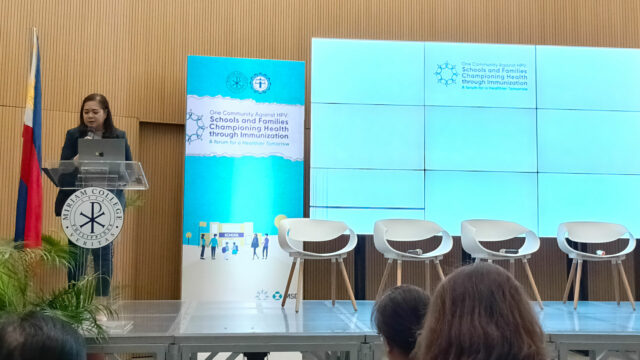
The expansion of the school-based human papillomavirus (HPV) vaccination program is being pushed by health advocates and private schools to strengthen efforts against cervical cancer.
Cervical cancer is the second leading cause of cancer-related mortality among women, claiming the lives of 12 Filipinas daily, with 36.9 million still at risk.
According to the World Health Organization, more than 95% of cervical cancer cases worldwide are linked to HPV, which can be prevented through vaccination.
HPV vaccines can prevent up to 90% of HPV-related cancers, including cervical cancer, and is best administered to girls aged 9 to 14, or before their sexual debut, Dr. Maria Socorro C. Bernardino, trustee of the Philippine Obstetrical and Gynecological Society, said at the 1st HPV Summit for Private Schools on Saturday.
HPV Summit for Private Schools
During the summit, representatives from various stakeholders and health advocates led by Miriam College and the Catholic Educators Association of the Philippines-National Capital Region (CEAP NCR) called for the urgency of HPV vaccination for school-aged children. They also emphasized the need to expand the school-based immunization program in private schools.
Dr. Maria Cristina I. Alberto, board member of the Philippine Foundation for Vaccination and the Philippine Pediatric Society, told BusinessWorld that while the government implements the School-Based Immunization (SBI) program, known as Bakuna Eskwela, for public school students.
She emphasized that it is equally important to expand the initiative for eligible women in private schools.
“Right now, the push is for private schools, for the meantime, to have their own vaccination through their own means. (But) We’re still pushing again for free immunization for girls in the private sectors,” Ms. Alberto said in a mix of English and Filipino in an interview during the summit.
The Bakuna Eskwela program, which was earlier announced by the Department of Education (DepEd) to resume from October to November last year, aims to immunize 973,930 female Grade 4 students in selected public schools.
However, Ms. Alberto emphasized that the numbers are still inadequate, as a large portion of the eligible female population remains underserved, with girls in private schools having fewer opportunities to participate.
While HPV vaccines are available at health centers, Ms. Alberto said that not all eligible women have access to them, and many parents are still unaware of its significance.
According to a report cited during the summit, only 33% of Filipina girls aged 9 to 14 have received the recommended two doses of the HPV vaccine, despite its availability since 2006 and inclusion in the National Immunization Program since 2015.
Government support
The Department of Education (DepEd) has expressed support for the expansion of school-based HPV immunization to private schools, emphasizing the role of schools in promoting health and bridging gaps in students’ immunization.
“Many learners are still unable to receive this protection due to misconceptions, community resistance, or lack of access to school health services,” Dr. Miguel Angelo S. Mantaring, Director of the Bureau of Learner Support Services at DepEd, said during his speech.
“Ensuring that learners have access to vaccines in schools means addressing multiple layers of barriers, from dispelling myths to providing a trusted space where children and parents feel confident in making the right health choices,” he added.
In support of the initiative, Mr. Mantaring announced that DepEd, the Department of Health, and the local government units are finalizing a joint administrative order to integrate school clinics into the local health care system.
“This policy formally integrates school health services into the broader local health system, ensuring that schools and local government units share responsibility in delivering essential health interventions,” he furthered.
Mr. Mantaring also announced that a school health benefit package, in partnership with Philippine Health Insurance Corporation is on the works, aiming to provide financial support on school clinics, allowing them to deliver preventive health services, including immunization.
While private schools are not yet covered by the government’s HPV vaccination program under SBI, Ms. Alberto told BusinessWorld that they can seek partnerships to procure HPV vaccines at a lower cost.
Miriam College has already taken this initiative, partnering with various health institutions to offer on-site HPV vaccination.
Kristine Marie L. Saludez, Miriam College’s grade school principal, told BusinessWorld that the rollout will begin in the coming months, aiming to immunize at least a thousand students from grade school to high school.
The U.S. Supreme Court on Monday rejected a bid by 21 young people to revive a novel lawsuit claiming the U.S. government’s energy policies violate their rights to be protected from climate change.
The justices denied a request by the youth activists to hear their appeal of a decision by the San Francisco-based 9th U.S. Circuit Court of Appeals directing a federal judge in Oregon to dismiss the case after holding they lacked legal standing to sue.
The decision marks the end of Juliana v. United States, one of the longest-running climate change cases that youth activists have filed nationwide and one that the plaintiffs’ lawyers say helped sparked a broader youth-led movement for climate rights.
“The Supreme Court’s decision today is not the end of the road and the impact of Juliana cannot be measured by the finality of this case alone,” Julia Olson, a lawyer for the plaintiffs at Our Children’s Trust, said in a statement.
The U.S. Department of Justice, which had fought the case across three presidential administrations, welcomed the court’s decision, which Acting Assistant Attorney General Adam Gustafson in a statement said “brings this long saga to a conclusion.”
Our Children’s Trust and its youth clients have filed a series of lawsuits accusing state and federal governments of exacerbating climate change by adopting policies that encourage or allow the extraction and burning of fossil fuels in violation of their rights.
While some cases have faltered, the Montana Supreme Court in December held that the state’s constitution guarantees a right to a stable climate system. Hawaii in June agreed to a first-in-the-nation settlement with young people to take action to decarbonize its transportation system by 2045.
In Monday’s case, which was filed in 2015, the youth plaintiffs had alleged the U.S. government has permitted, authorized and subsidized fossil fuel extraction and consumption despite knowing those actions cause catastrophic global warming.
By contributing to climate change, the plaintiffs said U.S. energy policies violate their rights to due process and equal protection under the U.S. Constitution.
But in a 2020 ruling, the 9th Circuit held it was beyond the power of the courts to order and supervise remedies designed to address climate change and that such complex policy decisions were better left to Congress and the executive branch.
The court sent the case back to the Oregon judge with instructions to dismiss the lawsuit. But U.S. District Judge Ann Aiken instead allowed the plaintiffs to try to amend their complaint to keep it going, citing a change in the law.
A three-judge 9th Circuit panel in May 2024 said the 2020 ruling left no room to amend the complaint and directed Aiken to dismiss the case. – Reuters
WASHINGTON – U.S. President Donald Trump said on Monday automobile tariffs are coming soon even as he indicated that not all of his threatened levies would be imposed on April 2 and some countries may get breaks, a move Wall Street took as a sign of flexibility on a matter that has roiled markets for weeks.
At the same time, Mr. Trump opened another front in a global trade war by slapping 25% secondary tariffs on any country that buys oil or gas from Venezuela, a directive that sent oil prices climbing.
At the White House, Mr. Trump told reporters not all the new tariffs would be announced on April 2, and said he may give “a lot of countries” breaks on tariffs, but provided no details.
A White House official declined to say exactly when sector-specific tariffs on autos, pharmaceuticals or semiconductor chips would come into effect, noting that was still “TBD (to be determined) and at the president’s discretion.”
The official cautioned against expecting a tariff reprieve, adding, “The president is determined to implement reciprocal tariffs that are very strong. People should expect that.”
Bloomberg and the Wall Street Journal reported earlier that the administration was narrowing its approach to the broad batch of levies Trump has been saying for weeks would be imposed on April 2, and could delay sector-specific tariffs.
U.S. stocks ended Monday broadly higher on optimism that the tariffs set to be detailed next week may not be as extensive as expected. The S&P 500 index gained nearly 1.8% to close at its highest in more than two weeks.
Meanwhile, Mr. Trump said the U.S. would impose tariffs on autos, pharmaceuticals and aluminum in “the very near future,” arguing that the U.S. would need all those products in the event of wars or other problems.
The auto tariffs would come in the next few days, Mr. Trump said later in the day, adding that tariffs on lumber and semiconductor chips would follow “down the road.”
“We’ve been ripped off by every country,” Mr. Trump said after a meeting of his cabinet, predicting that the expected tariffs would raise “rather astronomical” amounts of money for U.S. coffers, allowing tax rates to remain low or come down.
Mr. Trump, who has said countries can still avoid levies if they lower their tariffs or move manufacturing to the U.S., also announced on Monday a $21 billion investment by South Korea’s Hyundai Motor Group 005380.KS in the United States.
The investment would include a $5.8 billion new steel plant in Louisiana, he said at the White House alongside Hyundai Chairman Euisun Chung and Louisiana Governor Jeff Landry.
‘LIBERATION DAY’
Mr. Trump said the April 2 tariffs will mark a “Liberation Day” for the U.S. economy. They are aimed at shrinking a $1.2 trillion global goods trade deficit by raising U.S. levies to levels charged by other countries and counteracting their non-tariff trade barriers.
Mr. Trump said in February he intended to impose auto tariffs “in the neighborhood of 25%” and similar duties on semiconductors and pharmaceutical imports, but he later agreed to delay some auto tariffs after the three largest U.S. automakers pushed for a waiver.
Mr. Trump’s whirlwind tariff offensive since his January inauguration has been marked by threats, reversals and delays, sometimes within hours of imposition deadlines, as his trade team formulates policy on the fly.
So far, he has imposed new 20% duties on Chinese imports, fully restored 25% duties on global steel and aluminum imports and slapped 25% tariffs on imports from Canada and Mexico that do not comply with a North American trade agreement over the U.S. fentanyl overdose crisis.
‘DIRTY 15’
Two senior Trump officials – Treasury Secretary Scott Bessent and top White House Economic Adviser Kevin Hassett – said last week the administration is expected to focus the April 2 reciprocal tariff news on a narrower set of countries with the biggest trade surpluses and high tariff and non-tariff barriers.
Mr. Bessent referred to these as the “Dirty 15,” a reference to 15% of countries, while Mr. Hassett told Fox Business the focus would be on 10-15 countries.
Ryan Majerus, a former senior U.S. Commerce Department official now at law firm King & Spalding, said no matter if sectoral tariffs came on April 2 or later, the administration would remain aggressive with Section 232 investigations, as already seen with lumber and copper.
“Given that the administration has already signaled concern over exemptions and exclusions, it seems clear that at least some countries will likely face new tariffs in early April,” he said. “But countries like the UK and India are certainly trying to avoid the tariffs through visits to the White House.”
A second White House official said countries rushing for early talks were unlikely to make sufficient progress to avoid tariffs completely, given the calculation also factors in non-tariff barriers that are harder to remove quickly.
In a request for public comments on reciprocal tariffs, the Office of the United States Trade Representative expressed particular interest in submissions for the largest U.S. trade partners, and those with the highest goods trade surpluses.
USTR named Argentina, Australia, Brazil, Canada, China, the European Union, India, Indonesia, Japan, Korea, Malaysia, Mexico, Russia, Saudi Arabia, South Africa, Switzerland, Taiwan, Thailand, Turkey, Britain and Vietnam as being of particular interest, adding that they cover 88% of total goods trade with the U.S.
Mr. Trump on Monday also announced that any country buying oil or gas from Venezuela will pay a 25% tariff on any trades made with the United States.
This “secondary tariff” will take effect on April 2, Mr. Trump said in a Truth Social post, noting that Venezuela has sent “tens of thousands” of people to the United States who have a “very violent nature.” – Reuters
WASHINGTON – Boeing is seeking to withdraw an agreement to plead guilty in a criminal case that blamed the company for deceiving regulators before two deadly crashes of 737 MAX jets, the Wall Street Journal reported on Monday.
A U.S. judge in December rejected the deal, faulting a diversity and inclusion provision, and Boeing and the Justice Department have been negotiating toward a new agreement.
President Donald Trump took over on January 20, giving his administration a chance to weigh in on the deal.
Boeing declined comment. The Justice Department did not immediately comment.
In July, Boeing agreed to plead guilty to a criminal fraud conspiracy charge in the wake of two fatal 737 MAX crashes. The planemaker also agreed to pay a fine of up to $487.2 million and spend $455 million to improve safety and compliance practices over three years of court-supervised probation as part of the deal.
Relatives of the victims of the two 737 MAX crashes, which occurred in 2018 and 2019 and killed 346 people, have called the plea agreement a “sweetheart” deal that failed to adequately hold Boeing accountable for the deaths of their loved ones.
An accepted plea deal would brand Boeing a convicted felon for conspiring to defraud the U.S. Federal Aviation Administration about problematic software affecting the flight control systems in the planes that crashed.
In May, the DOJ found Boeing had violated the terms of a 2021 agreement that had shielded it from prosecution over the crashes. Prosecutors then decided to criminally charge Boeing and negotiate the current plea deal.
The decision followed a January 5, 2024, in-flight blowout of a door panel on an Alaska Airlines’ ALK.N jet that exposed ongoing safety and quality issues at Boeing.
Judge Reed O’Connor in Fort Worth, Texas in 2023 said “Boeing’s crime may properly be considered the deadliest corporate crime in U.S. history.”
Trump administration officials have said regulators must be firm with Boeing after a series of missteps.
The U.S. Securities and Exchange Commission’s crypto task force held its first public meeting with experts on Friday, focusing on how securities laws might apply to digital assets as the Trump administration looks to overhaul cryptocurrency regulations.
Among the participants of the roundtable were John Reed Stark, former chief of the SEC’s Office of Internet Enforcement; Miles Jennings, the general counsel for a16z crypto; and former SEC Commissioner Troy Paredes. Republican SEC Commissioner Hester Peirce is leading the task force, which is charged with developing rules and guidance for crypto.
“Spring signifies new beginnings and we have a new beginning here, a restart of the commission’s approach to crypto regulation,” said Peirce.
The crypto industry has long clashed with regulators over how federal securities laws translate to digital assets, with many arguing that crypto tokens are more akin to commodities. Tokens classified as securities would require firms to register with the SEC and provide certain disclosures to investors.
President Donald Trump, who campaigned on promises to be a “crypto president,” has pledged to reverse an industry crackdown under former President Joe Biden’s SEC, which sued multiple crypto companies, including Coinbase and Kraken, alleging they had flouted its rules. The SEC’s new leadership has agreed to withdraw or pause many of those cases.
The task force on Friday debated whether crypto tokens require a new, separate regulatory framework, different from how the SEC oversees securities such as equities.
Mr. Jennings urged the SEC to take a “technology-neutral” approach, “looking at what differentiates a system like ethereum from ownership of equity in Apple AAPL.O.”
Some, including Democratic SEC Commissioner Caroline Crenshaw, expressed concern that the regulator would loosen rules for cryptocurrencies by allowing them to operate under a distinct regime.
“Modifying the law to facilitate the success of a chosen product category is fraught with risk,” said Ms. Crenshaw. “Risk not only of weakening regulatory protections for that category, but of creating the negative domino effect on other areas of the market protected by the same laws.”
The task force’s first roundtable comes as Mr. Trump has sought to broadly overhaul policies toward cryptocurrency. Earlier this month, Trump signed an executive order to establish a strategic reserve of cryptocurrencies and held a summit for industry leaders at the White House. – Reuters






 Stay tuned for more exciting announcements about what is shaping up to be a Super Tech Week of groundbreaking events! For further details, please visit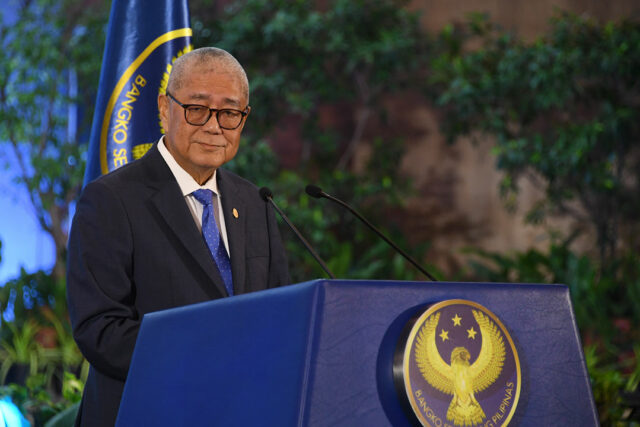



 “I didn’t want to start 2025 still working, only to leave after a month. It felt more practical to end in 2024 and focus on other things I wanted to do,” she said.