Home Blog Page 1831

Russia launches ‘inhuman’ Christmas Day attacks, Ukraine’s Zelensky says

Army soldier figurines are displayed in front of the Ukrainian and Russian flag colors background in this illustration taken, Feb. 13, 2022. — REUTERS/DADO RUVIC/ILLUSTRATION

KYIV — Russia attacked Ukraine’s energy system and some cities with cruise and ballistic missiles plus drones on Wednesday in an “inhuman” Christmas Day assault, Ukraine’s President Volodymyr Zelensky said.

Nearly three years into the war, the strikes wounded at least six people in the northeastern city of Kharkiv and killed one in the region of Dnipropetrovsk, the governors there said.

US President Joseph R. Biden denounced the “outrageous” attack and said he had asked the US Defense Department to push forward with a new surge of military aid to Kyiv.

Half a million people in Kharkiv region were left without heating, in temperatures just a few degrees Celsius above zero, while there were blackouts in the capital Kyiv and elsewhere.

“Today, (Russian President Vladimir) Putin deliberately chose Christmas to attack. What could be more inhuman? More than 70 missiles, including ballistic missiles, and more than a hundred attack drones,” he said.

Russia’s Defense Ministry confirmed it had conducted a “massive strike” on what it said were critical energy facilities supporting the work of Kyiv’s “military-industrial complex”.

“The aim of the strike was achieved. All facilities have been hit,” it said in a statement.

Ukraine’s military said its air defenses downed 59 Russian missiles and 54 drones overnight and on Wednesday morning.

Mr. Biden, who is being replaced by Donald J. Trump next month, said the purpose of the attack was “to cut off the Ukrainian people’s access to heat and electricity during winter and to jeopardize the safety of its grid”.

Washington has committed $175 billion in aid for Ukraine. It is not certain the flow will continue at that pace under Mr. Trump, who has said he wants to bring the war to a quick end.

In Moldova, Ukraine’s western neighbor, pro-European President Maia Sandu said one Russian missile crossed through her country’s airspace during the air assault.

“While our countries are celebrating Christmas, the Kremlin has chosen the path of destruction, launching strikes on Ukraine’s energy infrastructure and violating Moldova’s airspace,” Ms. Sandu wrote on social media.

Moldova has seen several cases of drone fragments landing on its territory and missiles passing through its airspace.

Ukrainians were marking their second Christmas on Wednesday, according to a new calendar in another step towards erasing Russian influence.

Most Ukrainians are Orthodox Christians and the independent Orthodox Church of Ukraine, set up in 2018, agreed in 2023 to move away from the traditional Julian calendar used in Russia where Christmas is on Jan. 7.

Russia has intensified attacks on the Ukrainian energy sector since spring of this year, damaging almost half of its generating capacity and causing prolonged blackouts.

‘RUSSIA WEAPONIZES WINTER’
Ukraine’s air force said Kharkiv was attacked by ballistic missiles. Regional governor Oleh Syniehubov said on Telegram there was damage to civilian non-residential infrastructure, without giving more detail.

Dnipropetrovsk Governor Serhiy Lysak said the fatality there occurred in an attack on regional power facilities.

“Since the morning, the Russian army has been massively attacking the Dnipro region. It is trying to destroy the region’s power system,” he said.

Ukrainian Energy Minister German Galushchenko said on Facebook that Russia was massively attacking the power sector and that restrictions on electricity supply were in place.

Ukraine’s largest private energy company DTEK said its generating facilities were attacked, with power equipment seriously damaged, in the 13th large-scale assault on the energy sector this year.

“We appeal to every ally of Ukraine to end this state-sponsored terrorism now by giving our armed forces the air defense ammunition they need to protect essential energy infrastructure,” DTEK Chief Executive Officer Maxim Timchenko said in a statement.

“Russia’s Christmas gift to Ukraine: more than 70 missiles and 100 drones, directed at Ukrainian families celebrating in their homes and the energy infrastructure that keeps them warm,” said US Ambassador Bridget Brink.

“For the third holiday season, Russia weaponizes winter.” — Reuters

In a first, Taiwan’s Presidential Office runs war games to simulate a China emergency

CHESS PIECES are seen in front of displayed China and Taiwan’s flags in this illustration taken Jan. 25, 2022. — REUTERS

TAIPEI — Taiwan’s Presidential Office conducted its first-ever tabletop exercise simulating a military escalation with China, several officials briefed on the matter said, at a time when the island is facing renewed Chinese military threats.

Dozens of central and local government agencies as well as civil groups participated in the 3-hour exercise on Thursday, the sources said, who requested anonymity due to the sensitivity of the matter.

China has in recent years stepped up military threats, including the large massing of naval forces this month and daily military activities close to democratically Taiwan, which Beijing claims as its own over Taipei’s rejection.

The war game held inside the Presidential Office in Taipei was led by Vice-President Hsiao Bi-khim and National Security Council Secretary-General Joseph Wu, the officials familiar with the meeting told Reuters.

The exercise simulated scenarios including China’s “high intensity” gray-zone warfare as well as when the island is “on the verge of conflict” to test response readiness by Taiwan government offices and civil society, a security official familiar with the matter said.

China has staged two rounds of major exercises around Taiwan this year to pressure Taipei, one in May and one in October, dubbed “Joint Sword – 2024A” and B, respectively. — Reuters

Pope Francis opens special ‘Holy Door’ for Catholic Jubilee at Rome prison

POPE FRANCIS — CATHOLIC CHURCH ENGLAND AND WALES/CATHOLICNEWS.ORG.UK

ROME — Pope Francis made a visit on Thursday to one of the largest prison complexes in Italy, opening a special “Holy Door” for the 2025 Catholic Holy Year, in what the Vatican said was the first such action by a Catholic pontiff.

Speaking to hundreds of inmates, guards and staff at the Rebibbia prison on the outskirts of Rome, Francis said he wanted to open the door, part of the prison chapel, and one of only five that will be open during the Holy Year, to show that “hope does not disappoint.”

“In bad moments, we can all think that everything is over,” said the pontiff. “Do not lose hope. This is the message I wanted to give you. Do not lose hope.”

Francis opened the Catholic Holy Year, also known as a Jubilee, on Tuesday. A Catholic Jubilee is considered a time of peace, forgiveness and pardon. This Jubilee, dedicated to the theme of hope, will run through Jan. 6, 2026.

Holy Years normally occur every 25 years, and usually involve the opening in Rome of four special “Holy Doors,” which symbolize the door of salvation for Catholics. The doors, located at the papal basilicas in Rome, are only open during Jubilee years.

The Vatican said the opening of the “Holy Door” at Rome’s Rebibbia prison was the first time such a door had been opened by a pope at a prison since the start of the Jubilee year tradition by Pope Boniface VIII in 1300.

Francis has shown special attention for the incarcerated over his 11-year papacy. He often visits prisons in Rome and on his foreign trips. — Reuters

Astoria Hotels and Resorts’ answer to growing demand for Philippine ube

When it comes to providing accommodations that have all the makings of a second home in the best Philippine destinations, Astoria Hotels and Resorts (AHR) is a brand that has always been at the forefront. But aside from AHR, The Astoria Group also has multiple companies in different sectors, including Astoria Culinary Expert Services (Astoria-ACES) which is their corporate catering and food solutions arm. Its main goal is to offer innovative approaches to its clients’ food solution requirements — from catering and banquet services, to cafeteria, food hall, and employee dining options.

To ensure the freshness of the ingredients being used, the Astoria-ACES team purchases its crops directly from its partner farmers in central Luzon. This is where their Farm-to-Table initiative comes in. This program is a major component of Astoria’s corporate social responsibility. It was founded in February of 2023 not only with the aim of securing a steady supply of healthy produce, but with the interest of supporting the agricultural sector, particularly small-scale farmers. A core tenet of the Farm-to-Table program is purchasing at a fair price, and ensuring that the financial benefit to the farmers is equitable.

To meet the increasing demand for real, high-quality Philippine ube, which is also becoming popular globally, Astoria-ACES developed the Philippine Royal Ube Powder which is made from 100% locally sourced ube. It has no additives, colorants, preservatives, or extenders, and is produced in an FDA-, Halal-, and GMP-compliant facility under the careful supervision of food scientists and quality assurance specialists. Furthermore, it is easy to use both at home and in professional kitchens as it has a shelf life of one year.

With Astoria-ACES’ Philippine Royal Ube Powder, you can easily whip up your favorite treats at home such as ube ice cream and ube biko custard. You can also press play for a short tutorial of how to make your very own ube halaya.

Astoria-ACES’ Philippine Royal Ube Powder is available in four variants: 125g, 250g, 500g, and 1000g. You may purchase yours online via:

Website: bit.ly/ACES-Ube

Shopee: bit.ly/ACES-Shopee

TikTok shop: bit.ly/ACES-TikTok

You may also contact their team through:

Emal: info.f2t@astoria-aces.com

Mobile: (+63) 998-535-2919

Landline: (+63 2) 8687-1111 locals 8125 and 8172

Ready to make your holidays extra delicious with your scrumptious ube desserts while helping out our local farmers? Make sure to get your hands on the Astoria-ACES’ Philippine Royal Ube Powder today!


Spotlight is BusinessWorld’s sponsored section that allows advertisers to amplify their brand and connect with BusinessWorld’s audience by publishing their stories on the BusinessWorld Web site. For more information, send an email to online@bworldonline.com.

Join us on Viber at https://bit.ly/3hv6bLA to get more updates and subscribe to BusinessWorld’s titles and get exclusive content through www.bworld-x.com.

On Christmas Day, Pope Francis calls for talks to end Ukraine war

MAZUR/CATHOLICNEWS.ORG.UK

 – Pope Francis in his Christmas message on Wednesday called for talks between Ukraine and Russia to end the war that followed Moscow’s full-scale invasion two years ago and has killed tens of thousands.

In his Christmas Day “Urbi et Orbi” (to the city and world) address, Francis mentioned the Ukraine conflict directly and called for “the boldness needed to open the door to negotiation”.

Speaking from the central balcony of St. Peter’s Basilica to thousands of people in the square below, the pope said: “May the sound of arms be silenced in war-torn Ukraine!” He also called for “gestures of dialogue and encounter, in order to achieve a just and lasting peace”.

Francis, who has been pope since 2013, was criticized by Ukrainian officials this year when he said the country should have the courage of the “white flag” to negotiate an end to the war with Russia.

Ukrainian President Volodymyr Zelenskiy had previously ruled out engaging in peace talks without the restoration of Ukraine’s pre-war borders. But Mr. Zelenskiy has shown an increasing willingness in the weeks since Donald Trump’s re-election as U.S. president to enter negotiations.

Earlier in December, Mr. Zelenskiy raised the idea of a diplomatic settlement that would involve a “freezing” of the current battle lines and the deployment of foreign troops in Ukraine. Russia has demanded that Ukraine abandon its ambitions to join the NATO military alliance.

The 88-year-old Francis, celebrating the 12th Christmas of his pontificate, called for an end to conflicts, political, social or military, in places including Lebanon, Mali, Mozambique, Haiti, Venezuela, and Nicaragua.


GAZA SITUATION ‘EXTREMELY GRAVE’

Francis, who has recently grown more critical of Israel’s military campaign in Gaza, describing it last week as “cruelty”, also renewed his call for a ceasefire in the Israeli-Hamas war and for the release of the remaining Israeli hostages held by Hamas.

He called the humanitarian in Gaza “extremely grave” and asked for “the doors of dialogue and peace (to) be flung open”.

The Israeli-Hamas war began when Hamas-led Palestinian militants attacked southern Israeli communities on Oct. 7, 2023, killing 1,200 people, mostly civilians, and taking more than 250 hostages back to Gaza, according to Israeli authorities.

Israel’s retaliatory campaign, which it says is aimed at eliminating Hamas, has killed more than 45,000 people, mostly civilians, said authorities in the Hamas-run Gaza Strip. The campaign has displaced nearly the entire population and left much of the enclave in ruins.

Francis opened a Holy Year for the global Catholic Church on Tuesday evening, Christmas Eve, which will run through Jan. 6, 2026. A Catholic Holy Year, also known as a Jubilee, is considered a time of peace, forgiveness and pardon.

On Wednesday, the pope said the Jubilee year should be a time for “every individual, and all peoples and nations … to become pilgrims of hope, to silence the sound of arms and overcome divisions”.

Francis also said it should be a time “to tear down all walls of separation”.

He called for a “mutually agreed solution” to bring down the border wall that has divided the Mediterranean island of Cyprus between the Republic of Cyprus and the Turkish Republic of Northern Cyprus since 1974. – Reuters

Russia is using bitcoin in foreign trade, finance minister says

FREEPIK

 – Russian companies have begun using bitcoin and other digital currencies in international payments following legislative changes that allowed such use in order to counter Western sanctions, Finance Minister Anton Siluanov said on Wednesday.

Sanctions have complicated Russia’s trade with its major partners such as China or Turkey, as local banks are extremely cautious with Russia-related transactions to avoid scrutiny from Western regulators.

This year, Russia permitted the use of cryptocurrencies in foreign trade and has taken steps to make it legal to mine cryptocurrencies, including bitcoin. Russia is one of the global leaders in bitcoin mining.

“As part of the experimental regime, it is possible to use bitcoins, which we had mined here in Russia (in foreign trade transactions),” Mr. Siluanov told Russia 24 television channel.

“Such transactions are already occurring. We believe they should be expanded and developed further. I am confident this will happen next year,” he said, adding that international payments in digital currencies represent the future.

Earlier this month, President Vladimir Putin said that the current U.S. administration was undermining the role of the U.S dollar as the reserve currency by using it for political purposes, forcing many countries to turn to alternative assets.

He singled out bitcoin as an example of such assets, saying that no-one in the world could regulate bitcoin. Mr. Putin’s remarks indicated that the Russian leader backs the extensive use of cryptocurrencies. – Reuters

Biden reaffirms support for weapons surge to Ukraine after Russia’s Christmas attack

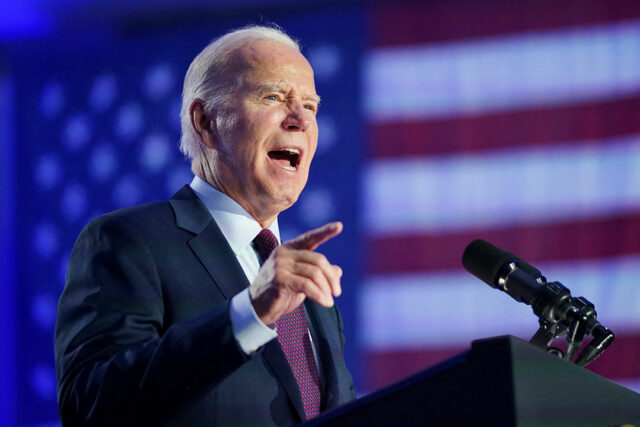
U.S. President Joe Biden holds a campaign rally ahead of the state’s Democratic presidential primary, in Las Vegas, Nevada, U.S. Feb. 4, 2024. — REUTERS

 – U.S. President Joe Biden said on Wednesday he had asked the Defense Department to continue its surge of weapons deliveries to Ukraine, after condemning Russia’s Christmas Day attack on Ukraine’s energy system and some of its cities.


WHY IT’S IMPORTANT

Russia attacked Ukraine on Wednesday with cruise and ballistic missiles, as well as drones, Ukraine said. The strikes wounded at least six people in the northeastern city of Kharkiv and killed one in the region of Dnipropetrovsk, the governors there said.

Nearly three years into the war, Washington has committed $175 billion in aid for Ukraine, but it is uncertain if the aid will continue at that pace under Republican President-elect Donald Trump, who replaces Mr. Biden on Jan. 20. Trump has said he wants to bring the war to a swift end.


KEY QUOTES

“The purpose of this outrageous attack was to cut off the Ukrainian people’s access to heat and electricity during winter and to jeopardize the safety of its grid,” Mr. Biden, a Democrat, said in a statement.

Keith Kellogg, Trump’s pick for special envoy for Ukraine and Russia, also criticized Wednesday’s attack.

“Christmas should be a time of peace, yet Ukraine was brutally attacked on Christmas Day,” Mr. Kellogg said. “The U.S. is more resolved than ever to bring peace to the region.”


CONTEXT

During the presidential election campaign, Trump questioned the level of U.S. involvement in the conflict, suggesting European allies should bear more of the financial burden. Some of his fellow Republicans – who will control both the House of Representatives and Senate starting next month – have also cooled on sending more aid to Kyiv.

This stance – despite previous strong support in the U.S. Congress for sustained or expanded support for Ukraine – has raised concerns among Ukraine’s supporters about the future of U.S. assistance under Mr. Trump. – Reuters

Taiwan defense ministry warns of ‘serious impact’ to security under new funding laws

Honor guards raise a Taiwanese flag at the Presidential Palace in Taipei, Taiwan Oct. 10, 2023. — REUTERS

 – Taiwan’s defense ministry warned of “serious impact” to security after opposition parties passed laws that will require a cut in defense spending of some T$80 billion ($2.45 billion) at a time when the island is facing elevated Chinese military threat.

Taiwan’s opposition parties, which hold a majority in parliament, last week passed legislation to shift spending from the central government to local municipalities, a move strongly contested by the ruling Democratic Progressive Party (DPP) and thousands of protesters.

In a statement late on Wednesday, the defesce ministry said it might need to cut its defense budget plan by 28% for next year, equivalent to around T$80 billion, to meet the new funding requirements

“It is set to deliver a serious impact to the national forces’ military build-up and combat preparedness,” the ministry said. “Major weapon equipment will not be continued to upgrade and it will be difficult to make payments to purchased items according to contracts, resulting in delays or cancellations.”

The ministry said the defense budget for next year accounted to around 2.4% of Taiwan’s GDP, but the possible cut will take it down to below 2% even as countries in the region are increasing defense spending.

“How do we persuade international friends to help us in critical moment when the enemy is invading us?” the ministry said.

China, which views democratically-governed Taiwan as its own territory, has ramped up its military pressure in recent years to assert those claims, which Taipei strongly rejects.

National Security Council Secretary-general Joseph Wu told reporters on Wednesday more discussions are needed as the budge cut will lead to “serious consequences”. He did not elaborate.

“It will send a wrong message that Taiwan does not want to defend itself. Seeing that, like-minded countries might not want to help our nation.”

The cabinet in August proposed a 7.7% year-on-year rise for defense spending to T$647 billion, a record high for Taiwan as the island adds more fighter jets and missiles to strengthen deterrence against the rising threat from Beijing.

The DPP lost its parliamentary majority in January elections and is in a stand off with the opposition on several issues. – Reuters

Hamas and Israel blame each other for ceasefire delay

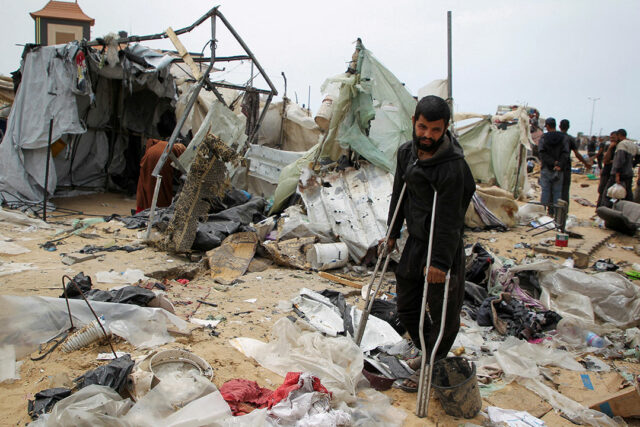
A MAN looks on as Palestinians inspect a tent camp damaged in an Israeli strike during an Israeli military operation, in Rafah, in the southern Gaza Strip, May 28, 2024. — REUTERS

 – The Palestinian militant group Hamas and Israel traded blame on Wednesday over their failure to conclude a ceasefire agreement despite progress reported by both sides in past days.

Hamas said that Israel had laid down further conditions, while Israeli Prime Minister Benjamin Netanyahu accused the group of going back on understandings already reached.

“The occupation has set new conditions related to withdrawal, ceasefire, prisoners, and the return of the displaced, which has delayed reaching the agreement that was available,” Hamas said.

It added that it was showing flexibility and that the talks, mediated by Qatar and Egypt, were serious.

Netanyahu countered in a statement: “The Hamas terrorist organization continues to lie, is reneging on understandings that have already been reached, and is continuing to create difficulties in the negotiations.”

Israel will, however, continue relentless efforts to return hostages, he added.

Israeli negotiators returned to Israel from Qatar on Tuesday evening for consultations about a hostage deal after a significant week of talks, Netanyahu’s office said on Tuesday.

The U.S. and Arab mediators Qatar and Egypt have stepped up efforts to conclude a phased deal in the past two weeks. One of the challenges has been agreements on Israeli troop deployments.

Israeli Defense Minister Israel Katz, speaking with commanders in southern Gaza, said on Wednesday that Israel will retain security control of the enclave, including by means of buffer zones and controlling posts.

Hamas is demanding an end to the war, while Israel says it wants to end Hamas’ rule of the enclave first, to ensure it will no longer pose a threat to Israelis.


ISRAEL KEEPS UP MILITARY PRESSURE

Meanwhile Israeli forces kept up pressure on the northern Gaza Strip, in one of the most punishing campaigns of the 14-month war, including around three hospitals on the northern edge of the enclave, in Beit Lahiya, Beit Hanoun and Jabalia.

Palestinians accuse Israel of seeking to permanently depopulate northern Gaza to create a buffer zone. Israel denies this and says it has instructed civilians to leave those areas for their own safety while its troops battle Hamas militants.

Israeli strikes killed at least 24 people across Gaza on Wednesday, health officials said. One strike hit a former school sheltering displaced families in Gaza City’s suburb of Sheikh Radwan, they added.

The Israeli military said it struck a Hamas militant operating in the area of Al-Furqan in Gaza City.

Several Palestinians were killed and wounded in the Al-Mawasi area, an Israeli-designated humanitarian zone in southern Gaza, where the military said it was targeting another Hamas operative.

The war was triggered by Hamas’ Oct. 7, 2023 attack on southern Israel, in which 1,200 people were killed and 251 taken hostage to Gaza, according to Israeli tallies.

Israel’s campaign against Hamas in Gaza has since killed more than 45,300 Palestinians, according to health officials in the Hamas-run enclave. Most of the population of 2.3 million has been displaced and much of Gaza is in ruins. – Reuters

PHL growth may fall below 6% in ’25

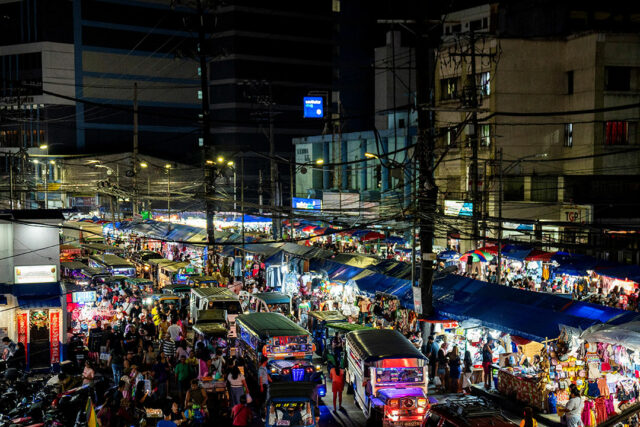
A general view of the rush-hour traffic at a market in Manila, Philippines, Dec. 20, 2024. — REUTERS

By Luisa Maria Jacinta C. Jocson, Reporter

PHILIPPINE ECONOMIC GROWTH could fall below 6% in 2025 amid a “gentle” recovery in domestic demand and expectations of a widening trade deficit, Bank of America (BofA) said. 

BofA Securities economist for the Philippines Jojo Gonzales said they forecast Philippine gross domestic product (GDP) to grow by 5.9% in 2025.

This would narrowly miss the government’s revised 6-8% growth target next year.

The economy expanded by a slower-than-expected 5.2% in the third quarter, its weakest growth in five quarters.

In the nine-month period, GDP growth averaged 5.8%, slower than the 6% print a year ago.

Earlier this month, the Development Budget Coordination Committee tweaked its economic growth targets to account for “evolving domestic and global uncertainties.”

“While we expect a gentle recovery in private consumption and investments over the next year, the growth in government spending is likely to be muted, and a wider net trade deficit is anticipated,” Mr. Gonzales told BusinessWorld in an e-mail.

In the third quarter, growth in government spending slowed to 5% from 11.9% in the previous quarter.

Latest data from the Philippine Statistics Authority (PSA) showed that the country’s trade deficit ballooned to $5.8 billion in October, the widest gap in over two years.

Meanwhile, BofA said it expects inflation to average 3% next year, well within the central bank’s 2-4% target.

The Bangko Sentral ng Pilipinas (BSP) expects inflation to average 3.3% in 2025. The central bank said that risks to the inflation outlook for next year remain tilted to the upside.

Headline inflation averaged 3.2% in the 11-month period, according to latest data from the PSA.

“A weaker peso remains a risk to this forecast, though softer oil prices will likely provide a cushion to negate the impact of the weaker currency,” Mr. Gonzales said.

BofA expects the dollar strength to persist next year, with the peso potentially breaching the P61 mark.

“The US dollar will remain stronger in 2025, and our end-2025 forecast is P61,” Mr. Gonzales said.

So far this year, the peso has hit a record-low P59-per-dollar level thrice.

BSP Governor Eli M. Remolona, Jr. earlier said they are watching the peso closely and have been a bit more active in the markets than usual.

The BSP had to intervene in small amounts in the past few months amid the stronger dollar after Donald J. Trump won as US President.

Meanwhile, BofA estimates that the central bank will deliver up to 75 basis points (bps) worth of rate cuts next year.

“This will bring down the policy rate to 5% (by end-2025),” Mr. Gonzales said.

Last week, the Monetary Board reduced borrowing costs by 25 bps at its final policy review of the year, bringing the key rate to 5.75%.

The central bank has slashed rates by a total of 75 bps this year since it began its easing cycle in August.

Mr. Remolona earlier said delivering 100 bps worth of rate cuts next year might be “too much.”

The central bank will likely keep reducing rates in “baby steps” as it is still carefully monitoring upside risks to inflation, the BSP chief added.

“We also expect the Fed rate to settle at 4% — one cut in December and two cuts in the first half of 2025,” Mr. Gonzales added.

The Fed continued cuts in December after a period of aggressive rate hikes but signaled fewer cuts in 2025. Investors are now focused on how gradually the US central bank would cut rates next year, Reuters reported.

While a benign US inflation reading on Friday eased some concerns about the pace of cuts next year, markets are still pricing in just about 35 bps worth of easing for 2025.

US investors are preparing for a swathe of changes in 2025 — from tariffs and deregulation to tax policy — that will ripple through markets as Mr. Trump returns to the White House in January.

Bill on 99-year land lease for foreigners seen to boost PHL investments

The House of Representatives and the Senate last week approved separate bills allowing foreigners to lease land up to 99 years from the current 75 years. — PHILIPPINE STAR/NOEL PABALATE

By John Victor D. Ordoñez, Reporter

A MEASURE seeking to extend the maximum term for land leases entered by foreigners to 99 years is likely to help the Philippines attract more investments, analysts said.

“Investors may be more inclined to commit to projects in the Philippines when they see the availability of longer-term leases as an assurance of stability,” Philippine Institute for Development Studies Senior Research Fellow John Paolo R. Rivera said in a Viber message.

He said industrial parks, economic zones and tourism-related projects are expected to benefit as foreign firms are more likely to invest if they can be assured of longer land leases.

Last week, the House of Representatives and the Senate approved separate bills allowing foreigners to lease land up to 99 years from 75 years. Both bills allow foreign investors to sublet properties, unless barred by a contract.

Under both versions, foreign private land leases related to tourism will be allowed if the investments are not less than $5 million. Of this amount, 70% must be infused in the project within three years after a contract is signed. 

The bill is one of President Ferdinand R. Marcos, Jr.’s priority measures, that the administration aims to approve before June 2025.

Lawmakers have yet to come up with a reconciled version of the measure through a bicameral conference committee.

However, Mr. Rivera said the government must come up with clear guidelines for the measure and ensure safeguards for local stakeholders.

“There may be concerns that longer lease terms could encourage speculative investments, where land is tied up for extended periods without being used productively,” he said.

“Extending lease terms could also lead to potential disputes with local communities over land use and allocation, especially in areas where indigenous peoples’ rights and agricultural interests are at stake.”

The 1987 Constitution bars foreigners from owning land in the country, but the 31-year-old Investors’ Lease Act allows foreign investors to lease private land for 50 years, renewable only once after 25 years.

“The 99-year lease bill, if passed into law, will contribute to a more favorable investment climate for foreign investors,” Foundation for Economic Freedom President Calixto V. Chikiamco said in a Viber message.

He cited a provision in a Senate bill that requires a lease to be registered with the Land Registration Authority (LRA), which he said would improve the “security and bankability” of leases.

Both bills allow foreign investors to lease land for agriculture, agroforestry and ecological conservation purposes.

They will also be allowed to enjoy longer leases to build industrial estates, factories, assembly or processing plants and tourism sites.

Sublease contracts must be registered with the registry of deeds under the LRA, according to copies of both the House and Senate bills.

The proposed measures also impose a fine of P1 million to P10 million on people who enter into illegal lease agreements.

Only the Senate version imposes jail time of up to six years for lease agreement violators. Congressmen removed the imprisonment penalty.

The upper chamber’s version also provides that in cases of corporations, associations or partnerships violating lease deals, the president, manager, director, trustees or other officers will be held criminally liable.

Both versions also mandate that only the Board of Investments or relevant investment promotion agencies may review and approve long-term lease agreements.

Lease contracts will also be subject to termination if an investment project is not initiated within three years.

Leonardo A. Lanzona, an economics teacher at the Ateneo de Manila University, said the government is better off coming up with a comprehensive plan that would ease the entry and exit of foreign companies in local markets.

“We are going to replace the restrictions to attract huge corporations that aim to take control of our markets in the long run because of their absolute control over the land,” he said in a Facebook Messenger chat.

Mr. Rivera said the Philippines still needs to work on improving the general investment environment.

“Investors look at lease terms as part of a broader environment for investment, and the Philippines must continue to improve other aspects of its investment climate,” he said.

VAT refund limit for tourists ‘just right,’ to benefit MSMEs — analysts

Tourists shop at Boracay Island, Aklan province, Philippines, Nov. 30, 2021. — REUTERS

By Aubrey Rose A. Inosante, Reporter

THE P3,000 ($51) minimum purchase requirement for nonresident tourists to qualify for a value-added tax (VAT) refund is “just right” to ensure small businesses benefit, analysts said.

President Ferdinand R. Marcos, Jr. recently signed into law Republic Act (RA) No. 12079, which allows tourists to claim VAT refunds on purchases worth at least P3,000 from government-accredited stores, in an effort to boost tourism receipts.

“The P3,000 is just right to benefit micro, small and medium enterprise (MSME) retailers and local products,” Philippine Retailers Association (PRA) President Roberto S. Claudio said.

He said the purchase cap is kept to a minimum to benefit locally made products.

“I think it’s a good entry and good starting point. Some countries are still higher than P3,000 as well. I think we’re above the middle, so I think that’s a good place to be,” Tourism Congress of the Philippines President James M. Montenegro said via phone call.

Under RA 12079, the value of the locally bought goods from accredited stores must reach at least P3,000 per transaction, provided these goods are taken out of the country within 60 days of purchase.

“This law is primarily designed to boost tourist arrivals and expenditure. Hopefully, it will also increase the sales revenue of retailers,” Mr. Claudio said.

Mr. Montenegro said the minimum purchase amount could be adjusted in the future.

The threshold is subject to review and adjustment every three years by the Finance secretary, upon recommendation of the Commissioner of Internal Revenue, considering the inflation data from the statistics agency.

“I think the minimum rate is at par with our ASEAN [Association of Southeast Asian Nations] neighbors. If you look at the minimum amounts in other countries, it is almost the same,” Eleanor L. Roque, a tax principal at P&A Grant Thornton, told BusinessWorld.

The Philippines has joined other ASEAN countries with a tax refund program for nonresident tourists. The scheme has increased retail activity, particularly in sectors such as fashion, electronics and souvenirs.

In Thailand, tourists are eligible for a VAT refund if they buy goods worth at least 2,000 baht ($58) from each store per day.

In Malaysia, the minimum purchase is 300 ringgit ($67). Singapore allows tourists to spend at least S$100 ($74), while in Indonesia, it starts at 500,000 rupiah ($31).

“It is good to have a minimum amount as it limits the refund claim to valuable expenses. De minimis spendings are normally not considered for VAT refund as it is not administratively practical. In some cases, the cost will be more expensive than the amount being refunded,” Ms. Roque said.

She said the government should tap accredited international firms in the VAT refund processing, adding that the “government should take advantage of the track record and best practices of these known companies.”

Ms. Roque said the government should ensure the goods bought are really brought out of the country.

“Physical inspection of the goods when exiting the country should be strict to ensure that local buyers do not use tourists for availing themselves of the VAT refund,” she added.

However, Philippine Institute for Development Studies Senior Research Fellow John Paolo R. Rivera said the P3,000 threshold “may not be enough to significantly encourage higher spending among affluent tourists,” especially compared with ASEAN counterparts.

“A higher or more flexible threshold might align better with international best practices and encourage larger purchases,” he said.

Mr. Rivera also urged the government to simplify the VAT refund process, rather than make it “extra bureaucratic.”

He cited countries such as Singapore and Thailand, which have digitalized their VAT refund process at airports or designated outlets, reducing friction.

Mr. Rivera also urged the government to expand access by having refund points beyond airports like seaports or malls, to ensure greater convenience.

“The Philippines must also do away with excessive forms by using technology to link transactions directly to refund systems that can streamline the process and minimize fraud. Tax refund should not be as difficult as applying for a plate number, license, etc.,” he said.

SHOPPING TOURISM
At the signing ceremony last week, Mr. Marcos said the law is expected to boost tourism spending by 30% and support the county’s goal to become a major shopping destination.

“You’d probably see that shopping accounts for approximately 20% of total inbound tourism expenditure. This is where the impact of the VAT refund law for nonresidents will be felt,” University of the Philippines Professor Edieser DL. Dela Santa said in an e-mail.

As the Philippines boosts tourism spending, he said arrivals would not necessarily increase because foreign tourists are more likely to be influenced by other conditions like airfares and exchange rates.

In 2023, tourism-related spending by nonresidents stood at P697.46 billion, the Department of Tourism (DoT) said.

The United Nations Tourism said on its website that shopping is a key area of tourist spending. It significantly contributes to national economies, both directly and through its connections to other economic sectors.

The Department of Finance (DoF) has said foregone revenues from the law could be offset by higher tourism spending.

“Data from the DoF show savings from the refund fully channeled into additional tourism spending may boost economic output by P2.8 billion to P4 billion annually,” it said.