Home Blog Page 1814

Sugar planters warn profiteers could be behind decline in millgate prices

PHILSTAR FILE PHOTO

SUGAR producers said millgate prices for their cane have declined since the start of the milling season, with the United Sugar Producers Federation (UNIFED) warning of possible profiteering by traders.

“We fear that this continued downtrend will have a severe impact on our small farmers which comprise more than 80% of the industry producers who are looking forward to a better holiday season especially with the increase in production inputs due to the long drought,” UNIFED President Manuel R. Lamata said in a statement.

UNIFED said prices averaged P2,500 per bag of sugar last week, compared to the 2,800 per bag farmers had been hoping for.

“Since the start of the milling season, prices have been erratically (fluctuating) contrary to the supply and demand figures, which raised suspicions that somebody is profiting from recent events,” Mr. Lamata added.

He said that despite the drop in millgate prices, the retail price for sugar remained stable.

He added that farmers should hold on to their sugar until prices stabilize.

“We may all need to tighten our belts so we will not be abused by these traders,” Mr. Lamata said.

The group also called on the Department of Agriculture and the Sugar Regulatory Administration to investigate the drop in millgate prices.

“We need the DA and SRA’s intervention to prop-up sugar prices at a comfortable level to prevent further losses especially now when there is also the issue of sugar purity, which has fallen due to the long drought,” he added.

The SRA has estimated that sugar production this crop year will drop 7.2% to 1.78 million metric tons.

He said the government could also move to buy sugar to stabilize prices.

“We will only sell directly to the government and they can sell directly to the people, eliminating these traders until prices stabilize,” Mr. Lamata said.

Low millgate prices were also reported during the previous crop year, prompting the government to allocate about P5 billion for the purchase of sugar directly from farmers. — Adrian H. Halili

Landowners along Subic-Clark rail line get TCTs

JOHANNES PLENIO-UNSPLASH

THE Bases Conversion and Development Authority (BCDA) has distributed transfer certificates of title (TCTs) to the landowners affected by the implementation of the Subic-Clark-Manila-Batangas (SCMB) railway project.

In a statement issued over the weekend, BCDA said that it has distributed a total of 68 TCTs to at least 43 landowners in Pampanga.

“One of the biggest challenges of the government is securing right-of-way; that is why it is really a big help that the (landowners) are willing to cooperate for the quick realization of this project,” BCDA Senior Vice-President Richard Brian M. Cepe said.

According to Mr. Cepe, the SCMB railway project will connect the port in Subic to the airport in Clark and to the ports in Manila and Batangas.

“This will be a big help to speed up commerce and the flow of products and services. In this way, we will attract more investors into the country,” he added.

Pampanga Vice Governor Lilia G. Pineda said that with the turnover of the certificates, “we recognize the challenges that our lot owners have faced, and we acknowledge the patience and resilience they have shown.”

“We also recognize the importance of this project in driving economic growth and development in our province,” she added.

According to the BCDA, the landowners who received the TCTs have been paid based on the land assessment and valuation of the Bureau of Internal Revenue or fair market value by independent real property valuers.

It said landowners were given “just compensation” as provided for by the Right of Way Act.

The distribution of the TCTs signifies that the property is now ready for the project. — Justine Irish D. Tabile

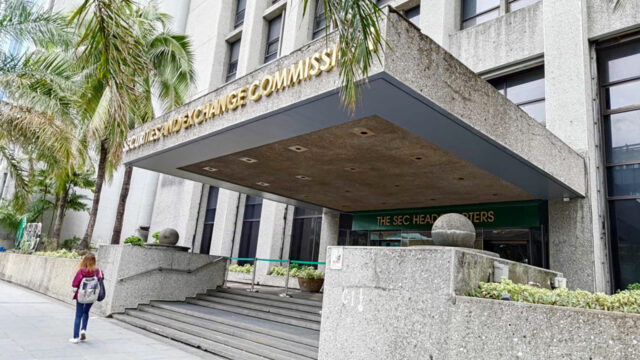
SEC extends deadline for lower fines to Dec. 31

Companies that fail to submit the complete requirements by Dec. 31 would be subject to the updated scale of fines and penalties implemented in April through Memorandum Circular No. 6. — BW FILE PHOTO

THE Securities and Exchange Commission (SEC) has extended the deadline to Dec. 31 for companies to apply for its incentive program, which reduces fines and penalties for late or non-filing of reportorial requirements.

Memorandum Circular (MC) No. 17, signed on Nov. 28, extended the application deadline for the Enhanced Compliance Incentive Plan (ECIP) to Dec. 31, the SEC said in an e-mailed statement over the weekend. The ECIP’s original deadline was Nov. 30.

The SEC said that over 3,200 corporations had applied and paid the ECIP fees as of Nov. 28.

ECIP allows noncompliant, delinquent, suspended, or revoked corporations to pay fines and penalties for failure to submit their annual financial statements (AFS), general information sheet (GIS), and official contact details at lower rates.

Applicant corporations must submit their latest AFS and GIS by Dec. 31.

Under the ECIP, noncompliant and delinquent corporations can settle their fines and penalties for P20,000.

Suspended and revoked registrations only need to pay 50% of their assessed fines and penalties, plus P3,060 to process their petition to lift the suspension or revocation order.

Companies that fail to submit the complete requirements by Dec. 31 would be subject to the updated scale of fines and penalties implemented in April through MC No. 6.

The new rates are around 900% to 1,900% higher compared to the previous rates.

Under the MC, a corporation with retained earnings up to P100,000 that files its AFS and GIS five months late must pay a base rate of P5,000 per report, up from P500.

A corporation with retained earnings up to P100,000 that fails to file its AFS and GIS for the year must pay a base rate of P10,000 per report, up from P1,000.

Under Republic Act No. 11232, or the Revised Corporation Code, a corporation is deemed delinquent if it fails to submit reportorial requirements three times, consecutively or intermittently, within a period of five years.

Delinquent corporations have two years to resume operations or risk having their registration revoked. — Revin Mikhael D. Ochave

How PHINMA Education aims to boost school access

CHRISTOPHER “HAPPY” A. TAN, PHINMA Education Holdings country chief for the Philippines

By Revin Mikhael D. Ochave Reporter

PHINMA Education Holdings, Inc. hopes to help increase access to education for Filipinos by expanding its network of affordable schools, a company executive said.

“Our aspiration is that every Filipino be given a chance to pursue their education and make their lives better,” Christopher “Happy” A. Tan, PHINMA Education country chief for the Philippines, said in an interview with BusinessWorld.

In July, the Philippine Statistics Authority said the country’s poverty rate shrank to 15.5% in 2023, equivalent to 17.54 million Filipinos living in poverty, compared with the 18.1% estimate in 2021.

“Our dream is to be a school network that produces thousands of board passers every year. This means we’re producing thousands of professionals every year because that’s how we will make an impact on poverty,” Mr. Tan said.

“By producing professionals, that will mean that you’ll have more families that will have cash flow to move out of poverty,” he added.

Mr. Tan has been with PHINMA Education for seven years. Prior to this, he was a human rights lawyer and was also involved in microfinance and development work.

PHINMA Education is the education unit of the Del Rosario-led conglomerate PHINMA Corp. It began operating in the education services sector in 2004 after the acquisition of PHINMA Araullo University in Nueva Ecija.

Other PHINMA Education schools include PHINMA Cagayan de Oro College, PHINMA University of Pangasinan, PHINMA University of Iloilo, and Southwestern University PHINMA in Cebu City. The company also operates Horizon Karawang in West Java, Indonesia.

PHINMA Chairman and Chief Executive Officer Ramon R. del Rosario, Jr. previously said that PHINMA Education now has 167,000 students following the recent acquisition of a school in Cavite that has 3,000 students.

Mr. Tan said PHINMA Education wants more schools to serve low-income students as it could help widen education access in the country.

“We would like to create a paradigm shift in the way schools operate. Right now, they don’t want to serve low-income students for multiple reasons, but part of which is they don’t necessarily think that it makes economic sense,” he said.

“What we would like to do is to convince a lot more schools that this isn’t us being nice. This is double bottom line. This is a public good, but it also makes financial sense. When we do that, then we shift the industry. The goal is not to dominate the industry, but to reduce poverty,” he added.

To improve the country’s quality of education, Mr. Tan said efforts should begin during the early years of the student’s journey.

“What do we need to do with grade school? We need to make sure that teacher education and teacher training is solid. You remove policies that make it hard for teachers to focus on their core work. Many teachers spend a lot of their hours on administrative issues. We should make sure that they have good teacher training,” he said.

“We also need to make sure that we have good assessment systems, not just grades because that can be rigged. You need to have standardized systems. We also should make sure to deal with issues of malnutrition,” he added.

In addition to this, Mr. Tan said the country needs an educational system that is more responsive to the needs of local employers.

“We should be able to understand the needs of local employers,” he said.

“However, we cannot control Filipinos if they want to find jobs outside the country. But I’m hoping that we, as a country, will give Filipinos the opportunity to choose,” he added.

Mr. Tan said PHINMA Education is also implementing active learning across its schools, as it helps improve the skills of both teachers and students.

“If you do active learning, you shift your role from being a lecturer to a facilitator of learning. This means that you have to pay attention to how individual students struggle with the content,” he said.

“We all learn best when we grapple with a problem rather than when we are passively listening to a lecture. It’s about deliberate practice. You actually do it,” he added.

In October, Phoenix Investments II Pte. Ltd. completed its P2.52-billion initial investment in PHINMA Education. The amount represented 70.22% of KKR’s total investment worth P3.59 billion. Phoenix Investments is an investment vehicle of funds managed by global investment firm KKR. The funds will be used to finance PHINMA Education’s growth plans.

PHINMA Education saw an 84% overall board passing rate, with 31 board exam topnotchers in various fields, for the school year 2023-2024.

Globe pursuing aggressive AI investment

REUTERS

GLOBE Telecom, Inc. is ramping up investments in artificial intelligence (AI) to enhance operational efficiency, a company official said.

“We are lining up investments for AI. The value we gain is in increasing customer engagement and improving our day-to-day operations,” said Jennifer Echevarria, Globe vice-president for enterprise data and strategic services, in an interview with BusinessWorld last week.

Ms. Echevarria did not specify the total AI investments but noted that the company expects to increase them.

She said that Globe is utilizing AI to enhance cybersecurity measures and improve internal operations.

“A lot of current initiatives focus on improving operational efficiency and strengthening brand propositions,” she said, adding that AI can also boost sustainability by improving energy efficiency.

For 2024, Globe has set a $1-billion capital expenditure target and aims to reduce it further next year.

Separately, Globe is set to establish its first-ever off-grid solar-powered cell site on Taganak Island in Turtle Islands to bring connectivity to remote areas, the company said in a statement on Sunday.

The facility is expected to provide reliable mobile and data connectivity to around 10,000 residents, Globe said.

“This project is a testament to Globe’s commitment to sustainable connectivity, made possible by a strong partnership with the government and local leaders to empower even our most remote communities,” said Gerhard Tan, Globe director and head of network strategy and technology enablement. — Ashley Erika O. Jose

New JAC City

PHOTO BY HAZEL NICOLE CARREON

Brand flexes electrified lineup at Auto Guangzhou 2024

By Hazel Nicole Carreon

ANHUI JIANGHUAI Automobile Group Co., Ltd. — or, more simply, JAC Motors — made a big splash at the recent Auto Guangzhou 2024 as it showcased vehicles enshrining its commitment to sustainable mobility and technological innovation. The company exhibited its latest electric vehicles (EV) and plug-in hybrid electric vehicles (PHEV), demonstrating its rapid progress and gains in the electrified era of mobility.

A standout at the motor show was the stylish and spacious RF8 PHEV MPV (multipurpose vehicle) that combines fuel efficiency and electric driving range. It is powered by either a 1.5-liter or 2.0-liter hybrid engine, depending on the variant. The MPV has an all-electric range of up to 250km, and offers plenty of space — with second-row captain seats, to boot. JAC hopes that the RF8 PHEV’s values, which also include superior performance and a luxurious interior, will make it a reliable choice people mover for families and businesses alike. According to JAC Philippines Brand Head Tonette Lee, the RF8 PHEV is expected to arrive here by next year.

In addition to the RF8 PHEV, JAC also displayed all-electric models such as the T9 pickup and Ytterby.

The T9 is powered by a dual-motor system that generates a total output of 220kW and maximum torque of 516Nm. The pickup can accelerate from a standstill to 100kph in eight seconds, onto a top speed of 140kph. Inside, the T9 offers generous space on both rows and is equipped with a 10.4-inch touch screen upon which its infotainment system is predicated.

The pickup will also be released in the Philippines next year. “We will have two versions. One is an internal combustion engine (ICE) version. What we’ll be introducing in the first or second quarter of 2025 is the ICE version,” Ms. Lee told “Velocity.”

On the other hand, the Ytterby, launched in the Philippines earlier this year, was displayed in a modified version that gave the electric hatchback a more masculine look. Here in the country, the Ytterby is available in two variants, priced from P1.195 million.

In China, JAC also showed off the PHEV versions of the JS6 and JS8 Pro crossovers. Currently, only the ICE-powered variants of the two vehicles are available in the Philippines.

The JS8 Pro has been one of the brand’s best-sellers in the Philippines. Priced at P1.35 million, the crossover offers a spacious seven-seater interior with versatile seating, an assertive exterior, and a wide range of safety features and technologies. It is powered by a 1.5-liter GDI engine mated to a seven-speed dual-clutch transmission.

“It is really suitable for the large and extended Filipino family, and is at the same price point as a lot of five-seaters in the market today. That alone presents a lot of value,” the executive added. “It is one thing to put a seven-seater in, but it is quite another to be able to put a well-priced seven-seater that does not compromise on power.”

JAC also displayed the Define concept car at this year’s Auto Guangzhou, showcasing its vision for future EVs. The Define won the Design Concept Award at the Red Dot Design 2024, thanks to its sleek aesthetics and advanced battery technology for extended range and fast charging.

Metro Retail eyes 12 new stores next year

METRORETAIL.COM.PH

METRO Retail Stores Group, Inc. plans to open 12 new stores next year to expand its nationwide presence.

“I think next year we will open about another dozen stores. However, we are not building as fast anymore because we are watching how things are evolving. We want to be able to identify certain target markets,” Metro Retail Chairperson Sherisa P. Nuesa told reporters on the sidelines of a forum in Taguig City last week.

“These will be in the Visayas because the growth of the area is faster than in other regions. There’s also the familiarity of the people with the Metro brand,” she added.

Metro Retail currently has 70 stores across its network. It operates store formats such as Metro Supermarket, Metro Department Store, Super Metro Hypermarket, and Metro Value Mart.

Ms. Nuesa said some of the targeted areas for expansion include Negros, Cebu, and Leyte.

“These are more neighborhood stores, about 800 to 1,000 square meters, a little bit bigger than convenience stores because we want to offer more,” she said.

Arnold M. Leoncio, Metro Retail vice-president for business development and investor relations, said in a Viber message that the company has earmarked about P5 billion as its capital expenditure budget for next year.

A major portion of the P5 billion will be used for Metro Retail’s network expansion, he said.

Meanwhile, Ms. Nuesa said that a large branch typically requires a P500-million investment.

“The lifestyle of the Filipino consumer has evolved, so we cannot use the same tactics. We revisit our expansion plans, looking at smaller formats. Then, we try to match the merchandising assortment accordingly,” she said.

For the first nine months, Metro Retail posted a 19.6% decline in its net income to P204.7 million from P254.57 million last year due to higher noncash charges with the company’s store expansion program.

Nine-month net sales rose by 3.9% to P27.56 billion, led by its food retail business. — Revin Mikhael D. Ochave

Fixing time

A WATCH is more than jewelry: with its inner workings, it keeps track of one of the secrets of the universe: time itself — and it sits intimately on your wrist.

Mig Reyes, who earned a degree in Horology at Birmingham City University (and graduating with first-class honors), is now back in the Philippines after a stint in the UK, and has built a watch service center up to Swiss standards. It took a year for him to put it up, importing all the equipment by himself, and it opened in October this year.

During a tour of the San Juan studio during the official opening on Nov. 23, Mr. Reyes showed BusinessWorld his customized table (with an added shelf, padded for his elbows’ comfort), a drawer full of watch parts, a timing machine, a Greiner cleaning machine, an automated pressure tester, and a fireproof vault insured for up to P500 million, among others. All of his equipment was imported from Switzerland and Germany: “It’s something that you cannot get off the shelf,” he said.

His studio also comes with a big glass window: arguably one of the most important parts of his studio, because his work is predicated on trust.

“What they (the clients) needed was transparency, good security, and they needed to talk to a watchmaker,” he said. “We show proof to the customers why it needs to be serviced.”

A collector since the age of 13 (his first watch was a Seiko), he got to observe gaps in the country’s watchmaking industry. For example, service centers would take the watch to the back, and the clients wouldn’t see what repairs are being done to the watch, or if they’re really being cared for.

Second, good watchmakers work on a referral basis, and learned their craft through apprenticeship (instead of formal training). “I didn’t see good-enough watchmakers in this country,” he said. “What I’ve learned is something I teach,” he added, noting that the other watchmakers under his watch (pun intended) are people he has trusted since his collecting and buying-and-selling days; and who receive training from him. “One of my goals is to make sure that the skills of watchmakers here will improve.”

But what did he learn from Birmingham that he couldn’t get anywhere else? “Only the real watchmakers have the real experience of what it takes to be a very disciplined person,” he said. He recalls waking up early in the morning: drinking alcohol the night before is discouraged, and so is coffee, the better to prevent shaking while working with delicate instruments. To this day, he starts the day with hand exercises. “It’s a discipline instilled within you, over a matter of time,” he said.

He took what was then a hobby, studied it deeply, and now defines it his path. “Mechanical watches — there’s always craft in it… and it’s something that you pass on to the next generation.

“It’s a symbol of who was wearing the watch… it’s the personal journey you have with the watch. It doesn’t matter how expensive your watch is. It is always your journey with the watch.”

His services can cost from P500 for a battery replacement to P20,000 for full service. That includes diagnosing the watch’s problem, a water pressure test, then stripping it for a visual check, along with polishing. The service center also offers restoration and authentication services. Services can take from four to five hours to three to four days, and the service’s length and its price will depend on the complications and parts needed (all original).

Personally, his most expensive watch is a Patek Philippe 5712. We wanted to ask what the most expensive watch was he had worked on, but we settled on sentimentality. He once worked on a 1959 Rolex Datejust passed down from father to son, he said. The watch had not moved in 30 years, because the owner couldn’t trust anybody else to do it. After passing through Mr. Reyes’ hands, the watch started working again. “But now, it runs perfectly, and he wears it,” he said of the owner.

“It gives me that sense of completion, after fixing a watch,” he said. “I’ve done something right.”

Set an appointment with Watch Solutions at 0917-831-6820 or through Mig@watchsolutionsph.com. Watch Solutions is located at Unit 809, BTTC Center, San Juan City. — Joseph L. Garcia

Fighting the ASF disease: Vaccines vs surveillance

UNSPLASH

African Swine Fever (ASF) continues to reduce the productivity of the swine industry of the country. According to the World Organization for Animal Health (WOAH), the disease has affected several regions of the world including East Asia, exacting “massive losses in pig populations and drastic economic consequences.”  Caused by the ASF virus, the disease can be passed on to other pigs through animal feeds, pork products, and even by the “clothes, boots, wheels, and other materials” used by those, who work in or in the neighborhood of pig farms.

The disease has come in several waves in the Philippines, its first outbreak being in 2019. In 2020, our pig herd was reduced by about 3.08 million heads from a pre-disease inventory of 13.8 million. That sharp drop reflected higher pig mortality due to ASF, boosted by pig farmers depopulating their farms to cut down their respective financial losses to ASF. The first wave of ASF in 2019 cut the number of backyard pig farms by half and commercial farms of the country by 40%, most intensively in the pig-producing Region 3.

In the next two years, outbreaks or spread of the disease had not been observed — it was as if the disease had been effectively contained. But according to one Department of Agriculture (DA) official, that might have been because farmers internalized their management of the diseases to avoid the costly process of following the protocols of the Bureau of Animal Industry (BAI) to contain the disease.

The DA issued regulations on national zoning and pig inventory movements for the prevention and control of ASF1 and mandatory culling of pigs in red zones, the ground zero of the disease outbreaks2. While necessary for animals no longer fit to be consumed and whose movements risk spreading the disease to the rest of the pig population, mandatory depopulation cost pig producers as they cannot recover their costs in raising pigs, despite the subsidy the National Government provides for their losses.

The costlier repercussion of the mandatory depopulation of animals in red zones is that a substantial number of pigs ordered to be culled may turn out to have been healthy pigs and may likely have commanded their normal values in the market. But without accurate information about what pigs deserve to be destroyed and which can still be destined for the market, regulators must lean on avoiding the higher cost of an uncontrolled spread of the ASF virus to the rest of the province or country. Without data, mandatory depopulation of animals in red zones appears to be the less risky move to take.

These regulations are still in place, but somehow the industry has learned how to deal with the costly threat of pig depopulation by abiding by DA’s regulation on how the marketing of pigs must be done to contain the spread of the disease.  According to these protocols, those pigs in no-ASF green zones can be marketed with a clearance, to be issued by authorized laboratories, affirming the absence of the disease.  The clearance allows producers to sell their pigs to the rest of the Philippines.  The clearance is valid for a period of six months.

The pigs in between red and green zones are allowed to be marketed — but only in the province where the animals are raised. This clearance is good for three months.

An equilibrium had descended on the industry, where pig farmers effectively avoided mandatory culling. Reporting of mortalities or of ASF symptoms could be avoided with marketing clearance procedures, whose validity can be questioned. A permit valid for at least three to six months, precludes the possibility that pig mortalities or at least symptoms of ASF were observed in these farms, which must be reported to the BAI. Industry players have been willing to pay a significant amount for getting such marketing clearances to avoid the costlier mandatory culling of pig farms where mortalities had been observed. Accredited private sector laboratories can process applications for these clearances, receiving the clearance fees which run to the tens of thousands of pesos.

Thus, it came to pass that in the two years after the first wave of ASF, the country had seemed to have eliminated ASF. But we did not. In 2022, the second major outbreak of the disease was observed in Iloilo and Negros Occidental. Eventually it spread to Cebu. And that is when we learned that ASF has continued to spread to other parts of the country.

ASF SURVEILLANCE 1.0
I call these protocols to control the ASF virus ASF Surveillance 1.0. Aside from the pig farmers internalizing their observations and responses to the disease to avoid the costly culling of pigs (sick or healthy) in red zones, regulators are ineffectively surveilling the country’s pig farms. LGU biosecurity officers surveille their area weekly to observe clinical signs of the disease, such as sudden death or animals with fever.  Such surveillance, supported by clinical observations, is like regulating the industry blindly.

Nonetheless, if ASF symptoms are observed, the surveillance officials must report these signs to the Province Veterinary Officer, who would organize a task force to undertake a disease investigation to confirm the presence of the virus.  Once confirmed, a wide area around ground zero is declared a red zone and animals may be culled and products derived from the swine restricted to move only within the area.

To confirm the presence of the virus, biological samples are moved from the affected areas to animal disease diagnostic laboratories, which have RT-Polymerase chain reaction (RT PCR). It is prescribed that confirmation be done using RT PCRs.  But this movement of samples can spread the disease to other areas.

There are 12 regional animal disease diagnostic laboratories (RADDL), one ADDL for the National Capital Region (NCR), and seven private laboratories. This forms a bottleneck and raises the cost of trading pork or live pigs. Private commercial farms are complaining about the fees charged by these laboratories, which are reportedly at P35,000. Small farmers would not have the incentive to comply with the regulation with only the few heads that they produce. Furthermore, the owners must wait five to seven days for the results. The lag time can cause the spread of the virus in affected areas.

ASF VIRUS VACCINE
After the spread of the disease in Western and Central Visayas, the BAI refocused its strategy to controlling the disease using the ASF virus vaccine.

The WOAH has advised its members that there is as yet no known effective and stable vaccine for the virus, and that an effective surveillance system continues to be the crucial approach to curtail the spread of ASF and eventually to eradicate the virus. Despite this, the BAI conducted a limited trial of the vaccine in 2024 in partnership with the vaccine’s importer.

The efficacy and safety of the Vietnamese ASF vaccine maybe questionable because the US Department of Agriculture – Animal and Plant Health Inspection Service, which produced the virus strain that was processed into the vaccine in Vietnam, delisted the said ASF strain from its “Selected Regulatory Exclusions List” as these were evaluated to potentially pose a severe threat to animal health and animal products. Despite this, AVAC, the Vietnamese vaccine developer and exporter to the Philippines of the vaccine, continued to process the virus strain and commercialized it globally.

It turns out that AVAC restricted the use of its ASF vaccine to obtain a 92% efficacy. The following are the conditions it should be used under:

1. The pigs to be vaccinated must be ASF Free.

2. The AVAC incubation period is 28 days. There is no guarantee if pigs will get infected before this.

3. Only healthy pigs of four to 10 weeks old may safely be vaccinated.

4. No other vaccines (for other diseases) must be given to vaccinated pigs within two weeks before or two weeks after the 28-day incubation period of the AVAC vaccine.

5. The vaccine must not be used to immunize boars or sows. Either may pass on the virus to their offspring. Sows may likely to have abortions.

The following are some comments/observations shared by a non-Vietnamese user of the AVAC vaccine.

1. Other diseases which were previously controlled or which had vaccines — e.g., PRRS, PCV, mycoplasma — flared up.

2. All the pregnant sows which were vaccinated had abortions and 80% of the sows died after the abortions.

3. ASF deaths before AVAC vaccination came to 1,000 pigs/day; after vaccination the number rose to 5,000 to 8,000/day indicating increased virulence of previous episodes, as well as the flare up of other diseases as mentioned above.

4. DNA analysis done before and after AVAC vaccination revealed the dominance of the AVAC ASF virus strain among pigs that died, not the original strain present before AVAC vaccination.

These concerns about the virus seriously call for a thorough evaluation of the efficacy and safety of the ASF vaccine. The trial conducted by the BAI and the virus importer in 2023 reported that it was successful. It said that there were no mortalities. But with all due respect, there is a conflict of interest in such a trial as it involved the importer. 

It was very helpful that the Chairperson of the Senate Agriculture Committee, Senator Cynthia Villar, conducted a public hearing on ASF in August this year. With it, we were able to focus our attention on the concerns surrounding the vaccine from Vietnam. For months before the hearing, stakeholders had heard about the significant importation of the vaccine, reportedly amounting to 3,000 doses, by a private sector firm. Allegedly, once the Food and Drug Administration issues the importer a Certificate of Product Registry, those doses can be commercially sold to vaccinate the country’s pig inventory.

The committee did urge the players to be extra careful in introducing the vaccine without the necessary evaluation of its safety and efficacy. That put down the introduction of the virus,  but only for a while.

RESUMED INTEREST IN THE ASF VACCINE
The next stimuli for bringing the vaccine into the country was the third major outbreak of ASF, this time in Batangas, the country’s largest provincial pig producer. The DA seemed compelled to pursue the application of the ASF vaccine to finally eliminate, or at least reduce effectively, the incidence of ASF in the country.

Batangas is the largest supplier of pork to the NCR. Because of its port in Batangas City, the province is also an entry point of pigs from the Visayas and Mindanao into the NCR. As of this writing, I gathered that 70% of the provincial pig inventory was killed by the virus or culled to arrest the spread of the disease.

In my view, if the industry and government do not do something smarter than what they are doing now to contain the virus, in the next few months we may observe the end of our once vibrant pig industry. It will puncture the government’s fight against food price inflation. Pork is a major supplier of protein to the population, and we expect pork prices to inflate without our pig industry.

In latest report about the ASF vaccine (to be honest, unverified by me), the DA did a trial of the vaccine on 40 pigs in the town of Lobo, Batangas. Reportedly, 10 of the vaccinated pigs died. This report seemed to contradict an assessment by a DA official whom I texted to find out about its ongoing program to conduct trials on the vaccine in Batangas. According to this official, the report from the field was encouraging toward the use of the vaccine.

If the report about Lobo is verified, a 10% mortality rate linked to the use of the virus is significant. The DA should be extra careful in introducing the vaccine. It may end up destroying the pig industry altogether.

There is even more disturbing information about the vaccine. Reportedly, the DA obtained funding worth P150 million to conduct more trials in other towns of Batangas.  The regulator of the vaccine, the Food and Drugs Administration, issued a certificate of product registry of the ASF vaccine.

These trials do not seem so widespread as to cost the taxpayers over P100 million. Farmers seemed resistant to using the vaccine in their farms, slowing down the implementation of the trials. Farmers had heard about the lack of efficacy and safety of the vaccine. Moreover, the vaccination procedure requires weeks of testing to ensure qualification of the animals to be vaccinated. These disrupted the normal operation of the farms affected, a reason why farmers are not eager to use the vaccine. I am not sure if, despite these concerns, the importation of the vaccines this year had gone through.

Then there is an even more concerning report that in 2025, the vaccine will be deployed to more pig farms in the country. The budget this time is P350 million. I think the DA, which is conducting the vaccine deployment, should be careful as it may end up wasting public money on a program that the industry seems to resist. Vaccines, after all, expire after a period.

What is even more upsetting — if true — is the cost. The DA reportedly is buying each dose of the vaccine at P400, but the price in Vietnam is only about P100. Perhaps the DA must renegotiate its cost to import these vaccines and must import the amount that it can effectively deploy to those farms which are open and ready to using the vaccine.

SURVEILLANCE 2.0
I have a few ideas to improve our surveillance system

1. We must use mobile PCRs or mPCRs to conduct on-site testing, instead of waiting to observe clinical signs of the presence of the virus. Onsite testing generates qualitative results, evidencing the sample tested has or does not have the virus. With this device, we manage the ASF disease by exception. The device can produce onsite results in at most two hours after testing. Only those pigs with positive results are to be confirmed and analyzed for the viral load and virulence of the virus.

2. We must deputize the municipalities/cities to conduct onsite testing. This solves the problem of lack of manpower for surveillance.

3. LGUs deputized to implement the surveillance system may be allowed to charge fees to recover the cost.

4. The provincial LGUs must be deputized to verify positive results of onsite testing in the province with qPCRs, following WOAH protocols. In some provinces like Batangas, the regional animal disease diagnostic labs may serve as verifiers of the disease.

5. Samples of positive results are transported as DNA and not biological form to avoid the spread of the disease.

6. Provincial LGUs must maintain a database of the incidence of the disease in the province.

7. An ICT application is to be developed to send the testing results in real time to the province. This allows a buildup of the data about the disease incidence and allows authorities to know more about the spread of the disease in the province.

1 See Administrative Circular (AC) No 12 s 2019

2 See AC 22 s 2019


Ramon L. Clarete is a professor at the University of the Philippines School of Economics.

Sealing the deal

Flanking a BYD Seal 5 DM-i are (from left): BYD Philippines Country Head Aiffy Liu, BYD Singapore Managing Director James Ng, ACMobility CEO Jaime Alfonso Zobel de Ayala, BYD Cars Philippines Managing Director Bob Palanca; and BYD Cars Philippines Assistant General and Finance Manager Lovelyn Labrador. — PHOTO BY DYLAN AFUANG

BYD Cars PHL marks brand’s 30th anniversary, launches Seal 5 DM-i PHEV

By Dylan Afuang

LAST NOVEMBER was momentous for China-headquartered automaker BYD and its local distributor BYD Cars Philippines — the latter led by the Ayala conglomerate’s ACMobility subsidiary, which assumed the distribution rights to the brand in 2023.

On a global scale, BYD celebrated its 30th anniversary and delivered its 10-millionth electrified or new energy vehicle (NEV). Locally, meanwhile, the brand introduced to the market its Seal 5 DM-i compact sedan, a plug-in hybrid electric vehicle (PHEV) that the manufacturer touted as boasting affordable pricing and a driving range of over 1,000km.

Founded as an electronics battery manufacturer in 1994, BYD began producing vehicles in the 2000s. It is the first-ever automaker to produce 10 million NEVs. It took the company 15 years to produce five million NEVs, before achieving the next five million in just 15 months. BYD Philippines Country Head Aiffy Liu boasted these figures during the public unveiling of the Seal 5 in Taguig City.

The sedan is available in Dynamic (with 8.3-kWh battery, P945,000) and Premium (with 18.3-kWh battery, P1.198 million) variants. Powered by BYD’s DM-i plug-in hybrid technology, the vehicle runs solely on electric power with a 1.5-liter gasoline engine acting as a generator and range-extender. The hybrid vehicle can either be refueled or charged through a Type 2 charger.

Each (BYD vehicle) launch has been a process of understanding what customers need in their NEVs and NEV technology,” ACMobility CEO Jaime Alfonso Zobel de Ayala stated during the Seal 5’s unveiling, referencing the launch of the Sealion 6 DM-i PHEV, and Seagull hatchback, and Seal sedan battery-electric vehicles (BEVs) this year.

By the end of 2024, ACMobility aims to establish and operate 100 EV charging stations around the country, while opening 25 BYD dealerships nationwide, said BYD Cars Philippines Managing Director Bob Palanca.

The Seal 5’s 1.5-liter supplemental gas engine produces 106ps and 135Nm of torque. Power output, electric-only, and combined range between the two models vary. The 8.3-kWh Dynamic packs 179ps and 316Nm, while the 18.3-kWh Premium boasts 197ps and 325Nm. The two models’ electric and combined range are quoted at 50km and 1,175km, and 115km and 1,240km, respectively.

The four-door sedan can travel up to 1,645.2 kilometers, as tested by the Automobile Association of the Philippines (AAP) and veteran race car drivers Georges and Louis Ramirez.

To validate the car’s driving range, the group took the Seal 5 on a journey from Bonifacio Global City, Taguig, to North Luzon provinces of Tuguegarao, Ilocos, and La Union, before heading to South Luzon in Lipa, Batangas, and back to BGC. The trip was done on a full tank of gasoline and a fully charged battery.

Like other models in the BYD Philippines lineup, included with the Seal 5 DM-i is an extensive warranty: an eight-year or 160,000-km warranty for the BYD Blade battery, an eight-year or 150,000-km warranty for the drive unit, and a six-year or 150,000-km vehicle warranty.

The public is invited to visit bydcarsphilippines.com for more information.

FAO eyes farm entrepreneurship projects with indigenous peoples

REUTERS

THE Food and Agriculture Organization (FAO) said it is seeking to collaborate with more farm cooperatives and associations for its agri-entrepreneurship program in the Philippines, with a particular focus on involving indigenous peoples and the youth.

“What we would like to explore is the possibility to work with indigenous peoples and also the possibility to work with youth,” FAO Country Representative to the Philippines Lionel Henri Valentin Dabbadie told BusinessWorld.

The FAO is also hoping to improve the agricultural economy in the Bangsamoro Autonomous Region in Muslim Mindanao (BARMM).

He said that FAO started its agri-entrepreneurial program to address farmer groups affected by the conflicts in BARMM. These included Christian and Muslim farmer communities.

“We are expanding to new regions, and we are also trying in the same region to diversify the beneficiaries,” Mr. Dabbadie added.

He said that the FAO typically works with community-based organizations through capacity-building and training exercises for local producers.

“We try to build the capacity of the cooperative. They are the one who serve as a relay between the farmers, and we teach the cooperative how to make cost recovery and how to serve their members better,” he added.

Mr. Dabbadie said that the FAO also tries not to resort to subsidies but favors a skills-improvement approach. 

“We provide this capacity, and we provide it as part of a collective approach. So most of the time it’s with cooperatives sometimes what we do also is collective training (through) the farmer field school,” he added.

He said that the FAO also provides equipment and technical assistance to help producers tap broader markets.

“The entry point is really the market and increasing the capacity of the producers to reach those markets… there is a huge market for pasalubong (souvenir) products,” Mr. Dabbadie added.

Among the souvenir products produced by the FAO’s project with the BARMM were banana chips and donuts.

“I would say that you can sell any kind of product, but you need to provide value addition. (That is why) we very seldom encourage the people to sell raw products,” he said. — Adrian H. Halili

T-bill rates may climb further on inflation pickup

BW FILE PHOTO

RATES for the Treasury bills (T-bills) on offer this week could rise further on expectations that Philippine headline inflation picked up last month.

The Bureau of the Treasury (BTr) will auction off P15 billion in T-bills on Monday, or P5 billion each in 91-, 182-, and 364-day papers.

T-bill rates could track the week-on-week increase in secondary market yields amid an expected uptick in November inflation, Rizal Commercial Banking Corp. Chief Economist Michael L. Ricafort said in a Viber message.

At the secondary market on Friday, the 91-, 182-, and 364-day T-bills went up by 11.13 basis points (bps), 2.48 bps, and 6.39 bps to end at 5.6445%, 5.9236%, and 6.0048%, respectively, based on the PHP Bloomberg Valuation Service Reference Rates data as of Nov. 29 published on the Philippine Dealing System’s website.

“The Bangko Sentral ng Pilipinas (BSP) released its November inflation forecast at 2.2-3%, which is mostly an uptick from last month’s 2.3% actual. Any surprise might cause some short-term volatility,” the trader said in an e-mail.

Headline inflation may have picked up in November as typhoon damage drove up prices of key agricultural commodities, analysts said.

A BusinessWorld poll of 15 analysts conducted last week yielded a median estimate of 2.5% for the November consumer price index (CPI), within the central bank’s 2.2%-3% forecast for the month.

If realized, the November print would be faster than 2.3% in October but slower than the 4.1% in the same month a year ago.

The Philippine Statistics Authority will release November CPI data on Dec. 5. (Thursday).

The Agriculture department last week said it downgraded its palay (unmilled rice) production forecast for this year due to several tropical cyclones that hit the country recently.

Its latest estimate is at 19.3 million metric tons (MMT), down from the 19.41 MMT forecast issued in October and the 20.1 MMT in August.

If realized, this would be a 3.63% decline from the 20.06 MMT palay output in 2023 and the lowest level since the 19.29 MMT posted in 2020.

Six consecutive typhoons hit the Philippines in recent weeks, damaging major rice, corn and vegetable production areas in eastern and northern Luzon. The Agriculture department estimated losses of about P10 billion from the recent storms.

Last week, the BTr raised P15 billion as planned from the T-bills it auctioned off as bids reached P47.155 billion, over thrice as much as the offered amount.

Broken down, the Treasury borrowed the programmed P5 billion via the 91-day T-bills as tenders for the tenor reached P17.25 billion. The average rate for the three-month paper went up by 1.6 bps to 5.647% from the previous week, with accepted rates ranging from 5.638% to 5.65%.

The government likewise made a full P5-billion award of the 182-day securities as bids hit P14.745 billion. The average rate of the six-month T-bill rose by 2 bps to 5.882%, with accepted bid yields at 5.862% to 5.914%.

Lastly, the BTr raised P5 billion as planned from the 364-day debt as demand for the tenor totaled P15.16 billion. The average rate of the one-year debt increased by 3.4 bps to 5.905%. Accepted rates were from 5.85% to 5.938%.

The Treasury plans to raise P75 billion from the local debt market this month, or P60 billion in T-bills and P15 billion in T-bonds.

The government borrows from local and foreign sources to help fund its budget deficit, which is capped at P1.48 trillion or 5.6% of gross domestic product this year. — A.M.C. Sy