Home Blog Page 173

Salesforce expands Philippine presence with new Makati office

GAVIN BARFIELD

AMERICAN cloud software company Salesforce officially opened its main office in Makati City on Tuesday, aiming to support more Philippine businesses in adopting agentic artificial intelligence (AI).

At a briefing, Salesforce Vice-President and Chief Technology Officer, Solutions for ASEAN Gavin Barfield said agentic technology can help Philippine businesses serve a larger customer base at speed.

“We all know that some companies in the Philippines are struggling with millions of customers. With agent and agentic technology, you can offer that level of customer service to a wide variety,” he said.

The new Philippine office is located at Ayala Triangle Gardens Tower 2 within the Makati central business district.

“With our new office in the Philippines, we are better positioned to empower Filipino businesses to transform into agentic enterprises while also supporting the local ecosystem by equipping Filipino workers with the critical AI skills needed for the future economy,” said Abraham Cuevas, regional vice-president and country manager of Salesforce Philippines.

AI technologies have the potential to boost the Philippine economy by P1.8 trillion, according to a report by Google Philippines and consulting firm Public First. However, many local companies may face challenges in adopting agentic AI amid fragmented data and skills gaps.

“Salesforce is uniquely positioned to lead customers through this transformation by enabling them to become ‘agentic enterprises,’ a new model of work where AI elevates people rather than replacing them,” the company said.

Among Salesforce’s key products is Agentforce 360, which integrates apps, data, metadata, and agents on a unified platform to help clients automate routine tasks. The company also announced that its Agentforce for Service and Employee Agent platforms are now available in Tagalog, enabling more local businesses to serve customers in their native language. 

Looking ahead, Salesforce plans to train 12,000 Filipino workers over the next five years in AI and customer relationship management skills.

“We want to invest in the talent that’s here not just to serve the Philippine market, but potentially our Southeast Asian markets as well,” Mr. Cuevas said. — Beatriz Marie D. Cruz

Bridget Jones gets her own statue in London’s Leicester Square

THE BRIDGET JONES: Scenes in the square statue after its unveiling at Leicester Square, London — PA VIA REUTERS

LONDON — Bridget Jones has joined the likes of Mary Poppins, Harry Potter and other beloved film characters with her own statue in London’s Leicester Square.

Oscar winner Renee Zellweger, who has played the titular character in all four Bridget Jones films, attended Monday’s unveiling of the statue which celebrates 25 years since the first movie, Bridget Jones’s Diary, was released.

“It’s pretty crazy. It’s kind of strange. It’s not something that you… ever expect… it’s quite a surprise,” Ms. Zellweger told Reuters.

Asked what she made of the statue, which depicts Bridget with her hair tied back, dressed in a mini skirt and holding a pen and diary, she said: “I mean, she’s adorable… she’s really cute. Looks like Bridget to me.”

Author Helen Fielding created the character of Bridget Jones more than 30 years ago for a newspaper column that detailed Bridget’s love life. Her first book Bridget Jones’s Diary was published in 1996 and three more followed.

Bridget Jones’s Diary was turned into a 2001 film with Hugh Grant and Colin Firth starring alongside Ms. Zellweger.

Movies Bridget Jones: The Edge of Reason and Bridget Jones’s Baby followed in 2004 and 2016 respectively. Bridget Jones: Mad About the Boy was released in February.

“My daughter’s generation now like Bridget, and that means a huge amount to me because it hardly ever happens,” Ms. Fielding said of the character’s enduring popularity. “So I feel very, very lucky, and yeah, I’m proud of Bridget.”

The Bridget Jones statue is part of the Scenes in the Square trail of sculptures of film characters in Leicester Square, where many movie premieres are held. The trail was launched in 2020 and also includes statues of Laurel and Hardy as well as Batman among others. — Reuters

Transparency by design: The promise of the CADENA Act

STOCK PHOTO | Image by Jcomp from Freepik

In a political environment repeatedly shaken by allegations of misuse of funds, overpriced procurements, and questionable projects, a reform bill has emerged that deserves far greater public attention: Senator Bam Aquino’s Citizens’ Access and Disclosure of Expenditures for National Accountability (CADENA) Act.

While many legislative proposals focus on adding new agencies, increasing budgets, or introducing new programs, the CADENA Act aims to do something far more fundamental: to finally give Filipinos a full, structured, real-time view of how government actually spends public money. And as simple as that may sound, it has the power to change the country.

I laud Mr. Aquino for pushing this measure. It could not have come at a more urgent time, when corruption, both petty and large-scale, continues to drain national resources and erode public trust.

Although the name sounds technical, the principle behind CADENA is very straightforward: every peso of taxpayer money must be visible, traceable, and publicly disclosed. The bill directs the government to create a single, unified digital platform where all National Government agencies must upload expenditure-related documents. This includes the National Expenditure Program, the Budget of Expenditures and Sources of Financing, the General Appropriations Act, all procurement documents, contractor information, project details, and progress reports. The goal is not merely to post scanned files online, but to ensure that data is shared in structured, machine-readable formats so that the public, media, civil society, and independent analysts can easily review and cross-check information.

The measure also requires agencies to upload documents within seven days of issuance, release, or payment. This near real-time disclosure prevents irregularities from being hidden until long after the damage is done.

To preserve the integrity of data, the bill requires that uploaded documents be tamper-resistant and traceable. This means that once a document is published, any modification will leave a permanent audit trail, with previous versions remaining accessible. While the bill does not specify which technology should be used, its language clearly points to the adoption of systems that can ensure verifiability, immutability, and long-term data protection.

It is worth noting that there should be a transition from a tamper-evident system to a truly tamper-resistant one. Tamper-evident simply means one can detect if something has been altered, while tamper-resistant means altering it in the first place is close to impossible. This shift demands not only secure digital infrastructure but also strict governance protocols and oversight.

It is here that the CADENA Act’s future-proofing must be taken seriously. The bill’s intention is strong, but its success will depend on execution — how data will be stored, verified, and protected in the long run.

Future-proofing the CADENA framework means thinking beyond the technology of today. The platform must be designed to accommodate emerging innovations, from advanced data analytics to AI-powered anomaly detection, while remaining resilient against evolving cybersecurity threats. The system’s architecture should allow for upgrades without disrupting continuity, and its policies should mandate regular independent audits to ensure that it continues to serve the public interest.

The government must also establish a clear governance framework to define ownership, accountability, and access. Which agency will operate the portal? Who verifies data quality? How will privacy and national security be balanced with transparency? These are not technical questions but policy ones. A multi-stakeholder oversight board that includes government, civil society, and private sector representatives could help guarantee both transparency and accountability in implementation.

Another crucial element will be the establishment of a pilot program. Before full-scale rollout, a limited pilot involving select agencies — such as the Department of Budget and Management, the Department of Public Works and Highways, and the Department of Education — should be undertaken to test interoperability, user experience, and data consistency. This approach allows lessons to be learned early, avoiding costly errors when scaling nationally. It will also help identify gaps in staff training, process alignment, and infrastructure readiness across different departments.

In addition, issues related to data sovereignty must be clearly defined. With the growing involvement of cloud computing and third-party vendors in government digital infrastructure, it is essential that data generated under CADENA remains within Philippine jurisdiction and subject to Philippine law. National expenditure data cannot be stored or processed in a way that exposes it to external manipulation or foreign access. The policy must explicitly state where data is hosted, how backups are handled, and who has ultimate control over the information.

Equally important, CADENA should not just be about uploading data but about making that data usable. Structured formats and open APIs will allow journalists, researchers, and watchdog groups to develop their own tools to monitor projects and spending. A transparency portal is only as good as its ability to generate citizen engagement. It must therefore be intuitive, searchable, and accessible even to ordinary Filipinos who may not be experts in data analysis.

This is why the CADENA Act matters now more than ever. For decades, Filipinos have witnessed corruption in many forms: delayed projects, overpriced deals, ghost deliveries, substandard infrastructure, and billions of pesos in leakages. Each scandal follows a familiar pattern, with documents surfacing too late, audits happening long after the fact, and accountability fading as the news cycle moves on. CADENA breaks this pattern by shifting the fight against corruption from after-the-fact investigation to real-time exposure. Corruption thrives when information is hidden. Transparency, on the other hand, acts as a disinfectant. When expenditure data is public, accurate, and searchable, irregularities become much harder to conceal.

It is also important for citizens to understand that even well-intentioned reforms take time. The legislative process in the Philippines requires committee hearings, multiple readings, and reconciliation between the Senate and House versions before the President can sign or allow a bill to lapse into law. Even with strong public and legislative support, a reform like CADENA could take one to two years before implementation begins. But every great reform starts with persistence and vigilance, and CADENA is worth that effort.

At a time when frustration with corruption runs deep, the CADENA Act represents a rare and tangible opportunity to rebuild trust in government. It will not eliminate corruption overnight, but it will make it far more difficult to hide. It will not solve all problems, but it will create the conditions for accountability to thrive.

If we want a Philippines where transparency is automatic, where citizens have the right to know how their money is spent, and where public office truly means public trust, then CADENA deserves our collective and vocal support. The fight for accountability does not begin when the law is passed. It begins now with understanding, advocacy, and the courage to demand that our leaders finally turn transparency from a promise into practice.


Dr. Donald Patrick Lim is the founding president of the Global AI Council Philippines and the Blockchain Council of the Philippines, and the founding chair of the Cybersecurity Council, whose mission is to advocate the right use of emerging technologies to propel business organizations forward. He is currently the president and COO of DITO CME Holdings Corp.


Product standard law to boost MSME competitiveness

PHILIPPINE STAR/MIGUEL DE GUZMAN

By Beatriz Marie D. Cruz, Reporter

A PROPOSED LAW to create a unified framework for product standards and testing should prioritize micro, small and medium enterprises (MSMEs) to ensure smaller firms can meet global market requirements, analysts said.

“Normally, micro and small companies may not have the kind of quality control setup that larger firms possess, but we don’t want them left behind,” Philippine Chamber of Commerce and Industry Chairman George T. Barcelon said by telephone. “The law must be simple to understand and easy to apply.”

The National Quality Infrastructure (NQI) bill, under consideration in both the House of Representatives and Senate, seeks to consolidate standards, metrology, accreditation and conformity assessment across industries.

It aims to align Philippine practices with international norms, potentially opening access for domestic products to foreign markets.

Teddy G. Monroy, Philippine representative for the United Nations Industrial Development Organization (UNIDO), said the framework should address challenges faced by MSMEs, including fragmented regulations, unclear standards and limited access to accredited testing laboratories.

The NQI framework should equip smaller enterprises with the tools and guidance to participate more effectively in global markets, he said in an e-mailed reply to questions.

Mr. Barcelon noted that existing compliance rules tend to favor larger producers such as electronics manufacturers.

“The law has to be crafted in a way that is understandable and practical so that smaller companies can comply,” he said.

UNIDO said a well-drafted NQI Development Act could streamline regulatory processes, reduce duplicative procedures and expand access to reliable certification services.

A national framework that consistently applies standards “will help MSMEs gain the trust of consumers and buyers, build reputations for quality and participate in higher-value supply chains,” Mr. Monroy said.

The measure will also support small firms in upgrading production capabilities and accessing government support programs, complementing the Tatak Pinoy Act, which provides financing and incentives to domestic producers.

UNIDO is offering technical assistance to lawmakers and agencies in implementing the measure.

MSMEs, which account for more than 99% of Philippine businesses and contribute roughly 40% to the nation’s gross domestic product, are widely regarded as a key driver of economic growth.

By establishing a modernized, integrated system for standardization and quality assessment, the NQI Act could provide a critical boost to smaller enterprises, helping them compete abroad while enhancing domestic product quality and market trust.

Philippine assets feeling strain from Cabinet shakeup — analysts

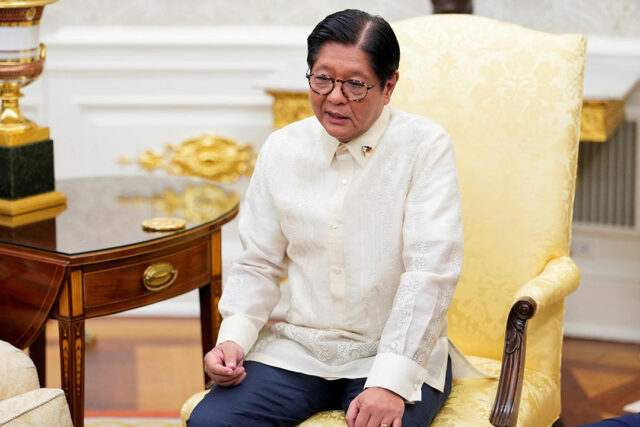
Philippine President Ferdinand Marcos Jr. meets with US President Donald Trump (not pictured), in the Oval Office at the White House in Washington, DC, July 22, 2025. — REUTERS/KENT NISHIMURA

PHILIPPINE ASSETS are under pressure after a Cabinet revamp by President Ferdinand R. Marcos, Jr. to stem a corruption scandal rocking his government, adding another layer of uncertainty.

Most of the country’s dollar bonds fell, with the note maturing in 2035 sliding to the lowest since Sept. 5, according to data compiled by Bloomberg. The peso on Tuesday slipped 5.4 centavos to close at P58.985 against the dollar, while the benchmark stock index, already trading at multi-year lows, dropped 0.38% or 22.46 points to 5,756.66.

The Cabinet reshuffle comes as two Cabinet secretaries resigned amid allegations of corruption, marking the first direct hit on Mr. Marcos’ government from the multibillion-dollar flood graft scandal.

Finance Secretary Ralph G. Recto will become executive secretary, replacing one of the departing secretaries. Frederick D. Go will be the nation’s finance chief. Budget Undersecretary Rolando U. Toledo will step up to become officer-in-charge of the agency. It’s the second major reshuffle in Marcos’ Cabinet since he took office in 2022.

This is what analysts and economists say:

Miguel Chanco, chief emerging Asia economist at Pantheon Macroeconomics:

“It sounds from the reporting of this reshuffle that it was instigated by more heads rolling over from the fallout of the ICI’s (Independent Commission for Infrastructure ) anti-corruption drive, which will continue to keep political event risk fairly elevated in the short run, impinging on market sentiment with regards to Philippine assets.

“It’s obviously far too soon to say what the new Finance secretary will bring to the role vis-a-vis his predecessor, who remains in government in another capacity. What’s undeniable, though, is that the post-Covid fiscal consolidation plan continued to slip behind schedule under Recto’s stewardship, so any change — at all — would be welcome, as the status quo clearly wasn’t working.”

Philip McNicholas, Asia sovereign strategist at Robeco in Singapore:

“The reshuffle is interesting. It is unlikely to help sentiment, and the Philippines is a market that is running sizeable twin deficits. In that light, a negative response makes sense. President Marcos may be trying to minimize disruption to his broader macro agenda beyond the resignations by keeping key personnel within his inner circle. It is worth noting that the President initiated these investigations to investigate the misuse of public funds. So, at the margin, one could see it as a positive for governance.

“The market reaction strikes me as a knee-jerk response to the injection of uncertainty over who the possible replacements might be.”

Wee Khoon Chong, senior APAC market strategist at BNY:

“The reshuffling of cabinet is likely to add an additional layer of uncertainties and likely to exert downward pressure on the Philippine peso in the near-term.

“It raises the probability of a more aggressive rate cut by the central bank at December’s meeting. We are looking for 25 bps and won’t rule out for a possible 50 bps for a strong boost to stabilize sentiment.”

Matthew Ryan, head of market strategy at Ebury Partners Ltd:

“In the near term, we suspect that the ensuing uncertainty stemming from the re-shuffle could provide a mild drag on growth, particularly should it trigger a loss of investor and business confidence and weaker government spending. We could see an improvement in medium-term growth, however, should Go’s emphasis on business reforms and deficit reduction lead to increased FDI flows, lower borrowing costs and an improvement in the country’s credit ratings.

“Going forward, we may see a mild appreciation in the peso should Frederick Go maintain his track record of attracting foreign direct investment and improving trade corridors, while bringing down inflation and bolstering the Philippines’ credit position. This will, however, depend on the success of his reforms, and his ability to detract attention away from the recent corruption controversies.”

Toby Allan Arce, analyst at Globalinks Securities & Stocks:

“The latest Cabinet reshuffle in the Marcos administration, set against the backdrop of a widening corruption scandal tied to the flood control anomaly, underscores a moment of heightened uncertainty for the Philippine stock market. Investor sentiment typically weakens when political risk rises, particularly when issues touch the core of governance, transparency, and fiscal accountability.”

“The appointment of Frederick Go as Finance Secretary and the repositioning of Ralph Recto may help steady the leadership structure, but transitions of this magnitude often take time to dissipate uncertainty, especially when they occur amid an active investigation with significant public scrutiny. The peso’s weakness, sluggish third-quarter growth, and the stock market’s decline all reflect how investors are already pricing in governance-related risks.”

Jash Matthew Baylon, analyst at First Resources Management and Securities

“We think that the recent Cabinet reshuffle may affect the market as it may bring uncertainty on possible imposition of new policies affecting our economy as the reshuffling affects the Department of Finance.

“Investors may also remain on the sidelines while volume will still be subdued due to current political risk and instability, implying weak confidence.”

SB Equities, Inc.:

“The Philippines’ benchmark stock index may see a relief rally if selling pressure remains tepid.” — Bloomberg News

Business groups urge gov’t to return PDIC dividend remittances

BW FILE PHOTO

BUSINESS GROUPS are pressing the Department of Finance and Congress to return the Philippine Deposit Insurance Corp.’s (PDIC) dividend remittances to the national Treasury, saying the funds should remain dedicated to protecting depositors’ savings.

“Returning the remitted funds will reaffirm that the resources of the PDIC are reserved exclusively for their intended purpose — to safeguard the savings of the Filipino people and to uphold confidence in the financial system,” the Financial Executives Institute of the Philippines (FINEX), Institute of Corporate Directors (ICD), Makati Business Club (MBC), Philippine Chamber of Commerce and Industry (PCCI)  and Philippine Finance Association (PFA) said in a statement on Tuesday.

The groups were referring to the P107 billion remitted by PDIC to the Treasury as “unrestricted retained earnings,” counted as part of the government’s dividend haul from government-owned and -controlled corporations in 2024. The Philippine Health Insurance Corp. (PhilHealth) last year also remitted P60 billion in excess funds under the same policy.

In September, former Finance Secretary Ralph G. Recto said PhilHealth’s remitted amount would be restored as “savings” in the proposed 2026 national budget.

“The government has since recognized the importance of keeping those resources within the healthcare system… The same principle should apply to the PDIC,” the groups said. “Funds accumulated to insure the savings of Filipino depositors must remain dedicated to their original purpose.”

They urged the government to ring-fence the deposit insurance fund (DIF) to ensure it is excluded from future dividend collections and fiscal transfers.

While officials have said the DIF remains untouched — and that its ratio of 7.83% to estimated insured deposits is above the 6.5% target — the act of transferring any part of PDIC’s reserves raises serious concerns, the groups said.

They added that PDIC should publish clear disclosures on the fund’s present and projected capacity to withstand systemic shocks.

“The Philippine banking sector continues to demonstrate resilience and discipline amid economic headwinds,” they said. “However, public confidence remains its most valuable asset. The PDIC must remain independent, transparent and sufficiently capitalized to perform its core mandate of protecting depositors.” — Aaron Michael C. Sy

SEC approves Blockshoals for fintech sandbox testing

BW FILE PHOTO

THE SECURITIES and Exchange Commission (SEC) has approved Blockshoals Technologies, Inc. to test its financial products and services under the SEC’s regulatory sandbox, as part of the regulator’s drive to support innovation in the financial sector.

At its Nov. 12 meeting, the Commission En Banc granted the domestic fintech firm in-principle approval to join the sandbox, pending the fulfillment of some remaining requirements, the SEC said in a statement on Tuesday.

The SEC StratBox, established under SEC Memorandum Circular No. 9, Series of 2024, is a regulatory sandbox that allows firms to test “innovative” products or services in a live, controlled environment before making them widely available.

Testing in the StratBox lasts 24 months but may be shortened or extended after the first year, based on periodic reviews.

Under this framework, the SEC can provide regulatory relief to sandbox participants by modifying or waiving licensing, registration, compliance, or other regulatory requirements that would normally apply during the testing phase.

“The SEC continues to review other applications, and remains open to receiving more proposals for its regulatory sandbox, as part of the Commission’s commitment to advancing innovations in the capital market,” the commission said.

With Blockshoals’ approval, there are now four entities actively testing products or services in the SEC StratBox: two focus on US equities offerings, while one involves tokenized real estate. — Alexandria Grace C. Magno

Vatican returns to Canada artifacts connected to Indigenous people

AERIAL VIEW of St. Peter’s Basilica, Vatican City — ALAN LIU-UNSPLASH

VATICAN CITY — The Vatican on Saturday returned 62 artefacts connected to the Indigenous peoples of Canada to the country’s Catholic bishops, offering what it called “a concrete sign of dialogue, respect and fraternity,” a statement said.

Pope Leo gifted the objects to the Canadian Conference of Catholic Bishops (CCCB) following a meeting with its representatives including its president, Bishop Pierre Goudreault.

“The CCCB will proceed, as soon as possible, to transfer these artefacts to the National Indigenous Organizations (NIOs). The NIOs will then ensure that the artefacts are reunited with their communities of origin,” the Canadian bishops said.

Catholic missionaries sent the artefacts to Rome on the occasion of a 1925 exhibition held by Pope Pius XI that displayed more than 100,000 objects. Nearly half of them later formed a new Missionary Ethnological Museum and were transferred to the Vatican Museums in the 1970s.

In 2022, the late Pope Francis issued a historic apology to Canada’s Indigenous peoples ahead of his visit to the country for the Catholic Church’s role in residential schools where many children suffered abuse and were buried in unmarked graves.

The repatriation of the native artefacts held at the Vatican Museums was also part of the talks between the Church and the Indigenous leaders.

Anita Anand, the foreign minister of Canada, welcomed the Vatican’s move.

“This is an important step that honours the diverse cultural heritage of Indigenous peoples and supports ongoing efforts toward truth, justice, and reconciliation,” she wrote on X. — Reuters

The unique nature of Philippine employment contracts

STOCK PHOTO | Image by Pch.Vector from Freepik

Philippine employment contracts cannot be treated in the same manner as other civil or commercial contracts. To do so may expose one to massive and unexpected liability down the line.

Employment contracts are not only governed by the ordinary rule of negotiation and autonomy, but they are a legal hybrid, a volatile instrument where the State may choose to intervene. This results in an asymmetrical playing field which is constantly tilted in the worker’s favor due to the constitutional mandate of “protection to labor.”

Thus, an employer must understand the volatility of an employment contract, especially the various phases: from perfection, through its active term, and even the enforcement of certain clauses even after the employment has been severed.

For ordinary civil contracts, if a party backs out before the delivery of a service, the remedy may be a case for breach of contract before the regular courts. However, this is not the case for employment contracts in the Philippines.

The Supreme Court’s landmark ruling in Aragones v. Alltech Biotechnology Corp. (G.R. No. 251736, April 2, 2025) held that an employer-employee relationship exists the moment the candidate accepts and signs the job offer. The relationship is legally established immediately upon mutual consent, and the agreed-upon start date is merely a suspensive period.

In Aragones, the employer unilaterally withdrew the offer after the candidate had already accepted, citing redundancy. This was rejected by the Supreme Court declaring that the relationship was already perfected under the protective umbrella of the Labor Code. In this case, the employer’s withdrawal of the job offer was not treated as a simple breach of contract but was ruled an illegal dismissal. Consequently, a candidate who never set foot in the workplace, never clocked in, and never performed a single task can now successfully demand all forms of liabilities or damages associated with illegal dismissal. This includes backwages from the intended start date, damages, so long as the attendant circumstances are present, and attorney’s fees. Thus, a job offer may carry the full burden of security of tenure the moment it is signed.

During the active term of the employment contract, the State is a perpetual party that may impose changes or amendments to the contract. This is perhaps the most unique feature and greatest source of instability for long-term business planning.

Any new law, Department of Labor and Employment (DoLE) regulation, or Supreme Court ruling that is more favorable to labor is immediately and retroactively incorporated into existing employment contracts. While the terms may have been agreed upon yesterday, those terms may be nullified by a new government issuance today.

This means that an employment contract is fluid, and compliance is an ongoing, moving target, not a one-time legal check. Businesses must factor in new mandatory benefits, wage hikes, or holiday declarations, which may lead to unexpected cost surges in existing payroll budgets. Moreover, unforeseen stipulations such as new rules on work-from-home arrangements, or new types of leaves are instantly integrated in these contracts, which immediately changes the employee’s rights and employer’s obligations. Even a single Supreme Court decision, like Aragones, can redefine an existing relationship, instantly turning a standard HR practice into a statutory violation, even if that practice was considered sound before the decision came out. The employment contract shifts gears again after the relationship formally ends, specifically when an employer attempts to enforce post-employment restrictions, such as Non-Compete Agreements, Non-Disclosure, and Non-Solicitation clauses. These are legally recognized under Philippine contracts law as long as they adhere to the principle of contractual autonomy and are not contrary to public policy. It is critical to note that the enforcement of these covenants falls under the realm of Civil Law, not Labor Law, because the breach occurs after the employer-employee relationship has ceased, and the resulting claim is typically one for damages.

Jurisprudence dictates that the restriction should be reasonable and not greater than necessary to protect the employer’s legitimate business interests. Simply wanting to prevent a former employee from competing is not a sufficient justification. A non-compete clause must be tied to a specific, identifiable business interest.

It has been stressed that the restraint may not be unduly harsh or oppressive in curtailing the employee’s legitimate efforts to earn a livelihood, and must be reasonable in light of sound public policy. The clause must not be so broad that it effectively prevents the employee from earning a living in their profession. The prohibition must be limited to the specific line of business in which the employee was directly engaged. A clause that imposes a blanket ban on an entire industry is likely to be struck down as an unreasonable restraint of trade.

In assessing the enforceability of a restriction, the court must consider whether its enforcement would be injurious to the public or cause undue hardship to the employee, and whether the restraint imposed would be greater than necessary to protect the employer. Thus, the court must have evidence relating to the legitimate interests of the employer that might be protected, in terms of time, space, and the types of activity proscribed.

The duration of the restriction must not be indefinite or excessively long. Time periods of one or two years are generally upheld, with one year often considered a local best practice for most industries. A five-year non-compete clause was struck down by the Supreme Court as excessive.

A provision on territorial limitation is necessary to guide an employee as to what constitutes a violation of a restrictive covenant and whether the geographic scope is co-extensive with that in which the employer is doing business. In considering a territorial restriction, the facts and circumstances surrounding each case must be considered. The restriction must be limited to the area where the employer genuinely operates or has a legitimate business presence. While nationwide bans are generally viewed with suspicion, they may be upheld if the employee’s responsibilities were also nationwide.

Philippine employment contracts demand precision, and not generic templates. An employer must consider all three phases, from perfection, the active term, and the post-employment stage to mitigate risks. An employer who fails to consider all existing principles runs the risk of having a contractual clause struck down, or worse, being found liable for non-compliance with unanticipated changes introduced by new government issuances. Employers must manage the risk by mastering the volatility of this unique legal document.

The views and opinions expressed in this article are those of the author. This article is for general informational and educational purposes only and not offered as and does not constitute legal advice or legal opinion.


Martin Luigi G. Samson is a senior associate of the Angara Abello Concepcion Regala & Cruz Law Offices (ACCRALAW), Davao Branch.

(6382) 224-0996

OpenAI backs startup that focuses on blocking AI-enabled bioweapons

REUTERS

SAN FRANCISCO — ChatGPT maker OpenAI on Thursday said it will invest in a startup focused on blocking bad actors from creating biological weapons powered by artificial intelligence (AI).

OpenAI is the lead investor in a $15-million seed round in Red Queen Bio, which is trying to make sure the AI industry’s defenses are growing at least as rapidly as those who seek to exploit models to harm humans, the startup’s co-founder Hannu Rajaniemi said.

The investment is part of OpenAI’s broader effort to invest in startups that seek to contain the risks posed by AI. Last month, the company backed Valthos, a New York-based biosecurity software startup. OpenAI Chief Strategy Officer Jason Kwon said OpenAI would consider investing in other startups focused on similar problems.

“We want to increase the overall resilience of the overall ecosystem,” Mr. Kwon said in an interview. “One of the best ways you can deal with the risk mitigation is more technology.”

Researchers and safety advocates say AI technology could soon accelerate drug development or design new vaccines. But those same capabilities could make it easier for bad actors to develop new and powerful biological weapons.

Red Queen Bio was spun out of Helix Nano, a clinical-stage mRNA therapeutics company that has been using AI more in drug design. Helix Nano has also worked with OpenAI to create tests to determine AI’s biorisks, Mr. Kwon said.

OpenAI CEO Sam Altman and board member Nicole Seligman, who had previously invested in Helix Nano, will receive shares in Red Queen Bio as part of the transaction. Mr. Kwon was indirectly an investor through Y Combinator, a Silicon Valley startup incubator. His stake is valued at less than $2,500, OpenAI said.

The executives did not take part in approving OpenAI’s investment in Red Queen Bio, a company spokesperson said. OpenAI’s chief compliance officer and unconflicted members of OpenAI’s board reviewed and approved the investment.

Red Queen Bio will rely on AI models as well as more traditional laboratory experiments to uncover new risks and develop new defenses. The startup’s name comes from a scene in Lewis Carroll’s book, Through the Looking-Glass.

“It was clear that biological capabilities were advancing faster than we anticipated,” Mr. Rajaniemi said. “We felt we needed to start developing defenses.”

Other investors in Red Queen Bio are Cerberus Ventures, Fifty Years and Halcyon Futures. — Reuters

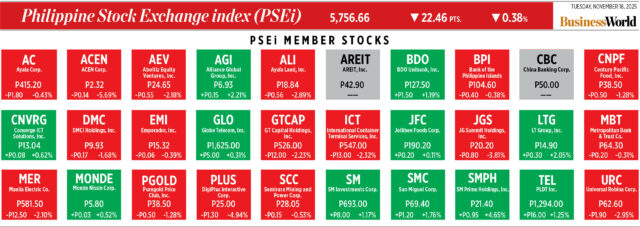
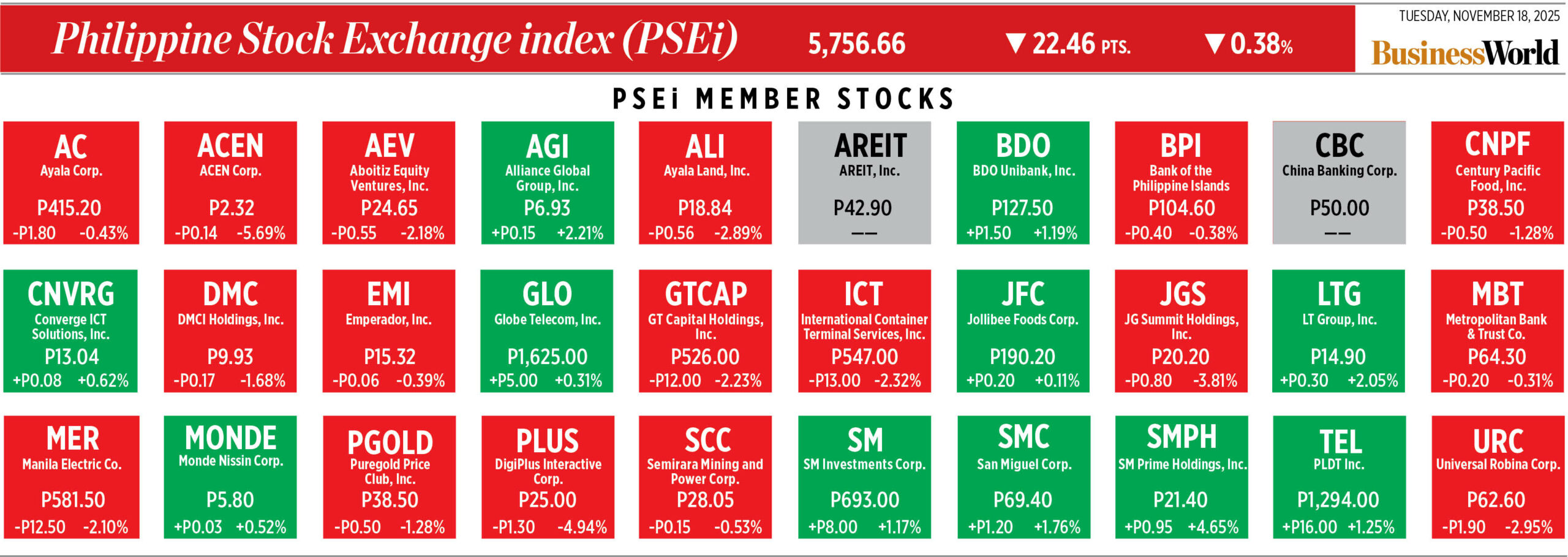
How PSEi member stocks performed — November 18, 2025

Here’s a quick glance at how PSEi stocks fared on Tuesday, November 18, 2025.


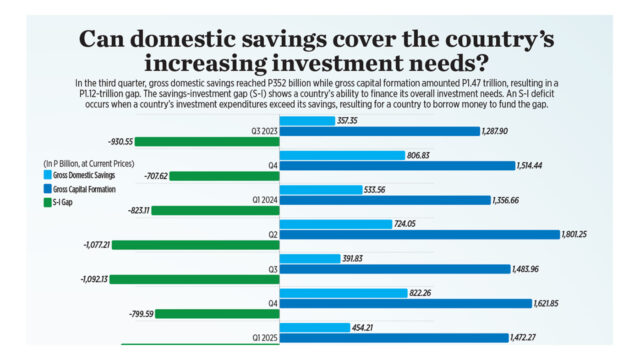
Can domestic savings cover the country’s increasing investment needs?

In the third quarter, gross domestic savings reached P352 billion while gross capital formation amounted P1.47 trillion, resulting in a P1.12-trillion gap. The savings-investment gap (S-I) shows a country’s ability to finance its overall investment needs. An S-I deficit occurs when a country’s investment expenditures exceed its savings, resulting for a country to borrow money to fund the gap.

Can domestic savings cover the country’s increasing investment needs?