Home Blog Page 1718

China state firms vow to boost share purchases to calm markets

REUTERS

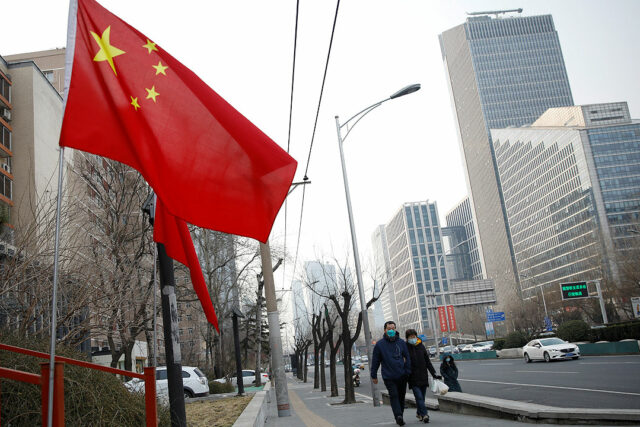
BEIJING – Several Chinese state holding companies vowed on Tuesday to increase share investment while a slew of listed companies announced share buybacks as Beijing stepped up efforts to stabilize a stock market rocked by U.S. tariff woes.

The announcements by China Chengtong Holdings Group SASACA.UL and China Reform Holdings Corp come a day after state fund Central Huijin said it would increase share holdings to steady markets.

China’s stock benchmark .SSEC rebounded in early trade on Tuesday, clawing back some of the 7% plunge from Monday, which was fueled by trade war and global recession fears.

Washington last week imposed extra tariffs of 34% on China, which then fired back with its own 34% levies on U.S. imports.

Chengtong said its investment units would increase holdings in stocks and exchange-traded funds (ETFs) to safeguard market stability.

“We are firmly optimistic toward the growth prospects of China’s capital markets,” the state investment firm said in a statement, vowing to support high-quality growth of Chinese listed companies.

China Reform Holdings Corp, also known as Guoxin, said in a separate statement that an investment unit will increase holdings in tech companies, state firms and ETFs, tapping a relending scheme for share buybacks. Initial investment will be 80 billion yuan ($10.95 billion).

Another state holding company, China Electronics Technology Group, said it would boost share buybacks in listed units to bolster investor confidence.

Meanwhile, a growing number of listed companies unveiled plans to buy back shares.

Oil giant Sinopec 600028.SS said its state-owned parent plans to buy its China- and Hong Kong-listed shares worth at least 2 billion yuan over the next 12 months to demonstrate “confidence in future growth prospects.”

Orient Securities 600958.SS said it is studying plans to buy back shares in a bid to express optimism and actively protect shareholder interest.

Other listed firms that unveiled share buy-back plans include Intco Recycling Resources Co 688087.SS and Spring Airlines Co 601021.SS. China Pacific Insurance (Group) said it would contribute to market stability by increasing investment in strategic sectors.

State fund Huijin said on Tuesday it has ample liquidity and smooth financing channels to help it suppress abnormal market volatility in its role as market “stabilizer”.

“Central Huijin has adequate confidence and competence to resolutely maintain smooth operation of the capital market,” Huijin said in a statement.

“We will act decisively when needed.”

Separately, China’s central bank said on Tuesday it supported Central Huijin Investment increasing its holdings in stock funds. — Reuters

South Korea to hold snap presidential election on June 3

SOUTH KOREAN soldiers salute in front of a huge national flag in Pohang, South Korea, Sept. 30, 2021. — LEE JIN-MAN/POOL VIA REUTERS

SEOUL – South Korea’s government has approved June 3 as the date for a snap presidential election, following the removal from office of Yoon Suk Yeol last week over his short-lived declaration of martial law.

The cabinet agreed the date on Tuesday after discussions with the National Election Commission since it needed to approve a public holiday for the election.

Yoon was removed by the Constitutional Court for violating his official duty by issuing the martial law decree on December 3 and mobilizing troops in an attempt to halt parliamentary proceedings.

The law requires a new presidential election within 60 days if the position becomes vacant.

South Korea has faced months of political turmoil since Yoon stunned the country by declaring martial law, triggering his impeachment by parliament and the impeachment of acting leader Prime Minister Han Duck-soo.

Han’s impeachment was later overturned by the Constitutional Court and he will continue in the role of acting president until the election.

The power vacuum at the top of South Korea’s government has overshadowed Seoul’s efforts to deal with the administration of U.S. President Donald Trump at a time of spiraling U.S. tariffs and slowing growth in Asia’s fourth-largest economy.

Lee Jae-myung, the populist leader of the liberal Democratic Party who had lost to Yoon by a razor-thin margin in 2022, is a clear front-runner but faces legal challenges of his own under multiple trials for charges including violating the election law and bribery.

The conservatives have a wide-open field of candidates.

According to a Gallup poll published on April 4, 34% of respondents supported Lee as the next leader, 9% backed conservative Labour Minister Kim Moon-soo, 5% former ruling party leader Han Dong-hoon, 4% Daegu mayor Hong Joon-pyo, and 2% Seoul mayor Oh Se-hoon. — Reuters

Tariff turmoil could undercut Trump’s buyout offers to federal workers

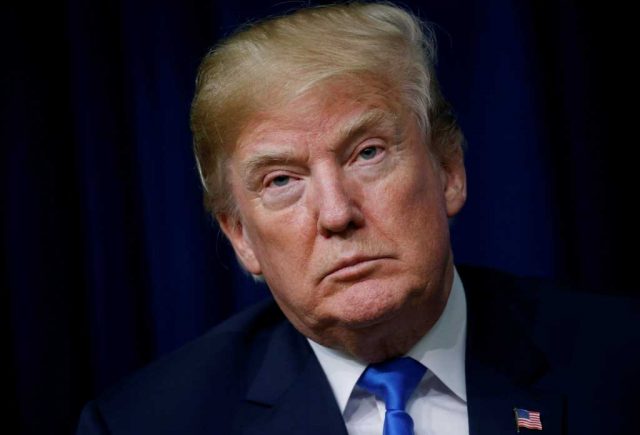
U.S. President Donald Trump — REUTERS/LEAH MILLIS/FILE PHOTO

WASHINGTON – A host of U.S. federal agencies have unveiled fresh buyout offers to slash their workforce, renewing a voluntary program that preceded the first wave of mass firings led by Elon Musk’s Department of Government Efficiency.

About 75,000 federal workers accepted the first offer, but some economists queried how many would take it this time, after President Donald Trump sent world markets into a downward spiral and raised fears by unveiling sweeping new tariffs last week.

The treasury department, defense department and human resources agency the Office of Personnel Management, are among those that recently unveiled a new version of the “deferred resignation program”.

The offer gives workers the chance to go on leave with pay until September before formally exiting their roles.

On Monday, the Department of Homeland Security asked non-law enforcement employees to consider voluntarily resigning, retiring or taking a buyout of as much as $25,000 in a new voluntary program, an internal email showed.

DOGE, the White House, Treasury, Defense and OPM did not immediately respond to requests for comment.

With the market uncertainties induced by Mr. Trump’s tariffs expected to chill private-sector hiring, however, federal workers would be less likely to take the offers, said Peter Morici, an economist at the University of Maryland.

“It will be harder to make the transition to the private sector if we’re in the depths of a recession,” Mr. Morici said in an interview.

Similar views were expressed by participants in a Reddit group chat that has become a lifeline for federal workers since the Musk-led purge began.

They warned workers would be entering a potentially much more unfriendly job market as companies grapple with the fallout from Mr. Trump’s announcement.

In an email on Friday, Chuck Ezell, the acting director of OPM, told staff the new offer “provides employees the option to take paid administrative leave through Sept. 30, 2025.”

He described it “as a tool to avoid reductions in force,” the formal term for mass layoffs.

The Department of Labor and the General Services Administration, which manages the government’s real estate portfolio, have also announced similar programs.

The Labor Department did not immediately respond to a request for comment, while a GSA spokesman said the agency’s new offer also applied to workers who had already been identified for dismissal.

The program is one of many efforts to dramatically reduce the size and costs of the federal government. The latest buyout offer takes a page from the so-called fork in the road email sent on January 28, offering a similar program to all 2 million civilian full-time federal workers.

That email was followed by DOGE-led mass firings of tens of thousands of probationary workers, although a judge has since forced the administration to rehire them, ruling that their terminations were probably illegal.

DOGE is now scything through departments in a second wave of large-scale layoffs. — Reuters

Trump threatens to hike China tariffs further as market plunge continues

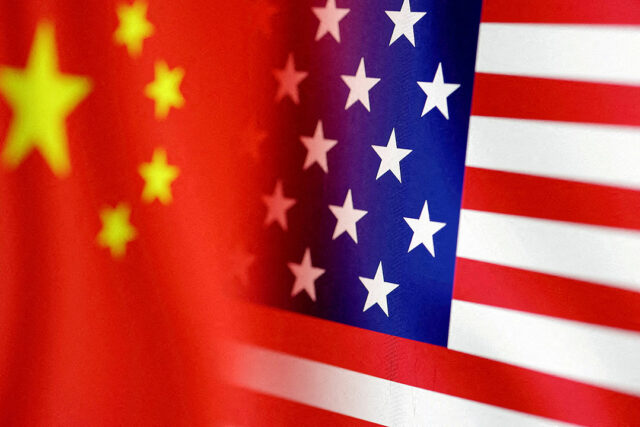
US and Chinese flags are seen in this illustration. — REUTERS

WASHINGTON/BRUSSELS – A global trade war touched off by US President Donald Trump’s sweeping tariffs escalated further on Monday, as Trump threatened to increase duties on China and the European Union proposed counter-tariffs of its own.

Financial markets across the globe posted a third day of losses as investors worried that steep trade barriers around the world’s largest consumer market could lead to a recession. The S&P 500 closed lower after a rollercoaster session in which it touched its lowest level in more than a year.

Trump said the tariffs – a minimum of 10% for all US imports, with targeted rates of up to 50% – would help the United States recapture an industrial base that he says has withered over decades of trade liberalization.

“It’s the only chance our country will have to reset the table. Because no other president would be willing to do what I’m doing, or to even go through it,” he told reporters at the White House. “Now, I don’t mind going through it because I see a beautiful picture at the end.”

Trump spoke hours after he ratcheted up a confrontation with China, the world’s No. 2 economy.

Trump said he would impose an additional 50% duty on US imports from China on Wednesday if it did not withdraw the 34% tariffs it had imposed on US products last week. Those Chinese tariffs had come in response to 34% “reciprocal” duties announced by Trump.

Beijing responded with defiance. Trump’s threat was a “typical move of unilateralism, protectionism and economic bullying,” Chinese embassy spokesperson Liu Pengyu said.

“We have stressed more than once that pressuring or threatening China is not a right way to engage with us,” he added. “China will firmly safeguard its legitimate rights and interests.”

The European Commission, meanwhile, proposed counter-tariffs of 25% on a range of US goods, including soybeans, nuts and sausages, though other potential items like bourbon whiskey were left off the list, according to a document seen by Reuters.

Officials said they stood ready to negotiate a “zero for zero” deal with Trump’s administration. “Sooner or later, we will sit at the negotiation table with the US and find a mutually acceptable compromise,” EU Trade Commissioner Maros Sefcovic said at a news conference.

The 27-member bloc is struggling with tariffs on autos and metals already in place, and faces a 20% tariff on other products on Wednesday. Trump has also threatened to slap tariffs on EU alcoholic drinks.

US Treasury Secretary Scott Bessent met with Trump in Florida on Sunday, Politico reported, to urge him to emphasize striking trade deals with partners in order to reassure the markets that there is an endgame to the US strategy.

Trump said his administration would open trade talks with Japan, one of Washington’s closest allies in Asia, and administration officials say dozens of other countries have reached out as well with the hope of heading off the tariffs as high as 50% due to take effect on Wednesday.

The back-and-forth injected further turbulence into global financial markets, which have fallen steadily since Trump’s announcement.

Trump administration officials say the president is following through on a promise to reverse decades of trade liberalization that he believes has undercut the US economy.

“He’s doubling down on something that he knows works, and he’s going to continue to do that,” White House economist Kevin Hassett said on Fox News. “But he is also going to listen to our trading partners, and if they come to us with really great deals that advantage American manufacturing and American farmers, I’m sure he’ll listen.”

China’s retaliatory levies are the firmest response yet to Trump’s announcement, which has been met with bewildered condemnation from other leaders.

After stocks in mainland China and Hong Kong cratered on Monday, China’s sovereign fund stepped in to try to stabilise the market.

Shares in Taiwan plummeted almost 10% – the biggest one-day percentage fall on record.

Wall Street leaders issued warnings on US tariffs, with JPMorgan Chase JPM.N CEO Jamie Dimon saying they could have lasting negative consequences, while fund manager Bill Ackman said they could lead to an “economic nuclear winter.”

Ackman is one of a handful of Trump supporters who questioned the strategy. Billionaire Elon Musk, who is leading Trump’s effort to slash government spending, called for zero tariffs between the US and Europe over the weekend.

On Monday, Trump trade adviser Peter Navarro dismissed the Tesla CEO as a “car assembler.”

NEW REALITY OR NEGOTIATING PLOY?
Investors and political leaders have struggled to determine whether Trump’s tariffs are permanent or a pressure tactic to win concessions from other countries.

Some in the EU worry that a forceful response risks even more blowback on European exporters of everything from French cognac and Italian wine to German cars.

Volkswagen’s Audi is holding back cars that arrived in US ports after April 2 because of the newly imposed 25% auto tariff. Aircraft parts supplier Howmet Aerospace may halt some shipments if they are impacted by tariffs, according to a letter seen by Reuters.

Some governments in Asia have signalled a willingness to engage.

Taiwanese President Lai Ching-te on Sunday offered zero tariffs as the basis for talks, while an Indian government official said Delhi does not plan to retaliate.

Investors are now betting that the growing risk of recession could prompt the US Federal Reserve to cut rates as early as next month. Trump repeated his call for the central bank to lower rates on Monday, but Fed chief Jerome Powell has so far indicated he is in no rush. — Reuters

Philippines’ Kanlaon volcano eruption resumes, says seismology agency

PHILSTAR FILE PHOTO/ROB ILUMBA UGBINADA

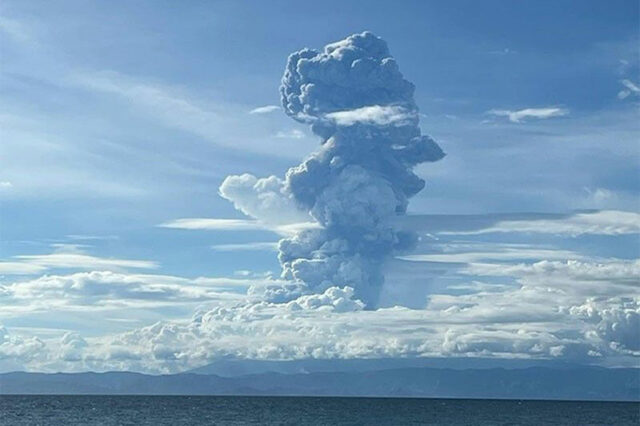
MANILA – A volcano in the central Philippines erupted on Tuesday morning, ejecting an ash-laden plume reaching around 4,000 meters (2.5 miles) high, the seismology agency said.

The Philippine Institute of Volcanology and Seismology (Phivolcs) said alert level 3 remained in effect over Mount Kanlaon, where it has been since December 2024 after an earlier explosive event.

Level 3, on a scale of 5, means there is an increased risk of lava flows and the potential for a hazardous eruption within weeks.

Mount Kanlaon, an active volcano straddling the Southeast Asian country’s central provinces of Negros Occidental and Negros Oriental, is one of two dozen active volcanoes in the Philippines.

Phivolcs director Teresito Bacolcol told DWPM radio there is a possibility the alert level could either be raised or lowered in the coming days, depending on how quickly magma rises to the surface.

A faster ascent could trigger a more intense eruption, prompting an escalation to alert level 4, while a slowdown or pause in magma movement may lead to a downgrade to alert level 2, Bacolcol said.

The Southeast Asian nation is located on the Pacific “Ring of Fire” where volcanic activity and earthquakes are common. — Reuters

Semirara Mining and Power Corp. to hold Annual Meeting of Stockholders on May 5 via remote communication

Notice of Annual Stockholders’ Meeting

Please be notified that the Annual Meeting of Stockholders of Semirara Mining and Power Corporation (the “Corporation”) will be held on May 5, 2025,1 Monday at 10:00 a.m. and will be conducted by remote communication at https://www.semirarampc.com/asm with the following agenda:

Agenda

  1. Call to Order and Proof of Notice of Meeting
  2. Certification of Quorum
  3. Chairman’s Message
  4. Approval of Minutes of Previous Stockholders’ Meeting held on May 6, 2024
  5. Presentation and Approval of President’s Report
  6. Presentation and Approval of Audited Financial Statements for 2024
  7. Ratification of the Acts of the Board of Directors and Management from the Date of the Last Annual Stockholders’ Meeting up to the Date of this Meeting
  8. Election of Directors for 2025-2026
  9. Approval of Appointment of Independent External Auditor
  10. Other Matters
  11. Adjournment

Record Date

Stockholders of record, as of March 14, 2025 will be entitled to notice of, and vote at the said annual meeting or any adjournment or postponement thereof.

Registration and Voting

Stockholders may attend the meeting remotely by registering at https://www.semirarampc.com/asm beginning April 18 until April 28, 2025. Only stockholders of record as of March 14, 2025 will be entitled to vote at the said meeting. Stockholders may vote in absentia using the online voting portal at https://www.semirarampc.com/voting, or by appointing the Chairman of the meeting as their proxy. The voting portal will be accessible beginning April 21, 2025, until 12:00 noon of May 5, 2025.

The following documents are required to be transmitted by email to corporatesecretary@semirarampc.com upon registration:

CERTIFICATED SHARES:

  1. Individual Stockholder
    1. Valid Government-Issued ID or passport
  2. Corporate Stockholder
    1. Secretary’s Certificate designating its attorney-in-fact and proxy
    2. Valid Government-Issued ID or passport of the representative

UNCERTIFICATED OR SCRIPLESS SHARES:

  1. Individual Stockholder
    1. Broker’s Certification stating the stockholder’s name and the number of shares held
    2. Valid Government-Issued ID or passport
  2. Corporate Stockholder
    1. Broker’s Certification stating the stockholder’s name and the number of shares held
    2. Secretary’s Certificate designating its attorney-in-fact and proxy
    3. Valid Government-Issued ID or passport of the representative

The requirements and procedure for electronic voting in absentia and participation by remote communication is set forth in Schedule 4 of the Definitive Information Statement published on the Company’s Website and on PSE Edge.

Stockholder Question

Questions may be sent prior to the meeting at corporatesecretary@semirarampc.com no later than April 28, 2025, which shall be limited to the items in the Agenda. Some questions may be addressed while others will be replied to via email.

Proxy

Duly accomplished proxy forms must be submitted on or before 5:00 p.m. on April 25, 2025 to the Office of the Corporate Secretary at 2nd Floor DMCI Plaza, 2281 Don Chino Roces Avenue, Makati City 1231, Philippines or by email at corporatesecretary@semirarampc.com. Validation of proxies is set on April 30, 2025, at 10:00 a.m.


(Sgd.) JOHN R. SADULLO 

           Corporate Secretary 

       For the Board of Directors


1 Should the date of the annual stockholders’ meeting (ASM) be declared a legal holiday, the ASM will be held on the next succeeding business day at 10:00 a.m. pursuant to Section 1, Article I of SMPC’s By-Laws, as amended.


Spotlight is BusinessWorld’s sponsored section that allows advertisers to amplify their brand and connect with BusinessWorld’s audience by publishing their stories on the BusinessWorld Web site. For more information, send an email to online@bworldonline.com.

Join us on Viber at https://bit.ly/3hv6bLA to get more updates and subscribe to BusinessWorld’s titles and get exclusive content through www.bworld-x.com.

DTI mulls lower tariffs on US goods

BW FILE PHOTO

By Justine Irish D. Tabile, Reporter

THE DEPARTMENT of Trade and Industry (DTI) said on Monday that it is open to lowering tariffs on US goods in response to US President Donald J. Trump’s imposition of a 17% reciprocal tariff on Philippine goods.

“We are really going to do that… Actually, we, the economic team, are going to meet soon,” Trade Secretary Ma. Cristina A. Roque told reporters on Monday.

She said the Philippines is “definitely” looking at reducing the tariffs on US products but noted that the economic team will discuss the extent of what the Philippines can offer.

Ms. Roque’s statement came after US and Vietnam leaders agreed to discuss a “deal to remove tariffs” after a “very productive phone call” on April 4, Reuters reported.

Ms. Roque said the Philippine government is also looking at a collective response with other Association of Southeast Asian Nations (ASEAN) member-countries to address the higher US tariffs.

Malaysia’s Prime Minister Anwar Ibrahim on Sunday called for a united ASEAN response to the US tariffs. He said Malaysia, as ASEAN chair, is ready to lead efforts to “ensure ASEAN’s collective voice is heard clearly and firmly on the international stage.”

The US slapped ASEAN countries with some of the highest tariffs, which will take effect on April 9. Cambodia is facing a 49% tariff, followed by Laos (48%), Vietnam (46%), Myanmar (44%), Thailand (36%), Indonesia (32%), Malaysia (24%), and Brunei (24%).

Compared with its regional neighbors, the Philippines’ tariffs are among the lowest, only second to Singapore, which was imposed a baseline rate of 10%.

Malacañang on Monday said the government is taking action to reverse the effects of the 17% reciprocal tariff, but declined to give details.

“I am aware that actions will be taken that will be beneficial for our country,” Palace Spokesperson Clarissa A. Castro told a news briefing.

In 2024, the Philippines imported $8.17 billion worth of commodities from the US, and exported $12.14 billion worth of goods to the US, data from the statistics agency showed. This brought the trade surplus to $3.97 billion last year.

The US is a major source of agricultural imports, representing approximately 20% of total Philippine imports.

Earlier, the DTI said it targets to engage the US in a discussion in pursuit of a mutually beneficial trade.

In particular, Ms. Roque said that she plans to facilitate enhanced market access for key US export interests, including automobiles, dairy products, frozen meat, and soybeans, within the framework of a bilateral free trade agreement.

‘CAUTIOUS’
Meanwhile, Philippine manufacturing firms are likely to be more cautious amid uncertainty arising from Mr. Trump’s tariff policies, an electronics firm executive said.

“Maybe after today, we’ll be more cautious moving forward this second and third quarter… There’s a lot of wait-and-see attitude amongst manufacturing and companies on the impact of the global tariff,” EMS Group Chairman and Chief Executive Officer Ferdinand “Perry” A. Ferrer told BusinessWorld during a phone call on April 3.

EMS Group is a complete electronic, semiconductor and medical subcontracting group that offers technology and manufacturing solutions.

Mr. Ferrer said many local firms, as well as global companies, put expansion plans on hold in anticipation of the tariff announcement.

“The ripple effect is on the supply chain, which affects the Philippines,” he said.

Mr. Ferrer said the relatively lower tariff rate on the Philippines compared with its neighboring countries puts it in a “good position” to secure future investments.

“Moving forward, we can see, we will do some campaigning in our partner countries, from Taiwan, Japan, of course the United States and some European Union countries, on how to bring in the much-needed foreign direct investments (FDIs) in services in manufacturing,” he said.

Earl Lawrence S. Qua, president of the Electronics Industry Association of the Philippines, said the government should try to work with the US to lower the tariffs.

“We need to make sure we do not escalate further and try to negotiate with the US to bring down tariffs. At the moment we need to wait and see how the tariffs will be implemented,” Mr. Qua said.

However, Leonardo A. Lanzona, who teaches economics at the Ateneo de Manila University, said that while the 17% tariff “would seem to be small,” the impact would still be greater compared with other countries since the US is the Philippines’ top export destination.

“To assume that other countries will choose to come in the Philippines because of the lower tariffs is as irrational as these tariffs imposed by Trump,” Mr. Lanzona said.

In 2024, the US was the top destination for Philippine exports, accounting for 17% of the total.

COUNCIL
Meanwhile, the Philippine Economic Zone Authority (PEZA) said that it is crucial that the Philippine government establish an Economic Security Council amid the new US tariff measures.

“The proposal to establish an Economic Security Council is crucial given the global business risks posed by US tariffs, as well as the geostrategic considerations that the Philippines must now take into account in these still uncharted waters,” said PEZA Director-General Tereso O. Panga in a Facebook post.

“In PEZA, we believe we must craft a concrete roadmap to move forward together — seizing opportunities while mitigating the impact of tariffs on global trade involving the Philippines,” he added.

The Management Association of the Philippines (MAP) earlier recommended the formation of an Economic Security Council under the Office of the President to address the impact of the US tariffs.

According to the MAP, the council should be composed of the DTI, the Department of Foreign Affairs, the National Security Council, the Department of Finance, the National Economic and Development Authority, PEZA, the Anti-Red Tape Authority, the Department of Labor and Employment, and appropriate private sector and industry representatives.

Mr. Panga said that the first step should be to secure reduced tariff lines for key economic zone (ecozone) exports to the US.

Key ecozone exports to the US include EMS-SMS (electronics manufacturing services and semiconductor manufacturing services), machinery, transport equipment, automotive parts, and select agricultural products, including coconut. — with Aubrey Rose A. Insosante and J.V.D.Ordoñez

Philippine shares slump on Trump tariff turmoil

US PRESIDENT Donald J. Trump on Sunday warned foreign governments they would have to pay “a lot of money” to lift sweeping tariffs, characterizing the duties as “medicine” and delivering more pain for global financial markets on Monday, Reuters reported. — REUTERS

By Revin Mikhael D. Ochave, Reporter

THE Philippine Stock Exchange (PSE) plummeted over 4% to a 30-month low on Monday amid a global sell-off as US President Donald J. Trump doubled down on his aggressive tariff plan.

This comes as Cebu-based fuel retailer Top Line Business Development Corp. (Topline) is set to make its stock market debut on Tuesday. This is the first initial public offering (IPO) at the PSE this year.

The bellwether PSE index (PSEi) on Monday dropped by 4.29% or 261.34 points to close at 5,822.85, while the broader all shares index fell by 4.02% or 146.67 points to 3,496.77.

This was the PSEi’s lowest close in 30 months or since the 5,783.15 finish on Oct. 3, 2022. It also marked the PSEi’s return to bear market territory as it was down by 23.4% from the immediate high of 7,604.61 posted on Oct. 7 last year.

The PSEi’s 4.29% decline on Monday was also the biggest one-day drop in more than 57 months or since the 4.82% drop on June 15, 2020.

The last time that the PSEi closed at 5,800 level was more than two months ago, when it finished at 5,883.04 on Feb. 3.

DragonFi Securities, Inc. Equity Research Analyst Jarrod Leighton M. Tin said the market declined due to concerns over the US reciprocal tariffs.

“The market saw heavy selling today amid heightened concerns over tariffs and renewed trade war tensions, which could lead to a global trade slowdown and potentially tip the US into a recession,” Mr. Tin said in a Viber message.

Mr. Trump on Sunday warned foreign governments they would have to pay “a lot of money” to lift sweeping tariffs, characterizing the duties as “medicine” and delivering more pain for global financial markets on Monday, Reuters reported.

Asian equity markets sank across the board and oil prices plummeted as investors feared that the duties unveiled last week could lead to higher prices, weaker demand and potentially a global recession.

JPMorgan last week raised its odds for a US and global recession to 60%, while Goldman Sachs also increased the odds to 45% in the next 12 months.

“Adding to the pressure, foreign fund managers typically have minimal exposure to Philippine equities, so offloading a significant portion of their local holdings has little impact on their overall portfolios — making them more willing to sell aggressively in times of uncertainty,” Mr. Tin said.

All indices closed in the red, led by mining and oil which slumped by 8.75%, followed by services (-4.97%) and industrial (-4.81%).

At the same time, the peso sank by 60.9 centavos (1.06%) to close at P57.43 per dollar on Monday from its P56.821 finish on Friday. This was the biggest one-day drop since the 1.08% decline on Sept. 9, 2024.

Year to date, the peso is still up by 0.72% or 41.5 centavos from its end-2024 close of P57.845.

OVERSHADOWED BY TARIFFS
Analysts said the negative investor sentiment arising from concerns over the global economy may cloud Topline’s stock market debut on Tuesday.

Topline will be listed on main board of the PSE with the stock symbol “TOP.” The company will be a part of the industrial sector, under the electricity, energy, power, and water subsector.

“The listing comes in the midst of major volatility in the stock market, so we have to hand it to the owners for their determination to see this through,” China Bank Capital Corp. Managing Director Juan Paolo E. Colet said in a Viber message.

“Unfortunately, the IPO is being overshadowed by tariffs and trade wars,” he added.

COL Financial Group, Inc. Chief Equity Strategist April Lynn C. Lee-Tan said in a Viber message that the negative investor sentiment could drag shares of Topline on its first trading day.

“At least they were able to raise some money,” she said.

Topline set its final IPO price at 31 centavos per share, lower than the maximum offer price of 38 centavos previously projected.

The company’s IPO was initially sized at P3.16 billion, but was reduced to P900 million and subsequently lowered to P732.62 million after the final offer price was set.

The IPO comprised of 2.36 billion shares, with a base offer of 2.15 billion primary common shares with an overallotment option of up to 214.84 million secondary common shares.

The PSE is targeting to have six IPOs this year. Some companies that are planning their IPOs include mobile wallet platform GCash and Pangilinan-led water provider Maynilad Water Services, Inc.

TARIFF ‘MEDICINE’
Speaking to reporters aboard Air Force One on Sunday, Mr. Trump indicated he was not concerned about losses that have wiped out trillions of dollars in value from world stock markets.

“I don’t want anything to go down. But sometimes you have to take medicine to fix something,” he said as he returned from a weekend of golf in Florida.

Mr. Trump said he had spoken to leaders from Europe and Asia over the weekend, who hope to convince him to lower tariffs as high as 50% due to take effect this week.

“They are coming to the table. They want to talk but there’s no talk unless they pay us a lot of money on a yearly basis,” Mr. Trump said.

Mr. Trump’s barrage of tariffs announced last week was met with bewildered condemnation from other leaders and triggered retaliatory levies from China, the world’s No. 2 economy.

Billionaire fund manager Bill Ackman, who endorsed Mr. Trump’s run for president, called for the tariffs to be paused to avert an “economic nuclear winter.” “The president is losing the confidence of business leaders around the globe,” he added.

Investors and political leaders have struggled to determine whether Mr. Trump’s tariffs are part of a permanent new regime or a negotiating tactic to win concessions from other countries.

On Sunday talk shows, Mr. Trump’s top economic advisers sought to portray the tariffs as a savvy repositioning of the US in the global trade order.

Treasury Secretary Scott Bessent said more than 50 nations had started negotiations with the US since last Wednesday’s announcement. Commerce Secretary Howard Lutnick said the tariffs would remain in place “for days and weeks.”

Prime Minister Shigeru Ishiba of Japan, one of Washington’s closest allies in Asia, is also trying to cut a deal with Mr. Trump but told parliament on Monday that it may take time.

Investors are now wagering on the mounting risk of recession. They could see the US Federal Reserve cutting rates as early as next month.

White House economic adviser Kevin Hassett sought to tamp down concerns that the tariffs were part of a strategy to pressure the central bank to lower interest rates, saying there would be no “political coercion.”

Fed chief Jerome H. Powell has indicated he is in no rush to take action.

JPMorgan economists now estimate the tariffs will see full-year US gross domestic product (GDP) decline by 0.3%, down from an earlier estimate of 1.3% growth.

Meanwhile, Goldman Sachs said the tariffs could lower GDP growth in China by at least 0.7% percentage point this year. It currently anticipates China to record 4.5% growth in 2025.

US customs agents began collecting Mr. Trump’s unilateral 10% tariff on all imports from many countries on Saturday. Higher “reciprocal” tariff rates of 11% to 50% on individual countries are due to take effect on Wednesday at 12:01 a.m. EDT (4:01 a.m. GMT). — with Reuters

Southeast Asian countries may need to ramp up their US purchases

Power plug, shopping cart and miniature car are seen in front of US flag in this illustration taken Dec. 17, 2024. — REUTERS/DADO RUVIC/ILLUSTRATION

MAJOR Southeast Asian economies may need to ramp up purchases from the United States, as they seek relief from steep US tariffs, a DBS Bank report said.

In a report released on Monday, the Singapore-based bank said six Association of Southeast Asian Nations (ASEAN) member-countries are facing the steepest tariffs imposed by the US.

“The method behind the flurry of tariff measures announced by the US on April 2 is simple — the more a nation is reliant on US markets, the more tariffs they face,” DBS said.

“From there it should follow that the only way a country can see tariff relief in the future is by buying more from or selling less to the US,” it added.

ASEAN-6, which is comprised of Indonesia, Malaysia, Philippines, Singapore, Thailand and Vietnam, is facing potential 27.5% increase in US tariffs on average.

“The region might seek to step up purchases from the US, for instance agricultural inputs, machinery, aircraft, energy and defense, to balance the trade gaps,” DBS said.

The US began implementing a baseline tariff of 10% on imports from most countries on April 5. A higher reciprocal tariff on individual countries will be implemented starting April 9.

The Philippines faces a 17% tariff on its exports to the US.

However, compared to its regional neighbors, the Philippines’ tariffs are among the lowest, only second to Singapore, which faces a baseline rate of 10%. Vietnam bears the steepest tariff at 46%, followed by Thailand (36%), Indonesia (32%), and Malaysia (24%).

ASEAN-6 should strike up agreements to mitigate the impacts of these tighter duties, it said.

“Regional governments are likely to initiate bilateral discussions and seek concessions with the US administration as the scale and scope of reciprocal action become clearer,” it said.

“A broad range of conciliatory options include diplomatic and other economic steps — bilateral trade agreement or critical minerals agreement,” it added.

Even prior to the tariff proposals, the Philippines has been seeking to secure a bilateral free trade agreement (FTA) with the United States. Among ASEAN-6, only Singapore has an FTA with the US.

However, DBS cited the lack of reliability of the United States when it comes to upholding agreements it makes.

“Such gestures may still fall short of providing meaningful relief. The playbook for most Asian economies ought to be to combine remaining open to the US while pushing for greater integration with the rest of the world.”

For the Philippines, DBS said electronic exports are likely to be the most impacted, as they form the bulk of the country’s exports.

In 2024, the Philippines exported $12.14 billion worth of commodities to the US. Of the total, over half or 53% or $6.43 billion were electronic products, including semiconductors.

However, the US exempted semiconductors from the new tariffs.

DBS also cited the potential impact on apparel, footwear and textile products.

“The country aims to push for higher farm exports to the US, seeking to displace countries in the region which have higher rates,” DBS added.

However, DBS said a reduction in tariffs for US goods in the absence of an FTA may be difficult.

“A unilateral reduction in tariffs to accommodate US demands (without an FTA) might be challenging given the need to level the playing field with all the countries under the most-favored nation (MFN) terms,” DBS added.

ASIA OUTLOOK
For the overall Asia region, DBS flagged the potential spillovers from these tariffs, which could weigh on growth and inflation.

“If tariffs stay the way they are for the rest of the year, core personal consumption expenditure (PCE) inflation could readily exceed 3.5%, while household income and consumption will be dented, especially for those at the low end of the income spectrum.”

It also cited the possible downside of 50-100 basis points (bps) to real GDP growth.

“There is another, more adversarial, scenario. If trade war intensifies with additional tariffs and retaliations, and financial market correction worsens, US recession risks will rise considerably.”

“This will especially be the case if the US ratchets up secondary tariffs (penalty on nations for buying goods from countries under US sanctions) and China/EU take aim at the US services exports.”

With this, DBS said there is a 45% probability of “below-trend growth and above-trend inflation” in Asia.

It also flagged the 35% probability to a US recession scenario, which would “drag down the outlook of Asia’s exports-dependent economies.”

“The Fed will face pressure to cut interest rates even if inflation remains well over its target. Global financial stability could also be at stake,” it added. — L.M.J.C. Jocson

Republic Glass Holdings Corp. to hold Annual Stockholders’ Meeting on April 29


Spotlight is BusinessWorld’s sponsored section that allows advertisers to amplify their brand and connect with BusinessWorld’s audience by publishing their stories on the BusinessWorld Web site. For more information, send an email to online@bworldonline.com.

Join us on Viber at https://bit.ly/3hv6bLA to get more updates and subscribe to BusinessWorld’s titles and get exclusive content through www.bworld-x.com.

NexGen unit secures green-lane perks for P300-B Quezon wind projects

NEXGEN is focused on wind and solar power, with more than 1.5 gigawatts of projects in the pipeline. — INSUNG YOON-UNSPLASH

AIRSTREAM Renewables Corp., a subsidiary of listed NexGen Energy Corp., has secured green-lane certifications for its P300-billion wind power projects in Quezon, making them eligible for expedited permit processing.

The Board of Investments One-Stop Action Center for Strategic Investments has granted green-lane certifications to the 2,000-megawatt (MW) Real Offshore Wind Farm, the 300-MW Mauban Offshore Wind Farm, the 300-MW Silang Maragondon Wind Farm, and the 200-MW Pandan Labayat Wind Farm, the company said in a media release on Monday.

“The issuance of green-lane certifications gives opportunities for Airstream Renewable Corp. and [NexGen] to have bigger roles in promoting clean energy in the Philippines, thus addressing critical issues such as environmental sustainability, electricity prices, and energy supply sufficiency,” said Eric Peter Y. Roxas, president and chief executive officer of NexGen.

Executive Order No. 18, approved in 2023, established green lanes within government agencies to expedite the process of granting permits and licenses for strategic investments.

NexGen said its subsidiary has conducted technical, environmental, and social studies, as well as wind resource assessments for the wind projects.

“The granting of green lane certifications to Airstream Renewable Corporation’s projects is a testament to the government’s confidence that we are a proactive contributor to sustainable and inclusive national development,” Mr. Roxas said.

“With that being said, the critical task ahead of us is to ensure that these wind farms will start commercial operations soon — thus contributing to [NexGen’s] long-term financial growth and increased shareholder value,” he added.

Asked about the timeline of the projects, Mr. Roxas said that the Silang and Mauban wind power projects are slated for completion by late 2027, while the Pandan and Real wind projects are set to be finished by 2028.

“The project costs will be funded by partial debt and equity. The company has been in talks with several foreign investors who have expressed their interest in participating in these projects,” he said.

NexGen is focused on wind and solar power, with more than 1.5 gigawatts of projects in the pipeline. — Sheldeen Joy Talavera

Short films revived at intimate screening-slash-dancefloor

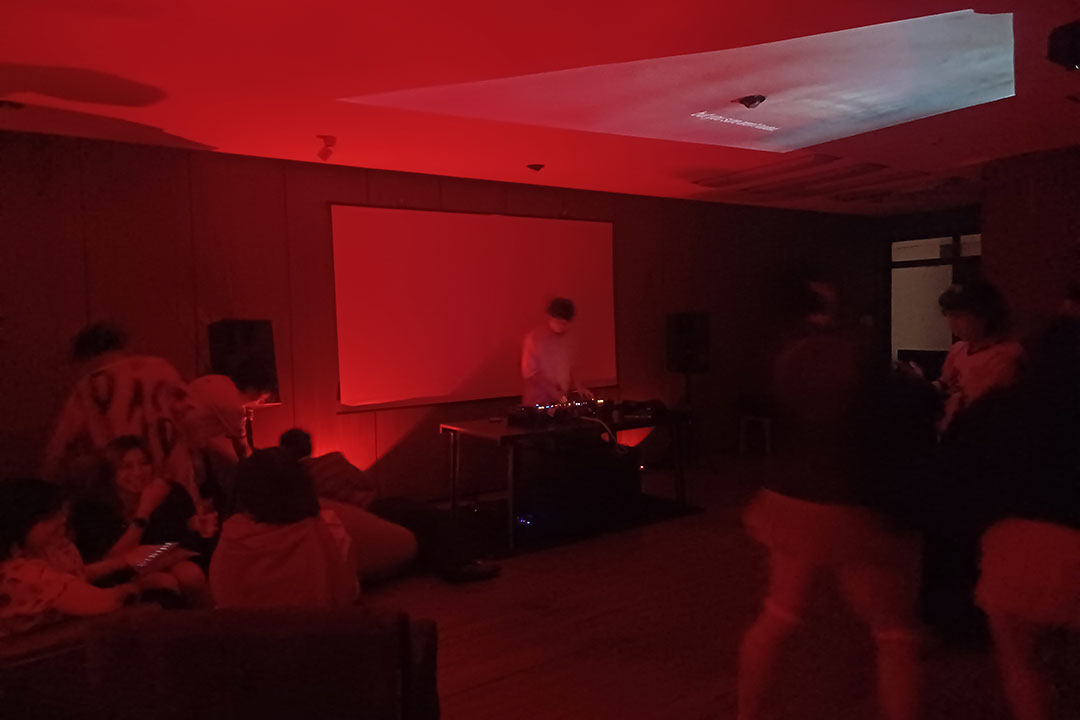
DJ SET by Pepi Dalmacion at the afterparty of the 1F Projects Backroom screening, with short films projected on the ceiling care of film collective Kinoise.

Film collective Kinoise teams up with performance space 1F Projects

FOUR short films and one feature film, all of various genres, will be projected onto a wall (and later, the ceiling) for a screening organized by the film collective Kinoise.

The five independent films, representing drama, Western, sci-fi, experimental, and horror genres, were screened on April 5 at 1F Projects, a space in the La Fuerza Compound in Makati City that usually hosts live music events.

Both Kinoise and 1F Projects are set on making their mark as alternative outlets for film exhibition and live performance.

“For this screening, I wanted to put together different genre films that I think mix well, like a melting pot,” said Jetri Bolintiam, a curator for Kinoise, at the sidelines of the Backroom screening.

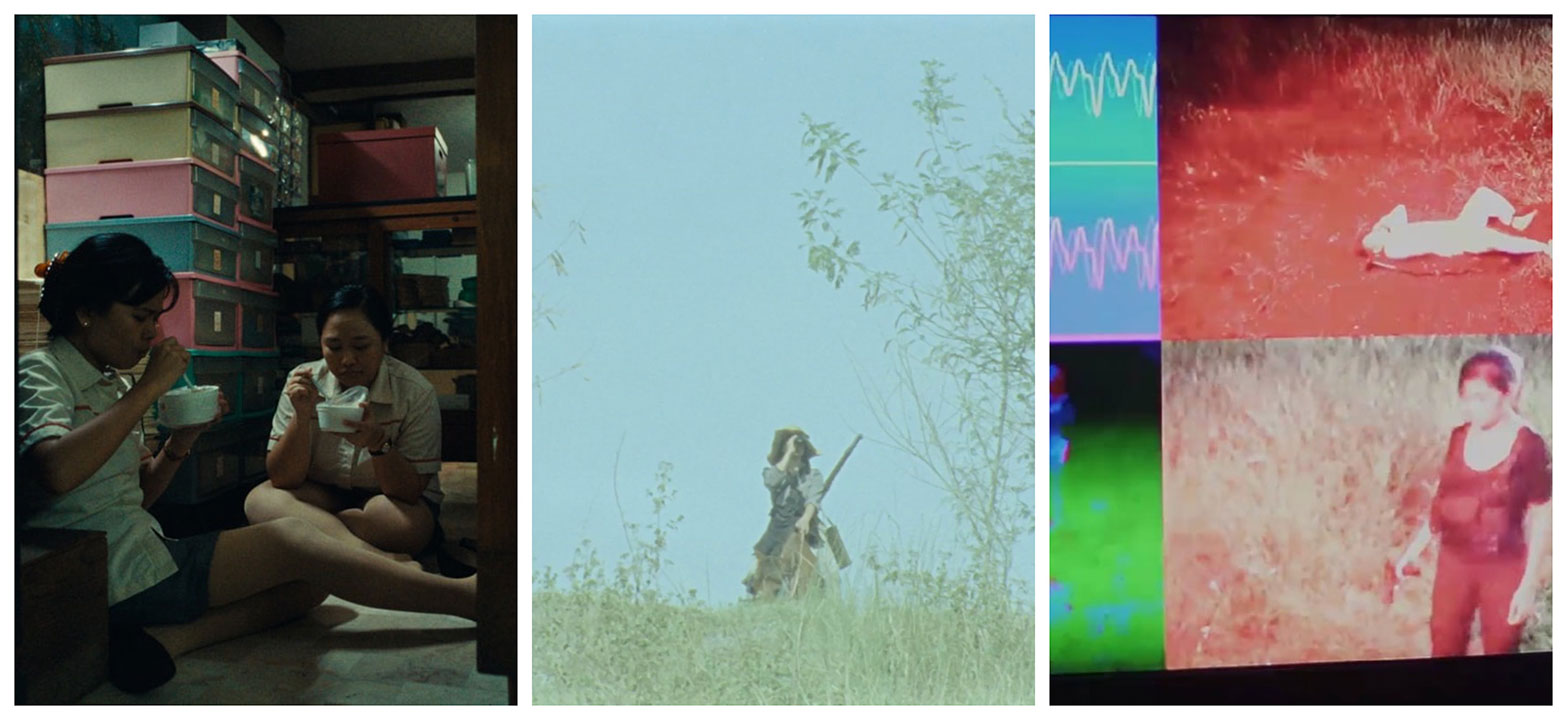
In the lineup were the dark drama Cross My Heart and Hope to Die (2023) by Sam Manacsa, the Pinoy Western Shotgun Tuding (2014) by Shireen Seno, the sci-fi action short Spid (2019) by Alejo Barbaza and Mervine Aquino, and the experimental film Buwal na Mga Imahe (2022) by Gerard Bernardo.

Rounding out the night was Dodo Dayao’s dystopian horror film, Midnight in a Perfect World (2020), billed as a “mystery film” in promotional materials. As all five films were shown, the backroom of 1F Projects was packed, around 30 people filling the seats and even standing in the last row.

Starting 10 p.m., the chairs in the makeshift screening area were cleared to make way for a dance floor, with DJ Pepi Dalmacion performing a set. The short films that had just been screened were projected on the ceiling to add a trippy vibe to the afterparty. Film and music lovers, with bottles of beer and cups of gin and tonic in hand, mingled at the 1F Projects bar until way past midnight.

Michael Benedicto, a co-owner of the space, said that the collaboration with Kinoise helped them create another unique option in Metro Manila’s nightlife.

“To be honest, there is no sort of masterplan for this place. We’ve been around the scene as musicians and have hosted several projects,” he told BusinessWorld. “You really have to look for new things that are happening, and it leads to stuff like this.”

CONVERGENCE OF SCENES
The performance venue launched the Backroom film screenings in February, but its bread and butter are actually music events. It was founded by Mr. Benedicto with his artist-architect sister Micaela and her partner, musician Mario Consunji, back in 2023.

“This started because my sister needed an architecture office space. We thought we could take the music studio and make something else out of it, like the makeshift bar. It started on a whim, us doing shows, inviting musicians, and screening movies that we like,” he said.

The space had previously hosted the Fifth Wall dance film festival, various album launches, live gigs, DJ sets, and a mini book fair.

Mr. Benedicto explained that, while film screenings are free, an entrance fee for the afterparties and music performances is needed to keep the place running. The minibar, while quaint, charges a fair amount for various alcoholic drinks to last the night.

The son of music producer Toti Dalmacion, DJ Pepi Dalmacion, who provided the beats and rhythms of the night, is a product of the 1F Projects trio’s network as musicians.

“While we do have our own scene, we’re definitely meeting new people, like Madge [Reyes] for Fifth Wall, and the Kinoise kids for this film screening. We just want to keep going and see where it leads,” Mr. Benedicto said.

Backroom screenings will be taking a break after the recent one, with 1F Projects going back to music events for a bit. Next up for them is a live show with three bands, scheduled for the end of April.

For Cross My Heart director Sam Manacsa and Spid co-director Mervine Aquino, who were in attendance to see how their short films fit into the night’s events, small screenings like this help keep alternative cinema alive.

“If nobody screens them, people won’t remember or learn about it. There are so many short films that kind of die out like that,” said Mr. Aquino. “Especially ones that aren’t aligned with the tastes of festival fare in QCinema and Cinemalaya, so they’re rarely programmed.”

Ms. Manacsa added that independent short films can have “an extended life” if they’re shared with many people. “It’s a way to address the issue of people just not knowing where to watch them,” she said.

One of her next undertakings is to screen student thesis films that haven’t been exhibited in any venue since completion.

WOMEN’S FILMS
Though Mr. Bolintiam said that he programmed Kinoise x Backroom to showcase a blend of genres, BusinessWorld found that the four short films also worked as a belated Women’s Month experience.

Cross My Heart and Hope to Die centers on Mila (played by Jorrybell Agoto), an overworked and underpaid employee whose anonymous love interest is a source of comfort amid unfair working conditions. Shotgun Tuding, playfully described as a “pancit western,” is the 1940s-set tale of Tuding (Chantel Garcia), who travels to a distant town to find the man that got her sister pregnant. Then, there’s Spid, a more low-definition joint which has its female assassin lead (Genevieve Reyes) fight against the ills of a sense-impaired society.

Without spoiling anything, all three tell stories of female characters who are boxed in by the toxic masculine-led structures around them. Both Tuding and the female assassin are even singled out by male characters in their respective films, for being able to dispense violence “despite being women.” Then there’s Mila, an employee who witnesses violence and undergoes a journey that pushes her to the brink of her frustration. Her fate diverges from expectation to collide with a man (in a way that mirrors Tuding’s defiance against men).

The fourth film, Buwal na Mga Imahe (Dead Images), doesn’t fit into this women-centered interpretation of the lineup easily, due to its experimental nature. But its barrage of images explores rotting distortions in modern Philippine culture, akin to the violence of rape, the trigger warning for the overwhelming clash of visuals and sound quite apt as it brings a myriad of societal issues to the forefront.

Finally, there was Midnight in a Perfect World. Though studio-produced and garnering multiple Gawad Urian awards back in 2021, the film doesn’t have a rating from the Movie and Television Review and Classification Board (MTRCB). The Backroom x Kinoise screening hence billed it as a “mystery Dodo Dayao film,” one of the many techniques used by indie curators to get unrated films to the public.

Its representation of the drug war, with stars Jasmine Curtis-Smith and Glaiza de Castro at its center, is as frenetic and horrific as Spid’s. Both films have singular ways of depicting women who must navigate the disorienting darkness of a monstrous systemic death machine.

“I think [the women-centric themes] subconsciously seeped into the rationale of the whole thing,” Mr. Bolintiam said, when asked about our interpretation of the night’s lineup of films. Notably, prior to Backroom, Kinoise and fellow film collective Timog Pelikula led a screening and talk with women filmmakers at the end of March in Las Piñas City.

He concluded that these events represent a “grassroots approach to spreading the love for cinema.” He said, “Our goal is really to see a crowd of people. Some were standing at the back earlier, which was great. We’re just happy to do this.”

What’s next for Kinoise? Mr. Bolintiam revealed that there may be a screening of basketball-related films, given that many filmmakers — and Filipinos in general — love the sport.

For more information on Kinoise or 1F Projects, visit their Facebook and Instagram pages. 1F Projects is located on the second floor of the La Fuerza Compound along Chino Roces Ave. in Makati City. — Brontë H. Lacsamana