Home Blog Page 1637

Conte hails McTominay, Lukaku as Napoli extends lead over Serie A rivals

NAPOLI manager Antonio Conte praised the impact of Scott McTominay and Romelu Lukaku, both in their first season at the club, after their 2-0 Serie A win over Hellas Verona on Sunday.

Napoli broke the deadlock early on when Giovanni Di Lorenzo’s shot hit the post and rebounded off goalkeeper Lorenzo Montipo, while Frank Anguissa sealed the victory with a powerful long-range shot.

Conte said he is still trying to find the right tactics to suit his squad, even as it secured a fifth successive league win, but that the new signings were integral in helping Napoli lead the standings by four points ahead of Inter Milan.

“There have certainly been changes since the beginning of the summer, especially as I am still trying to find the right tactics for this team,” Conte told DAZN.

“The arrival of Scott McTominay and Romelu Lukaku, in particular, made a big difference to the switch to 4-3-3. We tried a couple of different formations before we settled on this one.”

The coach added that he was pleased with the team’s development, as “there is more confidence, and the whole squad is involved.”

After revealing that forward Khvicha Kvaratskhelia wanted to leave the Serie A club, Conte said he bore no ill will toward the Georgian and that he was more disappointed with himself.

“It’s a disappointment for me, not for the player or the club,” Conte said. “In six months I failed to change the situation.

“I believe a coach should help a club to make decisions and advise on what players to sign. When I realize that I was unable to make a difference here, that is my disappointment.

“I take nothing from Khvicha, he’s a good lad, but everyone has to decide their own destiny, just as the club has to make its decisions.” Reuters

Nuggets rally from big deficit, take down Mavs

NIKOLA JOKIC had 19 points, 18 rebounds and nine assists, Russell Westbrook finished with 21 points and 10 rebounds and the visiting Denver Nuggets used a big fourth quarter to rally past the short-handed Dallas Mavericks 112-101 on Sunday.

Denver outscored the Mavericks 33-12 in the final 12 minutes to take a 2-1 advantage in the season series, which resumes on Tuesday in Dallas.

The Mavericks played again without leading scorers Luka Doncic and Kyrie Irving and are 2-3 without the duo. Klay Thompson scored 25 points, Spencer Dinwiddie and Naji Marshall had 16 each and Dereck Lively II contributed 14 points and eight assists for Dallas.

Jamal Murray scored 17, Aaron Gordon returned after a nine-game absence with 13 points, Michael Porter, Jr. also had 13 points and Peyton Watson finished with 10 for Denver. The Nuggets have won three straight.

Denver opened the fourth quarter on a 15-4 run to go ahead 94-93. Daniel Gafford had a dunk and Dinwiddie split a pair of free throws to put the Mavericks back in front 96-94 before the Nuggets took control.

Westbrook hit two layups, Jokic made a hook shot and then fed Watson for a corner 3-pointer to put Denver ahead 106-99 with 2:21 left.

Denver scored the first four points of the third quarter to take a 62-61 lead, but the Mavericks heated up.

Lively scored six points, Marshall hit a jumper and Thompson scored the next eight Dallas points to put the hosts ahead by 12.

Thompson hit another from deep as part of a 16-2 run that gave the Mavericks an 87-69 lead with 3:59 left in the third before the Nuggets cut the deficit to 10 heading into the fourth.

Dallas was 10-for-15 from 3-point range in the first half, led by Thompson’s four from deep, and led by as much as 17 before the Nuggets rallied to make it 41-34 early in the second quarter.

Denver scored the last seven points of the first half to trail just 61-58 at halftime. Reuters

PHL deposit insurance levels at international standards even after remittance of idle funds to BTr

The country’s deposit insurance levels are consistent with international standards even after the Philippine Deposit Insurance Corp. (PDIC) remitted its idle funds to the Bureau of the Treasury (BTr) in support of government-wide efforts to boost the economy by funding the national government’s priority projects.

“We assure the public that after the remittance, the Deposit Insurance Fund (DIF) of the PDIC remains adequate to cover risks in the banking system and that the PDIC is still capable of delivering its services effectively, in case of insurance calls,” PDIC President Roberto B. Tan said.

“The DIF continues to be maintained within the target level set by its Board of Directors based on international best practices,” he added.

The PDIC remitted P107.23 billion in compliance with the Congressional mandate under the General Appropriations Act of 2024 and strictly in accordance with the opinion rendered by the Office of the Government Corporate Counsel (OGCC).

The PDIC’s multibillion-peso remittance to the national government went to projects aimed at spurring economic activities, which are envisioned to lead to higher deposits in banks and growth of financial institutions to provide more financial products and services to Filipinos nationwide.

These include major infrastructure and social programs such as the maintenance, repair, and rehabilitation of major infrastructure facilities; the Protective Services for Individuals and Families in Difficult Circumstances/Assistance to Individuals in Crisis Situations; the Philippine Food Stamp Program; and various projects to advance the government’s disaster-related infrastructure projects; and rural electrification efforts through the Financial Subsidy for the Purchase of Photovoltaic Mainstreaming (Solar Home System).

Additionally, the unutilized funds were used to support counterpart financing for foreign-assisted projects, including the Panay-Guimaras-Negros Island Bridges; the Metro Manila Subway Project; the Philippine Multi-Sectoral Nutrition Project; the Mindanao Inclusive Agriculture Development Project; the Cebu-Mactan Bridge and Coastal Road Construction Project; the North-South Commuter Railway System; the Support to Parcelization of Lands for Individual Titling Project; the Teacher Effectiveness and Competencies Enhancement Project; and the Philippine Fisheries and Coastal Resiliency Project, among others.

These projects are envisioned to drive economic growth by generating employment, boosting incomes and reducing poverty, thus creating a positive multiplier for society.

Following the remittance of P107.23 billion to the national government, the DIF now stands at P202.85 billion, or 5.8% of the country’s estimated insured deposits. The target range ratio level set by the PDIC Board is from 5% to 8%.

The International Association of Deposit Insurers (IADI) recommends that most jurisdictions set a target reserve ratio between 2% and 5% of insured deposits, though the specific target may vary based on the risks and banking environment of a country.

For example, the United States target reserve ratio for their DIF is 2% of insured deposits, while in Canada the target is typically around 1.05% of insured deposits.

The IADI is a global standard-setting body dedicated to enhancing the effectiveness of deposit insurance systems worldwide. Established in 2002 and headquartered at the Bank for International Settlements in Basel, Switzerland, the association promotes financial stability by developing international standards and providing guidance for deposit insurance practices.


Spotlight is BusinessWorld’s sponsored section that allows advertisers to amplify their brand and connect with BusinessWorld’s audience by publishing their stories on the BusinessWorld Web site. For more information, send an email to online@bworldonline.com.

Join us on Viber at https://bit.ly/3hv6bLA to get more updates and subscribe to BusinessWorld’s titles and get exclusive content through www.bworld-x.com.

Taiwan reports rise in suspected Chinese espionage

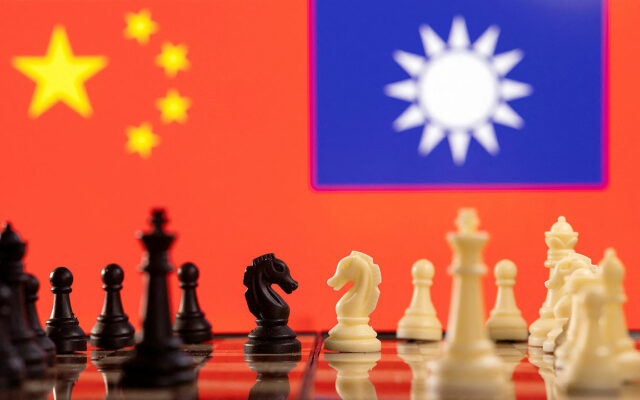
CHESS PIECES are seen in front of displayed China and Taiwan’s flags in this illustration taken Jan. 25, 2022. — REUTERS

TAIPEI — Taiwanese charged with suspicion of spying on behalf of China rose by a third to 64 people last year, the island’s National Security Bureau said, adding most were current or retired soldiers.

China has stepped up political and military pressure in recent years to back its claim that democratically governed Taiwan is its own territory. This has included daily military drills, balloons near the island and an espionage campaign.

The increase in the number of Taiwanese charged with attempted espionage for China represented a “significant rise” from 48 and 10 people in 2023 and 2022, respectively, according to a report by the National Security Bureau on Sunday.

The report did not provide an explanation for the increase in cases.

“The Chinese Communist Party continues to use diverse channels and means to infiltrate all walks of life in order to absorb citizens to help them develop networks or gather sensitive government information,” the report said.

China’s Taiwan Affairs Office did not immediately respond to a request for comment.

Among those who were charged last year, two-thirds were current or retired members of the armed forces, the report said, adding these demographics were the “main target” of China’s infiltration of Taiwan.

Through criminal gangs, underground banks and religious groups, some retired soldiers tried to recruit serving members of the military to acquire sensitive military information or build spy networks, the report said.

In some unspecified cases, the report said, some gangsters were asked to serve as planted agents to “sabotage” and raise China’s flag in the event of a Chinese invasion; Some retired military officers were instructed to gather photos and the coordinates of a foreign government office in Taiwan in a move to build a “sniper team” for an “assassination assignment.”

Seven retired military officials were prosecuted last year on suspicion of Chinese espionage including mapping out the coordinates and details of several military bases and the de facto US embassy in Taipei, the official Central News Agency reported last week.

Beijing has never renounced the use of force to bring Taiwan under its control. The government in Taipei strongly rejects the Chinese sovereignty claim and vows to defend its democracy and freedom. — Reuters

Thailand’s cabinet approves draft law to legalize casinos and gambling

STOCK PHOTO | Image from Rawpixel

BANGKOK — Thailand’s cabinet has approved a draft law that would legalize gambling and casinos, a move aimed at boosting tourism, jobs and investment, Prime Minister Paetongtarn Shinawatra said on Monday.

Under the government’s plan, the law, which will be sent to parliament for deliberation, would see gambling take place in large-scale entertainment complexes.

Casinos and most forms of gambling are illegal in Thailand but soccer betting and underground gaming activities and lotteries are rife, with vast sums of money changing hands.

Only some gambling is permitted, such as state-controlled horse races and on an official lottery.

Neighbors, Cambodia, Singapore, the Philippines, Laos and Myanmar have benefited from large casino complexes and Thailand’s government has argued the absence of legal casinos means it is turning its back on revenue and not reaching its tourism potential.

Tourism is a key driver of Southeast Asia’s second-largest economy and Thailand is forecasting record visitor numbers in the next few years.

“Legalization will protect the public and would also generate more state revenue,” Ms. Paetongtarn told reporters.

Successive Thai governments have sought to legalize and regulate gambling to boost the economy but each attempt has faced pushback from conservatives in the Buddhist majority country.

The latest move could see foreign visitor numbers grow 5% to 10% and tourism revenue increase by about 120 billion baht to 220 billion baht ($3.45 billion to $6.32 billion), said Deputy Finance Minister Julapun Amornvivat.

About 9,000 to 15,000 new jobs would be created, he added.

A key advocate of legalizing gambling has been billionaire former premier Thaksin Shinawatra, Paetongtarn’s father, an influential figure in the ruling party. — Reuters

Tokyo museum offers visitors ‘flashback’ to defunct technology

OLD CAMERA MODELS are displayed at Extinct Media Museum, a private museum showcasing a collection of defunct gadgets including old cameras, cassette tapes and cell phone, in Tokyo, Japan, Jan. 11, 2025. — REUTERS

TOKYO — Tucked away in a corner of central Tokyo, the Extinct Media Museum lives up to its name.

From Betacam videotapes to floppy disks and vintage Sony devices, the museum is a showcase for old cameras and telecom equipment, including a 1916 Japanese-made “Lily” still camera, its oldest exhibit.

Amidst the three-roomed museum’s cluttered shelves, visitors like 59-year-old Mika Matsuda can rewind to the past and the gadgets that were once in everyday use.

“It is fascinating not only for generations unfamiliar with these items, but also for those who lived through those times,” Ms. Matsuda said on Saturday.

“Seeing these pieces feels like I’m having a flashback of our own lives. It reminded me of how things were back then — I used to have so much fun,” she said.

Opened in January 2023, the museum was founded on the belief that all media equipment, except for paper and stone, will eventually “die out,” explained deputy museum curator Barbara Asuka.

The mostly donated items are displayed so that visitors can pick them up, encouraging a full sensory experience, she added.

“There’s a lot of information you can gain by holding it, like the smell,” Ms. Asuka said.

“We want visitors to experience these items with all five senses, rather than just looking at the display through glass,” said Ms. Asuka.

The museum regularly accepts donations from museum-goers like Hisashi Ito, who brought in a small hand-held watch and cassette tapes from his personal collection on Saturday.

“Even if I keep these gadgets at home, they will probably just be thrown away when I die. It’s better to share them and let people enjoy them,” the 56-year-old car designer said.

The Extinct Media Museum’s hours vary, according to its website, with general admission priced at around 2,000 yen ($12.70). Tickets for donors and students are 1,000 yen. — Reuters

S. Korea plans to overhaul airport ‘localizers’ after fatal Jeju Air crash

RESCUE WORKERS take part in a salvage operation at the site where an aircraft crashed after it went off the runway at Muan International Airport in Muan, South Korea, Dec. 29, 2024. — REUTERS

SEOUL — South Korea plans to improve the structures housing the antenna that guide landings at its airports this year following December’s fatal crash of a Jeju Air plane, which skidded off the runway and burst into flames after hitting such a structure.

The transport ministry, which has been inspecting safety conditions at airlines and airports since the Boeing 737-800 jet crashed at the southwestern Muan airport, announced the move to change the so-called “localizer” structures on Monday.

Seven domestic airports, including Muan, were found to have embankments or foundations made of concrete or steel that needed to be changed, the ministry said in a statement.

It added that it would prepare measures to improve the structures by this month and aim to complete the improvements by the end of 2025.

The government has also finished its inspection of six domestic airlines flying Boeing 737-800s, and found violations at some operators including exceeding the period of inspection pre- and post-flight, and non-compliance with procedures to resolve plane defects or passenger boarding.

The transport ministry did not immediately respond to a request for comment on whether Jeju Air089590.KSwas among the airlines where violations were found. A Jeju Air spokesperson could not be immediately reached.

A special safety inspection of the country’s major airport facilities will also take place between Jan 13-21, the ministry statement said. — Reuters

Tibet quake highlights earthquake risk for dams on roof of the world

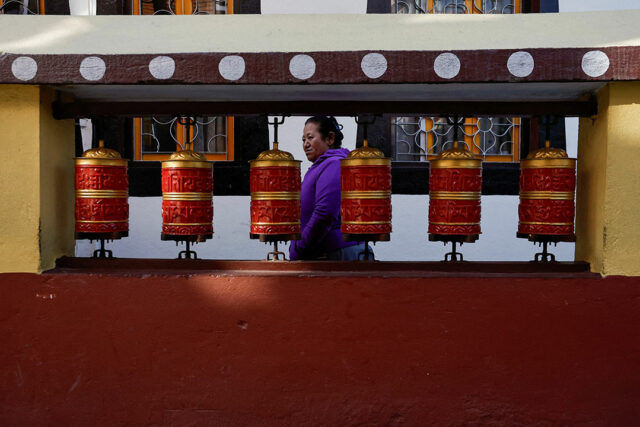
A Tibetan woman in Nepal circles a monastery as she offers prayer in memory of those killed in the recent earthquake, at the Tibetan Refugee Camp in Lalitpur, Nepal Jan. 8, 2025. — REUTERS

BEIJING — Tibet’s earthquake of magnitude 6.8 that killed 126 and damaged four water reservoirs this week highlights the risks from a hydropower building spree by Asian giants China and India in one of the world’s most remote, quake-prone regions, experts say.

Some 68 major dams in the Himalayan region exploit the enormous hydropower potential of high-altitude lakes and rivers — just a fifth of which has been tapped, researchers say, but face seismic risks.

Another 101 are in the stages of being planned or built.

Even before the quake centered on Tingri county, the northern gateway to the Mount Everest region, experts had voiced concern about both nations’ hydropower ambitions there, exemplified by China’s plan for the world’s largest hydropower dam.

The project, more than three times the size of the Three Gorges Dam, the world’s largest, is set to provide 34 gigawatts of clean energy vital to China’s aim of peak carbon emissions before 2030.

“A strong earthquake could cause direct damage,” Fan Xiao, a former chief engineer in the geology and mineral bureau of Sichuan in southwestern China, wrote in an article in October 2022 on the province’s Motuo project approved in late December.

Fan, who warned the project was in an area prone to strong earthquakes, did not respond to Reuters questions on messaging app Wechat about the article.

Hydropower projects in the remote mountainous area highlight the tension between the risks of building there and the enormous demand for clean power in China and India, the world’s No. 1 and No. 3 emitters of greenhouse gases respectively.

Earthquakes have damaged dams in the past, particularly by setting off landslides and rockfalls. A massive earthquake in Nepal in 2015 shuttered almost a fifth of its hydropower for more than a year, research published in 2018 showed.

Building more dams in the Himalayas is not sustainable, said C P Rajendran, a geologist at India’s National Institute of Advanced Studies, citing ecological concerns and the earthquake risk from the weight of gigantic reservoirs on faultlines.

AGEING RESERVOIRS
China’s water resources ministry has raised concerns about ageing reservoirs, more than 80% built between the 1950s and 1970s.

However, it did not respond to a faxed request for comment and has not detailed the reservoirs damaged in the Tibet quake.

The Motuo project has been rigorously tested for disaster prevention and mitigation, China’s foreign ministry has said.

Tectonic activity in the region could make the site hazardous though analysis is needed to determine specific risks at the site on the upper reaches of the Yarlung Zangbo river, said Wolfgang Schwanghart, a Potsdam University expert who studies the formation and changes of the earth’s surface.

His research in 2018 showed about a quarter of the region’s projects were at risk of moderate to severe damage in a future earthquake.

China says the dam will play a major role in reaching carbon peaking and neutrality goals and will stimulate the economy and create jobs.

Hydropower generation is more reliable and flexible than intermittent wind and solar, and helps with the urgent need to transition away from polluting coal.

But Fan said the project was unnecessary, given the low hydropower demand in sparsely populated Tibet and the high costs of transmitting it elsewhere.

Some mega-dam building in China may be motivated more by economics than energy needs, he said.

“The gross domestic product brought by huge hydropower projects, as well as the increase in investment and tax revenue, is a great temptation for the government and related interest groups,” Fan added. — Reuters


Philippines files protest over Beijing’s ‘escalatory actions’ in South China Sea

PHILIPPINE STAR/EDD GUMBAN

MANILA – The Philippines on Monday called on Beijing to desist from “escalatory actions” at a South China Sea shoal and said a protest has been lodged over the presence of Chinese coast guard, militia and navy in its exclusive economic zone.

The protest stems from the presence of two coast guard vessels on Jan. 5 and Jan. 10 in and around the disputed Scarborough shoal, one of which was a 165 m (541ft) long boat referred to by the Philippines as “the monster”. It said a Chinese navy helicopter was also deployed in the area.

“The escalatory actions of these Chinese vessels and aircraft disregard Philippine and international laws,” said the Philippines’ national maritime council, an inter-agency group tasked with upholding the country’s interests at sea.

“China should direct its vessels to desist from conducting illegal actions that violate Philippines’ sovereign rights in its EEZ,” it said in a statement.

China’s embassy in Manila did not immediately respond to a request for comment. China says the Scarborough Shoal is its territory and has accused the Philippines of trespassing.

Tensions between China and the U.S. ally the Philippines have escalated the past two years, with frequent run-ins between their coast guards in the South China Sea, which China claims sovereignty over almost in its entirety.

The statement came just hours after Philippine President Ferdinand Marcos Jr. had a virtual call with U.S. President Joe Biden and Japanese Prime Minister Shigeru Ishiba where the three leaders discussed China’s conduct in the South China Sea.

China’s expansive claims overlaps with the EEZs of Brunei, Indonesia, Malaysia, the Philippines and Vietnam. The disputed waterway is a strategic shipping route through which about $3 trillion of annual commerce moves.

A 2016 ruling of an international arbitral tribunal said Beijing’s claims, based on its historic maps, have no basis under international law, a decision China does not recognise. — Reuters

Bezos sees no threat from Musk-Trump ties in space race

JEFF BEZOS, president and CEO of Amazon and owner of The Washington Post. — REUTERS

CAPE CANAVERAL, Florida – Jeff Bezos said he does not think SpaceX CEO Elon Musk will use his close ties with U.S. President-elect Donald Trump to undercut his space company Blue Origin, adding he feels “very optimistic” about the incoming administration’s space agenda.

“Elon has been very clear that he’s doing this for the public interest and not for his personal gain. And I take him at face value,” Bezos, founder of Blue Origin which rivals SpaceX in the space industry, told Reuters in an interview on Sunday.

Bezos spoke with Reuters in Cape Canaveral, Florida where he will watch the debut launch of Blue Origin’s New Glenn, a 30 story-tall rocket that is expected to chip away at SpaceX’s market dominance and kick start Blue Origin’s long-delayed entrance in the satellite launch business.

Musk, who spent more than a quarter billion dollars to help elect Trump, has had the president-elect’s ear on space matters.

Last month he said the U.S. should send missions straight to Mars instead of going to the moon first, fueling industry concerns of a major shakeup to NASA’s space exploration program.

“My own opinion is that we should do both – we need to go to the moon and we should go to Mars,” Bezos said, when asked if he was concerned about changes to NASA’s moon program.

“What we shouldn’t do is start and stop things. We should continue with the lunar program for sure,” Bezos said.

Trump in his second term as president is expected to make sweeping changes to NASA’s moon program and focus heavily on sending missions to Mars.

Amazon has donated $1 million to Trump’s inauguration fund and will stream the event on its Prime Video service. Bezos, Amazon’s founder and executive chairman, has met with Trump but told Reuters “we really haven’t talked about space.”

Blue Origin, founded by Bezos in 2000, has a $3 billion contract with NASA to land humans on the moon later this decade after missions by SpaceX’s Starship, Musk’s fully reusable rocket in development that is designed to put humans and cargo on both the moon and Mars. — Reuters

DoF clarifies determination of the National Tax Allotment shares for LGUs

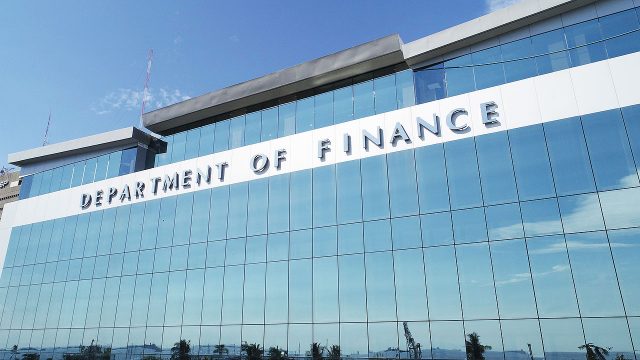
DOF.GOV.PH

The Department of Finance (DoF) has reaffirmed its commitment to transparency and strict compliance with the Supreme Court (SC) decision and relevant laws in determining the National Tax Allotment (NTA) shares for local government units (LGUs).

“We assure our LGUs that we are strictly adhering to transparency and accountability, especially with the principles set by the Supreme Court, in implementing the Mandanas-Garcia ruling. Nothing is shortchanged. We are very much welcome and open to having continued dialogues with our LGUs to help them strengthen their fiscal capacities and optimize resource utilization to deliver more and better services to Filipinos,” Finance Secretary Ralph G. Recto said.

The 2019 Mandanas-Garcia ruling of the SC, which took effect in 2022, increased the NTA shares of LGUs to 40% of all national taxes beyond those collected by the Bureau of Internal Revenue (BIR). This adjustment was intended to enhance the fiscal autonomy of LGUs by granting them a more substantial share of the national tax base.

In its decision, the SC ordered the Secretary of the DoF, the Secretary of the Department of Budget and Management (DBM), the Commissioners of the BIR and the Bureau of Customs (BoC), and the National Treasury, to include all national tax collections in the computation of the NTA base, “except those accruing to special purpose funds and special allotments for the utilization and development of the national wealth.”

In determining the deductions, the DoF is guided by the SC decision including Section 29 (3), Article VI and Section 7, Article X of the 1987 Constitution.

The Finance chief is set to meet the League of Cities this coming week to discuss the computation of the NTA.


Spotlight is BusinessWorld’s sponsored section that allows advertisers to amplify their brand and connect with BusinessWorld’s audience by publishing their stories on the BusinessWorld Web site. For more information, send an email to online@bworldonline.com.

Join us on Viber at https://bit.ly/3hv6bLA to get more updates and subscribe to BusinessWorld’s titles and get exclusive content through www.bworld-x.com.

China steps up policy measures to defend fragile yuan

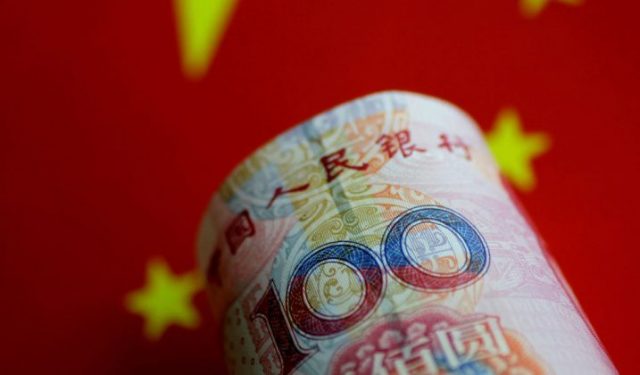
REUTERS

SHANGHAI – China stepped up its policy measures on Monday to defend a weakening yuan by relaxing rules to allow more offshore borrowing and sending verbal warnings as the Chinese currency hovered around 16-month lows against a strong dollar.

The yuan has faced renewed depreciation pressures, weighed down by a triple-whammy of a broadly stronger greenback, falling Chinese yields and rising trade tensions with other economies.

The People’s Bank of China (PBOC) announced on Monday that borrowing limits would be raised to allow corporates to borrow more from abroad.

The ratio under its macro-prudential assessments (MPA) – determining the maximum a company can borrow relative to its net assets – would be raised to 1.75 from 1.5, with immediate effect.

The move was to “further improve the macro-prudential management of cross-border financing, continue to increase the sources of cross-border funds for enterprises and financial institutions, and guide them to optimise their asset-liability,” the PBOC said in a statement jointly issued with the foreign exchange regulator.

Separately, the China Foreign Exchange Committee planned to resolutely keep the yuan exchange rate basically stable at reasonable and balanced levels, the central bank said in another statement.

The committee is a forum under the sponsorship of the central bank and the foreign exchange regulator.

The committee also said that monetary authorities will increase FX market resilience and strengthen market management. They will also correct pro-cyclical market activities, deal with behaviours that disrupt market orders and prevent exchange rate overshooting risks.

And in Hong Kong, PBOC Governor Pan Gongsheng told the Asia Financial Forum on the same day that “China has the confidence, conditions and ability to maintain stable operation of the foreign exchange market.”

China will keep the yuan exchange rate basically stable at reasonable and balanced levels,” Pan reiterated.

These measures are “sending a signal to stabilise the yuan,” said Ken Cheung, chief Asian FX strategist at Mizuho Bank.

“But the actual impact on capital flows and exchange rate is relatively limited, due to the low cost of domestic financing.”

Cheung said regulators will continue to mainly use the daily midpoint fixing to stabilise the currency and guide market expectations.

China’s onshore yuan traded at 7.3315 per dollar as of 0247 GMT on Monday, not far from a 16-month low of 7.3328 hit on Friday. It has lost more than 3% to the dollar since U.S. President-elect Donald Trump won the election in November.

The central bank has been setting its official midpoint guidance on the firmer side of the key 7.2 level and stronger than market projections since mid-November. Traders and analysts widely interpret this as a sign of rising unease over recent yuan declines.

The PBOC said last week that it will sell 60 billion yuan worth of six-month yuan bills in Hong Kong on Jan. 15, the most since the central bank started such bill sales in the financial hub in 2018.

Selling these yuan bills will mop up liquidity in the market to reduce speculative bets against the yuan. — Reuters