Home Blog Page 1625

Gogolook launches news wall feature to Whoscall App

Gogolook, a leading global TrustTech company, has launched a new feature in the Whoscall app — a global anti-scam application — aimed at keeping Filipinos updated on the latest cyberspace news in the country.

Mel Migriño, Gogolook’s Country Head for the Philippines, introduced the new “Scam Alert” feature — a one-stop hub for scam-related news and updates.

“As part of our effort to raise awareness among Filipinos, we want them to stay informed about the latest developments in the Philippines that affect their online safety,” Ms. Migriño said.

She explained that the news wall features up-to-date articles sourced from legitimate outlets, curated and compiled directly into the app.

“With this, we offer Filipinos a convenient way to stay protected, reducing the risk of encountering illegitimate sources that could provide misleading or harmful information,” she added.

This initiative is part of Whoscall’s ongoing commitment to strengthening online protection for users.

The goal is to help Filipinos stay informed about the latest scam trends, enabling them to spot potential scammers early.

It also aims to keep them updated on the newest cybersecurity and anti-scam initiatives, both locally and globally, so they can share this knowledge with friends and family to protect them from becoming victims.

How to access Scam Alert

Android users can access this feature by opening the Whoscall app and tapping the three-bar menu icon in the upper left corner of their screen.

From there, they need to select “Protection,” where they will find the “Scam Alert” option in the upper right corner.

For iOS users, accessing the feature is even simpler. By opening the Whoscall app, they can immediately access the “Scam Alert” section in the upper right corner of their screen. 


Spotlight is BusinessWorld’s sponsored section that allows advertisers to amplify their brand and connect with BusinessWorld’s audience by publishing their stories on the BusinessWorld Web site. For more information, send an email to online@bworldonline.com.

Join us on Viber at https://bit.ly/3hv6bLA to get more updates and subscribe to BusinessWorld’s titles and get exclusive content through www.bworld-x.com.

Dusit International and Grand Land, Inc. break ground on ASAI Cebu Oslob — the first ASAI resort in the Philippines

Overlooking the pristine shores of Barangay Lagunde, ASAI Cebu Oslob will offer a seamless blend of modern comfort and authentic local experiences.

Expected to open in late 2026, ASAI Cebu Oslob will introduce ASAI Hotels’ signature blend of modern design, local experiences, and vibrant communal spaces to one of the Philippines’ most scenic coastal destinations.

Dusit International, one of Thailand’s leading hotel and property development companies, and Grand Land, Inc., a subsidiary of the Gaisano Grand Group of Companies and a trusted name in Philippine real estate, have officially broken ground on ASAI Cebu Oslob, marking ASAI Hotels’ brand entry into the Philippines and the brand’s first beach resort.

Located in Barangay Lagunde, Oslob, a premier coastal destination known for its pristine beaches, whale shark encounters, and rich biodiversity both on land and at sea, ASAI Cebu Oslob is planned to open in late 2026. The resort will bring ASAI Hotels’ thoughtfully curated, experience-driven hospitality to a stunning beachfront setting, catering to modern, millennial-minded travelers who seek meaningful local connections and adventure.

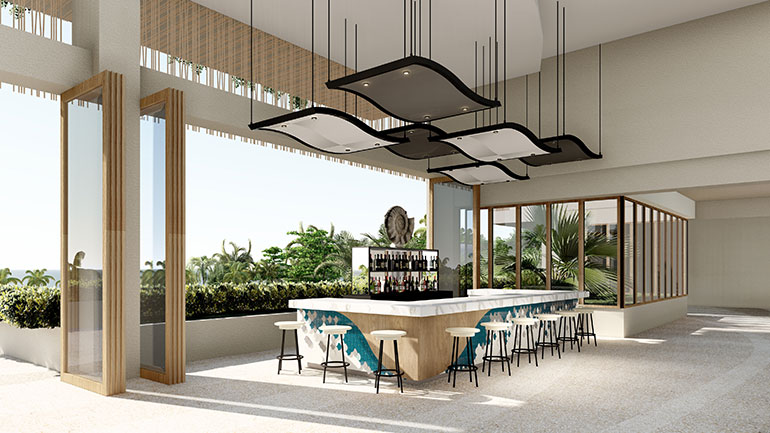
Seamlessly blending modern design with local inspiration, ASAI Cebu Oslob’s vibrant communal space features an open and flexible layout where guests can dine, socialize, and connect — set against artistic touches that celebrate Oslob’s marine heritage.

Thoughtfully designed with 98 compact yet functional rooms, most featuring private balconies with stunning ocean or pool views, the resort will also include a signature communal space integrating ASAI Hotels’ Eat/Work/Play concept — an open, flexible area designed for dining, socializing, and remote work. Guests will find a stylish beach bar serving craft cocktails and local beers, an inviting pool overlooking the beach, and a locally inspired dining experience showcasing the finest Cebuano cuisine.

Beyond the famed whale shark encounters, guests can immerse themselves in the region’s lush landscapes, cascading waterfalls, and vibrant island-hopping experiences, including tours to Sumilon Island, Cebu’s first marine sanctuary. To enhance the guest experience — and fully embracing ASAI Hotels’ “Live Local” philosophy — the resort’s community ambassadors will also be on hand to curate personalized itineraries that uncover hidden gems, from secret snorkelling spots to cultural heritage sites.

ASAI Cebu Oslob’s inviting communal bar will serve as a vibrant social hub where guests can unwind with craft cocktails, local brews, and stunning tropical views.

“Building on the success of our city-based ASAI Hotels in Thailand and Japan, ASAI Cebu Oslob is all about creating an immersive, social, and seamless resort experience in one of the Philippines’ most beautiful coastal destinations,” said Siradej Donavanik, Vice-President Development Global and Head of Culture at ASAI Hotels, Dusit International. “With its breathtaking biodiversity, natural wonders, and deep cultural heritage, Oslob is the perfect setting for our first ASAI beach resort. This distinctive property will be a vibrant hub where like-minded travelers can connect, relax, and explore everything Oslob has to offer — all while enjoying a contemporary, sustainability-focused, design-forward environment.”

The groundbreaking ceremony, held on Feb. 3, 2025, was attended by key executives from Dusit International and Grand Land, Inc., alongside local government officials, who highlighted the project’s positive impact on Oslob’s tourism industry and local economy.

The groundbreaking ceremony, held on Feb. 3, 2025, was attended by key executives from Dusit International and Grand Land, Inc., alongside local government officials. Pictured (from left): Frederick Chiong, CMD Head, Grand Land, Inc.; Benrick Ryan Go, Operations Director, Grand Land, Inc.; Gladys Gaisano Goho, VP — Marketing, Gaisano Grand Group; Ryan Bernard Go. President, Grand Land, Inc.; Ronald Guaren, Oslob Municipality Mayor; Genevieve Gaisano Go, Executive Vice-President, Gaisano Grand Group; Shubham Chandra, Area General Manager — Philippines, Dusit International; Masahiko Yamada; and Bien Bullicer, architect.

Ryan Bernard Go, President of Grand Land, Inc., said, “Our collaboration with Dusit International reflects our vision to create world-class hospitality experiences that go beyond traditional hotel offerings. ASAI Cebu Oslob will offer international standards of service while celebrating the heart of the community, providing guests with truly local and meaningful experiences. With sustainability at its core, this project will not only elevate Oslob’s appeal as a premier beach destination but also support its long-term growth by fostering deep connections between travelers and the local way of life.”

The launch of ASAI Cebu Oslob marks another key milestone in Dusit’s ongoing expansion in the Philippines, where the company already operates five properties, including Dusit Thani Manila, Dusit Thani Mactan Cebu Resort, Dusit Thani Residence Davao, dusitD2 Davao, and Dusit Thani Lubi Plantation Resort. Additionally, this project strengthens Dusit’s partnership with Grand Land, Inc., which is also developing a Dusit Princess branded property in Cebu’s North Reclamation Area.

ASAI Hotels currently in operation include ASAI Bangkok Chinatown, ASAI Bangkok Sathorn, And ASAI Kyoto Shijo. Expanding its presence further, the brand will debut in Malaysia with ASAI Gamuda Cove, slated to open in 2026. Dusit also recently signed an agreement to manage ASAI Hat Yai, set to open in Songkhla, Thailand, in 2028.


Spotlight is BusinessWorld’s sponsored section that allows advertisers to amplify their brand and connect with BusinessWorld’s audience by publishing their stories on the BusinessWorld Web site. For more information, send an email to online@bworldonline.com.

Join us on Viber at https://bit.ly/3hv6bLA to get more updates and subscribe to BusinessWorld’s titles and get exclusive content through www.bworld-x.com.

New downloads of DeepSeek suspended in South Korea, data protection agency says

THE DeepSeek logo is seen in this illustration taken on Jan. 29, 2025. — REUTERS

SEOUL – South Korea’s data protection authority on Monday said new downloads of the Chinese AI app DeepSeek had been suspended in the country after DeepSeek acknowledged failing to take into account some of the agency’s rules on protecting personal data.

The service of the app will be resumed once improvements are made in accordance with the country’s privacy law, the Personal Information Protection Commission (PIPC) said in a media briefing.

The measure that came into force on Saturday aims to block new downloads of the app, the agency said, though DeepSeek’s web service remains accessible in the country.

The Chinese startup appointed legal representatives last week in South Korea and had acknowledged partially neglecting considerations of the country’s data protection law, the PIPC said.

Italy’s data protection authority, the Garante, said last month it had ordered DeepSeek to block its chatbot in the country after failing to address the regulator’s concerns over its privacy policy.

DeepSeek did not immediately respond to a request for comment.

When asked about earlier moves by South Korean government departments to block DeepSeek, a Chinese foreign ministry spokesperson told a briefing on February 6 that the Chinese government attached great importance to data privacy and security and protected it in accordance with the law.

The spokesperson also said Beijing would never ask any company or individual to collect or store data in breach of laws. — Reuters

China condemns sailing of Canadian warship in Taiwan Strait

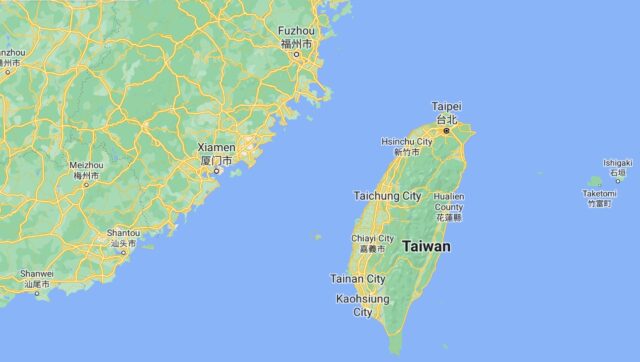
The Taiwan Strait as seen in a screenshot from Google Maps

BEIJING – China’s military on Monday condemned the sailing of a Canadian warship in the Taiwan Strait, saying its air and naval forces had monitored and warned the ship, a mission that came just a few days after U.S. Navy ships made a similar mission.

The U.S. Navy, and occasionally ships from allied countries like Canada, Britain and France, transit the strait, which they consider an international waterway, around once a month. Taiwan also considers it an international waterway but China, which claims Taiwan as its own territory, says the strategic waterway belongs to it.

Canada’s actions “deliberately stirred up trouble” and undermined peace and stability in the strait, the People’s Liberation Army’s Eastern Theatre Command said in a statement.

“Theatre forces maintain a high level of alert at all times and resolutely counter all threats and provocations,” it added.

The Canadian military declined immediate comment.

Both the Chinese and Taiwanese governments identified the ship as the Ottawa.

Taiwan’s defence ministry said on Sunday that the ship had sailed in a northerly direction, adding that Taiwanese forces also kept watch.

Taiwan’s foreign ministry welcomed the sailing.

“Canada has once again taken concrete actions to defend the freedom, peace and openness of the Taiwan Strait and has demonstrated its firm position that the Taiwan Strait is international waters,” it said on Sunday.

Taiwan has complained of repeated Chinese military activities near the island.

Taiwan’s defence ministry said on Monday morning in its daily update of China’s actions over the previous 24 hours it had detected 41 Chinese military aircraft and nine ships around the island, concentrated in the strait and off Taiwan’s southwest.

Last October, a U.S. and a Canadian warship sailed together through the strait, less than a week after China conducted a new round of war games around the island.

Taiwan’s democratically-elected government rejects Beijing’s sovereignty claims, saying only the island’s people can decide their future. — Reuters

UK PM Starmer offers to send peacekeeping troops to Ukraine

BRITAIN’S PRIME MINISTER KEIR STARMER — POOL VIA REUTERS

LONDON – British Prime Minister Keir Starmer said on Sunday he was ready to send British troops to Ukraine as part of any postwar peacekeeping force as talks aimed at ending the conflict were set to begin this week.

Mr. Starmer said he had not taken the decision to consider putting British servicemen and women “in harm’s way” lightly, but securing a lasting peace in Ukraine was essential to deter Russian President Vladimir Putin from further aggression.

U.S. Secretary of State Marco Rubio on Sunday said Ukraine and Europe would be part of any “real negotiations” to end Moscow’s war, signaling that U.S. talks with Russia this week were a chance to see how serious Mr. Putin is about peace.

The end of Russia’s war with Ukraine “when it comes, cannot merely become a temporary pause before Putin attacks again,” Mr. Starmer wrote in the Daily Telegraph newspaper.

Mr. Starmer is expected to join German Chancellor Olaf Scholz, Polish Prime Minister Donald Tusk, NATO Secretary General Mark Rutte, Italian Prime Minister Giorgia Meloni and other European leaders in Paris after French President Emmanuel Macron convened the talks on Ukraine.

U.S. President Donald Trump stunned European allies in NATO and Ukraine last week when he announced he had held a call with Russian President Vladimir Putin without consulting with them and would start a peace process. Mr. Trump’s Ukraine envoy, Keith Kellogg, then suggested Ukraine and other European leaders would have no place at peace negotiations. — Reuters

Trump shrugs off EU’s reported plans for Trump-style import curbs on food

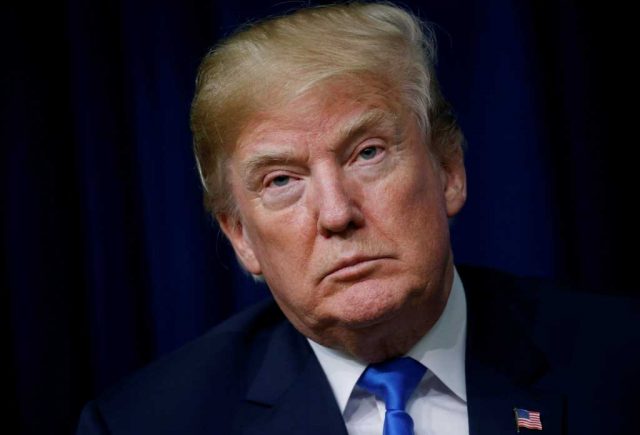
U.S. President Donald Trump — REUTERS/LEAH MILLIS/FILE PHOTO

WEST PALM BEACH, Florida – U.S. President Donald Trump on Sunday shrugged off the European Union’s reported push to block imports of U.S. soybeans and other foods made to different standards, warning such a move would only hurt Europe itself.

Mr. Trump, speaking to reporters after a quick trip to Daytona Beach for the Daytona 500 car race, said the U.S. was sticking to its plans to start implementing reciprocal tariffs.

“That’s alright. I don’t mind. Let them do it. Let them do it. It’s just hurting themselves if they do that,” he said.

The Financial Times reported earlier on Sunday that the European Commission would agree next week to explore tough import limits on certain foods made to different standards in an effort to protect its farmers, echoing Mr. Trump’s reciprocal trade policy.

Early targets could include U.S. crops such as soybeans grown using pesticides that EU farmers are not allowed to use, the report said, citing three officials it did not name.

Asked about the report earlier, a White House official earlier said Mr. Trump was fighting for fair and reciprocal trade and would stand up for American farmers.

“We will continue to look to open markets all over the world for high-quality American products,” the official said.

Tensions are running high between the U.S. and the EU after Trump’s decision to impose 25% tariffs on steel and aluminum from March 12; reciprocal tariffs from April; and separate tariffs on cars, pharmaceuticals and semiconductor chips.

All those tariffs would stack on top of each other, U.S. officials have said.

European Trade Commissioner Maros Sefcovic is expected to travel to Washington on Monday for meetings with U.S. officials on the new trade policy, the European Commission said.

Sefcovic, who had a first telephone call with U.S. counterparts last week, is due to speak at the American Enterprise Institute think tank, which is closely aligned with Mr. Trump’s Republican Party, on Wednesday. — Reuters

Netanyahu reiterates support for Trump’s Gaza plan

Image via Wikipedia

JERUSALEM – Israeli Prime Minister Benjamin Netanyahu said on Sunday that Palestinians should be given the choice to leave Gaza.

Speaking to Jewish American organizations gathered in Jerusalem, Mr. Netanyahu again praised U.S. President Donald Trump’s plan to resettle Palestinians from Gaza.

“Give them a choice. Not forcible eviction. Not ethnic cleansing,” he said.

Mr. Trump’s call for Palestinians to emigrate from Gaza, including to Egypt and Jordan, has been widely condemned with some critics saying that it amounted to “ethnic cleansing”.

Mr. Trump has said that he wants the U.S. to take ownership of Gaza and rebuild it into the “Riviera of the Middle East”.

U.S. Secretary of State Marco Rubio earlier met in Israel with Mr. Netanyahu. — Reuters

Meralco radiates communications excellence at the 60th Anvil Awards

Manuel V. Pangilinan-led Manila Electric Company (Meralco) exemplified communications excellence at the recent 60th Anvil Awards as it took home 10 Silver Anvils.

Meralco, which was also a finalist for Company of the Year, was recognized for its outstanding programs centered on communications, public service, employee centricity, corporate social responsibility, and digital transformation.

Seen in the photo are Meralco executives along with their respective teams: (first row, L- R) Vice-President and Chief Corporate Social Responsibility Officer Jeffrey O. Tarayao, Senior Vice-President and Chief Human Resources Officer Edgardo V. Carasig, First Vice-President and Head of Networks Froilan J. Savet, Executive Vice-President and Chief Operating Officer Ronnie L. Aperocho, Senior Vice-President and Chief Revenue Officer Ferdinand O. Geluz, First Vice-President and Head of Customer Retail Services Charina P. Padua, and Vice-President and Head of Corporate Communications Joe R. Zaldarriaga.

“These awards are affirmation of Meralco’s relentless efforts to capitalize on strategic communications that add meaning and value to the company’s impactful programs for our stakeholders. In addition, these also reflect the Meralco leaders’ proactive stance to empower our employees to continue going the extra mile to bring these initiatives to those who need it the most,” Mr. Zaldarriaga said.

Among Meralco’s campaigns that earned recognition were the “Goodbye, Spaghetti Wires: The Meralco Anti-Urban Blight Program,” which highlighted the distribution utility’s public safety campaign to address urban blight; and the company’s yearlong energy security campaign called “With great power comes great reliability: Meralco’s campaign to address the energy challenges during the summer and typhoon season.”

“Shaping Future-Ready Communications: Meralco Newsroom’s leap into digital excellence,” which showcased Meralco’s innovative use of digital communication technologies; and the digital documentary “Empowering Women in Energy: Suzette Castro’s Journey,” which featured the story of a Meralco female linecrew balancing motherhood and work in a male-dominated field.

Meralco’s commitment to the development of its employees as exemplified in the training programs “Strengthening Workforce Knowledge and Values through the Meralco Way Training Program,” and “Forging the Future of Engineering: The Meralco Cadet Engineering Program” also bagged Silver Anvils.

“Transforming Employee Communications through the Meralco News revival,” meanwhile, featured Meralco’s engagement and communication efforts through an internal newsletter that gave an avenue to level up information dissemination and employee engagement.

Meralco’s commitment to promote inclusivity was also hailed with the recognition of the program called “Empowerment Through Sports: A Soft Tennis Clinic Promoting Inclusivity Among People with Disabilities,” which fosters acceptance and empowerment of persons with disabilities (PWDs).

Completing this year’s haul were the two Silver Anvils won by One Meralco Foundation — the corporate social development arm of the distribution utility — for programs that uplift underserved communities within and beyond its franchise area namely “Household Electrification Program” and “Electrification for Development: Improving Agriculture in Mindanao.”

Spearheaded by the Public Relations Society of the Philippines, the Anvil Awards is the premier recognition for outstanding public relations programs, campaigns, and tools that exemplify the highest standards of industry practice in the country.


Spotlight is BusinessWorld’s sponsored section that allows advertisers to amplify their brand and connect with BusinessWorld’s audience by publishing their stories on the BusinessWorld Web site. For more information, send an email to online@bworldonline.com.

Join us on Viber at https://bit.ly/3hv6bLA to get more updates and subscribe to BusinessWorld’s titles and get exclusive content through www.bworld-x.com.

Trade war may hamper policy path

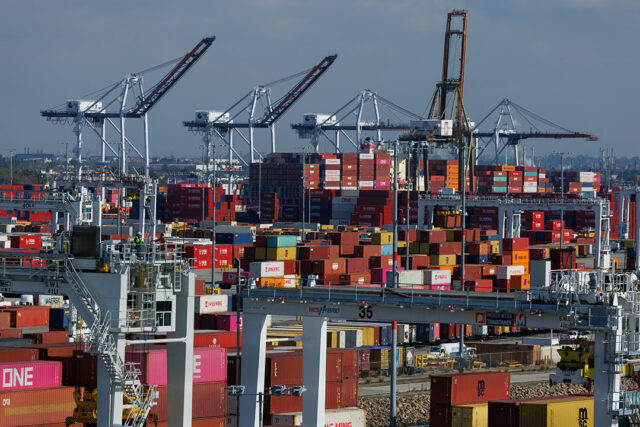
A drone view shows shipping containers from China at the Port of Los Angeles in Wilmington, California, Feb. 4, 2025. — REUTERS

THE Bangko Sentral ng Pilipinas (BSP) is likely to continue its easing cycle, but second-round effects from a looming global trade war could hamper its policy path, analysts said.

“The BSP remains in an easing mode from a fundamentally tight monetary stance; it is yet to unwind its significant tightening of previous years,” GlobalSource Partners Country Analyst and former BSP Deputy Governor Diwa C. Guinigundo said.

“However, the BSP could find itself in the middle of its easing mode faced with upside risks,” he added.

The central bank unexpectedly held interest rates steady last Thursday, leaving the target reverse repurchase rate (RRP) unchanged at 5.75%.

This after the Monetary Board delivered three straight rate cuts since it began easing in August. It cut rates by a total of 75 basis points (bps) by end-2024.

BSP Governor Eli M. Remolona, Jr. said the decision to hold rates was due to global uncertainties arising from the US’ tariff policies. He has said he is more concerned about the indirect effects of these tariff moves, as direct effects on the Philippines will likely be modest.

Markets have been rattled by fears of a global trade war amid US President Donald J. Trump’s plan to slap reciprocal tariffs on every country that taxes US imports.

Mr. Guinigundo said these tariff adjustments could directly impact price levels and domestic inflation in the short term.

“Trade uncertainties also tend to increase the risk premium and therefore they could also pose inflationary pressures. Direct effects of tariff and trade uncertainties as well as the impact of fuel prices could be limited as yet, but the indirect effects on wages, transport fare, and domestic pricing could be substantial,” he said.

Mr. Guinigundo said these second-round effects could “build up into inflation” in the coming months.

In a report, Capital Economics said the indirect impact from reciprocal tariffs “would potentially prove bigger” than a universal tariff.

“A reciprocal tariff would potentially undermine the case for friendshoring in those emerging markets that have high tariff barriers given that there would be other, less vulnerable options for multinationals to consider when it comes to supply chain configuration — notably Vietnam and other parts of Southeast Asia as well as developed markets,” it said.

ANZ Research said emerging Asian economies would be under a “direct line of fire” if reciprocal tariffs were implemented.

“The current trade tensions could become significantly more disruptive if the US administration imposes reciprocal tariffs on Asian economies,” ANZ said.

“Unlike in 2018, when these economies experienced only secondary effects from the US-China trade war, they would now be directly impacted.”

The United States is the Philippines’ top destination for exports, while China is usually the Philippines’ biggest source of imports.

Citi Economist for the Philippines Nalin Chutchotitham said these trade policies could also put pressure on the peso.

“Looking ahead, the delayed Fed funds rate cut and the US trade policy uncertainties pose risks of peso depreciation, which could impact inflation via imports of food and energy, as well as from converted income remittances from overseas workers,” she said.

MEASURED EASING
Despite the pause last week, analysts said that the BSP will likely continue easing rates but at a cautious and measured pace.

“We think the decision signals BSP is looking to slow the pace of the easing cycle (after three consecutive cuts), based on the governor’s definition of ‘measured’ and absent a strong rationale for the on-hold decision,” Nomura Global Markets Research analysts Euben Paracuelles and Nabila Amani said.

Bank of the Philippine Islands Lead Economist Emilio S. Neri, Jr. said he sees limited room for monetary easing this year.

“A narrowing interest rate differential could lead to capital outflows, while the country’s current account deficit heightens the vulnerability to external shocks… Keeping interest rates steady might be needed to mitigate these risks. We still expect the policy rate to end the year at 5.25%,” he said.

For the rest of the year, Mr. Guinigundo said he expects two more rate cuts.

“Depending on future data on inflation and inflation expectations, two more rate cuts could be in the works,” he said.

“Easing monetary policy could have marginal effects on growth. But tightening it promises better results in taming inflation without significant collateral harm on growth.”

At the same time, Nomura expects the Monetary Board to lower borrowing costs by 75 bps through three rate cuts.

“We still forecast an additional 75 bps of policy rate cuts in this cycle, taking the RRP rate to 5%, which we still believe is BSP’s estimate of the neutral level, given its forward guidance suggesting its stance remains restrictive and that it will look to reduce this restrictiveness.”

Both Nomura and Citi expect the Monetary Board to cut rates in April, August and December by 25 bps each.

“While we think the BSP could afford to cut a total of 75 bps this year, considering a high real policy rate and positive interest rate differential with the Fed, Governor Remolona’s more cautious forward guidance of a total of 50-bp cut this year means a third cut still hinges on several factors besides domestic demand and inflation,” Ms. Chutchotitham said.

For his part, Mr. Neri said the BSP could resume cutting rates in June.

“Additional policy easing is still possible later this year, as the outlook for domestic inflation continues to be positive. There’s a chance that the BSP could cut in June if the gross domestic product (GDP) growth in May continues to disappoint,” he said.

However, he said uncertainties from the Federal Reserve’s guidance and changing global conditions could make cutting rates in the second half of the year more challenging.

Mr. Remolona has said the BSP is still in an easing cycle, adding there is a possibility of up to 50 bps worth of rate cuts this year.

RRR CUT IN APRIL
Meanwhile, Nomura expects the BSP to further reduce the reserve requirement ratio (RRR) in April.

“We think April is a plausible window, as demand for liquidity could pick up ahead of the midterm elections in May,” it said.

“We have also argued that this sequencing (i.e., RRR cuts first before further rate RRP cuts) makes sense. From BSP’s perspective, these cuts are consistent with its longer-term goal of reducing the RRR to single-digit levels but also helping to further improve the transmission of its policy rate cuts later in the year.”

Mr. Remolona has said an RRR cut is still on the table this year, possibly before the Monetary Board’s next policy review on April 3.

He has signaled a 200-bp reduction, which would bring the RRR for big banks to 5% from the current 7%.

“Potentially, such a move would help support economic activity while having limited impact on the exchange rate versus the policy rate,” Ms. Chutchotitham added. — Luisa Maria Jacinta C. Jocson


External debt service burden jumps 14% as of end-November

PHILSTAR FILE PHOTO

By Luisa Maria Jacinta C. Jocson, Reporter

THE COUNTRY’S external debt service burden jumped by 14% as of end-November amid a rise in both principal and interest payments, preliminary data from the Bangko Sentral ng Pilipinas (BSP) showed.

Debt servicing on external borrowings rose by 14% to $15.735 billion in the 11-month period from $13.808 billion in the same period in 2023.

Central bank data showed principal payments increased by 12.9% to $8.39 billion from $7.431 billion in the same period in 2023.

Amortization payments accounted for over half (53.3%) of total debt servicing during the period.

Meanwhile, interest payments jumped by 15.2% to $7.345 billion in the January-to-November period from $6.377 billion a year ago.

The BSP said that the debt service burden represents principal and interest payments after rescheduling. 

This includes principal and interest payments on fixed medium- and long-term credits including International Monetary Fund credits, loans covered by the Paris Club and commercial banks’ rescheduling, and New Money Facilities.

It also covers interest payments on fixed and revolving short-term liabilities of banks and nonbanks.

However, the debt service burden data exclude prepayments on future years’ maturities of foreign loans and principal payments on fixed and revolving short-term liabilities of banks and nonbanks.

Latest data from the BSP showed the Philippines’ outstanding external debt hit a record $139.64 billion as of end-September, higher by 17.5% year on year.

Broken down, this was composed of $86.88 billion in public sector debt and $52.76 billion from private sector obligations.

This brought the external debt-to-GDP ratio to 30.6% at the end of the third quarter.

At end-September, the external debt service burden as a share of gross domestic product (GDP) stood at 3.9%, up from 3.5% in the previous year.

The BSP’s external debt data cover borrowings of Philippine residents from nonresident creditors, regardless of sector, maturity, creditor type, debt instruments or currency denomination.

“The higher external debt service was largely due to higher interest rates and weaker peso since 2022, as well as the need to finance wider budget deficits that increased the need for total both local and foreign borrowings,” Rizal Commercial Banking Corp. Chief Economist Michael L. Ricafort said.

Though the central bank began cutting rates in August last year, BSP Governor Eli M. Remolona, Jr. has said the policy rate is still in “restrictive territory.”

The central bank cut rates by 25 basis points at each of its last three meetings last year, bringing the key rate to 5.75%.

The Monetary Board last week kept interest rates steady amid global uncertainties.

The peso was under pressure towards the fourth quarter of 2024. The local unit fell to the record-low P59-per-dollar level twice in November.

Latest data from the Treasury showed the budget deficit ballooned to P1.18 trillion in the January-to-November period from the P1.11-billion deficit last year. 

“Going forward, the National Government (NG) reduced the share of foreign borrowings in its overall borrowing program to reduce forex risks involved in external borrowings denominated in US dollars or foreign currencies,” Mr. Ricafort said.

Finance Secretary Ralph G. Recto has said they will continue lowering the share of external borrowings in its borrowing program.

From this year to 2027, the NG plans to source at least 80% of its borrowing program from domestic sources, and 20% from foreign lenders. The government previously adopted a 75:25 borrowing mix.

Philippines needs faster growth to reach UMIC status by ’26 — analysts

According to the World Bank’s latest income classification data, the Philippines remained a lower middle-income country with a gross national income (GNI) per capita of $4,320 in 2023. — PHILIPPINE STAR/RYAN BALDEMOR

By Aubrey Rose A. Inosante, Reporter

INCREASED public expenditure and investments are needed to boost the economic growth and bring the Philippines closer to becoming an upper middle-income country (UMIC) by 2026, analysts said.

“To achieve upper middle-income status, the gross domestic product (GDP) must continuously grow by at least 6%-7%. This will both increase the country’s income and outpace population growth,” Oikonomia Advisory and Research, Inc. economist Reinielle Matt M. Erece told BusinessWorld on Feb. 8 via Viber message. 

In the 2024 Philippine Development Report, the Marcos administration expects the Philippines to reach upper middle-income status over the next two years (2025-2026) “driven by strong economic performance and sound fiscal policies.”

According to the World Bank’s latest income classification data, the Philippines remained a lower middle-income country with a gross national income (GNI) per capita of $4,320 in 2023, higher than $3,950 in 2022.

To become an upper middle-income country, the Philippines now needs to have an estimated GNI per capita of between $4,516 and $14,005.

Ateneo School of Government Dean and Economics Professor Philip Arnold P. Tuaño said the only way for the Philippines to reach the upper middle-income status is to boost economic growth.

“This will be dependent on the level of investments and consumption that we will achieve in the short term,” he told BusinessWorld.

“There is some likelihood that we will be able to achieve UMIC status even in the prospective difficult international environment that most likely will occur, but this requires steadfast macroeconomic management and prudent assessment of our fiscal resources,” he added.

The Philippine economy grew by a weaker-than-expected 5.6% in 2024, falling short of the government’s 6-6.5% target but slightly faster than 5.5% in 2023.

Economic managers are targeting 6-8% GDP growth for this year until 2028.

On the other hand, Leonardo A. Lanzona, who teaches economics at the Ateneo de Manila University, said the Philippines is unlikely to achieve the government’s target of achieving UMIC status in the near term “mainly because we are growing at slightly 6% for the last two years.”

Mr. Erece said global economic uncertainty such as softer demand for exports and inflation risks may weigh on Philippine growth prospects which “can make it difficult to achieve upper middle-income status quickly.”

However, Mr. Erece said that achieving upper middle-income status is still possible within the next two years “as more monetary policy easing and increased fiscal spending are seen to materialize in 2025 to boost economic activity.”

“Further, building a resilient economy through political stability, improving the ease of doing business, and accommodative economic reforms in the country can attract more investments, boost employment, and overall provide higher income for Filipinos,” he said.

Jose Enrique “Sonny” A. Africa, executive director at think tank IBON Foundation, said the Philippines will most likely become a UMIC this year or in 2026 “but the government should do so much more for the benefits from that growth to be more equitably shared.”

“The biggest barrier to this kind of more inclusive growth boost is the bias of current economic policy for supporting the profits of large foreign and domestic corporations in a few regions of the country like National Capital Region, Central Luzon and Southern Tagalog rather than the economic activity of rural producers, small enterprises and low-income households nationwide,” he said. 

In Philippine Development Report, the National Economic and Development Authority (NEDA) said it anticipates improved income levels for Filipinos in the next two years.

“(This) positions the country to attract more investments and a stronger fiscal capacity to fund development priorities such as critical infrastructure, education and social services,” NEDA said.

Achieving UMIC status would mean the Philippines would have reduced access to official development assistance (ODA) from development partners.

“One of the benefits we will lose once we upgrade to an upper middle-income country is access to cheap loans, a benefit for developing countries,” Mr. Erece said.

Mr. Erece said fiscal consolidation is “key to improving our self-liquidity.”

“This involves improving the country’s tax collection system, robust export sector for both goods and services and attracting investments can also provide additional capital inflow for the Philippines,” he added.

According to the 2023 ODA Portfolio Review Report, the country’s active ODA portfolio of loans and grants reached $37.29 billion in 2023.

Mr. Lanzona said the Philippines will see an increase in investments once it achieves upper middle-income status, which could be more than enough to offset any decline in ODA and concessional loans.

“But this involves more than just capital growth and infrastructure because it will require expanding opportunities and improving capacities of workers… Reaching this higher status next year will be meaningless to the majority of the population. How can we think of reaching and sustaining upper middle-income status when learning poverty is at 90%? The crucial step is institutional reform,” he said.

Mr. Africa said since ODA is used to support domestic spending “the government should also already consider revenue generation with a more progressive tax system.”

“This means more direct taxes on income of rich families and large corporations, and on billionaire wealth,” he added.

Among Association of Southeast Asian Nations (ASEAN), the Philippines, Vietnam ($4,110), Cambodia ($2,390), Lao ($2,110), and Myanmar ($1,230) are all classified as lower middle-income countries.

Meanwhile, Indonesia ($4,810), Thailand ($7,200) and Malaysia ($11,710) are classified as upper middle-income countries. Brunei ($34,480) and Singapore ($70,590) are classified as high-income countries.

“But even if (the Philippines) did reach UMIC, this will be just in name since its position can be so shaky that it may fall back into lower middle-income class especially since the population is still growing and debilitating effects of climate change have not been resolved,” Mr. Lanzona said.

PHL financial system’s resources near P34 trillion

BW FILE PHOTO

THE TOTAL resources of the Philippine financial system rose by 7.8% to nearly P34 trillion in 2024, preliminary data from the Bangko Sentral ng Pilipinas (BSP) showed.

Resources of banks and nonbank financial institutions  jumped to P33.78 trillion last year from P31.34 trillion in 2023.

Financial system resources include funds and assets such as deposits, capital, as well as bonds or debt securities.

BSP data showed banks’ resources increased by 8.9% to P28.26 trillion as of end-2024 from P25.96 trillion in the previous year.

Broken down, resources of universal and commercial banks stood at P26.44 trillion, higher by 8.7% from P24.32 trillion in 2023.  Big banks accounted for the bulk or 78.3% of total resources last year.

Thrift banks’ resources went up by 5.9% to P1.17 trillion in 2024 from P1.1 trillion in the year prior.

Total resources held by digital banks reached P121.8 billion in 2024, up 33.6% from P91.2 billion in 2023. The BSP began consolidating data from digital banks starting March 2023.

Rural and cooperative banks’ resources climbed by 18% to P527.1 billion as of end-2024 from P446.5 billion in the prior year.

Meanwhile, latest available data showed that nonbanks’ resources stood at P5.52 trillion as of end-June. There were no available data as of end-December.

Nonbanks include investment houses, finance companies, security dealers, pawnshops and lending companies.

Institutions such as nonstock savings and loan associations, credit card companies, private insurance firms, the Social Security System and the Government Service Insurance System are also considered nonbank financial institutions.

Rizal Commercial Banking Corp. Chief Economist Michael L. Ricafort said the growth in financial resources could largely be attributed to the growth in bank lending.

Separate BSP data showed outstanding loans of universal and commercial banks jumped by 12.2% year on year to P13.1 trillion in December. This was the fastest pace of bank lending growth in two years.

“Furthermore, the continued growth in banks’ net income also contributed to the growth in banks’ capital and overall assets,” Mr. Ricafort added.

The Philippine banking industry’s combined net profit rose by 9.8% to an all-time high of P391.28 billion at end-December from P356.49 billion in the year-ago period. 

The central bank’s rate-cutting cycle also brought down loan rates and increased demand for credit, Mr. Ricafort said.

In 2024, the Monetary Board lowered borrowing costs by a total of 75 basis points (bps) since it began its easing cycle in August, bringing the benchmark rate to 5.75%.

The reduction in reserve requirements also supported the ability of banks to increase loans and investments, he added.

The BSP cut the reserve requirement ratio for universal and commercial banks and nonbank financial institutions with quasi-banking functions by 250 bps to 7% from 9.5%, which took effect last October. — Luisa Maria Jacinta C. Jocson