Home Blog Page 1610

History lesson: The Nilad Community holds Battle of Manila tour series


EIGHTY YEARS AGO in February, 100,000 people died as the city of Manila burned.

For 30 days, the Philippine capital was caught up in a clash between the Japanese and American armed forces in a bloody, destructive battle at the tail end of World War II.

It is an event that many of the nearly 15 million current inhabitants of the gigantic metropolis that is Metro Manila have only a vague awareness of. It was, after all, 80 years ago, and the survivors who can tell the tale are fading fast. To combat this forgetfulness and to save the stories, every February is filled with events to memorialize the people and places who were caught up in the Battle of Manila.

This year, the Nilad Community, an organization composed of heritage and touring groups operating in Manila, is offering for the first time a series of Battle of Manila tours. The participating groups are Manila Girls, Don’t Skip Manila, The Heritage Collective, Renacimiento Manila, and WanderManila.

The series is set to take place on the following dates and locations: Feb. 8 in Sampaloc, Feb. 9 in Binondo, Feb. 15 in Malate, Feb. 22 in Intramuros, and March 1 in Ermita.

Across the five tours, the Nilad Community and its member groups aim to provide not just history lessons, but “an invitation to confront the reality of loss and, more importantly, the responsibility of preserving what remains.”

“We’ve each done our own iterations of this before, but this is the first time that it’s consolidated into one program, with one set of promotions for the entire series,” Renacimiento Manila founder Diego Torres told BusinessWorld in a short conversation in Manila.

Each of the five chosen neighborhoods in Manila will be showcased through their sites of catastrophe during the war.

For WanderManila head tour guide Benjamin Canapi, tours are one way to help “deepen people’s understanding of Manila beyond being a chaotic and confounding city.” Recently, he led the Luneta Art Fair that made Rizal Park a center of art for the second year in a row.

“The work we do is our way of presenting Manila in a new light,” he told BusinessWorld in an online interview in January.

Registration for the first two tours this weekend — those in Sampaloc, which focuses on the University of Santo Tomas which served as a Japanese internment camp for enemy civilians, and in Binondo, the oldest Chinatown in the world which turned into a battleground — close on Feb. 6. 

Next up on Feb. 15 and 22 are Malate and Ermita, neighborhoods that endured unimaginable devastation and were the sites of some of the worst massacres of the war.

The series concludes on the first day of March, in the historic walled city of Intramuros, which was reduced to ruins in the battle’s final harrowing days. Only San Agustin Church was left standing.

Some of the trails have been adjusted, said Stephen John Pamorada of The Heritage Collective, which means those who have gone through any of the five participating heritage groups’ Battle of Manila-centered tours before can expect something new.

“This is more than a tour. It is a tribute to the courage, chaos, and sacrifices that shaped Manila’s history,” the members of the Nilad Community wrote in a post online.

“Together, let us honor the past and safeguard the stories that remain.”

All tours are P800 each, inclusive of commemorative merchandise. The full schedule and details regarding the Battle of Manila tour series can be found on the Nilad Community’s social media pages. Register via https://forms.gle/MT6imQqZUKtn7B4S8.Brontë H. Lacsamana

BSP open to extending regulatory relief for DBP if ‘strongly justified’

BW FILE PHOTO

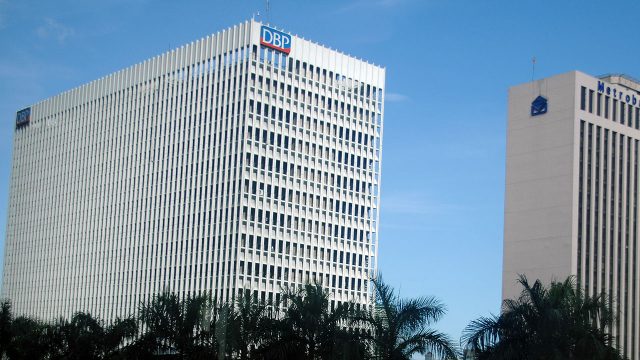
THE BANGKO SENTRAL ng Pilipinas (BSP) is open to granting state-run Development Bank of the Philippines (DBP) further regulatory relief if they are able to “strongly” justify the need for it.

“Of course, they have to justify. We need to see and assess, is it reasonable? So, the justification, we have to assess,” BSP Deputy Governor Chuchi G. Fonacier said in a seminar over the weekend.

“But the openness as to considering it, of course it’s there because they can submit, but… they should really justify it. It’ll be a very strong justification.”

DBP President and Chief Executive Officer Michael O. de Jesus last month said they plan to request for regulatory relief again this year to boost its capital position.

Mr. De Jesus said they expect to have met the required minimum capital ratios in 2024, but they want to continue ramping up their buffers.

State-run lenders DBP and Land Bank of the Philippines (LANDBANK) had sought regulatory relief from the central bank following their contributions to the Maharlika Investment Corp. (MIC). DBP and LANDBANK were mandated to contribute P25 billion and P50 billion, respectively, as the initial seed capital for the MIC, which they remitted in September 2023.

For its part, LANDBANK has said it is not planning to request for further regulatory relief amid its “sound financials.”

“All this regulatory relief, it’s time bound. That’s why we can say it’s reasonable because it’s time bound. Once they request for more time, that’s where we go in to assess if it’s justified to extend. We’ll look at that,” Ms. Fonacier said.

She said the central bank considers several metrics when granting regulatory relief, such as capital adequacy, loan portfolio, past due and nonperforming loans, and the bank’s overall performance.

“We have to assess if it’s justified to grant an extension… It should really be prudence [that’s] the first consideration, because otherwise, if it’s not prudent, … it’s no longer safe,” Ms. Fonacier said.

“It also depends on the condition and the factors that they are in. LANDBANK’s case is different, DBP’s case is different — that’s why we can’t compare them, because to begin with, their sizes are different,” she added. “We really look at it on a per institution basis, but also we need to take a look at what is the impact on the entire system, because if it’s no longer resulting in a level playing field, then there’s something there.”

In a recent report, the International Monetary Fund (IMF) called for the restoration of capital for the two state banks after their contributions to the MIC.

The IMF noted the importance of capital restoration and exiting regulatory relief “as soon as possible.”

The House of Representatives last week approved on third and final reading a bill that will replace DBP’s current charter to raise its authorized capital stock and allow it to conduct an initial public offering.

House Bill No. 11230 repeals DBP’s almost 27-year-old charter to raise its capital stock to P300 billion from the current P35 billion. The Senate okayed its counterpart version of the measure in September 2024.

Both House and Senate versions of the bill allow the government to sell DBP shares to the public, provided that it retains a 70% stake. They also mandate that 10.67% or P32 billion of the bank’s shares should be subscribed to and paid by the government.

DBP’s net income declined by 8.95% year on year to P4.68 billion in the first nine months of 2024 amid lower foreign exchange gains. DBP Senior Vice-President Catherine T. Magana last week said they expect to have ended 2024 with a net profit of about P7 billion.

The bank’s net earnings are seen to reach about P7.3 billion this year, Ms. Magana added. — Luisa Maria Jacinta C. Jocson

Fruitas board OKs P100-M share buyback program

FRUITASHOLDINGS.COM

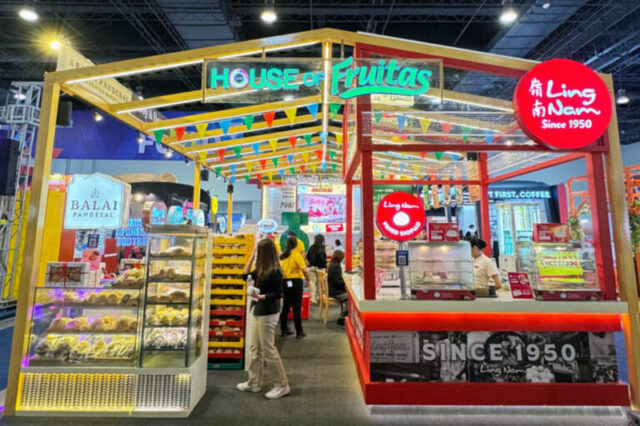
FRUITAS HOLDINGS, Inc. board has approved a share buyback program of up to P100 million to boost shareholder value, the company announced on Tuesday.

The proposed creation and implementation of the share buyback program for the company’s common shares secured board approval on Feb. 3, Fruitas said in a regulatory filing on Tuesday.

“The objectives of the share buyback program are to enhance shareholder value and to manifest confidence in the company’s value and prospects through the repurchase of the common shares and the return of a portion of the company’s capital to its shareholders,” Fruitas said.

As of end-2024, Fruitas has a 40.75% public float, equivalent to 869.38 million publicly owned shares.

Fruitas said the share buyback program could potentially acquire 163.93 million shares based on the company’s closing share price of 61 centavos apiece on Jan. 31.

Once the share buyback program is completed, Fruitas said its public float could drop to 35.81%, corresponding to 705.45 million publicly owned shares.

Fruitas has 2.13 billion issued, outstanding, and listed shares. The share buyback program could potentially reduce the company’s outstanding shares to 1.97 billion.

The share buyback program will have an initial term of one year, which could be extended upon approval by the company’s board, Fruitas said.

It added that the program will be implemented in the open market through the trading facilities of the Philippine Stock Exchange.

Fruitas said in early January that it had earmarked P500 million for its capital expenditure (capex) budget this year to support its expansion plans. The company aims to open 100 stores in 2025.

According to the company, 50% of the capex budget will be allocated for commissary infrastructure and logistics upgrades, 40% will be for store expansions, and 10% for brand acquisitions and development.

Fruitas shares rose by 11.67%, or seven centavos, to 67 centavos per share on Tuesday. — Revin Mikhael D. Ochave

Artists from the Filipino diaspora pay tribute to Nena Saguil

PIECES of the 7,642nd Island installation by Kulay Labitigan

MODERNIST PAINTER Nena Saguil was a Filipino pioneer of abstract art. But aside from the impact of her cosmic paintings and ink drawings, there is a side of her not many know — that she was a woman of the Filipino diaspora. From the age of 40, she had lived in Paris, France, to pursue a career in painting.

Menial work sustained Ms. Saguil’s artistic practice throughout the 1950s and 1960s, her dedication to her art shining through despite being away from the Philippines. This thread of the diasporic experience has since continued across generations of Filipino artists.

With the goal to “bring something refreshing yet resonant to the local art scene,” boutique multi-platform creative brand The Art House has mounted a tribute show for Ms. Saguil, featuring a collection of works by nine artists from the Filipino diaspora.

Titled LAKBAY: Voyages into the Absolute with Nena Saguil, the exhibit will be on view at the mezzanine of Discovery Primea from Feb. 8 to 12. “Having my aunt as the point artist showcasing expatriate work really would have been a dream come true for her, if she was still around,” said Ms. Saguil’s nephew, Benjamin Saguil, at the media launch of the exhibit on Jan. 27.

“The Philippine art community is really progressing, even in the other side of the world in Europe and the United States, where they are showcasing that unique experience of being in a different culture and yet maintaining their character as a Filipino,” he added.

A COMMON LINK TRACED
The exhibit features work by Jana Benitez, Rose Cameron, Kim Cruz, John Wayne Forte, and Jaclyn Reyes in the US, Lizza May David in Germany, Marissa Gonzalez in Switzerland, Racso Jugarap in Belgium, and Kulay Labitigan in the UK. The exhibit was curated by Marika Constantino in partnership with the Nena Saguil Foundation.

“We’re very lucky that the foundation loaned to us several pieces to be displayed. The nine artists we tapped, who are intergenerational and from different parts of the world, all responded and reacted to Ms. Saguil’s works,” explained Ms. Constantino.

“The diasporic experience, which may be consciously or unconsciously manifested in their artworks, is a common linkage with the artists in this exhibition,” she added.

The works can be very different. For example, Marissa Gonzalez, a figurative painter based in Switzerland, currently works in the tromp l’oeil illusory style of realism using grisaille painting on stained glass. Meanwhile, Kulay Labitigan works with colorful yarn assemblage to make an installation reflecting the “digital island” that overseas Filipino workers reside in. He draws from the contrasting experiences of his sunny childhood in rural Quezon province and his current life as a gay Filipino migrant in London.

As a curator, Ms. Constantino said that the exhibit aims to be both “a visual conversation and art experience that honors the stories of the Philippine diaspora,” with Ms. Saguil’s life and work as an anchor point.

In a quote highlighted by The Art House, Ms. Saguil once said, “Your ‘roots’ will always be expressed in anything you do.

“I think we are too conscious of being ‘Filipino.’ The important thing is sincerity… Therefore, one must free oneself — within one’s self.”

A VENUE FOR THE GLOBAL FILIPINO
The Art House is a platform for Philippine artists, community engagement, and cultural exchange. Founded in 2019 by Juan Carlo Pineda, Maritess Pineda, and Maiqui Pineda — all from the Pineda family of art collectors — the platform endeavors to create a common ground for both the audience and artists.

“For National Art Month, we wanted to present a different proposition, something new and fresh. We were keen on bringing audiences stories and experiences not usually found in the local art market,” said Mr. Pineda, chief executive officer of The Art House, at the launch.

“We’d like to think that our work as a platform helps to revitalize the patron-artist relationship,” he added.

The artists participating in Lakbay were handpicked by the boutique platform from recommendations by industry insiders and extensive research. The Tourism Promotions Board and the British Council are also exhibit partners, helping in bringing the nine artists back to the motherland for a series of talks.

From Feb. 9 to 12, one or two of the artists will be sharing their insights at 4 p.m. at the exhibition space, for visitors to understand the various processes and practices on display.

“We are an artist’s platform, focused on talent and highlighting what they have to say,” said Mr. Pineda. “Unlike the traditional gallery, we have a clear vision for engaging with local communities.”

For more information about The Art House, visit www.arthouseph.com or follow them on Instagram via @thearthouse_. — Brontë H. Lacsamana

AXA Philippines launches insurance plan covering major critical illnesses

AXA PHILIPPINES Life and General Insurance Corp. has launched a life insurance product that covers more than 150 critical illnesses and allows up to nine claims.

Health Max Elite covers 150 critical illnesses, including 77 major and 73 minor conditions, the insurer said.

“All critical illness or most critical illness insurance products allow you to only claim once. With the Health Max Elite of AXA, you can claim up to nine times. Of those nine claims, four of those could be for major critical illness,” AXA Philippines Chief Marketing Officer Fernando V. Villar said at an event on Tuesday.

Policyholders can make claims equal to 400% of the sum insured, broken down into four claims for major critical conditions for cancer, stroke, and heart attack, two claims for covered minor critical conditions, two claims for non-listed cases requiring intensive care unit (ICU) confinement and life-saving surgery, and one claim for select pre-early conditions and mental health illnesses.

“So, the rule is, if it’s not in the list, then it’s not covered. However, in this product, if it’s not in the list and you’re in the ICU for five days or have a life-threatening surgery, you get partial coverage,” Mr. Villar said.

The plan also includes coverage for select mental health conditions such as depression and mild bipolar disorder.

“There’s a different degree of criticality of the illness, but we cover from the moderate condition up to the severe condition. It is the first in the market; hence, we only focus on those that are most common depending on the disease registry of the Department of Health,” AXA Philippines Critical Illness & Health Product Category Head Antonio S. Castillo said.

The product also includes coverage for the pre- and post-illness stages of certain conditions, which Mr. Villar said is also the first in the market.

“In other words, before it becomes a critical illness, if it’s still in the pre-early stage, like a benign tumor, you can already claim. Of course, not the full amount, but a partial amount” he said.

AXA Philippines’ premium income stood at P21.76 billion in 2023, with its net profit at P2.73 billion. — A.M.C. Sy

Pryce sees 30.34% profit growth

PRYCE CORP. reported a 30.34% increase in net income for 2024, primarily driven by improved margins in its liquefied petroleum gas (LPG) products, with notable growth in the Luzon market.

The company’s net income stood at P3.07 billion, up from P2.36 billion in 2023, it said in a media release on Tuesday.

Pryce said that its consolidated revenues grew by 6.3% to P20.47 billion from the previous year’s P19.26 billion.

LPG revenues contributed a significant portion, increasing by 5.8% to P19.18 billion, supported by a rise in the average contract price by 5.5% to $608.38 per metric ton.

Part of the total revenues also came from industrial gases, which contributed P913.57 million, or 4.46%.

Revenues were further bolstered by the operation of its air separation plant in Mindanao, producing a total daily capacity of 7,200 equivalent standard cylinders (ESC) for oxygen, 1,500 ESC for nitrogen, and 200 ESC for argon. Consequently, industrial gas volume increased by 34% to 2.03 million cylinders.

Other business segments contributed as well: memorial park operations accounted for P326.78 million, or 1.60%, while pharmaceutical products represented P46.53 million, or 0.23%.

Pryce said its gross profit for 2024 rose by 16% to P6.48 billion, despite a 2.4% increase in its cost of sales and services to P13.99 billion.

“With all these developments, Pryce is committed to taking a more proactive approach to increase industrial gas sales volume, particularly with respect to the supply and distribution of its medical oxygen, nitrogen, argon, and other industrial gas products in the Visayas and Mindanao regions,” the company said.

Pryce was established as a property holding and real estate development company, involved in the development of memorial parks and the sale of memorial lots.

Pryce Gases, Inc., the company’s major subsidiary, is engaged in the importation and distribution of LPG and also produces and sells industrial gases. Another subsidiary, Pryce Pharmaceutical, Inc., is a wholesaler and distributor of private-branded multivitamins and some over-the-counter generic drugs.

At the local bourse on Tuesday, shares in the company climbed by 1.90% to close at P10.70 each. — Sheldeen Joy Talavera

Creating dreamy Filipiniana for ballet

DANCE MEETS DESIGN as Jor-el Espina collaborates with Ballet Philippines for its Filipiniana-themed season-ender, Ang Panaginip (The Dream).

Mr. Espina is making the costumes for the ballet, which were shown in a short luncheon fashion show cum preview on Jan. 28 in Solaire.

Ang Panaginip is inspired by (but, according to Ballet Philippines’ President Kathleen Liechtenstein, not an adaptation of) the fairy tale and ballet The 12 Dancing Princesses. To modify the theme for Philippine audiences, the setting is in a fantasy Filipino kingdom, and instead of 12 princesses, there will be 17, reflecting each of the country’s regions.

Not even the plot is the same, depicting medieval themes, 12 princesses locked in a bedroom, or romances. “This is all about Filipina(s)… finding themselves,” said Ms. Liechtenstein in an interview. “It’s really the 17 women that went out of their way to find themselves and gain strength of character in the journey.”

And the reason for choosing Mr. Espina to costume the ballet: “Who can make a fantasy world of Filipiniana? Jor-el is one of those. He’s very, very evocative.”

As it turns out, Mr. Espina — famous for his barong bomber jacket and modernized Filipiniana — had a background in dance in high school.

“This is Filipiniana, something very close to my heart. It’s easy to interpret,” he said, speaking in a mixture of English and Filipino. For the costumes, Mr. Espina used various Indigenous weaves and Filipino fabrics, along with the shape of the balintawak and the baro’t saya.

We asked him about concerns about weight, temperature, and other such considerations in costumes. “These fabrics are tropical fabrics,” he said, though pointing out that some costumes would be heavy because of layering and beadwork. “I see to it that nakakagalaw pa rin sila… na hindi nasisira iyong form nila (that they can still move… without ruining their form).”

While each princess represents a certain region in the country, they’re not taking it too literally by costuming one in the singular costume of each area. “Let’s not be literal,” said Ms. Liechtenstein. Mr. Espina grouped the princesses into the three major island groups (Luzon, Visayas, and Mindanao) and added different touches from here and there, but bound by similar shapes and forms. The designer added, “It looks cohesive pa rin (still) at the same time, pero iba-iba pa rin iyong texture and elements (the textures and elements are still different) when you see them onstage.”

Ms. Liechtenstein spoke of the importance of costuming in this particular ballet: “A dance that is very minimalist can also tell and evoke a story. When you see a production that is visually appealing and visually admirable, it adds a different dimension.”

Ballet Philippines will be the principal performer at the Philippine Pavilion at the Osaka Expo in April, then will be embarking on a European tour in September, covering Prague, Vienna, Budapest, Belgrade, and Athens.

Ballet Philippines’ Ang Panaginip will have performances on Feb. 28, March 1 and 2 at The Theatre at Solaire, Solaire Entertainment City in Parañaque. For tickets, log on to www.ballet.ph.Joseph L. Garcia

The demographic dividend of the Philippines: Sex is only for marriage

VECTEEZY

(Part 10)

It is providential that Donald Trump has made it very clear that he will do everything in his power as the new President of the US to root out the very morally dangerous “woke culture” that was encouraged by the previous US administration. President Trump minced no words when his first pronouncement on this issue was that there only two sexes recognized in American society: male and female, to the great consternation of the LGBTQ+ advocates. President Ferdinand “Bongbong” Marcos, Jr. thinks along the same line. On Jan. 20, the day Mr. Trump was sworn into office, Mr. Marcos Jr. said he was appalled by some elements in Senate Bill 1979, the proposed Prevention of Adolescent Pregnancy Act, blaming the “woke mentality” that he said some proponents were trying to bring into our system.

His statement came after an NGO named Project Dalisay, which is led by former Chief Justice Maria Lourdes P.A. Sereno, linked the Bill’s sex education provision to a technical guidance by the UN Educational, Scientific and Cultural Organization (UNESCO) and the World Health Organization for sex education to tackle the issue of masturbation among children. The documents issued by these two international organizations are very candid in proposing the normalization of masturbation.

One does not have to be deeply religious to accept as reasonable the dictum that “beasts copulate, but human beings are meant to marry.” Men and women are meant for lasting, loving relationships. They are the pillars and the foundation of the human family. It is important to drum this truth into the minds of young people. Animals can meet and mate for one day and never see each other again. That does not apply to persons. In sexuality education, the teacher and the parent must prepare the students not just for sex and its consequences but for marriage, that permanent loving bond which is the only right context for human intercourse.

Sexuality education must be accompanied by an education in human freedom and responsibility. The young must be taught as early as possible in life that freedom is not the ability to do what one pleases. It is the ability to choose what is right, what is good.

Irish writer Cormac Burke calls these the “Rules of Life.” These rules stem from objective realities, e.g., alcohol intoxicates, fire burns, electricity electrocutes, copulation can lead to pregnancy. If a person wishes to be truly free, he has to use things according to their purpose or else they backfire on him and he ends up with more problematic things to contend with than when he first began. No matter who someone is, or what he thinks or does, he is not excused from being governed by life’s rules. He can ignore these rules, defy them, or disregard them, but they still hold true. It is only by respecting these rules that one finds the fulfillment of freedom.

In the relations among individuals, the ultimate responsibility is to respect the inviolable dignity of the human person. For someone who believes that one is created by God, and that one’s existence was willed by the same God from eternity past, the person is of infinite value and worthy of being loved for his or her own sake. To use a person merely for the sake of the pleasure or comfort he or she can provide, without regard for that person’s welfare, is to go against the dignity of that person. In sexual matters, anyone who treats another person (whether of the opposite or same sex) as merely an object of pleasure is going against the dignity of that person.

Any kind of sexual act that is outside of marriage, no matter how strong the feelings of “love” may be, goes against the dignity of a person who deserves to be loved completely, exclusively, and permanently. Outside of marriage, there is no reassurance of committed love. Only in marriage can a person give himself to the other until death calls. Outside of it, the commitment lasts only as long as the pleasure lasts. In this type of sexual relationship, there can be no real loving but merely using or exploiting.

It is fundamentally wrong and counterproductive to teach teenagers to use condoms or other contraceptives in order to reduce the large number of teenage pregnancies in the Philippines. As we have seen above, an education that merely addresses the biological realities of the person is insufficient and can potentially damage the student. The narrow educational approach could lead the student to set the importance of the soul and its needs aside or beneath the desires of his or her flesh and senses. This may lead him or her to solely seek bodily pleasure instead of pursuing higher good which can demand that he give up some or all of his comforts.

On the other hand, an education that merely deals with the soul and neglects to acknowledge the senses and the passions, can also lead to unbearable frustration for the student. It must be emphasized that feelings and emotions run high, especially during adolescence, and that the student needs to understand that these emotions are not bad in and of themselves but that they must be used to pursue greater good.

These introductory principles are fully developed in eight separate books used at different levels of basic education from Grades 5 to 12, corresponding to the pre-teen and mid-teen ages, i.e., 11 to 18 years of age. The themes covered in ascending order are: Our Sexuality: What We Are; Our Home, Our Folks, Our Family; Our Classmates, Our Friends, Our Peers, Our Barkada; Sex: Its Nature, Purpose, Joys, Travails, and Challenges; Attraction and Courtship, Hanging Out, Dating and Relationships; Engagement and Marriage; Human Reproduction and Reproductive Well-being; Population, Economics and Population Management; and, finally at the Grade 12 level, special questions covering pre-marital sex, homosexuality, open parties, fashion, drugs, social networking, contraception, abortion, divorce and remarriage.

This set of books on Sexuality Education first appeared in 2013 and were updated in 2024. They were first used widely in the public school system in 2014. Accredited users number about 500 schools spread out all over the National Capital Region and the Calabarzon region. Authorization is given by an NGO, (Alalay sa Pamilya at Bayan carrying an expanding nationwide program) called Campaign for Character Education Tenacity (CACHET). The lead faculty come from the University of Asia and the Pacific where the teachers-coaches get their training. The contents of the books were made available online at cost by the Department of Education under the previous leadership and negotiations have started with the office of the current Secretary of Education. Interested parties may contact Global Creative Publishing House, care of Andrea Gomez at 0995-323-8503.


Bernardo M. Villegas has a Ph.D. in Economics from Harvard, is professor emeritus at the University of Asia and the Pacific, and a visiting professor at the IESE Business School in Barcelona, Spain. He was a member of the 1986 Constitutional Commission.

bernardo.villegas@uap.asia

Moovr bullish about increased e-scooter use in Philippines

By Beatriz Marie D. Cruz, Reporter

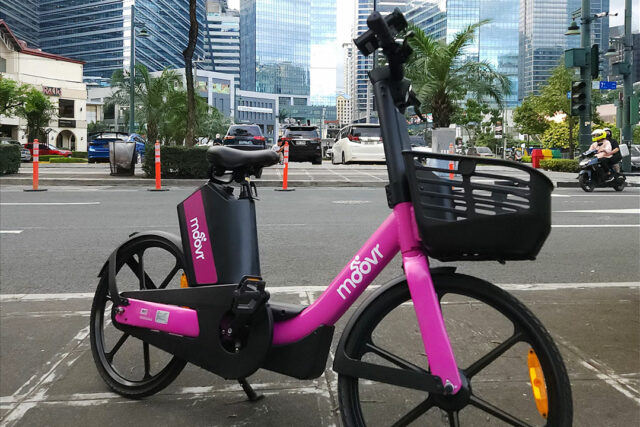
MOOVR PH, an e-scooter and bicycle-sharing mobile service, expects rider usage to increase by as much as 35% this year as it expands its fleet amid a growing demand for sustainable transport.

“For 2025, we project a 25-35% increase in rider usage, primarily driven by our expanded fleet and improved network coverage, particularly in connecting McKinley West and Bonifacio Global City (BGC),” Carlo Rombano, vice-president of operations at Moovr, said in an e-mail.

Moovr onboarded about 300,000 users last year, bringing the total to 600,000. It mainly serves BGC in Taguig City, the Makati central business district and Filinvest Alabang in Muntinlupa City.

The Philippine startup added 150 e-scooters to its fleet last year, bringing the total to 350, aside from 200 bicycles.

Moovr is bullish about increased awareness of micromobility options as a viable transportation alternative, Mr. Rombano said.

“We are optimistic given the positive experiences and adoption rates we’ve seen in areas like BGC,” he said in an e-mailed reply to questions. “Riders are increasingly recognizing the convenience and sustainability of bikes and e-scooters as viable transport solutions.”

Metro Manila ranked as the most congested metropolitan area in the world, according to the 2023 TomTom Traffic Index.

Moovr seeks to upgrade its fleet with more durable and advanced vehicles, and will launch marketing campaigns to increase public awareness and adoption. Safety also remains a priority for Moovr, Mr. Rombano said.

“Our geofencing technology ensures riders stay within designated zones, away from unsafe or prohibited areas such as highways or high-speed roads.”

The startup also conducts regular maintenance checks on its vehicles, educates riders and works with local governments to identify infrastructure gaps such as the need for dedicated bike lanes.

Part of its key growth opportunities is integrating artificial intelligence (AI)-powered route optimization in its mobile app, he added.

The company also seeks to deepen partnerships with local governments and private developers to create micromobility hubs and align its initiatives with eco-friendly practices.

E-scooters were the most commonly rented vehicle in the Philippines last year, driven by its convenience and compact design. It is also easy to operate both for first-time and regular users, Mr. Rombano said.

Moovr vehicles are rented for 15 to 30 minutes. Its customers are mostly residents, office workers and visitors.

Common reasons for renting two-wheeled vehicles include work commutes, running errands, leisure activities and bridging the “last mile” gap between public transportation and final destinations.

In the future, the company is considering four-wheeled vehicles for its fleet, particularly for group travel, cargo transport and sustainable intercity journeys.

“With growing user engagement and increasing alignment with urban infrastructure, we believe micromobility is on the cusp of broader acceptance and integration into the everyday transport landscape,” Mr. Rombano said.

US gold magnet: Banks fly bullion from Asian hubs to benefit from premium

STOCK PHOTO | Image from Freepik

MUMBAI — Global bullion banks are flying gold into the United States from trading hubs catering to Asian consumers, including Dubai and Hong Kong, to capitalize on the unusually high premium that US gold futures are enjoying over spot prices.

Traditionally, bullion banks transport gold eastward from the West to meet demand from China and India, the world’s two largest consumers, accounting for almost half of global consumption.

But alarm about US import tariffs planned by President Donald J. Trump has driven Comex futures prices substantially above spot prices in recent months, creating a lucrative arbitrage opportunity.

“Gold prices are skyrocketing, and in Asia, demand has pretty much disappeared,” said a Singapore-based bullion dealer with a leading bullion supplying bank. Spot gold prices hit a record high on Monday.

“Meanwhile, a sweet opportunity has popped up in the US, and naturally, almost every bank is jumping on it — moving gold over for Comex delivery to cash in on the arbitrage,” he said.

COMEX gold inventories have shot up almost 80% since late November, or 13.8 million troy ounces worth more than $38 billion at current prices, with supplies coming from London, Switzerland and now Asia-focused hubs.

The premium on Comex futures over spot prices widened again to about $40 on Monday, compared with discounts as high as $15 in India and a discount of around $1 in China.

The cost of moving gold from Asian hubs to the US is fractional when compared with prevailing Comex premiums, said a Mumbai-based bullion dealer.

A leading bullion bank even moved gold stored in a customs-free zone in India to the US last week, he said.

In normal situations, many banks bring gold into India and keep it in customs-free zones, clearing consignments by paying import taxes only after realizing demand. They can move the cargo back overseas without paying taxes.

As retail demand in Asian markets was muted by high prices, bullion banks were even sourcing gold from refiners in Dubai, which usually serve as a major India-supplying hub, to cater their demand in the US said a Dubai-based bullion dealer.

“The US is like a gold magnet right now, pulling in gold from all over the world,” he said. — Reuters

DigiPlus eyes partnership in Brazil

DIGIPLUS.COM.PH

DIGIPLUS Interactive Corp. is exploring the possibility of teaming up with a local partner in Brazil to support the company’s expansion.

“We’re always exploring possibilities. It’s better to have a local partner,” DigiPlus Chairman Eusebio H. Tanco said at a recent media briefing.

“It is not so much about the funding. We have sufficient resources, maybe more of a strategic partner,” he added.

Mr. Tanco also confirmed that the company’s operations in Brazil will begin with sports betting, which could go live “probably towards the end of the year.”

“We’ll start with sports first. They love football there. We’ll test the market first,” he said.

DigiPlus Vice-President for Investor Relations Celeste M. Jovenir said that the company has engaged a local Brazilian investment bank to search for potential partners.

“We haven’t identified anyone yet. The team is still searching and looking at different companies there. We have an investment banker in Brazil helping us. It’s a local Brazilian investment bank,” she said.

“The senior management is interviewing people from Brazil to form the team. Actually, we already have a team of ten people there since last year to apply for the license,” she added.

Last month, DigiPlus announced that its subsidiary DigiPlus Brazil Interactive Ltda. secured a gaming license from the Brazilian Ministry of Finance’s Secretariat of Awards and Bets.

With the gaming license, DigiPlus is now authorized to conduct land-based and online sports betting, electronic games, live game studios, and other fixed-odds betting activities in Brazil.

The company has initially earmarked P660 million to cover the license fees, minimum capitalization, financial reserves, and other operational expenses for the first three months of its operations in Brazil. It will use the ArenaPlus online sports betting platform for the Brazilian expansion.

DigiPlus previously mentioned that the Brazil expansion coincides with the country’s recent move to open up its gaming market, citing the population of over 200 million and its potential as one of the fastest-growing gaming markets in Latin America.

On Tuesday, DigiPlus shares rose by 0.84%, or 25 centavos, to P29.90 per share. — Revin Mikhael D. Ochave

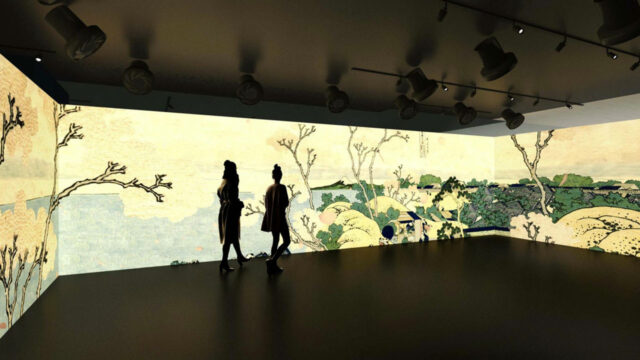
High-tech spin for samurai-era ukiyo-e artist Hokusai at Tokyo exhibit

HOKUSAI.ANOTHERSTORY.WORLD

TOKYO — Visitors can step back in time to Japan’s samurai era in a new Tokyo exhibition that uses cutting-edge technology to bring to life the work of iconic artist Hokusai.

Hokusai: Another Story in Tokyo marks the latest in a series of immersive attractions that have sprung up in the capital, as well as growing interest in Japan’s cultural past as record numbers of tourists flood into the country.

The exhibition, tucked into a downtown shopping mall, invites patrons to step into scenes of nature and village life depicted by the master of Edo Period woodblock art.

Technical wizardry from digital imagery firm Ars Techne reproduces the washi paper texture of his prints. Haptic plates in the floor, developed by Sony PCL, give the feel that one is walking on a beach, ice, or across a rickety bridge.

“The concept is not just to see something, but to have an experience that goes beyond the real thing, to let you feel the scenery that Hokusai saw,” said Hiroki Inokuchi, a visual artist with Red Geek Pictures, which helped develop the exhibition.

Born in 1760, Katsushika Hokusai took the medium known as ukiyo-e to new artistic heights and popularity through his unique use of color and dynamic composition. Hokusai’s depictions of Mount Fuji have become emblematic of Japan, with his masterpiece The Great Wave off Kanagawa now gracing the back of the nation’s ¥1,000 note.

His prints became a hit in Europe after his death in 1849, kindling the Japonisme movement in art and inspiring painters such as Claude Monet and Vincent van Gogh.

The Hokusai exhibition, which runs from Saturday to June 1 at Tokyu Plaza Shibuya, follows other tech-driven, immersive art showcases in Tokyo that have proven to be draws among residents and overseas visitors. The digital art collective teamLab has two interactive museums in the capital that have set Guinness World Records for attendance.

Mariko Fukumizu, 42, said her four-year-old daughter loved stepping on and cracking make-believe ice in a rendering of one of Hokusai’s winter scenes.

“I like looking at art, but it’s difficult with kids, so it’s good to be able to go and experience things together,” said Ms. Fukumizu.

Japan is experiencing a tourism boom fueled by the weak yen, while cultural exports from manga to movies are seeing unprecedented popularity. Last year’s period epic Shogun swept major awards at both the Emmys and Golden Globes.

Ethem Sonmez, a 22-year-old visitor from Turkey, said Japanese animation and comics are rising in popularity in his country. He said an exhibit room that simulates wind rushing through a Hokusai landscape nearly brought him to tears.

“It was like the moment I first saw Fuji in the Shinkansen” bullet train, Mr. Sonmez said. “It was mesmerizing and I felt it again here.” — Reuters