Home Blog Page 153

Russian fertilizer makers can’t offset potential Iran-related supply crunch

MOSCOW — Fertilizer producers in Russia, the world’s largest exporter, will not be able to make up for a potential global shortfall linked to the US-Iran conflict as their ability to boost supply is constrained, industry sources told Reuters.

The war has shut down fertilizer plants in the Middle East and severely disrupted shipping routes via the Strait of Hormuz, conduit for about a third of global trade in fertilizers.

Russia accounts for about one-fifth of global fertilizer trade, but limited capacity, domestic export caps and recent Ukrainian attacks on major plants all constrain its ability to ramp up output, the sources said.

New export-oriented plants are not expected to come on stream before 2027, according to one source who spoke on condition of anonymity.

“Higher prices look great on paper, but Russian producers are boxed in by domestic supply obligations, especially ahead of the planting season,” said another industry source, who also spoke on condition of anonymity.

“And any windfall profits are likely to draw government attention as it looks for ways to boost budget revenue.”

A third source, also speaking on condition of anonymity, said companies are currently focused on meeting domestic demand.

“It may be possible to cover, over a short horizon, the demand left unmet without the Middle East, but in the long term it is too large a volume to replace,” the source added.

A Ukrainian drone attack on Dorogobuzh, one of Russia’s largest fertilizer plants, owned by major producer Acron, on Feb. 25 has temporarily knocked out about 5% of the country’s overall production capacity and killed seven people.

Dorogobuzh accounts for 11% of Russia’s ammonium nitrate output and 9% of its NPK fertilizer production, a mixture of nitrogen, phosphorus and potassium.

Russia, also the world’s top wheat exporter, introduced fertilizer export restrictions in 2021 to ensure sufficient supply on the domestic market.

Andrey Guryev, head of the industry lobby, estimated the gap between lower domestic and higher export prices at about 15% during a meeting with President Vladimir Putin in 2025.

He also told Mr. Putin that Russia is aiming to capture one-quarter of global fertilizer trade by 2030.

Russian fertilizer producers have been spared Ukraine-related Western sanctions in order to ensure global food security, but face payment and logistical difficulties related to sanctions.

Brazil, India and China are the biggest buyers of Russian fertilizer, and it also exports to the US.

Shares in two of Russia’s publicly traded producers, Acron and PhosAgro, have risen modestly, by 3% and 4%, respectively, on the Moscow Exchange since the US and Israeli attacks on Iran began on Feb. 28.

“A shortage of phosphate fertilizers, amid China’s export restrictions, the shutdown of sulphur production in Qatar, and tensions in the Strait of Hormuz, are powerful drivers for price increases in the market,” T-Bank analysts said in a research note. Reuters

PHL bond yields climb amid oil, war concerns

GOVERNMENT bond yields in the Philippines climbed last week as investors reacted to escalating tensions in the Middle East and weighed the implications of inflation data that came in slightly softer than expected.

Yields on government securities rose across the curve, reflecting weaker demand for bonds as markets reassessed inflation risks and the outlook for monetary policy. Bond yields move inversely to prices.

Short-term Treasury bill yields edged higher, whilst medium- and long-term bond rates posted steeper increases, according to data from the Bloomberg Valuation Service Reference Rates posted on the Philippine Dealing System’s website. Trading activity also eased compared with the previous week.

Market participants pointed to geopolitical risks following a sharp escalation in the conflict involving the US, Israel, and Iran. The tensions have heightened concerns over energy supply disruptions after Iran shut the Strait of Hormuz, a key shipping route for global oil and liquefied natural gas.

About a fifth of the world’s seaborne oil trade passes through the strait. Any prolonged disruption could drive energy prices higher, raising inflation risks for import-dependent economies such as the Philippines.

“The escalation of geopolitical tensions between US-Israel and Iran… fueled domestic inflationary concerns that pushed bond yields higher,” a bond trader said in an e-mailed reply to questions. “This uncertainty is pushing investors to reassess the future policy path of the Bangko Sentral ng Pilipinas.”

The conflict intensified after joint US and Israeli strikes in Iran killed several senior officials, including Iran’s Supreme Leader Ayatollah Ali Khamenei, according to international media reports. The attacks followed weeks of stalled negotiations over Tehran’s nuclear program.

Iran retaliated by launching strikes targeting US bases across several Middle Eastern countries, including Saudi Arabia, Qatar, Bahrain, the United Arab Emirates, Kuwait, Jordan and Oman. The escalation has unsettled financial markets and raised fears of broader regional instability.

For the Philippines, the developments are closely tied to inflation prospects. The country imports most of its crude oil requirements, making domestic prices sensitive to global energy movements.

Inflation rose to 2.4% in February from 2% in January, according to the Philippine Statistics Authority. It matched market expectations and remained within the central bank’s forecast.

Even so, analysts said the renewed risks to energy prices could complicate the central bank’s policy outlook.

The central bank cut its benchmark interest rate by 25 basis points last month to a more than three-year low, extending an easing cycle that began in 2024. The move brought total reductions since the start of the cycle to more than two percentage points.

Investors are now reassessing how much room the central bank has to continue easing if global energy prices climb.

Jonathan L. Ravelas, a senior adviser at Reyes Tacandong & Co., said the surge in geopolitical risk has prompted a more cautious stance in bond markets.

“Risk-off trades pushed yields higher due to the US-Iran war,” he said in a Viber message. “Rising inflation expectations are also adding to the pressure.” — Lourdes O. Pilar

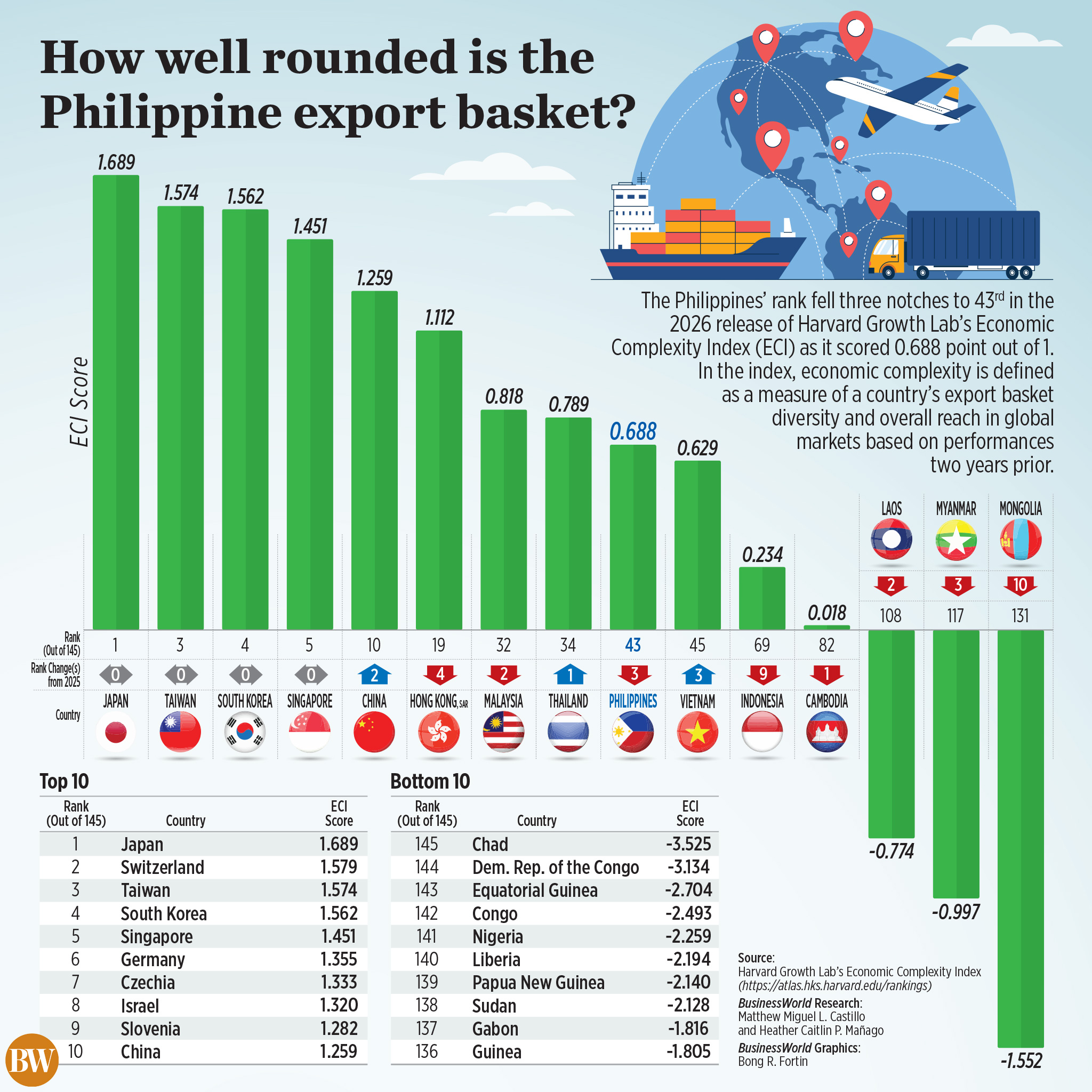
How well rounded is the Philippine export basket?

The Philippines’ rank fell three notches to 43rd in the 2026 release of Harvard Growth Lab’s Economic Complexity Index (ECI) as it scored 0.688 point out of 1. In the index, economic complexity is defined as a measure of a country’s export basket diversity and overall reach in global markets based on performances two years prior.

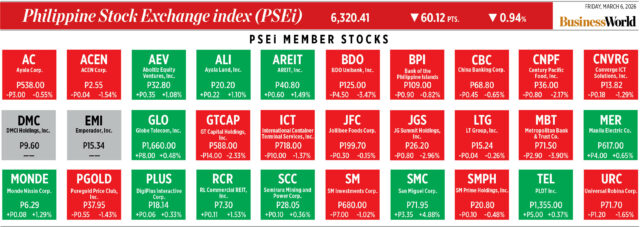
How PSEi member stocks performed — March 6, 2026

Here’s a quick glance at how PSEi stocks fared on Friday, March 6, 2026.


PSEi may move sideways on oil surge, Iran war

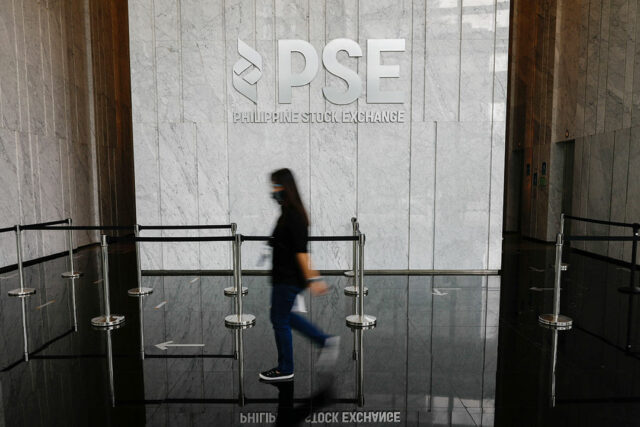
The lobby of the Philippine Stock Exchange in Taguig City, Sept. 30, 2020. — REUTERS

By Alexandria Grace C. Magno, Reporter

PHILIPPINE SHARES may move sideways this week as investors weigh last week’s sharp decline against persistent geopolitical risks and rising oil prices.

“The Middle East conflict between US/Israel and Iran was the main headline during the week, prompting risk aversion across the region,” 2TradeAsia.com said in a market note.

The Philippine Stock Exchange index (PSEi) fell 0.94% or 60.12 points on Friday to close at 6,320.41, while the broader all-share index shed 0.87% or 31 points to 3,494.99.

Week on week, the benchmark index dropped 290.83 points from its Feb. 27 close of 6,611.24 as concerns over the escalating war involving the US, Israel and Iran dampened investor sentiment.

Philstocks Financial, Inc. Research Manager Japhet Louis O. Tantiangco said the local market posted a bearish performance last week as geopolitical tensions weighed on risk appetite.

“It was a bearish week for the local market as it plunged by 4.4%,” he said in a Viber message. “In the process, the market has again fallen below the 6,400 level.”

Mr. Tantiangco expects the market to move sideways this week as some investors take advantage of lower valuations after the recent sell-off.

However, he cautioned that a strong rebound is unlikely while tensions in the Middle East remain elevated.

He added that investors would closely watch the government’s response to rising fuel prices, which could affect inflation and consumer spending.

Fuel prices in the Philippines have climbed steadily in recent weeks. Diesel and kerosene have posted 10 straight weeks of increases, whilst gasoline prices have risen for eight consecutive weeks.

For February alone, pump price adjustments resulted in net increases of P3.20 per liter for gasoline, P4.40 per liter for diesel, and P3.50 per liter for kerosene.

The sustained rise in fuel costs comes amid concerns that geopolitical tensions in the Middle East could disrupt global oil supply.

The Philippines, which imports most of its oil requirements, is particularly vulnerable to fluctuations in global energy prices.

The Department of Economy, Planning and Development said authorities are monitoring local fuel price movements and may introduce measures if global oil prices climb sharply.

Aside from geopolitical developments, investors are also expected to watch for additional corporate earnings reports in the coming days, which could provide clues on how companies are coping with rising costs and slowing demand.

Mr. Tantiangco noted that the market’s technical indicators have turned weaker after the recent decline.

The PSEi has fallen below key support levels and short-term trend indicators, reflecting cautious sentiment among investors.

2TradeAsia said inflation data released last week might also influence market expectations for interest rates.

Inflation accelerated to 2.4% in February from 2% in January, according to government data. Although the figure was within the Bangko Sentral ng Pilipinas’ forecast and matched market expectations, analysts said it might keep the central bank cautious about further policy easing.

“Anticipate equities to glide alongside upcoming fiscal intervention,” 2TradeAsia said, adding that economic managers might need to introduce measures such as fuel subsidies and food security programs to cushion the impact of higher oil prices on consumers.

For the near term, 2TradeAsia placed the PSEi’s immediate support level at 6,300, with secondary support at 6,100, while resistance is seen around 6,700 points.

Stronger pushback urged vs weak anti-dynasty bill

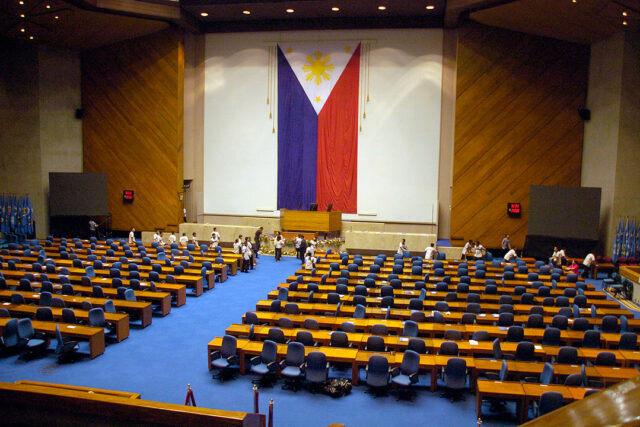
BW FILE PHOTO

By Kenneth Christiane L. Basilio, Reporter

CIVIL SOCIETY groups should keep pressing Congress for a tougher anti-political dynasty bill after a House of Representatives committee passed a weaker version, analysts said over the weekend, noting that measures remain under debate and could still be amended.

Groups should mount a pressure campaign for the version of the governance reform bill they see fit to be passed, as analysts noted that while a signature drive remains an option, it could be costly and time-consuming.

“The process is very demanding,” Ederson DT. Tapia, a political science professor at the University of Makati, said in a Facebook Messenger chat. “It requires millions of verified signatures and nationwide mobilization.”

“For a reform that directly affects entrenched political interests, organizing that level of support can be extremely difficult,” he added.

Congress is currently weighing bills aimed at curbing political dynasties, with the Senate bill that bars second-degree relatives from running or succeeding immediately, awaiting plenary debates, and the recently approved House measure that analysts say is weaker as it still allows families to monopolize seats across government levels.

President Ferdinand R. Marcos, Jr. has made limiting political dynasties a priority after public criticism over alleged misuse of billions of pesos in congressional district funds earmarked for Public Works projects, making it part of his governance reform agenda.

The version passed by the House is unsurprising as many lawmakers themselves hail from political dynasties, resulting in a weaker measure, said Anthony Lawrence A. Borja, an associate political science professor at De La Salle University.

“It’s cheap but not surprising since that’s the only version that dynasts can afford as both a lip-service to the constitution, and the low costs imposed on them by the anti-dynasty advocacy,” he said in a Facebook chat. “Given the loopholes, it would make dynasties legal.”

Such a bill has long been pushed in Congress but has repeatedly faltered for a lack of support from a legislature dominated by political families. Eight of 10 lawmakers belong to dynasties, according to a report by the Philippine Center for Investigative Journalism.

“The House bill fails to provide a comprehensive framework and leaves gaps in the prohibition of political dynasties,” Rona Ann V. Caritos, executive director at election watchdog Legal Network for Truthful Elections, said in a Facebook chat.

She said the House measure would still allow dynastic families to retain political control across multiple levels of government, with members permitted to hold offices in national, congressional and local units.

It also fails to cover party‑list groups and is silent on banning immediate succession of relatives, allowing dynasties to perpetuate power, she added.

“If the prohibition only applies to a very limited set of family relationships or electoral situations, many dynastic arrangements will still remain possible,” Mr. Tapia said.

Ms. Caritos said the optimal anti-political dynasty law “generally aligns” with the Senate version, but the group is “focused on effective and swift implementation mechanisms relative to the prohibition against political dynasties.”

She said the Commission on Elections should be given powers to enforce compliance with the anti‑political dynasty ban through summary administrative remedies via motu proprio action and allow registered voters to file petitions.

A people’s initiative for stronger anti‑political dynasty legislation “is not impossible,” Ms. Caritos said, but added the battle remains in Congress where the measures are still being deliberated.

Several groups have called for a stronger measure against political dynasties, including business chambers that sought a wider scope to limit the power of a few families. They urged a ban extending to fourth-degree relatives and planned a signature campaign to push for its enactment if current efforts fall short.

The coalition, which included the Makati Business Club, Philippine Chamber of Commerce and Industry and the Management Association of the Philippines, recommended that lawmakers pass a bill explicitly prohibiting substitution, rotation and position-switching among prohibited relatives to circumvent term limits.

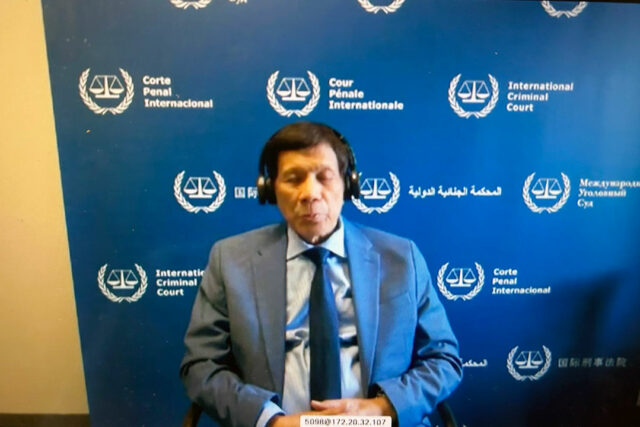
Duterte’s ICC case exposes political fault lines ahead of 2028 presidential polls

PHILSTAR FILE PHOTO

By Erika Mae P. Sinaking, Reporter

THE International Criminal Court’s (ICC) case against former Philippine President Rodrigo R. Duterte is shaping up to be a defining fault line for the 2028 presidential elections, analysts said, forcing a deeply polarized electorate to weigh demands for international justice against the political survival of a powerful dynasty.

David Michael M. San Juan, a professor at De La Salle University and convener of Professionals for a Progressive Economy, said the trial is crystallizing long-standing political divisions. “It will draw the line between the pro-Duterte bloc and the anti-Duterte groups,” Mr. San Juan told BusinessWorld in a Facebook Messenger chat.

As the proceedings advance, he added all 2028 presidential aspirants will be compelled to take a position, elevating human rights accountability as a central campaign issue.

“At this point, it is also becoming clear that the ICC trial will be among the very many issues in the minds of the public,” he added.

The confirmation of charges hearing in The Hague, which concluded on Feb. 27, underscored sharply opposing narratives surrounding the anti-drug campaign.

Prosecutors characterized the “war on drugs” as a systematic attack against the urban poor, linking alleged kill orders to a figure codenamed “Superman,” associated with the former president. Senior trial lawyer Julian Nicholls argued that the Duterte administration’s repeated use of “neutralize” was widely understood by police as an order to kill rather than a routine law enforcement directive.

Judges have begun deliberations and are expected to issue a written decision within 60 days after the hearing, which may confirm charges and commit the case to trial, dismiss charges lacking sufficient evidence, or adjourn to seek additional evidence or amended charges.

“We expect that Pre-Trial I will confirm the 3 charges,” Ephraim B. Cortez, president of the National Union of Peoples’ Lawyers, told BusinessWorld in a Viber message, noting the evidence presented in the recent pre-trial hearings was both systemic and methodical.

With “overwhelming” evidence, Mr. Cortez said the prosecutors proved that specific acts of murder and attempted murder were the “necessary consequences” of the Mr. Duterte’s policy first implemented in Davao City and later nationwide.

“It was proven that its geographical spread, as well as the pattern and the frequency of killings, indicate that these were widespread and systematic. The evidence also showed that Duterte was at the center of this structure. He was the one who conceived the plan, ensured its implementation, and controlled the entire operation. The implementation of this plan/policy resulted in the commission of the ‘in the ordinary course of events,’” he explained.

In his defense, Mr. Duterte’s lawyer, Nicholas Kaufman, argued the case was built on “pure, unadulterated and undiluted hearsay,” maintaining his client was a unique phenomenon who spoke from the heart to instill respect for the law. Mr. Kaufman said most deaths occurred during legitimate “nanlaban” incidents, where police say they acted in self-defense. “Rodrigo Duterte was and will always remain a unique phenomenon,” he told the court.

The legal battle has intensified scrutiny of the previous administration’s inner circle, as prosecutors identified eight alleged co-perpetrators, including Senator Ronald “Bato” M. dela Rosa who led the drug war as Mr. Duterte’s former police chief. The defense claims there is “absolutely no evidence” of a coordinated plan.

At the sidelines of an EDSA protest on Feb. 25, Purisima B. Dacumos, whose husband was killed in a police operation, expressed her hope that the ICC would provide the accountability that domestic courts failed to deliver. “We are happy because we trust our lawyers and believe they will truly fight for our case so that we can achieve justice. Even though Duterte’s supporters are bashing us, I hope the ICC will really prove that he committed human rights violations,” Ms. Dacumos said in Filipino.

SYMPATHY VOTE
In Manila, the political fallout from The Hague has already began shaping the 2028 presidential race, following Vice-President Sara Duterte-Carpio’s presidential bid announcement on Feb. 18. She earlier broke from her 2022 alliance with President Ferdinand “Bongbong” R. Marcos, Jr. calling their previous partnership a “mistake.”

“The timing of the announcement of Sara Duterte’s presidential run, which also comes ahead of new moves to impeach her, suggests that the Duterte camp is banking on continued popular support and resentment against Marcos to parlay Rodrigo Duterte’s arrest into a path to vindication,” said Tomas Buenaventura, senior research assistant at Armed Conflict Location & Event Data Project, in an expert comment dated Feb. 20.

Ms. Duterte, who has emerged as a frontrunner for the 2028 presidential polls, has been a “dogged defender of her father’s legacy, Mr. Buenaventura said, adding the Dutertes will likely continue to face continued opposition over the war on drugs.

Mr. San Juan said that Ms. Duterte’s prospective presidential campaign might rely on “sympathy votes and hence retain the loyalty of the DDS (Diehard Duterte Supporters) bloc.”

In a recent analysis published by the Asia Pacific Foundation of Canada in March, Geopolitical analyst Don McLain Gill, lecturer at De La Salle University, said the ICC trial could significantly reshape Philippine politics as this could give the vice-president a “narrative of sympathy.”

“If the impeachment process fails, the vice-president may be in the position to rally support for a 2028 presidential bid by leveraging a narrative of sympathy for her family as victims of political persecution,” Mr. Gill said in the article, titled “How Duterte’s International Criminal Court Trial Could Shape the Future of Philippine Politics.”

“If she succeeds in doing so and goes on to win the presidency, the result will likely be a significant shift back to appeasing China and relying less on like-minded Western partners in maritime security matters. Additionally, she may use the platform to seek vengeance on her family’s political opponents, similar to what her father did during his term,” he added.


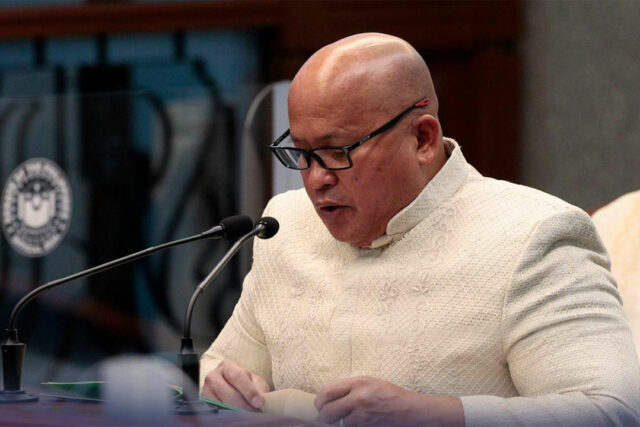
Delays in dela Rosa’s ethics case threaten Senate accountability

SENATOR RONALD "BATO" DELA ROSA — FACEBOOK.COM/SENATEPH

By Adrian H. Halili, Reporter

DELAYS in the Senate Ethics Committee’s handling of the complaint against Senator Ronald M. dela Rosa risk setting a damaging precedent, which could undermine accountability and signals tolerance for erring lawmakers, analysts said.

Dennis C. Coronacion, chairman of the University of Santo Tomas Political Science Department, said that the panel’s failure to act may set a poor precedent and encourage further inaction against erring senators.

“It’s not going to set a good precedent,” he said in a Facebook Messenger chat. “Future members of the Senate will be using the ethics complaint against Senator dela Rosa as an example should they choose not to take any action against an erring [member].”

The Ethics committee, which has stalled hearings for several months due to a lack of members and approval of its updated rules, is expected to deliberate on six ethics complaints against incumbent senators, which includes Mr. dela Rosa’s case.

It was only last week that the panel approved its updated rules and provided its members time to determine whether complaints are sufficient in form and substance.

Mr. Coronacion added that senators should not sacrifice accountability to protect an erring colleague.

“The bad thing about it is that they are public officials. As such, they should be setting a good example for the public and avoid engaging in self-serving politics,” he said.

Anthony Lawrence A. Borja, an associate political science professor at De La Salle University, added that the committee’s inaction could be perceived as condoning neglect and undermining the Senate’s duty.

“If it ends up being dismissed or dead on the water, then the Senate will appear to the public as either protecting its own ranks or thoroughly ineffective,” he said via Facebook chat.

Mr. Borja added that if the complaint reaches an appropriate punishment, then it would signal that occupying high public office must be tied to equally high professional standards.

“If not, then it condones unprofessional neglect,” he said.

A civil society group filed an ethics complaint against the senator, last month over his continued failure to return to his duties in the Senate, constituting a clear dereliction of duty and a “grave abuse of the privilege entrusted to him by the Filipino people.”

The group also noted that the senator’s absence from committee hearings risks disrupting proceedings and pending legislative measures.

Hansley A. Juliano, a political science lecturer at Ateneo de Manila University, said that the case may set a precedent over the handling of senators who disappear due to domestic or international legal issues.

“The Senate would be keen on ensuring that their precedents set here do not only blow back on them in the future, but it also projects that the Philippines respects international law,” he said in a Messenger chat.

Mr. Juliano said that the senator’s absence showed a clear abandonment of responsibility to the Senate and the people who voted for him.

“Losing all his remaining committee posts is just a matter of time unless he resurfaces, which will give further ground for the ethics complaint,” he added.

The senator has not attended a single Senate session since Nov. 11, 2025, when reports first surfaced about a possible warrant against him by the International Criminal Court (ICC).

The tribunal had named him along with Senator Christopher Lawrence “Bong” T. Go as co-perpetrators in former President Rodrigo R. Duterte’s bloody anti-illegal drugs campaign. The ICC had not yet issued arrest warrants against them.

Joint House panel to hold Iran war briefing, review of gov’t response to aid Filipinos

Smoke rises after reported Iranian missile attacks, following strikes by the United States and Israel against Iran, in Manama, Bahrain, February 28, 2026. — REUTERS/STRINGER TPX IMAGES OF THE DAY

THE House of Representatives has called for a briefing from government agencies and the private sector to give lawmakers a clearer understanding of the Iran war and its impact to the Philippines, a congressional leader said on Sunday.

In a statement, House Majority Leader and Ilocos Norte Rep. Ferdinand Alexander “Sandro” A. Marcos III said the House Foreign Affairs and Overseas Workers Affairs Committees will hold a joint congressional briefing on Wednesday “to obtain an updated assessment of the situation” in the Middle East and review government preparedness in assisting Filipinos there.

Several congressional hearings on the Middle East situation are also set in the House this week, including in the Ways and Means committee to review proposals to suspend excise taxes on fuel and the transportation panel on the government’s fuel subsidy program for public transport.

“The House wants to receive a full briefing on the situation on the ground and on the readiness of our agencies to assist our nationals should conditions require government intervention,” Mr. Marcos said in a statement.

US and Israeli strikes on Iranian targets entered their second week, in a conflict that has since widened across the Middle East and sent global oil prices sharply higher as markets braced for disruptions on gas supplies shipped through the Strait of Hormuz — a critical chokepoint through which 20% of the world’s oil transits.

US President Donald J. Trump has said the military will keep striking Iranian targets “as long as necessary” to meet Washington’s goals of halting Iran’s nuclear weapons development and pursuing a regime change.

On Saturday, White House Press Secretary Karoline Leavitt said meeting that objective could take “four to six weeks.”

“At a time of uncertainty in the region, it is important that the government remains fully prepared to protect their welfare and provide assistance when needed,” Mr. Marcos, a son of the President, said.

“With a significant number of Filipinos working across the Middle East, it is important that we stay ahead of developments and ensure that the necessary support mechanisms are in place,” he added.

There are an estimated 2.41 million Filipinos living in Middle Eastern countries, led by the United Arab Emirates with 975,000, followed by Saudi Arabia at 813,00, Qatar at 250,000 and Kuwait with 211,000, according to the Department of Foreign Affairs. There are about 800 Filipinos in Iran and 31,000 in Israel.

PRICE MONITORING
Meanwhile, a senator on Sunday called on the Department of Energy (DoE) to strictly monitor retailers and oil companies for potential profiteering, amid uncertainties in petroleum prices due to the ongoing conflict in the Middle East.

“They cannot raise prices immediately because the stocks they hold were sold at a lower price. They should sell at a reasonable price,” Senator Sherwin T. Gatchalian said in a statement.

He added that gasoline pump prices increased by 13.7% to P62 from P55 per liter from January to March 4, while diesel rose by 41.4% to P76 per liter from P54 during the same period, data from the senator’s office showed.

“A price increase has just been announced in the world market, but some retailers are already raising prices. This is profiteering,” Mr. Gatchalian said.

Citing the DoE, the senator said that oil companies still have an inventory of about 50 days, which should not prompt price increases yet.

In a separate statement, Senator Panfilo M. Lacson called on the public to report gas stations that prematurely increase fuel prices to proper authorities.

“Amid reports that some gasoline stations have already increased prices, they must be reported to authorities. You can report violations to the Philippine National Police or local government units,” he said.

Mr. Lacson added that these establishments violated Republic Act No. 8479, the Downstream Oil Industry Deregulation Act of 1998, which prohibits cartelization, predatory pricing, and other anti-competitive practices to protect consumers.

It also violated Republic Act No. 7394, the Consumer Act of the Philippines, which protects consumers from deceptive, unfair, and unconscionable sales practices.

The senator added that further consumer vigilance and the reporting of irregularities can assist local authorities in enforcing the law and protecting the public from abusive pricing practices.

Kerosene prices are projected to rise by P29.42 per liter, with diesel jumping by P19.62 per liter, and gasoline by P10.43 liter, according to the DoE.

President Ferdinand R. Marcos, Jr. last week urged Congress to grant him emergency powers to lower the excise tax on petroleum products to protect consumers from rising fuel prices. The Senate is scheduled to deliberate on proposed measures seeking to suspend or lower excises tax this week. — Kenneth Christiane L. Basilio and Adrian H. Halili

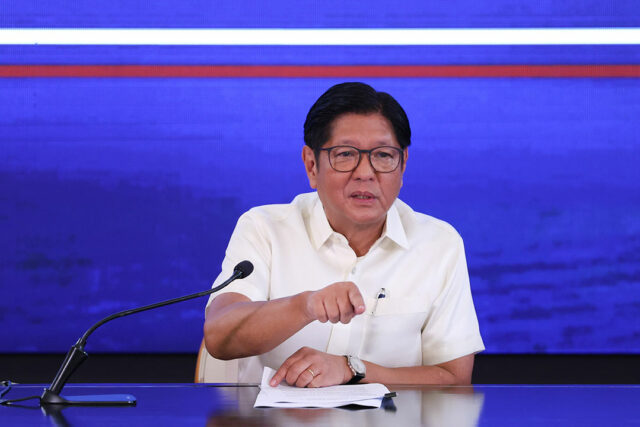
Marcos warns vs grandstanding

PHOTO SHOWS President Ferdinand R. Marcos, Jr. holding a news briefing at the Presidential Palace last year on his government’s anti-corruption drive.. — PHILIPPINE STAR/NOEL B. PABALATE

PRESIDENT Ferdinand R. Marcos, Jr. has directed national government agencies to eliminate political grandstanding in distributing of state aid and to fast-track the digitization of frontline services to ease the burden on Filipino citizens.

Citing public feedback regarding senior citizens being forced to wait and listen to repetitive political speeches before receiving assistance, he said that such activities are strictly prohibited by Department of the Interior and Local Government circulars and the General Appropriations Act.

“As long as these are national government programs, speeches and other forms of grandstanding before the distribution will no longer be allowed,” Mr. Marcos said in Filipino in his BBM VLOG 278 Sagot sa Polisiya released on Sunday.

“Government services cannot be used for politicking or self-promotion,” he added.

To streamline aid delivery, he encouraged local government units to study and adopt digital payout systems, noting Makati City’s use of mobile wallets like GCash.

Aside from aid distribution, Mr. Marcos is pushing for the digitization of civil registry services to eliminate the “tortuous” process of correcting clerical errors in birth certificates, which currently forces citizens to travel long distances.

“In my view, with the improvements we have made using e-gov and the internet, this should be one of the services we no longer have to worry about,” he said. — Erika Mae P. Sinaking

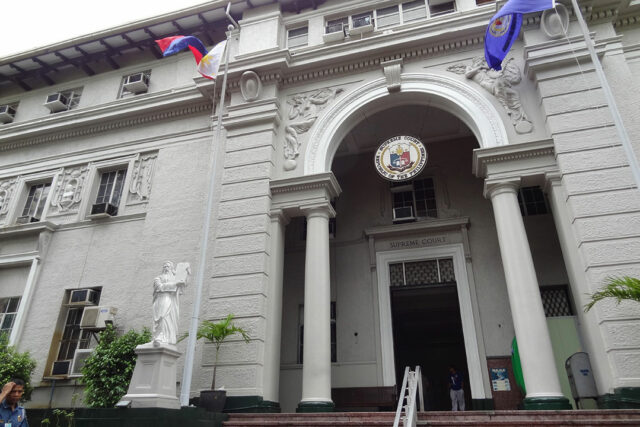
SC allows 4-day workweek in courts

BW FILE PHOTO

PHILIPPINE courts will implement a four-day workweek and one-day work from home arrangements beginning March 9, following a directive from the Supreme Court (SC) to align the judiciary with national energy conservation efforts.

Memorandum Circular (MC) No. 02-2026, issued on Sunday, mandates the adoption of flexible work arrangements across the judiciary to mitigate the impact of rising fuel prices and global energy market volatility.

The move follows Malacañang’s issuance of MC No. 114, which directed executive branch agencies to adopt similar measures as global oil prices surged due to escalating geopolitical tensions in the Middle East.

President Ferdinand R. Marcos, Jr. said last week that the March 10-16 forecast in fuel includes an increase in gasoline prices by P7.48 per liter, diesel by P17.28 per liter, and kerosene by P32.35 per liter.

Under the new guidelines, lower courts, including the regional trial courts and metropolitan trial courts, will operate on a Monday-to-Thursday onsite schedule, with Fridays designated for remote work.

The Court of Appeals and the SC will also follow this arrangement, though the Sandiganbayan and the Court of Tax Appeals are exempt to ensure the uninterrupted resolution of cases within their specific jurisdictions.

“The judiciary has to align its internal operations with the national policy on energy conservation, insofar as such alignment is consistent with the uninterrupted administration of justice,” the SC said in the circular, signed by Chief Justice Alexander G. Gesmundo. — Erika Mae P. Sinaking

Nueva Vizcaya price council created

BAYOMBONG, Nueva Vizcaya — The Nueva Vizcaya Provincial Price Coordinating Council will convene on Monday, to monitor market prices and ensure compliance with suggested retail prices amid anticipated increases in basic good prices.

Governor Jose V. Gambito said the council’s meeting seeks to safeguard consumers and prevent unjustified price hikes as petroleum prices climb amid the ongoing crisis in the Middle East.

Mr. Gambito noted that higher fuel costs are beginning to affect the cost of daily living, adding pressure on households already grappling with rising expenses.

He urged business owners and traders to practice fairness and social responsibility in pricing basic goods and warned against taking advantage of the situation through unwarranted increases. — Artemio A. Dumlao