Home Blog Page 1455

EU and Israel to discuss Gaza’s future, regional politics

A view shows houses and buildings destroyed by Israeli strikes in Gaza City, Oct. 10, 2023. — REUTERS

BRUSSELS – Israeli Foreign Minister Gideon Saar will meet senior European officials in Brussels on Monday, reviving a dialogue with the European Union as the bloc considers a role in the reconstruction of Gaza following last month’s ceasefire deal.

Mr. Saar will co-chair a meeting of the EU-Israel Association Council with EU foreign policy chief Kaja Kallas in the first such session since 2022, with talks set to focus on the humanitarian situation in Gaza, Israeli-Palestinian relations and changing regional dynamics.

“Monday’s Association Council is an important opportunity to reaffirm and strengthen the partnership between Israel and the EU,” Israel’s ambassador to the EU, Haim Regev, told Reuters.

The Hamas attacks on Israel on October 7, 2023, and Israel’s response, exposed sharp divisions within the EU. While all members condemned the Hamas attacks, some staunchly defended Israel’s war in Gaza as others condemned Israel’s military campaign and its toll on civilians.

In February 2024, the leaders of Spain and Ireland sent a letter to the European Commission asking for a review of whether Israel was complying with its human rights obligations under the 2000 EU-Israel Association Agreement, which provides the basis for political and economic cooperation between the two sides.

But ahead of Monday’s meeting, the bloc’s 27 member countries negotiated a compromise position that praises areas of cooperation with Israel while also raising concerns.

At the meeting, the EU will emphasize both Europe’s commitment to Israel’s security and its view that “displaced Gazans should be ensured a safe and dignified return to their homes in Gaza”, according to a draft document seen by Reuters.

Earlier this month, U.S. President Donald Trump upset Arab nations and Western allies by proposing the United States “take over” Gaza, permanently displacing its Palestinian inhabitants and creating the “Riviera of the Middle East”.

The war started when Hamas-led militants launched a cross-border attack on Israeli communities that killed 1,200 people and took 251 hostages, according to Israel.

The Israeli retaliatory offensive has killed at least 48,000 people, Palestinian health authorities say, leaving some hundreds of thousands of people in makeshift shelters and dependent on aid trucks. — Reuters

Trump eliminating 2,000 USAID positions in the US, notice says

WASHINGTON – President Donald Trump’s administration on Sunday said it was placing all but a handful of USAID personnel around the world on paid administrative leave and eliminating some 2,000 of those positions in the U.S., according to a notice sent to agency workers reviewed by Reuters.

Just before midnight on Sunday U.S. Eastern Time, all United States Agency for International Development direct hire personnel with the exception of workers essential for critical functions, will be placed on leave. At the same time the agency is “beginning to implement a Reduction-in-Force” affecting about 2,000 USAID personnel in the U.S., the notice said.

The White House did not immediately respond to request for comment.

Billionaire Elon Musk’s Department of Government Efficiency has led an effort to gut USAID, the main delivery mechanism for American foreign assistance, a critical tool of U.S. “soft power” for winning influence abroad.

On Friday, a federal judge cleared the way for the Trump administration to put thousands of USAID workers on leave, a setback for government employee unions that are suing over what they have called an effort to dismantle it.

Two former senior USAID officials estimated that a majority of some 4,600 USAID personnel, career U.S. Civil Service and Foreign Service staffers, would be placed on administrative leave.

“This administration and Secretary (of State Marco) Rubio are shortsighted in cutting into the expertise and unique crisis response capacity of the U.S.,” said Marcia Wong, one of the former officials.

“When disease outbreaks occur, populations displaced, these USAID experts are on the ground and first deployed to help stabilize and provide aid?”

“Unsigned notices like this are not self-implementing. They must be followed up by an individual personnel action or at least an approved leave slip, properly executed by someone with that authority,” said the second former official, who asked not to be further identified.

Mr. Trump ordered a 90-day pause on foreign aid shortly after taking office, halting funding for everything from programs that fight starvation and deadly diseases to providing shelters for millions of displaced people across the globe.

The administration has approved exceptions to the freeze totaling $5.3 billion, mostly for security and counter-narcotics programs, according to a list of exemptions reviewed by Reuters that included limited humanitarian relief.

USAID programs received less than $100 million in exemptions, according to the list. That compares to roughly $40 billion in USAID programs administered annually before the freeze. — Reuters

Britain and India to restart trade talks in New Delhi on Monday

— REUTERS/TOBY MELVILLE/FILE PHOTO

LONDON – Britain’s Business and Trade Secretary Jonathan Reynolds and India’s Commerce Minister Piyush Goyal will meet in New Delhi on Monday to restart talks on a UK-India trade deal, the British government said on Sunday.

“Securing a trade deal with what is soon-to-be the third biggest economy in the world is a no-brainer, and a top priority for me and this government,” Mr. Reynolds said in a statement.

“That is why I’m flying to New Delhi with our top negotiating team to show our commitment to getting these talks back on track.”

Britain’s previous Conservative governments, in power from 2010 to 2024, held years-long trade talks with New Delhi, but they ended in March 2024, with Britain saying an agreement could not be finalized before Indian elections, held last year.

Previous sticking points in the talks included a steep import duty on British whisky sold in India and India’s demand for more visas for Indian students and businesses.

Trade ministers will restart talks on an economic deal with two days of focused discussions – the first time both teams have formally got around the table since Britain’s Labour Party took power last year, the government said.

India and Britain, currently the world’s fifth and sixth largest economies respectively, have a trade relationship worth 41 billion pounds ($51.8 billion), it said. — Reuters

Philippine, Japan ministers look to further build defense partnership

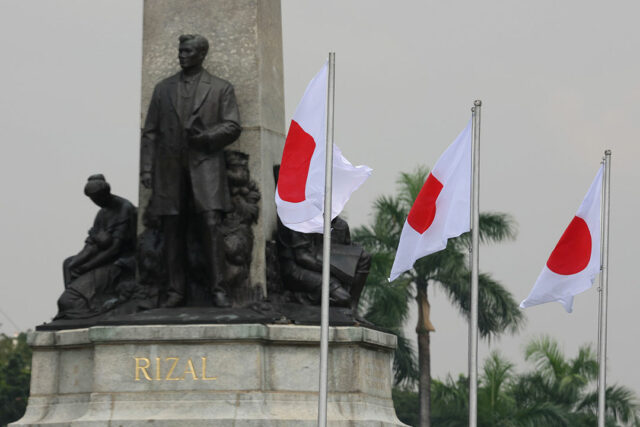
Flags of Japan are seen in Rizal Park. — PHILIPPINE STAR/EDD GUMBAN

MANILA – An increasingly complex security environment means Japan and the Philippines need to further enhance their defense cooperation, Japanese Defense Minister Gen Nakatani said on Monday ahead of a bilateral meeting in Manila.

Philippine Defense Secretary Gilberto Teodoro said he would discuss the shared values of a rules-based international order at the talks, saying a resilient partnership was needed to guard against “unilateral attempts by China and other countries to change the international order and the narrative”.

Security ties between the two U.S. allies have strengthened over the past two years as Japan and the Philippines share common concerns over China’s increasingly assertive actions in the region.

Last year, Manila and Tokyo signed a landmark military pact allowing the deployment of their forces on each other’s soil.

“As the regional and international security environments have become increasingly complex and intensified, there is an increasing need for Japan and the Philippines to further enhance defense cooperation and collaboration in order to contribute to the peace and stability in the region and international community,” Mr. Nakatani said. — Reuters

Wilcon Cup tournament returns for its 8th year

8th Wilcon Cup participants

Wilcon Depot made a dynamic return to the golf course with the 8th Wilcon Cup, held on Feb. 18 at the Wack Wack Golf and Country Club. The much-anticipated tournament gathered avid golfers and industry leaders, celebrating camaraderie and community support in the middle of the scenic fairways.

This year, more than 100 participants took to the green, composed of Wilcon’s longtime industry partners, media friends, international and local suppliers, ABCDE+ (Architects, Builders, Designers/Developers, and Engineers) professionals and the ever-spirited Wilcon’s team. The program began with a ceremonial tee-off spearheaded by Wilcon Depot executives: President and CEO Lorraine Belo-Cincochan, SEVP & COO Rosemarie Bosch-Ong, EVP & CPO Careen Y. Belo, and Boysen Paints representative, Richard Yap. This is followed by a day of competitive play and networking.

The Wilcon Cup underscores a more profound purpose — giving back to the community. Among the beneficiaries of this year’s tournament are ABS-CBN Foundation, Inc. (AFI) Sagip Kapamilya project Bantay Kalikasan, Wilcon Builders’ Foundation, Inc., Crocodylus Porosus Philippines, Inc. and the new addition to Wilcon’s roster of beneficiaries, Casa de Silencio, a retirement home for priests in the Diocese of Cubao.

“These causes are very close to our hearts — the environment, the next generation, and most of all, the Lord. Through this tournament, we are not only enjoying the sport we love but also making a meaningful impact by supporting organizations that uplift communities, protect nature, and care for those in need,” Ms. Ong said during her gratitude speech at the awarding ceremony.

While attendees mingled and enjoyed the game, the event reinforced Wilcon’s vision of creating opportunities to support and uplift others. Golf, as the “tie that binds,” brought together individuals who share the same passion for business and leisure, making room for meaningful conversations and a sense of togetherness.

This shared experience reflected Wilcon’s commitment to building strong relationships, a sentiment echoed by Ms. Belo-Cincochan: “Being your partner in every project is one of Wilcon’s greatest rewards. We look forward to continuing this partnership as we grow beyond 100 stores!”

Beyond camaraderie, the day had its thrilling moments. For Division 1, Alexander Dandan secured the champion title, edging out Jaime Alberto Melo, who settled for a runner-up. Martin Dy Buncio took home the champion trophy in Division 2, while Don Ferrer finished as the runner-up. The Ladies Division showcased an impressive display of skill with Carla Peña clinching the champion title.

Taking home the Low Net award is Gary Go, while Albert Samaniego emerged as the Low Net Champion. Other special awardees are Eugene Lim for nearest to the Pin, Romy David for most accurate drive, and RJ Banzon took home the longest drive.

With over a hundred golfers from Wilcon ABCDE+ partners, the energy on the course was palpable as players balanced competition with sportsmanship.

This year’s tournament also marked a significant milestone for Wilcon — its journey to 100 stores nationwide. This achievement reflects the company’s enduring commitment to excellent service, community engagement, and strengthening relationships.

The 8th Wilcon Cup was made possible through the support of its valuable sponsors. The Platinum Sponsors included Boysen Paints, Grohe, Sefa, and Pozzi. The Diamond Sponsors comprised ABC, Kentfloors, HCG, Alpha Chroma, Landlite, Primeo, Hills, Kessel, Heim, and P. Tech. The Gold Sponsors were Sentry and Lotus, while the Silver Sponsors featured Atlanta Industries, GT Stoneworks, Homeaid, Pacific Glass, STN, Ariston, Saigress, Bestank, Philips, Big Ass Plank, and American Standard.

The event was also supported by its media partners, which included The Manila Times, Metro Channel, Homebase, Philippine Daily Inquirer, Inquirer Golf, Manila Bulletin, BusinessWorld, Summit Media, Bluprint, and Business Mirror.

Additionally, the official apparel sponsors for the 8th Wilcon Cup were Boysen Paints, Grohe, and Kohler.

For more information about Wilcon, visit www.wilcon.com.ph or follow their social media accounts on Facebook, Instagram, and TikTok, or subscribe and connect with them on Viber Community, LinkedIn, and YouTube. Or you may contact Wilcon Depot Hotline at 88-WILCON (88-945266) for inquiries.


Spotlight is BusinessWorld’s sponsored section that allows advertisers to amplify their brand and connect with BusinessWorld’s audience by publishing their stories on the BusinessWorld Web site. For more information, send an email to online@bworldonline.com.

Join us on Viber at https://bit.ly/3hv6bLA to get more updates and subscribe to BusinessWorld’s titles and get exclusive content through www.bworld-x.com.

ERC approves higher rate for FIT-All

A power utility company lineman inspects electric meters in Tondo, Manila. — PHILIPPINE STAR/RYAN BALDEMOR

By Sheldeen Joy Talavera, Reporter

CONSUMERS will face higher electricity bills starting in March as the Energy Regulatory Commission (ERC) approved a new rate for the feed-in tariff allowance (FIT-All).

In a statement late on Saturday, the ERC said it has approved the rate of P0.1189 per kilowatt-hour (kWh), higher than the current rate of P0.0838 per kWh collected from on-grid consumers.

However, this new rate is lower than the P0.1220 per kWh sought by the National Transmission Corp. (TransCo).

The ERC said the collection of the adjusted FIT-All will start for the March billing period.

The FIT-All is a uniform charge billed to all on-grid electricity consumers to support the development and promotion of renewable energy.

Payments are remitted to the FIT-All fund established and administered by TransCo. The fund goes towards paying eligible RE developers who have obtained fixed rates for electricity generated by their projects.

As the administrator, TransCo is tasked to file the application before the ERC to determine the annual FIT-All rate.

In approving the increase, the ERC noted the depletion of the FIT-All Fund due to sustained low prices in the Wholesale Electricity Spot Market (WESM), the trading floor of electricity.

“The lower-than-expected WESM prices adversely affected the fund’s capacity to cover the FIT payments, necessitating adjustments in the FIT-All computation to ensure payments for the supply to consumers coming from renewable energy (RE) FIT-eligible power plants,” the ERC said.

The FIT differential was lowered to P10.13 billion from TransCo’s forecast of P13.64 billion. This represents the difference between the FIT rates payable to RE and the WESM prices.

The ERC said it used actual generation data for January to December 2024 “to ensure a more accurate assessment.”

It also noted that the computation for the administration allowance and disbursement allowance was based on actual expenses incurred in 2024, rather than TransCo’s projected figures.

“The ERC is committed to ensuring that FIT-All rates are fair, transparent, and reflective of actual market conditions,” the commission said.

Asked for further details, ERC Chairperson and Chief Executive Officer Monalisa C. Dimalanta told BusinessWorld that the increase in FIT-All rate within the first quarter will ensure that the fund has enough to pay the eligible RE FIT suppliers.

“For Q4 (fourth quarter), the rate is effective until a new rate is issued by the Commission or until suspended, like we did in December 2022,” Ms. Dimalanta said in a Viber message.

Sought for comment, Jose M. Layug, Jr., president of the Developers of Renewable Energy for Advancement, Inc., told BusinessWorld that the adjusted FIT-All rate boosts the confidence of the RE developers and the private sector in the Philippines.

“This ERC move is consistent with the recent Supreme Court decision promulgated last Aug. 13, 2024 upholding the constitutionality of the Renewable Energy Act of 2008 and the FIT System towards encouraging development of renewable energy resources as tools to effectively prevent or reduce harmful emissions and thereby balance the goals of economic growth and protection of health and environment,” he said in a Viber message.

In January 2024, the ERC lifted the 13-month collection suspension of FIT-All due to the projected deficit in the FIT-All fund.

The ERC first suspended FIT-All collection for three months covering the billing period of December 2022 to February 2023 to ease the financial burden on consumers amid the rising cost of electricity in 2022.

The suspension of the FIT-All collection was extended twice in 2023.

Investor sentiment likely to improve as Philippines is removed from ‘gray list’

PHILIPPINE STAR/NOEL B. PABALATE

By Luisa Maria Jacinta C. Jocson, Reporter

THE PHILIPPINES’ exit from the Financial Action Task Force’s (FATF) “gray list” is seen to improve investor sentiment, but analysts noted that continued reforms are necessary to sustain progress.

The FATF on Friday removed the Philippines from its list of jurisdictions under increased monitoring for “dirty money” following a “successful” on-site visit.

BSP Governor Eli M. Remolona, Jr. said in a text message that the Philippines’ removal from the FATF’s gray list will “help our overseas Filipino workers (OFWs) and foster more investment in our economy.”

“It also complements our ongoing efforts to make the financial system a stronger driver of sustainable growth,” he added.

Mr. Remolona attended the FATF Plenary and Working Group Meetings that took place in Paris, France from Feb. 17 to Feb. 21.

“Indeed, the Philippines came out of our gray list. They showed our members that they have completed in full the action plan,” FATF President Elisa de Anda Madrazo said at a press conference late on Friday.

The Philippines was on the FATF’s gray list for over three years or since June 2021.

The dirty money watchdog noted the Philippines’ “positive progress in addressing the strategic anti-money laundering and countering the financing of terrorism and proliferation financing (AML/CFT/CPF) deficiencies previously identified during their mutual evaluations.”

“The Philippines has completed their Action Plan to resolve the identified strategic deficiencies within agreed timeframes and will no longer be subject to the FATF’s increased monitoring process,” it said.

Finance Secretary Ralph G. Recto said in a statement that the removal of the Philippines from the gray list is a “seal of good housekeeping that strengthens public confidence in our financial system.”

“By upholding the highest standards of financial governance, we will attract more foreign direct investments and expand more trade partnerships that will help accelerate economic growth,” he said.

This would also support the government’s push to achieve an A-credit rating, Mr. Recto added.

The Anti-Money Laundering Council (AMLC) said the exit from the gray list will “facilitate faster and lower-cost cross-border transactions, reduce compliance barriers, and enhance financial transparency.”

Being part of the gray list for the past years has been a “burdensome process for banks and other financial institutions,” AMLC said.

“This process discourages correspondent banking relationships and international financial flows into the country. The exit will reduce international fund transfer requirements, benefiting Filipino individuals and businesses.”

The AMLC also said that the gray list status had hindered other countries from doing business with the Philippines.

“Moreover, even prior to the gray-listing, some foreign regulators were already imposing stringent requirements or fines on financial institutions dealing with entities in the Philippines and other countries deemed to have weak anti-dirty money regimes.”

“This prompted some banks to just avoid doing business with entities in those countries rather than managing possible money laundering or terrorist financing risks. The FATF decision may prompt foreign banks to review and resume their business relationship and transactions with Philippine financial entities.”

President Ferdinand R. Marcos, Jr. last year directed all concerned agencies to work on efforts to exit the list by October.

In July, Malacañang issued an executive order mandating all government offices to adopt the National Anti-Money Laundering, Counter-Terrorism Financing, and Counter-Proliferation Financing Strategy 2023-2027.

“With our exit from the FATF gray list, we are optimistic that the international community will see the Philippines as an even more attractive destination for business and investment,” Securities and Exchange Commission (SEC) Chairperson Emilio B. Aquino said.

Chester B. Cabalza, founding president of Manila-based International Development and Security Cooperation, said that this is a “celebratory moment” for the country.

“As an aspiring upper middle-income country, such transformation will give it more credibility as an investment destination in the region without fear that our financial buoyancy comes from dirty money,” he said.

Rizal Commercial Banking Corp. Chief Economist Michael L. Ricafort said this would increase investor confidence in the Philippines.

“The Philippines would save more processing time and also save on transaction costs, a more desirable scenario if transactions of the country with the rest of the world move with greater ease,” he added.

FATF’s Ms. Madrazo had also noted the Philippines’ efforts “in combating the risk of dirty money running through the casinos.”

The Philippine Amusement and Gaming Corp. (PAGCOR) said it will continue to strengthen regulations and strictly monitor the local gaming industry.

“We also commit to sustain the fight against money laundering and terrorist financing in the entire Philippine gaming industry, including our online gaming operators, land-based casinos and junket operators,” PAGCOR Chairman and Chief Executive Officer Alejandro H. Tengco said.

MOVING FORWARD
However, the FATF said it will be crucial for the Philippines to sustain the measures on strengthening AML/CFT regimes.

“The FATF encourages the Philippines to continue its work in ensuring that its CFT measures are appropriately applied, particularly the identification and prosecution of TF cases, and are neither discouraging nor disrupting legitimate nonprofit organization activity,” it said.

Ms. Madrazo also said the Philippines will face a new assessment in 2027.

“That will be an opportunity for the FATF to verify that the measures are sustained and still in place,” she added.

For its part, the AMLC said that it is committed to “ensuring long-term compliance with international standards.”

Bienvenido S. Oplas, Jr., president of a research consultancy and of the Minimal Government Thinkers think tank, said the Philippines should continue to clamp down on illegal trade, which is a channel for dirty money.

“Illicit trade in tobacco, oil, jewelries, etc., this is a big source of money laundering. The government should crack them down,” he said.

Leonardo A. Lanzona, an economics professor at the Ateneo de Manila University, said the government must accompany reforms with other measures to better attract investments.

“While exiting the FATF gray list removes a major barrier to investments, the Philippines must compete on its strengths, such as its young workforce, service-driven economy, and tourism potential,” he said.

“Regional competitors are also aggressively courting investors, so policy consistency, infrastructure upgrades, and targeted investment promotions will be critical,” he added.

SAFEGUARDS SOUGHT
Meanwhile, Jose Enrique “Sonny” A. Africa, executive director at think tank IBON Foundation, said there needs to be “stronger safeguards to mitigate the heightened risk of continued erosion of civic and democratic space.”

“The FATF itself nominally calls for a targeted risk-based approach — the government should be challenged to uphold the spirit of this with transparent data-driven risk assessments and with sanctions governed by due process with clear judicial oversight,” Mr. Africa said.

The FATF in its statement said that the Philippines’ continued measures should not impede on legitimate nonprofit activities.

“Executive misapplication has already been checked with so-called terrorist financing cases motu proprio dismissed for insufficiency of evidence and no probable cause at least thrice by the courts,” Mr. Africa said.

He said that the government should “stop using AML/CFT as political tools to suppress activism and use them against actual financial crimes.”

“It should stop freezing assets of NGOs and individual activists with trumped-up terrorism financing accusations and redirect enforcement towards systemic financial crimes including those committed by politically connected individuals.”

In 2002, the FATF blacklisted the Philippines for having no legal anti-money laundering framework. It was removed from the blacklist a year later after the passage of the Anti-Money Laundering Act.

Analysts say RRR cut to boost economic activity

A vendor sells fruits during Lunar New Year celebrations at Chinatown in Binondo, Manila, Philippines, Jan. 28, 2025. — REUTERS

By Luisa Maria Jacinta C. Jocson, Reporter

FURTHER lowering banks’ reserve requirements is seen to drive economic growth as increased liquidity could boost bank lending, analysts said.

“This is good. It will certainly help prop economic activity further,” Ruben Carlo O. Asuncion, chief economist at Union Bank of the Philippines, Inc., said in a Viber message.

“This can further loosen existing financial conditions, help support more credit activity and consequently further drive domestic demand,” he added.

The Bangko Sentral ng Pilipinas (BSP) on Friday announced it will reduce the reserve requirement ratio (RRR) of universal and commercial banks and nonbank financial institutions with quasi-banking functions by 200 basis points (bps) to 5% from 7%, effective on March 28.

It will also cut the RRR for digital banks by 150 bps to 2.5%, while the ratio for thrift lenders will be reduced by 100 bps to 0%. 

Rural and cooperative banks’ RRR has been 0% since October.

The RRR is the portion of reserves that banks must hold onto rather than lending out. When a bank is required to hold a lower reserve ratio, it has more funds to lend to borrowers.

“The BSP reiterates its long-run goal of enabling banks to channel their funds more effectively toward productive loans and investments. Reducing RRRs will lessen frictions that hinder financial intermediation,” the central bank said.

The RRR cut is expected to release fresh liquidity into the financial system, analysts said.

“It is a welcome development as it will help increase liquidity in specific parts of the economy as opposed to a policy cut which has a wholescale impact,” Patrick M. Ella, economist at Sun Life Investment Management and Trust Corp., said.

Analysts said there could be P300 billion to nearly P400 billion of liquidity released into the economy following the RRR cut.

“This move is expected to inject at least P300 billion worth of liquidity into the financial system, with the potential for further expansion through bank lending,” Bank of the Philippine Islands Lead Economist Emilio S. Neri, Jr. said.

Rizal Commercial Banking Corp. Chief Economist Michael L. Ricafort expects P320 billion to P330 billion to be infused into the banking system.

Chinabank Research said it estimated the RRR cut will free up around P364 billion of liquidity.

“The move should provide further support to the Philippine economy — which has experienced some slowdown in the second half of 2024 — especially in light of the BSP’s decision to keep its policy rate unchanged last week,” it added.

Meanwhile, HSBC economist for ASEAN Aris D. Dacanay said P382 billion of liquidity could be injected into the financial system.

“The BSP’s RRR cut aligns with the BSP’s long-term goal of bringing reserve requirements closer to regional norms while maintaining liquidity conditions that support economic growth,” John Paolo R. Rivera, a senior research fellow at the Philippine Institute for Development Studies, said.

“This reduction releases additional funds that banks can lend, potentially lowering borrowing costs and stimulating credit growth. This could boost private consumption, business expansion, and investment, supporting overall economic activity.”

Mr. Neri said the lower reserve requirements are seen to boost bank lending as it will provide banks with “greater flexibility in allocating resources.”

“Recent data indicate that previous RRR cuts in June 2023 and October 2024 have already contributed to improved credit access, with loan growth accelerating from around 7% in mid-2023 to 12.2% in December 2024,” he said.

“Still, a number of banks may have been constrained by a real estate demand slump caused by remote work and the Philippine offshore gaming operator  ban. With the RRR cut, borrowers outside the property sector are likely to gain easier access to funds,” Mr. Neri added.

Separate BSP data showed outstanding loans of universal and commercial banks jumped by 12.2% year on year to P13.1 trillion in December. This was the fastest pace of bank lending growth in two years.

“In the longer term, the RRR cut, which lowers banks’ funding costs, would reduce loan rates as well,” Chinabank Research said.

“This could spur borrowing by businesses for business expansion and capital expenditure — which would be positive for the economy’s growth prospects,” it added.

The total resources of the Philippine financial system rose by 7.8% to nearly P34 trillion in 2024, earlier central bank data showed.

Mr. Ricafort said banks have the option to increase their loans, investments in bonds, fixed-income securities, equities, forex, and other assets.

“Instead of being idle as required reserves, at least the P320 billion to P330 billion would be deployed to more productive investment outlets that generate earnings,” he added.

Mr. Neri said the cut will also “level the playing field” between local and foreign banks.

“Foreign banks, which primarily fund their Philippine operations through deposits sourced from their headquarters abroad, will now face a more equitable competitive environment.”

On the other hand, Mr. Dacanay said the impact of the cut will likely be marginal.

“Though this may marginally offer some support to the economy, we do not think this RRR cut will serve as a substantial short-term boost to growth. This is because the liquidity injected will likely be re-absorbed by the BSP’s monetary tools,” Mr. Dacanay added.

Mr. Ricafort said the RRR cut should be “policy neutral” as it is being phased out as the main liquidity management tool due to the shift towards term deposit facility (TDF) and BSP securities auctions instead.

“On the demand side, demand for credit may still be tepid as households wait for the easing cycle to end (i.e. for policy rates to bottom) before taking out a loan,” Mr. Dacanay said, noting there was no change in the loan-to-deposit ratio after the October RRR cut.

INFLATIONARY IMPACT
Meanwhile, analysts said the reduction in banks’ reserve requirements is unlikely to result in significant inflationary pressures.

“This latest RRR cut is timely, as the BSP’s recent decision to keep its policy rate steady will likely mitigate any inflationary impact,” Mr. Neri said.

He said the country’s financial system is “well-positioned to absorb the additional liquidity in an orderly manner.”

“Banks have also gained valuable experience in managing liquidity from recent RRR reductions, ensuring a smooth implementation of this policy change,” he added.

Chinabank Research said it will not necessarily be inflationary, similar to the previous cut, amid the BSP’s toolkit for managing liquidity.

The central bank has said the risks to the inflation outlook have become “broadly balanced” for this year and the next.

The BSP expects inflation to average 3.5% this year and 3.7% in 2026, both still within the 2-4% target band.

“The timing of the cut is important. With inflation still being closely monitored, the move suggests the BSP is confident that liquidity management tools can offset any inflationary risks arising from increased money supply,” Mr. Rivera said.

With the cut, analysts said the RRR is at a manageable level.

“I think compared to our ASEAN (Association of Southeast Asian Nations) neighbors, we are at a good place. The goal previously was to bring it down to single digit and now it’s at 5%. For now, I believe this is sufficient,” Mr. Asuncion said.

Mr. Ella said he believes the BSP is “done” with cuts in the RRR.

Mr. Rivera said the cut brings the Philippines closer to neighbors like Malaysia and Thailand where reserve requirements are lower.

“However, at 5% for big banks, it remains relatively high by regional standards. While further reductions may be warranted, these should be calibrated carefully to avoid excessive liquidity that could stoke inflationary pressures,” he said.

Meanwhile, Mr. Dacanay said that the lower RRR will likely “strengthen the transmission of monetary policy.”

“With the RRR lower, the BSP’s incoming easing cycle will likely be faster and more effective in boosting growth as there is more to lend at lower interest rates,” he said.

The BSP has been looking for ways to improve its transmission mechanism, which Mr. Remolona earlier said has “long lags.”

“With the RRR cut serving as an accommodative measure for the economy, the RRR cut could give room for the BSP to potentially delay further policy rate cuts,” Chinabank Research said.

“Unlike a reduction in the policy rate, an RRR cut would provide support for economic growth without risking a depreciation of the Philippine peso.”

Earlier this month, the BSP unexpectedly left rates steady at its policy review, leaving the benchmark unchanged at 5.75%.


Smart invoicing made simple: The case for automation in finance

Automation has become a driving force in modern business, transforming areas such as manufacturing, customer service, and accounting. In accounting, particularly, financial electronic data interchange (EDI) has enabled businesses to streamline invoicing and payment processes, making them more efficient and accurate.

Manual invoice processing, while still common, is time-consuming and prone to errors.  Automation, including the use of EDI in finance, addresses these challenges by enabling faster, more reliable transactions.

What is invoice process automation?

Invoice process automation refers to the use of specialized software to streamline and manage invoicing tasks with minimal human intervention. Combined with financial EDI, this approach ensures that businesses can handle payments and document exchanges quickly and securely.

Automation, supported by tools for EDI in banking, covers multiple invoicing stages, such as:

  • Creating invoices: Generating documents based on predefined templates and data.
  • Sending/receiving invoices: Leveraging EDI processes for secure, error-free transactions.
  • Posting invoices: Automatically recording transactions in ERP or financial systems.
  • Handling returns and corrections: Streamlining adjustments through automated workflows.

System integration and best use cases

For smooth operations, automated invoicing systems must integrate seamlessly with ERP and financial platforms. This is particularly important for industries such as banking and finance, where secure and compliant document exchange is critical. Compatibility also simplifies tasks like EDI migration or switching EDI providers.

Automation is especially valuable for companies processing thousands of invoices monthly. For businesses expanding their EDI processes, automation reduces manual workloads and enables employees to focus on high-value activities like financial analysis or strategic planning.

Six benefits of automated e-invoicing

  1. Speed: Automation, including new EDI tools, accelerates tasks such as data entry and verification, significantly reducing processing times.
  2. Error reduction: Automated systems reduce the risk of human errors, improving the accuracy of financial documents — a critical factor in EDI banking operations.
  3. Cost savings: Automated systems, particularly those utilizing financial EDI, can lower invoicing costs by up to 50%-60%, saving time and labor expenses.
  4. Enriching invoices with additional information: Automation enables businesses to add essential details — such as compliance data or tax information — that may not be available in the original ERP system. This capability is especially valuable during EDI provider migrations.
  5. Customization to company needs: Modern tools, such as those designed for EDI finance, adapt to unique business requirements and workflows, offering flexible solutions tailored to industry-specific demands.
  6. Data analysis: Automated invoicing tools provide real-time insights into financial performance, outstanding payments, and vendor reliability. For companies looking to expand their EDI capabilities, these analytics are crucial for decision-making.

How automation impacts accounting jobs

While some fear that automation could lead to job losses, the reality is different. Tools for financial electronic data interchange free up employees from repetitive tasks, enabling them to take on more strategic roles.

Automation, particularly in EDI processes, shifts accountants’ responsibilities to areas such as:

  • Exception management
  • Client communication
  • Analytical tasks requiring expertise

By removing monotonous tasks, automated invoicing improves job satisfaction, offering professionals more opportunities for growth and creativity.

Three examples of invoicing automation in action

As highlighted in the IDC MarketScape: European Compliant e-Invoicing 2024 Vendor Assessment report, businesses are leveraging e-invoicing and automation not only to meet regulatory requirements but also to streamline their financial processes, reduce manual workloads, and improve accuracy. Notably, Comarch was named a leader in European compliant e-invoicing for its advanced solutions.

Here are three practical examples of how automation transforms invoicing operations:

  1. Mass invoice processing. Automated systems handle large invoice volumes effortlessly, performing tasks such as format conversion, electronic signing, and compliance checks — essential for EDI in banking and finance.
  2. Automatic invoice verification. These systems ensure document accuracy by automatically checking for completeness and consistency. They also enrich invoices with missing or additional data during the switch to a new EDI provider.
  3. Invoice conversion. Automation enables document conversion across formats and standards, ensuring interoperability during EDI migrations and simplifying global operations.

Technological innovations in accounting

Overcoming resistance to change

While automation adoption may face resistance, solutions like financial electronic data interchange prove its supportive role in enhancing human capabilities.

Competitive advantages

Automation modernizes processes, improves efficiency, and positions businesses for success in competitive markets like banking and finance.

Future outlook

As digital solutions become increasingly necessary, tools such as EDI banking systems are critical for staying relevant in a competitive and regulated environment.

Find the best EDI vendor for you

Automating invoice processes delivers tangible benefits: faster processing, fewer errors, cost savings, enriched data, and real-time insights. For businesses seeking to enhance operations or switch EDI providers, the right EDI system can ensure a smooth transition and ongoing efficiency gains.

When selecting an EDI system or vendor, consider these key features to ensure a robust and scalable solution:

  • Optical character recognition (OCR)
  • Invoice streaming
  • Invoice enrichment
  • Self-billing
  • Correction support
  • Attachment handling

Additionally, prioritize solutions that integrate easily with your existing ERP or financial systems. A flexible and compatible EDI provider can help future-proof your operations, support business growth, and enable smooth EDI migration or expansion.

By focusing on these criteria, your business can leverage automation to optimize invoicing and stay competitive in an increasingly digital world.


Spotlight is BusinessWorld’s sponsored section that allows advertisers to amplify their brand and connect with BusinessWorld’s audience by publishing their stories on the BusinessWorld Web site. For more information, send an email to online@bworldonline.com.

Join us on Viber at https://bit.ly/3hv6bLA to get more updates and subscribe to BusinessWorld’s titles and get exclusive content through www.bworld-x.com.

Australia-backed program funds Filipina-led sustainable, gender-equitable startups

An innovative funding program backed by the Australian government was recently launched in the Philippines, encouraging further improvement in gender equity business practices while giving women-led and women-owned businesses scalable access to growth capital.

Called SheSecure, the funding program is an investment product that applies a “gender lens” in support of the growth capital needs of women-owned and women-led small businesses (WSBs) in the Philippines.

SheSecure offers financing of up to P30 million per enterprise together with interest incentives tied to improvements in gender equality practices. These funds can be utilized by the enterprises to fuel expansion, invest in new technologies, or support their working capital requirements.

It was developed by ARQ SME Business Development Company (ARQ SME BDC), a pioneering SME-focused debt and mezzanine investor, in collaboration with the Australian-funded Investing in Women initiative.

The Australian Embassy’s Deputy Head of Mission, Dr. Moya Collett, led the launch of the financing program in Makati City on Dec. 5, 2024. “Australia is committed to supporting gender equality, and we are investing in women’s economic empowerment to help achieve this,” Dr. Collett said.

“Australia is pleased to support local partnerships that develop innovative solutions such as SheSecure by ARQ because evidence shows that incorporating a gender lens into an investment strategy improves financial performance and impact outcomes for investors.”

Bridging critical gaps for women entrepreneurs

“SheSecure was developed to tackle two critical gaps faced by larger women-led and women-owned small businesses in the Philippines,” Abigail Tan, ARQ SME BDC managing partner, said.

“The lack of appropriate capital is a major obstacle for growth. By offering tailored financing paired with strategic support, SheSecure aims to help bridge this gap for women entrepreneurs ready to scale,” she noted.

The SheSecure launch program was also a venue for women founders such as Maita Madlambayan (HausTalk), Ann Cuisia (Traxion), Abetina Valenzuela-Mader (EQUILIFE), and Monette Iturralde-Hamlin (TeamAsia) to converge and tackle the importance of capital access for women entrepreneurs, as well as share insights from their respective entrepreneurial journeys.

Ms. Valenzuela-Mader, a two-time founder in the healthcare industry, having built EQUILIFE and co-founded Kindred Health, spoke of leveraging “unfair advantages” to get ahead in business.

“We have different unfair advantages. [My family] was mine, and SheSecure is another unfair advantage. So don’t be hesitant to explore how you can get ahead with certain available funds or partnerships. If it’s available to you, then search it out. If it’s not your family, it’s things like [SheSecure], which were not available before.”

Addressing the ‘double bottom line’

With a strong commitment to the “double bottom line” approach, SheSecure is designed to drive financial profitability and social responsibility by fostering gender equality in business.

“By providing incentives linked to measurable progress in gender performance, SheSecure empowers companies to mainstream gender equality — ensuring opportunities and leadership roles are accessible to everyone, regardless of gender,” Ms. Tan said.

Speaking as a Male CEO Ally of the SheSecure launch event, PayMongo CEO Jojo Malolos spoke of the power of creating more diverse, equitable, and inclusive work cultures.

“When we create a space for diversity, when we champion women and value their perspectives, amazing things happen. But let’s not sugar-coat it. Women and entrepreneurs face challenges that their male counterparts don’t. So we need to be more than just cheering from the sidelines and actively breaking down the barriers that hold women back. It’s not charity — it’s strategy. And when women succeed, businesses flourish, and we’ve proven that communities thrive and economies grow stronger,” Mr. Malolos pointed out.

Creating a ‘win-win’ network for women-led businesses and for society

While SheSecure has specific criteria, ARQ SME BDC is committed to connecting applicants to suitable sources of capital, even if they don’t fully meet the program’s qualifications. This initiative aligns with the broader vision of creating “gender-smart enterprises” that deliver strong financial returns alongside positive social impact.

“Our goal with SheSecure is to nurture progressive growth-oriented businesses that seek to further adopt and improve their gender-inclusive practices while being the ‘unfair advantage’ as the SME captures visible opportunities,” Ms. Tan added. “By prioritizing both profit and social progress, we create a win-win for businesses, their customers, and society as a whole.”


SparkUp is BusinessWorld’s multimedia brand created to inform, inspire, and empower the Philippine startups; micro, small and medium enterprises (MSMEs); and future business leaders. This section will be published every other Monday. For pitches and releases about startups, e-mail to bmbeltran@bworldonline.com (cc: abconoza@bworldonline.com). Materials sent become BW property.

Extending access to quality healthcare for Filipinos

Maintaining good health is not just a matter of building practices and making choices for a better state of well-being. It also involves proper investments for fitness or wellness, as well as securing funds for attending to unexpected health conditions. Being insured thus provides crucial support for individuals, helping protect their personal well-being without compromising those of their loved ones and without putting other resources at stake.

Social health insurance seeks to ensure access to affordable healthcare for individuals and families. Amid the continuous medical inflation and increasing healthcare costs, social health insurance plays a pivotal role in the country’s healthcare system as a critical pillar for healthcare coverage. The signing of the Universal Healthcare (UHC) Act to law in 2019 has enabled the automatic enrollment of Filipinos in the National Health Insurance Program (NHIP), coupled with the expansion of healthcare services, facilities, and increased availability of medical professionals.

Nonetheless, challenges still persist in the country’s health care system, which the private sector acknowledges and endeavors to address by step up their respective healthcare efforts.

For its part, Cocolife, the largest Filipino-owned life insurance company, strives to provide the best and most affordable healthcare to Filipinos. It has been at the forefront of innovative and comprehensive healthcare solutions that meet the unique needs of its members and partners.

“Over the years, Cocolife Healthcare has been consistent in offering the most comprehensive healthcare solutions to partners at the most reasonable costs. We specialized in designing tailor-fitted benefit program package suited to the requirements of our most valued clients. We are constantly pushing boundaries and redefining what is possible with innovative solutions, the most competitive healthcare plans and personalized service for our members,” Christopher Tan, Cocolife Healthcare First Vice-President and Head of Sales and Marketing Department, told BusinessWorld.

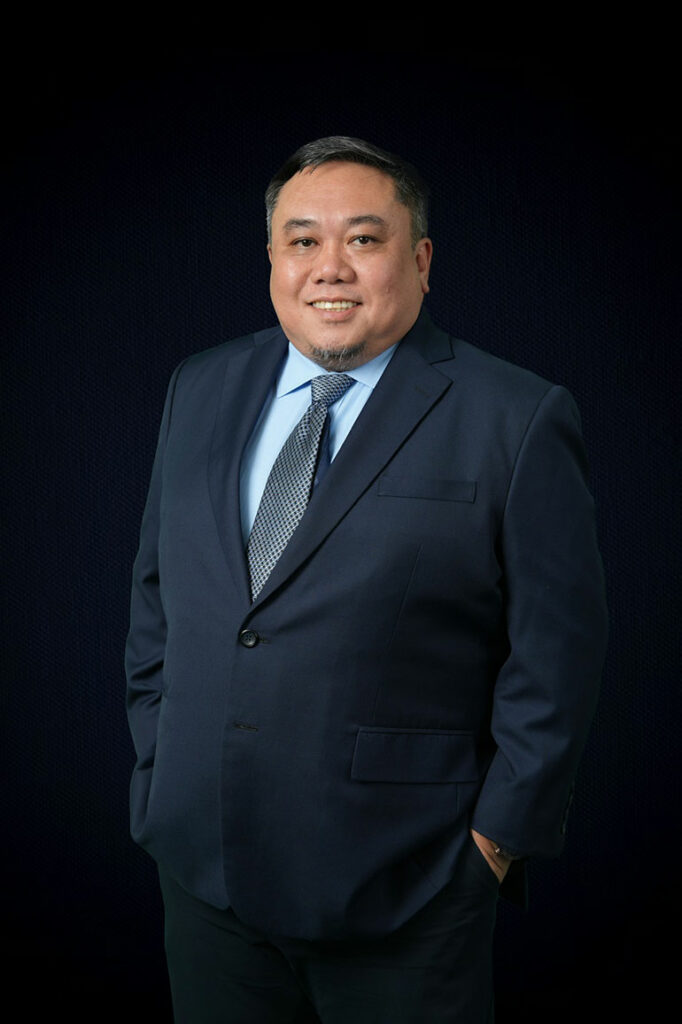
Christopher Tan, Sales and Marketing, Cocolife Healthcare

As Cocolife takes significant strides, among them the strengthening of customer-centric service, the quality of health insurance Cocolife provides is improving. According to Angelita Trinidad, Cocolife’s First Vice-President and Head of Customer Care Department, the company has been aiming to provide genuine care for members by prioritizing customer service. This approach has helped the company build strong customer relationships based on trust and reliability.

“Since day one, Cocolife has never rested on its laurel. We’ve been striving to provide the best service at a very affordable premium. It’s not about what we earn from a partnership but the commendable service we can give to every customer,” Ms. Trinidad said.

At the core of its operations, Cocolife made notable strides in customer service through digitalization. For instance, its implementation of the Customer Relationship Management (CRM) system includes a live chat feature with customer service representatives, offering customer support and addressing inquiries and requests for assistance promptly. This system has been a game-changer, positioning Cocolife as a truly customer-centric insurance provider.

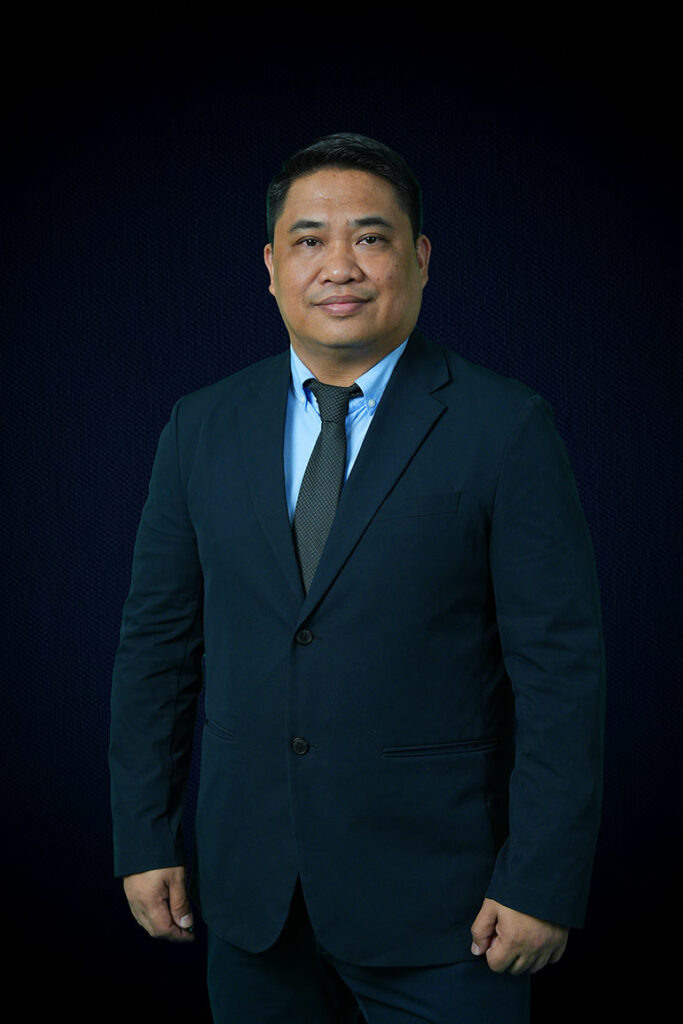
Angelita Trinidad, Customer Care Department, Cocolife Healthcare

Alongside this, the company also launched the Virtual Card app, a mobile application designed to provide a convenient and easy way access to medical care. The app features member access to their digital card, medical benefits, a health provider directory, and request for electronic letters of authorization (eLOA).

Cocolife has also embraced telemedicine as a key component of its healthcare services. It currently provides both in-house options and partnerships with telemedicine providers, giving members access to online consultations with accredited doctors.

Jefferson Calipjo, Account Management Unit, Cocolife Healthcare

The company is making significant investments in a more sophisticated contact center system to expand its helpline, further drive digitalization, and ensure a top-tier customer experience for all its members, according to Jefferson Calipjo, VP and Head of Account Management Unit, Cocolife Healthcare.

Cocolife is expanding its 24/7 Helpline to other regions, significantly enhancing the provider’s ability to serve more valued clients and providers alike. The helpline has already reached Davao, where it established services including enrollment, billing, and LOA in the Mindanao area. Moreover, Cocolife plans to explore additional key locations for this initiative in the near future, Mr. Calipjo added.

Improving the healthcare experience

Through these initiatives, Cocolife has established itself as a key player in delivering accessible and affordable healthcare for Filipinos.

2024 is a momentous year for Cocolife as it received several recognitions from Global Business and Finance Magazine Awards as Best Healthcare Insurance Company in the Philippines, Global Business Review Magazine Awards as Best Customer Service in Healthcare Provider in the Philippines, Gazet International Annual Awards as Customer Centric Healthcare Provider in the Philippines for 2024, and International Business Magazine Awards as Leading Healthcare Provider in the Philippines for 2024.

This year, Cocolife continues its pursuit to improve healthcare experiences among Filipinos. According to Ms. Trinidad, the company is introducing a Web portal specifically designed for its healthcare providers. The portal will be accessible to all Cocolife’s partner hospitals and clinics, aiming to improving efficiency and simplifying availment processes.

“As the largest Filipino-owned stock life insurance company, our aspiration is to cover as many Filipinos as possible by offering innovative and accessible insurance solutions tailored to the diverse needs of our clients,” Mr. Tan said. “Expanding financial inclusivity through cost effective healthcare plans and reducing vulnerability of members by designing tailor-fitted packages and introducing digital transformation is on top of our priorities. Combining these efforts with Cocolife’s sustainable business practices, confident that we are on the right track in contributing to improving the nation’s financial security and healthcare landscape.”

To know more about Cocolife’s quality healthcare products and award-winning services, visit www.cocolife.com.


Spotlight is BusinessWorld’s sponsored section that allows advertisers to amplify their brand and connect with BusinessWorld’s audience by publishing their stories on the BusinessWorld Web site. For more information, send an email to online@bworldonline.com.

Join us on Viber at https://bit.ly/3hv6bLA to get more updates and subscribe to BusinessWorld’s titles and get exclusive content through www.bworld-x.com.

The push for better healthcare

facebook.com/PhilHealthOfficial

The observance of National Health Insurance (NHI) Month serves as the Filipinos’ annual reminder of the government’s commitment to ensuring that no Filipino is left behind when it comes to healthcare. Through the National Health Insurance Program (NHIP), millions of Filipinos — especially those in marginalized and vulnerable sectors — can receive medical support without the burden of high out-of-pocket expenses.

February, often referred to as the month of love, coincides with the observance of NHI Month by the Philippine Health Insurance Corp. (PhilHealth). Established by virtue of Presidential Proclamation No. 1400 s. 2007, the month-long celebration emphasizes the important role of social health insurance in every Filipino’s life.

The theme for this year’s celebrations, “Panatag Kami Dito,” which roughly translates to “we feel secure here,” shows the government’s drive to continuously strengthen social health insurance, giving citizens peace of mind knowing that medical support is within reach when they need it most.

The NHI Month is also held to help spread awareness about the NHIP, emphasizing the various benefits that Filipinos can gain from it. The program, created through Republic Act 7875 or the National Health Insurance Act of 1995, seeks to offer health insurance coverage and guarantee access to affordable and high-quality healthcare services for all Filipinos.

Under Republic Act No. 11223, more famously known as the “Universal Health Care Act,” every Filipino citizen became an automatic member of the NHIP and was granted immediate eligibility for health benefit package, regardless of non-registration or non-membership with PhilHealth.

Exemplified by the Filipino spirit of bayanihan, the NHIP is built on the idea of social solidarity, where everyone — regardless of income, age, health condition, or location — shares the responsibility of supporting one another in accessing healthcare.

While most of the members are direct contributors who pay their monthly premiums to PhilHealth, there are some indirect contributors whose premiums are subsidized by the National Government to ensure that even the most vulnerable sectors — such as indigent families, senior citizens, and persons with disabilities — receive the medical care they need without financial burden.

This commitment to giving Filipinos sufficient healthcare can be seen in PhilHealth’s continuous efforts to provide timely financial support for medical needs. The latest numbers from the state health insurer show that a total of P137.6 billion in benefits claims has been disbursed to over 12,000 accredited healthcare facilities nationwide from Jan. 1 to Oct. 31, 2024.

Additionally, the national average turnaround time for claims processing has significantly improved to 25 days, which is 35 days faster than the 60-day period mandated by Republic Act No. 10606.

“The reduced turnaround time is helping partner hospitals in the country maintain liquidity, ensure a steady supply of medicines and supplies, salaries for health workers and continuous improvement of facilities, which all translate to better services to members,” former PhilHealth president and chief executive officer Emmanuel R. Ledesma, Jr. said in a news release.

Beyond improving claims processing and ensuring financial support for healthcare facilities, PhilHealth also prioritizes expanding its membership coverage to include all Filipinos. Despite the Universal Health Care Act’s mandated coverage rate of 100%, the state think tank Philippine Institute for Development Studies (PIDS) reported in 2022 that membership-to-population coverage in the poorest provinces is only a little over 50%.

Among the island and regional groups with the highest population coverage rates include the National Capital Region, Regions III and IV-A with 98.9%, Luzon with 90.7%, and Visayas with 90.5%. Although Mindanao had a relatively high population coverage at 87.82%, five of its conflict-affected provinces, namely, Maguindanao, Lanao del Sur, Basilan, Sulu, and Tawi-Tawi, registered the lowest PhilHealth coverage at 52% and below according to PIDS.

In addition, Mindanao has the highest proportion of indirect contributors, with 57% consisting mainly of indigent or sponsored members. Individuals classified as indigents, including beneficiaries of government initiatives like the Pantawid Pamilya Pilipino Program (4Ps), are considered more vulnerable to illnesses.

Recognizing these coverage gaps and the need for more accessible healthcare services, PhilHealth has introduced various programs aimed at addressing the specific needs of different sectors. These initiatives not only provide financial support for hospitalization and medical treatments but also focus on preventive care, primary healthcare access, and specialized benefit packages for critical illnesses.

One of the most notable programs by the insurance provider is the PhilHealth Konsultasyong Sulit Tama or the Konsulta package. Konsulta is a primary care benefit package that offers capitation payments to cover free yearly checkups, specific diagnostic tests, and essential medications. This initiative aims to protect Filipinos from chronic illnesses, prevent complications through early detection, and ensure access to affordable medications.

PhilHealth’s Z Benefits Package is also a noteworthy program that eases financial burdens for Filipinos with illnesses perceived as “medically and economically catastrophic.” Introduced in 2012, it provides financial coverage for patients diagnosed with severe and long-term illnesses such as certain types of cancer, end-stage kidney disease requiring dialysis, and severe heart conditions, among others.

Benefits from the package vary depending on the patient’s disease. According to its website, PhilHealth can provide financial assistance of up to P1.4 million for breast cancer treatment, P500,000 for Acute Lymphoblastic Leukemia (ALL), P600,000 for end-stage renal disease requiring kidney transplantation, P550,000 for coronary artery bypass graft surgery, and P175,000 for cervical cancer, among others. These grants cover room and board fees, drugs and laboratory exams, operating room, and professional fees during the entire course of treatment.

Last month, the state health insurer expanded Z benefit packages for both peritoneal dialysis (PD) and kidney transplantation. The Z package for PD now also covers continuous ambulatory peritoneal dialysis and benefits have been set at P389,640 and P510,140 depending on the PD solutions. Meanwhile, Z packages for kidney transplantation were also increased from P600,000 to over P1 million for living organ donor transplantation, and to P2.14 million for deceased organ donor transplantation.

As the nation celebrates NHI Month, individuals from all walks of life are reminded of the significance of healthcare for millions of Filipinos. The Philippines has come a long way in making health insurance more accessible and inclusive, but the journey continues. Through collective support and awareness, the vision of universal health coverage comes closer to reality, ensuring a healthier and more insured future for every Filipino. — Jomarc Angelo M. Corpuz