Home Blog Page 14

TNT guns for quick rebound against Macau Black Knights

TNT Tropang 5G

Games on Friday
(Smart Araneta Coliseum)
5:15 p.m. – TNT vs Macau
7:30 p.m. – Blackwater vs Ginebra

AS TNT plots for a quick bounceback against Macau on Friday in the PBA Commissioner’s Cup, coach Chot Reyes challenged the Tropang 5G to sharpen their shot making.

A team that thrives on long-range bombing, the defending champions practically fired blanks in their 92-97 loss to Converge on Wednesday night, hastening their fall.

“We cannot win if we’re shooting three out of 28, 10% from the three-point line,” Mr. Reyes rued. “The import had 70% from the two-point line, but we couldn’t get him the ball. Every time he was doubled, he passed it off and nobody could make a wide-open shot. So that’s the game.”

He noted how the usually ball-dominant Bol Bol “took his fewest shots ever” and kicked it out to the open locals against the double-teaming defense of Converge.

“Unfortunately, we have a team of shooters who cannot shoot. So that’s the problem. If we cannot make shots, then every other team is going to do what Converge did tonight,” Mr. Reyes lamented.

The Black Knights, fresh from a 119-107 breakthrough over Titan after losing their first seven assignments, could take a page from the FiberXers’ playbook when they challenge TNT in the 5:15 p.m. encounter at the Smart Ara-neta Coliseum.

“He’s been a challenge for the whole league,” said Macau coach Marcus Elliott of the 7-foot-3 Mr. Bol, the tournament’s leading scorer and shot blocker. “Interesting player, unique player, but I still like my players better.”

Meanwhile, Blackwater (2-6) seeks to ride the momentum from its massive 126-120 upset over San Miguel Beermen (SMB) as it guns for the scalp of another giant in Barangay Ginebra (5-2) at 7:30 p.m.

“It (shocker over SMB) would not get us to the quarterfinals but it’s a good start,” said Bossing coach Pat Aquino, who tasted his first W after touching off his tenure with back-to-back losses.

“It’s going to be hard for us ‘cause it’s back-to-back games against another champion and of course, my idol, Tim Cone. But we believe in what we’re doing here,” he added.

The Gin Kings (5-2) enter this tiff motivated to secure their fourth straight W, which will lift them to solo third and boost their shot at a coveted twice-to-beat incentive for the Top 4 teams in the playoffs. — Olmin Leyba

Iran tightens control of Hormuz after US calls off renewed attacks

A MAP showing the Strait of Hormuz is seen in this illustration taken on March 23. - REUTERS FILE PHOTO/DADO RUVIC/ILLUSTRATION

WASHINGTON/DUBAI/ISLAMABAD — Iran seized two ships in the Strait of Hormuz as it tightened its grip on the strategic waterway after US President Donald J. Trump announced he was indefinitely calling off attacks, with no sign of peace talks restarting.

The status of a two-week-old ceasefire, due to have expired earlier this week, remained unclear. In a sharp about-face hours after threatening renewed violence, Mr. Trump made what appeared to be a unilateral announcement on Tuesday that the US would extend a ceasefire until it had discussed an Iranian proposal in peace talks to end the two-month-old war.

But Iranian officials did not say they had agreed to any extension of the truce, and criticized Mr. Trump’s decision to maintain the US Navy blockade of Iran’s trade by sea, itself considered by Iran an act of war. Iran’s parliament speaker and lead negotiator Mohammad Bagher Ghalibaf said a full ceasefire only made sense if the blockade was lifted.

Reopening the Strait of Hormuz, the slender chokepoint that carried a fifth of the world’s oil trade before the war, was impossible with such a “flagrant breach of the ceasefire,” Mr. Ghalibaf said on social media.

“You did not achieve your goals through military aggression and you will not achieve them by bullying either,” he wrote in his first response to Mr. Trump’s announcement. “The only way is recognizing the Iranian people’s rights.”

In another wartime shakeup at the Pentagon, Navy Secretary John Phelan has been fired, a US official and a person familiar with the matter said on Wednesday. The move came just weeks after Defense Secretary Pete Hegseth ousted the Army’s top general.

The Pentagon said Mr. Phelan was leaving the administration “effective immediately,” but did not provide a reason or say whether it was his decision to go.

Mr. Trump has again backed away from his repeated threats to bomb Iran’s power plants and other civilian infrastructure, which the United Nations and others warn would violate international humanitarian law. But little progress has been made in ending the war that started with joint US-Israeli attacks on Iran on Feb. 28.

That leaves the two sides in a holding pattern with the crucial Strait of Hormuz still effectively shut, straining economies across the world. Thousands of people have been killed across the Middle East, mostly in Iran and Lebanon, where the Iran-allied Hezbollah militant group joined the fighting against Israel.

The Islamic Revolutionary Guard Corps seized two vessels and escorted them to Iranian shores, according to statements by the shipping companies and Iran’s semi-official Tasnim news agency.

The Revolutionary Guards accused the ships it had seized, the Liberia-flagged Epaminondas and Panama-flagged MSC Francesca, of operating without required permits and tampering with their navigation systems.

A third, Liberia-flagged container ship was fired upon in the same area but was not damaged and had resumed sailing, according to maritime security sources.

White House Press Secretary Karoline Leavitt said in an interview with Fox News that since the ships were not US or Israeli vessels the seizure was not a violation of the ceasefire. She called it an act of “piracy.”

The US military said on Wednesday it had so far directed more than 30 ships to turn around or return to port as part of the US blockade against Iran. Far beyond the Gulf, the US military has intercepted at least three Irani-an-flagged tankers in Asian waters, sources said, redirecting them away from their positions near India, Malaysia and Sri Lanka.

Brent, the international crude oil benchmark, remained above $100 a barrel in Asian trade on Thursday, having hit triple figures a day earlier for the first time in two weeks.

NO NEW DEADLINE FOR CEASEFIRE
In his Tuesday announcement, Mr. Trump said that the US had agreed to a request by Pakistani mediators “to hold our attack on the country of Iran until such time as their leaders and representatives can come up with a unified proposal… and discussions are concluded, one way or the other.”

He has not set any deadline for the proposal or discussions, Ms. Leavitt told reporters.

Pakistan, which has acted as a mediator, was still trying to bring the sides together after both failed to show up for tentatively scheduled talks in Islamabad on Tuesday before the two-week-old ceasefire was due to expire.

A first session of peace talks between Iran and the US in Islamabad 11 days ago produced no agreement.

Mr. Trump wants Iran to give up highly enriched uranium and forgo further enrichment to prevent it from building a nuclear weapon. Iran says it has only a peaceful civilian nuclear program, and wants the lifting of sanctions, reparations for damage and recognition of its control over the Strait.

Iran has also made a ceasefire between Israel and Lebanon’s Hezbollah militant group a condition of truce talks. On Wednesday, Israeli airstrikes on Lebanon killed at least five people, including the Lebanese journalist Amal Khalil.

It was the deadliest day since a 10-day ceasefire was announced on April 16 between Israel and Lebanon.

Iran executed a man convicted of links to both an exiled opposition group and Israel’s intelligence service, Iranian media reported on Thursday. — Reuters


Shares slip as market weighs BSP hike, ME war

BW FILE PHOTO

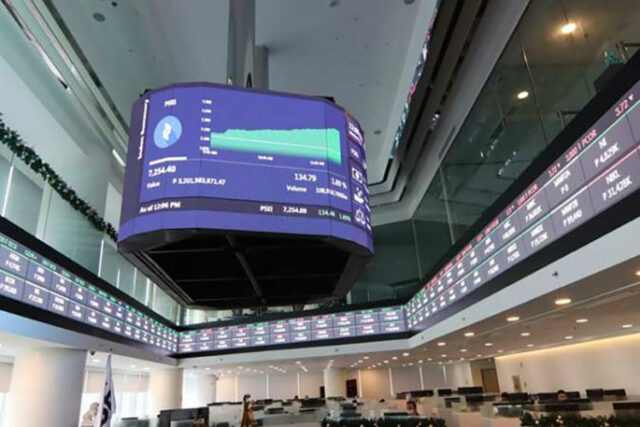
PHILIPPINE SHARES declined further on Thursday on concerns over the Middle East (ME) conflict, with the Bangko Sentral ng Pilipinas (BSP) also delivering a rate hike to quell growing inflation pressures as the war continues to push up prices.

The Philippine Stock Exchange index (PSEi) slipped by 0.09% or 5.75 points to close at 5,983.81, while the broader all shares index went down by 0.19% or 6.40 points to end at 3,369.72.

“The Philippine market ended slightly lower as the central bank’s rate hike weighed on sentiment, keeping risk appetite for equities remained subdued. This is still further pressured by ongoing uncertainty in the Middle East, keeping investors cautious and limiting overall market participation,” Regina Capital Development Corp. Head of Sales Luis A. Limlingan said in a Viber message.

“The local market extended its decline as investors continue to worry over the outlook of the situation between the US and Iran. This comes as the two remain without a deal that could end their war. Investors also traded cautiously while waiting for the BSP’s policy decision,” Philstocks Financial, Inc. Research Manager Japhet Louis O. Tantiangco said in a Viber message.

On Thursday, the BSP raised benchmark interest rates by 25 basis points in a preemptive move to mitigate second-round inflation effects from the Middle East warm bringing the policy rate to 4.5%. This was its first hike since October 2023 and was predicted by 11 of 19 analysts in a BusinessWorld poll.

BSP Governor Eli M. Remolona, Jr. also signaled further tightening ahead as they now see inflation breaching their 2%-4% tolerance band until next year.

Sectoral indices were mixed. Services rose by 0.41% or 11.40 points to 2,770.13; property increased by 0.13% or 2.66 points to 1,989.10; and holding firms went up by 0.07% or 3.24 points to 4,631.91.

Meanwhile, mining and oil declined by 1.39% or 252.50 points to 17,808.34; financials dropped by 1.13% or 21.37 points to 1,867.2; and industrials went down by 0.32% or 28.96 points to 8,789.35.

Decliners beat advancers, 102 to 92, while 62 names were unchanged.

Value turnover declined to P5.74 billion on Thursday with 4.03 billion shares traded from the P5.96 billion with 2.86 billion issues that changed hands on Wednesday.

Net foreign selling increased to P597.74 million from P497.60 million in the previous session.

Asian shares retreated from record highs on Thursday as oil prices extended their gains on renewed shipping woes in the Gulf, underscoring fragile risk sentiment as a peace deal eludes the US and Iran, Reuters re-ported.

Iran on Wednesday captured two container ships seeking to exit the Gulf via the Strait of Hormuz, tightening its grip on the crucial waterway, as investors watch if the fragile ceasefire in the Middle East will hold. — A.G.C. Mag-no

EDCOM II flags overlapping CHED, PRC laws

The Second Congressional Commission on Education (EDCOM II) on Thursday said that outdated laws for the Commission on Higher Education (CHED) and the Professional Regulatory Commission (PRC) hinder progress in tertiary curriculum.

During a Senate committee hearing on bills related to the tertiary education charter, EDCOM II Executive Director Karol Mark R. Yee said they have found 36 professional laws which restrict CHED from adjusting their curriculum.

“The challenge is that if the needs of the curriculum change based on the demands of the profession, [CHED] won’t be able to change it because the law explicitly states what the topics should be,” Mr. Yee said in a mix of English and Filipino, noting that some topics could be outdated already.

According to the EDCOM II’s findings, the 36 professional laws have determined the licensure exams topics, 16 laws have been found to prescribe minimum field hours, and nine mandates detailed program length, structure, and facilities for the program, blocking CHED from making updates.

Mr. Yee also stressed the lack of law-enabled mechanisms allowing CHED and the PRC to resolve the overlapping laws.

“If CHED suddenly decides five years and five months, that’s not allowed — because the law clearly states six years. Even if they say ‘let’s just shorten it now that we have K-12,’ it’s still not allowed, because it’s already written in the law,” he added.

Several bills have been filed in the Senate addressing the tertiary education charter, including the Technical Education and Skills Development Authority (TESDA).

The bills have also touched on the Philippine Professional Standards & Quality Assurance System Act which seeks to establish the Board of Pro-gram Standards co-chaired by CHED, TESDA, and the PRC to unify their overlapping policies. — Kaela Patricia B. Gabriel

PH banks urged to go fully digital to unlock AI potential — Kissflow

FREEPIK

Philippine financial institutions are being urged to fully transition their business operations into digital processes to maximize the capabilities of artificial intelligence (AI), according to global software company Kissflow.

“Every organization now has to become 100% digital in the next three to five years to fully leverage AI in terms of data crunching,” said Rakesh Nandakumar, associate vice president for Asia Pacific at Kissflow, in an interview.

“Hence, the push for data modernization or operations modernization is real. If you don’t, you lose the competitive edge,” he added.

Mr. Nandakumar identified a critical gap in the digital landscape of traditional Filipino banks, which he described as the “messy middle.”

While these institutions have prioritized automating front-end customer interactions and back-end financial systems, the wide range of business operations between these two poles often remains manual.

This middle layer frequently relies on rudimentary systems such as Excel spreadsheets, paper documents, and email chains.

Because these disparate systems do not communicate with one another, they fail to provide the structured digital data that AI requires for high-level analysis and insight generation, he said.

Mr. Nandakumar noted that AI needs this digital foundation to perform complex data analysis and generate insights that human analysts previously could not achieve.

To help organizations transition, Kissflow provides a platform that digitizes these manual operations into trackable processes.

Mr. Nandakumar defined the company’s role as providing a necessary layer beyond static records.

He noted that modern organizations require more than just a system of record. “What they need today is not a system of record alone, but a system of orchestration as well. And that system of orchestration is what Kissflow provides,” he said.

The company helps organizations modernize through a three-pronged approach. This includes equipping Information Technology (IT) departments with low-code capabilities to consolidate applications into a single platform and building satellite applications for niche areas that core systems do not cover.

Lastly, the approach empowers business units to automate their own workflows through citizen development. This allows non-technical staff to build the tools they need when central IT resources are stretched thin.

Kissflow functions as an AI-powered low-code platform designed to orchestrate complex business interactions.

“If you have an Excel sheet, you upload it into Kissflow, and it will transform it into a process in 30 seconds. Any interaction with that process will be tracked and stored in Kissflow,” Mr. Nandakumar said.

This efficiency ensures that all operational data is captured for compliance and deeper AI-driven analysis.
The platform specifically targets large enterprises, where scale and operational complexity necessitate digital modernization to remain competitive.

On cybersecurity concerns, Mr. Nandakumar said governance is essential to managing risks, noting that without it, organizations will remain vulnerable.

He added that Kissflow addresses these concerns by providing a unified platform where security coverage and maintenance for thousands of applications are handled at the platform level.

Mr. Nandakumar also said the company meets high international regulatory standards and is compliant with System and Organization Controls (SOC) 1, SOC 2, and SOC 3, among others.

Moving forward, Kissflow intends to build on its long-standing presence in the Philippines, where it has operated since 2012.

Mr. Nandakumar said the company has been doubling its operations annually and already maintains a home base with a local team. — Edg Adrian A. Eva

Iran tightens control of Hormuz after US calls off renewed attacks

An LPG gas tanker at anchor as traffic is down in the Strait of Hormuz, amid the US-Israeli conflict with Iran, in Shinas, Oman, March 11, 2026. — REUTERS

WASHINGTON/DUBAI/ISLAMABAD — Iran seized two ships in the Strait of Hormuz as it tightened its grip on the strategic waterway after US President Donald Trump announced he was indefinitely calling off attacks, with no sign of peace talks restarting.

The status of a two-week-old ceasefire, due to have expired earlier this week, remained unclear. In a sharp about-face hours after threatening renewed violence, Mr. Trump made what appeared to be a unilateral announcement on Tuesday that the US would extend a ceasefire until it had discussed an Iranian proposal in peace talks to end the two-month-old war.

But Iranian officials did not say they had agreed to any extension of the truce, and criticized Mr. Trump’s decision to maintain the US Navy blockade of Iran’s trade by sea, itself considered by Iran an act of war. Iran’s parliament speaker and lead negotiator Mohammad Baqer Qalibaf said a full ceasefire only made sense if the blockade was lifted.

Reopening the Strait of Hormuz, the slender chokepoint that carried a fifth of the world’s oil trade before the war, was impossible with such a “flagrant breach of the ceasefire,” Mr. Qalibaf said on social media.

“You did not achieve your goals through military aggression and you will not achieve them by bullying either,” he wrote in his first response to Mr. Trump’s announcement. “The only way is recognizing the Iranian people’s rights.”

In another wartime shakeup at the Pentagon, Navy Secretary John Phelan has been fired, a US official and a person familiar with the matter said on Wednesday. The move came just weeks after Defense Secretary Pete Hegseth ousted the Army’s top general.

The Pentagon said Mr. Phelan was leaving the administration “effective immediately,” but did not provide a reason or say whether it was his decision to go.

Mr. Trump has again backed away from his repeated threats to bomb Iran’s power plants and other civilian infrastructure, which the United Nations and others warn would violate international humanitarian law. But little progress has been made in ending the war that started with joint US-Israeli attacks on Iran on February 28.

That leaves the two sides in a holding pattern with the crucial Strait of Hormuz still effectively shut, straining economies across the world. Thousands of people have been killed across the Middle East, mostly in Iran and Lebanon, where the Iran-allied Hezbollah militant group joined the fighting against Israel.

The Islamic Revolutionary Guard Corps seized two vessels and escorted them to Iranian shores, according to statements by the shipping companies and Iran’s semi-official Tasnim news agency.

The Revolutionary Guards accused the ships it had seized, the Liberia-flagged Epaminondas and Panama-flagged MSC Francesca, of operating without required permits and tampering with their navigation systems.

A third, Liberia-flagged container ship was fired upon in the same area but was not damaged and had resumed sailing, according to maritime security sources.

White House press secretary Karoline Leavitt said in an interview with Fox News that since the ships were not US or Israeli vessels the seizure was not a violation of the ceasefire. She called it an act of “piracy”.

The US military said on Wednesday it had so far directed more than 30 ships to turn around or return to port as part of the US blockade against Iran. Far beyond the Gulf, the US military has intercepted at least three Iranian-flagged tankers in Asian waters, sources said, redirecting them away from their positions near India, Malaysia and Sri Lanka.

Brent, the international crude oil benchmark, remained above $100 a barrel in Asian trade on Thursday, having hit triple figures a day earlier for the first time in two weeks.

NO NEW DEADLINE FOR CEASEFIRE
In his Tuesday announcement, Mr. Trump said that the US had agreed to a request by Pakistani mediators “to hold our Attack on the Country of Iran until such time as their leaders and representatives can come up with a unified proposal … and discussions are concluded, one way or the other.”

He has not set any deadline for the proposal or discussions, Ms. Leavitt told reporters.

Pakistan, which has acted as a mediator, was still trying to bring the sides together after both failed to show up for tentatively scheduled talks in Islamabad on Tuesday before the two-week-old ceasefire was due to expire.

A first session of peace talks between Iran and the US in Islamabad 11 days ago produced no agreement.

Mr. Trump wants Iran to give up highly enriched uranium and forgo further enrichment to prevent it building a nuclear weapon. Iran says it has only a peaceful civilian nuclear program, and wants the lifting of sanctions, reparations for damage and recognition of its control over the strait.

Iran has also made a ceasefire between Israel and Lebanon’s Hezbollah militant group a condition of truce talks. On Wednesday, Israeli air strikes on Lebanon killed at least five people, including the Lebanese journalist Amal Khalil.

It was the deadliest day since a 10-day ceasefire was announced on April 16 between Israel and Lebanon.

Iran executed a man convicted of links to both an exiled opposition group and Israel’s intelligence service, Iranian media reported on Thursday. — Reuters

Pag-IBIG Fund, CHED push affordable rental housing for SUCs nationwide

Pag-IBIG Fund Chief Executive Officer Marilene C. Acosta addresses participants during the consultative meeting for Project BALAY: Bridging Access to Learning, held on April 15, 2026, at the CHED Auditorium in Quezon City. The initiative, a strategic partnership between Pag-IBIG Fund and the Commission on Higher Education, seeks to expand access to affordable rental housing for educators, students, and non-teaching personnel in state universities and colleges nationwide.

Pag-IBIG Fund Chief Executive Officer Marilene C. Acosta

During the meeting, Pag-IBIG Fund presented its Rental Housing Construction Loan program, which offers state universities and colleges financing at a subsidized interest rate of 3 percent per annum for the first 10 years, payable for up to 30 years. Pag-IBIG Fund has allocated P6.3 billion to support the development of dormitories and rental housing facilities within or near campuses.

Also present were Pag-IBIG Fund Deputy Chief Executive Officer Alexander Hilario G. Aguilar, Commission on Higher Education Commissioners Dr. Ricmar Aquino and Dr. Myrna Mallari, Officer-in-Charge Deputy Executive Director Ian Evangelista, and Director Aline Magalong. Discussions focused on practical and sustainable housing solutions tailored to the needs of the academic community.

Pag-IBIG’s Ms. Acosta with Commission on Higher Education Commissioner Dr. Ricmar Aquino

The consultative meeting gathered more than 30 state universities and colleges, with participants providing inputs on site development, financing, and implementation. To date, 11 state universities and colleges have already engaged with Pag-IBIG Fund, reflecting strong momentum for the program’s nationwide rollout.


Spotlight is BusinessWorld’s sponsored section that allows advertisers to amplify their brand and connect with BusinessWorld’s audience by publishing their stories on the BusinessWorld Web site. For more information, send an email to online@bworldonline.com.

Join us on Viber at https://bit.ly/3hv6bLA to get more updates and subscribe to BusinessWorld’s titles and get exclusive content through www.bworld-x.com.

US Senate votes to advance $70 billion funding plan for ICE, Border Patrol

Masked law enforcement officers, including Immigration and Customs Enforcement agents, walk into an immigration court in Phoenix, Arizona, US, May 21, 2025. — REUTERS/CAITLIN O’HARA

WASHINGTON — US Senate Republicans voted on Thursday to advance a $70 billion plan to fund the Immigration and Customs Enforcement (ICE) and Border Patrol agencies for the next three years, ignoring demands from Democrats for guardrails on immigration enforcement agents and their operations.

Lawmakers voted 50-48 in the predawn hours to adopt the non-binding budget resolution and send it to the US House of Representatives, taking a crucial step forward in their effort to end a partial shutdown that has gripped the Department of Homeland Security (DHS) since mid-February.

Two Republicans – Senators Rand Paul and Lisa Murkowski – opposed the measure.

If adopted by the House, the resolution will allow congressional committees to begin filling in the details on how the $70 billion would be spent in separate legislation that President Donald Trump would have to sign into law. The new funding would be expected to run through Mr. Trump’s presidency, which ends in January 2029.

With Democrats adamantly opposed to the funding initiative, Republicans plan to employ a rarely used procedure known as budget reconciliation in the separate legislation, which allows some budget-related bills to bypass Democratic opposition in the Senate.

Such measures require only a simple majority for passage in the 100-member chamber, instead of the usual supermajority of 60 votes or more. Republicans hold a 53-47 seat majority.

Funding for most of DHS ran out more than nine weeks ago, as Democrats pressed Republicans and the White House to accept new constraints on ICE and Border Patrol, which operate under the direction of DHS.

After two US citizens were fatally shot by immigration enforcement agents in Minneapolis, Democrats insisted that ICE and Border Patrol be subject to the same operational rules as police forces across the United States, including a requirement that judicial warrants be obtained before agents can enter private homes.

But weeks of negotiations ended in a stalemate.

The Senate has since passed legislation to fund DHS operations other than ICE and Border Patrol. But the measure has stalled in the House, where hardline Republicans have demanded funding for those two entities as well.

‘VOTE-A-RAMA’ LASTED NEARLY SIX HOURS
Last year, Republicans passed legislation providing around $130 billion in funding for these two agencies, separate from their annual appropriations and the $70 billion now being advanced in Congress.

The Senate action followed a nearly six-hour “vote-a-rama” session that began late on Wednesday, with votes on a series of proposed amendments.

Eight months before the November midterm elections, which will determine which party controls Congress in the final years of Donald Trump’s presidency, Democrats sought to use the session to portray Republicans as out of step with American families and the challenges they face from soaring gasoline prices and healthcare costs.

Republicans accused Democrats of wanting to “defund” crucial immigration and border security operations.

Democrats offered a dozen amendments intended to lower out-of-pocket healthcare costs, restore food assistance for lower-income Americans, prevent the cancellation of health insurance coverage, increase funding for school meals and childcare, protect consumers from rising prices driven by tariffs and the war in Iran, and lower electricity costs for working people.

All failed but drew support from some Republicans, including Senators Susan Collins of Maine and Dan Sullivan of Alaska, who face challenging re-election bids in November.

A recent Reuters/Ipsos poll shows that more than half of Americans are less likely to support candidates who back Mr. Trump’s approach to deporting immigrants, while a similar majority say their household finances have taken a hit from soaring gasoline prices.

Healthcare tops the list of household costs that voters think Congress should focus on most, polling data shows.

The Senate voted 98-0 to adopt a Republican amendment from Senate Budget Committee Chairman Lindsey Graham that would establish a deficit-neutral fund supporting ICE operations to apprehend, detain and expedite the deportation of adults convicted of rape, murder or sexual abuse of a minor after entering the United States illegally.

Lawmakers rejected other Republican amendments calling for legislation to require proof of citizenship in voting and other election restrictions, a ban on Medicaid funding for transgender surgery on minors, and cuts in foreign aid, science and education programs to pay for the ICE and Border Patrol funding. — Reuters

Impending El Niño to cause droughts, may intensify storms, says PAGASA

PHILSTAR FILE PHOTO

The El Niño phenomenon, which may onset as early as June, is likely to cause droughts and trigger fewer yet stronger tropical cyclones during its duration, according to the Philippine Atmospheric, Geophysical and Astronomical Services Administration (PAGASA) on Thursday.

The agency raised its ENSO (El Niño–Southern Oscillation) alert level to El Niño Alert on Wednesday, saying that the phenomenon is likely to develop between June to August and may persist until early 2027.

In a separate 5:00 am press briefing, PAGASA said that El Niño’s onset is likely to coincide with the development of the southwest monsoon, locally known as Habagat.

“This will further enhance or strengthen the southwest monsoon and bring heavier rainfall to the western side of the country,” Leanne Marie Loreto said during the press briefing in Filipino.

As for tropical cyclones, fewer are expected during the prevalence of the phenomenon, “however, the intensity or level of these typhoons will be stronger,” Ms. Loreto said.

Toward the latter part of El Niño, between October to March 2027, dry spells and droughts are likely to be experienced in some parts of the country.

During its onset, El Niño is likely to start weak and may progress into a moderate to strong El Niño by the early months of 2027, PAGASA said.

The agency is also not ruling out the possibility of a Super El Niño, which it earlier warned could cause prolonged drought in the country.

Despite El Niño not yet persisting, all eight major dams in the country are already below normal high water level (NHWL), except Caliraya, which does not impose an NHWL, based on PAGASA’s dam information on Thursday.

The Angat Dam, which supplies over 90% of the potable water needs of Metro Manila, is already operating at 187.52 meters as of 8:00 am.

It is nearing the minimum operating water level of 180 meters, which, if reached, may prompt the dam to reduce irrigation releases and implement water-saving measures.

The Metropolitan Waterworks and Sewerage System (MWSS) earlier said in a public briefing on March 24 that Angat is expected to remain at a safe water level and will not reach the critical level of 160 meters despite expected hotter temperatures in the coming months. — Edg Adrian A. Eva

BSP hikes rate as war sends inflation past target

A wide variety of fish at the Marikina Public Market. — PHILIPPINE STAR/ WALTER BOLLOZOS

The Philippine central bank increased its benchmark interest rate for the first time in more than two years, warning of a deteriorating inflation outlook as the Iran war drives up energy prices.

The Bangko Sentral ng Pilipinas raised its target reverse repurchase rate by a quarter of a point to 4.5% on Thursday, as predicted by 15 of 30 economists in a Bloomberg News survey. The rest expected no change.

“The inflation outlook has deteriorated amid the ongoing conflict in the Middle East,” the BSP said in a statement. “Timely and preemptive policy action” was needed to safeguard price stability as higher global oil and fertilizer prices feed into domestic fuel and food costs.

The peso held losses after the decision, trading 0.5% lower versus the dollar at P60.40. The main stock index was steady.

The latest move ends a lengthy easing cycle that began in August 2024 and highlights how quickly risks have escalated for the Philippines, which imports nearly all of its oil requirements from the Middle East. Even with the hike, the central bank warned that average headline inflation is expected to breach the 2%-4% target for both 2026 and 2027.

The nation is now one of the early movers towards monetary tightening in Asia, along with Singapore. Indonesia held rates on Wednesday, and Thailand has signaled it would pause at its meeting next week.

“The policy rate increase is intended to anchor inflation expectations and contain the buildup of second-round effects,” the BSP said. “A measured increase in the policy rate will still accommodate economic recovery over the medium term.”

Inflation in the Philippines quickened in March to the fastest in nearly two years and breached the 2%-4% target as costlier oil triggered higher prices for transport, food, and utilities. BSP Governor Eli M. Remolona, Jr. said last week that second-round price pressures might be appearing earlier than expected.

The BSP has since shifted to a more hawkish tone. At an off-cycle meeting in March where the BSP kept the key rate steady, it had said that monetary policy has “limited effectiveness” against supply shocks. It also warned earlier this month that a “sharp and prolonged” oil price shock could trigger spillover effects and disanchor inflation expectations. — Bloomberg News

Elevated recovery: The Polarity Wellness Club experience

Cupping therapy is a technique used to relieve muscle tension and pain.

I didn’t walk into Polarity Wellness Club expecting a reset — I thought I was just trying out a recovery session. But somewhere between the quiet calm of the space and the way every detail felt confidently planned, it became clear this wasn’t just another wellness stop. It was something more structured, more thought-through.

Located at the 4th floor of The Podium in Ortigas, the club feels less like a clinic and more like a system designed for people who want to take their health seriously long-term. I’ve tried physiotherapy before, usually when something already hurts. This felt different from the start, less reactive, more proactive. As Luis Gatmaytan explained, “The evolution reflects a clear shift in what people now need from a wellness and rehabilitation institution.” That line stayed with me throughout my visit. There was a clear sense that everything here, from physiotherapy to recovery, is designed to work together.

I started with an assessment and a guided movement session. It wasn’t rushed or templated. Instead, it felt like a deep dive into how my body moves, where it compensates, and what it actually needs to function better long-term. It made me realize how often people push through workouts or daily strain without a real understanding of sustainability. That’s exactly what Dr. Fahim James Pasha pointed out: “Most people only seek treatment once pain already disrupts their life, or they train without fully understanding how to maintain their bodies sustainably. There is often no single place that connects rehabilitation, recovery, strength development, and overall wellness planning in a continuous and clinically grounded way.” That “continuous” approach defines what Polarity Wellness Club offers. It’s not just about fixing pain; it’s about building a long-term system for strength and resilience.

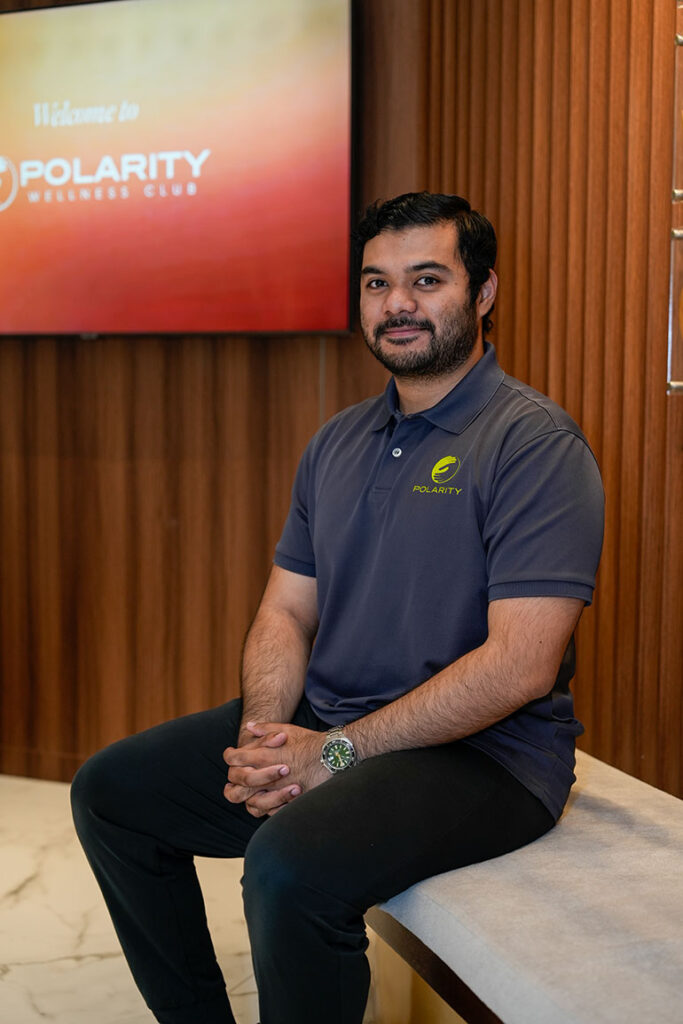
Dr. Fahim James Pasha, Associate Manager of the Physiotherapy, Department and Chief Physiotherapist at Polarity Wellness Club

The club brings together a full suite of services under one roof. Their physiotherapy and movement recovery sessions focus on restoring mobility, reducing pain, and rebuilding confidence in movement. For those dealing with posture issues, their scoliosis and spine programs provide non-invasive, therapist-led care aimed at long-term alignment and spinal health. There are also specialized programs for seniors under geriatric care and active aging, designed to improve balance, strength, and overall quality of life.

Beyond rehabilitation, the Recovery Lab offers advanced tools to support performance and healing, including infrared sauna, cold immersion, contrast baths, and recovery boots — all designed to help the body recover more efficiently. What stands out is how seamlessly these services connect. Physical strain, stress, and recovery are treated as parts of the same equation, not separate concerns.

“Our clients arrive carrying pain, and they place extraordinary trust in our hands,” added Dr. Pasha, Associate Manager of the Physiotherapy Department and Chief Physiotherapist at Polarity Wellness Club. “From the moment someone walks through our door we want them to feel something powerful: instant calm, genuine care, and assurance that they’re in the right place.”

That intention is felt immediately. Even the atmosphere, subtle lighting, controlled sound, and the demeanor of the staff, creates a sense of ease before any treatment begins. By the time I left, my perspective had shifted. This wasn’t just about recovery, it was about building a body that can sustain strength, movement, and clarity over time. As Gatmaytan, Administrative Director and Physical Therapy Program Director of the Strength in Movement Group, put it, “When you are stronger, you move better, feel better, think better, and live better.”

For anyone looking to move beyond quick fixes and invest in a more structured, long-term approach to health, Polarity Wellness Club is worth experiencing. It’s not just a place to recover — it’s where you begin to build a system for lasting strength, resilience, and overall well-being. For more details about the Polarity Wellness Club, visit their website at https://polaritywellnessclub.com/ or Follow Polarity Wellness Club on Instagram and Facebook.


Spotlight is BusinessWorld’s sponsored section that allows advertisers to amplify their brand and connect with BusinessWorld’s audience by publishing their stories on the BusinessWorld Web site. For more information, send an email to online@bworldonline.com.

Join us on Viber at https://bit.ly/3hv6bLA to get more updates and subscribe to BusinessWorld’s titles and get exclusive content through www.bworld-x.com.

Philippines to join JPMorgan emerging market bond index in 2027

PHILSTAR FILE PHOTO

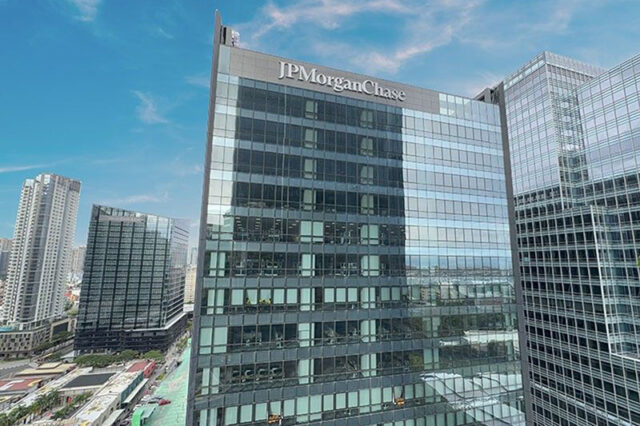
LONDON — J.P. Morgan said on Wednesday that Saudi Arabia and the Philippines will be added to its ‌local currency emerging market debt index from January 29 next year.

The inclusion will cover Saudi riyal-denominated sovereign sukuk and Philippine peso-denominated government bonds, both entering the ⁠widely tracked GBI-EM index series.

Their weights will be introduced gradually, with Saudi Arabia expected to reach 2.52% and the Philippines 1.78% once fully phased in.

The update is part of a broader index adjustment, which will lower the “Country Cap” — the maximum weight, or ‌share, any ⁠single country can hold in the “diversified” index — to 9% from 10%.

As a result, major markets including China, India, Mexico, Malaysia, and Indonesia will see their weight ⁠reduced to the new limit.

Based on current eligibility criteria, about eight Saudi sovereign sukuk with a ⁠combined value of roughly $69 billion could be included, JPMorgan said.

For the Philippines, nine ⁠eligible government bonds with a combined value of around $49 billion are under consideration. — Reuters

ADVERTISEMENT
ADVERTISEMENT