Home Blog Page 1394

Study strengthens link between maternal diabetes and autism

STOCK PHOTO | Image by Vanessa from Unsplash

A LARGE new study adds to evidence that diabetes during pregnancy is linked with an increased risk of brain and nervous system problems in children, including autism, researchers say.

Whether diabetes actually causes those problems remains unclear. But when mothers have diabetes while pregnant, children are 28% more likely to be diagnosed with a neurodevelopmental disorder, according to an analysis of data pooled from 202 earlier studies involving more than 56 million mother-child pairs.

The risks for children of mothers with diabetes during pregnancy were 25% higher for autism, 30% higher for attention deficit hyperactivity disorder and 32% higher for intellectual disability. They were also 20% higher for trouble with communication, 17% higher for movement problems and 16% higher for learning disorders than in children whose mothers did not have diabetes while pregnant.

Diabetes diagnosed before pregnancy appeared to confer a 39% higher risk for one or more of these neurodevelopmental disorders compared with gestational diabetes that begins in pregnancy and often resolves afterward, the researchers reported in The Lancet Diabetes & Endocrinology.

Diabetes affects up to 9% of pregnancies in the United States, with the incidence rising, according to the US Centers for Disease Control and Prevention.

Seven of the earlier studies compared affected children with siblings. These analyses did not find an effect from mothers’ diabetes, which suggests that shared genetic or familial factors might be contributing to the increased risk, the authors noted. 

The findings emphasize the importance of medical support for women at risk of developing diabetes and the continuous monitoring of their children, the researchers said.

The association of maternal diabetes with autism in offspring is well known, said Dr. Magdalena Janecka of NYU Grossman School of Medicine, who studies links between in utero exposures and child development but was not involved in the new research.

A large “meta-analysis” like this one allows for analyses of subgroups, such as mothers with pre-existing vs gestational diabetes, or children with autism vs those with ADHD or movement disorders, but it cannot prove cause and effect, Ms. Janecka said.

“Meta-analyses allow us to compare groups more precisely. At the same time, they are not bringing us any closer to understanding the causes or the underlying mechanisms.”

The study comes as Trump administration health officials have called for further research into whether vaccines are a cause of autism, a claim long championed by new Health Secretary Robert F. Kennedy, Jr. that has been debunked by established science. — Reuters

Tariff-whipped Wall Street wonders: will Trump blink?

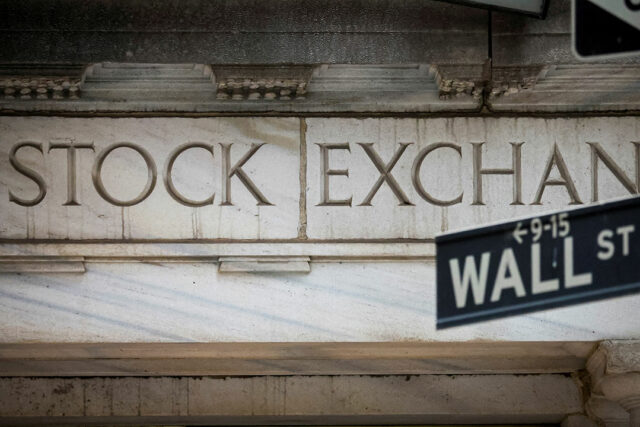
The Wall Street entrance to the New York Stock Exchange (NYSE) is seen in New York City, US, Nov. 15, 2022. — REUTERS

NEW YORK — Investors are trying to game out how much tolerance US President Donald Trump has for stock market losses after his latest tariff policies ignited a more than 10% wipeout on Wall Street, with some still holding out hope of eventual relief.

A so-called “Trump put” — the option market equivalent of a presidential backstop for equities — underpinned Mr. Trump’s first term, as he frequently cited stock market strength as proof his policies were working. Over the course of his first presidency the S&P 500  benchmark rose 68% and scaled record highs, while Mr. Trump cheered its progress, tweeting more than 150 times about the stock market.

This time around, hope that such a Trump put still exists is evaporating, or at the least, investors are coming around to the view that Mr. Trump is much more inclined to ride out sharp falls. The S&P and Nasdaq are down over 15% and 20% since his inauguration in January respectively.

“The whole notion of tariffs and trade policy has been such an integral part of Donald Trump’s psyche, I don’t see it abandoned,” said Michael Rosen, chief investment officer at Angeles Investments, who said any pain level likely to cause Mr. Trump to change course remained a long way away.

Previous assumptions that Mr. Trump’s pro-business agenda would buoy risk assets similarly had already been fading as his trade policies rattled investors over the past few weeks.

But the more-aggressive-than-anticipated tariffs unveiled on April 2 deepened the market selloff, leaving investors questioning whether the Trump put was gone, or might eventually reappear through tariff rollbacks after any trade deals.

For Bob Elliott, chief executive officer and chief investment officer of Unlimited Funds, the selloff still had a long way to go before any policy turnaround.

“It takes 20-30% declines in stocks to get there. So the decline so far is not big enough,” he said.

Some were more hopeful the market fall could eventually induce a change of course.

“I don’t think (Trump) is going to be highly tolerant of massive stock market declines — he’ll see his popularity tank, and it will endanger his whole agenda,” said Kevin Philip, partner at Bel Air Investment Advisors. “I don’t see any way out of this if he doesn’t come up with deals or reasons to change course.”

The huge market falls — not seen since the beginning of the COVID-19 pandemic in 2020 — even caused speculation online that Mr. Trump was intentionally “crashing” the market to force the US Federal Reserve to lower interest rates while making stocks more affordable to middle-class investors.

Mr. Trump on Friday retweeted a social media post bearing the caption “Trump is Purposely CRASHING The Market” and featuring images of the president pointing at a large downward red arrow and of him signing executive orders at the White House.

Speaking to reporters aboard Air Force One on Sunday, Mr. Trump said he was not intentionally engineering a market selloff and the rout was the result of a “medicine” needed to fix the US trade deficit.

Mr. Trump and his team have said their policies may cause short-term pain but will eventually revive manufacturing and spur growth. On Friday he told investors pouring money into the United States that his policies would never change.

White House spokesman Kush Desai said in a statement to Reuters: “Just as it did during President Trump’s first term, the administration’s America First economic agenda of tariffs, deregulation, tax cuts, and the unleashing of American energy will restore American Greatness from Main Street to Wall Street.”

PAIN LEVEL
Some investors fear that weakening consumer confidence, an escalating trade war, and rising price pressures could deal a harsh and lasting blow to the economy, regardless of any potential economic upside down the line.

For Brian Bethune, an economist at Boston College, the disruption caused by the tariffs was too abrupt to allow US businesses to soften the blow, despite their resilience.

“You’re putting so many sandbags on the balloon, it’s going to come back down to earth with a thud,” Mr. Bethune said.

In the two sessions after the tariff decision was unveiled on Wednesday, the S&P 500 has tumbled 10.5%, erasing nearly $5 trillion in market value, marking its most significant two-day loss since March 2020.

Hopes that the market could be propped up by actions by the US Federal Reserve have also taken a knock.

Mr. Trump on Friday called on Federal Reserve Chairman Jerome Powell to cut interest rates, saying it was the “perfect time” to do so. But stock losses deepened past 5% after Mr. Powell on Friday warned that the new tariffs would likely push inflation higher while slowing economic growth, suggesting the Fed was unlikely to rush in to cut rates.

“The market is still digesting the great deal of uncertainty and I think it’s also digesting the fact that both Trump and Powell have made it clear that the cavalry is not coming to immediately cause things to bounce back up,” said David Seif, chief economist for developed markets at Nomura in New York.

Rising prices could reduce the Fed’s ability to take supportive actions as it has in previous market downturns or if economic conditions deteriorated significantly, analysts said. This could take off the table a so-called “Fed put,” or a perceived tendency of the central bank to run to the aid of financial markets.

“Who blinks first? The Fed or President Trump? The Fed has made it clear that with inflation where it is and unemployment where it is, (they’re) comfortable without doing anything right now,” said Ryan Detrick, chief market strategist at Carson Group in Omaha. “We think Washington likely has to blink first to present some type of positive news.” — Reuters

Pioneer Insurance, BYD La Union partner to offer specialized electric vehicle insurance

L-R: SEA Electric Philippines (BYD La Union) Vice-President for Energy Transition & Infrastructure Paolo Bugayong and CEO Glenn Yu; Pioneer Insurance Motor Department Head Iluminado Garcia III, and Assistant Manager for Motor Accounts Carl Zeus Corral

Pioneer Insurance’s EV One, a specialized electric vehicle insurance, is now available directly to BYD customers through the Pioneer-BYD La Union partnership.

Pioneer Insurance’s Motor Department Head Iluminado Garcia III said the collaboration aims to give BYD customers easy access to Pioneer’s EV One insurance.

“EV (Electric Vehicle) owners have unique needs that require tailored insurance solutions. With Pioneer EV One, more EV drivers can hit the road with confidence and fully enjoy the benefits of going electric,” Mr. Garcia said.

Present at the contract signing with BYD La Union were Mr. Garcia, Pioneer Insurance Assistant Manager for Motor Accounts Carl Zeus Corral, along with representatives from SEA Electric Philippines, a distributor of BYD in La Union, CEO Glenn Yu and Vice-President for Energy Transition & Infrastructure Paolo Bugayong.

Meanwhile, Mr. Garcia explained that the total cost of ownership is lower thanks to stable energy prices and up to 50% lower maintenance cost versus traditional vehicles. EV owners also enjoy number-coding exemptions, registration discounts, and flexible bank financing options.

“Aside from facing the same risks as regular car owners, EV owners grapple with unique challenges. That’s why having reliable and responsive insurance coverage is more important than ever,” he said.

Pioneer EV One

Pioneer Insurance launched Pioneer EV One as a comprehensive insurance solution designed to address the specific concerns of the growing EV market in the Philippines.

The policy covers a wide range of EV types, including hybrids, plug-in hybrids, and battery electric vehicles.

Traction batteries are also covered with no hidden deductibles.

Mr. Garcia shared the key benefits of this new innovative insurance product, including the Range Anxiety Cover which provides towing services to the nearest charging station or back to the point of origin if the vehicle runs out of power, and the Advanced Driving Assistance System (ADAS) which secures EV technologies such as adaptive cruise control, lane-keeping assistance, and emergency braking.

He added that the policy also comes with the Charging Equipment Cover, which safeguards private EV charging accessories against loss or damage; and Enhanced Battery Coverage, covering repair or replacement costs for battery-related issues.

Furthermore, in the event of vehicle downtime due to repairs, the Loss of Use benefit will provide reimbursement for transportation expenses of up to P500 per day for 15 days.

“In addition to these specialized benefits, Pioneer EV One includes standard comprehensive motor policy coverages, including own damage, third-party liability, acts of nature, and theft,” he said.

“With its extensive coverage, Pioneer EV One not only empowers EV owners to hit the road in their EVs with peace of mind, but it also makes electric adoption easier, more convenient, and more practical,” Mr. Garcia noted.

How to avail EV One

As a key innovator in the insurance industry, Pioneer recognizes the growing demand for EVs and the unique coverage they require.

“By offering EV One at a BYD dealership, Pioneer not only enhances the customer experience for BYD owners but also reinforces its leadership in providing forward-thinking insurance solutions,” Mr. Garcia shared.

“With the shift toward sustainable transportation, Pioneer is well-positioned to support EV owners with comprehensive and convenient insurance options,” he concluded.

To avail of Pioneer EV One, interested customers can inquire through BYD La Union or Pioneer’s website at https://pioneer.com.ph/motor.


Spotlight is BusinessWorld’s sponsored section that allows advertisers to amplify their brand and connect with BusinessWorld’s audience by publishing their stories on the BusinessWorld Web site. For more information, send an email to online@bworldonline.com.

Join us on Viber at https://bit.ly/3hv6bLA to get more updates and subscribe to BusinessWorld’s titles and get exclusive content through www.bworld-x.com.

Challenges in hiring PWDs

One of the challenges in hiring a person with a disability (PWD) is the language barrier, said Harl’s founder Harley Dave B. Beltran. Despite the challenge, he noted that the willingness to make adjustments that cater to everyone’s needs and capabilities can overcome this roadblock.

“The challenges (in) hiring a person with a disability starts from you, you as a person who hired them,” Mr. Beltran said in an interview. “The willingness to accept a person or someone in your house if you’re not comfortable, that’s the challenge. How are you going to hire them?”

Interview by Almira Martinez
Video editing by Jayson Mariñas

Taiwan says China using generative AI to ramp up disinformation and ‘divide’ the island

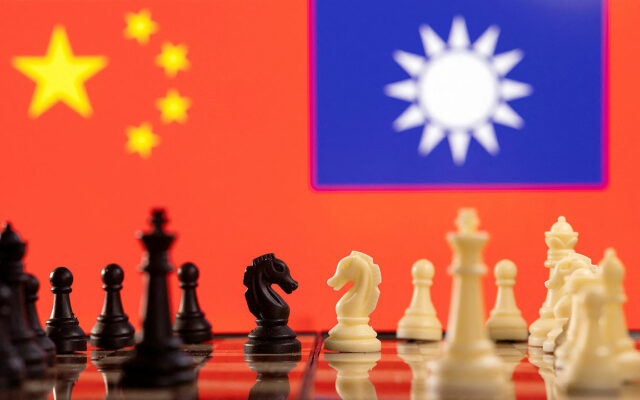
CHESS PIECES are seen in front of displayed China and Taiwan’s flags in this illustration taken Jan. 25, 2022. — REUTERS

TAIPEI – China is using generative artificial intelligence (AI) to ramp up disinformation against Taiwan to “divide” Taiwan’s public, the island’s National Security Bureau said.

Taiwan has accused China of stepping up military drills, trade sanctions and influence campaigns against the island in recent years to force the island to accept Chinese sovereignty claims. Taiwan strongly rejects China’s sovereignty claims.

China staged two days of war games and live-fire drills near the democratically governed island this month, triggering concern by the United States and many of its allies.

In a report to parliament, a copy of which was reviewed by Reuters, the security bureau said it had detected more than half a million pieces of “controversial messages” so far this year, mostly seen on social media platforms including Facebook and TikTok.

Beijing has targeted sensitive moments such as President Lai Ching-te’s speech on China last month or chipmaker TSMC’s announcement of new U.S. investment to launch what the report said was “cognitive warfare”, adding such efforts were “designed to create division among our society.”

“As the application of AI technology becomes more widespread and mature, it has also been found that the Chinese Communist Party has been using AI tools to assist in the generation and dissemination of controversial messages,” the report said.

China’s Taiwan Affairs Office did not respond to a request for comment.

The report said China has also ramped up its “grey-zone” tactics against Taiwan, with a sharp increase so far this year in the number of Chinese coast guard incursions as well as air balloons in Taiwan’s waters and airspace.

Those moves have forced Taiwan to dispatch its own forces in response and depleted its resources, the report said.

Mr. Lai, who says only Taiwan’s people can decide their future, in March labelled China a “foreign hostile force”.

China has never renounced the use of force to bring Taiwan under Chinese control. — Reuters

New Zealand to stick to current economic plans despite US tariff concerns

SULTHAN AULIYA-UNSPLASH

WELLINGTON – New Zealand will not revise its economic and fiscal plans despite the turmoil in the global financial markets triggered by U.S. President Donald Trump’s tariff plans, Finance Minister Nicola Willis said on Tuesday.

A global trade war touched off by Mr. Trump’s sweeping tariffs escalated further on Monday, as he threatened to increase duties on China and the European Union proposed its own counter-tariffs, wiping out trillions of dollars in stock market value.

Mr. Trump has imposed a unilateral 10% tariff on New Zealand, the low end of his reciprocal tariffs for all imports into the United States. Wellington has said it would not retaliate.

Though Mr. Trump’s trade policies posed risks, Willis said her government had taken measures to effectively navigate through a period of uncertainties in global financial markets.

“Though unwelcome, these impacts are likely to be modest in comparison with the impact for many other countries,” Willis told reporters.

“We have enough resilience to withstand it and we are in … a fortunate position relative to others that we can stick to our economic and fiscal strategy.”

Willis said the government still expects to get its books back in surplus by the end of this decade, and that she planned to include in next month’s budget the impacts of the tariffs on the country’s economic growth.

The U.S. is New Zealand’s second-largest market after China, with the Pacific nation last year shipping about 12% of its total exports to the United States, official data showed.

Some of New Zealand’s largest exports to the United States, such as dairy, meat and fruits, are among the most traded commodities across the world, giving it more leverage to diversify its export markets, Willis said.

New Zealand’s economy has been struggling in recent months and the central bank has cut rates by 175 basis points since August last year to spur the economy.

All 31 economists in a Reuters poll expect the Reserve Bank of New Zealand to cut the cash rate by 25 basis points to 3.50% at its Wednesday meeting and they see more cuts in 2025 as it reacts to U.S. tariffs and their potential economic fallout. — Reuters

China denounces as ‘blackmail’ Trump’s threat to ratchet tariffs higher

REUTERS

BEIJING, April 8 (Reuters) – China decried as “blackmail” on Tuesday U.S. President Donald Trump’s threat to add a further tariff of 50% on its goods, after he demanded that Beijing withdraw its plans for counter-tariffs.

If neither side blinks and Mr. Trump sticks to his plans, total new levies could climb to 104% this year on Chinese goods imported into the United States, escalating a trade war that has already spurred the biggest market losses since the pandemic.

“The U.S. side’s threat to escalate tariffs against China is a mistake on top of a mistake, once again exposing the American side’s blackmailing nature,” China’s commerce ministry said in a statement.

“If the U.S. insists on having its way, China will fight to the end.”

Mr. Trump said he would impose the additional 50% duty on U.S. imports from China on Wednesday if Beijing did not withdraw the 34% tariffs it had imposed on U.S. products last week.

Those Chinese tariffs, in turn, had come in response to 34% “reciprocal” duties announced by Mr. Trump.

The average U.S. tariff on Chinese goods is already set to climb to 76% following Mr. Trump’s levies last week, which hit China with a tariff of 34%, in addition to 20% he previously imposed this year.

The moves have led economists to question whether the White House stands to gain much from hiking rates further.

“Since China already faces a tariff rate in excess of 60%, it doesn’t matter if it goes up by 50% or 500%,” said Xu Tianchen, senior economist at the Economist Intelligence Unit.

“What China can do is stop U.S. farming purchases, match U.S. tariffs and expand its export controls across the periodic table of chemical elements,” he added. — Reuters

China state firms vow to boost share purchases to calm markets

REUTERS

BEIJING – Several Chinese state holding companies vowed on Tuesday to increase share investment while a slew of listed companies announced share buybacks as Beijing stepped up efforts to stabilize a stock market rocked by U.S. tariff woes.

The announcements by China Chengtong Holdings Group SASACA.UL and China Reform Holdings Corp come a day after state fund Central Huijin said it would increase share holdings to steady markets.

China’s stock benchmark .SSEC rebounded in early trade on Tuesday, clawing back some of the 7% plunge from Monday, which was fueled by trade war and global recession fears.

Washington last week imposed extra tariffs of 34% on China, which then fired back with its own 34% levies on U.S. imports.

Chengtong said its investment units would increase holdings in stocks and exchange-traded funds (ETFs) to safeguard market stability.

“We are firmly optimistic toward the growth prospects of China’s capital markets,” the state investment firm said in a statement, vowing to support high-quality growth of Chinese listed companies.

China Reform Holdings Corp, also known as Guoxin, said in a separate statement that an investment unit will increase holdings in tech companies, state firms and ETFs, tapping a relending scheme for share buybacks. Initial investment will be 80 billion yuan ($10.95 billion).

Another state holding company, China Electronics Technology Group, said it would boost share buybacks in listed units to bolster investor confidence.

Meanwhile, a growing number of listed companies unveiled plans to buy back shares.

Oil giant Sinopec 600028.SS said its state-owned parent plans to buy its China- and Hong Kong-listed shares worth at least 2 billion yuan over the next 12 months to demonstrate “confidence in future growth prospects.”

Orient Securities 600958.SS said it is studying plans to buy back shares in a bid to express optimism and actively protect shareholder interest.

Other listed firms that unveiled share buy-back plans include Intco Recycling Resources Co 688087.SS and Spring Airlines Co 601021.SS. China Pacific Insurance (Group) said it would contribute to market stability by increasing investment in strategic sectors.

State fund Huijin said on Tuesday it has ample liquidity and smooth financing channels to help it suppress abnormal market volatility in its role as market “stabilizer”.

“Central Huijin has adequate confidence and competence to resolutely maintain smooth operation of the capital market,” Huijin said in a statement.

“We will act decisively when needed.”

Separately, China’s central bank said on Tuesday it supported Central Huijin Investment increasing its holdings in stock funds. — Reuters

South Korea to hold snap presidential election on June 3

SOUTH KOREAN soldiers salute in front of a huge national flag in Pohang, South Korea, Sept. 30, 2021. — LEE JIN-MAN/POOL VIA REUTERS

SEOUL – South Korea’s government has approved June 3 as the date for a snap presidential election, following the removal from office of Yoon Suk Yeol last week over his short-lived declaration of martial law.

The cabinet agreed the date on Tuesday after discussions with the National Election Commission since it needed to approve a public holiday for the election.

Yoon was removed by the Constitutional Court for violating his official duty by issuing the martial law decree on December 3 and mobilizing troops in an attempt to halt parliamentary proceedings.

The law requires a new presidential election within 60 days if the position becomes vacant.

South Korea has faced months of political turmoil since Yoon stunned the country by declaring martial law, triggering his impeachment by parliament and the impeachment of acting leader Prime Minister Han Duck-soo.

Han’s impeachment was later overturned by the Constitutional Court and he will continue in the role of acting president until the election.

The power vacuum at the top of South Korea’s government has overshadowed Seoul’s efforts to deal with the administration of U.S. President Donald Trump at a time of spiraling U.S. tariffs and slowing growth in Asia’s fourth-largest economy.

Lee Jae-myung, the populist leader of the liberal Democratic Party who had lost to Yoon by a razor-thin margin in 2022, is a clear front-runner but faces legal challenges of his own under multiple trials for charges including violating the election law and bribery.

The conservatives have a wide-open field of candidates.

According to a Gallup poll published on April 4, 34% of respondents supported Lee as the next leader, 9% backed conservative Labour Minister Kim Moon-soo, 5% former ruling party leader Han Dong-hoon, 4% Daegu mayor Hong Joon-pyo, and 2% Seoul mayor Oh Se-hoon. — Reuters

Tariff turmoil could undercut Trump’s buyout offers to federal workers

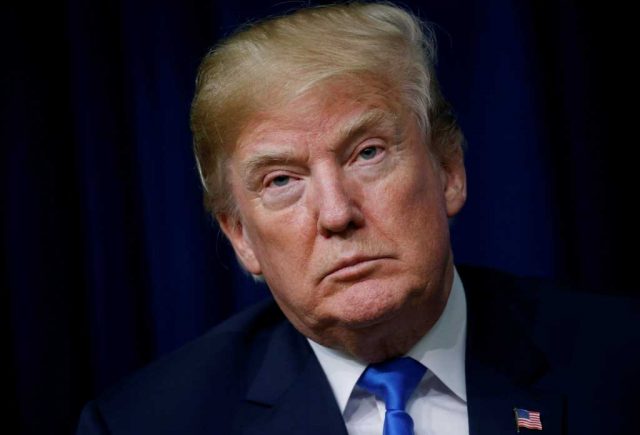
U.S. President Donald Trump — REUTERS/LEAH MILLIS/FILE PHOTO

WASHINGTON – A host of U.S. federal agencies have unveiled fresh buyout offers to slash their workforce, renewing a voluntary program that preceded the first wave of mass firings led by Elon Musk’s Department of Government Efficiency.

About 75,000 federal workers accepted the first offer, but some economists queried how many would take it this time, after President Donald Trump sent world markets into a downward spiral and raised fears by unveiling sweeping new tariffs last week.

The treasury department, defense department and human resources agency the Office of Personnel Management, are among those that recently unveiled a new version of the “deferred resignation program”.

The offer gives workers the chance to go on leave with pay until September before formally exiting their roles.

On Monday, the Department of Homeland Security asked non-law enforcement employees to consider voluntarily resigning, retiring or taking a buyout of as much as $25,000 in a new voluntary program, an internal email showed.

DOGE, the White House, Treasury, Defense and OPM did not immediately respond to requests for comment.

With the market uncertainties induced by Mr. Trump’s tariffs expected to chill private-sector hiring, however, federal workers would be less likely to take the offers, said Peter Morici, an economist at the University of Maryland.

“It will be harder to make the transition to the private sector if we’re in the depths of a recession,” Mr. Morici said in an interview.

Similar views were expressed by participants in a Reddit group chat that has become a lifeline for federal workers since the Musk-led purge began.

They warned workers would be entering a potentially much more unfriendly job market as companies grapple with the fallout from Mr. Trump’s announcement.

In an email on Friday, Chuck Ezell, the acting director of OPM, told staff the new offer “provides employees the option to take paid administrative leave through Sept. 30, 2025.”

He described it “as a tool to avoid reductions in force,” the formal term for mass layoffs.

The Department of Labor and the General Services Administration, which manages the government’s real estate portfolio, have also announced similar programs.

The Labor Department did not immediately respond to a request for comment, while a GSA spokesman said the agency’s new offer also applied to workers who had already been identified for dismissal.

The program is one of many efforts to dramatically reduce the size and costs of the federal government. The latest buyout offer takes a page from the so-called fork in the road email sent on January 28, offering a similar program to all 2 million civilian full-time federal workers.

That email was followed by DOGE-led mass firings of tens of thousands of probationary workers, although a judge has since forced the administration to rehire them, ruling that their terminations were probably illegal.

DOGE is now scything through departments in a second wave of large-scale layoffs. — Reuters

Trump threatens to hike China tariffs further as market plunge continues

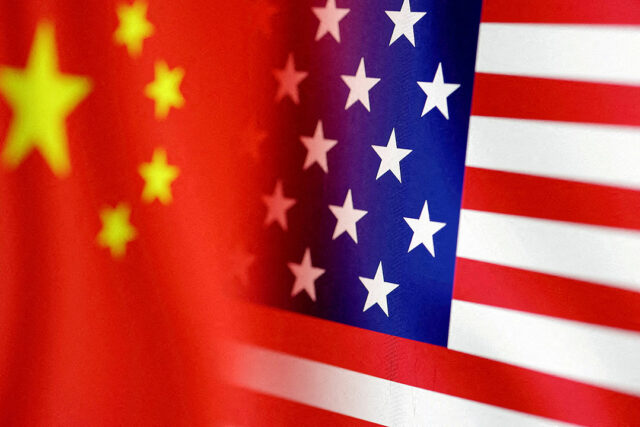
US and Chinese flags are seen in this illustration. — REUTERS

WASHINGTON/BRUSSELS – A global trade war touched off by US President Donald Trump’s sweeping tariffs escalated further on Monday, as Trump threatened to increase duties on China and the European Union proposed counter-tariffs of its own.

Financial markets across the globe posted a third day of losses as investors worried that steep trade barriers around the world’s largest consumer market could lead to a recession. The S&P 500 closed lower after a rollercoaster session in which it touched its lowest level in more than a year.

Trump said the tariffs – a minimum of 10% for all US imports, with targeted rates of up to 50% – would help the United States recapture an industrial base that he says has withered over decades of trade liberalization.

“It’s the only chance our country will have to reset the table. Because no other president would be willing to do what I’m doing, or to even go through it,” he told reporters at the White House. “Now, I don’t mind going through it because I see a beautiful picture at the end.”

Trump spoke hours after he ratcheted up a confrontation with China, the world’s No. 2 economy.

Trump said he would impose an additional 50% duty on US imports from China on Wednesday if it did not withdraw the 34% tariffs it had imposed on US products last week. Those Chinese tariffs had come in response to 34% “reciprocal” duties announced by Trump.

Beijing responded with defiance. Trump’s threat was a “typical move of unilateralism, protectionism and economic bullying,” Chinese embassy spokesperson Liu Pengyu said.

“We have stressed more than once that pressuring or threatening China is not a right way to engage with us,” he added. “China will firmly safeguard its legitimate rights and interests.”

The European Commission, meanwhile, proposed counter-tariffs of 25% on a range of US goods, including soybeans, nuts and sausages, though other potential items like bourbon whiskey were left off the list, according to a document seen by Reuters.

Officials said they stood ready to negotiate a “zero for zero” deal with Trump’s administration. “Sooner or later, we will sit at the negotiation table with the US and find a mutually acceptable compromise,” EU Trade Commissioner Maros Sefcovic said at a news conference.

The 27-member bloc is struggling with tariffs on autos and metals already in place, and faces a 20% tariff on other products on Wednesday. Trump has also threatened to slap tariffs on EU alcoholic drinks.

US Treasury Secretary Scott Bessent met with Trump in Florida on Sunday, Politico reported, to urge him to emphasize striking trade deals with partners in order to reassure the markets that there is an endgame to the US strategy.

Trump said his administration would open trade talks with Japan, one of Washington’s closest allies in Asia, and administration officials say dozens of other countries have reached out as well with the hope of heading off the tariffs as high as 50% due to take effect on Wednesday.

The back-and-forth injected further turbulence into global financial markets, which have fallen steadily since Trump’s announcement.

Trump administration officials say the president is following through on a promise to reverse decades of trade liberalization that he believes has undercut the US economy.

“He’s doubling down on something that he knows works, and he’s going to continue to do that,” White House economist Kevin Hassett said on Fox News. “But he is also going to listen to our trading partners, and if they come to us with really great deals that advantage American manufacturing and American farmers, I’m sure he’ll listen.”

China’s retaliatory levies are the firmest response yet to Trump’s announcement, which has been met with bewildered condemnation from other leaders.

After stocks in mainland China and Hong Kong cratered on Monday, China’s sovereign fund stepped in to try to stabilise the market.

Shares in Taiwan plummeted almost 10% – the biggest one-day percentage fall on record.

Wall Street leaders issued warnings on US tariffs, with JPMorgan Chase JPM.N CEO Jamie Dimon saying they could have lasting negative consequences, while fund manager Bill Ackman said they could lead to an “economic nuclear winter.”

Ackman is one of a handful of Trump supporters who questioned the strategy. Billionaire Elon Musk, who is leading Trump’s effort to slash government spending, called for zero tariffs between the US and Europe over the weekend.

On Monday, Trump trade adviser Peter Navarro dismissed the Tesla CEO as a “car assembler.”

NEW REALITY OR NEGOTIATING PLOY?
Investors and political leaders have struggled to determine whether Trump’s tariffs are permanent or a pressure tactic to win concessions from other countries.

Some in the EU worry that a forceful response risks even more blowback on European exporters of everything from French cognac and Italian wine to German cars.

Volkswagen’s Audi is holding back cars that arrived in US ports after April 2 because of the newly imposed 25% auto tariff. Aircraft parts supplier Howmet Aerospace may halt some shipments if they are impacted by tariffs, according to a letter seen by Reuters.

Some governments in Asia have signalled a willingness to engage.

Taiwanese President Lai Ching-te on Sunday offered zero tariffs as the basis for talks, while an Indian government official said Delhi does not plan to retaliate.

Investors are now betting that the growing risk of recession could prompt the US Federal Reserve to cut rates as early as next month. Trump repeated his call for the central bank to lower rates on Monday, but Fed chief Jerome Powell has so far indicated he is in no rush. — Reuters


Philippines’ Kanlaon volcano eruption resumes, says seismology agency

PHILSTAR FILE PHOTO/ROB ILUMBA UGBINADA

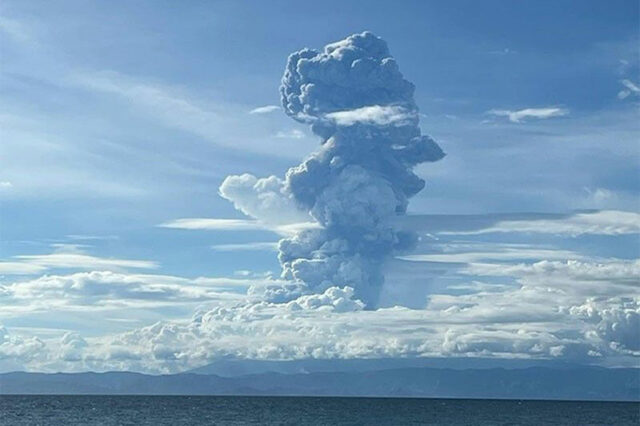
MANILA – A volcano in the central Philippines erupted on Tuesday morning, ejecting an ash-laden plume reaching around 4,000 meters (2.5 miles) high, the seismology agency said.

The Philippine Institute of Volcanology and Seismology (Phivolcs) said alert level 3 remained in effect over Mount Kanlaon, where it has been since December 2024 after an earlier explosive event.

Level 3, on a scale of 5, means there is an increased risk of lava flows and the potential for a hazardous eruption within weeks.

Mount Kanlaon, an active volcano straddling the Southeast Asian country’s central provinces of Negros Occidental and Negros Oriental, is one of two dozen active volcanoes in the Philippines.

Phivolcs director Teresito Bacolcol told DWPM radio there is a possibility the alert level could either be raised or lowered in the coming days, depending on how quickly magma rises to the surface.

A faster ascent could trigger a more intense eruption, prompting an escalation to alert level 4, while a slowdown or pause in magma movement may lead to a downgrade to alert level 2, Bacolcol said.

The Southeast Asian nation is located on the Pacific “Ring of Fire” where volcanic activity and earthquakes are common. — Reuters