Home Blog Page 1385

PSEi back above 6,300 mark as cease-fire holds
BW FILE PHOTO

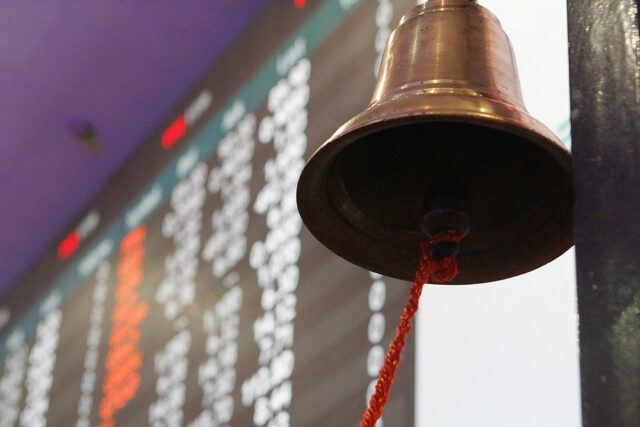
PHILIPPINE SHARES closed higher for a second straight day on Wednesday, with the index returning above the 6,300 mark, on optimism over a long-term cease-fire between Iran and Israel.

The benchmark Philippine Stock Exchange index (PSEi) rose by 0.52% or 32.89 points to end at 6,325.64, while the broader all shares index went up by 0.4% or 15.23 points to 3,754.43.

“The local market extended its rise on the back of hopes that the Israel-Iran cease-fire would hold,” Philstocks Financial Inc. Research Manager Japhet Louis O. Tantiangco said in a Viber message. “Investors also cheered the effect of the said cease-fire on other relevant markets, including the decline in global oil prices and the rebound of the Philippine peso against the US dollar.”

“Philippine shares rose and oil prices sank Tuesday as markets welcomed a fragile cease-fire between Israel and Iran, despite mutual accusations of violations. US President Donald J. Trump confirmed the truce remains in effect, though he voiced frustration with both sides,” Regina Capital Development Corp. Head of Sales Luis A. Limlingan said in a Viber message.

The cease-fire brokered by Mr. Trump between Iran and Israel appeared to be holding on Wednesday a day after both countries signaled that their air war had ended, at least for now, Reuters reported.

Each side claimed victory on Tuesday after 12 days of war, which the US joined with airstrikes in support of Israel to take out Iran’s uranium-enrichment facilities.

Mr. Trump’s Middle East envoy, Steve Witkoff, said late on Tuesday that talks between the United States and Iran were “promising” and that Washington was hopeful for a long-term peace deal.

On Wednesday, Brent crude rose 2% to $68.43 per barrel, bouncing a bit following a plunge of as much as $14.58 over the previous two sessions. US West Texas Intermediate crude was up as much to trade at $65.60 per barrel.

At home, the peso returned to the P56 level on Wednesday as risk appetite improved, closing at P56.711 per dollar, jumping from Tuesday’s finish of P57.16.

The conflict in the Middle East had caused the peso to slide to the P57 level last week after starting June at the P55 level on concerns that rising oil prices would stoke inflation anew. The Philippines is a net importer of oil.

Majority of sectoral indices closed in the green on Wednesday. Property climbed by 1.93% or 42.81 points to 2,251.04; mining and oil increased by 1.49% or 145.21 points to 9,893.96; holding firms went up by 0.76% or 40.89 points to 5,399.45; and services rose by 0.65% or 14.21 points to 2,185.63.

Meanwhile, financials dropped by 0.24% or 5.65 points to 2,318.29 and industrials slipped by 0.02% or 1.86 points to 9,064.84.

Value turnover dropped to P4.67 billion on Wednesday with 616.14 million shares traded from the P5.81 billion with 1.13 billion issues exchanged on Tuesday.

Advancers outnumbered decliners, 97 versus 83, while 60 names were unchanged.

Net foreign selling increased to P331.5 million on Wednesday from P286.36 million on Tuesday. — R.M.D. Ochave with Reuters

7,200 scams detected from March

BW FILE PHOTO

ANTI-SCAM application Whoscall said it has received 20,829 reports in its Content Checker from March to mid-June, with over 7,200 of these labeled as scams, according to its developer Gogolook Philippines.

“From March to the middle of June, the reports we received were a mix of deepfakes, malicious links, and suspicious OCR (Optical Character Recognition) images,” Gogolook Country Manager Mel Migriño said in a news forum on Wednesday.

Out of the total, 70% or 14,627 reports during the period were assessed by the Whoscall Content Checker.

Of the assessed reports, 7,200 were labeled as outright scams, and around 2,891 were potential scams, Ms. Migriño said.

Meanwhile, around 4,400 assessed reports showed “no risk for now,” she also noted.

Whoscall in March introduced its Content Checker function, designed to help users detect suspicious messages and posts containing misinformation.

It can identify phishing attempts, fake promos, and misleading news links.

Also on Wednesday, anti-scam group Scam Watch Pilipinas launched Scam Vault PH in a platform where users can report scam content links and fake accounts.

The platform was built in collaboration with Whoscall Philippines and the Philippine National Police Anti-Cybercrime Group (PNP-ACG).

Users can report suspicious links on Scam Vault PH’s Facebook page, which will be analyzed by Whoscall’s AI (artificial intelligence)‑driven tools.

The confirmed scam posts will be sent to the PNP‑ACG to coordinate the necessary takedowns and investigations.

Scam Watch Pilipinas Co-founder Jocel De Guzman called on the need to crack down fake accounts that spread scams, deepfakes and other suspicious posts.

“We will compile all of these [reports,] and then hopefully, we’ll be able to monitor how fast these [posts or accounts] are taken down [in these online platforms],” Mr. De Guzman said in mixed English and Filipino.

Mr. De Guzman also cited the need to limit the number of registered subscriber identity modules (SIMs) per person to avoid the proliferation of online scams. — Beatriz Marie D. Cruz

SM joins retail aggregation program

ADVENTENERGY INC/ FACEBOOK.COM/ERCGOVPH

SM Prime Holdings, Inc. is bringing its two schools to the government’s retail aggregation program (RAP) in a bid to take control over their electricity supply at a competitive cost, the Energy Regulatory Commission (ERC) said.

The ERC said that SM Prime, National University (NU), and Asia Pacific College (APC) have entered into a retail electricity supply contract with AdventPower, Inc., the retail electricity supply company of Aboitiz Power Corp.

Under the deal, SM Prime will consolidate a total electricity demand of 967.13 kilowatts (kW), covering the facilities of APC and three NU buildings in Manila, through AdventPower’s services. The NU will also eventually expand to other sites across the country.

ERC Chairperson and Chief Executive Officer Monalisa C. Dimalanta said that “the objective of RAP goes beyond lowering costs of power use in their facilities. It is also about reinvesting those savings in things that truly matter: better classrooms, smarter technology, improved facilities, and potentially, even more affordable tuition.”

RAP is the ERC’s latest customer choice program, which allows loads from multiple end-users within the same franchise area to be aggregated to meet the minimum energy demand requirements.

The Philippine Cultural College pioneered the RAP switch in academia in March by aggregating the power demand of its five facilities, which have a total capacity of 740 kW.

“Let us remember that electricity is more than just a utility we pay for – it is a good or a service (in more ways than one) we are empowered to choose,” Ms. Dimalanta said.

“What good would you like your choice today to contribute? What service does your choice make in our nation’s evolving energy journey? In that power of choice lies the promise of a future where learning thrives, innovation gains momentum, and opportunities multiply – for our students, our communities, and our entire nation.” — Sheldeen Joy Talavera

Two of five miners survive Nueva Vizcaya tunnel, police says

BAGUIO CITY — Two of the five miners, initially reported dead due to suffocation inside a tunnel in Barangay Runruno, Quezon, Nueva Vizcaya on Tuesday morning, were rescued alive, the latest Nueva Vizcaya police report said.

Alfred Dulnuan Bilibli was first rescued past 2 p.m. while his colleague Joval Bantiyan was located past 7 p.m., also on Tuesday.

Rescue operations are ongoing for the three other miners: Daniel Segundo Paggana, 47; Lipihon Bumulyad Ayudan, 56; and Florencio Napudo Indopia, 63, all from Barangay Runruno.

Police initially presumed all the five miners were dead based on the first information that reached them.

Russel Tumapang, 29, also from Barangay Runruno, discovered the victims after getting into the tunnel in Sitio Compound at around 1 a.m. and reported it to authorities.

Police had indicated that the two rescued miners were found about 300 meters deep into the tunnel, but the other three are believed to be located in a deeper section.

Relatives, residents, and rescue personnel are hopeful that the three remaining miners are still alive. — Artemio A. Dumlao

35 groups call for signing of Konektadong Pinoy bill

STOCK PHOTO | Image by Yasmina H from Unsplash

THIRTY-FIVE organizations on Wednesday called on President Ferdinand R. Marcos, Jr. to approve the Open Access in Data Transmission measure, also known as Konektadong Pinoy bill in the face of aggressive lobbying for a Presidential veto, noting that the issues raised against the bill are “unfounded.”

“In light of the call by certain groups to veto the bill, we would like to reiterate our request to the President to approve Konektadong Pinoy and why the Philippines needs this law,” the organizations said in a joint statement.

“We, the undersigned organizations, express our full support and call for the immediate enactment of the Konektadong Pinoy bill. We believe this landmark legislation will democratize internet access, which could potentially be this administration’s greatest legacy,” they added.

The groups dismissed claims that Konektadong Pinoy will endanger national security, as the bill asks network providers to comply with cybersecurity measures based on internationally organized standards.

“It mandates a cybersecurity performance audit and makes this a requirement for continuing operation and license renewal. Konektadong Pinoy also disallows foreign government-controlled and state-owned enterprises from operating data transmission networks,” they said.

“Finally, the bill requires that national security be taken into consideration in interconnection and access to infrastructure,” they added.

The 35 organizations said that the bill, which was ratified by the Congress on June 9, will “free Filipinos from the shackles of poor internet.”

“The Philippines has been lagging behind on internet connectivity not only in Asia but in the whole world. Latest data shows that 19,000 barangays (or 45.5% of all barangays nationwide) still lack internet access,” the statement read.

Citing the World Bank, the groups said that inequality in internet access makes Filipinos unequipped for digital jobs.

“The growing digital divide makes e-commerce, e-government, online learning, and artificial intelligence virtually inaccessible to millions of Filipinos and disadvantaged sectors,” the groups added.

The groups also see the landmark bill to reduce internet cost as it will enable smaller providers to build infrastructure and offer internet services in their communities.

In 2022, the Philippines was cited as the “most internet poor” in Southeast Asia, as over 50 million potential users could not afford basic internet packages; the Philippines has since surpassed Laos and Timor-Leste.

The bill is also seen as a “decisive step toward dismantling barriers in the data transmission industry.”

“Outdated and restrictive laws have made it cumbersome and costly for small players, such as cable operators and community internet service providers, as well as new and emerging players, to build and expand broadband networks,” the organizations said.

“Konektadong Pinoy will change the status quo by promoting competition and stimulating the market and encouraging investment even in the rural barangays,” they added.

The groups said that the bill should be approved as it has been “thoroughly vetted by Congress and the Executive.”

“The bill has undergone rigorous scrutiny, almost 10 years of deliberations, and various improvements through three Congresses,” they said.

“The strong backing from key stakeholders, including established and reputable organizations from major sectors, is proof that the bill is truly responsive to the urgent digital needs of the country,” they added.

The signatories to the joint statement include industry groups such as the Analytics & AI Association of the Philippines, Alliance of Tech Innovators for the Nation, Employers Confederation of the Philippines, Fintech Alliance.PH, Internet and Technology Association of the Philippines, Inc., Maharlika Internet Exchange, National Confederation of the Philippines, and Philippine Exporters Confederation, Inc.

Foreign chambers such as American Chamber of Commerce of the Philippines, Inc., Canadian Chamber of Commerce of the Philippines, Inc., European Chamber of Commerce of the Philippines, Japanese Chamber of Commerce and Industry of the Philippines, Inc., and Korean Chamber of Commerce of the Philippines, Inc. also signed the statement.

The Chief Information Officers Forum, Inc., CIO Forum Foundation, Inc., National ICT Confederation of the Philippines, Philippine Councilors League, and Provincial Health Officers Association of the Philippines, Inc. are also signatories to the statement.

Tech organizations such as Asia Open RAN Academy, Cebu Python Users Group, League of Goal Oriented Information and Communications Technology Officers, Inc., MozillaPH, Philippine Institute of Cyber Security Professionals, Unconnected.org, the University of the Philippines Computer Science Guild, User Experience Philippines, and Wiki Society of the Philippines also added their signatures.

Rounding out the 35 signatories are the Association for Progressive Communications, Better Internet PH, Democracy.net.PH, Foundation for Media Alternatives, Institute for Social Entrepreneurship in Asia, Internet Society, Internet Society – Philippines Chapter, and the Samahan ng Nagkakaisang Pamilya ng Pantawid. — Justine Irish D. Tabile

PHL seeks $250M in funding from WB to improve TVET instruction

PHILSTAR FILE PHOTO

THE PHILIPPINES is seeking a $250-million package from the World Bank (WB) to upgrade Technical and Vocational Education and Training (TVET).

The project, to be implemented by the Technical Education and Skills Development Authority (TESDA), aims to improve access, completion rates, and labor market relevance of TVET programs in targeted sectors and regions, according to a document uploaded on World Bank’s website.

The project is expected to be approved by March 23, 2026.

Other objectives of the project are imposing system-level reforms to strengthen the overall TVET framework, and targeted support in regions and sectors with growth potential and high need, such as those with high jobless rates, youth not in education, employment, or training, and Pantawid Pamilyang Pilipino Program graduates.

“It will enhance trainee learning experiences and generate labor market-relevant skills, aligned with the project’s Theory of Change,” it said.

It also noted that TESDA only got about 0.32% of the P6.352-trillion government budget in 2025, with 60% going to scholarships for disadvantaged groups.

“Persistent underinvestment in skills training and constraints on employment opportunities limit the country’s potential and weaken its demographic advantage,” according to the document.

TVET is overseen primarily by TESDA, which was established under Republic Act. No. 7796 or Technical Education and Skills Development Act of 1994. — Justine Irish D. Tabile

AG&P Industrial to venture into Indonesia geothermal

ATLANTIC, Gulf and Pacific Co. of Manila, Inc. (AG&P Industrial) said it is partnering with Dutch firm Royal Eijkelkamp to develop geothermal projects in Indonesia.

The tieup, which covers geothermal and infrastructure projects across Indonesia, was outlined in a memorandum of understanding signed last week.

“The two companies will work together in business development, marketing and communication, tender participation, estimation, contracting, and execution,” AG&P Industrial said in a statement late Tuesday.

“AG&P Industrial will serve as the main contractor and technical lead, bringing its long-standing expertise in large-scale infrastructure delivery,” it added.

According to the company, the partnership will help Indonesia achieve its energy transition. Its energy mix is currently dominated by fossil fuels.

“The country aims to increase its share of renewables to 23% by 2025 and achieve net-zero emissions by 2060,” AG&P Industrial said.

“The two companies aim to unlock Indonesia’s geothermal potential and support the country’s path toward energy security and sustainability,” it added.

The deal follows an earlier agreement between AG&P Industrial, Royal Eijkelkamp, and other partners to explore, develop, and manage geothermal resources in the Philippines and the region.

“Our partnership with Royal Eijkelkamp solidifies our commitment to driving clean energy development across Southeast Asia,” AG&P Industrial President and Managing Director Alex Gamboa said.

“Indonesia holds tremendous geothermal potential, and we are eager to contribute to meeting the Indonesian government’s energy transition targets by bringing our innovative and scalable solutions prioritizing sustainability, efficiency, and long-term value,” he added.

Earlier this month, AG&P Industrial said that it has about $1 billion worth of contracts in the pipeline over the next two or three years, which include projects in the US, Europe, and Australia. — Justine Irish D. Tabile

Modular refrigerated warehouses to help expand cold-storage network

AYALALAND.COM

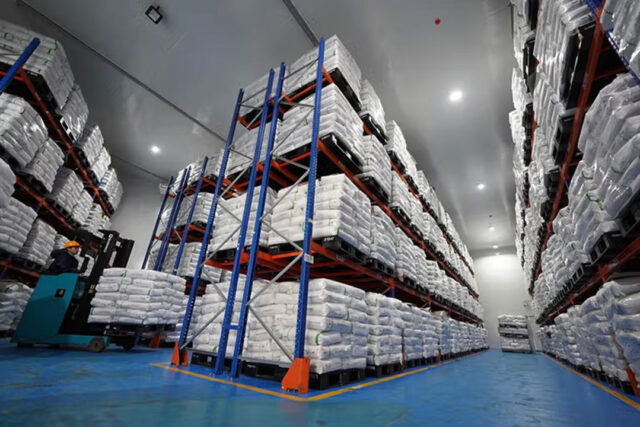
THE Department of Agriculture (DA) said on Wednesday that it is pursuing the expansion of the cold chain network by deploying modular and mega cold storage warehouses in major agricultural regions.

“These facilities are designed to be scalable and adaptable, with modular features that accommodate local conditions while maintaining operational efficiency and integrity,” Agriculture Secretary Francisco Tiu Laurel, Jr. told the Cold Chain Association of the Philippines at their annual meeting.

The modular warehouses are designed to handle large-volume storage, with capacities ranging from 1,700 to over 8,000 pallet positions, he added.

The facilities packages will also include refrigerated vans, dryers, tramlines, packaging equipment, and ice plants.

The DA has allocated P3 billion to build, starting this year, around 99 cold storage facilities aimed at extending the shelf life of fruit, vegetables, and other high-value crops.

The refrigerated warehouses will feature hybrid systems, which are designed to operate on both renewable energy sources — such as solar and wind — and electricity from the main power grid.

“This approach ensures efficient and environmentally sustainable operations, especially in remote or underserved agricultural areas,” the DA said.

“We also recognize that cold storage infrastructure is only one part of the equation,” Mr. Laurel said. “The development of food hubs and agri-fisheries ports — while more extensive in scope and requiring longer timelines — remains a critical long-term priority.” — Kyle Aristophere T. Atienza

Taiwan financial conglomerate CTBC seeking to expand Philippine presence

CTBC FINANCIAL PARK — EN.WIKIPEDIA.ORG

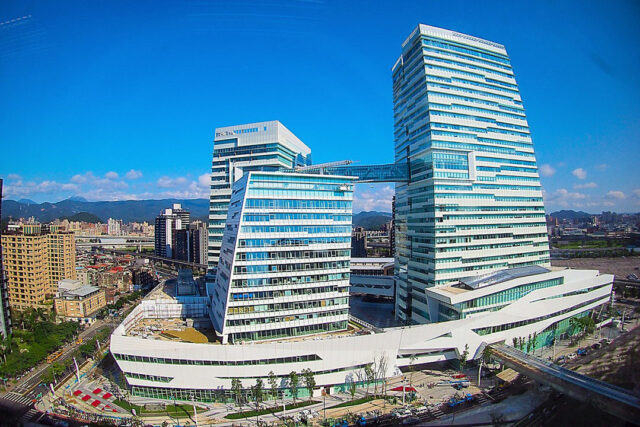
THE Department of Trade and Industry (DTI) said Taiwan financial services group CTBC Holding Co., Ltd. has expressed interest in expanding in the Philippines.

In a social media post, the DTI said the Philippine Trade and Investment Center (PTIC) in Taipei met with CTBC executives earlier this month to explore opportunities “to further strengthen trade and investment relations between the Philippines and Taiwan.”

“The meeting highlighted shared commitment in deepening economic cooperation, with CTBC expressing keen interest in expanding its presence in the Philippines,” the DTI said.

“The company reiterated its support for inclusive financial solutions tailored to the needs of micro, small, and medium enterprises (MSMEs) as well as large corporations,” it added.

The DTI said CTBC views the Philippines as an attractive destination for “long-term strategic investments” due to its robust economic outlook and enabling policy environment.

“The PTIC continues to facilitate strategic engagements that open new opportunities for collaboration between Philippine and Taiwanese businesses, aligned with the DTI’s goal of promoting the country as a conducive environment for doing business,” the DTI added.

Earlier this month, the Philippine Economic Zone Authority (PEZA) said that it expects Taiwan, along with China and Hong Kong, to be the country’s top sources of foreign direct investments this year and in the next few years.

PEZA Director General Tereso O. Panga said manufacturers in greater China, which hope to export to the US and the European Union (EU), now see the Philippines as the new ‘plus one’ destination.

In April, US President Donald J. Trump imposed reciprocal tariffs on most trading partners, with Philippine goods assigned the second-lowest rate in Southeast Asia of 17%.

The US has put the higher reciprocal tariffs on hold until July 8, pending the outcome of negotiations with the various trade delegations visiting Washington.

The Philippines also participates in the EU’s Generalised Scheme of Preferences Plus, which allows for over 6,000 Philippine-made products to enter the EU with zero duty. — Justine Irish D. Tabile

PHL, HK readying Customs information-sharing deal

FINANCE Secretary Ralph G. Recto said the Philippines is preparing a Customs cooperation agreement with Hong Kong (HK), focused on information-sharing to deter smuggling and the transport of illicit goods.

“I thank the government of Hong Kong for collaborating with us on this very important matter. This arrangement is necessary to ensure that both our Customs Administrations are functioning together in the most efficient way possible,” Mr. Recto said in a statement on Wednesday.

“We owe it to our nations to ensure that what crosses our borders is legitimate, safe, and lawful,” he added.

The draft bilateral arrangement emerged from discussions between the BoC (Bureau of Customs) and its Hong Kong counterparts in response to growing global concern over supply chain security and more sophisticated cross-border smuggling operations.

“The draft arrangement is intended solely for the mutual administrative assistance between the Customs Administrations of the Philippines and Hong Kong,” the Department of Finance said.

Among the salient provisions on general assistance includes the sharing of information and intelligence to ensure the proper application of Customs laws, the prevention, investigation and combating of Customs offenses, and the security of international supply chains. — Aubrey Rose A. Inosante

P26.3M worth of vape products seized from dealers near schools

STOCK PHOTO | Image by Rainier Ridao from Unsplash

THE Department of Trade and Industry (DTI) said it confiscated around P26.3 million worth of vape products that were being sold within 100 meters of schools.

“The intensified crackdown aims to curb youth access to vaporized nicotine and non-nicotine products,” the DTI said in a statement on Wednesday.

Between January 2024 and June 2025, it said 49,981 vape units were seized, while 22 notices of violation were issued to non-compliant establishments.

The DTI said its actions were authorized by Republic Act No. 11900, or the Vape Law, which prohibits the sale, promotion, advertisement, and demonstration of vape products within 100 meters of schools and other places frequented by minors.

Under the law, first-time violators face a fine of P10,000 or imprisonment of up to 30 days, at the discretion of the court.

Repeat offenders face penalties and the revocation of business permits, with the owner, president, or manager of businesses held personally liable.

“Minors caught selling, buying, or using vape products will be referred to intervention programs handled by the Department of Health and the Department of Social Welfare and Development,” the DTI said. — Justine Irish D. Tabile

Israel-Iran war highlights declining Middle East influence on oil prices

LONDON — The contained move in oil prices during the Israel-Iran war highlights the increasing efficiency of energy markets and fundamental changes to global crude supply, suggesting that Middle East politics will no longer be the dominant force in oil markets they once were.

The jump in oil prices following Israel’s surprise attack on Iran was meaningful but relatively modest considering the high stakes involved in the conflict between the Middle East rivals.

Benchmark Brent crude prices, often considered a gauge for geopolitical risk, rose from below $70 a barrel on June 12, the day before Israel’s initial attack, to a peak of $81.40 on June 23 following the US strikes on Iranian nuclear facilities.

Prices, however, dropped sharply that same day after it became clear Iran’s retaliation against Washington — a well-telegraphed attack on a US military base in Qatar that caused limited damage — was essentially an act of de-escalation. Prices then fell to below pre-war levels at $67 on Tuesday after US President Donald Trump announced that Israel and Iran had agreed to a ceasefire.

The doomsday scenario for energy markets — Iran blocking the Strait of Hormuz, through which nearly 20% of the world’s oil and gas supplies pass — did not occur. In fact, there was almost no disruption to flows out of the Middle East throughout the duration of the conflict.

So, for the time being, it looks like markets were right not to panic.

The moderate 15% low-to-high swing during this conflict suggests oil traders and investors have slashed the risk premium for geopolitical tensions in the Middle East.

Consider the impact on prices of previous tensions in the region. The 1973 Arab oil embargo led to a near quadrupling of oil prices. Disruption to Iranian oil output following the 1979 revolution led to a doubling of spot prices. Iraq’s invasion of neighboring Kuwait in August 1990 caused the price of Brent crude to double to $40 a barrel by mid-October. And the start of the second Gulf war in 2003 led to a 46% surge in prices.

While many of these supply disruptions — with the exception of the oil embargo — ended up being brief, markets reacted violently.

One, of course, needs to be careful when comparing conflicts because each is unique, but the oil market’s response to major disruptions in the Middle East has — in percentage terms, at least — progressively diminished in recent decades.

There are multiple potential explanations for this change in the perceived value of the Middle East risk premium.

First, markets may simply be more rational than in the past given access to better news, data and technology.

Investors have become extremely savvy in keeping tabs on near-live energy market conditions. Using satellite ship tracking and aerial images of oilfields, ports and refineries, traders can monitor oil and gas production and transportation, enabling them to better understand supply and demand balances than was possible in previous decades.

In this latest conflict, markets certainly responded rationally.

The risk of a supply disruption increased, so prices did as well, but not excessively because there were significant doubts about Iran’s actual ability or willingness to disrupt maritime activity over a long period of time.

Another explanation for the limited price moves could be that producers in the region — again, rational actors — learned from previous conflicts and responded in kind by building alternative export routes and storage to limit the impact of any disruption in the Gulf.

Saudi Arabia, the world’s top oil exporter, producing around 9 million bpd, nearly a tenth of global demand, now has a crude pipeline running from the Gulf coast to the Red Sea port city of Yanbu in the west, which would have allowed it to bypass the Strait of Hormuz. The pipeline has capacity of 5 million bpd and could probably be expanded by another 2 million bpd.

Additionally, the United Arab Emirates, another major OPEC and regional producer, with output of around 3.3 million bpd of crude, has a 1.5 million bpd pipeline linking its onshore oilfields to the Fujairah oil terminal that is east of the Strait of Hormuz.

Both countries, as well as Kuwait and Iran, also have significant storage facilities in Asia and Europe that would allow them to continue supplying customers even through brief disruptions.

Perhaps the most important reason for the world’s diminishing concern over Mideast oil supply disruptions is the simple fact that a smaller percentage of the world’s energy supplies now comes from the Middle East.

In recent decades, oil production has surged in new basins such as the US, Brazil, Guyana, Canada and even China.

OPEC’s share of global oil supply declined from over 50% in the 1970s to 37% in 2010 and further to 33% in 2023, according to the International Energy Agency, largely because of surge in shale oil production in the US, the world’s largest energy consumer.

To be sure, the global oil market was well supplied going into the latest conflict, further alleviating concerns.

Ultimately, therefore, the Israel-Iran war is further evidence that the link between Middle East politics and energy prices has loosened, perhaps permanently. So geopolitical risk may keep rising, but don’t expect energy prices to follow suit.


Ron Bousso is the Reuters energy columnist.