Home Blog Page 1307

Arca South hosts first Invitational Football Cup

TAGUIG CITY — Arca South, Ayala Land’s emerging 74-hectare urban estate, came alive as it hosted the first-ever Arca South Invitational Football Cup, a two-day celebration of grassroots football that brought together over 300 young athletes and hundreds of spectators from across Taguig.

Held on the FIFA-certified Arca South Pitch, home to Barça Academy Manila (BAM), the event showcased Taguig’s growing talent and passion for football across five age divisions (U6, U8, U10, U12, U14). The Cup also marked the unveiling of newly built bleachers and locker rooms, blessed and officially opened on Day 1, furthering Arca South’s commitment to developing world-class sports facilities for both athletes and the wider community.

Arca South, known for its walkable design, green spaces, and central location, is fast becoming a hub for active communities and young talent.

“The success of our first Invitational Cup reflects what Arca South stands for: building an inclusive community through passion, sportsmanship, and shared experiences,” said Gilbert Ramos, Senior Project Development Head at Ayala Land Estates.

INDIVIDUAL HONORS
The Arca South Invitational Football Cup opened with an electric atmosphere, drawing 22 teams and over 300 players across two days. Beyond the matches, the event celebrated exceptional talent, sportsmanship, and the true spirit of the game through team and individual awards.

In the U6 division, Joaquin Jacobe of BAM was named XMPLR Athlete, with Forza FC taking the Sportsmanship Award and finishing first runner-up behind champions Barça Academy Manila; Phoenix FC secured second runner-up.

For U8, Kyle Jacob of Forza FC stood out as XMPLR Athlete, while Barça Academy Manila-Grana (BAM-Grana) team earned the Sportsmanship Award. The title went to Barça Academy Manila-Blau, (BAM-Blau) with Grana and Forza FC following as first and second runners-up.

The U10 category saw Thomas Iñong from BAM-Grana recognized as XMPLR Athlete and BAM-Grana also earning the Sportsmanship Award, while BAM-Blau took the championship, Stars United finished first runner-up, and Forza FC placed third.

In U12, Gab Capito of Forza FC was named XMPLR Athlete and Stars United FC received the Sportsmanship Award. BAM-Grana clinched the championship, with Eres Embo FC and BAM–Blau rounding out the top three.

For the U14 division, outstanding sportsmanship was displayed by Gat Andres Bonifacio High School, which took both the Sportsmanship Award and produced the XMPLR Athlete, Alden Nazarionda. Barça Academy Manila captured the championship title, while Forza FC and Stars United FC completed the podium.

Philippines slams Kyrgyzstan, 2-0, advances to Group III Davis Cup

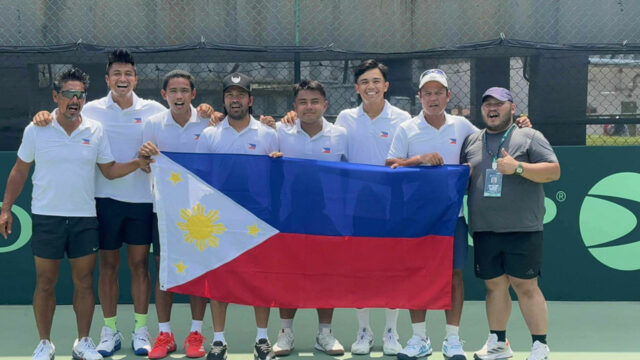
PHILIPPINES DAVIS CUP TEAM

THE Philippines completed its ascent back to Group III after it waylaid Kyrgyzstan, 2-0, over the weekend in their Asia-Oceania Group IV Davis Cup tie in Kuala Lumpur, Malaysia.

Eric Olivarez, Jr. smashed Kirill Kistanov, 6-1, 6-3, in the first singles and then AJ Lim turned back Ilgiz Kamchibekov, 6-3, 6-3, in the next to seal match win and a return trip to Group III.

With the victory all wrapped up, both countries decided to forego the doubles duel that would have pitted Francis Casey Alcantara and Ruben Gonzales with Erbol Eldiyar Uulu and Kistanov.

It was redemption of sorts for the team after sputtering straight down to Group V, the lowest of all groups in the Davis Cup.

Now the Filipinos, who swept their pool in three matches to set up the promotional payoff, have a chance further and shoot for a Group II seat.

“This promotion is a testament to the team’s hard work, discipline, and fighting spirit,” said Unified Tennis Philippines chief Jean Henri Lhuillier. “From start to finish, our players have shown that Philippine tennis is ready to make its mark again in the Davis Cup.” — Joey Villar

Caitlin Clark calls for more pay

INDIANAPOLIS — Indiana Fever sensation Caitlin Clark called for better pay in the WNBA on Saturday as labor negotiations between the league and players intensify, while Commissioner Cathy Engelbert said she was optimistic about their latest talks.

Thousands of fans wearing “Clark” jerseys packed the Gainbridge Fieldhouse for the sold-out All-Star Game on Saturday, while the wildly popular Rookie of the Year was forced to sit out. — Reuters

Messi’s brace seals Inter win over Red Bulls

LIONEL MESSI had two goals and two assists to lead Inter Miami to a bounce-back 5-1 victory over the host New York Red Bulls on Saturday night in Harrison, New Jersey.

Messi and Inter Miami (12-4-5, 41 points) erased a 1-0 first-half deficit with a flurry of goals late in the first half — two of them coming off the foot of Telasco Segovia — that staked the Herons to a 3-1 halftime lead.

Miami won its sixth MLS match in its past seven after having a five-game winning streak snapped at Cincinnati on Wednesday.

The Red Bulls (9-9-6, 33 points) failed to string together consecutive wins at home and lost to Inter Miami for the second time this season.

New York scored its lone goal in the 15th minute when Emil Forsberg lifted a corner kick in front of Miami goalkeeper Rocco Rios Novo’s line of sight. Alexander Hack then kicked it home for the score despite having defender Federico Redondo draped all over him. — Reuters

WNBA All-Star Weekend

The 2025 WNBA All-Star Weekend in Indianapolis delivered exactly what it needed to: high-level competition, meaningful instances, and a clear sense that the league is both rooted and rising. The return to the classic Team Captains format for the Game itself gave fans a heady dose of the familiar. Hometown hero Caitlin Clark, despite sitting out with a groin injury, still played a significant role — on the bench, locked in, even coaching. Meanwhile, leading Most Valuable Player candidate Napheesa Collier took full advantage of the spotlight, scoring a record-breaking 36 points in a stunning display of her trademark efficiency. Her performance was both dominant and polished, making her claim to the hardware academic.

The WNBA introduced a new wrinkle to the Game with the four-point shot, and presumptive Rookie of the Year Paige Bueckers wasted no time making history by draining the first. In the process, she got the hoopla, no pun intended, under way the right way—with fun and freshness, as much a sign as any that the league is willing to experiment without diluting the very factors that make the festivities memorable. It doesn’t always get innovation right, but this one landed smoothly.

Arguably, the previous night produced even greater spectacle. The Liberty emerged as big winners, with starters Natasha Cloud and Sabrina Ionescu taking the Skills Challenge and Three-Point Contest, respectively, in intense fashion. From the outside looking in, the supposed warm-up acts set the tone for the weekend: one with a competitive edge, but sprinkled with joy — players hyping each other up, fans staying engaged throughout, and all and sundry invested in outcomes.

Significantly, the players knew well enough to use the stage to send a message. Just before the All-Star Game tipped off, they all wore matching black shirts with the inscription “Pay us what you owe us.” The statement was direct and yet controlled. With looming negotiations on a new collective bargaining agreement, it was a show of force that underscored they know their value and are not afraid to stand for it. At the same time, the mode of delivery ensured it did not choke the life out of the fan-friendly atmosphere. If anything, it made developments feel even more grounded in purpose.

The WNBA needed the weekend to be a smash hit — and it was. It helped, of course, that Indianapolis is Hoosiers nation. In any case, the moments added up. The competitions had meaning, both professionally and personally. And, if nothing else, the league managed to celebrate the present with a cautiously optimistic eye toward the future.


Anthony L. Cuaycong has been writing Courtside since BusinessWorld introduced a Sports section in 1994. He is a consultant on strategic planning, operations and human resources management, corporate communications, and business development.

‘Business as usual’ in Taiwan’s Silicon Valley amid China threats

THE TSMC (Taiwan Semiconductor Manufacturing Company) Museum of Innovation is located within Hsinchu Science Park, around 72 kilometers outside of Taipei. — CATHY ROSE A. GARCIA

By Cathy Rose A. Garcia, Editor-in-Chief

HSINCHU CITY, Taiwan — Clusters of unobtrusive buildings greet you when you enter Hsinchu Science Park (HSP), also known as the heart of Taiwan’s Silicon Valley. Outside these modern buildings, there’s little indication that the world’s most important chips are being manufactured inside.

Taiwan produces around 60% of the semiconductors in the world, and over 90% of the most advanced chips. Most of these advanced semiconductors are manufactured by TSMC (Taiwan Semiconductor Manufacturing Company).

At the TSMC Museum of Innovation here, the company prominently displays the chips it has produced since it was founded in 1987, and how these are used in nearly all aspects of modern life — from home appliances and mobile phones to artificial intelligence (AI) and self-driving vehicles.

TSMC is the world’s largest producer of chips, and a top supplier for Apple and Nvidia. It also accounted for 9% of Taiwan’s gross domestic product (GDP) last year.

This puts TSMC right at the center of the so-called “Silicon Shield.” Experts have long noted that Taiwan’s dominance in semiconductor manufacturing could protect the island from China’s military aggression.

Despite geopolitical tensions, it’s “business as usual” for the over 600 companies that operate in HSP, officials said.

“(But) if there is a big conflict, if there is a war, that will be absolutely a very big problem for global supply chains,” HSP Bureau Associate Researcher Scott Huang told visiting foreign journalists.

China continues to assert its claim over Taiwan, which Beijing views as a breakaway province. It has threatened to annex the self-ruled island, by force if necessary, endangering Taiwan’s population and threatening the world’s most advanced semiconductor factories.

A possible China attack on TSMC’s facilities in Taiwan would severely affect chip supplies in the world, Mr. Huang said.

“Some scholars estimate that if there is a missile that hits TSMC from China, there will be no chip supplies for advanced manufacturing engineers for at least three years. That means nobody will have a new model of iPhone again for three years until those constructions, manufacturing productions, facilities recover,” Mr. Huang said.

Chung-Hua Institution for Economic Research (CIER) President Hsien-ming Lien said there are estimates that an attack on Taiwan would reduce around 6-10% of global GDP.

“It’s an enormous amount of money. It will affect all the top 10 technology companies (in the world), almost every one of them requires the TSMC chip… All your phones have their chips from TSMC. It’s going to be catastrophic,” he said during a separate briefing.

Mr. Lien said this is why Taiwan and other Asian countries are working to prevent this attack from happening.

“It’s a disaster nobody wants to actually see,” he added.

INNOVATION
Despite rising geopolitical tensions, Taiwan continues to focus its efforts on innovation development.

The National Science and Technology Council (NSTC) takes the lead not just in formulating science and technology policy but also in supporting and funding research, developing science parks, and promoting innovation.

NSTC Vice-Minister Chen-kang Su highlighted the unique ecosystem in Taiwan where there is close collaboration among the government, academe, research and industry.

The NSTC works with the Industrial Technology Research Institute (ITRI), the National Institute of Applied Research and with other industries to train professionals as well as to help the academe and research sectors transfer technology to the industry that will turn these technologies into commercial products.

It was ITRI that laid the groundwork for Taiwan’s semiconductor industry and played a key role in the creation of TSMC. TSMC, which was founded by Morris Chang, had received early funding and support from ITRI, the Taiwanese government and private investors.

ITRI had also advocated for a science-based industrial park, which led to the establishment of the HSP, which in turn became the birthplace of TSMC.

Ambassador-at-Large and Digital Transformation Association (DTA) Chairman JR Chen said the science parks and industrial parks are the secret to Taiwan’s economic development.

“All these science parks or industry parks are a vital asset and competitive advantage of Taiwan’s economic development, and this is also the hidden center of global economy because most of the high-tech industries need support from all these science parks or industrial parks,” Mr. Chen told a group of visiting foreign journalists.

NSTC’s Mr. Su said at a briefing that there are over 1,150 companies located in science parks, which cover 5,194 hectares around Taiwan. In 2024, these science parks generated over $148 billion in revenues.

HSP’s Mr. Huang showed a photo of the science park when it was established in 1980, where there was only one building surrounded by “nothing, only rice fields.”

“We started from making PCs (personal computers), desktop, notebooks to semiconductors in the 1990s… With electronics, semiconductors and chipmaking, Taiwan firms really had a remarkable performance in the global market. For the advanced semiconductor sector, Taiwan enterprises really shine in the world, with over 95% (of the market),” he said.

HSP is home to the headquarters of TSMC and Mediatek, as well as over 620 companies in six industries, namely integrated circuits, optoelectronics, biotechnology, machineries, PC and telecommunications. The park itself now covers 1,467 hectares, employs around 178,000 and generates over $47 billion in revenue a year.

Meanwhile, NTSC is looking to expand Taiwan’s international cooperation in priority areas such as semiconductors, AI, security and surveillance, next-generation communications, and military.

“In addition to working with allied countries on industrial supply chains, we can also work with them to introduce new applications of these technologies. Areas of collaboration could be working with these countries to introduce new technology in AI and semiconductors to build local industries,” Mr. Su said.

Other policy focus areas include net-zero technology, quantum technology, space technology, precision medicine, and robotics.

NSTC currently has 18 science and technology liaison offices in 14 countries, including the US, Japan, Vietnam and India.

RISKS
Rising geopolitical risks such as the US-China trade war, Russia-Ukraine war and US tariffs are forcing Taiwan’s supply chains to undergo restructuring, according to DTA’s Mr. Chen.

“For the DTA, we still advocate that digital transformation (is needed) for all industries in Taiwan. This is still the foundation of resilience and advanced capabilities to tackle the issue of geopolitical risks,” he said.

Mr. Chen said companies can use AI to have real-time visibility and transparency or manage risks in the supply chain.

“Global diversification is very important. Right now, I think you cannot really have only one source of manufacturing or logistics,” he said.

“Though the main technology is from Taiwan, we’d like to collaborate with like-minded countries to work together to provide high-tech products for the world.”

For instance, TSMC has been expanding beyond Taiwan as it sees the need to diversify manufacturing and reduce supply chain risks amid these risks. It has already invested in semiconductor fabrication plants in Arizona in the US, and Kumamoto in Japan.

Mr. Chen also suggested that Taiwan firms continue to expand to other countries in Southeast Asia, South Asia or Eastern Europe.

“We need to develop domestic supply and critical components here in Taiwan but also we need to form alliances with like-minded countries to share research and development and other resources so that will make a resilient foundation for the high-tech industry,” he said.

‘DEMOCRATIC SUPPLY CHAIN’
Taiwan President Lai Ching-te had earlier called on semiconductor companies to stop buying from and selling to China and to only work with supply chains with companies from democratic countries.

“The so-called pure democratic supply chain is still a very challenging goal,” CIER Taiwan ASEAN Studies Center director Kristy Hsu said at a separate briefing. 

She noted that China controls more than 90% of the critical minerals needed for making chips, so it would not be possible to establish a democratic supply chain without the participation of non-democratic countries like China and Vietnam.

However, as China has become increasingly aggressive in recent years, Ms. Hsu noted some like-minded countries have been forging supply chains among themselves to ensure they would not be too dependent on China.

Taiwan has also been trying to diversify or de-risk its economic dependence on China, she added.

“Taiwanese companies used to invest hugely in China and right now they are already diversifying their supply chain. So back in 2010, out of every $100 that we invested overseas, $85 went to China. But in the past two years, China accounted for only less than 10% of our overseas investment,” Ms. Hsu said.

DTA’s Mr. Chen said Taiwanese firms have moved production of high-tech products from China to other countries not just due to political reasons and cost.

“After the new geopolitical order, they can’t think just about cost but also resilience and security of the product… Most Taiwanese high-tech companies not only stress cost effectiveness but trust worthiness,” he added.


Taiwan’s vice-president says it will not provoke confrontation with China

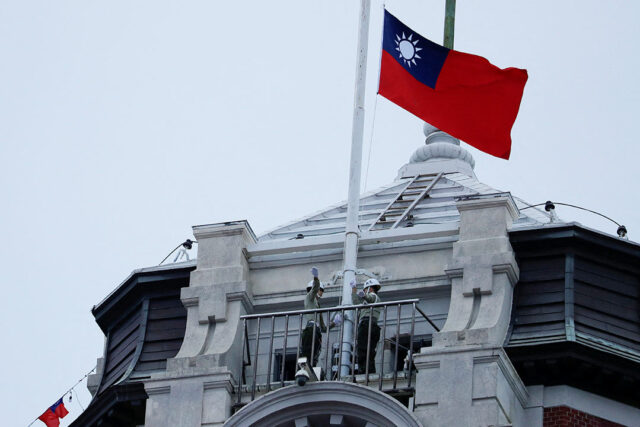
Honor guards raise a Taiwanese flag at the Presidential Palace in Taipei, Taiwan Oct. 10, 2023. — REUTERS

TAIPEI — Taiwan does not seek conflict with China and will not provoke confrontation, but Beijing’s “aggressive” military posturing is counterproductive, Vice-President Hsiao Bi-khim said on Friday.

China considers democratic Taiwan as part of its own territory and calls President Lai Ching-te a “separatist.” Taiwan’s government disputes China’s claim.

Speaking to the Taiwan Foreign Correspondents’ Club in the capital Taipei, Ms. Hsiao said Chinese pressure on Taiwan had escalated over the past few years but that the island’s people were peace-loving.

“We do not seek conflict; we will not provoke confrontation,” she said, reiterating Mr. Lai’s offer of talks between Taipei and Beijing.

For decades, Taiwan’s people and business have contributed to China’s growth and prosperity, which has been possible only in a peaceful and stable environment, Ms. Hsiao added.

“Aggressive military posturing is counterproductive and deprives the people on both sides of the Taiwan Strait of opportunities to pursue an agenda of growth and prosperity,” she said.

“Defending the status quo (with China) is our choice, not because it is easy, but because it is responsible and consistent with the interests of our entire region.”

In 2023, China put sanctions on Ms. Hsiao for the second time, but they have little practical effect as senior Taiwanese officials do not travel to China and Chinese law has no jurisdiction on the entirely separately governed island.

Mr. Lai has repeatedly offered talks with China, but has been rebuffed. China has staged at least six rounds of major war games around Taiwan since 2022.

In Beijing, Chinese Foreign Ministry spokesperson Lin Jian said that whatever Taiwan’s governing Democratic Progressive Party said or did, both sides of the strait belonged to “one China.”

Taiwan, a major semiconductor producer, is facing another international challenge at the moment — tariff talks with the United States.

Taiwan remains in negotiations with Washington, following US President Donald J. Trump’s April announcement that the island would be subject to a 32% tariff, which was subsequently suspended to facilitate talks.

“With the United States, our negotiators are literally working around the clock to strive to reach an agreement on reciprocal tariffs to achieve trade balance while also promoting further bilateral cooperation in technology, investments and other areas,” Ms. Hsiao said.

Ms. Hsiao is Taiwan’s former de facto ambassador to Washington, and a fluent English speaker with deep ties in the US capital. — Reuters

Trump’s ambitions collide with Epstein, Fed and health concerns

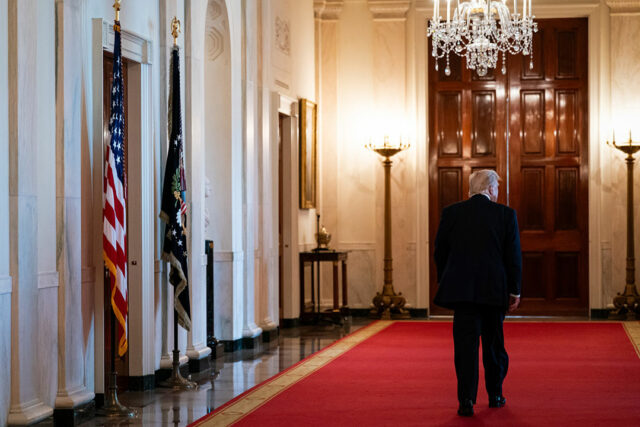
US PRESIDENT Donald J. Trump departs the East Room of the White House in Washington, DC, July 18. — AL DRAGO/BLOOMBERG

FOR President Donald J. Trump, whose political career has benefited from voter anxiety over Washington elites, the health of his predecessor and the riches of Wall Street, the past week offered a reversal of fortune.

Mr. Trump’s efforts to escape the uproar over Jeffrey Epstein failed spectacularly, after the Wall Street Journal published a story alleging he once sent a suggestive birthday letter to the disgraced financier — a claim the president denied.

The White House was forced to make a rare disclosure that Mr. Trump wasn’t in perfect health. And Mr. Trump whipsawed on the fate of US Federal Reserve Chairman Jerome Powell, signaling to lawmakers that he would attempt to fire him before relenting after concern about a market backlash.

Now, as Mr. Trump gears up for a high-profile trip to the UK next week to finalize a trade deal with Prime Minister Keir Starmer, he finds himself looking slightly vulnerable.

There was much Mr. Trump hoped to harness in what he called a “week of wins” — passage of his flagship tax-cut package earlier this month, approval of spending cuts this week, a run of favorable economic data, the signing of a stablecoin bill, and implementation of his aggressive tariff agenda.

Instead, there were suddenly a few punctures in the armor of a president who at times in his second term has seemed irrepressible as he bent rival institutions, countries, and political opponents to his will.

Mr. Trump concluded the week posting angrily to social media and suing one of his top allies in the press, Rupert Murdoch, along with Dow Jones & Co. and News Corp. for libel.

The Journal reported on Thursday that Mr. Trump had prepared a letter for a book compiled for Mr. Epstein’s 50th birthday. The president said the letter was “FAKE” and called the story “false, malicious, and defamatory.”

Still, the report threw gasoline on a simmering fire, particularly among members of Mr. Trump’s base, after the Justice department claimed it had no evidence that Mr. Epstein had blackmailed political figures or kept a client list. That conclusion flew in the face of promises from some of the president’s top aides that they would reveal substantial new details about a case many Mr. Trump loyalists see as a smoking gun proving the existence of a so-called Deep State.

‘WEAKLINGS’
Mr. Trump supporters and Federal Bureau of Investigation leaders Kash Patel and Dan Bongino are said to be at odds with Attorney General Pam Bondi, while the president has repeatedly tried — and so far failed — to quell the furor.

“Are you still talking about Jeffrey Epstein?” he barked at a reporter earlier this month. “People still talking about this guy, this creep? That is unbelievable.”

This week, he dismissed questions from his base and said those worried about Mr. Epstein are “weaklings” and that “I don’t want their support anymore!”

But what was once a potent political tool for Mr. Trump — stoking conspiracies about Mr. Epstein, and Democrats’ involvement — has now backfired, with his own supporters frustrated that his administration may be covering up details they hoped would be released.

“The emphasis on Epstein is truly the best intentions of your most loyal followers,” Charlie Kirk, a conservative media figure, said in a segment on his show addressed to the president. He said the Epstein case was a sort of linchpin in loyal Trump supporters’ questions about the alleged Deep State.

After the release of the Journal story, Mr. Trump moved quickly. He directed Ms. Bondi to pursue the release of some grand jury transcripts related to the case, though that stopped short of the full release of materials his allies have demanded.

‘SAME SCAM’
Separately, Mr. Trump’s Director of National Intelligence, Tulsi Gabbard, directed the declassification of materials from the Obama administration that she argued showed evidence the former president and aides sought to politicize intelligence around Russia’s role in the 2016 election.

Mr. Trump has repeatedly drawn an equivalence between the Russia controversy and the Epstein case, suggesting both amounted to conspiracy-mongering by his political opponents. A special counsel ultimately did not find evidence Mr. Trump had coordinated with the Kremlin to interfere with the 2016 contest.

“It’s all the same scam,” Mr. Trump told Real America’s Voice in an interview that aired Wednesday.

The Epstein saga is a rare example of Mr. Trump struggling to successfully shift the narrative or change subjects in the news, according to one Mr. Trump ally, speaking on condition of anonymity. The ally predicted the matter would fizzle out by next year’s elections but criticized the White House’s move in February to hand right-wing influencers a binder called “The Epstein Files” that was largely a rehash of previously released information.

It even overshadowed the president’s escalating campaign against Mr. Powell, which has threatened to undermine long-standing conventions about US Federal Reserve independence. Mr. Trump mused about dismissing Mr. Powell in a Tuesday meeting with lawmakers, with one White House official saying on condition of anonymity they expected the president to act soon to fire the central bank chief.

For Mr. Trump, his war against Mr. Powell serves an important political function, giving voice to homebuyers and borrowers who see lending costs impacting their wallets. But by Wednesday, Mr. Trump said he wouldn’t remove Mr. Powell unless the Fed chair was forced out for fraud, nodding to increasing efforts by the president’s allies to pressure the chairman over questions about a bank renovation project.

‘WINNING EVERYWHERE’
Mr. Trump backed off his push to force Mr. Powell out in part because of warnings that it would trigger a messy legal fight, according to one person familiar with the matter, who requested anonymity to discuss internal deliberations.

The issues are distracting from what the White House wants to steer attention to: a winning streak that includes passage of a package of spending cuts and the stablecoin bill Mr. Trump signed Friday.

“We’re winning everywhere,” Mr. Trump said at a signing ceremony for the stablecoin legislation. “It’s not even close — not even close — and we’re going to keep it going.”

Even as Mr. Trump has notched long-sought policy victories — extending his tax-cut package, gutting government agencies and securing funding for his sweeping immigration crackdown — Republicans know that each carries substantial political risk and that he’ll need to focus on selling his agenda.

Democrats have seized on provisions curtailing Medicaid eligibility and tax cuts benefiting the wealthy, to sharpen their economic critique of Mr. Trump. And Mr. Trump is now two weeks away from his next tariff barrage due on Aug. 1.

The president has batted away economists’ warnings that his tariffs will threaten growth, upend supply chains and amount to a fresh tax on consumers. — Bloomberg

Japan tariff negotiator Akazawa to hold more trade talks in US next week

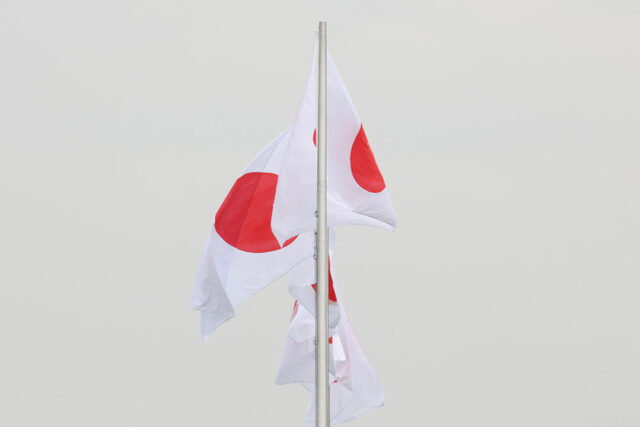
PHILIPPINE STAR/EDD GUMBAN

TOKYO Japan’s top tariff negotiator, Ryosei Akazawa, said on Saturday he planned to visit Washington this week to hold further ministerial-level talks with the United States.

Tokyo hopes to clinch a deal by an Aug. 1 deadline that will avert President Donald J. Trump’s tariff of 25% on imports from Japan.

“I intend to keep on seeking actively an agreement that is beneficial to both Japan and the United States, while safeguarding our national interest,” Mr. Akazawa told reporters in the western region of Osaka.

Akazawa was visiting Osaka to host a US delegation, led by Treasury Secretary Scott Bessent, that participated in the US National Day event at World Expo 2025.

Mr. Akazawa said he did not discuss tariffs with Mr. Bessent. Reuters

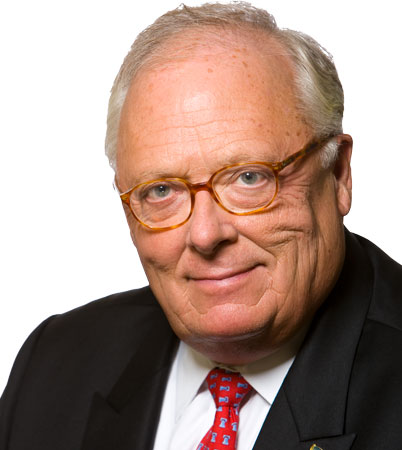
Heritage Foundation founder Feulner dies at 83

EDWIN FEULNER — HERITAGE FOUNDATION WEBSITE

EDWIN FEULNER, founder and longtime president of the influential US conservative think tank the Heritage Foundation, has died at age 83, Heritage said in a statement.

The Friday statement did not say when Mr. Feulner died or the cause.

Mr. Feulner, a Chicago-born political scientist, founded Heritage in 1973 and became its president in 1977, a position he held until 2013. Republican President Ronald Reagan awarded him the Presidential Citizens Medal in 1989.

Current Heritage president Kevin Roberts and Board of Trustees Chairman Barb Van Andel-Gaby, wrote in a joint statement that Mr. Feulner founded Heritage to plant “a flag for truth in a town too often seduced by power.”

“What started as a small outpost for conservative ideas became — under Ed’s tireless leadership — the intellectual arsenal for the Reagan Revolution and the modern conservative movement,” they wrote.

Heritage continues to deeply impact American conservatism — including being the institution that created Project 2025, widely considered the policy blueprint of President Donald J. Trump’s quick-moving second term.

Senator Mitch McConnell, a longtime leader of Congressional Republicans, wrote on social media that Feulner “was a great man” and that “his dedication to promoting peace through strength at the end of the Cold War offers a particularly enduring lesson.”

Representative Steve Scalise, a Republican and majority leader in the House of Representatives, wrote on social media that Mr. Feulner “was one of the architects who built the conservative movement in this country.” — Reuters

US races to build migrant tent camps after $45-B funding boost, WSJ reports

Masked law enforcement officers, including Immigration and Customs Enforcement agents, walk into an immigration court in Phoenix, Arizona, US, May 21, 2025. — REUTERS/CAITLIN O’HARA

US IMMIGRATION and Customs Enforcement (ICE) is racing to build migrant tent camps nationwide after receiving $45 billion in new funding, aiming to expand detention capacity from 40,000 to 100,000 beds by year-end, the Wall Street Journal (WSJ) reported on Saturday.

The agency is prioritizing large-scale tent facilities at military bases and ICE jails, including a 5,000-bed site at Fort Bliss in Texas and others in Colorado, Indiana, and New Jersey, the report added, citing documents seen by WSJ.

“ICE is pursuing all available options to expand bedspace capacity,” a senior ICE official told Reuters, adding that the “process does include housing detainees at certain military bases.”

Top US officials at Homeland Security, including US Homeland Security Secretary Kristi Noem, have expressed a preference for detention centers run by Republican states and local governments rather than private prison companies, the report said.

The agency declined to confirm the specifics of the plan to expand detention capacity.

Ms. Noem said last week that she was in talks with five Republican-led states to build other detention sites inspired by the “Alligator Alcatraz” facility in Florida.

“We’ve had several other states that are actually using Alligator Alcatraz as a model for how they can partner with us,” Ms. Noem told a press conference in Florida without naming any of the states. — Reuters

More firms turn to retail aggregation program for power supply, says ACEN

“More companies have been showing interest in availing of the Retail Aggregation Program (RAP) since its implementation in 2022.

Interview by Edg Adrian Eva
Video editing by Arjale Queral