Home Blog Page 1274

Three suspected terrorists hurt

COTABATO CITY — At least three suspected terrorists were wounded in a clash with government troops in Salibo, Maguindanao del Sur in the Mindanao region on Saturday, according to local officials.

About 10 suspected members of the Dawlah Islamiya and Bangsamoro Islamic Freedom Fighters left an M14 assault rifle, two bags containing a .45 caliber pistol each and a dozen home-made bombs as they fled during the encounter with combatants from the Army’s 6th Infantry Battalion under the 6th Infantry Division, they said.

The improvised bombs could be detonated from a distance using a mobile phone.

Lieutenant  Colonel Al Victor C. Burkley, commanding officer of the 6th Infantry Battalion, said their troops were dispatched to a far-flung area in the village of Penditen to validate reports by villagers about the presence of gunmen in the area. — John Felix M. Unson

Suspected NPA member killed

COTABATO CITY — Government troops killed a member of the New People’s Army (NPA) who belonged to a group notorious for extorting money from hapless farmers in a brief clash in an upland area in Palimbang, Sultan Kudarat province on Thursday, according to local authorities.

The NPA member had been wanted for high-profile criminal cases pending in different courts in Central Mindanao, members of the multi-sector Palimbang Municipal Peace and Order Council told reporters on Sunday.

Brigadier General Michael A. Santos, commander of the Army’s 603rd Infantry Brigade, said the casualty and his companions opened fire first as state troops approaching their hideout in Sitio Sandawagen in the village of Bambanen in Palimbang, sparking a gunfight that led to his death.

His companion escaped toward a nearby hinterland after the soldiers sent to check their reported presence in the area killed him with rifle shots. — John Felix M. Unson

DoT backs Pinatubo tourism pause

THE Department of Tourism (DoT) on Sunday urged visitors and stakeholders to comply with the suspension of tourism-related activities at Mt. Pinatubo ordered by the local government of Botolan.

“The DoT acknowledges the significant role that Mt. Pinatubo plays in the local tourism industry and fully supports the actions taken by the Botolan local government unit under Mayor Jun Omar C. Ebdane,” it said in an advisory.

“Likewise, the department puts utmost consideration on the concerns raised by the five Aeta clans from Capas, Tarlac, during a recent consultative session organized by the DoT Central Luzon Office and various stakeholders,” it added.

A social media post recently gained attention online about locals barricading the road in protest of commercial tourism at the volcano.

Under Executive Order No. 05 issued by the Botolan local government, all tourism-related activities, programs and projects at Mt. Pinatubo are suspended until further notice starting May 2. — Justine Irish D. Tabile

Next House to focus on jobs

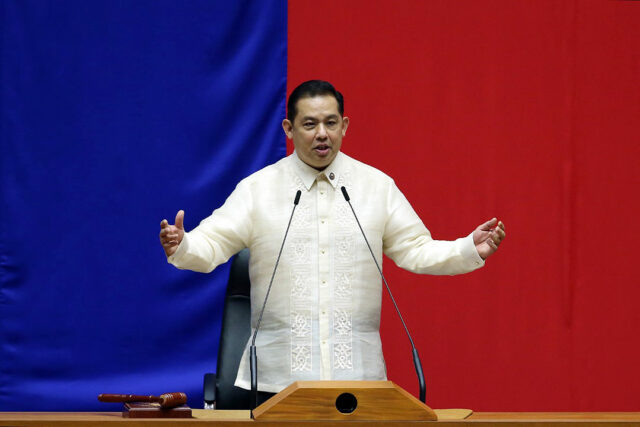
House Speaker Ferdinand Martin G. Romualdez — PHILIPPINE STAR/KRIZ JOHN ROSALES

SPEAKER Ferdinand Martin G. Romualdez on Sunday said the House of Representatives would pass bills that seek to boost job creation and support small businesses when the next Congress convenes.

The House would back measures to strengthen workers’ rights, modernize the agriculture sector and bolster food supply, he said in a statement, adding that this is in line with the agenda of Senate bets backed by the Marcos government.

“Our efforts are in lockstep with the Alyansa ng Bagong Pilipinas (Alliance for a New Philippines) candidates’ platforms,” Mr. Romualdez said. “Their platform to prioritize livelihoods, support farmers and fishers and protect the welfare of workers both here and abroad reflects the same values driving our legislative work.” — Kenneth Christiane L. Basilio

Free tuition red tape review sought

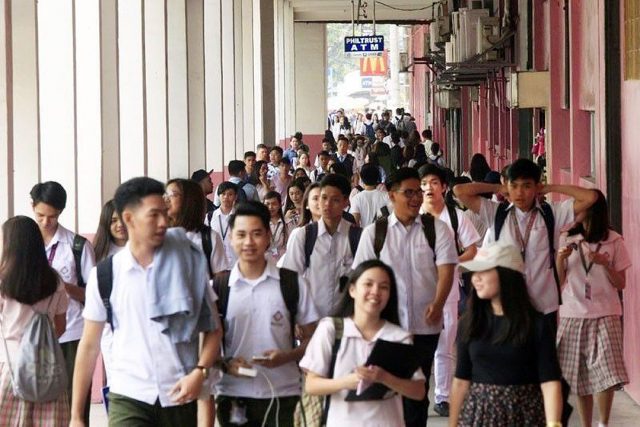
PHILSTAR FILE PHOTO

A SENATORIAL candidate on Sunday said he would seek a review of Republic Act No. 10931 or The Universal Access to Quality Tertiary Education Act to streamline rebates under the Commission on Higher Education (CHED).

In a statement, former Senator Panfilo M. Lacson said parents still have to pay tuition even if their children are eligible for free college tuition.

“We saw problems in the implementation of the law,” he said. “One is the requirement for some parents to give advance payments and wait for the rebate.”

He added that some CHED rebate payments had been delayed and in some cases were never given back to the parents.

“The scholarship should be available, and the parents should not be made to give advance payments. We should revisit this law in the Senate in the exercise of oversight,” Mr. Lacson said.

Under the law, eligible students enrolled in a bachelor’s or certificate degree, or any comparable undergraduate degree are exempted from tuition and other school fees. — Adrian H. Halili

Singapore’s ruling party extends monopoly with decisive election win

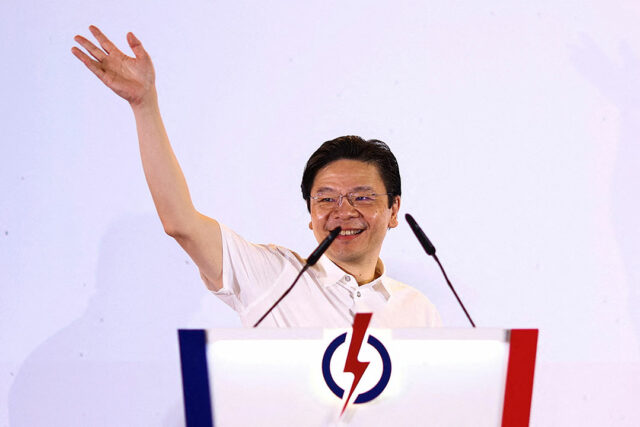
SINGAPORE’s Prime Minister Lawrence Wong addresses People’s Action Party (PAP) supporters, at an assembly area for the results of the general election, in Singapore, May 4, 2025. — REUTERS

SINGAPORE — Singapore’s People’s Action Party (PAP) won its 14th successive election on Saturday to extend its unbroken six-decade rule, delivering a strong mandate to its new premier as the city-state braces for economic turbulence from a global trade war.

The PAP, which has ruled since before Singapore’s 1965 independence, won 87 of the 97 parliamentary seats up for grabs, with victories by huge margins in many of the 33 constituencies as the opposition failed to extend gains in previous contests.

The election was a bellwether of the popularity of the PAP amid some signs of disenchantment with its tight grip on power in the Asian financial hub, whose six million people have known no other kind of government.

Though the PAP has consistently won about 90% of seats, its share of the popular vote is closely watched as a measure of the strength of its mandate, with Prime Minister Lawrence Wong eager to leave a mark on his first election in charge after one of the PAP’s worst performances on record last time.

The PAP had yet to be formally declared winner but took 65.57% of the vote, according to local media, surpassing the 61.2% achieved in the 2020 contest.

The outcome will be seen as a ringing public endorsement of US-educated Mr. Wong, 52, who became Singapore’s fourth prime minister last year, promising continuity as well as new blood and a new style of leadership.

He took over at the end of the two-decade premiership of Lee Hsien Loong, the son of former leader Lee Kuan Yew, founder of modern Singapore.

RECESSION RISK
Mr. Wong must address high living costs and a shortage of housing: persistent problems in one of the world’s most expensive cities, which faces a risk of recession and job losses if its trade-dependent economy takes a hit from the trade war triggered by steep US tariffs.

Mr. Wong thanked his constituents, saying: “We are grateful once again for your strong mandate, and we will honor it.”

Though the PAP win maintains the status quo, the margin of victory in most races was significant, with the opposition decimated and PAP candidates winning more than two-thirds of the vote in 18 of 33 constituencies.

“The voters have spoken and they have voted for stability, for continuity, for certainty — and they voted to give Prime Minister Lawrence Wong a strong mandate,” said Mustafa Izzuddin, adjunct senior lecturer at the National University of Singapore.

Although a PAP defeat was always extremely unlikely, some analysts had said the election could have altered the future political dynamic if the opposition had made more gains, with some younger voters keen for fresh voices, greater scrutiny and more robust debate.

But that could take time. Like previous elections, Saturday’s was a lopsided affair, with 46% of all candidates representing the PAP.

The ruling party ran in all seats, compared to just 26 for the Workers’ Party, which won the 10 seats PAP did not win.

The PAP has a big membership to draw from, influence in state institutions and far greater resources than its untested opponents.

Joshua Kurlantzick, Senior Fellow for Southeast Asia and South Asia at the Council on Foreign Relations, said the PAP’s decisive win came down to Singaporeans backing a known quantity at a time of uncertainty.

“It’s a flight to safety — not wanting to change to a new party amidst the greatest global trade tensions in decades,” he said.

“Just because they are a rock in times of trouble — the same issues are there (that) they need to address.” — Reuters

US economy risks losing billions as travel demand weakens, analysts warn

A CHILD holds a US flag as she watches the Macy’s Fourth of July fireworks in New York City, New York, US, July 4, 2021. — REUTERS

WEAKENING travel demand, signaled by grim earnings forecasts of travel-related companies, may erase billions of dollars from the US economy this year as the Trump administration’s trade policy takes a toll on consumer sentiment, analysts have warned.

“Anti-American sentiment could be driving a decline in international tourism, which is considered a service export,” JPMorgan said in a note last week.

Goldman Sachs and JPMorgan projected lower foreign travel spending to trim 0.1% from US gross domestic product (GDP) this year, adding that the hit could be as much as 0.2% to 0.3%.

As of the first quarter of 2025, US GDP stands at $23.53 trillion, according to LSEG data, and the impact could amount to anywhere between $23 billion and $71 billion, based on Reuters calculations.

Last month, Delta Air Lines, a major international carrier, warned travel demand has “largely stalled,” scrapping its forecasts for the year.

Southwest Airlines, American Airlines, Alaska Air and Frontier pulled their guidance, while United Airlines gave two different forecasts as the trade war creates the biggest uncertainty for the industry since the COVID-19 pandemic.

Vacation rental platform Airbnb forecast second-quarter revenue largely below Wall Street estimates, while hotel operator Hilton indicated travelers were in a “wait-and-see” mode.

“Tariff announcements and a more aggressive stance toward historical allies have hurt global opinions about the United States. The bigger issue is a pullback in tourist visits to the US,” Goldman Sachs said in March, at a time when Europeans were already booking fewer trips to the country.

President Donald J. Trump’s erratic tariffs have also led to global consumers boycotting and ditching US products and brands.

Spending by foreign travelers and tourists in 2024 accounted for 0.7%, or $215 billion, of US GDP, according to JPMorgan estimates.

A 10% reduction in spending is a direct 7-basis point hit to US GDP, the brokerage added.

DOMESTIC PULLBACK
Americans have also been wary about non-essential spending as household budgets get squeezed amid worries of a probable recession brought on by the fluctuating trade policies.

The US travel and tourism industry accounted for about 3% of GDP and more than six million jobs in 2023, according to the Bureau of Economic Analysis.

Following a strong run in 2023 and 2024, this year has had a slow start, with Bank of America-aggregated card data showing softer lodging, tourism and airline spending through the week ending March 22.

Earlier this week, data showed, the US economy contracted for the first time in three years in the first quarter, while consumer sentiment remained weak in April. — Reuters

Taiwan says it has concluded first ‘substantive’ tariff talks with US

XANDREASWORK-UNSPLASH

TAIPEI — Taiwan’s government said on Saturday that it had concluded its first round of “substantive” tariff talks with the United States, describing the atmosphere as frank and cordial.

A semiconductor powerhouse that runs a large trade surplus with the US, Taiwan had been due to be hit with a 32% US import tax until President Donald J. Trump last month put all his “reciprocal tariffs” on pause for 90 days.

In a statement, Taiwan’s Office of Trade Negotiations said the talks in Washington had concluded on Thursday, and focused on tariffs, non-tariff trade barriers and various other US-Taiwan issues, which it did not elaborate upon.

“The atmosphere of the talks was frank and cordial, and both sides expressed their common expectations for strengthening Taiwan-US economic and trade cooperation and their hope for a mutually beneficial relationship,” it said.

The office did not say with whom the talks were conducted.

It added that both sides also agreed to continue consultations on various issues in the near future, “with a view to actively seeking consensus and exploring further steps.”

The United States is Chinese-claimed Taiwan’s most important international supporter and arms supplier, despite the lack of formal diplomatic relations.

Taiwan has responded to Mr. Trump’s tariffs by proposing a zero-tariff regime and offering to massively ramp up purchases from and investment in the United States. — Reuters

Buffett to step down as Berkshire CEO by yearend

WARREN BUFFETT — EN.WIKIPEDIA.ORG

OMAHA, Nebraska — Warren Buffett is ending his career as perhaps the world’s most famous and revered investor, saying he will step down as chief executive officer (CEO) of Berkshire Hathaway at the end of 2025, and hand over the reins to Vice Chairman Greg Abel.

The move caps an era for Berkshire after Mr. Buffett’s extraordinary 60 years at the helm, which made him a household name, a multi-billionaire and an American success story.

“I think the time has arrived where Greg should become the CEO of the company at year end,” Mr. Buffett, 94, said on Saturday as he wrapped up Berkshire’s annual meeting in Omaha, adding he would still “hang around and conceivably be useful in a few cases” but that the “final word” would be Mr. Abel’s.

The announcement prompted an outpouring of praise for Mr. Buffett from CEOs and investors.

“Warren Buffett represents everything that is good about American capitalism and America itself -— investing in the growth of our nation and its businesses with integrity, optimism, and common sense,” said Jamie Dimon, CEO of JPMorgan Chase & Co.

Tim Cook, CEO of Apple, in a post on X said: “There’s never been someone like Warren, and countless people, myself included, have been inspired by his wisdom. It’s been one of the great privileges of my life to know him.”

Mr. Buffett’s move will propel Mr. Abel into the spotlight at Berkshire. Mr. Abel, who has long been identified by Berkshire to be Mr. Buffett’s successor, may not have the star power of Mr. Buffett although he is expected to preserve the culture of the conglomerate.

Mr. Buffett said Mr. Abel and most of Berkshire’s board of directors hadn’t been aware of his plans prior to the announcement, though Mr. Buffett had told his two children who are directors. Berkshire’s board of directors will meet on Sunday to discuss the transition, he said.

Mr. Abel, 62, has been a Berkshire vice chairman since 2018, and was named Mr. Buffett’s expected successor as CEO in 2021.

“I couldn’t be more humbled and honored to be part of Berkshire as we go forth,” Mr. Abel told shareholders.

Mr. Buffett also said he had “zero” intention of selling any of his Berkshire stock, nearly all of which will be donated after his death.

“The decision to keep every share is an economic decision because I think the prospects of Berkshire will be better under Greg’s management than mine,” Mr. Buffett said.

REMARKABLE RUN
The decision to step down caps a remarkable 60-year run where Mr. Buffett transformed Berkshire from a failing textile company into a $1.16-trillion conglomerate with businesses across the US economy.

Mr. Buffett’s own fortune totals $168.2 billion according to Forbes magazine, nearly all of which is in Berkshire stock.

Cole Smead, CEO of Smead Capital Management, said after Mr. Buffett’s announcement he turned to his father Bill Smead, who founded the firm, and said: “Well, it’s the end of an era. It’s sad, but it’s life.”

Berkshire’s stock price has risen 19% this year, compared with a 3% drop in the Standard & Poor’s 500.

Many investors have viewed the conglomerate and Mr. Buffett’s stewardship as a safe haven from uncertainty about the economy and US President Donald J. Trump’s tariff policies.

“The question going forward is: will Berkshire still have a Buffett premium when Buffett is not there?” said Cathy Seifert, an analyst at CFRA Research. “You’re buying a stock and you’re also getting the investing prowess of a legend. With that legend gone, what is the value?”

‘GREG CAN DO BETTER’
Mr. Abel had already been taking on many of Mr. Buffett’s responsibilities, including for capital allocation.

Asked during the meeting how his oversight of Berkshire’s 189 operating businesses would differ from Mr. Buffett’s, Mr. Abel said: “More active, but hopefully in a very positive way.”

Mr. Buffett said Berkshire’s board could make arrangements for the transfer of power over the next few months, and he could “conceivably be useful in a few cases” after Mr. Abel takes over.

“The fact that you can do pretty well doesn’t mean you couldn’t do better, and Greg can do better,” Mr. Buffett told shareholders before the announcement.

Berkshire’s annual shareholder weekend, which Mr. Buffett calls “Woodstock for Capitalists,” annually draws tens of thousands of people to Omaha for the meeting and for a series of shareholder events across the city, including shopping.

The company has said it intends to continue holding the weekends. Many shareholders have said they will keep attending after Mr. Buffett leaves, though many believe attendance will drop.

Mr. Buffett took over Berkshire in 1965 and with his longtime friend and business partner Charlie Munger, who died in November 2023, built it into an American success story.

Headquartered in Omaha, where Mr. Buffett and Mr. Munger grew up, Berkshire now has close to 200 businesses including Geico car insurance, the BNSF railroad, industrial and chemical companies, utilities, Dairy Queen ice cream, Fruit of the Loom underwear and See’s Candies.

It also ended March with $264 billion of stocks including Apple, American Express and Bank of America.

‘ORACLE OF OMAHA’
Mr. Buffett became known as the “Oracle of Omaha” for his investing success as well as his folksy wisdom and modest lifestyle.

While Berkshire stock rose 5,502,284% from 1965 to 2024, Mr. Buffett never moved from a home he paid $31,500 for in 1958.

Mr. Buffett was a disciple of Benjamin Graham, the economist and his former professor, stressing the importance of company fundamentals and not overpaying for assets.

That approach often made it hard to deploy Berkshire’s ever-growing cash hoard, which reached $347.7 billion at the end of March.

Mr. Abel joined the former MidAmerican Energy, now known as Berkshire Hathaway Energy, in 1992, eight years before Berkshire took it over. He later led that business for a decade.

Mr. Buffett’s fortune would have been much bigger had he not since 2006 given away more than half his Berkshire shares to charity.

Nearly all of the rest is expected to go into a new charitable trust overseen by his daughter Susie and sons Howard and Peter.

Mr. Abel will face challenges including how to help Berkshire grow meaningfully without overpaying for acquisitions, whether to pay a dividend and how to deploy the cash.

Howard Buffett, 70, is expected to eventually succeed his father as Berkshire’s non-executive chairman, to help preserve the company’s culture. — Reuters


Australia’s gov’t says US-China tussle a top priority

STOCK PHOTO | Image by Rebecca Lintz from Pixabay

SYDNEY — Australia’s government will prioritize dealing with the “dark shadow” of the U.S.-China trade war following its resounding reelection victory, Treasurer Jim Chalmers said on Sunday, after a campaign that highlighted concerns over US trade policy and the global economy.

Labor Party leader Anthony Albanese, Australia’s first prime minister to win a second consecutive term in two decades, promised in remarks on Sunday that he would run a disciplined and orderly government, stressing that Australians had voted for unity.

The center-left Labor Party appeared likely to expand its majority in parliament to at least 85 seats from 77, the Australian Broadcasting Corp projected, after most polls had suggested it would struggle to keep its slim hold on the 150-seat lower house. More than two-thirds of votes have been tallied, with counting to resume on Monday.

Echoing an election in Canada less than a week earlier, Australia’s conservative opposition leader, Peter Dutton, lost his seat as voters, who initially focused on cost-of-living pressures, grew increasingly concerned over US President Donald Trump’s sweeping tariffs and other policies.

“We will be a disciplined, orderly government in our second term, just like we have been in our first,” Albanese told reporters while visiting a coffee shop in his Sydney electorate where he said his late mother took him as a child.

“The Australian people voted for unity rather than division,” Albanese added in brief public comments.

Polls had shown Labor trailing the opposition conservative coalition for nine months until March, amid widespread angst about the government’s handling of inflation.

But the polls flipped when the conservatives unveiled a proposal to slash the federal workforce, which was compared to the Trump administration’s moves to cut back government agencies. A proposal to force federal workers back to the office five days a week was also criticized as unfair to women.

Trump’s April 2 tariff announcement added to voters’ unease as it sent shockwaves through global markets and raised concerns about the impact on their pension funds.

“The immediate focus is on global economic uncertainty, U.S. and China, and what it means for us,” Treasurer Jim Chalmers told the Australian Broadcasting Corp.

“What’s happening, particularly between the U.S. and China, does cast a dark shadow over the global economy … We need to have the ability, and we will have the ability, to manage that uncertainty.”

Former conservative member of parliament Keith Wolahan, who conceded his seat at the election, told the ABC his party had mis-read the public mood.

“It was clear that our party has an issue in urban Australia, which is where most people live,” he said.

“We need to really dig deep and think about who we are and who we fight for and who makes up Australia,” Wolahan added. — Reuters

Digitel Telecommunications, Inc. to conduct 2025 Annual Meeting of Stockholders via remote communication on May 26


Spotlight is BusinessWorld’s sponsored section that allows advertisers to amplify their brand and connect with BusinessWorld’s audience by publishing their stories on the BusinessWorld Web site. For more information, send an email to online@bworldonline.com.

Join us on Viber at https://bit.ly/3hv6bLA to get more updates and subscribe to BusinessWorld’s titles and get exclusive content through www.bworld-x.com.

What MOA can teach us about the next era of urbanization

And how SMDC anchors residential living within Metro Manila’s most integrated global hub

The next generation of great cities will not happen by chance. They will be built deliberately — planned as integrated ecosystems where living, working, leisure, and commerce are seamlessly connected. In the Philippines, few developments reflect this shift more clearly than the Mall of Asia (MOA) complex in Pasay City.

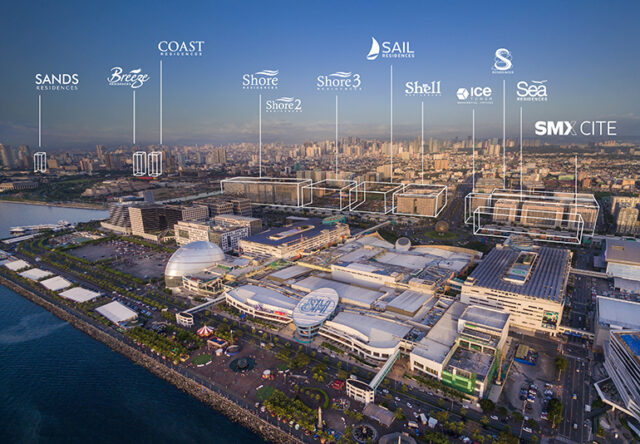
Across a single district, MOA brings together a rare convergence: the sprawling SM Mall of Asia, the landmark MOA Arena, the five-star Conrad Manila, the E-Com office clusters, and a growing network of residential and hospitality developments. Soon, the addition of the SMX Center for International Trade and Exhibitions (SMXCITE) will expand MOA’s role even further. Designed to accommodate up to 18,000 guests, SMXCITE will double SMX’s exhibition footprint and position MOA as the country’s premier hub for global trade shows, conferences, and business events — comparable to Southeast Asia’s leading convention centers.

Strategically rising beside SMXCITE is SMDC’s Ice Tower Residential-Office. Its location is no coincidence. For Ice Tower owners, immediate proximity to the country’s largest events center means access to a year-round stream of businesses, entrepreneurs, and international delegates. Units here will have the built-in advantage of higher rental demand, business flexibility, and strong resale potential — qualities that few other addresses in Metro Manila can replicate.

This ripple effect extends to other SMDC developments in the complex as well, such as Sail Residences, offering waterfront-inspired living near commerce; and Shore 3 Residences, an expansive enclave with resort-style amenities at the heart of a business and leisure corridor.
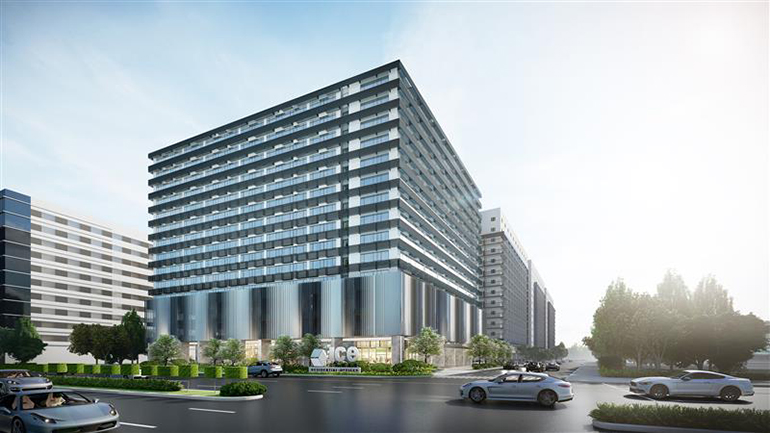
In a market where location alone is no longer enough, MOA gives a real-world glimpse of what tomorrow’s cities will need: being close to where industries are growing, having easy access to business and leisure hubs, and living in communities designed for long-term growth and connection. Owning a condo within this complex means living in a district built for real growth — where business opportunities, tourism, and everyday life all come together.

The future of urban value will not be determined by geography alone, but by ecosystems — and MOA is proving how that future can be built.

Learn more about investing in SMDC’s MOA developments by visiting www.smdc.com or calling our hotline at (+632) 8858-0300 today.


Spotlight is BusinessWorld’s sponsored section that allows advertisers to amplify their brand and connect with BusinessWorld’s audience by publishing their stories on the BusinessWorld Web site. For more information, send an email to online@bworldonline.com.

Join us on Viber at https://bit.ly/3hv6bLA to get more updates and subscribe to BusinessWorld’s titles and get exclusive content through www.bworld-x.com.