Home Blog Page 1262

WTA No. 69 Alex Eala withdraws from Cincinnati Open to rest injured shoulder ahead of US Open

ALEXANDRA “ALEX” EALA — RAFANADALACADEMY.COM

ALEXANDRA “ALEX” EALA has withdrawn from the Cincinnati Open to rest her minor shoulder injury and ensure a tip-top shape for the US Open later this month.

No less than the Women’s Tennis Association (WTA) broke the news on Thursday on Ms. Eala, who’s automatically seeded into the main draw of the Cincinnati tourney as the 65th ranked player in the world.

The Cincinnati Open slated on Aug. 7 to 18 is the last WTA 1000 level tourney before the US Open on Aug. 24 to Sept. 7 in New York.

Mexico’s Renata Zarazua, Ms. Eala’s partner in the 2025 French Open doubles, will take her spot in the main draw.

Ms. Eala, with a kinesiology tape on her left shoulder, had the injury in her return to the hardcourt in the National Bank Open in Montreal, Canada earlier this week following a month-long vacation in the Philippines.

The 20-year-old Filipina ace braved the injury and snatched the first set from former Grand Slam champion Marketa Vondrousova of the Czech Republic, 6-3, only to run out of steam in the next two, 1-6, 2-6, for an early exit.

“Pretty in pink. Montreal was a short but sweet trip. I had so much fun out on court! Time to rest and recover,” said Ms. Eala on her social media post.

Ms. Eala, a lefty specialist now nursing a left shoulder injury, will shoot for a historic main draw victory in the US Open after foiled attempts in the French Open and Wimbledon.

She absorbed first-round exits in both Grand Slams but will have some added motivation by her side after scoring the country’s first-ever WTA final stint in the Eastbourne Open in England.

Ms. Eala also reigned supreme in the girls’ single division of the 2022 US Open to become the first Filipina junior Grand Slam champion ever for added fire in her bid.

But first things first for Ms. Eala and that’s to recuperate for more than three weeks before another shot at history. — John Bryan Ulanday

In Hiroshima, a schoolboy keeps memories of war alive with guided tours

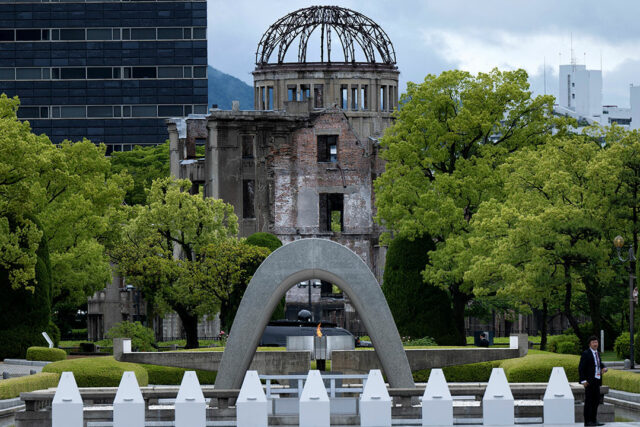
The Peace Memorial Park in Hiroshima, Japan. — BRENDAN SMIALOWSKI/POOL VIA REUTERS

HIROSHIMA, Japan — Since the age of seven, Japanese schoolboy Shun Sasaki has been offering free guided tours to foreign visitors of the Hiroshima Peace Memorial Park with a mission: ensuring that the horrors of nuclear war do not fade from memory with the passage of time.

Aged 12 now, Shun has conveyed that message to some 2,000 visitors, recounting in his imperfect but confident English the experiences of his great-grandmother, a hibakusha who survived the atomic bomb.

“I want them to come to Hiroshima and know about what happened in Hiroshima on Aug. 6,” Shun said in English, referring to the day the bomb was dropped in 1945.

“I want them to know how bad is war and how good is peace. Instead of fighting, we should talk to each other about the good things of each other,” he said.

About twice a month, Shun makes his way to the peace park wearing a yellow bib with the words “Please feel free to talk to me in English!” splashed across the back, hoping to educate tourists about his hometown.

His volunteer work has earned him the honour of being selected as one of two local children to speak at this year’s ceremony to commemorate 80 years since the A-bomb was dropped — its first use in war.

Shun is now the same age as when his great-grandmother Yuriko Sasaki was buried under rubble when her house, about 1.5 km (0.9 mile) from the hypocenter, collapsed from the force of the blast. She died of colorectal cancer aged 69 in 2002, having survived breast cancer decades earlier.

The uranium bomb instantly killed about 78,000 people and by the end of 1945 the number of dead, including from radiation exposure, reached about 140,000. The US dropped a second atomic bomb on Nagasaki on Aug. 9.

Canadian Chris Lowe said Shun’s guided tour provided a level of appreciation that went beyond reading plaques on museum walls.

“To hear that about his family… it surely wrapped it up, brought it home and made it much more personal. So it was outstanding for him to share that,” he said.

Shun said he plans to continue with the tours as long as he can.

“The most dangerous thing is to forget what happened a long time ago… so I think we should pass the story to the next generation, and then, never forget it, ever again.” — Reuters

Filipinas eye Women’s World Cup slot despite AFC tough grouping

FILIPINAS WOMEN’S FOOTBALL TEAM — FACEBOOK.COM/PILIPINASWNFT

COACH Mark Torcaso expressed confidence the Filipinas will step up to the plate in the face of a tough group assignment in next year’s AFC Women’s Asian Cup (WAC).

The recent draw put the Pinay booters in early collision course with host Australia and 2022 runner-up Korea as well as Iran in the dispute for Continental honors and tickets to the 2027 FIFA Women’s World Cup.

“I know our players will be up for the challenge. Every team here (WAC) is going to be a difficult opponent. It didn’t really matter who we were going to play, every game is going to be tough, and every game, we have to be extremely determined and focused to get an outcome,” Mr. Torcaso said.

The Filipinas, who finished fourth in the 2022 edition en route to their historic stint in the 2023 Women’s World  Cup (WWC) in New Zealand, need to finish in the Top 6 of the 12-nation WAC in March to book a return trip to the global showpiece.

Initial objective for Mr. Torcaso’s charges is to advance to the quarterfinals as the topnotcher or runner up of Group A or the No. 1 or No. 2 squad among third placers across the three groups. Reaching the semifinals will lead to automatic qualification to the prestigious world meet; if not, a victory in the playoff matches for losing quarterfinalists will send them through.

“We are going to do our absolute best to bring World Cup opportunities back to our players and back to our country,” said Mr. Torcaso, looking to duplicate the feat of his predecessor Alen Stajcic, who brought the Filipinas to a milestone appearance and 2-0 upset of NZ in the previous WWC.

“We’ll be extremely determined and excited by making sure that we make this happen and we’ll do everything possible over the next few windows to make sure that we’re as prepared as possible,” he said. — Olmin Leyba

Trump’s use of tariffs faces legal test ahead of August 1 deadline

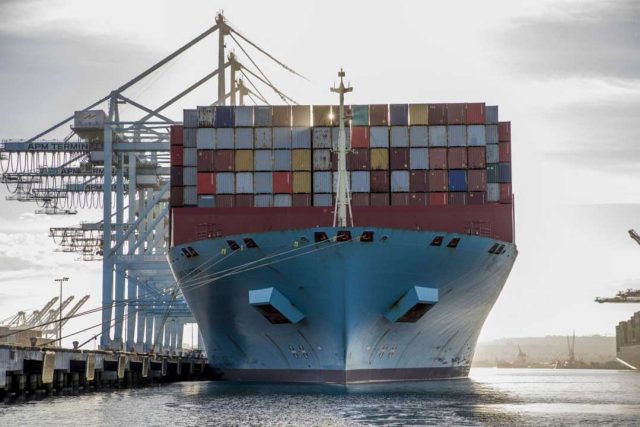
IMAGE VIA THE PORT OF LOS ANGELES

The bulk of President Donald Trump’s global tariffs face their biggest test yet when a US appeals court weighs arguments on their legality Thursday, a day before higher rates against many countries are set to kick in.

The tariffs were allowed to stay in place temporarily even after the US trade court in May sided with a group of Democratic-led states and small businesses that claimed Trump wrongfully invoked an emergency law to justify the levies. Now, the US Court of Appeals for the Federal Circuit is set to weigh whether the tariffs are constitutional. A ruling is possible within weeks.

Trillions of dollars of global trade are embroiled in the legal fight. A loss for the government would raise questions about the validity of Trump’s recent trade deals. The administration also would be forced to contend with demands to refund tariffs that were already paid.

The cases is likely to wind up at the Supreme Court, drawing the justices into yet another fight this year over Trump’s agenda.

LEGALITY
The states and businesses are set to argue that only Congress has authority to issue tariffs and that the levies amount to a massive illegal tax on American companies and consumers who are footing most of the bill. The Trump administration will press its case that the president has broad authority to issue tariffs under a rarely used emergency law, and that his decisions cannot be reviewed by any court.

A 10% flat global tariff has been in effect while the litigation unfolds. Trump set an Aug. 1 deadline for a new round of rate hikes on imports from countries that haven’t struck deals with the US, insisting that no further extensions would be granted. The contested levies could be in place for weeks or months before there’s a final resolution, creating more financial uncertainty for businesses.

US trade negotiators continue to strike deals with nations eager to lower their tariffs. Trump has hailed agreements with Japan and the European Union in the past week, following recent deals with nations including the Philippines and Vietnam. 

IEEPA
The appeals court will hold Thursday’s hearing with its entire slate of 11 active judges instead of a typical three-judge panel, meaning the ruling can immediately be appealed to the Supreme Court. Three of the judges were appointed by Republican presidents and eight by Democrats.

Trump issued a series of executive orders to announce his tariffs using the International Emergency Economic Powers Act, a law that grants the president authority over a variety of financial transactions on an emergency basis. The states and businesses argue Trump’s use of IEEPA is illegal because the law doesn’t mention tariffs and is typically used to levy sanctions and asset freezes during national emergencies. 

In February, Trump used the law to impose tariffs on China, Canada and Mexico, arguing that the flow of the drug fentanyl and illegal immigration into the US constituted a national emergency. The president then declared another national emergency over the persistent US trade deficit and invoked IEEPA to issue duties in April against virtually all US trading partners, his so-called “Liberation Day” tariffs.

The Trump administration said in a brief with the appeals court that Trump is exercising his tariff authority “consistent with his obligations under the Constitution.” The levies, the government argues, are “appropriate to address what he has determined are grave threats to the United States’s national security and economy.”

The states and businesses argue that trade deficits are a persistent part of the US economy and therefore not an emergency, and that the fentanyl-related tariffs are a dressed-up negotiating tactic rather than a legitimate effort to stem the flow of drugs.

“If he’s using unconstitutional powers to implement tariffs, those will be struck down,” said Oregon Attorney General Dan Rayfield, whose office is leading the multi-state suit.

Trump has also imposed tariffs on specific sectors like autos and steel under an authority that allows him to do so on national security grounds — so-called 232 cases that trade lawyers consider to have a stronger legal foundation than the IEEPA duties.

At least 11 lawsuits have been filed this year over Trump’s tariff policies. Most are on hold until the Federal Circuit — and potentially the Supreme Court — weighs in.

Earlier in the week, the US trade court rejected a request to reinstate a tariff exemption that Trump got rid of for low-value goods from China, citing the fact that the cases before the Federal Circuit cover the same ground. Trump on Wednesday signed a new executive order ending the tariff exemption for low-value imports worldwide — a move expected to invite even more legal challenges. — Bloomberg 

Charlie Woods vaults into contention at Junior PGA Championships

CHARLIE WOODS vaulted into contention at the Junior PGA Championships with a 6-under par 66 in the second round in West Lafayette, Ind. on Wednesday.

After carding a 70 during the first round on the Kampen-Cosler Course at the Birck Boilermaker Golf Complex, Woods birdied six of his first eight holes en route to making the turn in 5-under 31 on Wednesday. He birdied three of his first six holes on the back to reach 9 under for the event before consecutive bogeys dropped Woods back to 7 under.

He is seven shots behind leader Lunden Esterline, a 2027 Auburn commit, with Max VanderMolen and Chase Yenser tied at 9 under with 36 holes to play.

Woods, 16, failed to qualify for the match play rounds at last week’s US Junior Amateur Championship in Dallas. He is now seeking one of the two automatic spots on the Junior Ryder Cup team that will go to the top two finishers this week. There is also one captain’s pick, although Woods is likely not in line to be selected for it. — Reuters

After Shohei Ohtani leaves mound, Cincinnati Reds down Los Angeles Dodgers

SPENCER STEER broke a tie with a two-run, two-out triple in the eighth inning as the Cincinnati Reds salvaged the finale of a three-game series with a 5-2 win over the visiting Los Angeles Dodgers on Wednesday.

Dodgers starter Shohei Ohtani exited as a pitcher after just three-plus innings. He flied out to Will Benson for the final out of the game, finishing 0-for-5 at the plate.

Three pitches after left fielder Andy Pages dropped a foul pop along the left field line, Steer drove the 11th pitch of the at-bat from Emmet Sheehan (2-2) to deep center. James Outman, who entered the game as a defensive replacement to start the inning, leaped at the wall and had the ball bounce off his glove as Austin Hays and Tyler Stephenson scored for a 4-2 lead.

Benson, who made a pair of spectacular running catches in center, added an RBI single off Blake Treinen to increase the advantage to 5-2.

After dropping the first two games to the Dodgers, the Reds extended their streak to 35 series without being swept this season, the only major league team not to have been swept so far in 2025.

Reds reliever Scott Barlow (4-0) recorded the final two outs of the top of the eighth, escaping a bases-loaded, one-out jam. Tony Santillan pitched a scoreless ninth for his third save.

Ohtani was escorted from the mound by medical training staff after walking Tyler Stephenson and throwing two more balls to Spencer Steer in the fourth before manager Dave Roberts hurried out of the Dodgers’ dugout.

Ohtani, who had his second Tommy John surgery in September 2023, was making his seventh start of the season, and was into the fourth inning for the first time this season. He was charged with two runs on five hits and two walks with two strikeouts.

Anthony Banda entered the game, finishing a walk to Steer that was charged to Ohtani. Banda allowed a sacrifice fly to Benson but got out of the inning with the game tied 2-2.

Freddie Freeman hit a two-run homer for the Dodgers in the fourth inning off Nick Martinez, who allowed two runs on four hits in six innings. Martinez fanned seven and walked two.

Steer had two hits and two RBIs for the Reds, and Santiago Espinal also collected two hits. — Reuters

GS, Kuminga deadlock

It would be a gross understatement to argue that the Golden State (GS) Warriors and Jonathan Kuminga are at an impasse. They have navigated the summer keeping their options open. He has spent it trying to close a few; he has declined the team’s $45-million offer through 2027, balking at a second-year team option and the removal of what he rightly viewed as a de facto no-trade clause. They aim for flexibility, he wants clarity, and the result has been a standoff that is slow-moving and yet pointed, between a franchise still trying to contend and a player no longer content to wait.

The impasse, first reported by ESPN, reflects a deeper disagreement about value, tangible or otherwise. Kuminga is pushing for clarity: a long-term commitment, a starting role, and a say in where he plays. Which is why his camp has put forth a three-year, $82-million proposal that includes a descending salary structure to help the Warriors navigate the tax apron. The latter said no, however, bent on creating as much room to maneuver as possible, no doubt for a bigger move down the line.

Needless to say, the market has reacted to the standoff. The Kings and Suns have offered four-year deals worth close to $90 million, with a player option in the final year and a promise of opportunity. Both have trade frameworks in place — sweeteners, picks, rotational pieces. So far, though, the Warriors haven’t bitten; they’re balking at the risk and the returns. And so they hold on to Kuminga’s restricted rights for leverage, but at a cost. Because of the uncertainty, they have been constrained from making any other move.

For all intents, the gridlock is made more prominent by the growing gap between the Warriors’ timeline and Kuminga’s desired career path. And since he’s betting on himself, he could very well take the $7.9-million qualifying offer, play it out, and hit unrestricted free agency next year. The flipside, of course, is that it’s a big gamble. Injury or inconsistency could cost him tens of millions of dollars. Even staying might mean him being showcased more for mere trade value than for lasting development. All told, it’s the kind of bet that works only if the win comes early.

In another year, or on another roster, the issue would have been resolved by now. Unfortunately, the Warriors are operating with a tighter margin, both in cap space and direction. Top dog Steph Curry is 37. Defensive anchor Draymond Green is 35. The window for success is becoming narrower and, at best, closing. Kuminga was envisioned to be the bridge. But if the team won’t commit, and if he won’t bend, that bridge may never be built. For now, both sides are still staring at it, waiting for the other to lay the first foundation.


Anthony L. Cuaycong has been writing Courtside since BusinessWorld introduced a Sports section in 1994. He is a consultant on strategic planning, operations and human resources management, corporate communications, and business development.

Why consistency in policy matters for foreign investors

It takes more than “attractive” taxes to entice foreign investments in the Philippines, according to an expert at PricewaterhouseCoopers Philippines.

“You also need good infrastructure,” said Ma. Lourdes P. Lim, vice chairman and tax managing partner of the professional services company. “Don’t also change the rules of the game in the middle of the game.”

While Ms. Lim acknowledged the Bureau of Internal Revenue’s efforts in tax enforcement, she suggested the need for a balanced approach that considers the taxpayer’s history and financial capacity.

“More can be done…especially on the side of tax assessments and tax investigations,” she told BusinessWorld.

Interview by Patricia Mirasol
Video editing by Jayson Mariñas

Music: Lemonade by Next Route https://nextroutemusic.gumroad.com/
Free Download / Stream: https://www.audiolibrary.com.co/next-route/lemonade
Promoted by Audio Library: https://youtu.be/ZL08DePkChQ

#ForeignInvestment
#InvestmentClimate
#PolicyStability
#PhilippineEconomy
#BusinessWorldPH

The Nautilus at CaSoBe: Where coastal luxury meets smart investment in Batangas’ most iconic beachfront property

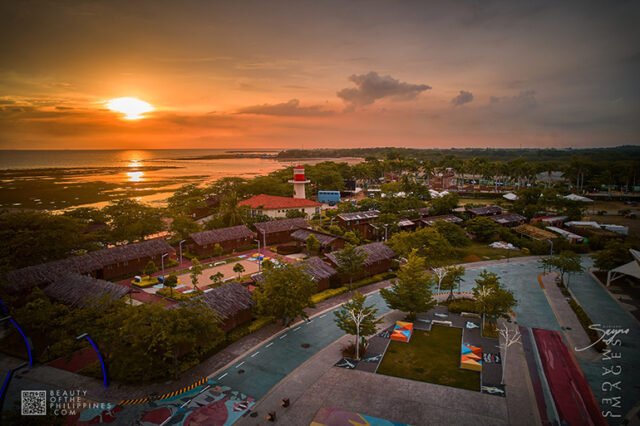
Experience the glorious beachfront sunset every day. The Nautilus is rising as part of the stunning 15-hectare Landco BeachTowns — CaSoBe, Calatagan South Beach. Photo credit: Mariano Sayno of The Beauty of the Philippines

As demand for premium coastal properties rises, Landco Pacific Corporation’s newest beachfront condotel The Nautilus, a bold 10-storey architectural icon, emerges as a timely and compelling opportunity in CaSoBe (Calatagan South Beach), a 15-hectare master-planned beach estate in Batangas.

Inspired by Jules Verne’s legendary submarine, The Nautilus blends dramatic design with the tranquility of refined coastal living, delivering a distinctive lifestyle offering that also serves as a strategic investment.

With its prime beachfront location, thoughtfully curated resort amenities, and future-forward sustainability features, The Nautilus redefines the essence of modern leisure — where elevated living meets long-term value by the sea.

Year-round summer vibe. The Nautilus at Landco BeachTowns CaSoBe. Photo credit: Mariano Sayno of The Beauty of the Philippines

Here are 11 compelling reasons why The Nautilus stands out as a premier investment opportunity:

  1. Award-Winning Developer with Proven Legacy
    With over 30 years of expertise in developing upscale leisure communities — behind landmark projects like Punta Fuego and Playa Calatagan — Landco continues to set the standard for luxury coastal living.

Recognized as a Highly Commended Best Lifestyle Developer at the 2024 PropertyGuru Philippines Property Awards, Landco also shares the spotlight with its Chairman, business icon Manuel V. Pangilinan, named 2024 Real Estate Personality of the Year.

The Nautilus at CaSoBe — iconic beachfront condotel inspired by Jules Vernes’ futuristic submarine, a blend of contemporary and luxury leisure living.

Its latest beachfront projects, such as The Spinnaker at Club Laiya and The Residences at Terrazas de Punta Fuego, are earning global acclaim — bagging Asia Pacific and International Property Awards for excellence and sustainability. The same pedigree of innovation and prestige now defines The Nautilus at CaSoBe.

  1. Prime Beachfront Location in a 4-Star Resort Estate in Calatagan, Batangas

Just 2–3 hours from Metro Manila, The Nautilus sits at the heart of CaSoBe — Calatagan South Beach — a master-planned beach tourism estate designed for leisure and lifestyle. Strategically located within a 4-star resort, it offers residents daily access to resort-style living, with white sand beaches, vibrant amenities, and a serene coastal environment. Surrounded by golf courses, polo fields, and nearby essentials like hospitals, markets, and schools, it’s the perfect blend of escape and convenience.

The Horizon pool deck of The Nautilus beckons as a stylish and sophisticated swimming pool of a seemingly cruise ship on the beachfront.
        1. Hassle-Free Passive Income Through Rental Pool Program
          Investors gain full ownership of titled condo units, with the option to join the Landco Lifestyle Ventures rental pool. The condotel will be operated as premium hotel complete with amenities, offering seamless management while providing unit owners with a dependable stream of rental income.
        2. Iconic and World-Class Design
          Inspired by a ship anchored ashore, The Nautilus is designed by internationally acclaimed firms Pomeroy Studio (Singapore) and Visionarch (Philippines). Every unit offers floor-to-ceiling windows, generous 2.8-meter ceiling heights, balconies with ocean views, and access to expansive resort amenities.
        3. Versatile Investment Options for Various Needs
          The Nautilus offers 171 residential units and 5 commercial units, including studios, one- to three-bedroom suites, and lofts — ranging from 38 sq.m. to 183 sq.m. Commercial spaces up to 235 sq.m. are also available. These flexible unit options cater to individuals, families, and business-minded investors.

          The grand entrance of The Nautilus
        4. Premium Hotel Amenities by Landco Lifestyle Ventures
          From curated dining outlets and infinity pools to spas and gyms, The Nautilus delivers a resort experience unlike any other. Highlights include The Abyss Spa, The Observatory rooftop deck, The Captain’s Hideout bar, The Engine Room gym, and the Horizon Pool Deck with panoramic sea views.
        5. A Lifestyle Enhanced by CaSoBe’s Iconic Amenities
          From the thrills of Aquaria Water Park to the charm of Crusoe Cabins along with other unique accommodations and the scenic CaSoBe Lighthouse, residents of The Nautilus live with front-row access to the estate’s most beloved destinations. Perfect for weekend escapes, digital workcations, and beachfront celebrations — all within a vibrant resort community.

          The Nautilus loft with a relaxing view of the sea
        6. Proven Capital Appreciation in Landco Projects
          Landco developments have demonstrated significant long-term value, with Punta Fuego appreciating over 1,000% since the 1990s. The Nautilus continues this legacy, offering investors the opportunity to be part of the next success story.
        7. Built for Sustainability and Energy Efficiency
          EDGE Registered, The Nautilus integrates green technology — from rooftop solar panels and recycled building materials to water-saving fixtures and EV charging stations. Natural ventilation, LED lighting, and low-carbon cement contribute to a future-forward, eco-conscious design.
        8. Lifestyle + Legacy Investment

      The Nautilus isn’t just a property — it’s a legacy. It offers a multi-generational asset where families can create memories, investors can generate income, and owners can enjoy the best of coastal luxury in one of the country’s most scenic locations.

      The impressive lobby of The Nautilus
      1. Wellness by the Water: Natural Healing in a Blue Space

      Living by the sea isn’t just beautiful, it’s good for beachcombers, visitors and residents alike. Studies show that coastal settings promote relaxation, reduce stress, and support better sleep. At The Nautilus, the sound of the waves, wide open views, and fresh sea air create a calming environment that restores the mind and body. Whether it’s a quiet walk on the beach, a swim, or time at the spa, wellness comes naturally, right outside your door.

      For more information about Landco Pacific Corporation and The Nautilus, visit https://www.landco.ph/ or https://www.facebook.com/LandcoPacificCorporation.


      Spotlight is BusinessWorld’s sponsored section that allows advertisers to amplify their brand and connect with BusinessWorld’s audience by publishing their stories on the BusinessWorld Web site. For more information, send an email to online@bworldonline.com.

      Join us on Viber at https://bit.ly/3hv6bLA to get more updates and subscribe to BusinessWorld’s titles and get exclusive content through www.bworld-x.com.


Australia wipes $10 billion off student loans, targeting cost of living relief

REUTERS

SYDNEY – Australia’s parliament on Thursday passed a law to cut student loans by 20%, wiping more than A$16 billion ($10.31 billion) in debt for 3 million people, and fulfilling a key election promise to help mitigate the rising cost of living.

The law is the first passed by Prime Minister Anthony Albanese’s center-left Labor Party since being re-elected in May with one of the country’s largest-ever majorities.

“We promised cutting student debt would be the first thing we did back in parliament – and that’s exactly what we’ve done,” Mr. Albanese said in a statement.

“Getting an education shouldn’t mean a lifetime of debt.”

Education Minister Jason Clare said the measure would help “take a weight” off the backs of young people.

“Young Australians don’t always see something for them on the ballot paper, but they did this year and they voted for it in their millions,” he said at a press conference.

“And we’re repaying now the trust that these young Australians have placed in us.”

Millennials and Generation Z made up 43% of the 18 million people enrolled to vote in Australia’s May general election, outnumbering Baby Boomers.

Seizing on the generational shift, Labor made cutting student debt a key election promise, framing it as a measure to ease living costs and tackle intergenerational inequality.

The government said reducing student loans by one-fifth was equivalent to more than A$16 billion in debt relief for three million Australians.

It would mean a university graduate with an average loan of A$27,600 would have A$5,520 wiped, the government said, adding the changes would be backdated from June 1, 2025, before the loans were indexed 3.2% for inflation.

The law would also raise the minimum repayment threshold from an income of A$54,435 to A$67,000, reducing the amount low-income earners would have to pay. — Reuters

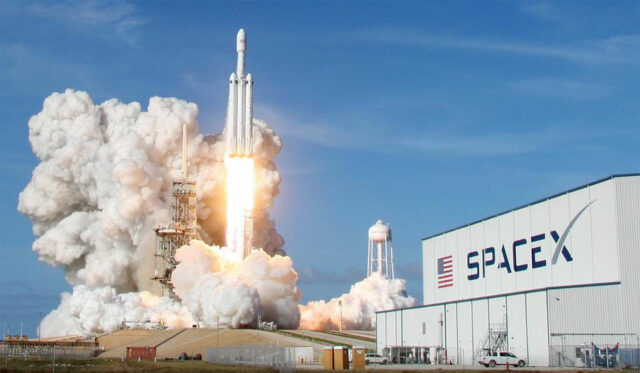
How SpaceX’s rocket diplomacy backfired in the Bahamas

REUTERS

NASSAU, Bahamas – When SpaceX was negotiating a deal with the Bahamas last year to allow its Falcon 9 rocket boosters to land within the island nation’s territory, Elon Musk’s company offered a sweetener: complimentary Starlink internet terminals for the country’s defense vessels, according to three people familiar with the matter.

But by this April, the landing agreement was put on hold after the explosion a month earlier of a different SpaceX rocket, Starship, whose mid-flight failure sent hundreds of pieces of debris washing ashore on Bahamian islands.

SpaceX’s setback in the Bahamas – detailed in this story for the first time – offers a rare glimpse into its sensitive diplomacy with foreign governments. As the company races to expand its dominant space business, it must navigate the geopolitical complexities of a global operation involving advanced satellites and rockets flying over or near sovereign territories.

In a statement provided to Reuters post-publication, the Bahamian Prime Minister’s office said that while the defense force uses Starlink for communications, the government covers the full cost.

“No donation was sought, proposed, or accepted from SpaceX in this regard,” the statement said.

SpaceX did not respond to requests for comment.

In interviews with Reuters, the sources described in detail the Starlink sweetener. However, they did not provide written evidence. The prime minister’s office also didn’t provide specific evidence that it had paid for Starlink.

The Bahamas rocket landing deal, unlocking a more efficient path to space for SpaceX’s reusable Falcon 9, was signed in February last year by Deputy Prime Minister Chester Cooper, who bypassed consultation with several other key government ministers, one of the sources and another person familiar with the talks said.

The prime minister’s office said in its statement that the approval for SpaceX’s landing agreement came from the cabinet and no single individual or ministry acted independently of this process.

A spokesperson for Cooper did not respond to questions about how the rocket landing deal was arranged. Reuters found no evidence that Cooper broke any laws or regulations in striking the deal with SpaceX, but the two sources said the quick approval created tension within the Bahamian government, with some officials expressing misgivings about a lack of transparency in the negotiations.

The government has said publicly it wanted a post-launch investigation after the Starship explosion in March.

“While no toxic materials were detected and no significant environmental impact was reported, the incident prompted a reevaluation of our engagement with SpaceX,” Chequita Johnson, the acting director general of the Civil Aviation Authority Bahamas, said in a statement.

MISSION TO MARS

SpaceX is pursuing aggressive global expansion as Mr. Musk, its CEO, has become a polarizing figure on the world stage, especially following high-profile clashes with several governments during his time advising President Donald Trump. More recently he has fallen out with Mr. Trump himself.

Starlink, SpaceX’s fast-growing satellite internet venture, is a central source of revenue funding Mr. Musk’s vision to send human missions to Mars aboard Starship. But to scale globally, SpaceX must continue to win the trust of foreign governments with which it wishes to operate the service, as rivals from China and companies like Jeff Bezos’ Amazon ramp up competing satellite networks.

The political risks facing SpaceX were laid bare last month when Mexican President Claudia Sheinbaum said her government was considering taking legal action against SpaceX over “contamination” related to Starship launches from Starbase, the company’s rocket site in Texas, 2 miles north of the Mexican border.

Her comments came after a Starship rocket exploded into a giant fireball earlier this month on a test stand at Starbase. Responding to Sheinbaum on X, SpaceX said its teams have been hindered from recovering Starship debris that landed in Mexican territory.

Meanwhile, Starship’s trajectory from Texas to orbit requires it to pass over Caribbean airspaces, exposing the region to potential debris if the rocket fails, as it has in all three of its test flights this year.

The Falcon 9 rocket can carry heavier payloads and more satellites to space if its booster is allowed to land in Bahamian territory, SpaceX says.

SpaceX’s deal with the Bahamas, the government said, also included a $1 million donation to the University of Bahamas, where the company pledged to conduct quarterly seminars on space and engineering topics. The company must pay a $100,000 fee per landing, pursuant to the country’s space regulations it enacted in preparation for the SpaceX activities.

The Falcon 9 booster landings could resume later this summer, two Bahamian officials said.

Holding things up is the government’s examination of a SpaceX report on the booster landing’s environmental impact, as well as talks among officials to amend the country’s space reentry regulations to codify a better approval process and environmental review requirements, one of the sources said.

Arana Pyfrom, assistant director at the Bahamas’ Department of Environmental Planning and Protection, said SpaceX’s presence in the country is “polarizing”. Many Bahamians, he said, have voiced concerns to the government about their safety from Starship debris and pollution to the country’s waters.

“I have no strong dislike for the exploration of space, but I do have concerns about the sovereignty of my nation’s airspace,” Pyfrom said. “The Starship explosion just strengthened opposition to make sure we could answer all these questions.”

STARSHIP FAILURES ROCK ISLANDS

Starship exploded about nine and a half minutes into flight on March 6 after launching from Texas, in what the company said was likely the result of an automatic self-destruct command triggered by an issue in its engine section. It was the second consecutive test failure after a similar mid-flight explosion in January rained debris on the Turks and Caicos Islands, a nearby British overseas territory.

Matthew Bastian, a retired engineer from Canada, was anchored in his sailboat on vacation near Ragged Island, a remote island chain in southern Bahamas, just after sunset when he witnessed Starship’s explosion. What he initially thought was a rising moon quickly became an expanding fireball that turned into a “large array of streaking comets.”

“My initial reaction was ‘wow that is so cool,’ then reality hit me – I could have a huge chunk of rocket debris crash down on me and sink my boat!” he said. “Fortunately that didn’t happen, but one day it could happen to someone.”

Thousands of cruise ships, ferries, workboats, fishing boats, yachts and recreational sailboats ply the waters around Caribbean islands each year, maritime traffic that is crucial for the Bahamas tourism industry.

Within days of the explosion, SpaceX dispatched staff and deployed helicopters and speedboats to swarm Ragged Island and nearby islands, using sonar to scan the seafloor for debris, four local residents and a government official told Reuters. On the surface, recovery crews hauled the wreckage from the water and transferred it onto a much larger SpaceX vessel, typically used to catch rocket fairings falling back from space, the people said.

The SpaceX team included its vice president of launch, Kiko Dontchev, who emphasized in a news conference with local reporters that the rocket is entirely different from the Falcon 9 boosters that would land off the Exuma coast under SpaceX’s agreement.

Joe Darville, chairman of a local environmental organization called Save The Bays, was angered by the Starship debris, as well as what he described as a “deal done totally in secret” over the Falcon 9 agreement. As Bahamian waters become increasingly polluted and coral reefs shrink, he’s unhappy with the lack of transparency in his government’s dealings with SpaceX.

“Something like that should have never been made without consultation of the people in the Bahamas,” he said.

Pyfrom, the official from the Bahamas’ environmental agency, said the review of the SpaceX report and the approval process will show “where we fell short, and what we need to improve on.”

SpaceX, meanwhile, is forging ahead with Starship. Musk said earlier this month he expects the next Starship rocket to lift off within the next three weeks. — Reuters


Trump hits Brazil with tariffs, sanctions but key sectors excluded

RAWPIXEL.COM

SAO PAULO/BRASILIA – U.S. President Donald Trump on Wednesday slapped a 50% tariff on most Brazilian goods to fight what he has called a “witch hunt” against former President Jair Bolsonaro, but softened the blow by excluding sectors such as aircraft, energy and orange juice from heavier levies.

Mr. Trump announced the tariffs, some of the steepest levied on any economy in the U.S. trade war, as his administration also unveiled sanctions on the Brazilian supreme court justice who has been overseeing Mr. Bolsonaro’s trial on charges of plotting a coup.

“Alexandre de Moraes has taken it upon himself to be judge and jury in an unlawful witch hunt against U.S. and Brazilian citizens and companies,” Treasury Secretary Scott Bessent said in a statement.

Mr. Bessent said Mr. Moraes “is responsible for an oppressive campaign of censorship, arbitrary detentions that violate human rights, and politicized prosecutions — including against former President Jair Bolsonaro.”

Last week, the Brazilian justice levied search warrants and restraining orders against Bolsonaro over allegations he courted Trump’s interference in his criminal case, in which he is accused of plotting to stop President Luiz Inacio Lula da Silva from taking office in 2023.

Mr. Trump’s final tariff order and the sanctions followed weeks of sparring with Lula, who has likened the U.S. president, a close ideological ally of Mr. Bolsonaro’s, to an unwanted “emperor.”

On Wednesday, Mr. Lula and his government closed ranks behind Moraes, calling the U.S. sanctions “unacceptable.”

“The Brazilian government considers the use of political arguments to defend the trade measures announced by the U.S. government against Brazilian exports to be unjustifiable,” it said in a statement.

Mr. Lula added that Brazil was willing to negotiate trade with the U.S., but that it would not give up on the tools it had at hand to defend itself, hinting that retaliation was possible.

Still, Mr. Trump’s tariff order threatened that if Brazil were to retaliate, the U.S. would also up the ante.

DIPLOMACY AT WORK

Despite Mr. Trump’s effort to use the tariffs to alter the trajectory of a pivotal criminal trial, the range of exemptions came as a relief for many in Brasilia, who since Mr. Trump announced the tariff earlier this month had been urging protections for major exporters caught in the crossfire.

“We’re not facing the worst-case scenario,” Brazilian Treasury Secretary Rogerio Ceron told reporters.

The new tariffs will go into effect on August 6, not on Friday as Trump announced originally.

Mr. Trump’s executive order formalizing a 50% tariff excluded dozens of key Brazilian exports to the United States, including civil aircraft, pig iron, precious metals, wood pulp, energy and fertilizers.

Planemaker Embraer, whose chief executive has met with officials in Washington and U.S. clients in recent days to plead its case for relief, said an initial review indicated that a 10% tariff imposed by Mr. Trump in April remains in place, with the exclusion applying to the additional 40%.

The exceptions are likely a response to concerns from U.S. companies, rather than a step back from Trump’s efforts to influence Brazilian politics, said Rafael Favetti, a partner at political consultancy Fatto Inteligencia Politica in Brasilia.

“This also shows that Brazilian diplomacy did its work correctly by working to raise awareness among U.S. companies,” he said.

Brazil’s minister of foreign affairs, Mauro Vieira, said he met with U.S. Secretary of State Marco Rubio on Wednesday to express the nation’s willingness to discuss tariffs after negotiations stalled in June, though he stressed Mr. Bolsonaro’s legal troubles were not up for debate.

It remains unclear what Brazilian authorities “are bringing to the negotiating table to, for instance, open the domestic market,” Goldman Sachs said in a note to clients.

IMPACT SMALLER THAN EXPECTED

The effective tariff rate on Brazilian shipments to the U.S. should be around 30.8%, lower than previously expected due to the exemptions, according to Goldman.

Oil shipments to the U.S., which had been suspended, are set to restart after being spared, lobby group IBP said. Meanwhile, mining lobby Ibram said the exemptions covered 75% of mining exports.

However, it was still too soon to celebrate, said former Brazilian trade secretary Welber Barral, estimating that Brazil exports some 3,000 different products to the United States.

“There will be an impact,” Mr. Barral said.

Trump’s tariff exemptions did not shield two of Brazil’s key exports to the U.S., beef and coffee.

Meatpackers expect to log $1 billion in losses in the second half of the year on the new tariffs, lobby group Abiec, which represents beef producers including JBS and Marfrig said.

Coffee exporters will also continue to push for exemptions, they said in a statement.

The government said it was readying measures to protect Brazil’s businesses and workers.

If Brazil were to retaliate against Mr. Trump’s measures, that “would generate a larger negative impact” on activity and inflation, Goldman said.

“The political inclination may be to retaliate, but exporters and business associations have been urging the Brazilian administration to engage, negotiate and de-escalate.” — Reuters

ADVERTISEMENT
ADVERTISEMENT