Home Blog Page 1215

Rural dev’t NGO backs law setting palay farmgate floor at P25 per kilo

PHILIPPINE STAR/KRIZ JOHN ROSALES

THE 20th Congress needs to devote significant attention to stabilizing the rice industry, in particular a measure that will set a floor price of P25 per kilogram (kg) for palay, or unmilled rice, the Integrated Rural Development Foundation (IRDF), a non-government organization (NGO)  said.

In a statement, the IRDF said the “primary driver” of the current crisis is the Rice Tariffication Law of 2019, which removed restrictions on private-sector rice imports. In exchange, importers were required to pay tariffs on their shipments, set initially at 35% and since reduced to 15%.

The price of palay at the farmgate level has been recorded at P10 per kg in some areas, below the average production cost of P14.52 per kg estimated in 2024 by the Philippine Statistics Authority (PSA),

Production costs are also rising because of more expensive fuel and inputs, the IRDF added.

In 2024, the Philippines became the world’s largest rice importer, bringing in a record 4.8 million metric tons (MMT) of rice.

House Bill No. 1, or the proposed RICE Act, seeks to restore some regulatory powers to the National Food Authority (NFA), but the IRDF said “farmers remain exposed to price volatility and income uncertainty” if the NFA cannot influence the market with floor prices and grain procurement.

The IRDF called for a comprehensive law that provides integrated production, marketing and post-harvest support to rice farmers.

The 20th Congress should restore and strengthen the power of the NFA to regulate imports and intervene in the market to stabilize prices and buy palay at support levels, it said.

The IRDF supports the repeal of the Rice Tariffication Law, replacing it with a proposed Rice Industry Sustainable Development Act that sets the minimum farmgate price for palay at P25 per kg.

The floor price will help farmers earn at least P50,000 per hectare each harvest, equivalent to about P16,000 per month, thereby incentivizing continued planting and increasing yields.

It also supports legislation enabling the NFA to procure  10%-20% of the palay harvest. — Kyle Aristophere T. Atienza

Davao airport upgrade seen completed by 2026

CAAP

THE Department of Transportation (DoTr) said it expects to complete the P650-million upgrade of the Davao International Airport by the end of 2026.

The airport project covers the 48% expansion of the passenger terminal to 25,910 square meters by December 2026, the DoTr said, thereby raising seating capacity in the terminal to 1,500 passengers.

The government is currently evaluating an unsolicited proposal for the airport’s operations and maintenance.

The Public-Private Partnership (PPP) Center has said that the proposal is still undergoing assessment.

The P12.9-billion proposal was submitted by the Davao International Airport Consortium, according to the PPP Center.

The consortium consists of Asian Infrastructure and Management Corp.; Filinvest Infra-Solutions Ventures, Inc.; and JG Summit Infrastructure Holding Corp.

The PPP Center said the proposal will be implemented under a rehabilitate-operate-transfer arrangement with a 30-year concession agreement.

The DoTr said it is looking to tap the private sector for the operation and maintenance of up to 20 airports to help expand and upgrade the Philippines’ regional hubs. — Ashley Erika O. Jose

Artificial intelligence upskilling plan expected to be ready by early next year

Students answer test questions at a state high school in Manila. — REUTERS

THE ANALYTICS & Artificial Intelligence Association of the Philippines (AAP) said it expects the completion of the detailed implementation plan for nationwide artificial intelligence (AI) upskilling early next year.

AAP President Michelle Alarcon said the group has co-created the National AI Upskilling Plan, which was proposed by the Private Sector Advisory Council (PSAC) Education and Jobs Pillar to President Ferdinand R. Marcos, Jr.

“We will work towards having a pilot, but at least the detailed implementation plan will be there in January 2026,” she told reporters on the sidelines of AICON PH 2025.

“We are tasked to put together the plan and then the associated costs (involved). And then the government will set a realistic amount that can be released, which we have not got around to yet,” she added.

The National AI Upskilling Plan is set to have five tiers addressing the needs of beginners to professionals.

“Right now, we are trying to consolidate all the efforts from the private sector because we are the lead, and we are working with the Commission on Higher Education (CHED) and Technical Education and Skills Development Authority (TESDA),” she said.

“We kicked off weeks ago, and now we are in the process of putting details to the budget,” she added, noting that the upskilling plan is being planned around an initial budget of P1.5 billion.

She said that the PSAC has determined a need to focus on high school students, as those already in the workforce are being taken care of by their employers.

“We will also be careful about which particular segment of the youth we will need to educate on AI,” she said.

“But the rest of the sequence, we have not figured out. It also depends on the budget. Because just high school students is already a lot,” she added.

At the conference last week, the AAP also launched the Code of Ethics of AI Professionals, which it hopes will lay the groundwork for self-regulation.

“Anyone can build anything right now. The code of ethics is just an attempt to self-regulate,” she said.

She said there is no Philippine law that regulates the use of AI, noting that the European Union restricts the use of behavioral data, facial recognition, and data points dealing with physical appearance in certain AI applications.

“What we intend to do is, without any other basis for regulating, removing bias or potential bias,” she said.

She said that the Code of Ethics will serve as a placeholder until a law or an AI governance framework emerges for the Philippines.

Asked what she wants to hear from President Ferdinand R. Marcos, Jr.’s State of the Nation Address on Monday, she said that she hoped for Mr. Marcos to announce the National AI Upskilling Plan.

“If the leader of a country says that we are going to have AI upskilling for everyone, that shows that we are for innovation and that everything that is implied to be needed to power that innovation, be it digital infrastructure or upskilling or whatever, will be provided by the government,” she said. — Justine Irish D. Tabile

Philippine gross borrowing surges 78% in June

BW FILE PHOTO

THE NATIONAL Government’s (NG) gross borrowing rose 78.16% year-on-year in June, with both foreign and domestic debt expanding, the Bureau of the Treasury (BTr) said.

The BTr reported gross borrowing of P263.99 billion in June, which was up 37.28% against the May total.

Gross external debt grew 514.09% to P96.41 billion in June, which included P86.11 billion in program loans and P10.31 billion in project loans.

Meanwhile, gross domestic borrowing rose 26.50% year-on-year to P167.58 billion, including P127.68 billion in fixed-rate Treasury bonds and P39.90 billion in Treasury bills.

Domestic debt accounted for 63.48% of all gross borrowing.

Rizal Commercial Banking Corp. Chief Economist Michael L. Ricafort said the June borrowing total likely reflected the wider budget deficit that pushed the government to borrow more.

The budget deficit was P241.6 billion in June, according to the Bureau of the Treasury, bringing the first-half total of P613.9-billion.

“This could also be a function of maturing government debt in the coming months, with a large Treasury bond maturity of about P800 billion from August-September 2025, also in view of the upcoming RTB offering/issuance worth about P200 billion as early as 3Q 2025/August 2025,” Mr. Ricafort said via Viber. 

NG gross borrowing rose 1.33% to P1.59 trillion in the first six months, driven by foreign loans.

Gross external borrowing rose 50.46% to P402.35 billion during the period, with P191.97 billion in global bonds, P171.31 billion in program loans and P39.08 billion in new project loans.

Domestic debt declined 8.75% to P1.19 trillion at the end of June.

Domestic gross borrowing for the period accounted for 74.72% of total borrowing in the six months.

This consisted of P756.84 billion in fixed-rate Treasury bonds, P300 billion in fixed-rate Treasury notes and P132.31 billion in Treasury bills.

“The borrowing program of the NG exceeded (projections) halfway through June, which may be a sign that they will push for higher government spending in the latter half of the year,” Reinielle Matt M. Erece, an economist at Oikonomia Advisory and Research, Inc., said via Viber.

Finance Secretary Ralph G. Recto has said that the borrowing plan was adjusted to P2.6 trillion from P2.55 trillion to fund the budget deficit. The government is seeking to retain the 80-20 funding split in favor of domestic sources.

At the end of April, government expenditure hit P1.90 trillion, up 11.6% year-on-year.

“This may be as pessimistic trade conditions and weak investor sentiment may continue to drag down GDP (gross domestic product) growth, the government may step in to try and boost growth through faster spending,” Mr. Erece said.

The economy grew by a weaker-than-expected 5.4% in the first three months of 2025 as negative tariff sentiment dampened economic activity.

Economic managers have lowered their growth target range to 5.5%-6.5% from 6-8% previously.

The government caps its deficit at P1.56 trillion, equivalent to 5.5% of GDP.

THE NATIONAL Government’s (NG) gross borrowing rose 78.16% year-on-year in June, with both foreign and domestic debt expanding, the Bureau of the Treasury (BTr) said.

The BTr reported gross borrowing of P263.99 billion in June, which was up 37.28% against the May total.

Gross external debt grew 514.09% to P96.41 billion in June, which included P86.11 billion in program loans and P10.31 billion in project loans.

Meanwhile, gross domestic borrowing rose 26.50% year-on-year to P167.58 billion, including P127.68 billion in fixed-rate Treasury bonds and P39.90 billion in Treasury bills.

Domestic debt accounted for 63.48% of all gross borrowing.

Rizal Commercial Banking Corp. Chief Economist Michael L. Ricafort said the June borrowing total likely reflected the wider budget deficit that pushed the government to borrow more.

The budget deficit was P241.6 billion in June, according to the Bureau of the Treasury, bringing the first-half total of P613.9-billion.

“This could also be a function of maturing government debt in the coming months, with a large Treasury bond maturity of about P800 billion from August-September 2025, also in view of the upcoming RTB offering/issuance worth about P200 billion as early as 3Q 2025/August 2025,” Mr. Ricafort said via Viber. 

NG gross borrowing rose 1.33% to P1.59 trillion in the first six months, driven by foreign loans.

Gross external borrowing rose 50.46% to P402.35 billion during the period, with P191.97 billion in global bonds, P171.31 billion in program loans and P39.08 billion in new project loans.

Domestic debt declined 8.75% to P1.19 trillion at the end of June.

Domestic gross borrowing for the period accounted for 74.72% of total borrowing in the six months.

This consisted of P756.84 billion in fixed-rate Treasury bonds, P300 billion in fixed-rate Treasury notes and P132.31 billion in Treasury bills.

“The borrowing program of the NG exceeded (projections) halfway through June, which may be a sign that they will push for higher government spending in the latter half of the year,” Reinielle Matt M. Erece, an economist at Oikonomia Advisory and Research, Inc., said via Viber.

Finance Secretary Ralph G. Recto has said that the borrowing plan was adjusted to P2.6 trillion from P2.55 trillion to fund the budget deficit. The government is seeking to retain the 80-20 funding split in favor of domestic sources.

At the end of April, government expenditure hit P1.90 trillion, up 11.6% year-on-year.

“This may be as pessimistic trade conditions and weak investor sentiment may continue to drag down GDP (gross domestic product) growth, the government may step in to try and boost growth through faster spending,” Mr. Erece said.

The economy grew by a weaker-than-expected 5.4% in the first three months of 2025 as negative tariff sentiment dampened economic activity.

Economic managers have lowered their growth target range to 5.5%-6.5% from 6-8% previously.

The government caps its deficit at P1.56 trillion, equivalent to 5.5% of GDP. — Aubrey Rose A. Inosante


Virtual nursing industry pitching stay-in-PHL jobs to health workers

Rosita Lara Lumagui (right), WWRS managing director are joined by Patti Artley (middle), Medical Solutions chief clinical officer, and Laura Dunlap Messineo, Worldwide Healthstaff Solutions chief nursing officer at the recent opening of WWRS' second operations site at the GBF Center, Bridgetowne in Quezon City.

By Beatriz Marie D. Cruz, Reporter

DEVELOPING a virtual nursing industry will depend on upgrades to digital infrastructure and sufficiently attractive pay that can offer workers of a viable option to emigrating, according to Worldwide Resource Solutions (WWRS), Inc., a Manila-based healthcare outsourcing firm.

“If you look at the US market right now, there’s a potential of $40 billion for virtual nursing alone. So, just to get a chunk of that business would really provide jobs for a lot of people and help the economy,” WWRS Managing Director Rosita Lara Lumagui told BusinessWorld.

Worldwide HealthStaff Solutions Ltd., a US medical solutions company, is banking on the Philippines’ strong outsourcing industry and large number of healthcare graduates in expanding virtual nursing services here.

Last month, WWRS launched its virtual nursing hub in Bridgetowne, Quezon City, which allows healthcare workers to care for patients in US hospitals while being based here.

The Philippines itself is grappling with a shortage of 127,000 nurses, which could grow to 250,000 by 2030, the World Health Organization said.

“The Philippine government should strengthen the country’s position as a global leader in outsourced healthcare — particularly in virtual nursing,” Ms. Lumagui said.

She cited the need for national certification programs and government-funded scholarships or training subsidies for virtual healthcare roles.

To support critical telehealth facilities like data centers and secure cloud platforms, the government must improve its digital infrastructure and security standards, she noted. It should also ensure fair wages and safe working conditions for virtual healthcare workers.

“Once they know that we have the capability to do this in the Philippines, then others will follow suit,” Ms. Lumagui said.

The market for health information management services (HIMS), one of the fastest-growing segments in the knowledge process outsourcing industry, is valued at about $4 billion, the Department of Trade and Industry (DTI) estimates.

According to Ms. Lumagui, virtual nursing roles typically require a license to practice nursing in the Philippines or the US, depending on client requirements.

On the other hand, a nursing license is not required for virtual sitters, but they must have at least two years of healthcare experience.

Using video technology, WWRS staff are trained to monitor up to 15 patients, communicating patient needs with bedside staff.

While their employees are paid in pesos, salaries are “adjusted upward to reflect the responsibilities of working within a US clinical framework,” WWRS said.

“For this year, what we (plan to) put in place at least 590 (virtual sitters/nurses,)” Ms. Lumagui said. “But probably (by) 2026, we would need more depending on the market.”

As virtual nursing expands in the Philippines, Ms. Lumagui is counting on healthcare workers staying in the country for long haul, with a living wage that can support family life expected to be attractive to those who would rather not emigrate.

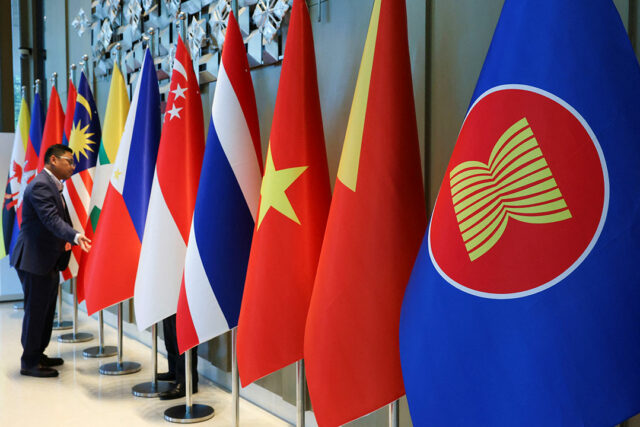
European Union offers model for long-stalled ASEAN integration

REUTERS

By Chloe Mari A. Hufana, Reporter

THE EUROPEAN UNION (EU) offers a roadmap to the closer integration of Association of Southeast Asian Nations (ASEAN) economies, an Italian academic said.

Enrico Letta, Dean of the IE School of Politics, Economics, and Global Affairs at IE University in Madrid, said the EU’s own journey toward economic integration — driven by the removal of internal trade barriers — offers valuable lessons for ASEAN.

“The elimination of internal borders is a big boost for growth,” he told BusinessWorld in an interview on July 25. “We have to understand that internal borders are a limit, and this is the same within ASEAN countries.”

The Philippines and the EU are currently in talks to for a bilateral trade pact, which Philippine officials hope to finalize by 2027.

Negotiations between the Philippines and the EU advanced to a third round in Brussels, between June 16 and 20, with both sides covering 19 critical issues, the Department of Trade and Industry (DTI) said in a statement.

The next round of free trade negotiations is scheduled to take place in the Philippines in October.

Mr. Letta, a former Italian prime minister who also wrote the 2024 report Much More Than a Market for the European Commission, said such agreements are critical at a time when global trade is under threat from rising protectionism by the US and China.

“Only through trade cooperation can we have mutual benefits, but this cooperation (implies) the elimination of internal borders,” he added.

He noted that a Philippine‑EU free trade agreement can serve as a launching pad for broader ASEAN‑EU trade cooperation, adding Manila could play an “avant-garde” role for Southeast Asia.

The DTI described the prospective deal with the EU as the most comprehensive such deal in Philippine history, broadening beyond traditional tariff chapters to encompass labor and environmental standards, intellectual property, competition policy, sanitary measures, and state-owned enterprise regulation.

Philippine-EU trade was $15.5 billion in 2024, making the EU the Philippines’ fifth-largest trading partner, accounting for 7.7% of total trade. Philippine exports to the bloc amounted to $8.1 billion.

Singapore and Vietnam both have free trade deals with the EU, which were signed in 2019 and 2020, respectively. Negotiations with the Philippines were relaunched in October.

Josue Raphael J. Cortez, an ASEAN Studies lecturer at the De La Salle-College of St. Benilde, said an EU trade deal could carry strategic weight as the country assumes the ASEAN chairmanship in 2026.

“With our leaders also devising ways to better navigate the negative repercussions of the nuanced reciprocal tariffs imposed by the US, it is high time that we steer discussions on how we can better promote our aspiration of becoming a single market,” Mr. Cortez said via Messenger.

“While ASEAN’s Community Visions and the ASEAN Economic Community Blueprint (AEC Blueprint) have long championed economic integration, actual progress has been slow due to wide development gaps and structural asymmetries between maritime and mainland member states,” he added.

Mr. Cortez noted that, unlike the EU, ASEAN is not geographically contiguous, and its member states specialize in different industries.

“What we can do moving forward is to maximize what we have in common — agricultural products, semiconductors, and mineral resources — and better utilize intra-ASEAN mobility to promote a sustainable production environment,” he said.

He added that a Philippine-EU deal could become a blueprint for regional partners seeking to reduce dependence on traditional trade allies and expand relationships with like-minded economies.

“The Philippines may serve as a negotiating model for how its neighbors can deepen ties with the EU despite normative differences. It may even take the lead in representing ASEAN’s collective interests in future trade negotiations,” Mr. Cortez said. “This agreement, if finalized, won’t just open up European markets. It could also shape how Southeast Asia reimagines its role in global trade.”

ERC approves NGCP substation project

THE National Grid Corp. of the Philippines (NGCP) obtained approval from the Energy Regulatory Commission (ERC) to go ahead with its proposed P1.11-billion substation project in Aklan.

“The project must be completed by NGCP on or before Dec. 31,” the ERC said in a notice.

The ERC noted that the approval is “subject to optimization based on actual use, usefulness, and verified expenses incurred, supported by official receipts and other relevant documents.”

The proposed project is part of NGCP’s 2022 roster of capital expenditure (capex) projects.

The grid operator said that the project addresses expected overloading of the Nabas Substation as well as overloading and undervoltage issues along the Panitan-Nabas 69kV Transmission Line.

NGCP capex projects must be approval by the ERC under Republic Act No. 9136 or the Electric Power Industry Reform Act.

Under a congressionally granted 50-year franchise, the company has the right to operate and maintain the transmission system and related facilities, and to exercise the right of eminent domain as needed to construct, expand, maintain, and operate the transmission system.

The ERC approved the NGCP’s fourth regulatory period rate reset spanning 2016 to 2022, under which it is entitled to an additional P28.29 billion in under-recoveries. — Sheldeen Joy Talavera

US zero-tariff treatment seen resulting in P3.97 billion in foregone PHL revenue

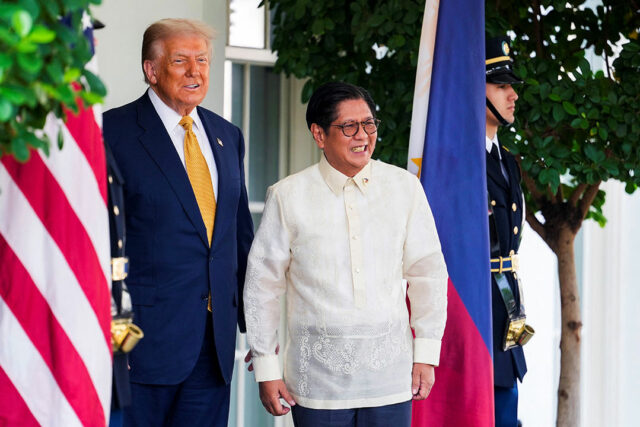
US PRESIDENT Donald J. Trump welcomes Philippine President Ferdinand R. Marcos, Jr. at the White House in Washington, DC, US, July 22. — REUTERS/KENT NISHIMURA

THE Philippines could forego about P3.97 billion in government revenue as a result of its tariff deal with the US, think tank IBON Foundation estimated.

In its IBON Birdtalk Midyear 2025 briefing Friday, Jose Enrique A. Africa, executive director at IBON Foundation, said the revenue foregone as a result of the trade concessions include P1.6 billion from automobiles, P1.2 billion from wheat, P730 million from soy, and P440 million from pharmaceuticals , he said.

He added that this scenario assumes only a selected range of US products is admitted tariff-free.

“If US President Donald J. Trump is to be believed about Philippine going ‘open market’ with 0% tariffs on all products, we roughly estimate a P31-billion revenue loss,” Mr. Africa said.

President Ferdinand R. Marcos, Jr. said many details still need to be worked out on the recent negotiations, which reduced the Philippine tariff rate to 19% from 20%.

The final Philippine rate is two percentage points higher than the 17% “reciprocal tariff” initially announced in April.

“The bigger problem is the loss of policy space. The fact that we’re giving so much to the US, while even forgoing our own protection on the argument that, oh, we don’t have a car industry anyway, that kind of is a bit shortsighted,” Mr. Africa said.

He said the Philippine negotiating performance was poor relative to the deals negotiated by the rest of the region.

He said Vietnam reduced its initial 46% tariff to 20%, with a 40% escalator for goods transshipped through Vietnam.

Indonesia shaved its initial 32% tariff rate to 19%.

“A one-sided deal has actually become worse because of the poor negotiating leverage and the poor negotiating posture of the Marcos administration,” he said.

Separately, Rosario Bella Guzman, executive editor and head of research at Ibon Foundation, flagged the economy’s “steady decline and accelerating political decay.”

“We are seeing economic growth slowing… and the limits of investment-driven growth,” Ms. Guzman said.

The economy has to grow by an average of 6.6% in the next three quarters to reach the middle of the range of the downgraded 5.5% to 6.5% government target — an outcome she called “impossible.”

Gross domestic product (GDP) grew by a weaker-than-expected 5.4% in the first quarter and 5.7% in 2024.

These are both lower than the pre-pandemic growth rate of 6.1% in 2019 and the 6.9% posted in 2012.

Ms. Guzman said poverty and hunger are worsening three years into the Marcos administration.

IBON estimates that the number of families rating themselves as poor has grown to 14.1 million as of the end of April, from 12.2 million in June 2022, at the start of his term.

Meanwhile, Mr. Africa said the “accomplishments” expected to be presented in the upcoming July 28 State of the Nation Address are “micro efforts” that are too small to address poverty, the need for agricultural reform, and national industrialization.

He said agriculture is being “deprioritized” with its share of the national budget falling to 3.9% in 2025 General Appropriations Act from 4.1% in the 2024 budget.

Also, agriculture growth under Mr. Marcos average 0.2% between the third quarter of 2022 to the first quarter of 2025. The equivalent growth rates were 1.2% for his predecessor Rodrigo R. Duterte and 3.5% for former President Benigno S.C. Aquino III. — Aubrey Rose A. Inosante
AI: Placing humans at the center

First of two parts

IN BRIEF:

​• Despite the extensive use of artificial intelligence (AI), a gap in adoption remains, highlighting the difference between individuals’ willingness to use AI and their actual engagement with it.

• Organizations have the opportunity to bridge this divide by fostering trust in AI, showcasing its benefits, and empowering employees to engage with the technology on their own terms.

• Understanding current attitudes toward AI, including comfort levels and practical applications, is essential for leaders to make informed decisions and demonstrate the value of AI to employees.

Artificial intelligence has emerged as a crucial element in contemporary life and work. The AI Sentiment Index Study, conducted by market research firm EY Sweeney, surveying over 15,000 participants globally, found that 82% had actively engaged with AI in the past six months. This trend signifies a significant shift in human capability rather than just a technological advancement. The research utilized a random stratified sampling method to ensure diverse demographic representation across 15 countries, including Australia, Brazil, Canada, China, France, Germany, India, Japan, Saudi Arabia, New Zealand, South Korea, Sweden, the UAE, the UK, and the US.

Despite the extensive use of AI, a gap in adoption remains — this gap highlights the difference between individuals’ willingness to use AI and their actual engagement with it. Issues related to trust, privacy, and control contribute to this gap, along with the current availability of AI tools. Organizations have a substantial opportunity to bridge this divide.

Leadership is vital in this context. Organizations that build trust in AI, showcase its benefits, and place humans at center by empowering them to engage with AI on their own terms will be best equipped to implement AI effectively. By utilizing AI in ways that align with human needs and aspirations, organizations can ultimately enhance human potential rather than diminish it, shaping the role of AI in business and society.

AI’S IMPACT ON EVERYDAY LIFE
Understanding present attitudes toward AI provides insights into its future trajectory. People’s interactions with AI today reflect a practical approach. Most individuals seek to understand how AI can help them achieve their objectives. Currently, AI is mainly employed for straightforward, efficiency-driven tasks such as managing energy consumption, researching topics, or summarizing information. When AI offers immediate, tangible benefits, individuals are more likely to engage.

However, AI adoption hinges on confidence as much as functionality, with clear boundaries around where individuals feel comfortable using AI. More complex systems or tasks requiring personal data, e.g., AI-powered health diagnostics, credit scoring algorithms, personalized marketing, etc., often evoke hesitation. As AI evolves, these boundaries will shift, necessitating that business leaders make informed decisions based on current and emerging trends.

The AI Sentiment Index quantifies global comfort levels with AI, currently scoring 68 out of 100. This index averages comfort levels based on factors such as the presence of AI in daily life, its personal impact, its national impact, and excitement for its future. A higher score indicates greater comfort with AI, and the index categorizes respondents into three groups: uncomfortable, neutral, and comfortable.

Those most at ease with AI engage significantly more, averaging 15 different AI applications in the past six months, compared to six among neutral respondents and just three among the uncomfortable. This data reveals a reinforcing cycle: comfort with AI encourages exploration of more applications, gradually increasing confidence and usage.

DEMONSTRATING THE VISION AND VALUE OF AI
To get employees on board with the vision and the value of AI, it’s critical to demonstrate its value, prioritizing progress over perfection and recognizing how the technology affects emotions within an organization.

These examples illustrate the importance of demonstrating the value of AI to employees, prioritizing progress over perfection, and recognizing the emotional impact of technology within an organization:

1. Training and development programs: Implement AI-driven training tools that personalize learning experiences for employees. By showcasing how AI can enhance their skills and career growth, employees may feel more positive about the technology.

2. Employee feedback systems: Use AI to analyze employee feedback and sentiment in real-time. This can help management understand employee concerns and emotions, fostering a culture of openness and trust.

3. ​Streamlined workflows: Introduce AI tools that automate repetitive tasks, allowing employees to focus on more meaningful work. Highlighting the time saved and increased job satisfaction can help employees embrace AI.

4. Data-driven decision making: Implement AI analytics to provide insights that support decision-making processes. Demonstrating how AI can lead to better outcomes can help employees see its value in their daily work.

5. Collaborative AI tools: Use AI to enhance collaboration among teams, such as AI-driven project management tools that help track progress and allocate resources effectively. This can foster a sense of teamwork and shared purpose.

6. Recognition programs: Create AI systems that recognize and reward employee achievements based on performance data. This can boost morale and show employees that their contributions are valued.

7. Customer interaction improvements: Showcase AI applications that enhance customer service, such as chatbots that provide quick responses. Employees can see how AI improves customer satisfaction, which can positively impact their roles.

8. Emotional intelligence in AI: Introduce AI tools that analyze employee emotions and well-being, allowing management to respond proactively to issues. This shows a commitment to employee welfare and can foster a supportive environment.

The adoption of AI within an organization can be enhanced by initiating small-scale pilot projects that showcase quick wins and celebrating these successes to build enthusiasm and confidence in the technology among employees. Additionally, leaders should maintain transparent communication by regularly sharing the goals and benefits of AI initiatives, addressing any concerns or misconceptions, and fostering open dialogue to mitigate fear and resistance.

In the second part of this article, we discuss the local AI landscape, how organizations can support human agency through AI, and the leadership imperative in keeping humans at the center.

This article is for general information only and is not a substitute for professional advice where the facts and circumstances warrant. The views and opinions expressed above are those of the author and do not necessarily represent the views of SGV & Co.


Rossana A. Fajardo is the country managing partner of SGV & Co.

Congress told to focus on food security, job creation and manufacturing revival

PCOO

By Adrian H. Halili, Reporter

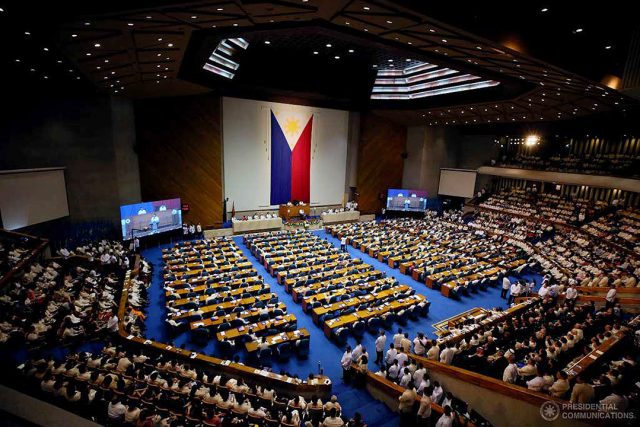
ECONOMISTS are calling on Philippine lawmakers to prioritize legislation that will boost food security, revive manufacturing and create better jobs as the 20th Congress opens on July 28.

Congress should pass measures to modernize the country’s agro-industrial sector, said John Paolo R. Rivera, a senior research fellow at the Philippine Institute for Development Studies. “These efforts will uplift the income of local producers and improve the country’s food security,” he said in a Viber message.

The agriculture sector has long lacked adequate government support, leaving the Philippines dependent on food imports. Local production often fails to meet domestic demand, exposing the country to price fluctuations caused by global trade disruptions.

Inflation rose to 1.4% in June from 1.3% in May. The Bangko Sentral ng Pilipinas warned that geopolitical tensions could still pose inflation risks.

“One priority legislation should be to raise the land retention limits for agricultural land to raise agricultural productivity,” Calixto V. Chikiamco, a political economist, said in a Viber message.

Party-list Rep. Terry L. Ridon, convenor of infrastructure think tank InfraWatch PH, urged lawmakers to push policies that cut the cost of living.

“They should focus on continuing to reduce food and basic commodity prices, generate jobs and implement infrastructure projects which palpably contribute to economic growth and poverty alleviation,” he said in a Viber message.

Mr. Rivera also cited the need to strengthen the manufacturing and electronics sectors to offer better job quality for Filipinos. He said Congress should also promote the digital economy and expand the Information Technology and Business Process Management (IT-BPM) sector.

The employment rate was 96.1% in May, representing about 50.29 million Filipinos with jobs. Most workers came from the service, agriculture and industry sectors, the Philippine Statistics Authority said.

“Lawmakers should push for measures on tourism and creative industries, which are high-potential, labor-intensive sectors, and green infrastructure and renewable energy, which can future-proof the economy and attract climate-aligned investments,” Rivera added.

Ederson DT. Tapia, a political science professor at the University of Makati, said legislators are likely to stay aligned with the Marcos administration’s priorities.

“Because President Ferdinand R. Marcos, Jr. is term-limited in 2028, codifying which issues belong to the administration is crucial,” he said. “These could include industry upgrading, service convenience and sovereignty.”

The 20th Congress will elect its leadership ahead of Mr. Marcos’s fourth State of the Nation Address. Senator Francis G. Escudero and Leyte Rep. Ferdinand Martin G. Romualdez are expected to retain their posts as Senate President and House Speaker, respectively.

Farm damage from PHL storms rises to P1.12B

PHILIPPINE STAR/EDD GUMBAN

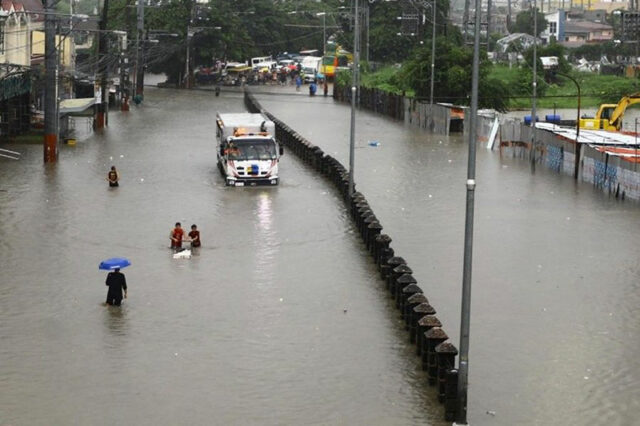
DAMAGE to the country’s agriculture sector from three successive tropical storms and the southwest monsoon has climbed to P1.12 billion, the Department of Agriculture (DA) said at the weekend.

The agency said 45,408 farmers and fishermen were affected, with damage covering 43,741 hectares of farmland — mostly rice fields. Of the 41,189 hectares of affected rice areas, 32,445 hectares were partially damaged and still have recovery potential, while 8,744 hectares were completely lost.

Estimated rice production losses reached 19,819 metric tons, equivalent to about a third of the country’s daily consumption and valued at P664.4 million, the DA said.

High-value crops across 918 hectares suffered losses amounting to 4,509 metric tons and were valued at P162.2 million. Corn farms covering 1,613 hectares posted an estimated loss of P55.7 million. Fisheries were also heavily affected, with losses pegged at P202.4 million and 1,436 fishermen affected.

Regions affected include the Cordillera Administrative Region, Ilocos Region, Cagayan Valley, Central Luzon, Calabarzon, Mimaropa, Bicol Region, Western Visayas, Zamboanga Peninsula, Northern Mindanao, Davao Region and Soccsksargen.

The DA said it would distribute P653 million worth of assistance in the form of seeds, livestock, fingerlings and other agricultural inputs to aid recovery.

The National Food Authority has released 43,136 bags of rice to the Ilocos Region, Cagayan Valley, Central Luzon, Calabarzon, Mimaropa, Bicol Region, Soccsksargen and Metro Manila. Central Luzon received the biggest allocation, which was distributed through the Department of Social Welfare and Development.

The Agricultural Credit Policy Council has allotted P400 million in zero-interest loans for affected farmers and fishermen.

Meanwhile, the Philippine Crop Insurance Corp. estimates initial indemnity payouts for 45,980 insured farmers at P268 million.

In a separate report, the National Disaster Risk Reduction and Management Council (NDRRMC) said the death toll from the combined effects of storms Crising, Dante and Emong, as well as the enhanced southwest monsoon, had climbed to 30.

Thirteen of the deaths — nine in the National Capital Region, two in Central Luzon, one in Northern Mindanao and one in Caraga — have been confirmed.

The NDRRMC was still verifying six deaths in Western Visayas, four in Calabarzon, three in the Negros Island Region, two in Northern Mindanao, one in Mimaropa and one in the Davao Region.

The total number of affected families has reached 5.57 million from 1.54 million families across 6,053 villages in 17 regions. Damaged houses stood at 3,592,643 of which were totally destroyed. — Kyle Aristophere T. Atienza

House prosecutors to ask high court to reconsider junking of VP impeachment

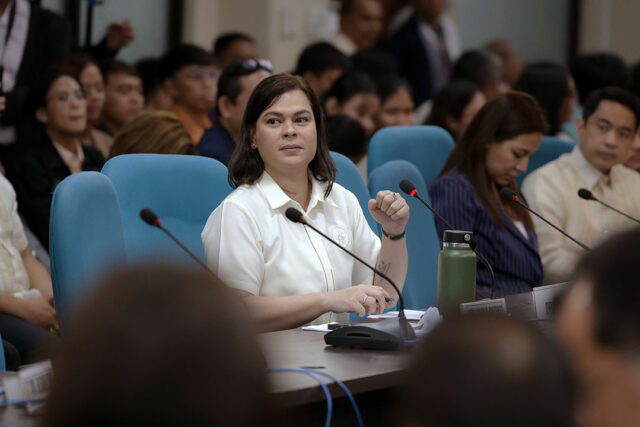
VICE-PRESIDENT Sara Duterte-Carpio, in this Aug. 27, 2024 photo, attended the deliberations on the proposed 2025 budget for the Office of the Vice-President at the House of Representatives in Quezon City. — PHILIPPINE STAR FILE PHOTO/MIGUEL DE GUZMAN

By Adrian H. Halili, Reporter

THE HOUSE of Representatives on Sunday said that it will file a motion for reconsideration before the Philippines’ High Court following its ruling to bar the impeachment proceedings of Vice-President (VP) Sara Duterte-Carpio for being unconstitutional.

“The House, after careful study, will file a Motion for Reconsideration because the decision is anchored on factual premises or findings that are erroneous and contrary to the official record of the House,” House Spokeswoman Priscilla Marie “Princess” T. Abante said in a statement.

Last week, the Supreme Court (SC) ruled that the impeachment of Ms. Duterte was unconstitutional for violating the one-year ban on the filing of more than one complaint against an impeachable official and the right to due process. Any subsequent impeachment complaint against her may only be filed by Feb. 6, next year.

A total four impeachment complaints were filed against the Vice-President. She was impeached on the fourth complaint after more than 200 House members voted to send her impeachment complaints to the Senate, after the first three failed to materialize.

Ms. Abante said that the Court’s primary argument — that the Articles of Impeachment were transmitted to the Senate without plenary approval — was “categorically false.”

“On Feb. 5, 2025, Majority Leader (Manuel Jose “Mannix” M. Dalipe) proposed to forward the February complaint to the Senate, based on the fact that it was verified and signed by at least one third of the members of the House. This motion was approved in plenary, and the House immediately formed a panel of public prosecutors,” she added.

She said that the transmittal to the Senate was a clear result of the House’ plenary action.

The House Spokeswoman also argued that the House had voted to archive the first three impeachment complaints filed in December 2024.

“On the same day that the February complaint was acted upon, the House also voted in plenary to archive the three impeachment complaints filed in December. This was done hours before the session adjourned,” she added.

Ms. Abante said that the SC had issued a new rule that is not in existing laws and has invalidated the Articles of Impeachment based on the new standards of due process for the respondent.

“According to the Court, even a complaint that has been signed and verified by 1/3 of the members still needs to be read by each signatory and then referred back to the plenary for a vote. The respondent should also have been given a copy and an opportunity to respond to the complaint before it is submitted to the Senate. But there is no such requirement in our Constitution or the Rules of the House,” she added.

Ms. Duterte, who is widely seen as a potential presidential contender in 2028, was impeached last February with the backing of more than 200 lawmakers — exceeding the one-third threshold required to transmit the charges to the Senate.

She faces accusations of secret fund misuse, unexplained wealth, destabilization and plotting the assassination of President Ferdinand R. Marcos, Jr., his family, and the Speaker. She has denied all allegations.

FACTUAL INACCURACIES
In a separate statement on Sunday, the 1SAMBAYAN Coalition called for the re-examination of the SC’s decision, also arguing factual inaccuracies.

“The misrepresentation of facts undermines the principles of due process and fair judgment,” the political group added. “1SAMBAYAN advocates for a transparent and accurate accounting of events, ensuring that future legal decisions are grounded on the truth and not flawed interpretations of the facts.”

It also said that the High Court’s decision was supported by a “flawed understanding” of the impeachment timeline and the procedural actions of the House.

“By incorrectly stating the order of events, the Court reached an erroneous conclusion regarding the timeliness of the fourth impeachment complaint,” 1SAMBAYAN added.

This could lead to a Constitutional crisis as some Senators have already shared plans to disregard the SC’s ruling, a political analyst warned.

“It is possible that this will lead to a constitutional crisis since some senators have already publicly declared that they want the trial to proceed believing that the Senate has the sole prerogative to handle and decide on issues pertaining to the impeachment of (Ms. Duterte),” Arjan P. Aguirre, who teaches political science at the Ateneo de Manila University, said in a Facebook Messenger chat.

He added that House prosecutors should use the setback as a way to campaign and raise awareness about the charges against the Vice-President.

“Use this time to gather more evidence too by conducting committee hearings for more discussions and deliberations to ferret out the truth, etc.” Mr. Aguirre said.

Michael Henry Ll. Yusingco, a fellow at the Ateneo de Manila University Policy Center, said that the charges against Ms. Duterte could instead be pursued through the Office of the Ombudsman.

“The House should bring the case to the Ombudsman. The House prosecutors should work to secure a plunder indictment that can be filed with the Sandiganbayan,” Michael Henry Ll. Yusingco, a fellow at the Ateneo de Manila University Policy Center, said in a Facebook Messenger chat.

He added that the High Court’s ruling did not absolve the Vice-President of the charges filed against her.

“So, plunder charges can be pursued and prosecuted through the Ombudsman. The VP can still be held criminally liable and punished accordingly,” Mr. Yusingco said.

Josue Raphael J. Cortez, who teaches diplomacy and governance at De La Salle-College of St. Benilde, noted that House prosecutors should confirm if they will still pursue a case against Ms. Duterte next year.

“It is still imperative that those supportive of the impeachment proceedings must continue doing their due diligence,” Mr. Cortez said in a Messenger chat.