Home Blog Page 1188

San Miguel Beer battles Magnolia for Philippine Cup solo leadership

PBA

Games on Wednesday
(Smart Araneta Coliseum)
5 p.m. – NorthPort vs Rain or Shine
7:30 p.m. – San Miguel vs Magnolia

WHENEVER it’s the All-Filipino, San Miguel Beer (SMB) and Magnolia play with a lot of pride and will to win.

The Philippine Cup is the PBA’s centerpiece competition, one the 10-time kingpin Beermen and the six-time titlist Hotshots traditionally consider their domain.

In the ongoing conference, there’s more at stake for the Beermen and the Hotshots. Not only are they after the PBA’s crown jewel but they’re also aiming for redemption after crashing out in the elimination round and quarterfinal stage, respectively, of the preceding Commissioner’s Cup.

And the Beermen and the Hotshots started their drives with back-to-back triumphs to share pole position.

“I’m expecting them to do well because in practice, it’s very evident that they want to win. And that’s the thing na we instill on the mind of the players,” said SMB coach Leo Austria.

“For us to win, we have to work harder because a lot of teams are playing really well and catching up talent-wise. And this is an all-Filipino, there’s no easy game so we have to level up to be competitive.”

Fresh from beating last season’s Finals conqueror Meralco, 110-98, in their April 9 “retro game,” the June Mar Fajardo and CJ Perez-led Beermen take a big test against the Hotshots in a marquee duel for the solo lead tonight.

The Holy Wednesday gig is set for 7:30 p.m. at the Smart Araneta Coliseum after the 5 p.m. curtain raiser between NorthPort (1-0) and injury-hit Rain or Shine (0-1).

“It will be a huge game for us. I’m really worried about Magnolia because they’re playing a lot better, they’re in top shape and relentless,” said Mr. Austria of their opponent.

Magnolia’s Chito Victolero said the Hotshots really focused on their shot-stopping schemes in the pre-conference.

“Credit to all the players because they embrace to improve our strength and our defense,” he said. “And I think it’s working.”

The double-header will serve as the PBA’s final offering before taking its Holy Week break. Action will resume on April 23 at the Big Dome featuring grand slam-seeking TNT and Barangay Ginebra in their conference debuts against NLEX (1-1) and Terrafirma (1-2), respectively. — Olmin Leyba

Philippines hosts FIBA U16 Asia Cup SEABA Qualifiers

LA TENORIO — PBA.jpg

Tenorio gets baptism of fire

FORMER Gilas Pilipinas standout and now Gilas youth head coach LA Tenorio gets a baptism of fire at home as the Philippines hosts the 2025 FIBA U16 Asia Cup Southeast Asia Basketball Association (SEABA) Qualifiers from May 24 to 30.

Pampanga will house the tourney at the Bren Z. Guiao Convention Center in San Fernando as announced by the Samahang Basketbol ng Pilipinas (SBP) after a meeting with provincial governor Dennis “Delta” Pineda.

It will serve as the much-awaited coaching debut for Mr. Tenorio, who’s concurrently serving as assistant coach to Tim Cone in the Gilas men and a veteran leader for Barangay Ginebra in the PBA.

Mr. Tenorio, 40, was appointed by the SBP to take over the Batang Gilas program last November in lieu of long-time mentor Josh Reyes, who steered the squad back to the FIBA U17 World Cup after six years.

Mr. Reyes authored the Mr. Kieffer and Mr. Alas-led Gilas youth to a sweep of the SEABA Qualifiers in 2023 in Indonesia before a semifinal finish in the 2024 Asian tourney for a World Cup return in Turkey since the golden batch of AJ Edu, Carl Tamayo and Kai Sotto In 2018.

Now, all eyes are on Mr. Tenorio with a new squad as Gilas youth looks to keep its supremacy against Southeast Asian rivals led by Thailand, Indonesia and Malaysia to book a ticket to the FIBA Asia Cup in August in Mongolia.

Mr. Tenorio is known for his role in the lethal three-guard combo with Jimmy Alapag and Jayson Castro in Gilas’ heydays in the 2010s marked by the Jones Cup championship in 2012, where he was named MVP, and the silver medal finish in the 2013 FIBA Asia Cup.

The feat paved Gilas’ return to the World Cup after 35 years and has not missed the world conclave since then highlighted by a hosting in 2023.

Mr. Tenorio, the PBA’s Iron Man, is hoping to do the same for Gilas youth. — John Bryan Ulanday

NBA sees sport’s growth lagging behind potential in Europe

NEW YORK — The basketball business in Europe is far from living up to its potential, NBA Deputy Commissioner Mark Tatum told Reuters, as the league explores launching a new operation in the continent to take advantage of the sport’s skyrocketing popularity.

Commissioner Adam Silver said last month that it was looking into launching NBA Europe with world basketball body FIBA as its partner, with the initial plan to have a 16-team league.

The league is intended to harness the explosive popularity of the sport in the continent, where Tatum said basketball is second only to soccer, as well as the deep pool of talent, with roughly 15% of all NBA players today from Europe.

“There’s an opportunity to continue to accelerate the growth of basketball in Europe and to close the gap between the affinity for the game of basketball and the commercial viability of basketball in that market as well,” he told Reuters.

Organizers of the Euroleague, the continent’s existing premier club competition, balked at the idea of a new league, however, and said the plans for a new European league amounted to a threat that could fragment the sport.

“Our goal is not to replace the Euroleague. Our goal is to create a commercially viable league that features high quality on-court competition and respects the rich tradition of European basketball. And we think that that will better serve fans and players on the continent,” Tatum said.

“We’ve tried for years to bring all of the relevant stakeholders together and we remain open to doing so.”

Tatum pointed to the lack of permanent Euroleague teams in key cities including London, Paris, Berlin and Rome, and said the investment that comes with a new league would help bring sorely needed basketball infrastructure to the region.

“The lack of world-class basketball facilities in Europe is striking relative to the affinity there,” Tatum said.

“There are big markets in Europe that aren’t being serviced today, where there are millions of basketball fans that aren’t being serviced.”

NBA TALKS
The NBA held early-stage talks with owners of Paris St Germain (PSG) and Manchester City among others, along with possible backers of a London-based team, Bloomberg reported.

A spokesperson for PSG owner Qatar Sports Investments said it had been “approached with regards to a basketball franchise in Paris in relation to which we have expressed an interest,”

NBA rules would prohibit current team owners from having individual franchises in Europe, Tatum said.

The potential Europe league extends the NBA’s longstanding effort toward globalization, a trend that is happening across the North American “Big Four” men’s leagues.

Four years ago, the NBA announced the formation of NBA Africa, which co-organizes the Basketball Africa League with FIBA, and Tatum said the league has hosted more than 100 games in Europe.

Nowhere was the sport’s growing global appeal more obvious than the Paris Olympic Games, where dozens of NBA athletes could be found on teams from Germany to South Sudan. At the 1992 Games, there were only nine international players from the NBA.

A joint-record 125 international players from 43 countries were named to NBA teams at the start of the 2024-25 season.

“The US Accounts for less than 5% of the world’s population so by definition, our biggest opportunities for growth are going to exist outside the United States,” said Tatum.

“We want to continue to spur the growth of basketball in Europe, in Africa, in Asia, in South America and Latin America and continue to grow the sport here in North America as well. — Reuters

Luka Dončić’s No. 77 Lakers jersey is NBA’s bestseller

LUKA DONČIĆ’S trade from the Dallas Mavericks to the Los Angeles Lakers shook the basketball world, and apparently motivated the fans, too.

Dončić’s No. 77 Lakers jersey was the top seller for the 2024-25 regular season according to NBAStore.com sales, the NBA announced Monday.

He is also the first person other than Steph Curry or LeBron James to top the list for more than a decade. The last time Curry or James didn’t have the best-selling jersey was when Carmelo Anthony’s No. 1 New York Knicks jersey was the most popular in the 2012-13 season.

Curry and James haven’t gone far, though. Curry’s No. 30 Golden State Warriors jersey is second this season and James’ No. 23 Lakers jersey is third.

The rest of the top 10 include:

4. Jayson Tatum, Boston Celtics

5. Jalen Brunson, Knicks

6. Victor Wembanyama, San Antonio Spurs

7. Anthony Edwards, Minnesota Timberwolves

8. Ja Morant, Memphis Grizzlies

9. Shai Gilgeous-Alexander, Oklahoma City Thunder

10. Nikola Jokic, Denver Nuggets. Reuters

GS in play-in tourney

Save for a brief stretch in the second quarter, the score was close for the entire match. Yet, when the battle smoke cleared, the Warriors found themselves ruing missed opportunities that could have netted them the win against the Clippers and, with it, the sixth seed in the playoffs. Instead, they wound up in the play-in tournament for the third time in five years. And if they consider today’s set-to against the eighth-running Grizzlies with no small measure of trepidation, it’s because they carry a 0-3 slate, losing twice in 2021 and once last year.

Indeed, the Warriors appeared on the way to booking a meeting with the rival Lakers in the first round of the postseason. Unfortunately, turnovers by Stephen Curry — coupled with bad misses by Draymond Green and Buddy Hield — in the crunch torpedoed any chance they had of prevailing in front of the 18,064-strong capacity crowd at the Chase Center. And so egregious were their blunders that even casual observers had cause to deem them their own worst enemies the other day.

Not that the Clippers didn’t deserve to win. In fact, they highlighted their resiliency in hostile territory, with James Harden and Kawhi Leonard — ably backstopped by Ivic Zubac and Norman Powell — coming up big down the stretch. And in so doing, they underscored their mastery over the Warriors; they swept the season series, in the process showing all and sundry that they have the number of the 2023 National Basketball Association champions. They’ve likewise proven that they have the personnel to legitimately cast a moist eye on the hardware for the first time since they bowed to the Suns in the 2021 conference finals.

So, yes, the Warriors have no choice but to go all out today; while they can still afford a setback given their higher seeding vis-a-vis the Grizzlies, they would do well to take care of business pronto. Else, they may yet get burned anew. It’s not their fault the West has become so competitive that their 23-8 record since Jimmy Butler’s arrival at the trade deadline practically amounted to squat. It will, however, most definitely be their fault if they waste one more campaign with Curry already in his twilight years.


Anthony L. Cuaycong has been writing Courtside since BusinessWorld introduced a Sports section in 1994. He is a consultant on strategic planning, operations and human resources management, corporate communications, and business development.

US steps up probes into pharmaceutical, chip imports, setting stage for tariffs

REUTERS

The Trump administration is proceeding with probes into imports of pharmaceuticals and semiconductors as part of a bid to impose tariffs on both sectors on grounds that extensive reliance on foreign production of medicine and chips is a national security threat, Federal Register filings on Monday showed.

The filings announce 21-day public comment periods and mark President Donald Trump’s latest use of Section 232 of the Trade Expansion Act of 1962 as justification for so-called sectoral tariffs aimed at boosting domestic production of goods he says are critical to national security.

Using the 232 provision, the Trump administration has started investigations into imports of copper and lumber, and probes completed during Trump’s first term formed the basis for 25% tariffs rolled out since his return to the White House in January on steel and aluminum and on the auto industry.

The filings, which indicate the administration began the investigations on April 1, follow exclusions unveiled over the weekend for smartphones, computers and other electronics imported largely from China from Mr. Trump’s steep 125% reciprocal duties. Mr. Trump officials had said those products would soon be subject to Section 232 tariffs.

Section 232 probes need to be completed within 270 days of their initiation.

Mr. Trump has made use of tariffs a central plank of his administration’s economic and national security policies, rolling out a series of aggressive levies against trading partners that economists estimate have lifted the average import duty to around 25% from just 2.5% in matter of months.

The announcements have roiled financial markets, with most U.S. stock indexes now down 10% or more from record highs hit following Trump’s election win in November. Waves of economists have also downgraded their outlooks for the American economy, many foretelling higher joblessness and inflation in the wake of Mr. Trump’s tariffs.

A top Federal Reserve official – Governor Christopher Waller – earlier on Monday called Mr. Trump’s tariff policy “one of the biggest shocks to affect the U.S. economy in many decades.”

‘BREATHING ROOM AND VISIBILITY’
The U.S. began collecting baseline tariffs of 10% on most U.S. imports on April 5, and Mr. Trump on April 9 put on hold even stiffer levies aimed at goods at dozens of other trading partners, although the heftiest tariffs targeting China remain in place. Pharmaceuticals and semiconductors are exempt from those duties, but Mr. Trump has said they will face separate tariffs.

Mr. Trump said on Sunday he would be announcing tariffs on imported semiconductors over the next week, adding that there would be flexibility with some companies in the sector.

The U.S. relies heavily on chips imported from Taiwan, something former President Joe Biden sought to reverse during his term by granting billions of dollars in Chips Act awards to lure chipmakers to expand production in the United States.

The notices published on Monday showed the investigations will include both pharmaceuticals and pharmaceutical ingredients as well as other derivative products.

Drugmakers have argued that tariffs could increase the chance of shortages and reduce access for patients. Still, Mr. Trump has pushed for the fees, arguing that the U.S. needs more drug manufacturing so it does not have to rely on other countries for its supply of medicines.

Companies in the industry have lobbied Mr. Trump to phase in tariffs on imported pharmaceutical products in hopes of reducing the sting from the charges and to allow time to shift manufacturing.

Large drugmakers have global manufacturing footprints, mainly in the U.S., Europe and Asia, and moving more production to the U.S. involves a major commitment of resources and could take years.

“This notice gives us some breathing room and visibility on when the tariffs might be expected, and we will be certainly looking out for the lobby actions that PHRMA and the industry CEOs will be engaging in over the next three weeks,” said Bernstein analyst Courtney Breen.

“We are bracing for announcement of tariffs around mid-May and see tariffs of 10-25% as being possible, with the industry angling for a slow ramping to these tariffs and potential carve-outs,” Ms. Breen said.

Gary Shapiro, CEO and Vice Chair of the Consumer Technology Association, said that Mr. Trump’s Friday exclusion on smartphones, computers and semiconductors recognized that his tariffs will hurt consumers.

“At the same time, the shift from IEEPA to Section 232 as a legal basis for tariffs reveals the Administration’s desire for a more durable justification,” Mr. Shapiro said in a statement. “But claiming that downstream consumer tech products qualify as ‘semiconductors’ is a stretch.”

He called for “a smarter, targeted trade strategy where we team up with allies to compete with China.” — Reuters

United Nations trade agency urges US to exclude poor states from tariffs

REUTERS

UNITED NATIONS — The United Nations (UN) Trade and Development agency urged US President Donald J. Trump’s administration on Monday to exclude the poorest and smallest economies from reciprocal tariffs because it “would have minimal impact on United States trade policy objectives.”

Mr. Trump imposed steep import tariffs from 11% to 50% on 57 trading partners – including the European Union — on April 9 only to pause the duties hours later for 90 days for all of them but China. The pause has cut the rate for those states to 10%, a level he had imposed on nearly all other countries.

The UN agency, known as UNCTAD, said the pause offered a “critical moment to consider exempting” small, vulnerable economies and least developed countries “from tariffs that offer little to no advantage for US trade policy while potentially causing serious economic harm abroad.”

In a policy insight report it said some of the countries listed among the 57 trading partners threatened with reciprocal tariffs above 10% “are very small and/or economically poor with very low purchasing power.”

“As a result, they offer limited or no export market opportunities for the United States. Trade concessions from these partners would mean little to the United States, while potentially reducing their own revenue collection,” UNCTAD said.

Mr. Trump’s tariff pause is aimed at allowing time to negotiate deals to reduce foreign tariffs and trade barriers. UNCTAD also said that for 36 of the 57 trading partners listed, the new tariffs would generate less than 1% of current US tariff revenues.

UNCTAD also noted that several of the 57 trading partners targeted by Washington export agricultural commodities that are not produced in the United States and for which there are few substitutes.

“Examples include Madagascar’s vanilla and cocoa from Cote d’Ivoire (Ivory Coast) and Ghana. Increasing tariffs on such goods, while generating some revenue, is likely to result in higher prices for consumers,” it said. — Reuters

China accuses US of launching ‘advanced’ cyberattacks

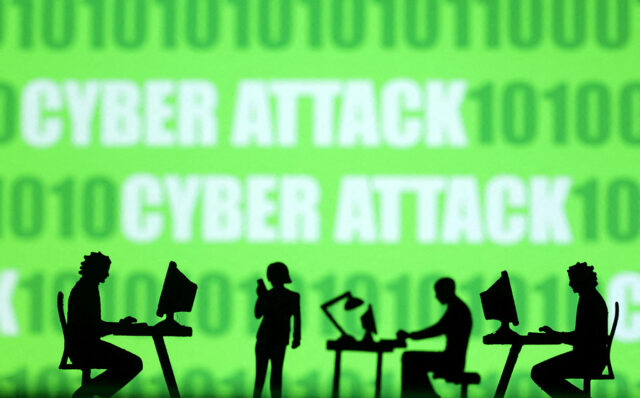
Miniatures of people with computers are seen in front of binary codes and words “cyber attack’ in this illustration taken July 19, 2023. — REUTERS

BEIJING — Chinese police in the northeastern city of Harbin have accused the United States National Security Agency (NSA) of launching “advanced” cyberattacks during the Asian Winter Games in February, targeting essential industries.

Police added three alleged NSA agents to a wanted list and also accused the University of California and Virginia Tech of being involved in the attacks after carrying out investigations, according to a report by state news agency Xinhua on Tuesday.

The NSA agents were identified by Xinhua as Katheryn A. Wilson, Robert J. Snelling and Stephen W. Johnson. The three were also found to have “repeatedly carried out cyber attacks on China’s critical information infrastructure and participated in cyberattacks on Huawei and other enterprises.”

It did not specify how the two American universities were involved.

The US Embassy in China did not immediately respond to an e-mailed request for comment.

The detailed allegations come as the world’s two largest economies spiral deeper into a trade war that has already spurred travel warnings for Chinese tourists going to the US and halted imports of US films into China.

“The US National Security Agency  launched cyberattacks against important industries such as energy, transportation, water conservancy, communications, and national defense research institutions in Heilongjiang province,” Xinhua said, citing the Harbin city public security bureau.

The attacks had “the intention of sabotaging China’s critical information infrastructure, causing social disorder, and stealing important confidential information,” it added.

ANONYMOUS SERVERS
Xinhua said the NSA operations took place during the Winter Games and were “suspected of activating specific pre-installed backdoors” in Microsoft Windows operating systems on specific devices in Heilongjiang.

In order to cover its tracks, the NSA purchased IP addresses in different countries and “anonymously” rented a large number of network servers including in Europe and Asia,” Xinhua said.

The NSA intended to use cyberattacks to steal the personal data of participating athletes, the news agency said, adding that the cyber attacks reached a peak from the first ice hockey game on February 3.

The attacks targeted information systems such as the Asian Winter Games registration system and stored “sensitive information about the identities of relevant personnel of the event,” Xinhua said.

The US routinely accuses Chinese state-backed hackers of launching attacks against its critical infrastructure and government bodies. 

Last month, Washington announced indictments against a slew of alleged Chinese hackers who targeted the US Defense Intelligence Agency, the US Department of Commerce, and the foreign ministries of Taiwan, South Korea, India, and Indonesia.

Beijing denies all involvement in overseas cyber espionage.

After years of being accused by Western governments of cyberattacks and industrial espionage, in the past two years several Chinese organizations and government organs have accused the United States and its allies of similar behavior.

In December, China said it found and dealt with two US cyberattacks on Chinese tech firms to “steal trade secrets” since May 2023, but did not name the agency involved. — Reuters

Trade tensions can lead to stock market crashes — IMF

THE International Monetary Fund in Washington, US. — REUTERS

WASHINGTON — Major geopolitical risk events, including trade tensions, can trigger large corrections in stock prices, the International Monetary Fund (IMF) said in a report on Monday.

That in turn can generate market volatility which can threaten financial stability, it said in a chapter from its forthcoming Global Financial Stability Report.

The IMF did not mention specific events, such as the sweeping tariffs US President Donald J. Trump has announced in recent weeks. But it noted that news-based measures of risk, including conflicts, wars, terrorist attacks, military spending and trade restrictions had increased sharply since 2022.

In an accompanying blog, the IMF urged financial institutions to hold enough capital and liquidity to help them deal with potential losses from geopolitical risks, and urged them to use stress tests and other analyses to identify and manage such risks.

In its report, the IMF said its research had shown that big risk events such as wars, diplomatic tensions or terrorism sent stock prices down an average 1 percentage point monthly across all countries, with the average drop for emerging markets 2.5 percentage points (ppts).

International military conflicts, such as Russia’s invasion of Ukraine in 2022, were the most significant risk events, pushing stock returns down an average 5 ppts monthly, twice the level of other geopolitical risk events.

The IMF is due to release the full report at its spring meetings with the World Bank the week of April 21. Mr. Trump’s tariff announcements will likely dominate the meetings.

Last week saw the wildest swings on Wall Street since the coronavirus pandemic of 2020. The benchmark Standard & Poor’s 500 index is down more than 10% since Mr. Trump took office on Jan. 20, while gold has hit record highs.

One US survey of consumers showed inflation fears have hit their highest level since 1981, while financial institutions have been warning of the growing risk of recession.

The IMF also said economic uncertainty increases so-called market tail risks — the chance of extreme, unexpected losses in an investment portfolio — which in turn boost the risk of stock market crashes.

It said heightened geopolitical risks also drive up sovereign risk premiums — the prices for credit derivatives that protect against default — and could spill over to other economies through trade and financial linkages.

In the accompanying blog, the IMF looked at the impact of US-China tariff actions from 2018 to 2024, noting that some larger-scale announcements had driven shares in both countries lower. — Reuters

Harvard gets hit by $2.3-B funding freeze after it rejects Trump’s demands

HARVARD on Monday rejected numerous demands from the Trump administration that it said would cede control of the school to a conservative government that portrays universities as dangerously leftist.

Within hours of Harvard taking its stand, the administration of President Donald J. Trump announced it was freezing $2.3 billion in federal funding to the school.

The funding freeze comes after the Trump administration said last month it was reviewing $9 billion in federal contracts and grants to Harvard as part of a crackdown on what it says is antisemitism that erupted on college campuses during pro-Palestinian protests in the past 18 months.

On Monday, a Department of Education task force on combating antisemitism accused America’s oldest university of having a “troubling entitlement mindset that is endemic in our nation’s most prestigious universities and colleges — that federal investment does not come with the responsibility to uphold civil rights laws.”

The exchange escalates the high-stakes dispute between the Trump administration and some of the world’s richest universities that has raised concerns about speech and academic freedoms.

The administration has frozen hundreds of millions of dollars in federal funding for numerous universities, pressing the institutions to make policy changes and citing what it says is a failure to fight antisemitism on campus.

Deportation proceedings have begun against some detained foreign students who took part in pro-Palestinian demonstrations, while visas for hundreds of other students have been canceled.

Harvard President Alan Garber wrote in a public letter on Monday that demands made by the Department of Education last week would allow the federal government “to control the Harvard community” and threaten the school’s “values as a private institution devoted to the pursuit, production, and dissemination of knowledge.”

“No government — regardless of which party is in power — should dictate what private universities can teach, whom they can admit and hire, and which areas of study and inquiry they can pursue,” Mr. Garber wrote.

The issue of antisemitism on campus erupted before Mr. Trump took office for his second term, following pro-Palestinian student protests last year at several universities following the 2023 Hamas attack inside Israel and the subsequent Israeli attacks on Gaza.

White House spokesman Harrison Fields said in a statement on Monday that Mr. Trump was “working to Make Higher Education Great Again by ending unchecked antisemitism and ensuring federal taxpayer dollars do not fund Harvard’s support of dangerous racial discrimination or racially motivated violence.”

In a letter on Friday, the education department stated that Harvard had “failed to live up to both the intellectual and civil rights conditions that justify federal investment.”

The department demanded that Harvard, work to reduce the influence of faculty, staff and students who are “more committed to activism than scholarship” and have an external panel audit the faculty and students of each department to ensure “viewpoint diversity.”

The letter also stated that Harvard, by this August, must only hire faculty and admit students based on merit and cease all preferences based on race, color or national origin. The university must also screen international students “to prevent admitting students hostile to American values” and report to federal immigration authorities foreign students who violate conduct rules.

Last week, a group of Harvard professors sued to block the Trump administration’s review of nearly $9 billion in federal contracts and grants awarded to the school.

The Trump administration is reportedly considering forcing fellow Ivy League school Columbia into a consent decree that would legally bind the school to follow federal guidelines in how it combats antisemitism. Some Columbia professors, like those at Harvard, have sued the federal government in response. The government has suspended $400 million in federal funding and grants to Columbia.

Harvard’s Mr. Garber said the federal government’s demands that it “audit” the viewpoints of its students, faculty and staff to ferret out left-wing thinkers generally opposed to the Trump administration clearly violated the university’s First Amendment rights to freedom of speech.

“The University will not surrender its independence or relinquish its constitutional rights,” Mr. Garber wrote.

He added that while Harvard is taking steps to address antisemitism on campus, “these ends will not be achieved by assertions of power, unmoored from the law, to control teaching and learning at Harvard and to dictate how we operate.”

Harvard agreed in January to provide additional protections for Jewish students under a settlement resolving two lawsuits accusing the Ivy League school of becoming a hotbed of antisemitism.

To ease any funding crunch created by any cutoff in federal funding, Harvard is working to borrow $750 million from Wall Street. — Reuters

As economy stalls, Germany struggles to get consumers spending

The Brandenburg Gate is illuminated during the Festival of Lights, in Berlin, Germany Oct. 4, 2024. — REUTERS/LISI NIESNER/FILE PHOTO

BERLIN — With global trade deeply uncertain and a tariff war causing havoc on financial markets, Germany’s next government is hoping to unleash domestic consumption to revive stalled growth in an economy that has been driven for decades by exports.

Conservative chancellor-in-waiting Friedrich Merz, in a newly forged coalition with the center left Social Democrats (SPD), has announced policies such as tax cuts and raising the minimum wage.

He hopes these measures will increase purchasing power and support domestic demand. However, economists, retail groups and consumer behavior experts question whether they will be enough to persuade Germans — already among the world’s biggest savers — to break open their piggy banks and spend.

“I doubt that we will really see a sharp consumption revival this year,” Carsten Brzeski, global head of macro told Reuters.

Germany’s attempts to wean itself off its exports dependency predate the trade turmoil unleashed by the Trump administration, as it has long struggled to deal with declining competitiveness.

Since 2023, domestic consumption has been stagnant however, with the household savings rate reaching 20% last year due to political uncertainty, above the EU average of 15%.

To avoid a third year of contraction in 2025, economists agree that boosting consumption in Europe’s biggest economy is crucial.

“Looking at it in a very simple way you can say, okay, there is a fall in demand for our export goods, so we have to strive for more domestic demand, which is investment and consumption,” Cyrus de la Rubia, chief economist at Hamburg Commercial Bank AG, told Reuters.

Merz’s coalition has agreed to lower income taxes for middle and lower income households, which could help consumption, the German retail association HDE told Reuters. “However, we do not expect a significant upturn.”

The government will make overtime pay tax-free and offer tax benefits for those working beyond retirement age. The minimum wage is expected to rise to 15 euros ($17.10) per hour and the value-added tax (VAT) on food in restaurants will be lowered to 7% from a current 19%.

Deutsche Bank, however, said these “miscellaneous fiscal gifts” will provide only limited relief in the near term.

Since unveiling the measures, Mr. Merz’s coalition has started bickering about the contents of the agreement, with Mr. Merz warning that tax cuts would only happen if there was enough money in the budget.

Moreover, the measures would likely take time to change household habits, Salomon Fiedler, an economist at Berenberg, told Reuters.

“German consumers seem to need a more psychological kickstarter: a policy or political breakthrough,” Mr. Brzeski said.

Despite a borrowing bonanza announced by Mr. Merz after the election, consumer sentiment was broadly unchanged afterwards, with a cooling labour market also making households hold back.

SUSTAINABILITY TRENDS
Adding to their reluctance to spend, German consumers are increasingly conscious of their environmental impact.

In the heart of Berlin is Kleiderei, a labyrinth of aisles with clothing from virtually every decade and style imaginable that customers can borrow for a monthly fee, like “a clothing library.”

“Our model is about slowing down consumption and creating a real community,” Kleiderei director Lena Schroeder told Reuters, having now five physical stores in Germany. “When customers visit our stores, they can touch and feel the clothes, making more conscious decisions about what they borrow.”

Kleiderei only includes pre-owned clothes in its collection of 60,000 pieces, repairing them to maintain quality.

As fast fashion brands like Shein and Temu rise, social media influencers advocate more environmentally responsible consumption.

“These advertisements on TV or radio always want people to buy more… but we actually don’t need it,” said Lisa Monaco, founder of the blog Nachhaltig4Future. “We already have an excess of everything – it’s not good for anyone.”

The 34-year-old, who started her sustainability platform in 2020 during the pandemic, provides tips ranging from zero waste to-go kits to sustainable cleaning products.

“Influencers have become the new gatekeepers of consumer attention, especially for younger generations,” Barbara Engels, senior economist at the IW institute told Reuters. “Luxury is out, values are in.”

Such a trend may continue. Close to 60% of the Germans reported consuming sustainably in some way, while 71% said they would like to do more, a 2023 study from the Development Engagement Lab showed.

“The project ‘making German consumers spend again’ will not be an easy one and requires patience and stamina,” said Mr. Brzeski. — Reuters


Tariffs drag Asia growth outlook to weakest since COVID

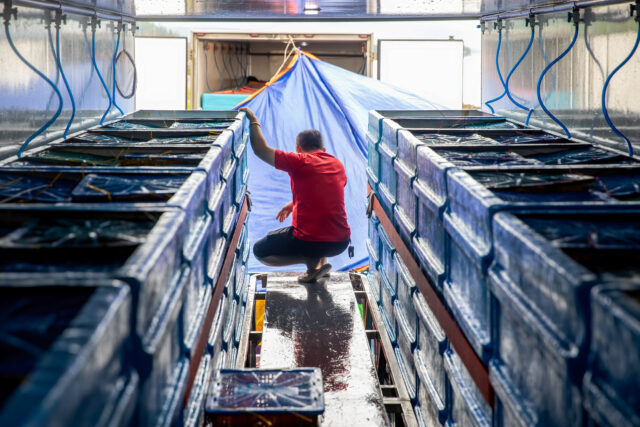
A worker arranges the plastic bins containing lobsters in the seawater tanks and oxygen generators inside a truck at a lobster collection point in Song Cau, Vietnam, on Friday, Dec. 20, 2024. — BLOOMBERG

US President Donald Trump’s global tariffs would cut Asia’s economic growth to the weakest since the COVID-19 pandemic, according to a regional research group.

If America’s so-called reciprocal levies are implemented, growth across Asia would slow to 3.8% this year and 3.4% next year, according to the ASEAN+3 Macroeconomic Research Office. The 2025 estimate includes Trump’s “Liberation Day” charges on all nations that he subsequently paused, but not the recently announced temporary exemption for certain products including smartphones and electronics.

That forecast compares to a 4.2% baseline without tariffs and would mark the slowest pace of growth since it slumped to 3.3% in 2022.

While some countries may be hit harder given how much they rely on exports to the US — such as Vietnam and Cambodia — the region can mitigate the impact by easing monetary policy and boosting fiscal spending, according to the Singapore-based group.

“They’ll take policy responses to mitigate it,” said AMRO chief economist Hoe Ee Khor. “The region is pretty resilient because they’ve accumulated reserves over the years and are more flexible in terms of the exchange rate,” he said, adding that inflation is tame, leaving space for central banks to cut policy rates.

Asia is set to be the hardest hit by Trump’s protectionist push, given the escalating charges on China and how integrated supply chains are across the region. Officials from Vietnam to Japan have been seeking exemptions and promising concessions across meetings with counterparts in the US.

Some central banks have already started cutting interest rates, flagging risks to the growth outlook, including the Reserve Bank of India last week, where members signaled additional easing in coming months.

Meanwhile, the 145% levies announced this year on China and retaliatory duties on the US mean trade is set to plummet between the two nations.

That impact is likewise “manageable” for China since the nation’s share of exports to the US makes up a shrinking share of domestic GDP, according to AMRO. The bigger risk, meanwhile— that the two economies will fully decouple — isn’t likely, Mr. Khor said. “Decoupling is basically all imports and exports” down to zero, he said. “That’s an extreme scenario that won’t happen.”

If implemented, US tariffs on Asia would rise to an average 26% excluding China, according to AMRO. About 15% of the region’s total exports currently head to the US, comprising about 4% of GDP. — Bloomberg