Home Blog Page 1180

PHL loses tariff edge as US also sets 19% rate on 4 ASEAN members

A US FLAG and a “tariffs” label are seen in this illustration taken on April 10, 2025. — REUTERS/DADO RUVIC/ILLUSTRATION

By Aubrey Rose A. Inosante, Reporter

THE PHILIPPINES may have lost its edge in the US market as the US imposed a similar 19% tariff on imports from Indonesia, Cambodia, Malaysia and Thailand, analysts said.

Analysts warned this may undermine the Philippines’ competitiveness as it erodes the margin of preference and limits opportunities for trade diversion.

In an executive order signed on July 31, US President Donald J. Trump imposed a 19% duty on many goods from five members of the Association of Southeast Asian Nations (ASEAN) — the Philippines, Cambodia, Malaysia, Thailand and Indonesia. This will take effect on  Aug. 7.

“What we’ve been saying before is that a 20% or even 19% tariff is acceptable — as long as our competitors have higher rates than us,” Philippine Exporters Confederation, Inc. (Philexport) President Sergio Ortiz-Luis, Jr. said in a phone interview over the weekend.

“The problem now in Asia is that countries like Japan and South Korea have even lower tariffs, and now we’ve been matched by Indonesia, Thailand, and the rest of the ASEAN+5, who are also our direct competitors. That’s where the problem lies for us.”

The Philippines had received the smallest tariff discount among ASEAN members even though Philippine President Ferdinand R. Marcos, Jr. met with Mr. Trump at the White House. The new rate is slightly lower than the 20% the US had threatened to impose, but higher than the 17% tariff announced in April.

Unlike the Philippines, other ASEAN countries received significant tariff discounts from the US, namely, Indonesia (from 32%) Malaysia (from 25%), Thailand (from 36%), Cambodia (from 36%), and Vietnam (from 46%).

At the same time, Mr. Trump set 15% duty on goods from South Korea (from 25%) and Japan (from 25%).

As the new US tariffs are set to take effect on Aug. 7, Trade Secretary Ma. Cristina A. Roque said the talks with the US are still ongoing to come up with a “mutually beneficial deal.”

“While some ASEAN member states got also 19% reciprocal tariff rate, I am not aware what deals or concessions were given for that because every country has its own sensitivities and priorities,” Ms. Roque told BusinessWorld in a Viber message on Saturday.

LOWER EXPORTS
Mr. Ortiz-Luis warned the higher US tariffs will dampen demand for Philippine goods, which will lead to lower exports for the US market. He said this also leaves no room for Philippine exporters to increase prices as regional competitors now have similar or lower tariff rates.

In June, the United States was the top destination for Philippine-made goods amounting to $1.22 billion, 35.2% higher from the same month a year ago.

“[Exporters] will be scared. We look to the government now to come up with mitigating measures to support our exporters. But I don’t know if the government is prepared to do that,” he said.

Mr. Ortiz-Luis also said the exporters group is still in the dark on the comprehensive details of the recent US-Philippines trade deal

Jose Enrique A. Africa, executive director at IBON Foundation, said “the Philippines loses much of the margin of preference and price-based advantage that the government was counting on to offset our underdeveloped manufacturing workforce, infrastructure, and ecosystem.”

He also said the changes in tariff rates in the region further reduce the chances of the Philippines benefiting from trade diversion or US manufacturers looking for supply-chain players.

“The right direction is definitely not to recklessly pursue more free trade agreements, since decades of such openness have already led to our premature deindustrialization and current inability to compete or take advantage of market access, even when it exists on paper,” Mr. Africa said.

Former Tariff Commissioner George N. Manzano said the Philippines is “not disadvantaged” even though it has the same US tariff rates as  Cambodia, Malaysia, Thailand, and Indonesia.

“My only observation is that in relative terms, we paid a steep price in concessions in terms of tariff revenue foregone by agreeing to duty-free imports of US imports in some products compared to our ASEAN neighbors, because we had a reduction of only 1 percentage point from 20%,” Mr. Manzano told BusinessWorld in a Viber message.

Finance Secretary Ralph G. Recto earlier said the government is anticipating between P3 billion and P6 billion in foregone revenues following its decision to grant zero tariffs on selected US products such as automobiles, wheat, soy, and pharmaceuticals.

Meanwhile, Ms. Roque said the Philippines remains competitive as it recently introduced economic reforms such as the Corporate Recovery and Tax Incentives for Enterprises to Maximize Opportunities for Reinvigorating the Economy Act, and free trade agreements with other countries.
BSP to refine economic surveillance tools

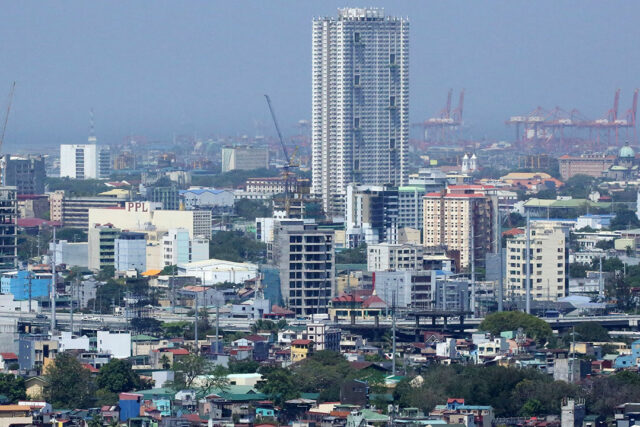
High-rise buildings dominate the Manila and Makati skyline. — PHILIPPINE STAR/EDD GUMBAN

THE Bangko Sentral ng Pilipinas (BSP) is working on further refining their economic surveillance tools to better capture data and enhance policymaking, an official said.

The central bank is shifting from mainly traditional data to more soft data in their monitoring, surveillance, and assessment, BSP Deputy Governor Zeno Ronald R. Abenoja said.

“We’re trying to improve a lot of things at the central bank, including our ability to monitor what’s happening on the ground real time and what it means going forward,” he told reporters on Friday.

“As we improve the surveillance, it helps us communicate, hopefully, what we think is happening on the ground and what we think are important developments that could affect policies moving forward.”

For example, the BSP is studying how to mine more data from the Consumer Expectations Survey and Business Expectations Survey.

“We are reviewing the instruments. We want to improve the ease of filling up or getting more information,” he said, adding that they are also reviewing the content of these surveys.

The BSP is also looking at how to streamline the data without sacrificing the information gathered.

“We are trying to improve our ability to mine more information from these different surveys. We are also trying to improve our understanding of what’s happening in the different regions.”

Mr. Abenoja said the BSP is also working to improve the data capture effectiveness of their surveys, and is considering the use of supplementary surveys.

He cited the US Federal Reserve, which uses strategic surveys on consumer sentiment that have more forward-looking aspects of household expectations.

“We’re thinking of doing those types (of survey) that are more forward-looking to have a sense how households are thinking of reacting or their expectations under different circumstances.”

Policy recommendations to the Monetary Board would be based on more solid and current information, he added.

The BSP is also keen on implementing more early warning exercises to better “anticipate possible scenarios that could influence developments and impact our policy stance.”

It is also studying how to leverage developments in the information technology sector and harness computing power.

FX PlAYBOOK
Meanwhile, Mr. Abenoja said they are in the process of developing an “FX (foreign exchange) playbook.”

“There are a lot of studies, analysis being done on the relationship between exchange rate and inflation, exchange rate and inflation expectations,” he said.

BSP Governor Eli M. Remolona, Jr. earlier said they are seeking to develop a “playbook” to guide foreign exchange intervention.

“There are asymmetric effects and threshold effects. The impact of FX movements on inflation is not the same in the sense that the significant, sharp depreciation over a short period of time could have big implications on inflation,” Mr. Abenoja said.

“But we may want to smooth out this impact on inflation because sometimes there are swings, there is a deficit and then it suddenly returns to the previous level. But the impact on inflation is already there,” he said.

Mr. Abenoja said there is room for foreign exchange intervention to smooth out its effects.

“The playbook is being reviewed… to ensure there is a development on our analysis of the dynamics of foreign exchange market. We want to preserve our flexible exchange rate regime,” he said.

“But probably we can improve the inflation dynamics by smoothing out some of these temporary effects of exchange rate on inflation, so we’re doing the playbook.” 

Meanwhile, in a separate memorandum, the BSP is advising banks on the revised the Residential Real Estate Price Index (RREPI), which seeks to provide a more comprehensive overview of the sector.

In a memorandum posted on its website, the BSP reminded universal and commercial banks, thrift banks and digital banks to submit their quarterly reports on residential real estate loans and appraised commercial properties in view of the revised index.

“With the transition to the hedonic methodology, the RREPI has been renamed the Residential Property Price Index (RPPI),” it said.

All references to the RREPI shall now refer to RPPI, it added.

“This change aligns the index’s nomenclature with international standards and more accurately reflects its comprehensive coverage of residential property prices on the banking segment of the market.”

The BSP monitors banks’ exposure to the property sector as part of its mandate to maintain financial stability.

The RREPI tracked the average price changes of residential properties across different housing types and locations.

The BSP in a separate notice said the RREPI relied on “simple averages (and) oversimplified the residential property market by assuming homogeneity within the stratum and failing to address outliers.”

“The use of hedonic regression — widely regarded as the gold standard in property price index generation — allows for the observation of how intrinsic characteristics of the residential real estate market independently influence prices,” it added.

The latest first-quarter data were released with the RPPI format. Latest data showed that the RPPI rose by an annual 7.6% in the January-March period, though slower than the 9.8% expansion logged in the fourth quarter. — Luisa Maria Jacinta C. Jocson

IPO pipeline seen to stay thin for remainder of 2025

BW FILE PHOTO

By Revin Mikhael D. Ochave, Reporter

DOMESTIC initial public offering (IPO) activity is expected to remain limited for the rest of the year amid uncertainties related to tariffs, according to analysts.

Only three initial public offerings are expected to take place this year, which would be half of the Philippine Stock Exchange’s (PSE) target of six, said DragonFi Securities, Inc. Equity Research Analyst Jarrod Leighton M. Tin in a Viber message.

Aside from the lone IPO so far — Cebu-based fuel distributor and retailer Top Line Business Development Corp. in April — Mr. Tin said two more companies could push through with their public listing plans this year, consisting of integrated resort operator Hann Holdings, Inc. and west zone water concessionaire Maynilad Water Services, Inc.

“The tepid IPO pipeline reflects a subdued market environment and lingering uncertainty over the US tariff policies, both of which continue to dampen investor appetite and discourage companies from listing. We believe IPO sentiment will likely remain muted under these conditions,” Mr. Tin said.

United States President Donald J. Trump announced a 19% tariff rate for products from the Philippines following a meeting with President Ferdinand R. Marcos, Jr. in Washington. The tariff rate is marginally lower than the 20% that Mr. Trump threatened to impose, but higher than the 17% announced in April.

“Investor sentiment is being weighed down by global concerns such as the trade tariffs, alongside local worries such as inflation and interest rates,” Unicapital Securities, Inc. Research Head Wendy B. Estacio-Cruz said in a Viber message.

Despite the cautious outlook, Ms. Estacio-Cruz said there is still some room for optimism.

However, she said the planned IPOs of GCash operator Globe Fintech Innovations, Inc. (Mynt) and the real estate investment trust (REIT) of Sy-led property developer SM Prime Holdings, Inc. are unlikely to happen this year.

“There’s some appetite for IPOs, especially for companies with solid fundamentals or exposure to resilient sectors like gaming, tech, and logistics,” she said.

“Big names like GCash or SM Prime’s REIT might be a stretch this year, but if market conditions hold steady, we could see a few more listings, especially from firms that have been waiting for the right timing,” she added.

Jayniel Carl S. Manuel, Seedbox Securities, Inc. sales and trading department assistant manager, said in a Viber message that the local bourse could see three to four IPOs this year depending on market sentiment.

“Realistically, I think we’ll be lucky to see three to four IPOs push through this year, assuming market sentiment remains cautious,” he said.

“While there’s still investor interest, most are becoming more selective, favoring proven names over riskier bets. Unless a major player like GCash or SM Prime REIT surprises us, I don’t see a significant pickup in IPO filings for the rest of the year,” he added.

On July 17, the Securities and Exchange Commission (SEC) approved the IPO of Hann Holdings, which expects to generate up to P11.43 billion in net proceeds. The company is expected to list its IPO on Sept. 23.

Maynilad postponed its IPO to no later than end-October from its initial listing date of July 17 to accommodate interest from cornerstone investors. The water provider aims to raise up to P37.41 billion in net proceeds.

Last month, the PSE raised its target for capital raising this year to over P186 billion, with some P123.7 billion expected in the second half.

The market operator raised about P62.6 billion in the first six months.

Pangilinan-led conglomerate Metro Pacific Investments Corp., which holds a majority stake in Maynilad, is one of three Philippine subsidiaries of First Pacific Co. Ltd., alongside Philex Mining Corp. and PLDT Inc.

Hastings Holdings, Inc., a unit of PLDT Beneficial Trust Fund subsidiary MediaQuest Holdings, Inc., has an interest in BusinessWorld through the Philippine Star Group, which it controls.

MGen sees power generation capacity doubling by 2030

MERALCOPOWERGEN.COM.PH

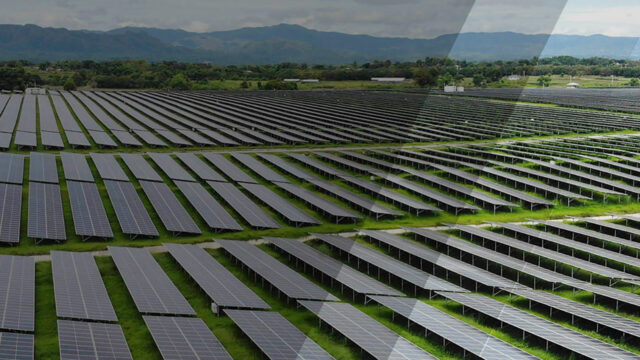
MERALCO PowerGen Corp. (MGen), the power generation arm of Manila Electric Co. (Meralco), expects to deliver 10,346 megawatts (MW) of net sellable capacity and 5,288 MW of attributable capacity over the next five years, according to its president.

This would double the company’s current net sellable capacity of 5,068 MW and attributable capacity of 2,559 MW from its Philippine and Singapore operations, MGen President and Chief Executive Officer Emmanuel V. Rubio said in a Viber message over the weekend.

Mr. Rubio attributed the anticipated increase to its “growth projects,” such as the MTerra Solar Project, which consists of a 3,500-MW solar farm paired with a 4,500-MW-hour battery energy storage system.

“MGen is set to exceed its 1,500-MW attributable renewable energy capacity goal by 2027, three years ahead of the original 2030 timeline,” he said.

The company is also banking on the 1,200-MW Atimonan coal-fired power plant in Quezon province and the 73-MW Toledo coal-fired power plant in Cebu. Other assets include Excellent Energy Resources, Inc.’s Unit 4 in Batangas and PacificLight Power Pte. Ltd.’s 600-MW gas-fired power facility in Singapore.

For the first half, MGen delivered a total of 12,644 gigawatt-hours of energy, a 66% increase compared to the same period last year.

“This significant growth was driven by improved dispatch across our plants, consistently high plant availability, increased capacity contributions, particularly with the successful integration of Chromite Gas Holdings, and our team’s continued commitment to operational excellence and reliability across the portfolio,” Mr. Rubio said.

Meralco’s power generation business accounted for 37% of its total earnings in the six-month period, which rose by 10% to P25.54 billion.

Manuel V. Pangilinan, chairman and chief executive officer of Meralco, said the power distributor is on track to hit its target bottom line of P50 billion for this year. 

Meralco’s controlling stakeholder, Beacon Electric Asset Holdings, Inc., is partly owned by PLDT, Inc. Hastings Holdings, Inc., a unit of PLDT Beneficial Trust Fund subsidiary MediaQuest Holdings, Inc., has an interest in BusinessWorld through the Philippine Star Group, which it controls. — Sheldeen Joy Talavera

T-bill, RTB rates to track secondary market levels

STOCK PHOTO | Image by RJ Joquico from Unsplash

RATES of the Treasury bills (T-bills) on offer on Monday could end mostly lower on bets of further monetary easing by the Bangko Sentral ng Pilipinas (BSP), while the five-year retail Treasury bonds (RTBs) could fetch yields close to comparable secondary market levels at the rate-setting auction.

The Bureau of the Treasury (BTr) will auction off P25 billion in T-bills on Monday, or P7 billion in 91-day securities, P8.5 billion in 182-day debt, and P9.5 billion in 364-day papers.

On Tuesday, the government will hold the rate-setting auction for its offering of five-year RTBs, from which it targets to raise at least P30 billion. The BTr cancelled its scheduled auction of P30 billion in five-year Treasury bonds (T-bonds) on Aug. 5 to give way to the RTB offer.

“The upcoming Treasury bill average auction yields could again slightly ease after the comparable short-term PHP BVAL (Bloomberg Valuation Service) yields were mostly slightly lower, particularly the six-month and one-year tenors,” Rizal Commercial Banking Corp. Chief Economist Michael L. Ricafort said in a Viber message.

“Upcoming local inflation data expected to be benign… could still support the dovish signals recently by local monetary authorities on possible 50-basis-point (bp) rate cuts for the rest of 2025, the earliest of which would be a possible 25-bp rate cut as early as the next rate-setting meeting on Aug. 28,” Mr. Ricafort said.

At the secondary market on Friday, the rate of the 91-day T-bill inched up by 0.48 bp week on week to end at 5.4152%, based on PHP BVAL Reference Rates data as of Aug. 1 published on the Philippine Dealing System’s website. Meanwhile, the 182- and 364-day papers went down by 2.47 bps and 1.72 bps to fetch 5.557% and 5.6628%, respectively.

Meanwhile, a BusinessWorld poll of 17 analysts yielded a median estimate of 1.2% for the July consumer price index, within the central bank’s 0.5%-to-1.3% forecast for the month.

If realized, the July print would be slower than the 1.4% in June and 4.4% clip in the same month a year ago.

BSP Governor Eli M. Remolona, Jr. said on Wednesday that a rate cut is “on the table” at the Monetary Board’s Aug. 28 review. If realized, this would mark the BSP’s third straight easing move since April.

The BSP has lowered borrowing costs twice this year, with cumulative cuts since it began its easing cycle in August 2024 now at 125 bps.

Mr. Remolona also said he is keeping his outlook for two more rate cuts this year. After this month’s review, the Monetary Board has two remaining meetings scheduled in October and December.

On the other hand, the five-year RTBs could fetch yields at par with comparable secondary market rates, Mr. Ricafort said. At the secondary market on Friday, the five-year bond rose by 0.49 bp week on week to end at 5.9734%, based on PHP BVAL Reference Rates data.

“The upcoming RTBs could add to the supply of bonds in the market and siphon off excess peso liquidity,” he said.

“The expected coupon rate is 6%. Eligible bonds for exchange amount to P566 billion, which could relieve liquidity pressure,” a trader added in an e-mail.

The public offer period for the RTBs will run from Aug. 5 to Aug. 15, unless ended earlier by the Treasury.

For the first time, the retail bonds will be available on an e-wallet, as they will be sold on GCash’s GBonds platform.

As part of the retail bond offer, the BTr is also conducting a bond exchange program for holders of eligible three-, seven- and 10-year T-bonds set to mature from September this year to February next year.

Last week, the Treasury raised P28.4 billion from the T-bills it auctioned off, higher than the P25-billion plan, with the offer more than four times oversubscribed as total bids reached P103.45 billion.

Broken down, the BTr borrowed P7 billion as planned via the 91-day T-bills as total tenders for the tenor reached P37.74 billion. The three-month paper was quoted at an average rate of 5.388%, down by 3.4 bps from the rate seen at the previous auction. The BTr only accepted bids with this yield.

Meanwhile, the government raised P11.9 billion from the 182-day securities, higher than the P8.5-billion program, as bids amounted to P36.74 billion. The average rate of the six-month T-bill was at 5.543%, down by 2.3 bps from the previous week, with accepted yields ranging from 5.54% to 5.55%.

Lastly, the Treasury sold the programmed P9.5 billion in 364-day debt as demand for the tenor totaled P28.97 billion. The average rate of the one-year T-bill inched down by 0.4 bp to 5.627%. Tenders accepted carried rates ranging from 5.6% to 5.648%.

The government borrows from local and foreign sources to help fund its budget deficit, which is capped at P1.56 trillion or 5.5% of gross domestic product this year. — A.M.C. Sy

SEC says no new tax, just standardization

BW FILE PHOTO

THE Securities and Exchange Commission (SEC) said the 20% tax on long-term deposit interest under the newly implemented Capital Markets Efficiency Promotion Act (CMEPA) is not a new levy but part of a standardization move.

The corporate regulator said the 20% tax on interest income from long-term deposits under the CMEPA has “standardized the tax rate across investment instruments.”

“The new law merely standardizes the tax on interest income for all types of deposits,” SEC Chairperson Francisco Ed. Lim said in an e-mailed statement over the weekend.

“The tax code previously discriminated against short-term deposits by unduly burdening them just because they cannot keep cash in banks for longer periods,” he added.

The SEC issued the statement after the CMEPA faced backlash for removing the tax exemption previously enjoyed by long-term deposits.

With the new law, interest income from deposit products — including savings deposits, time deposits, deposit substitutes, trust funds, negotiable certificates of deposit, and similar financial instruments — now faces a uniform final withholding tax of 20%, regardless of holding period.

Prior to the CMEPA, interest earned from time deposits with a term of five years or more was tax-exempt. Time deposits of more than three years but less than five years also enjoyed varying preferential rates.

Mr. Lim said the lower stock transaction tax (STT) under the CMEPA is also expected to generate more savings for investments, which would help improve stock market liquidity.

The CMEPA slashed the STT to 0.1% from 0.6%. The previous rate was the highest in the Association of Southeast Asian Nations (ASEAN).

“The previous rate had the effect of discouraging the public from investing in the stock market, especially those who may want to engage in bulk transactions. With the lower tax, the savings that investors get can be reinvested back to the capital market,” Mr. Lim said.

“The reduced STT is one of the most important reforms under the CMEPA, as it brings the rate in the Philippines at par with our peers in ASEAN,” he added.

Investment & Capital Corp. of the Philippines President and Chief Operating Officer Jesus Mariano “Manny” P. Ocampo said the CMEPA has already helped improve market liquidity since it took effect.

“Following the implementation of CMEPA, average daily trading value jumped from P6.8 billion in June to P10.6 billion in early July. That’s a 50% increase, suggesting improved liquidity and renewed interest among investors,” he said in a separate statement.

The CMEPA is also expected to entice more Filipinos to increase their retirement funds through Republic Act No. 9505, or the Personal Equity and Retirement Account (PERA), by enabling employers to claim an additional 50% tax deduction for PERA contributions, provided they match or exceed the employee’s contribution.

Other provisions under the CMEPA include the harmonization of the capital gains tax to a flat 15% on shares of foreign corporations and the reduction of the documentary stamp tax on the original issuance of shares of stock to 0.75% from 1% of par value. — Revin Mikhael D. Ochave

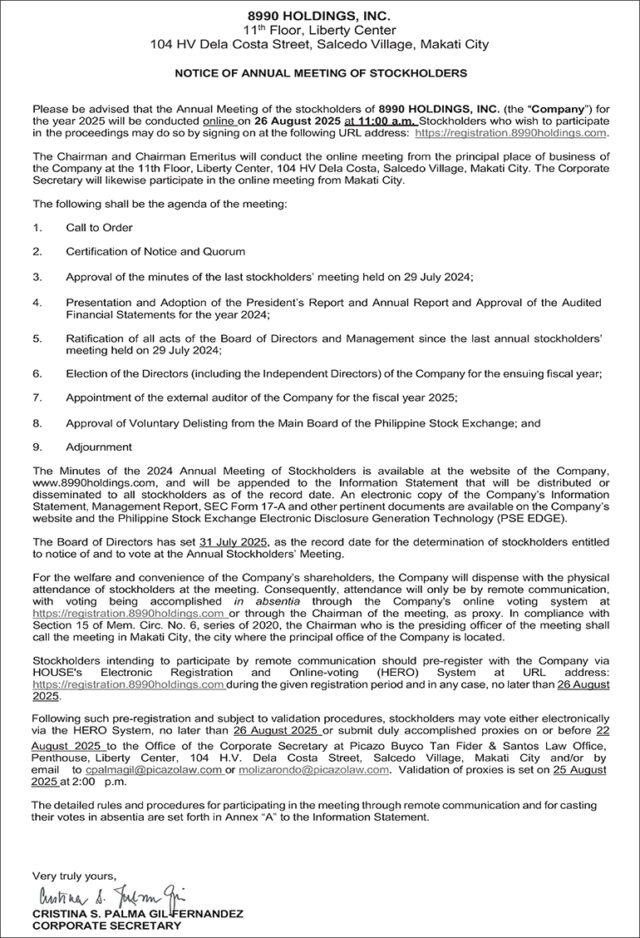
8990 Holdings, Inc. to hold virtual Annual Stockholders Meeting on Aug. 26


Spotlight is BusinessWorld’s sponsored section that allows advertisers to amplify their brand and connect with BusinessWorld’s audience by publishing their stories on the BusinessWorld Web site. For more information, send an email to online@bworldonline.com.

Join us on Viber at https://bit.ly/3hv6bLA to get more updates and subscribe to BusinessWorld’s titles and get exclusive content through www.bworld-x.com.

Metrobank net profit up 8% in Q2

METROPOLITAN Bank & Trust Co. (Metrobank) saw its net profit rise by 8.44% year on year in the second quarter.

The Ty-led bank’s attributable net income increased to P12.59 billion in the three months ended June from P11.61 billion in the same period last year, according to its financial statement disclosed to the stock exchange on Friday.

This brought its first-semester net earnings to P24.85 billion, climbing by 5.25% year on year from P23.61 billion, “supported by healthy loan growth, recovering margins, robust trading income, and improving cost efficiency,” Metrobank said in a statement.

This translated to a return on equity and a return on assets of 12.8% and 1.42%, respectively, down from 13.27% and 1.48% a year ago.

“Our first-half performance reflects the continuing strength of our core businesses. As we enter the second half of the year, we remain focused on building on our fundamentals and implementing prudent strategies, which will allow us to continue helping our clients grow further as well as achieve our medium-term goals,” Metrobank President Fabian S. Dee said.

The bank’s net interest income rose by 4.74% to P30.66 billion in the second quarter from P29.27 billion in the same period last year.

Broken down, interest income inched up by 1.72% to P45.03 billion as higher interest earnings from loans and receivables were offset by lower interest income from investment securities and deposits.

Interest expense slipped by 4.17% to P14.37 billion, mainly due to decreased interest expense on deposit liabilities, particularly on time deposits due to lower volume.

Net interest margin on average earning assets went down to 3.73% at end-June from 3.99% a year ago.

Metrobank’s other income jumped by 63.53% year on year to P8.91 billion in the second quarter on the back of higher net trading, securities, and foreign exchange gains.

Meanwhile, total operating expenses rose by 4.94% to P19.3 billion from P18.39 billion a year prior, primarily due to higher manpower costs.

The bank’s cost-to-income ratio was at 50% as of June, down from 52.33% a year ago.

“Gross loans grew by 13.2% year on year on healthy performance across portfolios. Institutional loans grew by 12.7% on the back of a sustained rise in corporate capital expenditures. Consumer loans went up by 15.3%, led by gross credit card receivables and auto loans, which climbed by 18.2% and 17.8% year on year, respectively,” Metrobank said.

Despite the expansion in its loan portfolio, the bank’s nonperforming loan (NPL) ratio eased to 1.54% at end-June from 1.66% a year ago.

“The bank booked P5.8 billion in provisions during the semester, keeping NPL cover high at 153.9%, still a strong buffer against any emerging risks,” it said.

On the funding side, total deposits stood at P2.3 trillion at end-June, with P1.5 trillion of this being low-cost current and savings account or CASA deposits.

This resulted in a loans-to-deposits ratio of 79.64% at end-June, up from 67.9% a year prior.

Metrobank’s total assets grew by 6% to P3.48 trillion as of June. Total equity stood at P390.7 billion.

The bank’s capital adequacy ratio stood at 16.3% at end-June, slightly lower than 16.72% a year ago, while its common equity Tier 1 ratio was at 15.57%, also down from 15.87%. Both remained above the minimum regulatory requirements.

Its liquidity ratio declined to 44.65% from 48.12%.

Metrobank shares went down by P1.50 or 2.02% to close at P72.70 each on Friday. — AMCS

Mayor Vico Sotto deals with congestion in Pasig City public schools

Education Secretary Sonny Angara recently stated that given the current budget and the growing classroom shortage, it could take up to 30 years to fully address public school congestion.

Given this, the Cristina Research Foundation, a public policy research and advocacy organization (full disclosure: We are the Chairman of Cristina Research), decided to conduct a study on the congestion in our Elementary and High School public schools.

The initial conclusion is that the 30-year period is optimistic. The current backlog is 165,000 classrooms and yet less than 1,000 new classrooms were constructed in 2024.

To better understand the congestion problem, Cristina Research created three maps to visualize congestion on three levels: 1.) regional, 2.) division-wide, and, 3.) city level. The data generated displayed enrollment and average pupil-classroom-ratio (PCR) within each sample region.

Cristina Research then decided to focus on congestion in Metro Manila where the congestion is critical as shown in Table 1.

Note that while Metro Manila students account for only 9% of enrolled students in public schools, they account for 21.8% of the congestion in public schools. This is understandable given that the main bottleneck of the government school building program is the lack of properties in which to construct classrooms and Metro Manila is, of course, crowded.

Given this information Cristina Research approached Pasig Mayor Vico Sotto asking for an opportunity to present its findings on his city’s public schools. He invited Cristina Research to present its findings to the Pasig City Local School Board (LSB) on June 23.

A summary of the presentation is shown in Table 2. As shown, of the 142,463 students enrolled in the Pasig City public schools in School Year 2025-2026, 28,295 are “aisle” students. “Aisle” students are students enrolled in the Second and Third shifts of the school day or are in classes that are above the optimum size of 45 students. Of the 44 public schools in Pasig City, 17 are on double shifts. Included in the presentation was the annual cost of school vouchers* if all the 28,295 aisle students were issued vouchers which would allow them to attend private schools.

The proposed voucher program was positively received by Mr. Sotto, who asked about the absorptive capacity of the Pasig City private schools. This would help determine the feasibility and potential impact of the proposed approach.

In response, on July 9, Cristina Research, with the full support of Dr. Ellaine Praxidio, the president of the Pasig Alliance of Private School Administrators, Inc. (PAPRISA) met with the PAPRISA board to conduct a survey among the group’s members on available slots to absorb the aisle students of the Pasig City public schools.

PAPRISA agreed and the survey was conducted. On July 29, Cristina Research presented the results of the survey to the Pasig City School Board.

Data was collected from 71 of 73 private schools and consisted of: 1.) tuition fees per level, 2.) available slots per level, and 3.) overall capacity per level. More importantly, the survey showed that private schools in Pasig City have enough available seats to accommodate only 17,116 of the 28,295 aisle students.

We consider this a promising start, as we are confident that once a voucher program is launched by the Pasig City government, the private schools can readily increase the available seats, unburdened as they are by government bureaucratic red tape.

At that same meeting, we conveyed the offer of two organizations to assist the city in designing and implementing the school voucher program.

The first is the Private Education Assistance Committee (PEAC), headed by Executive Director Doris Ferrer. PEAC designed and administers the national school voucher system for Senior High School students. Dr. Ferrer offered PEAC’s expertise to assist in the local voucher program.

The other organization is the Universal Storefront Services Corp. (USSC) headed by President Eckie Gonzales. USSC handled the National Registry System for Farmers and Fishers (RFFA) of the Department of Agriculture which transferred cash to the accounts of 2.3 million beneficiaries. USSC also handled the Malabon “Ahon Card” program which handled the ayuda (assistance) program for 87,000 beneficiaries. Mr. Gonzales also offered their expertise.

As Mr. Sotto and the Pasig City School Board work out the details of a voucher program in time for implementation in the coming school year (2026-2027), Cristina Research has approached several other Metro Manila mayors who have both the interest and the financial resources to adopt a similar plan.

What about those mayors who have the interest but not the financial resources?

Senator Sherwin Gatchalian and Congressman Roman Romulo have filed bills in Congress seeking to increase the budget of our present voucher system and, more importantly, to extend the coverage from Senior High School to Junior High School, Elementary, and Kindergarten.

The plan would be that as local government units with financial resources launch their local voucher systems, the national vouchers legislated by Messrs. Gatchalian and Romulo could then be directed to those local government units who do not have the financial resources to launch their own voucher system.

Given this emerging partnership between Congress, PEAC, local government executives, the associations of private schools like the PAPRISA, and private companies like USSC, there is reason to hope that the congestion in our public schools can be solved, not in 30 years but in three years.

* A system where public school students are issued vouchers which allow them to attend a private school which can, in turn, redeem the vouchers from the government.


Dr. Victor S. Limlingan is a retired professor of AIM and is a fellow of the Foundation for Economic Freedom. He is presently chairman of Cristina Research Foundation, a public policy adviser, and Regina Capital Development Corp., a member of the Philippine Stock Exchange.

French skincare line launched in PHL

AN ANTI-AGING skincare line from France, Filorga — known for its topical products which are supposed to have the same efficacy as injectable treatments — is now available in the Philippines.

Rustan Marketing Corp. officially launched the line of creams and serums during a luncheon on July 31 in Rockwell, Makati.

Founded in 1978 by aesthetic doctor Dr. Michel Tordjman, it began by revitalizing injectable solutions used by medical professionals across Europe. One of their lines, the Time Filler, plays with the concept: the wrinkle-correcting collection is inspired by five in-clinic aesthetic techniques, including botulinum toxin and tensor threads.

Filorga, which has its own laboratories in France and the US, developed its own proprietary complex, called NCEF (New Cellular Encapsulated Factors), to include in its products. NCEF combines hyaluronic acid, vitamins, amino acids, minerals, coenzymes, and antioxidants.

“We have our own R&D laboratory,” said Pauline Nat, Filorga global travel retail director and APAC director during a talk at the launch. “If you want efficiency, you need to have science.”

Filorga’s lines include the aforementioned Time-Filler, NCEF-Revitalize (serum, cream, and sheet mask for comprehensive skin renewal that boosts skin tone, firmness, and radiance), Hydra-Hyal (five types of hyaluronic acid for hydration), Global Repair Advanced (anti-aging with niacinamide, omega oils, peony, and rose extracts), Lift-Structure (collagen-boosting actives and peptides to lift the skin), Oxygen-Glow (radiance through oxygen boosters, hyaluronic acid, and enzymes), a triple action eye care line, a cream mask with collagen and elastin, and a three-step cleansing line.

“Before I do any treatment on my patients, I usually really emphasize the importance of having good quality skincare,” said dermatologist Gaile Robredo Vitas at the event.

“Healthy skin is your foundation,” she said. “Treatments and procedures amplify your skincare, but they should never replace it.”

With most of the lines of Filorga emphasizing anti-aging properties, Dr. Robredo Vitas was asked about the appropriate age to start using Filorga (or other anti-aging skincare lines). “More than the age, it’s actually what your skin is going through right now. We have a lot of patients in their early 30s who already have wrinkles and pigmentation,” she said. “What I do want to encourage is to start having a skincare routine at an early age.”

Already beloved by certain TV stars in the US, according to the company’s US website, Ms. Nat explained why they chose the Philippines as their next market. “We see a rising demand for effective skincare in the Philippines. The Philippines is one of markets in Asia where the medically dispensed products — the products sold by the doctor — has the highest penetration in the market. It really means the customers are asking the doctors, ‘What is good for me?’ We see the market potential, and we see customers being more demanding.”

The prices for Filorga products range from P1,450 for the Skin-Prep Micellar Solution to P5,950 for the Time-Filler 5XP Correction Cream. Filorga is available in-store at Rustan’s (Makati, Shangri-La Plaza, Alabang, Cebu); dermHQ, BeautiqueMD clinics, and online at Rustans.com, Trunc.ph, and Zalora. — Joseph L. Garcia

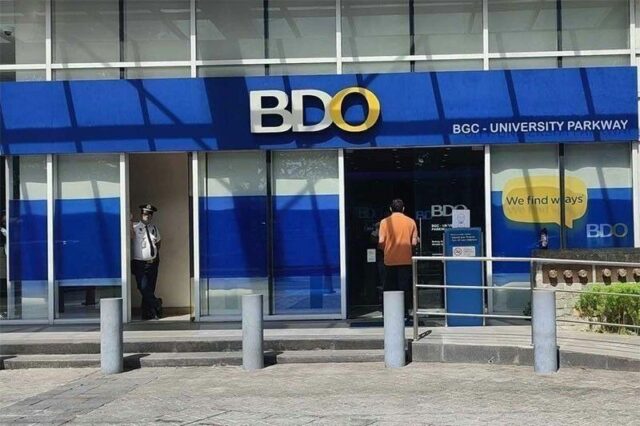
BDO shares down after profit taking

PHILIPPINE STAR/IRRA LISING

BDO UNIBANK, Inc. was one of the most actively traded stocks in the local market last week after disclosing its second-quarter earnings and latest offering of peso-denominated sustainability bonds.

Data from the Philippine Stock Exchange (PSE) showed that BDO was the third most actively traded stock last week, with 18.71 million shares worth a total of P2.73 billion traded from July 28 to Aug. 1.

At the end of the trading week, BDO closed at P143 per share, down 6% from the previous Friday’s close of P152.20.

The decline was also reflected in the financial sector, which fell by 2.7%, while the benchmark PSE index (PSEi) contracted by 1.7% week on week.

Year to date, the stock contracted slightly by 0.7%, a reversal from the financial sector’s 1.6% growth but better than the PSEi’s 3.4% decline.

Regina Capital Development Corp. Head of Sales Luis A. Limlingan said in a Viber message that the various news surrounding BDO drove investors to trade more actively.

“Some investors may have had higher expectations for the earnings, prompting them to take profits. In contrast, others might have viewed the oversubscribed bond issuance as a potential catalyst for BDO in the remaining months of the year,” said Mr. Limlingan.

Mr. Limlingan added that investors are still digesting BDO’s earnings report, as the increase in net income for the first half of 2025 is relatively modest compared to its growth from the first half of 2023 to the first half of 2024.

“This could weigh on investors’ sentiment. However, investors might view the recent decline in price as a bargain opportunity,” said Mr. Limlingan.

“BDO reported a flat income, up only 3% for the first half of 2025, though its revenue increased by almost 10% and its net interest margin rose by five basis points quarter-on-quarter. Also, gross loans were up by double digits broadly across all segments, and management expects to sustain the pace of loan growth going into the rest of the year,” said Aniceto K. Pangan, equity trader at Diversified Securities, Inc.

Mr. Pangan added that the bottom-line income was affected by the increase in operating expenses due to expanded market coverage such as branch expansion and higher business volumes, together with investments in information technology infrastructure supportive of maintaining growth momentum.

“Cost of this growth is expected to decelerate going forward. Also, provision for credit losses increased by 38% in the second quarter but it’s within expectation with annualized credit cost a bit down when compared to last year with nonperforming loan improving to 1.75% from 2% at second quarter,” added Mr. Pangan.

The Sy-led bank’s attributable net profit stood at P20.91 billion in the first quarter, almost flat from its P20.94-billion net income in the same period last year. This brought its attributable income to P40.62 billion for the first half of the year, a 3% increase from P39.44 billion posted in the same period last year.

Meanwhile, BDO’s net interest income in the second quarter picked up by 8.3% to P50.38 billion from P46.51 billion a year earlier.

Net interest margin inched down to 4.3% as of June from 4.34% a year ago amid lower rates due to the central bank’s monetary easing cycle and “competitive market pricing.”

Customer loans and total deposits in the first half rose to P3.48 trillion and P4.03 trillion, respectively.

BDO’s assets expanded to P5.13 trillion at end-June amid higher customer loans and were mainly funded by deposits.

In a disclosure last week, BDO raised P115 billion for its fourth peso-denominated ASEAN Sustainability Bond issue, twenty-three times oversubscribed against the original offer of P5 billion.

The bonds have a tenor of 1.5 years and carry a coupon rate of 5.875% per annum.

They were sold at a minimum investment amount of P500,000 and in additional increments of multiples of P100,000 thereafter.

The public offering for the bonds was first set to run from July 9 to 22 but was closed earlier than planned because of strong demand.

The net proceeds of the issuance are aimed at financing or refinancing eligible assets as defined in the bank’s Sustainable Finance Framework, supporting the bank’s lending activities, and diversifying the bank’s funding sources, BDO said in a disclosure.

“With the successful fundraising of P115 billion from the original offer of P5 billion for the ASEAN Sustainability Bond at twenty-three times oversubscription, you could expect further growth in BDO from these sectors as it encompasses broad-based key industries for the nation, fostering sustainable growth and inclusive development in the country,” said Mr. Pangan.

“This issuance would increase the bank’s liquidity, and if all goes well, like inflation and interest rates being in the business’ favor, it could provide a profit boost from the spreads generated through this successful offering. It may also support their plan in expanding their market coverage,” said Mr. Limlingan.

Given the first half earnings, Mr. Pangan expects better growth momentum going into the second semester as operating expenses are expected to decelerate with operating efficiencies further improving as support for growth was laid down in the first half of the year.

“Expect revenues to further improve at double digits going into the rest of the year,” said Mr. Pangan. Though Mr. Pangan did not give a revenue forecast for the year after President Donald J. Trump set a 19% tariff on Philippine goods, which has put a lot of uncertainties on global growth and economic activities.

Mr. Pangan gave immediate support of P142 per share, while immediate resistance is at P154.80 per share.

Mr. Limlingan said that BDO remains the largest bank in the country in terms of asset size.

“However, several factors could affect BDO if the Bangko Sentral ng Pilipinas implements further rate cuts this year. This could put downward pressure on its net interest margin and may force the bank to adjust its pricing, especially if competition from other banks intensifies,” Mr. Limlingan said.

Mr. Limlingan pegged support and resistance levels at P142.68 per share and P153.83 per share, respectively. — Lourdes O. Pilar

A legacy of helping

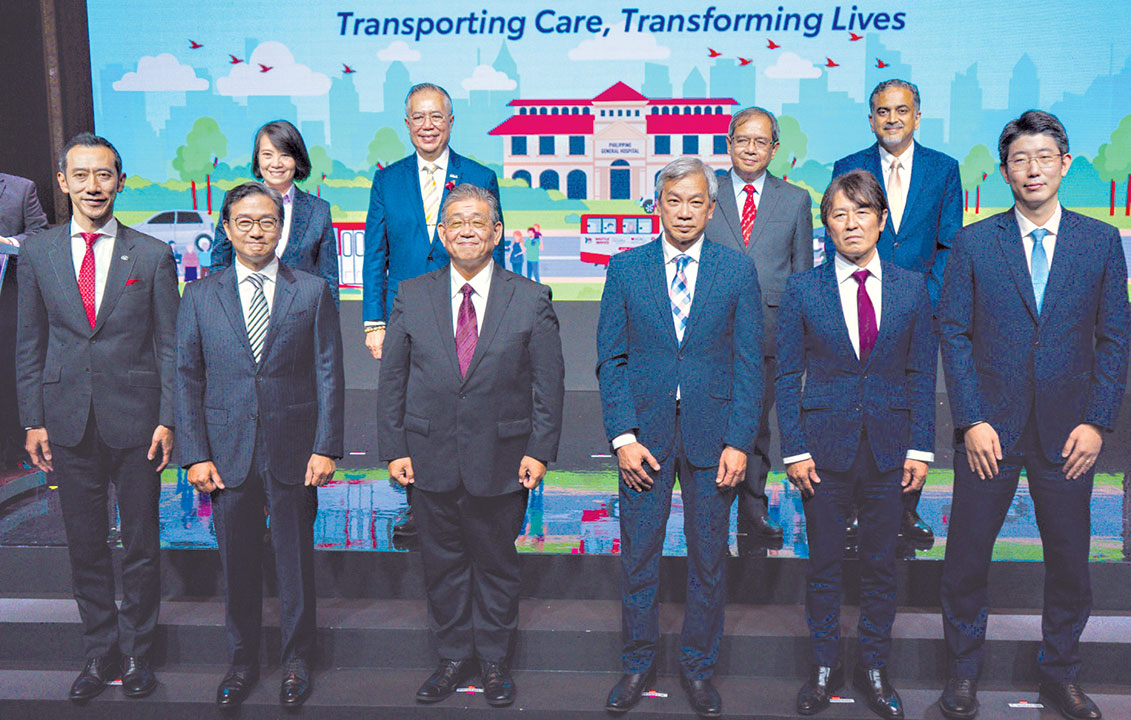
From left are Toyota Motor Philippines Foundation (TMP Foundation) President Jose Maria Aligada, Santa Rosa City Mayor Arlene Arcillas, Department of Health Secretary Teodoro Herbosa, First Lady of the Philippines Louise Araneta-Marcos, Toyota Motor Philippines (TMP) and TMP Foundation Chairman Alfred V. Ty, Toyota Motor Foundation (TMF) Deputy Chairman of the Board Susumu Matsuda, and TMP President and TMP Foundation Vice-Chairman Masando Hashimoto. — PHOTO BY KAP MACEDA AGUILA

Expanded advocacy marks TMP Foundation’s 35 years

THIRTY-FIVE YEARS of doing good is something worth celebrating. And there’s no better way to mark it than by finding even more ways to be of service to others. Toyota Motor Philippines Foundation (TMP Foundation), the “social and humanitarian arm” of Toyota Motor Philippines Corp. (TMP), works across four areas: education, health, environment, and community service.

Looking back at 35 years of “dedicated social and humanitarian service” with an event at the Grand Hyatt Hotel in Bonifacio Global City attended by public officials and private partners, TMP Foundation also took the opportunity to announce the addition of a new advocacy pillar, “Mobility+.”

“In synergy with our existing four pillars, this will enable us to create even more effective programs through the mobility of people, mobility of things, mobility of information, and mobility of creative and free ideas for many people,” said TMP and TMP Foundation Chairman Alfred V. Ty.

Late Metrobank Group and TMP Founding Chairman Dr. George SK Ty established the foundation to “give back to society and the communities from which (the group derives) resources.” Explained the younger Ty: “This vision was not merely an aspiration; it was a profound understanding of TMP’s role within the community — to improve the lives of our society, to contribute to a more equitable future for them.”

Mobility+ will now allow the foundation to expand its attention to the need for mobility and access — particularly to and for health professionals and the underserved segment of the populace they seek to treat or see. Spearheading the foray into the new area is the Healthcare Mobility for All (or HEAL) Project, led by Japan’s Toyota Mobility Foundation and undertaken with the Philippine General Hospital (PGH). The memorandum of understanding among the three parties was formally signed at the anniversary event.

The HEAL Project is envisioned to “address critical mobility needs and improve access to basic healthcare services in underserved communities,” to be achieved with the deployment of two Toyota Coaster-platformed mobile clinics to deliver essential medical laboratory services directly to patients in the pilot area Cavite (particularly Ternate), and the fielding of three units of the Tamaraw Utility Vans exclusively for healthcare workers traveling to and from PGH.

“The clinics will be integrated into the existing PGH IT systems that enable online consultation booking and will potentially be supported by a new queueing system to ensure efficient operations. This solution aims to optimize the time to do simple diagnosis and treatment for patients in these areas,” said TMP Mobility Foundation in a statement.

PGH Director-General Dr. Gerardo Legaspi revealed during the Q&A session at the event that the facility sees around 707,000 patients a year. “Around 30% of patients come from CALABARZON — and a majority of these patients come from Cavite. In the data that we have in the outpatient department, surprisingly, (many patients) still go for hypertension, diabetes, urinary tract infection consults. If we’re able to bring these services to the communities, you can imagine how many patients will be spared a trip to Manila.”

Speaking to members of the media after the event, TMF Program General Manager Nanako Kumamoto shared that the two mobile clinics and all the equipment therein will be turned over to PGH healthcare personnel for deployment in September. The shuttles, also to be fielded in September, meet a vital need for those commuting during nighttime or early morning when safety is a very real consideration.

TMP Foundation said that “this solution offers a more coordinated and comfortable way to travel to and from the hospital, reducing reliance on multiple public transportation transfers and minimizing safety concerns, commuting expenses and through pooling, and therefore cutting carbon emissions.”

The HEAL Project is potentially another feather in the cap for Toyota Motor Philippines, TMF Executive Program Director Pras Ganesh revealed in his response to this writer’s question. “This is the first location that we’re doing it within the Asia region,” he said, and likened it to the deployment of Toyota units for the use of healthcare workers during the time of the COVID-19 pandemic.

“(The) solution that we prepared here in the Philippines (was) replicated in Thailand, Indonesia, and India as well. So the issue of providing access to healthcare is a common issue, unfortunately across the region, and just as we did during the time of COVID-19, by creating this kind of a system, creating the program, creating the methodology, we could share it to other countries as well,” he concluded.