Home Blog Page 117

Marcos wants to scale solar-powered irrigation

President Ferdinand R. Marcos, Jr. led the inspection of the solar-powered irrigation project at Barangay Viejo, Minalabac, Camarines Sur, March 23, 2026.

PRESIDENT Ferdinand R. Marcos, Jr. is scaling up solar-powered irrigation as part of a broader push to shield Philippine agriculture from rising input costs and climate volatility.

While inspecting agricultural projects in Camarines Sur on Monday, Mr. Marcos reaffirmed continued state support for farmers as he inspected two P332-million solar-powered irrigation systems implemented by the National Irrigation Administration (NIA).

NIA Administrator Eduardo G. Guillen said the agency plans to expand similar systems, signaling a pipeline of projects that could accelerate adoption across irrigated areas.

“With the introduction of solar-powered irrigation systems in Camarines Sur, the government could strengthen food security and modernize the country’s agricultural sector through innovative, climate-resilient technologies,” a statement from the Presidential Communications Office read.

“With the adoption of solar energy, farmer cooperatives in the province drastically cut their power consumption, allowing them to save money and increase their income,” it added.

The projects cover the P126.7-million solar pump irrigation system of the San Agustin-San Ramon Agrarian Reform Farmers’ Cooperative in Bula and the P205.46-million New MASSBA Solar Pump Irrigation Project (Phase I) in Minalabac. — Chloe Mari A. Hufana

Isabela under state of calamity over prolonged dry spell

BAGUIO CITY — The provincial government of Isabela has placed the entire province under a state of calamity amid a prolonged dry spell that has battered farm output and threatened livelihoods.

The state of calamity declaration, approved by the Sangguniang Panlalawigan during its 7th Special Session at the Provincial Capitol in Ilagan City, came after reports of widespread crop damage and mounting losses among farmers due to persistent lack of rainfall.

The state weather bureau defines a dry spell as three consecutive months of below-normal rainfall, or two months of way-below-normal rainfall, conditions now being experienced across the province.

The resolution, sponsored by Board Member Evyn Jay C. Diaz, cited data from the Provincial Agriculture Office showing that about 49,468.87 hectares of standing corn crops — currently in critical vegetative and reproductive stages — have been severely affected by the dry conditions.

Provincial agriculturists warned that corn farmers could suffer up to 80% harvest losses, equivalent to at least P2.3 billion in damages this cropping season, with losses expected to rise without urgent intervention.

The declaration was backed by the Provincial Disaster Risk Reduction and Management Council after its assessment confirmed the widespread impact on agriculture and livelihoods. — Artemio A. Dumlao

Lawmaker wants reclassification of Benguet lands

BAGUIO CITY — Benguet lawmaker Eric Go Yap is pushing to reclassify large tracts of land in Benguet, saying outdated forest land tags no longer reflect how these areas are actually used.

Mr. Yap filed a House bill proposing to convert parts of the province’s forest lands into alienable and disposable areas, allowing residents — especially Indigenous communities — to secure land titles.

Much of Benguet remains legally classified as forest land, even as these areas have long been used for farming, housing, businesses and public facilities, creating hurdles for residents seeking ownership and government support, he said.

The lack of legal status has also limited access to credit and basic services, while complicating land-use planning for local governments, Mr. Yap said.

“We are seeking to align land classification with actual use, update local land plans and uphold rights under the Indigenous Peoples’ Rights Act of 1997, giving Indigenous communities legal footing over lands they have long occupied,” Mr. Yap explained. — Artemio A. Dumlao

PSEi plunges to 5,800 level as war roils markets

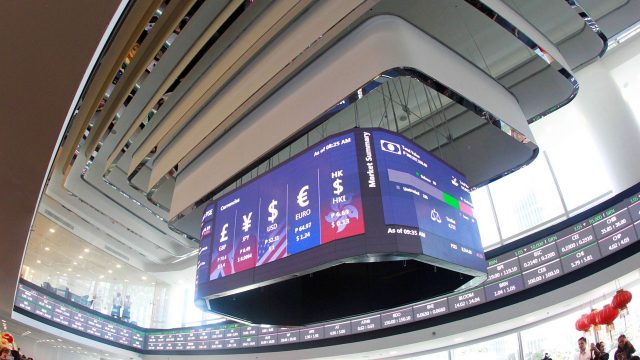
PHILIPPINE STAR/KRIZ JOHN ROSALES

PHILIPPINE STOCKS plunged on Monday, with the benchmark index sinking to the 5,800 level for the first time since December last year, as the worsening conflict in the Middle East and its impact on global oil prices continued to rattle markets.

The Philippine Stock Exchange index (PSEi) slid by 1.98% or 119.44 points to close at 5,899.18, while the broader all shares index went down by 2.04% or 68.28 points to end at 3,276.59.

This was the PSEi’s worst close so far this year as this was its lowest finish in nearly four months or since it ended at 5,887.58 on Dec. 4. Mining and oil companies posted the biggest losses, with the sector’s counter down by nearly 9%.

“Philippine equities kicked off the week with a massive sell-off as Middle East tensions further deepened concerns about the inflationary effects of oil shocks on the global economy, while the Federal Reserve’s hawkish pause added to investors’ worries,” AP Securities, Inc. said in a market note.

“The local market plunged as the further escalation of tensions between the US and Iran weighed on investors’ sentiment,” Japhet Louis O. Tantiangco, research manager at Philstocks Financial, Inc., said in a Viber message. “This comes as the two countries exchanged threats amid the US’ demand for the complete reopening of the Strait of Hormuz.”

Share markets slid in Asia on Monday as the United States and Iran traded escalating threats and Israel planned for “weeks” more fighting, sending oil prices on another roller-coaster ride, Reuters reported.

Oil prices rose again, with US crude futures up 3% to over $100 a barrel, reviving inflation fears and putting central banks in a tough spot with regard to monetary policy. International Energy Agency boss Fatih Birol warned the crisis was “very severe” and worse than the two oil shocks of the 1970s put together.

All sectoral indices ended in the red on Monday. Mining and oil was the worst performer, plummeting by 8.71% or 1,393.02 points to 14,591.81. Holding firms also sank by 2.99% or 138.78 points to 4,496.53; property plunged by 2.98% or 59.24 points to 1,928.11; financials dropped by 2.49% or 47.6 points to 1,858.80; industrials fell by 1.16% or 102.14 points to 8,690.39; and services decreased by 0.95% or 26.19 points to 2,726.18.

“Only two index members closed the day with gains, namely the Manila Electric Co. up 1.16% and Aboitiz Equity Ventures, Inc. up 0.68%. Converge ICT Solutions, Inc. was the worst index performer for the day, sliding 8.61% to P12.10,” Mr. Tantiangco said.

Decliners overwhelmed advancers, 167 to 46, while 58 names closed unchanged.

Value turnover declined to P8.17 billion on Monday with 1.36 billion shares traded from the P10.11 billion with 1.88 billion issues that changed hands on Thursday.

Net foreign selling ballooned to P1.34 billion from P460.37 million in the previous session. — Alexandria Grace C. Magno with Reuters

Food price growth seen picking up in 2nd quarter

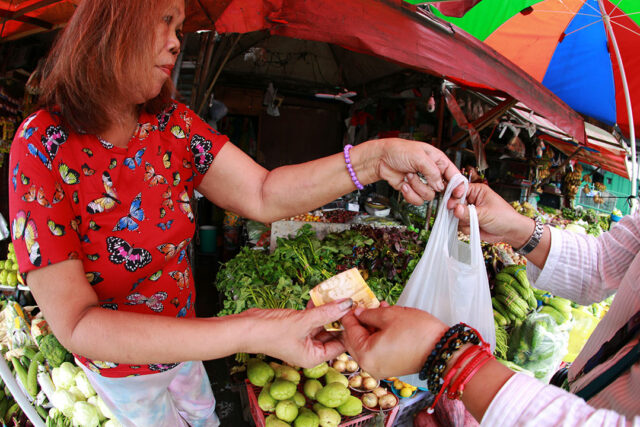
A vendor gives change to a customer who bought vegetables at a stall in Quezon City, July 14, 2024. — PHILIPPINE STAR/MIGUEL DE GUZMAN

By Vonn Andrei E. Villamiel, Reporter

FOOD PRICE GROWTH is expected to accelerate in the second quarter, as higher oil prices begin to flow through into the prices paid by consumers via elevated transport and farm production costs, analysts said.

Danilo V. Fausto, president of the Philippine Chamber of Agriculture and Food, Inc., said prices and supply of food and agricultural commodities are likely to remain steady in the first quarter but could accelerate afterward.

“This will pose a problem in the second quarter. Prices will be affected because of transport costs brought about by increases in oil prices and fertilizer costs,” he told BusinessWorld via Viber.

Mr. Fausto said the surge in agricultural production costs, coupled with a weaker peso, will result in upward pressure on food retail prices beginning next month.

Raul Q. Montemayor, national manager of the Federation of Free Farmers, said the impact of rising input costs will have a bigger impact on the next harvest season, but consumers may already be feeling price pressures earlier due to market speculation.

“We will see the impact in the next harvest later this year, although prices will start to creep up before that due to speculation about lower output and higher costs of production,” he told BusinessWorld via Viber.

The Philippine Statistics Authority reported price increases in various key food commodities in early March. Prices of well-milled rice and regular-milled rice rose 3.8% and 2% year on year, respectively.

It also reported higher prices for fish, including galunggong (round scad, 3.4%), tilapia (5.1%), and bangus (milkfish, 10%).

BMI, a unit of Fitch Solutions, said the Asia-Pacific region faces risks from food supply disruptions in the coming months.

“Asia-Pacific economies now confront rising risks of physical shortages of not just energy in the form of oil and gas, but also of fertilizers and — by extension — food possibly later in the year,” it said.

BMI said fertilizer costs are already rising, with urea prices increasing roughly 25% since the onset of the war in the Middle East, and further increases are likely if the conflict grinds on.

The Gulf Cooperation Council is a key supplier of fuel-derived nitrogen fertilizers. BMI said as much as a third of the global nitrogen fertilizer trade could be disrupted by prolonged gas supply issues.

Such disruptions come at a critical time, as the Philippines, Vietnam, Pakistan, and Sri Lanka enter key planting seasons for rice and corn in April and May.

“The disruption coincides with key planting and fertilizer application periods across the region, potentially affecting yields if shortages persist through the growing season,” BMI said.

Mr. Montemayor said the Philippines has to prepare starting midyear, particularly during the July to September period, when there will be minimal harvests.

“During this lean period, we have no choice but to rely on imports, and it will be influenced both by the availability and price of imports that could be affected by the Iran war,” he told BusinessWorld via Viber.

Mr. Montemayor said higher fuel and input costs could either raise production expenses or force farmers to cut back on key inputs such as irrigation and fertilizer, which in turn could lead to lower output and tighter food supplies.

Apart from crop-based commodities, the Department of Agriculture (DA) has said it expects tighter supply and higher prices for fishery products by midyear due to rising fuel costs and the upcoming lean season.

“Right now, our fishermen are still earning. But if fuel prices remain high by May or June, our fishermen may not be able to fish, which could lead to a shortage,” Agriculture Secretary Francisco P. Tiu Laurel, Jr. said.

As a contingency measure, the DA is prioritizing aquaculture, particularly tilapia and bangus, to help stabilize supply.

“We are pushing our aquaculture industry to seed more fingerlings this summer so that  by May or June, we will have an ample supply of fish,” Mr. Laurel said.

He also cited imports as a fallback option, with the DA recently approving imports of up to 250,000 metric tons of fish starting August.


Truck makers wary of reversion to Euro II fuel

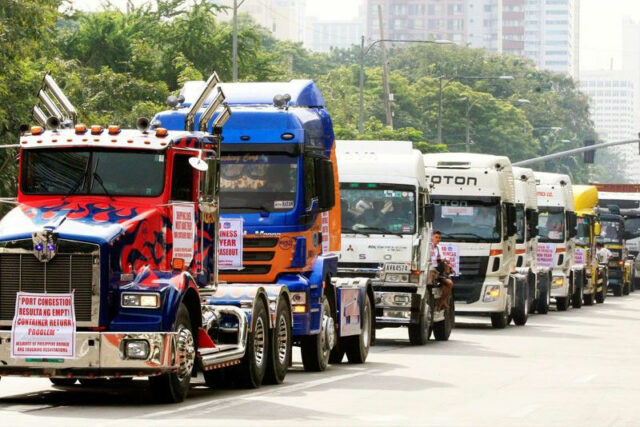
PHILIPPINE STAR/EDD GUMBAN

THE Truck Manufacturers Association, Inc. (TMA) said the plan to temporarily revert to Euro II fuel because of supply concerns must be accompanied by safeguards to avoid compatibility issues with trucks rated for higher-standard fuel.

It said newer vehicles would be affected by using Euro II fuel, which has higher sulfur levels.

In a statement on Monday, the TMA said it supports the Department of Energy (DoE) plan to allow Euro II fuels for selected transport and industrial uses.

The measure aims to help ensure that the Philippines has enough fuel supply as the Persian Gulf crisis plays out, posing risks to supply and fuel prices.

“The implementation of this interim measure must be undertaken with utmost caution, supported by clear guidelines, proper safeguards, and comprehensive public information,” it said.

TMA called on the need for clear and accessible information on how to determine vehicle compatibility with Euro II fuels, citing the need to ensure that Euro IV-compliant engines not ending up using fuel compliant with the older standard.

Euro IV-compliant vehicles have advanced fuel systems and emission-control technologies that are highly sensitive to fuel quality, particularly sulfur content.

In such cases, the use of Euro II fuels may affect engine performance, durability, and emissions systems.

“The advisory requirements prescribed under the circular are a positive step, and their strict and consistent implementation across all fuel retail outlets is strongly encouraged,” TMA said.

The group also recommended public-private collaboration in disseminating accurate technical guidance while conducting public awareness campaigns.

The government and private sector should also ensure that  fleet operators, transport groups, and individual vehicle owners — fully understand the implications of fuel selection on vehicle performance, maintenance, and longevity.

The availability of Euro II fuels should also be time-bound, closely monitored, and eventually give way to the long-term push toward cleaner fuel standards, TMA said.

The DoE said on Sunday that it issued a department circular authorizing the “temporary and controlled” introduction of Euro II petroleum products, citing the strain on fuel markets caused by the fighting in the Middle East.

Diesel prices rose above P100 per liter after the outbreak of fighting. — Beatriz Marie D. Cruz

Rice supply in source countries adequate amid harvest concerns

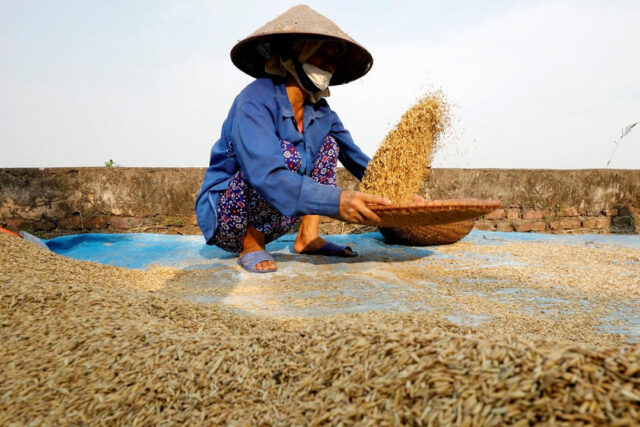
REUTERS

THE PHILIPPINES can tap adequate supplies of rice from its source markets overseas after rice farmers planted less last year due to low farmgate prices, Agriculture Secretary Francisco P. Tiu Laurel, Jr. said.

“Many farmers did not plant late last year due to low palay (unmilled rice) prices,” he told BusinessWorld via WhatsApp, adding that the Philippines is “lucky” that the expected decline in first quarter output is not as severe.

The Philippine Statistics Authority (PSA) forecast palay production to decline 7.1% year on year to 4.36 million metric tons (MT) in the first quarter, based on the standing crops as of Feb. 1.

The area to be harvested is estimated to drop 6.2% year on year to 1.08 million hectares, the PSA said.

Mr. Laurel said rice supply remains sufficient in major suppliers such as Vietnam, India, and Myanmar, but added that freight costs will be the main component affecting the price paid by consumers due to the Middle East crisis.

Meanwhile, Mr. Laurel said rice imports this month could slightly exceed the initial projection of 150,000 MT per month in March and April.

“It might exceed a bit. There is no real cap — it is just a sort of gentlemen’s agreement (between the DA and importers) to help farmers during the peak of the harvest,” he said.

As of March 12, rice imports topped 103,000 MT, according to the Bureau of Plant Industry. — Vonn Andrei E. Villamiel

PEZA still confident it will hit P300-B investment approval goal despite war

THE Philippine Economic Zone Authority (PEZA) said it remains positive about hitting its investment approval targets this year, noting that operations in its economic zones (ecozones) remain “normal” in the face of the fallout from the Persian Gulf crisis.

“While we remain bullish about our performance and targets, we acknowledge the presence of global and local headwinds that may impact investment flows and business confidence,” PEZA Director General Tereso O. Panga said at a forum on Monday.

He noted that high oil prices may elevate supply chain costs within its ecozones.

“Ongoing conflicts in the Middle East and other regions have resulted in rising global oil prices, which may pose risks to logistics and supply chains — especially for export-oriented industries that are highly dependent on fuel and transportation,” he noted.

Mr. Panga said that conditions within PEZA’s ecozones remain stable.

“Potential and existing investors are closely monitoring how the situation will unfold in the long term. However, within PEZA ecozones, conditions remain stable and operations are normal,” he said.

Mr. Panga said PEZA is following global developments and stands ready to recalibrate its targets and strategies as needed.

“While challenges such as potential logistics disruptions may arise if global tensions persist, PEZA remains confident in the Philippines’ long-term competitiveness,” he added.

For 2026, PEZA is hoping to approve P300 billion worth of investment proposals. As of February, the agency approved P35.37 billion worth of investments.

“Our value proposition to investors is, other than those looking at exporting basically to the US and Europe, we can be their hub in the region as a gateway to Asia-Pacific,” Mr. Panga said.

He also reiterated the need to amend Republic Act No. 7916 or The Special Economic Zones Act of 1995, or the PEZA Law, Mr. Panga said.

“We want to strengthen PEZA and enforce our powers to issue permits and our regulations inside PEZA ecozones, similar to powers granted to other IPAs (investment promotion agencies),” Mr. Panga said. — Beatriz Marie D. Cruz

Non-tariff measures on meat imports need streamlining — PCC

PHILSTAR FILE PHOTO

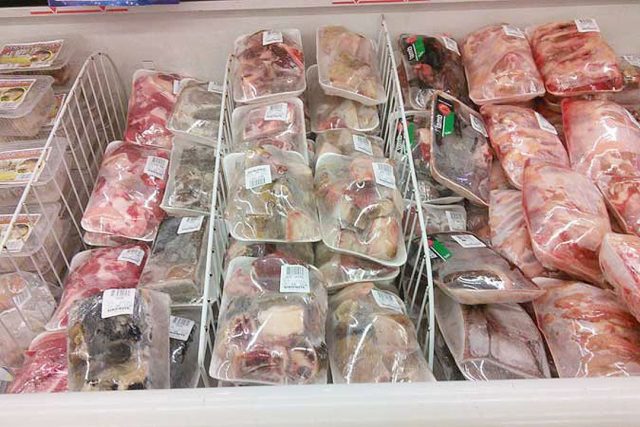
NON-TARIFF measures (NTMs) imposed on meat shipments were tallied at 169, which warrants streamlining if the growing Philippine market for imported meat is to become more competitive, the competition regulator said.

The Philippine Competition Commission (PCC) said in a brief that the Philippines remains among the world’s fastest-growing meat consumers, with demand projected to expand by 3.45% annually through 2028.

The study found that 169 NTMs are imposed on pork, beef, and chicken imports, with sanitary and phytosanitary (SPS) measures accounting for 77% of the total.

While these measures are designed to safeguard public health and address market failures, the PCC said they can become trade barriers when implemented through “onerous mechanisms.”

“Under such circumstances, NTMs act as non-tariff barriers, which are measures that effectively increase the price of goods or decrease the volume of trade by placing restrictive burdens on importers,” the PCC found.

The PCC said institutional gaps contribute to the inefficiency in the process and difficulty in compliance. These include inflexible and ambiguous guidelines, a lack of alignment with international standards, and weak coordination among regulatory agencies.

The commission added that procedural gaps, such as excessive documentation requirements and prolonged processing times, increase compliance costs and delay shipments.

Among the measures flagged by the PCC study as “potentially anti-competitive” are SPS import clearances required for every shipment, the 90-day must-ship-out rule, and strict labeling and packaging requirements.

The PCC said these requirements are often stringent and repetitive, forcing importers to incur additional expenses that are typically passed on to consumers through higher prices.

Supply constraints are further exacerbated by delays in the accreditation of meat-exporting countries and foreign meat establishments, as well as licensing requirements for importers.

These bottlenecks reduce the number of qualified suppliers and limit competition in terms of both price and product variety, the PCC said.

“Procedural challenges encompass recurring process delays, thereby restricting companies’ capacity to import goods efficiently and sustain supply,” the study concluded.

To address these concerns, the PCC recommended closer coordination among regulators, streamlining of processes, and the adoption of international best practices in managing NTMs.

It also proposed integrating NTM disciplines into trade agreements and strengthening the overall regulatory framework to ease compliance for businesses.

The commission said improving the implementation of NTMs could help lower trade costs, expand supply, and promote fair competition, ultimately benefiting consumers through more affordable and diverse meat products. — Vonn Andrei E. Villamiel

Department of Finance calls for more ASEAN+3 financial cooperation

DOF.GOV.PH

THE Department of Finance (DoF) called for closer financial cooperation among Association of Southeast Asian Nations+3 (ASEAN+3) economies to mitigate the risks from global and regional crises.

“The Philippines, through the DoF, is pushing for concrete measures to strengthen regional financial resilience and cooperation,” it said in a statement on Monday.

“By anticipating risks, sharing insights, and coordinating policy responses, member economies can navigate these challenges together,” it added. “While each economy manages its own domestic pressures, a united regional approach is key to building resilience and safeguarding stability against external shocks,” it added.

ASEAN+3 refers to the 10 ASEAN member states and the China, Japan, and South Korea.

The DoF said it is pushing for the advancement of regional disaster risk financing in response to climate-related challenges. 

“Member economies expressed support for continued collaboration and the creation of a roadmap to boost regional resilience and preparedness,” it added.

Disaster risk financing will be on the agenda of the ASEAN+3 Finance and Central Bank Deputies’ Meeting next month.

“This vision of support was evident at the second Task Force Meeting held from March 3-4 in Osaka, Japan, which was co-chaired by the DoF and the Bangko Sentral ng Pilipinas, together with the Japan Ministry of Finance and the Bank of Japan,” it said.

According to the department, the International Finance Group said during the meeting that the recent disruptions in the Strait of Hormuz and the volatility in oil prices “have direct impacts on fiscal space, economic growth, and livelihoods.”

“Member economies likewise supported ongoing discussions on the DoF-championed Sovereign Asset and Fiscal Empowerment Facility, which embeds disaster insurance directly into development projects financed by bilateral and multilateral partners,” it said.

“The DoF also continued to advance the Philippines- and Japan-led ASEAN+3 Fiscal Exchange, a platform for finance ministries to share best practices and insights, strengthening collective regional resilience,” it added. — Justine Irish D. Tabile

Mindanao highway assured of funding until 2034

FACEBOOK.COM/BUKIDNONPROVINCEPHILIPPINES

THE Department of Budget and Management (DBM) said it approved long-term funding across Presidential terms of P145.56 billion for the Central Mindanao High Standard Highway Construction Project.

“The move underscores the President’s push to fast-track high-impact infrastructure projects that directly improve mobility, strengthen regional economies, and create more opportunities for Filipinos, especially in Mindanao,” the DBM said in a statement on   Monday.

The DBM said the Forward Obligational Authority it issued ensures sustained financing for the project between 2026 and 2034.

The project is expected to enhance connectivity between Cagayan de Oro and Malaybalay, Bukidnon by cutting travel time from 6.5 hours to 3.5 hours.

“This means faster travel, lower transport costs, and more efficient movement of goods — benefits that will directly impact commuters, farmers, businesses, and local communities,” it said.

According to the DBM, the highway will seek financing from the Japan International Cooperation Agency and the Asian Development Bank on top of the government’s counterpart funding. — Justine Irish D. Tabile

PPP Center project tally hits 248, valued at P2.94 trillion

PPP.GOV.PH

THE Public-Private Partnership (PPP) Center said 248 projects are in the pipeline, valued at P2.94 trillion as of March 18.

The PPP Center said 166 projects worth P2.81 trillion will be implemented by the National Government, while 82 projects worth P134.82 billion will be overseen by local government units (LGUs).

194 projects are solicited or were initiated by the government, while the remaining 54 projects are unsolicited.

In terms of project value, railways accounted for P1.75 trillion, followed by property development (P321.24 billion) and land transport (P233.06 billion).

Projects to be located in the National Capital Region amounted to P1.91 trillion, followed by Central Luzon (P1.08 trillion), and Calabarzon (P644.94 billion).

218 projects are in the development stage, valued at P2.46 trillion.

17 projects worth P203.03 billion were in the approval stage, while 13 projects worth P281.73 billion are at the procurement stage. — Justine Irish D. Tabile

ADVERTISEMENT
ADVERTISEMENT