COTABATO CITY — Policemen and soldiers on Saturday arrested seven members of an armed group that figured in a gunfight with a rival partisan faction in Pandag, Maguindanao del Sur, leaving a candidate for municipal councilor and a student dead.
The seven gunmen and their companions first traded shots with personnel of units under the Maguindanao del Sur Provincial Police Office and the Army’s 2nd Mechanized Infantry Battalion who responded to the incident.
Moro community leaders had told reporters on Sunday that the companions of the seven gunmen, now locked in a police detention facility, had escaped towards another barangay, bringing with them their military-type combat weapons.
Officials of the Pandag Municipal Police Station and the Maguindanao Provincial Police Office confirmed to reporters on Sunday that two villagers, Emran Tumbah Mamalinta, a candidate for municipal councilor in Pandag, and a male student, Alkama Kilam Maslama, got killed in the crossfire between the two groups, each identified with feuding local politicians locked in a deep-seated political rivalry.
An old Moro woman, who was hit by stray bullets, was rushed by emergency responders to a hospital for treatment.
Brig. Gen. Romeo J. Macapaz, director of the Police Regional Office-Bangsamoro Autonomous Region, and Army Major Gen. Donald M. Gumiran, commander of the Army’s 6th Infantry Division,said separately that the joint military-police peacekeeping teams seized three M16 rifles, two .30 caliber M1 Garand rifles, an M653 rifle, and an M203 rifle fitted with a 40 millimeter grenade launcher.
Pandag is a far-flung town in the politically hostile Maguindanao del Sur, one of the five provinces in the Bangsamoro Autonomous Region in Muslim Mindanao. — John Felix M. Unson
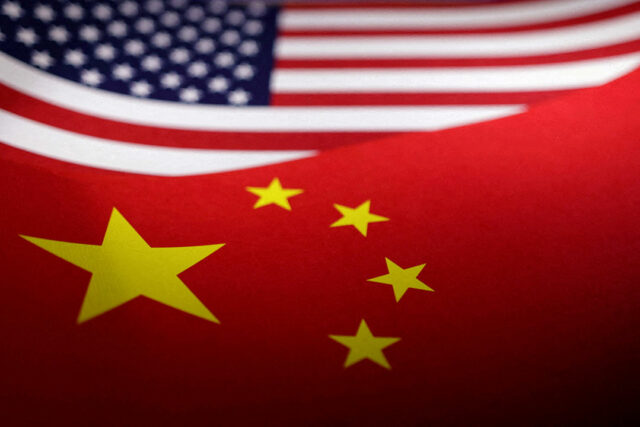
U.S. and Chinese flags are seen in this illustration taken, April 24, 2024. — REUTERS
INVESTORS are hopeful that US-China trade talks this weekend will cool a trade war between the world’s two largest economies and dispel some of the uncertainty clouding financial markets, though few expect a major breakthrough just yet.
The highly anticipated meeting in Switzerland could mark one of the biggest developments since US President Donald J.Trump launched sweeping tariffs on April 2, which threw the global trade landscape into chaos and set off extreme market volatility.
“This is the mother of all negotiations,” said Alejo Czerwonko, chief investment officer, Emerging Markets Americas, at UBS.
“There are hundreds of billions of dollars of trade on the line, a 145% tariff on Chinese exports that amounts to some sort of de facto embargo and grievances that extend well beyond trade.”
The US-China trade talks in Geneva had adjourned for the day and were set to continue on Sunday, a source familiar with the discussions told Reuters.
Mr. Trump said late on Saturday that the two countries had negotiated “a total reset… in a friendly, but constructive, manner.”
He added that “great progress” was made, without elaborating.
Recently, investors have expressed optimism that the worst-case trade scenarios would not come to pass, and pointed to signs of de-escalation between the US and China as a reason behind a rebound in equities.
But despite comments by Mr. Trump ahead of the talks suggesting a lower level of Chinese tariffs, and a trade deal announced on Thursday between the US and Britain, many market participants said they were not expecting major breakthroughs this weekend.
Rather, they confined themselves to hoping that nothing goes wrong when the two sides come face-to-face for the first formal round of what may be protracted negotiations.
“We’re still doubtful that direct US-China negotiations will lead to a ‘grand compromise,’” said Thierry Wizman, global FX and rates strategist at Macquarie, in a note to clients.
IMMEDIATE PACT SEEN AS UNLIKELY Both the US and China may want, or even need, to reach a deal, said Liqian Ren, director of Modern Alpha at WisdomTree Asset Management. At this early stage, however, there seems to be little incentive to do so rapidly, she added.
“Each still wants to see how the other side copes with negative headwinds,” Ms. Ren said.
“Right now, the market is maybe a little bit too optimistic in terms of what China and the US can achieve and how fast events will move.”
Trade tensions between the two nations escalated last month, when the US boosted tariffs on all Chinese imports to a whopping 145%, and China then raised levies on US imports to 125%.
On Friday, comments by Mr. Trump that an 80% tariff on Chinese goods “seems right” — making his first suggestion of a specific alternative to the 145% levies — created some hope of progress toward resolving the dispute.
The benchmark S&P 500 stock index has already erased the steep losses seen in the immediate aftermath of the tariffs announcement on April 2, although businesses continue to warn investors of their impact, and the uncertainty they create, in earnings-related comments.
The S&P 500 remains down about 8% from its February all-time high and roughly 4% for the year.
Amid the tariff chaos, weak consumer sentiment surveys and other “soft data” have raised concerns about US growth, although most economic data has indicated resilience in the economy.
EYEING MARKET VOLATILITY Volatility, meanwhile, remains. The Cboe Volatility Index, the options-based measure of investor anxiety, hovered around 22 late on Friday — well below its recent closing high of 52.33 in early April, but above its longer-term median of 17.6.
One of the factors curbing that volatility so far has been the high cost of establishing short positions betting on future market declines, said WisdomTree’s Ren.
“When a single (social media post) from the president can make the market move 10%, it becomes very costly” to establish those positions, Ms. Ren said. Equities soared on April 9 after Mr. Trump paused many of the heftiest tariffs for 90 days.
Still, markets were poised for more volatility ahead, said Matt Gertken, head of geopolitical strategy at BCA, a macroeconomic investment research firm.
Mr. Gertken said the firm’s best advice was to “sell on strength.”
Any signs of progress in the initial discussions would be welcome, and allow China to devote more energy to its domestic economic problems, said Andrew Mattock, a portfolio manager at Matthews Asia.
“To talk about any other scenario, you end up with a lose-lose outcome,” he warned.
TOUGHEST DEAL TO NEGOTIATE Despite the relatively fast agreement with Britain, Claudio Irigoyen, head of global economics research at BofA Securities, cautioned that other deals would be harder to hammer out, with China being the toughest.
“I can see trade deals coming with India, Japan and maybe South Korea, down the road,” he said. “China — this is the most complicated and will be the last one to come,” in part because the geopolitical relationship is entangled with the trade ties.
Investors are concerned that negative scenarios have not been factored into markets.
“If we come out of Geneva with people using incendiary language and strong disagreements, I don’t think that’s priced in,” said Mr. Czerwonko of UBS.
The market would probably be content with only modest signs of progress, several investors said.
“We don’t need happy talk,” said Mr. Gertken. — Reuters
LONDON — The British government outlined plans on Sunday to end what it called the “failed free market experiment” in mass immigration by restricting skilled worker visas to graduate-level jobs and forcing businesses to increase training for local workers.
British Prime Minister Keir Starmer is under pressure to cut net migration after the success of Nigel Farage’s right-wing, anti-immigration Reform UK party in local elections this month.
Under the government’s new plans, skilled visas will only be granted to people in graduate jobs, while visas for lower-skilled roles will only be issued in areas critical to the nation’s industrial strategy, and in return businesses must increase training of British workers.
The Labour government said the changes will be part of a policy document, known as a white paper, to be published on Monday setting out how ministers plan to reduce immigration.
High levels of legal migration were one of the major drivers behind the vote to leave the European Union (EU) in 2016 with voters unhappy about the free movement of workers across the bloc.
After Britain eventually left the EU in 2020, the then Conservative government reduced the threshold to allow workers in categories such as yoga teachers, dog walkers and DJs to be eligible for skilled worker visas.
“We inherited a failed immigration system where the previous government replaced free movement with a free market experiment,” Yvette Cooper, the British interior minister, said in a statement. “We are taking decisive action to restore control and order to the immigration system.”
While post-Brexit changes to visas saw a sharp drop in the number of EU migrants to Britain, new work visa rules and people arriving from Ukraine and Hong Kong under special visa schemes led to a surge in immigration.
Net migration, or the number of people coming to Britain minus the number leaving, rose to a record 906,000 people in the year to June 2023, up from the 184,000 people who arrived in the same period during 2019, when Britain was still in the EU. — Reuters
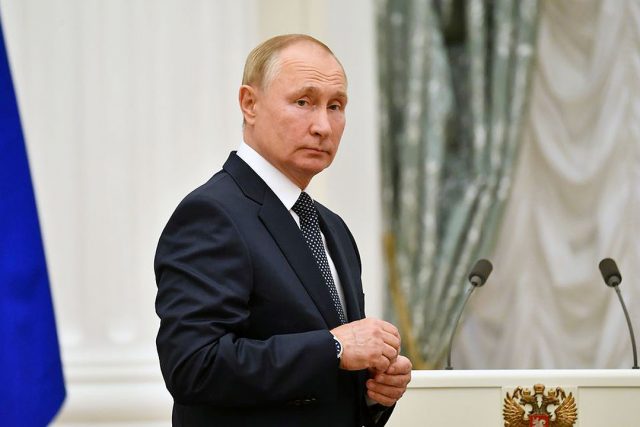
MOSCOW — Russian President Vladimir Putin on Sunday proposed direct talks with Ukraine on May 15 in Turkey that he said should be aimed at bringing a durable peace, an initiative welcomed by US President Donald J. Trump.
Mr. Putin sent thousands of troops into Ukraine in February 2022, unleashing a war that has left hundreds of thousands of soldiers dead and triggering the gravest confrontation between Russia and the West since the 1962 Cuban Missile Crisis.
The Russian leader, who has offered few concessions towards ending the conflict so far, said the talks in the Turkish city of Istanbul will be aimed at eliminating the root causes of the war and restoring a “long-term, lasting peace” rather than simply a pause for rearmament.
“We are proposing that Kyiv resume direct negotiations without any preconditions,” Mr. Putin said from the Kremlin in the early hours of Sunday. “We offer the Kyiv authorities to resume negotiations already on Thursday, in Istanbul.”
Mr. Putin said that he would speak to Turkish President Tayyip Erdogan later on Sunday about facilitating the talks, which he said could lead to a ceasefire.
“Our proposal, as they say, is on the table. The decision is now up to the Ukrainian authorities and their curators, who are guided, it seems, by their personal political ambitions, and not by the interests of their peoples.”
President Volodymyr Zelensky’s office and Ukraine’s foreign ministry did not immediately respond to Reuters’ request for comment on the proposal.
In a message on the social network Truth Social, Mr. Trump hailed Mr. Putin’s proposal as a positive for ending the war.
“A potentially great day for Russia and Ukraine!” Mr. Trump said. “Think of the hundreds of thousands of lives that will be saved as this never ending ‘bloodbath’ hopefully comes to an end.”
NO CEASEFIRE? Mr. Putin’s proposal for direct talks with Ukraine came hours after major European powers demanded on Saturday in Kyiv that Mr. Putin agree to an unconditional 30-day ceasefire or face “massive” new sanctions.
Mr. Putin dismissed what he said was the attempt by some European powers to lay down “ultimatums.”
Russia, Mr. Putin said, had proposed several ceasefires, including a moratorium on striking energy facilities, an Easter ceasefire and most recently the 72-hour truce during the celebrations marking 80 years since victory in World War Two.
Both Russia and Ukraine accused each other of violating the temporary truce proposals, including the May 8-10 ceasefire.
Despite Mr. Putin’s call for peace talks, Russia on Sunday launched a drone attack on Kyiv and other parts of Ukraine, injuring one person in the region surrounding the Ukrainian capital and damaging several private homes, Ukrainian officials said.
Mr. Putin said that he does not rule out that during his proposed talks in Turkey both sides will agree on “some new truces, a new ceasefire,” but one that would be the first step towards a “sustainable” peace.
PEACE? Mr. Putin, whose forces have advanced over the past year, has stood firm in his conditions for ending the war despite public and private pressure from Mr. Trump and repeated warnings from European powers.
In June 2024, he said that Ukraine must officially drop its NATO ambitions and withdraw its troops from the entirety of the territory of four Ukrainian regions claimed by Russia.
Russian officials have also proposed that the US recognize Russia’s control over about one-fifth of Ukraine and demanded that Ukraine remains neutral though Moscow has said it is not opposed to Kyiv’s ambitions to join the European Union.
Mr. Putin specifically mentioned the 2022 draft deal which Russia and Ukraine negotiated shortly after the Russian invasion started.
Under that draft, a copy of which Reuters has seen, Ukraine should agree to permanent neutrality in return for international security guarantees from the five permanent members of the UN Security Council: Britain, China, France, Russia and the United States.
“It was not Russia that broke off negotiations in 2022. It was Kyiv,” Mr. Putin said. “Russia is ready to negotiate without any preconditions.”
He thanked China, Brazil, African and Middle Eastern countries and the United States for their efforts to mediate.
Mr. Trump, who says he wants to be remembered as a peacemaker, has repeatedly said he wants to end the “bloodbath” of the Ukraine war which his administration casts as a proxy war between the United States and Russia.
“I will continue to work with both sides to make sure that it happens,” Mr. Trump said in his Truth Social post on Sunday. “The USA wants to focus, instead, on Rebuilding and Trade. A BIG week upcoming!”
Former US President Joseph R. Biden, Western European leaders and Ukraine cast the invasion as an imperial-style land grab and repeatedly vowed to defeat Russian forces.
Mr. Putin casts the war as a watershed moment in Moscow’s relations with the West, which he says humiliated Russia after the Soviet Union fell in 1991 by enlarging NATO and encroaching on what he considers Moscow’s sphwere of influence, including Ukraine. — Reuters
Pope Leo XIV | Screenshot from Vatican Media Livestream
VATICAN CITY — Pope Leo XIV signaled on Saturday he would continue with the vision and reforms of Pope Francis, telling the world’s Catholic cardinals the late pontiff left a “precious legacy” that must carry on.
In his first meeting with all the cardinals since his election as pontiff on May 8, Leo also asked the senior clerics to renew their commitment to major Church reforms enacted by the landmark Second Vatican Council in the 1960s.
Leo said Francis, who died on April 21, broadly had a vision of opening the staid 1.4-billion-member Church to the modern world, had left an “example of complete dedication to service.”
“Let us take up this precious legacy and continue on the journey,” the new pope told the cardinals.
The pontiff also asked the clerics to “renew together our complete commitment” to the reforms enacted by the Council, which included celebrating the Mass in local languages rather than Latin and pursuing dialogue with other religions.
He cited Francis’ focus on “courageous and trusting dialogue with the contemporary world in its various components and realities.”
Francis was pope for 12 years and often garnered criticism from conservative cardinals, who said he was watering down the Church’s doctrine on issues such as inclusion of LGBT Catholics and women’s leadership.
Leo, the former US Cardinal Robert Prevost, was a relative unknown on the global stage before his election as pontiff. He had spent most of his career as a missionary in Peru before serving as a senior Vatican official for the past two years.
The new pope said on Saturday he had taken his papal name partly to honor Pope Leo XIII (1878-1903), who was known as an advocate for social justice and pushed for fair pay and treatment of workers during the industrial revolution.
Leo said the Church must now take the lead in facing newer threats to workers, such as artificial intelligence. He said artificial intelligence posed “new challenges for the defense of human dignity, justice and labor.”
Leo’s two-hour meeting with the cardinals took a different format to that used by previous popes, who would typically offer a speech and expect the clerics only to listen.
This time, Leo gave a prepared address and then opened the floor to any cardinal who wanted to make a comment — allowing the clerics to voice their opinions and concerns about the main issues facing the global Church.
“He listened very carefully, but he knows he’s going to have to make the decisions,” Irish Cardinal Sean Brady told Reuters. “But we’re here to help him.”
Spanish Cardinal Aquilino Bocos Merino described the meeting as “very cordial and communal.”
CHINA DEAL COMES UP Leo greeted each of the cardinals individually as they left the meeting, which was held in the same small Vatican auditorium where the cardinals had been gathering in the days before the conclave to discuss who should be the next pope.
Czech Cardinal Dominik Duka said one topic that came up was the situation of Catholics in communist China.
The Vatican and China in 2018 signed a controversial deal on the appointment of bishops in the country, which gives Beijing some input into their selection.
Conservatives have attacked the still-secret deal as a sell-out, but Duka told Reuters it was necessary to keep a dialogue open in places where the Church is oppressed, comparing it to dialogue between the Vatican and eastern European countries during the Cold War.
German Cardinal Gerhard Mueller, who openly clashed with Francis on issues concerning Catholic moral teaching, told Reuters that Saturday’s encounter was “very good and harmonious.”
To be elected as pope during the May 7-8 secret conclave at the Sistine Chapel, Leo required a two-thirds majority of 89 of the 133 voting cardinals.
Madagascar Cardinal Désiré Tsarahazana told Reuters that Leo received more than 100 votes at the final ballot on the afternoon of May 8. — Reuters
WASHINGTON — The US House committee in charge of taxes released on Friday evening a partial text of its part of President Donald J. Trump’s proposed tax agenda that would make his 2017 tax cuts permanent, leaving out contentious issues before a planned vote on Tuesday.
The 28-page proposal by the House Ways and Means Committee would increase the child tax credit from $1,000 to $2,500 through 2028 and to $2,000 after, and adds a requirement for recipients to have a Social Security number and reduces some taxes for multinational companies and unincorporated businesses.
But it does not address more hotly contested issues like what to do with the current $10,000 deduction limit for state and local taxes, which is important to states with high taxes like New York, California and New Jersey.
It also does not address the fate of Medicaid, which covered about 35 million people in states Mr. Trump won in last year’s presidential election and clean energy tax credits that benefit some Republican states.
“Ways and Means Republicans have spent two years preparing for this moment, and we will deliver for the American people,” said Ways and Means Committee Chair Jason Smith of Missouri.
US congressional Republicans are struggling over how to pay for what Trump has called his “big, beautiful bill” — a multitrillion-dollar tax-cut and immigration reform agenda, with the fate of the Medicaid healthcare program and the nation’s debt ceiling hanging in the balance.
The party is torn between hardliners who want tax cuts to be scaled back to achieve a goal of $2 trillion in spending reductions over the next decade and moderates pushing back against large-scale slashing of the Medicaid healthcare program.
Ways and Means is scheduled to hold a meeting to debate and advance the legislation on Tuesday afternoon. — Reuters
THE number of measles cases in the United States has crossed 1,000 for the first time in five years, federal data showed on Friday, as the country battles one of its worst outbreaks of the childhood disease.
The US Centers for Disease Control and Prevention (CDC) reported 1,001 measles cases in 31 jurisdictions, as of Thursday.
The CDC count does not reflect the latest data from Texas, the epicenter of the current measles outbreak, where cases have increased by seven to a total of 709.
Researchers have warned that the United States is at a tipping point for the return of endemic measles, a quarter century after the disease was declared eradicated in the country.
Infections only previously surpassed the 1,000 mark in 2019 when the country reported 1,274 cases.
“I think we are still at risk of seeing these numbers at least stay steady, if not continue to increase over time,” said Lisa Maragakis, senior director of infection prevention at Johns Hopkins Medicine.
The outbreak in Texas, which has led to the deaths of two children and hundreds more being infected, is centered in a Mennonite community and has spread to neighboring states including New Mexico, Oklahoma and Kansas.
The CDC said 13% of those infected with the disease this year have been hospitalized. There have been three confirmed deaths so far.
There have been 14 outbreaks, defined as three or more related cases, reported in 2025, the CDC said.
US pediatricians and infectious disease experts say that the fight against rising measles cases nationwide is being hampered by a lack of forceful advocacy for vaccination by government health officials and by misleading statements about unproven treatments that confuse parents.
The measles vaccine is 97% effective after two doses, according to the CDC. — Reuters
Search engine platform Google and video streaming application YouTube highlighted specific features for the midterm elections on Monday to help promote reliable information on their platforms.
“Supporting the elections is important to Google and YouTube,” Google Philippines Head of Public Policy and Government Relations Yves Gonzalez said in a press release.
“As Filipinos prepare for the May 12 elections, we are committed to robust collaboration with the government, industry, media, and civil society,” Mr. Gonzalez added.
A study by the market research firm Kantar revealed that YouTube is the number one platform for accessing a wide variety of content types (e.g., short, long, and live videos). With over 50 million users aged 18 and above, Google said it expects users to turn to the platform for the latest election news.
On May 12, live coverage from authoritative news organizations, in both English and Filipino, will be placed on YouTube’s homepage to help ensure that viewers are following the latest news and results from reliable sources.
Apart from the livestreams, the “How to vote” playlist of the Commission on Elections (COMELEC) will be promoted on the platform during the election day to provide relevant materials, requirements, and a step-by-step guide for first-time voters.
“A well-informed electorate is fundamental to COMELEC’s mission for credible elections,” COMELEC Chairperson George Erwin M. Garcia said.
“We thank and commend Google for their continued, valuable contributions in ensuring Filipinos have accessible and reliable election information online, empowering them to make informed choices for the midterm elections,” he added.
Information and labels
YouTube is set to introduce an information panel above search results when users look up content related to 2025 senatorial candidates. This panel will display key details such as the candidate’s name, political affiliation, and a direct link to Google Search for additional information.
In an effort to maintain transparency, YouTube has announced that AI-generated content must be disclosed by creators. Videos featuring election-related material altered by artificial intelligence will carry a label on the video player, informing viewers of modifications.
Meanwhile, Google Search is reinforcing its commitment to accuracy by prioritizing authoritative sources in its ranking system, ensuring voters receive reliable election-related information. Additionally, its “About this Image” feature will help users evaluate the credibility and context of online images.
Further strengthening efforts against misinformation, Google has pledged that all AI-generated images produced by its platforms will be embedded with a watermark using DeepMind’s SynthID technology.
Removed videos
To further protect voters during the election, YouTube prohibited content that “misleads voters on how to vote or encourages interference in the democratic process.” It also vowed to “quickly remove content that incites violence, encourages hatred, promotes harmful conspiracy theories, or threatens election workers.”
On the latest transparency report of YouTube, the Philippines, with over 153,000 videos removed, ranked eighth between October and December 2024 on the highest number of videos removed globally for violating the platform’s policies. – Almira Louise S. Martinez
According to a study by travel booking platform Klook, 89% of Filipinos select their travel destinations based on social media popularity, surpassing the regional average of 79%.
“We know that social media is a huge factor in really driving people to book their travel purchases,” Klook Philippines General Manager Michelle Ho said in a press briefing.
The 2025 Travel Pulse research, which has 7,000 respondents, showed that Filipinos use Facebook (84%) as their top source of information for travel inspiration, followed by YouTube (73%), TikTok (69%), and Instagram (63%).
The study added that quick travel content in the form of photos (67%) and short-form videos (62%) is the type of posts that attract most Filipinos. On the other hand, travelers use long-form videos (48%) and in-depth blog posts (45%) for deeper research on the destination and tours.
Ms. Ho noted that although TikTok is the third most popular application among travelers, Filipinos are two times more likely to engage with the platform’s videos.
Klook also reported a 20% increase in Q1 2025 versus Q4 2024 on its Kreator-generated sales.
Vietnam, for example, has experienced a 157% increase in revenue for tourism services and products made on Klook after content creators posted their travels.
“Social media has played a huge role in elevating the popularity of Sapa,” Ms. Ho said. “We’ve seen a triple-digit growth for Filipinos travelling to Vietnam these days.”
Apart from Vietnam, the study revealed that Taiwan and Thailand are also experiencing a rise in Filipino tourists, with 120% and 78% growth in 2024 versus 2023, respectively.
For domestic travel, Ms. Ho shared that Manila remains the top destination for weekend getaways, while Tagaytay, Boracay, Cebu, and Bohol are popular destinations.
Surigao and Siargao have also been gaining traction and popularity recently, the Klook executive said.
“What’s interesting is that you’ve got your core destinations, rising in terms of popularity, and at the same time, lesser-known destinations are being talked about,” Ms. Ho said.
“And we’re actually paying close attention to that, because we feel that in the next few months, this could really rise in the tourism industry,” she added. – Almira Louise S. Martinez
From pandemic challenges to business growth. The success of Leslie’s small business showcases how digital payment solutions opened new customer channels, helping her earn more.
GCash bridges financial gaps for women nationwide, driving economic independence and community growth
GCash, the Philippines’ leading finance super app and largest cashless ecosystem, continues to promote gender-inclusive finance. It recently showcased the transformative power of digital financial services and technology in the lives of Filipino women nationwide, from everyday individuals to small business owners, students to heads of household. Beyond the eight out of 10 Filipinos who have tried using GCash, and with five out of 10 Filipino[1] women using the mobile wallet and its other financial features, the app’s real impact lies in the individual stories of empowerment, resilience, and growth.
“GCash is committed to breaking down financial barriers through innovative technology and deep customer insights,” shares Rowena Zamora, Chief Strategy Officer of Mynt, the holding company of GCash. “We recognize that Filipino women are often the financial stewards of their households, making everyday decisions about spending, budgeting, and savings. Our platform is designed to empower them by putting powerful financial tools directly in their hands.”
For many Filipino women, traditional banking frameworks pose significant obstacles due to the need for documentation and credit history that many do not possess. Through AI-powered solutions that utilize alternative data based on users’ digital footprints, GCash has revolutionized this landscape, unlocking previously unattainable opportunities for many.
Real Stories, Real Impact: Women Empowered by GCash
The transformative impact of GCash is best illustrated by the stories of women whose lives have been changed by having the right financial tools at their fingertips. Leslie, a single mom and carinderia owner from Manila, shares her experience: “During the pandemic, we had a hard time selling to customers. It’s a good thing that some of them encouraged us to try GCash; it helped us cater to more people and enabled us to triple our sales and even purchase our e-vehicle.”
With access to the mobile wallet, Leslie, as well as other unbanked women, can easily access tools such as GSave, which democratizes investment opportunities with low entry points, and GCoach AI, which provides interactive financial advice and insights for building wealth.
For Lyn, a virtual assistant from Batangas, GCash provided crucial support during a family emergency: “My husband and I had to rush our child to the hospital because he contracted pneumonia. I had purchased insurance previously through GInsure; within the same day, our claim was approved, which allowed us to buy the medicines our son needed.”
When seconds count. How Lyn’s foresight in securing digital insurance became her family’s lifeline during her child’s health crisis, demonstrating technology’s role in modern financial safety nets.
By providing affordable and accessible insurance options with streamlined claims processing, GInsure gives users peace of mind, knowing that they have finances they can rely on during emergencies.
Mabel, a college professor, likewise found GCash to be useful during a medical emergency. “I needed a loan quickly, and, thankfully, GCash was able to grant us P40,000 easily through its lending arm, Fuse Financial, Inc.,” says Mabel, who availed herself of a GLoan to ease her financial worries. GLoan offers credit options for those without traditional banking relationships, making it accessible to more Filipinos.
Financial solutions at critical moments. Professor Mabel discovered how digital loans could support immediate medical emergencies, leaving out unnecessary paperwork and collateral.
“Not only is it convenient, it’s also not difficult to repay,” Mabel adds.
Claire, an office worker from Cebu, highlights how GCash enabled her to support her family. As one of only two members of her family with a college degree, Claire promised herself that she would do whatever it takes to achieve a better life for all of them. “When I discovered the high interest rates on savings via GSave, I did not think twice about opening an account,” shares Claire. “Now I can easily put aside money for my family’s needs.”
Building generational progress. Claire’s commitment to her family’s future found an ally in digital savings tools, turning consistent small deposits into meaningful security.
Through GSave, users enjoy higher interest rates on their savings, with no minimum balance requirements, making it easier for women, the stewards of their families’ finances, to set aside funds for the rainy days.
Because GCash believes financial inclusion goes beyond access, it also offers platforms that open up economic opportunity. One such platform is the job marketplace, GJobs, which has already connected over 3M Filipinos with more than 417,000 job listings.
For Lhynels from Caloocan, who found herself looking for new work while starting a new family, GJobs provided relief at a crucial time. “Last year, I got married, bought my own house, and had a baby, which is why I decided to look for new work closer to home that could give us more allowance,” shares the new mother. “I found it hard to look for work until a friend told me I could find job openings on the GCash app through GJobs. It was able to filter job openings by location and allowed me to apply online, which meant I did not have to leave home [or my baby] to look for work.”
Job opportunities in just one tap. Lhynels turned her smartphone into a tool for self-empowerment, matching her with credible employers and building a better future on her terms.
Powered by PasaJob, the job referral platform of GCash, GJobs today presents an easy, seamless, and safe way to explore career opportunities. With over 50,000 blue-collar job openings and a robust referral feature, GJobs helps workers earn a steady wage and explore earning additional income.
Leveling the Playing Field for Women
The statistics tell a powerful story of inclusion: Seven out of 10 GInsure users are women, now protected by diverse insurance products covering life, health, business, and more. Five out of 10 GSave users are women, most of whom reside outside Metro Manila.
Additionally, six out of 10 GLoan users are women, demonstrating how GCash has transformed access to capital. “While many define a super app as a multi-feature platform, our approach positions GCash as an indispensable daily companion in our users’ lives,” says Zamora. “We’re focused on innovation that responds to real customer needs, constantly understanding user behaviors to identify opportunities that have impact.”
GCash’s advocacy spans both its user base and its organizational structure, as women make up almost half of the company’s leadership team. With women like Zamora, Chief Executive Officer Martha Sazon, Chief Technology and Operations Officer Pebbles Sy, Chief Risk Officer Ingrid Beroña, and Chief Data Officer Sara Venturina at the helm, GCash embodies its commitment to gender equality in the tech industry.
“We don’t just celebrate mothers, and women—we invest in their success,” Zamora emphasizes. “Women are leaders, innovators, and changemakers, and they drive not just our company but entire communities forward.”
Recently, both Sazon and Sy represented the Philippines at the 2025 Mobile World Congress in Barcelona, bringing GCash’s mission of “Finance for All” to a global audience and sharing how fintech innovations can promote women’s economic empowerment.
“When we expand financial inclusion, we directly boost Filipino women’s economic power,” says Zamora. “Our work at GCash is deeply connected to building a stronger nation. The Philippines can only truly progress when women have equal financial opportunities, because when women thrive economically, we’ve seen how entire communities benefit and grow alongside them.”
[1] Based on 2024 gender disclosure: Five out of 10 GCash registered users are women; five out of 10 GSave users are women, with the majority residing outside of Metro Manila; seven out of 10 GInsure users are women; and six out of 10 GLoan users are women.
Spotlight is BusinessWorld’s sponsored section that allows advertisers to amplify their brand and connect with BusinessWorld’s audience by publishing their stories on the BusinessWorld Web site. For more information, send an email to online@bworldonline.com.
Join us on Viber at https://bit.ly/3hv6bLA to get more updates and subscribe to BusinessWorld’s titles and get exclusive content through www.bworld-x.com.
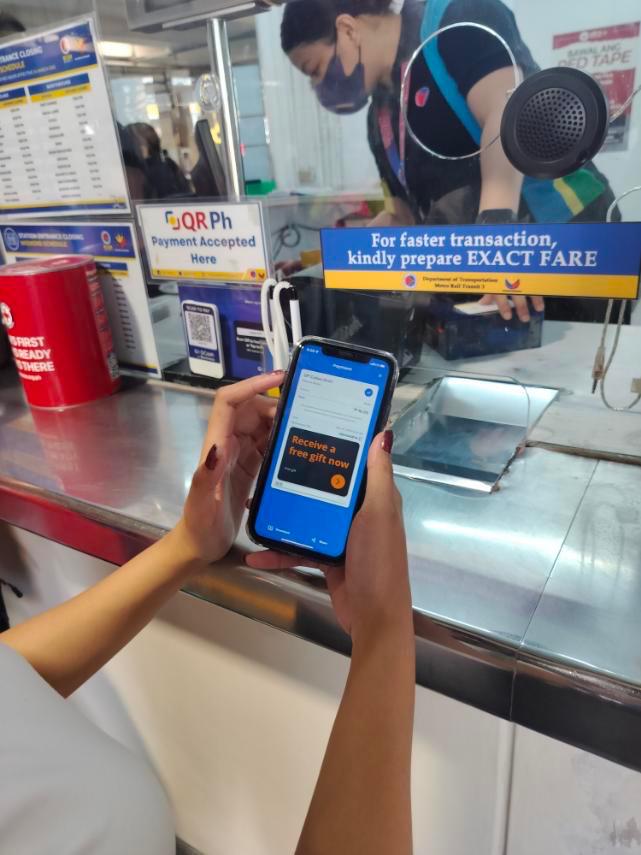
The Department of Transportation has launched cashless payments at the 13 stations of the MRT-3, in line with its mandate of providing train passengers with a more convenient and faster commute.
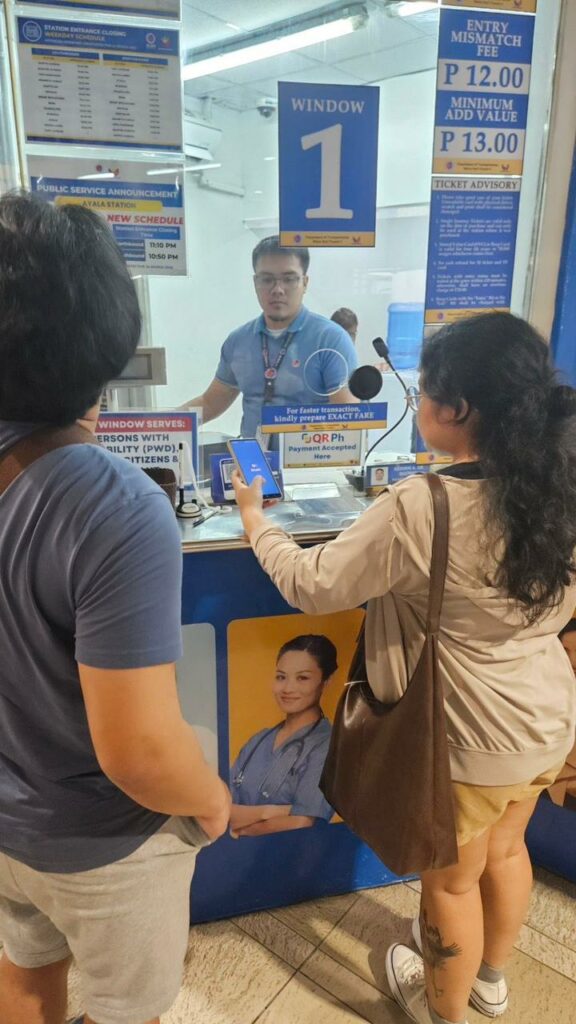
In collaboration with the Philippines’ leading finance Super App GCash, passengers can now make cashless QR payments using any e-wallet or bank via QRPH when purchasing single-journey tickets at MRT-3 stations.
“This is a turning point for public transportation in the Philippines. By embracing cashless systems, we are not just modernizing — we are revolutionizing how Filipinos move. This partnership between the public and private sector is in compliance with the President’s directive to provide faster, safer, and more convenient travel for every Filipino,” Transportation Secretary Vince Dizon said.
With over 350,000 daily commuters expected to benefit, this initiative facilitates faster payments across the key system of the MRT-3.
Oscar Enrico Reyes, Jr., President and CEO of G-Xchange, Inc., the mobile wallet operator of GCash, said, “By working hand in hand with the Department of Transportation, we are simplifying commutes and empowering Filipinos through accessible and secure digital payment solutions. Together, we are shaping a more connected and digitally-enabled Philippines.”
To experience convenient and more secure payments for their MRT-3 commute, passengers can just look for ticket counters that offer QRPH cashless options when purchasing their single journey tickets.
In the coming months, the DOTr is working closely with the private sector along with GCash in further modernizing how commuters pay in more public transportation options.
Spotlight is BusinessWorld’s sponsored section that allows advertisers to amplify their brand and connect with BusinessWorld’s audience by publishing their stories on the BusinessWorld Web site. For more information, send an email to online@bworldonline.com.
Join us on Viber at https://bit.ly/3hv6bLA to get more updates and subscribe to BusinessWorld’s titles and get exclusive content through www.bworld-x.com.