Home Blog Page 114

German military satellite plan fuels EU fragmentation fears

A GERMAN national flag flies atop the illuminated Reichstag building in Berlin, Germany Dec. 9, 2022. — REUTERS

GERMAN plans for a €10-billion ($11.6-billion) military satellite network independent of a parallel European program are raising red flags among some European Union (EU) lawmakers over potential duplication, fragmentation of efforts and cost.

Germany’s proposed collaboration with Rheinmetall, OHB and Airbus is in addition to the bloc’s €10.6-billion ($12.3-billion) IRIS² system, which is a central plank in its quest for strategic defense autonomy.

EU lawmakers told Reuters that Germany’s solo initiative risks undermining attempts to bolster collective defense capabilities as the bloc adapts to the relative decline of the US defense umbrella under President Donald J. Trump.

“If Germany now builds a purely national architecture that is not integrated into IRIS², there is a risk of weakening European structures,” said Marie-Agnes Strack-Zimmermann, chair of the European Parliament’s Security and Defense Committee.

Germany envisages 100 low-Earth-orbit (LEO) satellites exclusively for military communications, while the EU project, which aims to deploy 290 satellites by 2029, is designed to establish a unified, space-based communication system.

Analysts say Germany’s system will leverage technology similar to Elon Musk’s SpaceX Starshield platform, which has been instrumental in Ukraine’s battlefield communications.

Both the German and EU systems would be comparable in scale to the Starshield network, though IRIS² — which will also carry commercial traffic — would remain far smaller than Starlink’s roughly 10,000 satellites.

A spokesperson said Berlin was closely monitoring the IRIS² project, which “has the potential, where appropriate, to complement national initiatives in fulfilling sovereign tasks.”

Germany’s proposed system specifically addressed its military’s unique requirements, with capability demands and performance parameters that were “entirely different” from those of IRIS², the spokesperson told Reuters.

DUPLICATION OR SOVEREIGNTY?
The potential divide between Germany’s national priorities and the EU’s collective vision underscores the challenges of aligning sovereignty, costs and strategic coherence in the 27-member bloc.

Ms. Strack-Zimmermann said parallel systems could result in “duplicate structures, fragmented standards, and ultimately less strategic impact for more money,” citing escalating security threats from the war in Ukraine.

“The decisive point is compatibility, connectivity, and European integration,” Ms. Strack-Zimmermann told Reuters, adding that national projects must remain aligned with EU frameworks.

Italy is studying a home-grown LEO satellite network with military and civilian uses, but the project is still at an early feasibility stage and is less advanced than Germany’s plan.

European Commission spokesperson Thomas Regnier said the EU executive body does not comment on investments by individual member states, which are a national responsibility.

“By investing in IRIS², member states can be part of a common European effort that benefits from shared resources and expertise. This helps develop advanced satellite communication technologies more efficiently and at a larger scale,” he added.

WORTH THE MONEY?
Some EU and German lawmakers also question the economics.

“The (German) taxpayer will ultimately pay the bill,” Jeanne Dillschneider, a Green Party rapporteur on the Bundestag’s Defense Committee, told Reuters.

Meanwhile, Christophe Grudler, a European Parliament lawmaker who represents the Renew Europe party and is focused on defense and space policy, warned against inefficiencies.

“Fragmentation is rarely the most efficient use of public resources,” he told Reuters, adding: “A smaller, isolated constellation would come with limitations in coverage and scalability.”

However, the Alternative for Germany (AfD) party said it supported Berlin’s initiative.

“Given the capabilities of potential adversaries to disrupt or even destroy satellites, redundancy — in military terms, reserves — is not a waste of money but a requirement of responsible national security policy,” said AfD defense policy spokesperson Ruediger Lucassen.

OHB Chief Executive Officer Marco Fuchs said IRIS², which relies on public-private partnerships, lacked the specificity required for a military-focused network.

“If there is a genuine military requirement, you cannot simply say: ‘I’ll rent it from private companies and wait to see how the conditions turn out,’” he said after OHB reported 2025 earnings last week.

While Airbus said it looked forward to receiving a request for proposals from Berlin, a spokesperson declined to comment on concerns regarding duplication.

NEED FOR SPEED
Although proponents of IRIS² say it will reduce EU dependency on non-European players and ensure interoperability across the military systems of member states, analysts note full deployment is not expected until the 2030s.

“Europe must accelerate,” said Mr. Grudler, adding that national systems were unlikely to address the shortfall any more quickly. — Reuters

South Korea’s Lee calls for energy-saving campaign including shorter showers, car curbs

STOCK PHOTO | Image by Vitamin from Pixabay

SEOUL — South Korean President Lee Jae Myung on Tuesday called for a nationwide energy-saving campaign over risks to oil and gas supplies from the Iran war, saying public institutions would cut back on their use of passenger cars.

Energy Minister Kim Sung-hwan told a Cabinet meeting private-sector vehicle curbs were voluntary for now but could be reviewed if the energy alert level increased.

The government is calling on people to adopt 12 energy-saving practices like shorter showers, charging phones and electric vehicles during the day and using washing machines and vacuums over the weekend.

The government will ask the top 50 oil-consuming businesses to cut use and encourage staggered commuting hours and other conservation steps, he said.

Mr. Kim also said Seoul would restart five nuclear reactors by May, ease restrictions on coal plants and expand renewable energy to reduce longer-term dependence on liquefied natural gas (LNG) and could extend the lives of three coal power plants scheduled to close this year.

The energy mix adjustment is expected to save up to 14,000 tons, or up to 20% of South Korea’s average daily LNG consumption of 69,000 tons for power, Mr. Kim said.

HD Hyundai has introduced energy-saving measures across affiliates such as HD Hyundai Heavy and HD Hyundai Oilbank, including voluntary vehicle restrictions, reduced plastic use and taking steps to cut power use such as turning off lights, a company official said.

South Korea also plans to draft a supplementary budget of 25 trillion won ($16.6 billion) as soon as possible which could include cash vouchers for consumers and financial support for companies, amid growing stimulus talks by other economies.

“Right now, what matters most is not saving government finances, but deploying funds swiftly and effectively where they are needed most,” Mr. Lee told the Cabinet meeting, as the finance ministry said it would submit the budget to parliament by end-March.

RESERVES MAY NOT LAST TWO MONTHS
The ongoing US-Israeli strikes on Iran and Tehran’s retaliation have brought severe disruption to global energy markets, bringing tanker traffic through the Strait of Hormuz to a near standstill.

South Korea imports around 70% of crude oil through the Strait of Hormuz, according to lawmakers and the industry ministry.

The country faces a looming energy crisis despite holding about 190 million barrels of oil reserves — 100 million barrels by the government and 90 million by private companies.

While standards from the International Energy Agency suggest reserves could last 208 days, officials note this figure excludes uses such as petrochemical exports, making the actual buffer significantly shorter.

Based on a daily consumption rate of 2.9 million barrels as of 2024 according to Korea National Oil Corp. data, analysts said the reserves might not last two months.

The government has secured pledges from the United Arab Emirates for 24 million barrels of oil, but the timing of shipments remains unclear. Reuters

Bahrain pushes UN-backed action for Hormuz shipping; France tables rival text

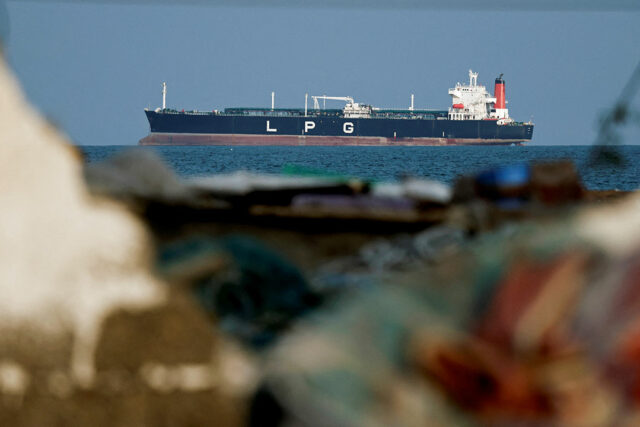
An LPG gas tanker at anchor as traffic is down in the Strait of Hormuz, amid the US-Israeli conflict with Iran, in Shinas, Oman, March 11, 2026. — REUTERS

PARIS — Bahrain has put forward a draft UN Security Council resolution that would authorise countries to use “all necessary means” – diplomatic language for force – to protect commercial shipping in and around the Strait of Hormuz, according to a text seen by Reuters on Monday.

Diplomats said the draft text was backed by other Gulf Arab states and the United States, although they said it was unlikely to get through the council, where Russia and China had veto power.

France circulated a more conciliatory alternative draft resolution, seen by Reuters, on Monday evening.

The move underscores mounting concern in the region that Iran could continue to threaten the Strait of Hormuz, a strategic chokepoint that carries about a fifth of global oil supplies and underpins Gulf economies.

Closing the Strait has been one of Iran’s main objectives. Shipping through the waterway has ground to a near-⁠halt after Iran hit vessels in its conflict with the US and Israel.

The draft resolution calls Iran’s actions a threat to international peace and security.

The Bahraini text would authorize countries, acting alone or through voluntary multinational naval coalitions, to use “all necessary means” in and around the Strait of Hormuz – including in the territorial waters of countries along its shores – to ensure passage and to prevent moves that block or interfere with international navigation.

The resolution also expresses the readiness to impose measures, including targeted sanctions.

The Bahraini and US missions at the United Nations did not immediately respond to requests for comment.

The draft text “demands that the Islamic Republic of Iran immediately cease all attacks against merchant and commercial vessels and any attempt to impede lawful transit passage or freedom of navigation in and around the Strait of Hormuz.”

FRENCH RESOLUTION MAKES NO MENTION OF IRAN
The resolution would be placed under Chapter Seven of the UN Charter, which allows the council to authorize actions ranging from sanctions to the use of force.

Two European and one Western diplomat said there was little prospect of such a resolution being adopted by the Security Council as Iran’s allies Russia and China were likely to veto the text if needed.

A resolution needs at least nine votes in favor and no vetoes by Russia, China, the US, Britain and France to be adopted by the 15-member body.

The Russian and Chinese missions to the United Nations were not immediately available for comment.

France on Monday put forward its own draft, seeking a more conciliatory tone and broader support within the council.

President Emmanuel Macron, who has suggested having a UN framework for any action in the Hormuz, has refused to take part in any immediate operations to secure the Strait saying that international efforts could only happen once hostilities calm and with Iran’s consent.

The French resolution makes no mention of Iran and is not under Chapter Seven. It “urges all parties to refrain from further escalation, calls for a cessation of the ongoing hostilities in the Persian Gulf, the Strait of Hormuz and the Gulf of Oman, and calls for a return to the path of diplomacy.”

Rather than authorizing action, the text encourages states with an interest in commercial maritime routes in the Strait of Hormuz to coordinate strictly defensive efforts to ensure the safety and security of navigation, including through the escort of merchant and commercial vessels, in full respect of international law, including the law of the sea.

France’s foreign ministry did not immediately respond to a request for comment.

Three US officials have told Reuters that 2,500 Marines, along with the USS Boxer, an amphibious assault ship, and accompanying warships would deploy to the region, although they did not say what their role would be.

Two officials said there had been no decision on whether to send troops into Iran itself. Sources previously told Reuters that possible targets could include Iran’s coast or Kharg Island oil export hub. — Reuters

Japan to tap joint oil stockpiles, PM says, with no end seen to supply crisis

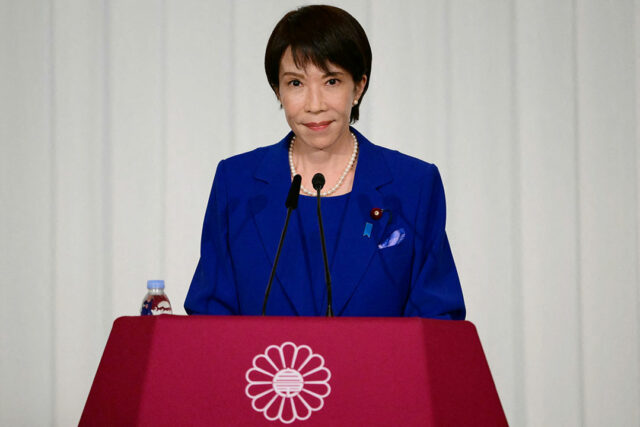
Sanae Takaichi, the newly elected leader of Japan’s ruling party, the Liberal Democratic Party (LDP), attends a press conference after the LDP presidential election in Tokyo on October 4, 2025. — YUICHI YAMAZAKI/POOL VIA REUTERS

TOKYO — Japan will tap joint oil stockpiles held by producing nations in the country by the end of March, Prime Minister Sanae Takaichi said on Tuesday, as Tokyo ramps up emergency measures to offset supply losses from the Middle East.

Global oil prices spiked to their highest levels since 2022 after the US and Israel launched missile strikes on Iran on February 28. The Strait of Hormuz, a key route for oil and liquefied natural gas shipments, remains closed.

“We began releasing privately held reserves on March 16 and will begin releasing national reserves from the 26th,” Ms. Takaichi said on social media.

“Furthermore, releases from jointly held stockpiles with oil-producing countries are also scheduled to begin later in March.”

Japan’s contribution to a record oil stockpile release coordinated by the International Energy Agency will total nearly 80 million barrels, consisting mainly of crude oil, according to the IEA.

In addition, some 13 million barrels, or a total of seven days of supply, are jointly held in Japan by Saudi Arabia, the United Arab Emirates and Kuwait. Of those, Japan will use five days’ worth of supply, industry minister Ryosei Akazawa said.

NO STRAIT OF HORMUZ TANKERS SAIL TOWARDS JAPAN
Two tankers, one sailing from the Red Sea’s Yanbu port in Saudi Arabia, and another from Fujairah in the UAE – all bypassing the Strait of Hormuz – are heading to Japan, Mr. Akazawa said, and are expected to arrive this week and early April.

Another tanker from outside the Middle East is also heading to Japan, due to arrive in late April, Mr. Akazawa added.

Tehran is ready to let Japanese-related ships pass through the Strait of Hormuz, Iranian Foreign Minister Abbas Araqchi told Kyodo news agency last week. But Kpler ship tracking data showed no Japan-bound tankers left the area since early March.

Mitsui O.S.K. and Nippon Yusen Kaisha, two major Japanese shipping companies with tankers stuck in the Gulf, have suspended transit and their vessels are waiting in a safe area, both companies said by email.

As Japan is tapping its reserve funds for gasoline subsidies and, according to Reuters sources, is looking at intervening in the crude oil futures market, local buyers are looking elsewhere, including to the US, for supplies.

Oil releases from private and public stockpiles can cover for external supplies until the end of April, said Shunichi Kito, president of the Petroleum Association of Japan (PAJ), the industry group that represents the country’s major oil refiners.

In a document presented to the ruling Liberal Democratic Party on Tuesday, the PAJ said alternative supplies would not reach Japan before June, even if purchased from the US or elsewhere. Mr. Kito urged the government to consider an additional oil stockpile release.

While the IEA said it was consulting with governments in Asia and Europe on the release of more stockpiled oil, no decision was made in Japan with regard to a possible second strategic oil stockpile release, according to Mr. Akazawa. — Reuters

PH to face more super typhoons in future amid climate change, expert warns

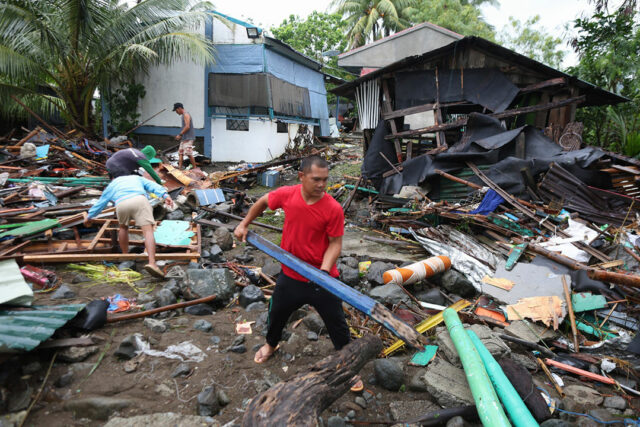
Residents of Aplaya village in Dingalan, Aurora province clear debris from their homes after Super Typhoon Uwan battered the area with strong winds and heavy rains. — PHILIPPINE STAR/WALTER BOLLOZOS

Amid the worsening effects of climate change, the Philippines may experience fewer tropical cyclones, but Super Typhoon–category storms are more likely to develop in the coming decades, an expert said on Monday.

Rafaela Jane P. Delfino, assistant professor at the Institute of Environmental Science and Meteorology at the University of the Philippines Diliman, made the statement, citing the findings of various studies.

Among these are simulations from the Philippine Atmospheric, Geophysical and Astronomical Services Administration (PAGASA) that compared historical storm data from 1971 to 2005 with future projections from 2036 to 2065.

Most of the models showed that the country is likely to experience a steady or even decreased number of tropical cyclones. However, the likelihood of stronger typhoons is higher.

“In terms of the number of typhoons, either stable or decreasing… Pero yung mga mas malakas na bagyo mas dumadami sila [But the stronger storms are increasing],” Ms. Delfino said during her presentation at the 161st National and 76th Meteorological Day press conference.
The Philippines currently averages 20 tropical cyclones per year.

Ms. Delfino said that this trend has already been occurring in recent years, citing findings from PAGASA.

But what is particularly concerning, she said, is the increase in the number of super
typhoons that develop in or enter the Philippine Area of Responsibility (PAR) in the same period.

The annual average of super typhoons entering the PAR increased from 1.5 per year between 1993 and 2002 to three per year between 2003 and 2020—a more than 100% increase.

Super typhoons are the highest tropical cyclone category in the Philippines, with maximum sustained wind speeds exceeding 185 kilometers per hour.

At this level, PAGASA hoists Storm Signal No. 5 in affected areas, as winds can pose an extreme threat to both life and property.

Tropical cyclones such as Haiyan (locally Yolanda), Goni (Rolly), and Rai (Odette) were classified as super typhoons, known for their devastating effects.

Ms. Delfino also said that rainfall associated with tropical cyclones has increased by 6–7% in recent studies compared to pre-industrial times and is projected to rise by up to 16% in the future.

What causes this? Ms. Delfino explained that human activities, such as increased emissions of carbon dioxide and other greenhouse gases, have contributed to global warming, accelerating climate change and its impacts, particularly over the past 200 years.

She added that warmer waters further induced by man-made activities make tropical cyclones stronger, increase their size, and contribute to rapid intensification, making storms more devastating.

“This leads to significant damage and loss of life and, more often than not, hinders sustainable development,” Ms. Delfino said.

Natural hazards, such as typhoons, cost the Philippines about 0.5% of the country’s gross domestic product (GDP) per year, with losses reaching almost 4.5% of GDP in 2013 due to Super Typhoon Haiyan, according to the Organisation for Economic Co-operation and Development (OECD) 2026 report.

Extreme weather events also have lingering economic effects, cutting local economic activity by up to 2.2% immediately, with 1.7 percentage points of the impact still felt five years later, even after post-disaster adaptation, relief, and reconstruction efforts.

Without climate change mitigation, the Philippines could see GDP losses of around 5% by 2040 and up to 18% by 2070 compared with a scenario without climate change, the report also said.

Meanwhile, the World Meteorological Organization (WMO) on Monday warned that Earth’s climate system is more out of balance than ever in recorded history, as greenhouse gases continue to warm the atmosphere and oceans and accelerate the melting of ice.

WMO said that the years 2015 to 2025 were the hottest 11 years on record, with 2025 ranking among the second and third hottest years at approximately 1.43°C above the 1850–1900 average.

This imbalance increases the risk of extreme weather events, including stronger tropical cyclones, heavier rainfall, more intense heatwaves, and rising sea levels.

The report calls for urgent action, emphasizing the need to cut greenhouse gas emissions and accelerate the transition to cleaner energy.

It also calls for strengthening early warning systems and climate-resilient planning to protect communities and economies. — Edg Adrian A. Eva

Philippines’ Marcos says grounding planes is a ‘distinct possibility’

STOCK PHOTO | Image by Stefan Fluck from Unsplash

The Philippines says grounding planes due to a shortage of jet fuel brought on by the war in Iran is a “distinct possibility,” according to President Ferdinand R. Marcos Jr.

“Several countries have already told our airlines they cannot fuel their aircraft, so they have to carry fuel there and back,” Marcos said in an interview with Bloomberg News on Tuesday. “Long haul is going to be a much more serious problem.”

Asked whether, inevitably, planes may have to be grounded, Mr. Marcos said “we’re hoping not, but it’s a distinct possibility.”

Airlines in Asia are mapping out contingency plans as the escalating Middle East conflict threatens to trigger the worst oil shock since the 1970s. Because the Philippines relies heavily on imported crude — much of it sourced from the Middle East — it’s more highly exposed than other nations in Southeast Asia to energy shortages and spiraling domestic fuel prices.

Philippine budget carrier Cebu Air on Monday said it plans to reduce flights beginning next month because of surging fuel prices caused by the Middle East crisis, according to a statement.

Elsewhere in Asia, Vietnam Airlines is temporarily suspending flights on some domestic routes while VietJet Aviation JSC is reducing the frequency of flights. Another Vietnamese carrier, Bamboo Airways, said it will try to maintain flights during peak travel periods but has advised services may be fewer than last year if oil prices stay high.

Mr. Marcos’s comments appear to be at odds with a briefing Energy Secretary Sharon Garin gave earlier Tuesday. She said the Department of Energy had on Monday met with airlines and they’d told the agency they have sufficient fuel orders coming in.

“We met them because we wanted to know if they need help in procuring, but they have assured us they’re okay,” Ms. Garin said. — Bloomberg

Marcos won’t spend all reserves on peso, sees 6% growth by 2028

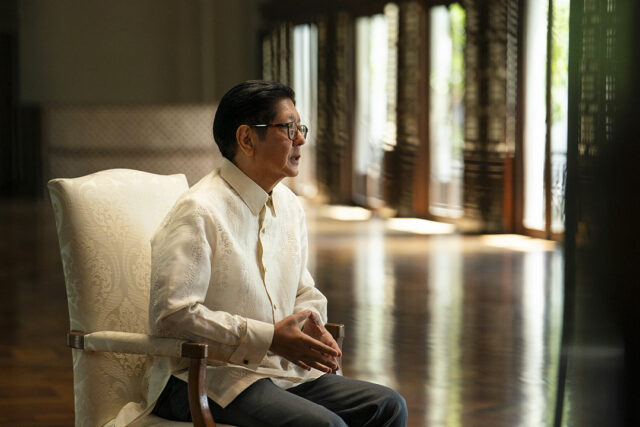
FERDINAND MARCOS JR. — LISA MARIE DAVID/BLOOMBERG

Philippine President Ferdinand Marcos Jr. signaled that his government will tolerate weakness in the peso, saying there is a limit to their defense of the currency as market forces drive up the dollar.

“I think it would be even futile to try to spend all our foreign reserves on defending the peso,” he said in an exclusive interview with Bloomberg Television’s Haslinda Amin in Manila on Tuesday. “We also recognize that there’s only so much you can do because the dollar’s going to move the way it does.”

The peso is among Asia’s hardest-hit currencies, having weakened through the psychologically important level of P60-per-dollar for the first time in history last week. High oil prices are driving up the cost of imports for an economy that sources almost 100% of its oil from the Middle East.

Mr. Marcos said his government is having to spend money to cushion lower- and middle-income families from the impact of the US and Israeli war on Iran, which has driven oil prices to above $110 a barrel.

Asked if the Philippines could reach a pace of 8% growth by the end of his single six-year term in 2028, Mr. Marcos said that would be “tough,” and that even near-term goals need to be rethought.

“With the war in the Middle East, those have to be redrawn — everything has to be redrawn,” Mr. Marcos said of the forecasts, adding that the recent spike in energy prices came after oil had been “fairly steady at $72 per barrel.”

Even if the war stopped today, crude oil won’t immediately sink back to around $70 per barrel, Mr. Marcos said, with the crisis having created uncertainty and risk factors that will linger.

“The impact of the war is really on middle-income and lower-middle-income countries,” he said.

Investors have been pulling money from emerging markets like the Philippines, whose benchmark stock index is down more than 10% since the US attacked Iran.

Still, foreign-exchange reserves hit a record-high $112.7 billion last month, giving the Bangko Sentral ng Pilipinas a degree of firepower to support the peso, which has been under pressure along with other Asian currencies. It gained 0.58% against the US dollar on Tuesday, and the remarks by Marcos indicate authorities will support the currency without trying to determine the peso’s level.

The central bank has to do a “delicate balancing act” on intervening in the foreign exchange market to smooth any volatility, according to Michael Ricafort, chief economist at Rizal Commercial Banking Corp. in Manila.

The government is seeking to diversify energy supplies and has ordered the transport agency to delay hiking ticket prices for consumers, although a prolonged war and energy crisis could hurt businesses and consumers alike.

Growth had already been under pressure.

After Marcos announced a probe into a massive public works scandal in July, the Philippines’ once high-flying economy stuttered as protests and slowing state spending hit consumer and investor confidence. The economy expanded just 3% in the fourth quarter of 2025, well below the pace of neighbors China, Indonesia, Malaysia and Vietnam.

In January, well before the war on Iran, the Philippines cut this year’s growth target to 5% to 6% from a previous goal of 6% to 7%.

But the president is confident the economy will be expanding by around 6% or more by the end of his time in office, pointing to investment and a young and increasingly upskilled workforce. He cited the increasing value of semiconductors, many of which are packaged and exported from the Philippines.

“We’ve moved up the value chain from pure fabrication to design, which has put us in a good position for the advent of data centers and AI,” Mr. Marcos said. “We have restructured our tax incentives for investors, worked hard on the ease of doing business, brought down transportation costs and digitalization is key.”

It’s difficult to tell now if Mr. Marcos’ 6% goal is realistic, given the high level of uncertainty from the Iran war, said Ruben Carlo Asuncion, chief economist at Union Bank of the Philippines.

“Reaching historical economic growth expansion levels really depends on the return to global oil price normalization, at least at this point in time,” he said. — Bloomberg

Philippines says inflation may exceed 4% this year if oil prices stay high, impacting GDP

A stall sells assorted varieties of rice inside a market in Quezon City. — PHILIPPINE STAR/MIGUEL DE GUZMAN

MANILA — Philippine inflation could breach this year’s 2% to 4% target if oil price increases are sustained, the Economic Planning Secretary said on Tuesday, adding that economic growth could fall below target.

Department of Economy, Planning, and Development (DEPDev) Arsenio M. Balisacan said the growth target could be missed due to a combination of higher inflation and lower remittances. — Reuters

Indonesia has assured Philippines of steady supply of coal, Manila says

FREEPIK

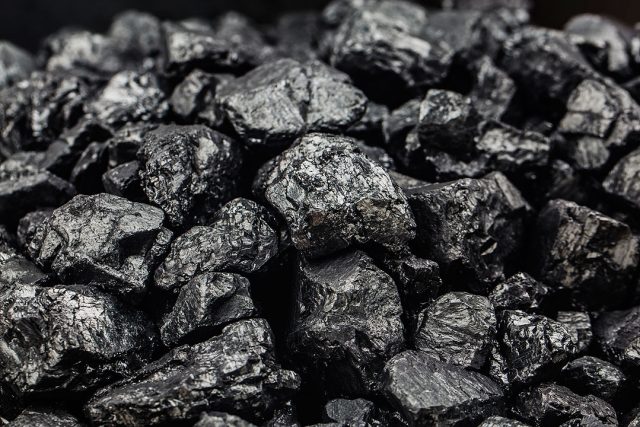
MANILA – Indonesia has assured the Philippines of a steady supply of coal, the Philippine energy minister said on Tuesday.

“We have assurance, and we are good partners,” Energy Secretary Sharon Garin told a news briefing.

The Philippines plans to temporarily increase coal-fired generation amid energy pressures, Ms. Garin said.

The country’s fuel supply remains manageable and the government is working to procure 1 million barrels of oil from countries within and outside Southeast Asia to build its buffer stock.

The Philippines has around 45 days of fuel supply based on current consumption levels, Ms. Garin said.

The Philippines has Southeast Asia’s most coal-dependent power grid.

After ramping up LNG-fired generation, Manila was poised in 2025 for its first decline in coal power in nearly two decades, but rising LNG costs are forcing it to turn back to coal.

Indonesia supplied half of all global thermal coal exports in 2025, and is the top coal supplier to many of the world’s largest coal importing nations. — Reuters

Iran denies talks with US after Trump postpones strikes on power grid

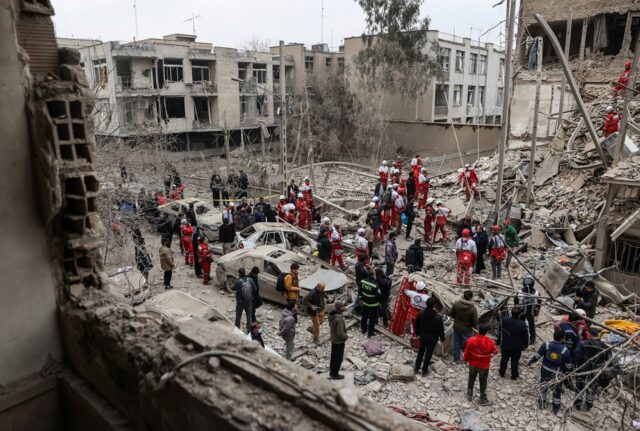
Emergency personnel work at the site of a strike on a residential building, amid the US-Israeli conflict with Iran, in Tehran, Iran, Mar. 16, 2026.—via REUTERS/MAJID ASGARIPOU

WASHINGTON/JERUSALEM/TEL AVIV — Iran denied on Monday that it had engaged in negotiations with the United States, after President Donald Trump postponed a threat to bomb Iran’s power grid because of what he described as productive talks with unidentified Iranian officials.

A European official said that while there had been no direct negotiations between the two nations, Egypt, Pakistan and Gulf states were relaying messages. A Pakistani official and a second source told Reuters that direct talks on ending the war could be held in Islamabad as soon as this week.

Mr. Trump wrote on his Truth Social platform that the US and Iran had held “very good and productive” conversations about a “complete and total resolution of hostilities in the Middle East”.

As a result, he said, he was postponing for five days a plan to hit Iran’s energy grid. His announcement sent share prices higher and oil prices sharply lower to below $100 a barrel, a sudden reversal to a market swoon caused by his weekend threats and Iran’s vows to respond.

Mr. Trump later told reporters his special envoy Steve Witkoff and son-in-law Jared Kushner, who had been negotiating with Iran before the war, had held discussions with a top Iranian official into the evening on Sunday and would continue on Monday.

“We have had very, very strong talks. We’ll see where they lead. We have major points of agreement, I would say, almost all points of agreement,” he told reporters before departing Florida for Memphis.

In Memphis, he said Washington had been negotiating with Iran “for a long time, and this time they mean business,” adding: “I think it could very well end up being a good deal for everybody.”

He did not identify the Iranian official in touch with Mr. Witkoff and Mr. Kushner, but said: “We’re dealing with the man who I believe is the most respected and the leader.”

An Israeli official and two other sources familiar with the matter said the interlocutor on the Iranian side was Iran’s powerful parliament speaker Mohammad Baqer Qalibaf.

‘FAKENEWS’, SAYS IRAN PARLIAMENT SPEAKER
Mr. Qalibaf said on X that there had been no such talks with the United States, and ridiculed the suggestion as an attempt to rig financial markets.

“No negotiations have been held with the US, and fakenews is used to manipulate the financial and oil markets and escape the quagmire in which the US and Israel are trapped,” he wrote.

“Iranian people demand complete and remorseful punishment of the aggressors. All Iranian officials stand firmly behind their supreme leader and people until this goal is achieved.”

Iran’s elite Revolutionary Guards (IRGC) said they were launching fresh attacks on US targets, and described Mr. Trump’s words as “psychological operations” that were “worn out” and having no impact on Tehran’s fight.

The IRGC said late on Monday it targeted several Israeli cities, including Dimona and Tel Aviv and a number of US bases. It said it was “negotiating” with the “aggressors through impact-focused operations.”

Israel’s military said it had detected missiles launched from Iran on Monday night for the first time since Mr. Trump’s earlier comments, and at least one interception blast was heard from Jerusalem.

Israeli Prime Minister Benjamin Netanyahu said in a video statement that he spoke with Mr. Trump on Monday and that Israel would press on with attacks in Lebanon and Iran.

But Mr. Netanyahu said Mr. Trump believed there was a possibility of “leveraging the mighty achievements obtained by the IDF (Israel Defence Forces) and the US military, in order to realize the goals of the war in a deal – a deal that will preserve our vital interests.”

Although there was no immediate confirmation that talks had taken place as described by Mr. Trump, Iran’s foreign ministry described initiatives to reduce tensions.

It said Iran’s Foreign Minister Abbas Araqchi reviewed developments related to the Strait of Hormuz with his Omani counterpart and agreed to continue consultations between the two countries.

Iran has effectively closed the key Strait of Hormuz, through which about a fifth of global oil and liquefied natural gas flows. Mr. Trump has demanded Iran open the strait, but Tehran says it will not do so until the United States and Israel call off their attacks.

The Pakistani official said US Vice President JD Vance, as well as Mr. Witkoff and Mr. Kushner, were expected to meet Iranian officials in Islamabad this week, following a call between Mr. Trump and Pakistan’s army chief Asim Munir.

The White House confirmed Mr. Trump’s call with Mr. Munir. When asked about a possible visit by Mr. Witkoff and Mr. Kushner to Islamabad, White House spokesperson Karoline Leavitt said:

“These are sensitive diplomatic discussions and the US will not negotiate through the press. This is a fluid situation, and speculation about meetings should not be deemed as final until they are formally announced by the White House.”

The Pakistani prime minister’s office and foreign ministry did not immediately respond to requests for comment.

Iranian media reported that Iran’s President Masoud Pezeshkian and Pakistani Prime Minister Shehbaz ‌Sharif discussed the impact of the war on regional and global security.

Mr. Pezeshkian was quoted as saying that Iran was committed “to preserving stability and security and countering foreign interference in regional affairs” and wanted to strengthen cooperation with the countries of the region.

Iran had responded to Mr. Trump’s threats to strike its power plants by saying it would hammer the infrastructure of US allies in the Middle East, raising the prospect that an extreme disruption to global energy supplies could last longer than previously expected.

More than 2,000 people have been killed in the war the US and Israel launched on February 28. — Reuters

PH game dev sector seen matching Korea, Japan — Xsolla

The Xsolla launcher is an all-in-one platform that allows game devlopers and publishers to distribute their games direct to players. — XSOLLA.COM

The Philippine game development sector is likely to grow as large as its Asian neighbors in the coming years, driven by the country’s sizable market and predominantly young, tech-savvy population that could become future creators, according to Xsolla, a global video game commerce firm.

“I think it could be as big as Korea or Japan, and I don’t mean to be condescending,” Eric Lee, head of partnerships for Asia Pacific at Xsolla, said in an interview via Microsoft Teams.

Similar to South Korea, where indie game developers have been growing after years of dominance by large companies, the same trend has been observed in the Philippines in recent years.

“The regional revenue for the Philippines is within the top three countries in Southeast Asia,” Mr. Lee said, referring to countries that make use of Xsolla’s services across its 3,000 game and project partners.

“Meaning there is clearly more growth to be explored within Southeast Asia, and the Philippines is definitely one of them,” he added.

Mr. Lee said that from being a source of outsourced talent, Southeast Asia, including the Philippines, has evolved into an active game development hub in recent years, driven by improved resources and a growing talent pool.

Data from the Philippine Statistics Authority (PSA) showed that the country’s digital interactive goods and services activities — where game development is classified — generated P416.33 billion in 2025.

This accounted for a 19.7% share of the Philippine creative economy, which grew by 6.7% to P2.12 trillion in 2025. However, the growth rate slowed from 10.9% in 2024 and 12.4% in 2023.

In a separate report, IMARC Group projected the Philippine gaming industry to expand to $9.9 billion by 2033, from $4.8 billion, reflecting a compound annual growth rate (CAGR) of 8.29%.

South Korea, one of the key players in the global video game market, was projected to achieve sales revenue of US$14.5 billion in 2025, according to Statista.

To reach the country’s full potential, Mr. Lee said the country must address bottlenecks such as funding, resources, and exposure, noting that several local indie developers are already gaining recognition from foreign studios.

He added that Xsolla aims to address the exposure gap by allowing Filipino student game developers from the De La Salle-College of Saint Benilde to access its launcher system, formalized through a recently signed memorandum of understanding (MOU).

According to its website, the Xsolla Launcher enables developers to distribute, monetize, and manage their games through a fully customizable platform, allowing them to bypass traditional marketplaces and directly engage with players.

“Self-publishing has always been a problem because you just can’t find your target audience globally, or you don’t have the resources to do so. Our launcher system helps address exactly that,” Mr. Lee said.

“We’re trying to help. I think the Philippines could use more exposure. I know developers are getting picked up, but we just want to help a bit more because we see the high quality of talent here,” he added.

As an expert in payment solutions and monetization tools, Mr. Lee said Xsolla can also help student developers generate revenue from their games — an aspect that is often overlooked by creators.

The company could also provide analytics, data, and metrics to developers to help them successfully navigate the market.

When asked why the company wants to help local indie game developers, Mr. Lee said that despite the uncertainty surrounding the success of these games, Xsolla aims to create a conducive environment for future developers.

“So we understand that indies may not stay indie forever,” he said.

“So there is an incentivizing factor for us to provide support from the beginning, but we also need these students, developers, creativity, and new regions to bring more players into the ecosystem and create better games for the future.”

Looking ahead, Xsolla is seeking to engage with both private and public agencies to expand its initiative. Mr. Lee said the company has recently talked with the Department of Trade and Industry (DTI) to help address the industry’s bottlenecks.

If given the right attention, Mr. Lee said the game development industry in the Philippines could capture a share of the growing global market and creatively introduce the country to the world. — Edg Adrian A. Eva

ADVERTISEMENT
ADVERTISEMENT