Home Blog Page 1118

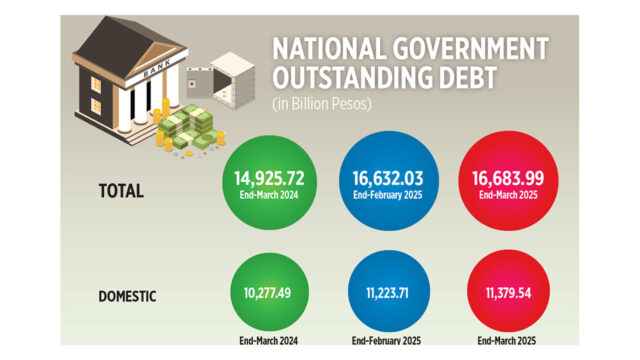
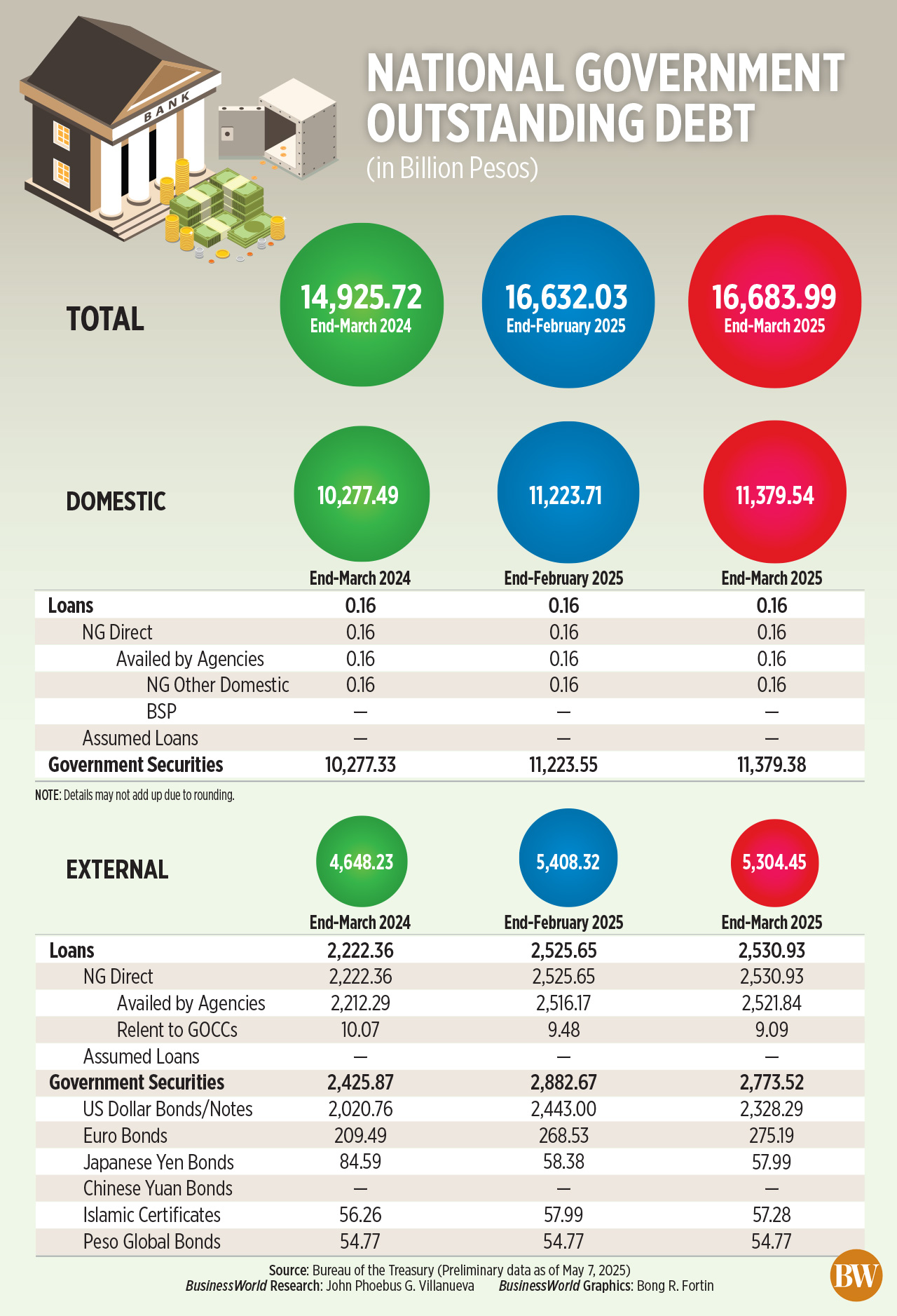
National Government outstanding debt

THE National Government’s (NG) outstanding debt edged up to a fresh high of P16.68 trillion as of end-March, the Bureau of the Treasury (BTr) said on Wednesday, adding that this debt “remains manageable.” Read the full story.

Mid-term vote holds key to Philippines riding out tariff-linked risks

The midterm elections are set for May 12. — PHILIPPINE STAR/WALTER BOLLOZOS

By Ditas Lopez and Neil Jerome Morales, Bloomberg

The Philippines’ May 12 midterm election is putting investors on alert for any changes to government policies, as the global trade war exposes weaknesses in one of Asia’s fastest-growing economies.

The vote to pick 12 senators, more than 300 congressmen and nearly 18,000 local officials comes as policymakers seek to boost investment and consumption against the backdrop of a more challenging external environment. It will also be a crucial test for both President Ferdinand Marcos Jr. and his estranged Vice President Sara Duterte, who are backing competing candidates.

“Investors are watching whether the elections will result in continuity that will ensure economic reforms,” said Jonathan Ravelas, managing director at eManagement for Business and Marketing Services, a Manila-based consultancy. “The Philippines cannot afford to have political instability, especially during this time of global uncertainty.”

The economy expanded 5.4% in the first quarter from a year earlier, slower than the 5.7% expansion forecast by analysts but marginally faster than the pace seen in the last quarter of 2024, according to data released Thursday. The government aims for growth of at least 6% this year after a slower-than-projected 5.7% expansion in 2024, though the economy is still outpacing most of Asia.

A Philippine trade delegation wrapped up initial talks with US officials last week with more likely as Manila seeks to lower the Trump administration’s proposed 17% tariff. The planned levy is well below those threatened against most of Southeast Asia, including a 46% rate on Vietnam, and policymakers see the chance to win a competitive advantage — if they can continue domestic reforms.

“While the tariffs create opportunities to shift supply chains, EU investors remain cautious of long-term operational inefficiencies,” European Chamber of Commerce of the Philippines President Paulo Duarte said. “To seize this strategic window, the government must focus on lowering operational costs and improving ease of doing business.”

The country’s young, English-speaking workforce is a big asset for the economy, but challenges abound, said Ebb Hinchliffe, executive director at the American Chamber of Commerce of the Philippines. They include red tape, infrastructure and connectivity, energy costs and regulatory unpredictability, he said, echoing worries that have haunted Philippine businesses for decades.

While the Philippines has enacted legislation to attract investors — including a measure that cuts corporate taxes and the removal of foreign ownership limits in sectors including renewable energy — businesses want more reforms. But a shaky political situation after the midterms could keep the government’s focus off much-needed changes.

Finance Secretary Ralph Recto last month withdrew a proposal that sought to increase capital gains, donor and estate taxes to 10% from 6%, citing ample tax collection in the past three months. The bill would generate roughly P300 billion ($5.4 billion) in additional revenue over the next five years.

Winning lawmakers will have their work cut out for them when the new Congress convenes in July. Pending bills include a measure to ban raw mineral exports to spur the downstream mining industry, a plan heavily opposed by a local nickel industry association.

And awaiting Marcos’ signature is a bill reducing the stock transaction tax to 0.1% from 0.6% to make the country more attractive compared with Southeast Asian neighbors. But it will also subject foreign firms to a 25% tax on dollar-denominated bonds out of the Philippines.

The average return on local assets in a midterm election year has been negative 0.3%, based on polls running back to 1995, compared with 12% gains during presidential election years since then, according to Ritchie Ryan Teo, chief investment officer at Sun Life Investment Management and Trust Corp. 

“Enflamed disagreements between parties have occurred in past elections that have not derailed the capability for Congress to pass laws and budgets,” Teo said. “We are cautiously optimistic, but this is definitely a space to watch.”

The outcome of the election is particularly critical for Duterte, as the 12 senators being elected will be among jurors for the vice president’s impeachment trial that starts in July.

“Businesses don’t seem to mind it as long as it does not spill over into their turf or their bottom line,” said Dereck Aw, a senior analyst at Control Risks. “If anything, some are even relieved that politicians are too busy feuding with each other to meddle in business, which the Philippine government has been known to do.”

Consumption, powered by remittances from Filipinos working abroad, who sent home a record $38.3 billion last year, accounts for about 70% of the country’s economic output. Manufacturing is less than 20%.

Amando Tetangco, a former central bank governor who now chairs top conglomerate SM Investments Corp., said a consumption-driven economy bodes well for the Philippines at a time of heightened global risks.

“This structure gives us a certain amount of protection. We are less vulnerable,” Tetangco said. “We may be less open than other countries (in terms of trade) but in this current environment it provides us some insulation from potential adverse effects of developments.”

The Philippines’ benchmark stock index has dropped 1% in the year through May 7, trailing the MSCI Asia Pacific index’s 5% gain. Local bonds have handed dollar-based investors a gain of 6.3%, while the peso is up around 4%.

“If you look at the last 20 years or so, we’ve had a lot of those political noises but the policy directions have remained largely the same,” Economic Planning Secretary Arsenio Balisacan said in an interview. “What matters is that the political noise will not cause a reversal of what is otherwise good policy,” he said.

For Teresita Sy-Coson, whose family leads SM that has interests in banking, property and retail, the way forward is to shrug off politics. “We just continue with the business, we are not listening to the noise,” she said. — Bloomberg


Philippines Q1 GDP grows slightly faster but lags expectations

PHILIPPINE STAR/ MICHAEL VARCAS

MANILA – The Philippine economy expanded slightly faster in the first quarter even as growth lagged expectations, with household consumption and public spending underpinning momentum as the country faces rising external headwinds from US tariffs.

Gross domestic product rose by an annual 5.4% in the January–March quarter, official data showed on Thursday, slightly ahead of the 5.3% pace in the fourth quarter of 2024. However, the figure fell short of the 5.7% growth projected in a Reuters poll.

“This performance underscores the relative resilience of our economy in the face of global volatility,” Economic Development Undersecretary Rosemarie Edillon said at a press briefing.

On a seasonally adjusted basis, the economy expanded 1.2% quarter-on-quarter, missing economists’ median forecast of 1.6%, according to the Reuters poll.

Growth in the first quarter was largely driven by a surge in public spending, which jumped 18.7%, the fastest pace since the second quarter 2020, as the government front-loaded infrastructure spending before a 45-day ban imposed ahead of the May 12 midterm election takes effect.

Household consumption also picked up, growing 5.3% from 4.7% in the previous quarter, buoyed by easing inflation, which Edillon said may give the Bangko Sentral ng Pilipinas more leeway to loosen monetary policy.

“There’s really room for more easing,” she said.

Annual inflation in April slowed to its lowest level in over five years to 1.4%, boosting expectations of a policy rate cut at the central bank’s next meeting on June 19. — Reuters

Philippines, China trade accusations on South China Sea confrontation

AN AERIAL photo of Philippine-occupied Thitu Island, locally known as Pag-asa, in the contested Spratly Islands. — REUTERS

MANILA/BEIJING – The Philippines and China gave conflicting versions on Thursday of a maritime confrontation around a contested shoal in the South China Sea, the latest incident in a longstanding dispute between the neighbours.

A Philippine Navy patrol near the disputed Scarborough Shoal encountered “aggressive and unsafe” movements by two Chinese Navy vessels earlier this week, the Philippine military said.

China’s military, meanwhile, accused the Philippine frigate of “attempting to invade” the waters around the feature and said that it had organised naval and air forces to track and expel the vessel, in a statement released by its Southern Theatre Command.

The Scarborough Shoal, named for a British ship grounded on the atoll nearly three centuries ago, is one of Asia’s most contested maritime features and a flashpoint for diplomatic flare-ups over sovereignty and fishing rights. “Such threatening and provocative conduct can lead to misunderstanding that may escalate tensions and impact regional stability,” the Armed Forces of the Philippines said in a statement.

China claims sovereignty over nearly all the South China Sea, including areas claimed by Brunei, Indonesia, Malaysia, the Philippines and Vietnam.

“(Scarborough Shoal) is China’s inherent territory. We urge the Philippine side to immediately cease its infringement, provocation and distorted speculation,” Tian Junli, a spokesman for China’s Southern Theatre said.

“Theatre troops are on high alert at all times, resolutely defending national sovereignty, maritime rights and interests, and resolutely maintaining peace and stability in the South China Sea region,” Tian added. — Reuters

A legacy of trust, a future of integrity: AMAES and PPCRV launch 2025 Elections Command Center

In a significant move ahead of the 2025 national elections, the AMA Education System (AMAES) and the Parish Pastoral Council for Responsible Voting (PPCRV) officially launched the PPCRV Command Center at PLDT Sampaloc, reinforcing a long-standing partnership rooted in transparency, technology, and civic duty.

The command center, now housed in its new location, will serve as the central hub for election monitoring, reporting, and data verification. This launch follows the signing of a Memorandum of Agreement (MoA) between AMAES and PPCRV at AMA University in Quezon City earlier this year, where both institutions renewed their commitment to promoting clean and honest elections through education and digital infrastructure.

At the heart of the event was the keynote address by AMAES Chairman Emeritus Amb. Amable R. Aguiluz V, who emphasized the institution’s continuing role in nation-building.

“Corporate Social Responsibility is not just a checkbox for AMA Education System — it is the very heartbeat of our institution,” Dr. Aguiluz stated. “Empowering communities through education and technology is our core mission, and it is through meaningful engagements like this that we bring that mission to life.”

Amb. Aguiluz outlined AMAES’ decades-long history of involvement in the country’s electoral process, dating back to the 1986 snap presidential elections. Since then, AMA has played a role in 14 national and local polls, including five automated elections. For the upcoming 2025 elections, AMAES is once again providing critical IT support, computer equipment, audiovisual training materials, and volunteers from over 200 campuses across the Philippines.
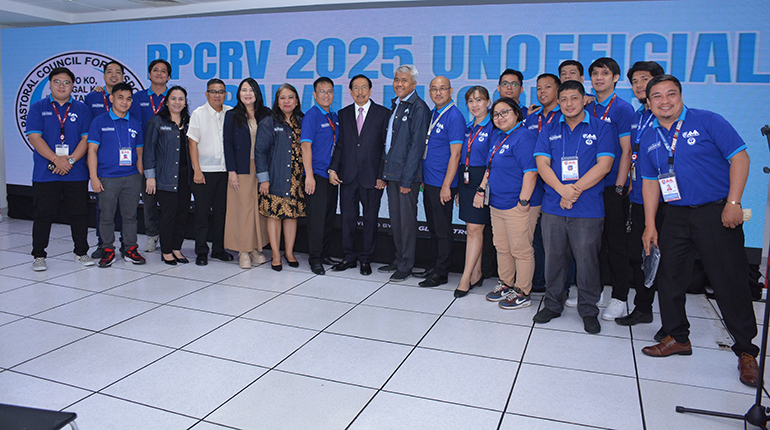
The launch also celebrated the enduring partnership between AMAES and PPCRV, which began in 2010 during the country’s first automated elections. But beyond institutional collaboration, it also spotlighted a personal bond that has long supported this shared advocacy — that of AMAES Chairman Emeritus Amb. Aguiluz and Ambassador Henrietta “Tita” de Villa, PPCRV Founding Chair and former Philippine Ambassador to the Holy See.

Ambassador de Villa, who has been at the forefront of electoral reform and civic education, was warmly welcomed at the event. Known for her strong Catholic faith and her dedication to peaceful elections, her presence was a reminder of the heart and soul behind the PPCRV’s mission.

PPCRV officials, including National Chairperson Evelyn Singson and Trustee and Spokesperson Ana de Villa-Singson, also graced the occasion, underscoring the organization’s readiness for 2025 and their appreciation for AMAES’ continued support.

As part of the renewed collaboration, voter education materials — including the Tibok Pinoy e-book — will be integrated into AMAES’ online learning platforms and disseminated through its digital and social media channels. This effort aims to mold not just voters, but responsible and informed Filipino citizens.

The launch of the PPCRV Command Center marks more than just logistical readiness. It is a symbol of trust, commitment, and shared purpose — an embodiment of the values both institutions stand for. With technology and education at the forefront, and a legacy of civic engagement behind them, AMAES and PPCRV are once again stepping up to help protect the integrity of the Filipino vote.


Spotlight is BusinessWorld’s sponsored section that allows advertisers to amplify their brand and connect with BusinessWorld’s audience by publishing their stories on the BusinessWorld Web site. For more information, send an email to online@bworldonline.com.

Join us on Viber at https://bit.ly/3hv6bLA to get more updates and subscribe to BusinessWorld’s titles and get exclusive content through www.bworld-x.com.

US, Britain to announce trade deal on Thursday, New York Times says

REUTERS

U.S. President Donald Trump is expected to announce a trade deal between the United States and Britain on Thursday, the New York Times reported on Wednesday, citing three people familiar with the plans.

Mr. Trump posted on Truth Social earlier that he would hold an Oval Office news conference at 10 a.m. EDT (1400 GMT) on Thursday about a “major trade deal with representatives of a big, and highly respected, country,” using all capitalized letters.

He did not offer more details but said it would be the “first of many.”

A White House spokesperson declined to comment on the Times report.

A UK official said on Tuesday that the two countries had made good progress on a trade deal that would likely include lower tariff quotas on steel and autos.

Mr. Trump’s top officials have engaged in a flurry of meetings with trading partners since the president on April 2 imposed a 10% tariff on most countries, along with higher “reciprocal” tariff rates for many trading partners, though those rates were later suspended for 90 days.

Britain was not among the countries hit with additional tariffs, because it imports more from the U.S. than it exports there.

Mr. Trump has also imposed 25% tariffs on autos, steel and aluminum, 25% tariffs on Canada and Mexico, and 145% tariffs on China.

On Tuesday, Mr. Trump said that he and top administration officials would review potential trade deals over the next two weeks to decide which ones to accept.

Last week, he said that he has “potential” trade deals with India, South Korea and Japan. — Reuters

Apple’s plan to offer AI search options on Safari a blow to Google dominance

REUTERS

Apple’s plans to add AI-powered search options to its Safari browser are a big blow to Google, whose lucrative advertising business relies significantly on iPhone customers using its search engine.

The news slammed shares of Google-parent Alphabet, which closed down 7.3%, wiping off roughly $150 billion from its market value.

The iPhone maker was “actively looking at” reshaping Safari, a source familiar with the matter told Reuters, citing Apple AAPL.O executive Eddy Cue who was offering testimony at an antitrust case on Wednesday over Google’s dominance in online search.

Cue said searches on Safari fell for the first time last month due to users increasingly turning to AI, according to the source. Apple stock closed down 1.1%.

Google said that it continued to see growth in the overall number of search queries, including “total queries coming from Apple’s devices and platforms,” according to a statement posted on the company’s blog.

“People are seeing that Google Search is more useful for more of their queries — and they’re accessing it for new things and in new ways,” the company wrote.

Google cited voice and visual search features as contributors to total search volume growth. It was unclear whether Cue was using the same basis of comparison in his testimony when analyzing types of searches.

Still, the Apple executive’s comments suggests that a seismic shift in search is likely underway, threatening Google’s dominant search business – a go-to advertising destination for marketers that has now become a target for U.S. antitrust regulators, which filed two major lawsuits against the company.

Google is the default search engine on Apple’s browser, a coveted position for which it pays the iPhone maker roughly $20 billion a year, or about 36% of its search advertising revenue generated through the Safari browser, analysts have estimated.

Banning Google from paying companies to be the default search engine is among the remedies that the U.S. Justice Department has proposed to break up its dominance in online search.

“The loss of exclusivity at Apple should have very severe consequences for Google even if there are no further measures,” D.A. Davidson analyst Gil Luria said.

“Many advertisers have all of their search advertising with Google because it is practically a monopoly with almost 90% share. If there were other viable alternatives for search, many advertisers could move much of their ad budgets away from Google,” Mr. Luria said.

Google is not defenseless.

Written off as an also-ran in the AI race by critics after ChatGPT’s buzzy launch in late 2022, Google has reached into its deep pockets to fund its AI efforts and leverage its vast data trove.

The company introduced an “AI mode” on its search page earlier this year, looking to retain its millions of users from going away to other AI models.

It recently expanded AI Overviews – summaries that appear atop the traditional hyperlinks to relevant webpages on a search query – for users in more than 100 countries, and added advertisements to feature, boosting Search ad sales.

CEO Sundar Pichai said in a testimony at an antitrust trial last month that Google hopes to enter an agreement with Apple by the middle of this year to include its Gemini AI technology on new phones.

Apple’s Cue on Wednesday also said the company would add AI search providers, including OpenAI and Perplexity AI, as search options in the future, Bloomberg reported.

“(Apple’s plan) also shows how far generative search sites, such as ChatGPT and Perplexity have come,” said Yory Wurmser, principal analyst for advertising, media & technology at eMarketer.

That Google is willing to pay tens of billions of dollars to remain the default search engine shows how crucial the agreements are, Wurmser said.

For instance, ChatGPT in April reported seeing over 1 billion weekly web searches for its search feature. It has more than 400 million weekly active users, as of February. — Reuters

US has plans for sovereign wealth fund but no final decisions made, White House says

STOCK PHOTO | Image by Pexels from Pixabay

The U.S. Treasury and Commerce departments have formulated plans for a sovereign wealth fund but no final decisions have been made, a White House spokesperson said on Wednesday.

“The Administration remains committed to using every tool available to deliver on President Trump’s directive to safeguard America’s national and economic security,” the spokesperson said in a statement.

Sovereign wealth funds are investment vehicles owned by countries and most act as an investment account, or as a development tool, or a combination of the two.

President Donald Trump ordered the creation of the fund in February and has previously said revenue earned from tariffs on U.S. imports could form the basis for a wealth fund.

Treasury Secretary Scott Bessent said in February that the plan was to monetize assets currently owned by the U.S. government “for the American people.”

“There’ll be a combination of liquid assets, assets that we have in this country as we work to bring them out for the American people,” he said in February. — Reuters

China’s BYD, Tsingshan scrap plans for Chile lithium plants

FREEPIK

SANTIAGO – Chinese automaker BYD and metals group Tsingshan are backing out of multi-million dollar plans to build lithium cathode plants in Chile, the country’s economic development agency said on Wednesday.

The retreat by the two huge Chinese companies is a blow to Chile’s aim to develop more domestic processing of lithium, a key metal for electric vehicle batteries. Chile is the world’s no. 2 lithium producer.

Both projects were hit by plunging lithium prices, said government economic development agency Corfo, which in 2023 had tapped BYD and Tsingshan for a preferential lithium price deal as part of its efforts to spur investment in Chile.

“The companies selected by Corfo have been affected in their investment decisions by the global market conditions, which have shown a sharp drop in prices,” Corfo said in a statement.

Tsingshan told Reuters it has withdrawn plans for a $233 million project to produce 120,000 metric tons of lithium iron phosphate (LFP). Chile’s national assets ministry told Reuters that BYD filed an intent to withdraw its plans in January.

BYD, the world’s biggest maker of electric cars, declined to comment. BYD last year flagged delays to a planned $290 million plant, which was expected to produce 50,000 metric tons per year of LFP for cathodes.

Chilean newspaper Diario Financiero first reported the scrapped investments.

Chile’s effort in 2018 to encourage lithium-related investments via a pricing deal also fell apart. Chilean chemical company Molymet, China’s Sichuan Fulin Transportation Group Co 002357.SZ, and a joint venture between Korean firms Posco and Samsung for various reasons withdrew their plans.

Tsingshan and BYD would have had access to preferential prices of lithium produced by Chilean miner SQM through 2030, a timeframe that Corfo said also may have influenced the withdrawal of the projects.

In addition, Corfo said Tsingshan had wanted to assign the project development to a unit of the company that had not participated in the bidding process, which Corfo said was not possible.

Corfo last week opened a second bidding process for a similar scheme, this time to provide a purchasing deal with U.S. lithium producer Albemarle through 2043 for companies that commit to lithium-related projects.

Albemarle and the selected investors will be able to use an “alternative form” to determine a price agreement, Corfo said. — Reuters

Bank of England set to cut rates amid worries about Trump tariff fallout

WIKIMEDIA.ORG

LONDON – The Bank of England is poised to extend its slow run of interest rate cuts on Thursday with investors watching for any signs that it could soon pick up the pace as U.S. President Donald Trump’s tariffs weigh on the world economy.

Governor Andrew Bailey and his BoE colleagues have long stressed the need for a gradual and careful approach to lowering borrowing costs, something most analysts say is likely to continue given the scale of uncertainty about the outlook.

The BoE has cut rates just three times so far since last August, moving more slowly than the U.S. Federal Reserve and the European Central Bank due to its concerns about inflationary heat in the jobs market.

Although Britain’s economy is far from robust, its growth this year looks set to be faster than in Germany and France.

But Mr. Bailey has recently stressed the risks to the economy from the surge in global trade tensions.

On Wednesday, the Fed kept its key interest rate on hold and said uncertainty about the economic outlook had increased with higher risks of a rise in both unemployment and inflation.

A latest quarter-point cut by the BoE is widely expected on Thursday and investors are almost fully pricing in three more reductions by the end of 2025 which would take its benchmark Bank Rate to 3.5% from 4.5% at the moment.

Most economists polled by Reuters last month expected the BoE to remain on its once-a-quarter rhythm which would leave Bank Rate at 3.75% at year-end.

But BofA Global Research analysts said they now saw four BoE rate reductions to come this year with UK inflation set to rise by less than previously thought, in part due to cheaper imports from China which have been effectively shut out of the U.S.

However, it was probably too soon for the BoE to change its stance on the way forward.

“For now, we expect the BoE to retain the careful, gradual and meeting-by-meeting guidance, in the midst of uncertainty,” the BofA analysts said.

BNP Paribas Europe economist Dani Stoilova predicted the BoE’s new forecasts would show inflation returning to the central bank’s 2% target at the end of 2026, a year earlier than the BoE previously expected.

However, Mr. Bailey and the rest of the Monetary Policy Committee would probably want to wait and see if Trump’s tariffs and retaliation by China and other countries ultimately push up inflation by damaging supply chains, she said.

The BoE is due to announce its May interest rate decision and its latest economic forecasts at 1102 GMT – two minutes later than usual to avoid disrupting a moment of silence to mark the 80th anniversary of the end of World War Two in Europe.

Mr. Bailey and other top officials are due to hold a press conference at 1130 GMT. — Reuters

Fed sees rising risks to economy as it leaves rates unchanged

A sign for the Federal Reserve Board of Governors is seen at the entrance to the William McChesney Martin Jr. building in Washington, D.C. — REUTERS

WASHINGTON – The Federal Reserve held interest rates steady on Wednesday but said the risks of higher inflation and unemployment had risen, further clouding the US economic outlook as its policymakers grapple with the impact of President Donald Trump’s tariffs.

At this point, Fed Chair Jerome Powell said, it isn’t clear if the economy will continue its steady pace of growth, or wilt under mounting uncertainty and a possible coming spike in inflation.

With so much unsettled about what Trump will ultimately decide and what of that survives possible court and political battles, “the scope, the scale, the persistence of those effects are very, very uncertain,” Powell said in a press conference at the end of a two-day policy meeting. “So it’s not at all clear what the appropriate response for monetary policy is at this time … It’s really not at all clear what it is we should do.”

“I don’t think we can say which way this will shake out.”

It was Powell’s subtle way of saying the U.S. central bank, a key actor in shaping the economy, was effectively sidelined until Trump’s sweeping policy agenda takes full effect.

The Fed’s policy statement, which held the benchmark overnight rate steady in the 4.25%-4.50% range, noted that since the central bank’s last meeting in March “uncertainty about the economic outlook has increased further,” and that risks were increasing that both inflation and unemployment could increase.

Thomas Simons, chief U.S. economist at Jefferies, said the language downplayed just how much disruption had occurred since the Fed’s March 18-19 meeting, and how unpredictable the outlook had become.

“All of the ‘Liberation Day’ tariff news, the April 9 announcement of a 90-day delay, the back and forth on trade deals and tariff exemptions in the headlines, and the resultant negativity expressed in business and consumer surveys make it impossible to judge what the economic outlook is, let alone whether the skew of risks around it has changed,” Simons wrote, calling Powell “predictably noncommittal” given the situation.

RISKS TO DUAL MANDATE

The Fed’s statement, and much of Powell’s comments to reporters as well, vouched for the economy’s continued resilience, with job gains continuing and the economy still growing at a “solid pace.” The recently reported decline in gross domestic productin the first quarter, Powell said, was skewed by a record rush of imports as businesses and households tried to front-run expected import taxes, with measures of domestic demand still growing.

But even that data demonstrated the dilemma facing the Fed. The rush of front-loading to buy goods and stock shelves won’t likely be repeated, and it is unclear whether underneath it all demand and investment are starting to weaken – and how that will eventually express itself in “hard” data on inflation and jobs.

The Fed’s own “Beige Book” of anecdotal reports about the economy recently gave a dour picture of suspended business deals, falling demand, and rising prices.

“Businesses and households are concerned … and postponing economic decisions of various kinds,” Powell said. “If that continues and nothing happens to alleviate those concerns, you would expect that to show up in economic data.”

The Fed can’t respond, however, until it is clear which way the economy pivots, and how it assesses the risks to its two goals of holding inflation to 2% and sustaining maximum employment.

“The current stance of monetary policy leaves us well positioned to respond in a timely way to potential economic developments,” Powell said, affirming a wait-and-see approach that has become the central bank’s calling card in the first months of the Trump administration.

U.S. stock prices extended gains after the release of the Fed’s unanimous policy decision and ended higher on the day. Treasury yields fell, while the dollar .DXY gained against a basket of currencies.

‘HOLDING PATTERN’

The direction of Fed policy will depend on which of the job and inflation risks develop, or, in the more difficult outcome, whether inflation and unemployment increase together and force the central bank to choose which risk is more important to try to offset with monetary policy.

A weaker job market would typically strengthen the case for rate cuts; higher inflation would call for monetary policy to remain tight.

“For the time being the Fed remains in a holding pattern as it waits for uncertainty to clear,” said Ashish Shah, chief investment officer of public investing at Goldman Sachs Asset Management, adding that “recent better-than-feared jobs data has supported the Fed’s on-hold stance, and the onus is on the labor market to weaken sufficiently to bring a resumption of its easing cycle.”

The Fed’s policy rate has been unchanged since December as officials struggle to estimate the impact of Trump’s tariffs, which have raised the prospect of higher inflation and slower economic growth this year.

When policymakers last updated their economic and policy projections in March, they anticipated reducing the benchmark rate by half a percentage point by the end of this year. — Reuters

Black smoke signals no pope elected in first conclave vote

Black smoke rises from the chimney on the Sistine Chapel, indicating no decision has been made to elect a new pope, at the Vatican, May 7, 2025. -- REUTERS/Murad Sezer

VATICAN CITY — Black smoke billowed from the chimney of the Sistine Chapel on Wednesday evening, signalling an inconclusive first vote by cardinals locked in the Sistine Chapel in a conclave to elect a new pope to guide the Roman Catholic Church.

Thousands of faithful gathered in St. Peter’s Square waiting for smoke to pour from a narrow flue on the roof of the chapel at the end of a day rich in ritual and pageantry, with prelates praying for divine guidance in their secret ballot.

The crowds had to be patient as it took longer than expected for the smoke to appear, more than three hours after the start of the conclave. This was an hour more than it took for smoke to be seen after the first vote in the 2013 conclave that picked the late Pope Francis.

When a pope is chosen, white smoke will emerge, but this had not been expected on Wednesday – a pontiff has not been picked on the first day of a conclave in modern times.
However, some cardinals said this week that they hoped to wrap things up by Thursday or Friday to show the Church can remain unified after the often divisive, 12-year papacy of Francis, who died last month.

The 133 cardinal electors, who are all aged under 80, will spend the night secluded in one of two Vatican guesthouses – where they can continue their deliberations in a more informal setting before returning to the chapel on Thursday morning.

Following Wednesday’s single round of voting, the red-hatted “princes of the Church” will hold two votes in the morning session and two in the afternoon, continuing in coming days until one man has secured a majority of at least two-thirds – 89 cardinals this time around.

Their only communication with the outside world will be the smoke from the chimney as they burn their completed ballot papers mixed with special chemicals – black when a voting session ends with no result, white when a pontiff is elected.

Modern papal conclaves are typically short. The 2013 conclave lasted just two days, likewise in 2005 when his predecessor, Benedict XVI, was picked.

In recent days, cardinals have offered different assessments of what they are looking for in the next pontiff who will lead the 1.4-billion-member Church.

While some have called for continuity with Francis’ vision of greater openness and reform, others have said they want to turn the clock back and embrace old traditions. Many have indicated they want a more predictable, measured pontificate.

‘GOOD OF THE CHURCH’

In a sermon ahead of the conclave, Italian Cardinal Giovanni Battista Re, who at 91 is too old to take part in the vote, told his fellow prelates they must set aside “every personal consideration” in choosing the new pontiff and keep in mind “only … the good of the Church and of humanity”.

He also suggested the next pope had to respect diversity within the Church. “Unity does not mean uniformity, but a firm and profound communion in diversity,” he said.

Some ultra-conservatives had branded Francis as a heretic, accusing him of being too welcoming to the LGBT community, too accommodating to Protestants and Muslims and too open on a range of topics, including offering communion for the divorced.

No clear favorite has emerged, although Italian Cardinal Pietro Parolin and Filipino Cardinal Luis Antonio Tagle are considered the front-runners.

However, if it quickly becomes obvious that neither can win, votes are likely to shift to other contenders, with the electors possibly coalescing around geography, doctrinal affinity or common languages.

Among other potential candidates are France’s Jean-Marc Aveline, Hungary’s Peter Erdo, American Robert Prevost and Italy’s Pierbattista Pizzaballa.

A record 133 cardinals from 70 countries entered the Sistine Chapel, up from 115 from 48 nations in the last conclave in 2013 – growth that reflects efforts by Francis during his 12-year reign to extend the geographical reach of the Church.

Among their considerations will be whether they should seek a pope from the global South where congregations are growing, as they did in 2013 with Francis, from Argentina, or hand back the reins to Europe, or even pick a first U.S. pope.

Latin chants and organ music accompanied the cardinals as they processed into the frescoed Sistine Chapel before the conclave began, with Michelangelo’s depiction of Christ delivering the Last Judgment dominating the 500-year-old room.

They laid their hands on the Gospels, taking a vow of secrecy not to divulge anything about their gathering.

Archbishop Diego Ravelli, the Vatican’s master of ceremonies, then pronounced the Latin command “Extra omnes!” (Everyone out!) telling those not involved in the gathering to leave the room, with the chapel’s heavy wooden doors slamming shut on the outside world.

There is not meant to be any discussion in the voting sessions but past experience suggests there will be plenty of covert campaigning during breaks and meals as the names of “papabili” rise and fall in successive ballots. — Reuters