Home Blog Page 11

Tourism department seeks broader foreign tourist markets

TOURISM SECRETARY Esperanza Christina G. Frasco speaks before a joint Senate committee, tackling the implementation of the National Tourism Development Plan and the proposed Tourist Safety, Protection and Assistance Act, Feb. 3. — PHILIPPINE STAR/RYAN BALDEMOR

THE DEPARTMENT of Tourism (DoT) said that it is seeking to broaden the country’s visitor base, reducing reliance on its key Asian markets and strengthening foreign tourism arrivals.

“We have sought to diversify our markets veering away from a dependency on particular markets alone,” Tourism Secretary Esperanza Christina G. Frasco told a Senate hearing on Tuesday.

She added that the government has opened the country to more Indian tourist, through visa-free entries and direct flights from Delhi to Manila.

“The President has shifted the policy from requiring visas to having visa-free travel from India to the Philippines in conjunction with flight from Delhi to Manila, we have immediately seen a 21% growth from the Indian market,” Ms. Frasco said.

The Tourism department is also working with the Korean embassy, communities and tourism attachés to improve efforts on promotions for the South Korean markets.

“We recognize the challenges in the South Korean market, the decline in their outbound travel is not limited to the Philippines but is seen all over the Southeast Asian Region,” Ms. Frasco said in response to Senator Rafael T. Tulfo who questioned the reported decline in tourist arrivals from South Korea and China.

“Challenges from recovering the Chinese market has been devastating as far as tourism is concerned in the Philippines,” she said.

She added that the agency has continued to advocate for liberalized visa policies to improve foreign visitor arrivals in the country, adding that the visa-free policy for Chinese nationals would bolster the Chinese market.

The Department of Foreign Affairs announced last month, that Chinese nationals visiting the Philippines for tourism or business can enter the country visa-free for 14 days.

“We do not anticipate an immediate surge in Chinese arrivals, but we do anticipate that since demand from China, according to our Beijing and Shanghai offices, has never waned, that there will be a gradual increase especially in the forthcoming Chinese New Year Celebration,” the Tourism chief said.

Visitor arrivals from South Korea declined by 21% to 1.134 million during the first 11 months of 2025, while Chinese tourist arrivals dropped by 16.55% to 248,339, data from the Tourism department showed.

South Korea made up the bulk of tourist arrivals accounting for 21.66% of the total. — Adrian H. Halili


Government to extend new car registration validity to five years

Motorists are stuck in traffic along Commonwealth Avenue in Quezon City, July 28, 2022. — PHILIPPINE STAR/MIGUEL DE GUZMAN

PRESIDENT Ferdinand R. Marcos, Jr. approved the Transportation department’s proposal to extend the validity of car registration to five years from three years, according to the Palace.

Palace Press Officer Clarissa A. Castro said Mr. Marcos gave the nod in a meeting with Transportation Secretary Giovanni Z. Lopez in Malacañang on Tuesday morning.

“Secretary Lopez had a suggestion to make the registration of new vehicles, instead of three years, five years and the President has initially approved it,” she said in a briefing in Filipino, adding the reform is expected to bring relief to motorists.

Ms. Castro did not specify a timeline but noted the Department of Transportation (DoTr) will issue a respective memorandum to formalize the order.

Vehicle registration in the Philippines is an annual requirement overseen by the Land Transportation Office.

It ensures vehicles meet safety and environmental standards, with owners needing an updated Certificate of Registration and Official Receipt.

New vehicles are typically registered through dealerships, with registration valid for only three years, while renewals involve emission testing, insurance coverage, and payment of Motor Vehicle User’s Charge. Failure to comply will result in fines, penalties, or the suspension of the vehicle’s legal use on public roads.

Filipinos have earlier expressed discontent with the current system due to the time wasted on annual registration.

Unlike drivers’ licenses, which typically have a five- to 10-year validity, vehicles are subject to continuous registration and periodic inspections to ensure roadworthiness.

In the same meeting, Ms. Castro said the President called for faster, more comfortable and reliable train services to ease daily commuting in Metro Manila.

Mr. Lopez reported ongoing improvements in the rail system, including the rehabilitation of Metro Rail Transit (MRT) Quezon Avenue Station, expansion of cashless payment systems on MRT line 3, and plans to implement cashless payments on Light Rail Transit lines 1 and 2 this year.

The department is also upgrading the remaining MRT 3 trains to enhance the commuter experience.

Mr. Lopez also provided updates on major rail infrastructure projects. Partial operations of the North-South Commuter Railway are expected in 2027 from Valenzuela to Malolos, Bulacan, with full extension to Clark by 2028.

MRT 7 is targeted for partial operations in 2027, linking Quezon City and Bulacan.

The Metro Manila Subway is scheduled for demo runs in 2028, with full operations expected by 2033.

Mr. Marcos instructed the DoTr to prioritize commuter welfare, maintain clean and well-ventilated facilities, and ensure trains run reliably and on schedule. — Chloe Mari A. Hufana

Airlines call for airport upgrades

PHILIPPINE STAR/WALTER BOLLOZOS

THE Air Carriers Association of the Philippines (ACAP) said the country’s lack of infrastructure, such as limited airport runway lengths, poses challenges to maintaining affordable domestic airfares.

“We welcome ongoing talks with the government initiated by DoTr (Department of Transportation) Secretary Giovanni Z. Lopez. We share the goal of growing tourism and keeping people and goods moving across the country,” ACAP said in a statement on Tuesday.

In an earlier statement, the Transportation department and Civil Aeronautics Board said they are working to help lower the prices of domestic airfares, noting that among the actions being undertaken by the agencies are airport expansion and upgrades.

ACAP, which is composed of flag carrier Philippine Airlines and its regional brand PAL Express, budget carrier Cebu Pacific and its regional brand Cebgo, and AirAsia Philippines, said domestic passenger volume continued to increase with traffic now surpassing pre-pandemic level.

“Showing a healthy market that benefits local tourism. However, structural cost pressures — such as airport charges, taxes, and infrastructure limits — affect the economics of domestic flights,” it said.

Smaller airports with short runways prevent airlines from utilizing their bigger aircraft, making them operate smaller turboprop aircraft which can carry fewer passengers, ACAP said, noting that this resulted in higher costs per seat and has made it challenging to serve domestic markets and make airfares affordable.

“Fares are only part of travel costs. We welcome collaboration with the DoTr and other stakeholders on practical, long-term solutions to reduce overall costs and improve infrastructure and connectivity. Together, we can build a more resilient and affordable domestic air transport system,” ACAP said.

The Transportation department earlier said it is working to upgrade and rehabilitate provincial airports to allow them to serve jet operations as part of the agency’s plan to help lower domestic ticket prices. — Ashley Erika O. Jose

‘No work, no pay’ eyed for Congress

PHILIPPINE STAR/MICHAEL VARCAS

A BILL seeking to impose a “no work, no pay” scheme for absentee lawmakers was filed at the House of Representatives last week.

Filed on Jan. 27, House Bill No. 7432 proposes linking the salaries and benefits of senators and congressmen to their attendance and participation in committee hearings and plenary sessions, aiming to ensure public funds allocated for their pay are not wasted.

“The principle of ‘no work, no pay’ is a general labor standard applied to workers across the country,” House Majority Leader and Ilocos Norte Rep. Ferdinand Alexander “Sandro” A. Marcos III said in a statement.

“However, Members of Congress, who are entrusted with the responsibility of crafting laws and representing the people, are currently compensated regardless of attendance or participation,” he added.

Lawmakers earn around P290,000 to P330,000 per month.

“Unexcused absences will result in forfeiture of compensation, while valid absences are recognized, including illness certified by a licensed physician, authorized official representation, official travel or mission approved by chamber leadership, and approved leaves of absence,” said Mr. Marcos. — Kenneth Christiane L. Basilio

Teachers get P7.37B in incentives

THE Philippine government released an additional P7.37 billion to fully fund a one-time incentive for teachers and school staff as President Ferdinand R. Marcos, Jr. looks to sustain reforms in education and public service delivery.

The Department of Budget and Management said the funds complete the remaining cash requirement for the 2025 Service Recognition Incentive, allowing the Department of Education (DepEd) to finish payments that had been rolled out in phases due to funding constraints.

The release was approved on Jan. 27 through a notice of cash allocation signed by Budget Secretary Rolando U. Toledo.

Of the total amount, P6.62 billion was allocated to the DepEd central office, while about P754 million will be disbursed directly to regional and division offices to speed up distribution to beneficiaries nationwide.

Mr. Marcos authorized the incentive in December through Administrative Order No. 40, which allows agencies to grant a one-time bonus of up to P20,000 to qualified government employees using savings from personnel services and operating expenses under the 2025 national budget. — Chloe Mari A. Hufana

SC adopts new rules for virtual hearings

WIKIMEDIA/PATRICKROQUE01

THE Supreme Court (SC) has approved amendments to its guidelines on court videoconferencing, institutionalizing remote proceedings and strengthening rules on virtual hearings and remote appearances of parties and witnesses.

According to the High Court en banc, the amendments aim to expand access to virtual court hearings, particularly for digitally disadvantaged individuals and those in geographically or geopolitically marginalized areas.

The SC said courts may deploy personnel to provide mobile or temporary internet access and establish supervised “access points” for litigants, witnesses, and other participants, among other measures.

The SC said the guidelines cover videoconferencing before first- and second-level courts, the Court of Appeals, the Sandiganbayan, and the Court of Tax Appeals, and apply to all actions and proceedings at any stage, including mediation, consultation, deliberation, and the promulgation of decisions and resolutions.

Courts may also allow participation from overseas venues, including embassies, consulates, and other government offices, but the SC said: “The court cannot compel any litigant or witness to participate or testify through videoconferencing from overseas venues.”

The SC added that videoconferencing is now the preferred mode for cases involving persons deprived of liberty, children in conflict with the law, arraignments, and bail hearings, noting that the technology may also be used to protect child witnesses and victims of gender-based violence by hiding the accused from view.

The 19-page resolution, containing revisions proposed by the Committee on Virtual Hearings and Electronic Testimony chaired by Associate Justice Jose Midas P. Marquez, was made public on Tuesday and is set to take effect Feb. 16, 2026. — Erika Mae P. Sinaking

AFP mobilization center rises in Pangasinan

URDANETA CITY, Pangasinan — Pangasinan has been designated as the first province in the Philippines to host an Armed Forces of the Philippines (AFP) mobilization center, a move aimed at strengthening national defense and reserve force readiness.

Military officials said the facility will enhance the AFP’s capability to rapidly organize and deploy reservists in times of security threats, disasters, and national emergencies.

The mobilization center, planned for Binmaley town, is envisioned as a hub for reservist registration, training, and coordination. The AFP said the site’s location in Northern Luzon makes it strategically important for territorial defense, internal security operations, and support to regular forces when mobilization is required.

Authorities stressed that the development of the facility is still being studied, with design, scope, and implementation undergoing review.

The AFP said consultations are ongoing to ensure the center meets operational requirements while remaining aligned with national defense plans.

Beyond its military role, officials said the mobilization center is expected to strengthen disaster response and humanitarian assistance in Pangasinan.

Reservists based in the province are often among the first responders during typhoons, floods, and other calamities, providing manpower, logistics support, and coordination with local governments.

Provincial officials said the project could also bring indirect benefits to nearby communities, including improved infrastructure, employment during construction, and closer coordination between the military and civilians. They added that community engagement will be prioritized as planning continues to balance security needs with local development concerns. — Artemio A. Dumlao

EEI, DMCI sounded out for Maharlika rehab contract

DPWH REGION III

By Ashley Erika O. Jose, Reporter

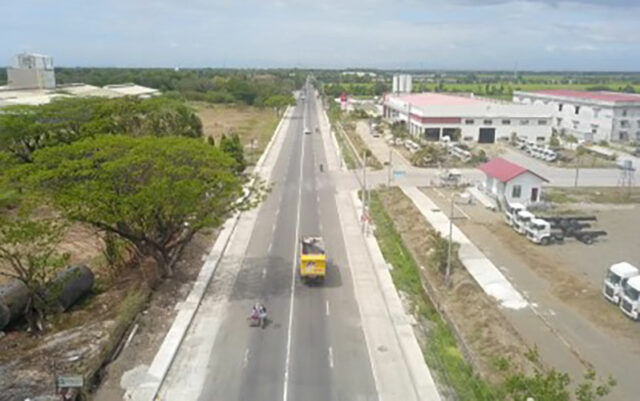
THE Department of Public Works and Highways (DPWH) said it will meet with major construction companies for the planned rehabilitation of the Maharlika Highway, with the authorities testing their willingness to take on more government projects usually won by smaller contractors.

“Typically, they do not join government projects, usually they join foreign assisted projects. I want to meet them maybe this week or next week and they have expressed interest to help out in major projects. The highest priority is Daang Maharlika, and (for a major company to) undertake this would be a good sign,” Public Works Secretary Vivencio B. Dizon said in a statement on Tuesday. 

The DPWH is set to meet with listed EEI Corp., and D.M. Consunji, Inc. (DMCI), among others, Mr. Dizon said.

“We will no longer hire small companies (for projects like this) because that has become part of the problem. I am talking about the biggest in the country, the likes of DMCI, EEI, and others,” he said, referring to the role played by small but well-connected contractors in last year’s public works corruption scandal.

The DPWH said that if a major construction company undertakes a project, it expects on-time completion and adherence to quality standards.

“We believe that if we do it right, hopefully by the end of 2027 a large portion of Maharlika, from Northern Luzon to Mindanao will be fixed, especially the parts that are always damaged,” he said.

The DPWH said it hopes to start the P16‑billion rehabilitation this year.

The Maharlika Highway, also known as the Pan-Philippine Highway, connects northern Luzon to the Zamboanga Peninsula with ferries linking Bicol and Samar as well as Leyte and Surigao.

Agri trade deficit narrows 26.9% in December

BW FILE PHOTO

THE DEFICIT in the agricultural goods trade narrowed 26.9% in December to $668.35 million, according to preliminary data from the Philippine Statistics Authority (PSA).

The PSA said the deficit in December decreased from $913.97 million a year earlier.

Agricultural exports in December rose 19.3% year on year to $884.77 million, accounting for 12.7% of total exports. As a share of the $2.44 billion in two-way trade in farm products, exports accounted for 36.29%.

Imports of agricultural commodities in December dipped 6.2% year on year to $1.55 billion, accounting for 14.8% of overall imports.

Two-way agricultural trade in December grew 1.7% year on year.

The strong performance in agricultural exports and the decline in imports in the second half of 2025 helped narrow the full-year trade deficit by 5.6% to $11.06 billion.

The decline in imports reflected the impact of a freeze on rice imports that was in force in late 2025.

The PSA said exports of edible fruit and nuts, including peels of citrus fruits and melons, grew 77.2% year on year to $329.72 million in December, accounting for 37.2% of agricultural exports.

Exports of animal, vegetable, or microbial fats and oils and their cleavage products; prepared edible fats; and animal or vegetable waxes declined 8.9% year on year to $270.07 million in December, accounting for 30.5% of agricultural exports.

Agricultural shipments to the Association of Southeast Asian Nations (ASEAN) in December hit $97.05 million, with top buyer Malaysia accounting for $58.09 million or 60% of the total.

Exports to the Netherlands, the Philippines’ top destination for agricultural commodities in the European Union (EU), amounted to $154.41 million or 70.06% of Philippine agricultural exports to the region.

Among the major commodity groups, cereals accounted for the largest share of agricultural imports in December, totaling $234.18 million or 15.1%. The value of cereal exports slid 34.0% during the month, following the four-month rice import ban that started in September.

Indonesia was the leading supplier of agricultural products to the Philippines within ASEAN, accounting for $146.61 million or 30.4% of total imports from the region.

The top agricultural goods imported from ASEAN were animal, vegetable, or microbial fats and oils, and their cleavage products; prepared edible fats; and animal or vegetable waxes.

Within the EU, Spain was the Philippines’ top supplier of agricultural commodities, with imports valued at $24.97 million, or 19.57% of total shipments from the region.

The top agricultural commodities from the EU were meat and edible meat offal. — Vonn Andrei E. Villamiel

BoI approves green-lane treatment for wind project

SANJOSECLEANENERGY.ORG

THE Board of Investments (BoI) said it endorsed a P30.92-billion onshore wind project for green lane treatment last month, bringing the total of green-lane eligible projects in the pipeline to P6.14 trillion.

In a statement, the BoI said that it endorsed the 300-megawatt San Jose Onshore Wind Power Project by San Jose Onshore Wind Power Corp.

At the end of January, the projects eligible for green-lane expedited permit processing numbered 233, and are expected to generate 399,667 jobs.

Of the P6.14 trillion, P1.77 trillion will consist of foreign equity.

Renewable energy (RE) accounts for 180 or P5.249 trillion of the project pipeline, with potential job creation estimated at 250,901.

Five public-private partnership, infrastructure, and water projects worth P416.08 billion were also certified for expedited processing, along with nine digital infrastructure projects worth P401.69 billion. These are expected to create 113,263 and 20,376 jobs, respectively.

Meanwhile, seven manufacturing projects worth P67.035 billion, 31 food security projects worth P18.7 billion, and one pharmaceutical project worth P45 million were certified for the green-lane program. Once operational, these projects will generate 7,773, 7,319, and 35 jobs, respectively.

Some 17 projects given green-lane treatment are already operational, valued at P258.19 billion, while seven are in the pre-operational stage and valued at P5.23 billion.

Some 162 projects valued at P5.51 trillion are in the pre-development stage, while 47 projects worth P366.26 billion are under construction. — Justine Irish D. Tabile

UK confident Philippines will emerge from reforms with improved business environment

BW FILE PHOTO

By Justine Irish D. Tabile, Senior Reporter

BRITISH FIRMS see the Philippine market as a major opportunity when it emerges from a round of reforms designed to make improve the business environment, the British Embassy Manila said.

“There is strong growth and a growing population, so the economic fundamentals are really sound,” Iain Frenkiel, director for trade and investment at the embassy, told BusinessWorld.

“We’re also seeing a range of reforms from a government that is clearly business-minded and has been really clear with the private sector and the international community on how they’re looking to attract investment and create favorable conditions for businesses,” he added.

These developments, he said, provide a range of opportunities for companies from the UK to grow.

He said that the embassy is optimistic about the year ahead as the Philippines chairs the Association of Southeast Asian Nations.

“We see a range of opportunities for UK companies, and we are looking to take those forward through our Joint Economic and Trade Committee (JETCO) and through our discussions at the ASEAN level,” he said.

He said the JETCO was designed around annual meetings, with the next session planned for late this year, “Perhaps aligning around one of the ASEAN events when we might hope to have ministers meeting anyway.”

Trade Undersecretary Allan B. Gepty said that for this year, the aim is to have new or revised work plans for the four sub-working groups on agriculture, infrastructure, energy, and economic development.

“We can look into the implementation of proposed capacity-building initiatives for agriculture and energy,” he said via Viber.

“For infrastructure, once the government-to-government agreement is signed, the UK can identify and pursue infrastructure projects,” he added.

He said that the two parties are expected to discuss maximizing utilization of the UK’s Developing Countries Trading Scheme.

“We also hope to include new areas for discussion such as economic security, digital trade, and supply chain resilience,” he said.

“The UK also strongly supports the Philippines’ application for the Comprehensive and Progressive Agreement for Trans-Pacific Partnership (CPTPP); thus, the same can also be highlighted,” he added.

Fish landed at regional ports up 16.34% in Dec.

Buckets of fish are sold at the Navotas fish port in this file photo. — PHILIPPINE STAR/MICHAEL VARCAS

THE Philippine Fisheries Development Authority (PFDA) said fish landed at regional fish ports totaled 49,379 metric tons (MT) in December, up 16.34% from a year earlier.

In a statement, the PFDA said the General Santos Fish Port Complex posted the highest volume for the month, with 24,908 MT of fish landed.

The Davao Fish Port Complex posted the largest year-on-year increase, with volume rising fivefold to 1,567 MT.

The Navotas Fish Port Complex landed 17,887 MT, representing a 51.53% increase from a year earlier. Meanwhile, the Lucena Fish Port Complex in Quezon Province recorded 1,462 MT, up 4.03%.

Fish unloaded at the Bulan Fish Port Complex in Sorsogon increased 61.48% to 1,240 MT.

Iloilo Fish Port Complex volume declined during the period but accounted for 1,859 MT of fish, according to the PFDA.

The Zamboanga Fish Port Complex posted volume of 455.84 MT, with Sual Fish Port Complex in Pangasinan landed 0.74 MT during the month. — Vonn Andrei E. Villamiel