Home Blog Page 1092

Shifting demand: serious investors know that true property value lies in long-term, tourism-driven strategies

The Philippine tourism sector has firmly established its position as a vital economic pillar, achieving an all-time high tourism revenue of approximately P760 billion in 2024.

In a rapidly evolving market, there is an urgent need to shield the real estate industry from the pitfalls of short-term thinking. The real crisis lies not in a shortage of buyers, but in the rising expectations and shifting behaviors of investors, which increasingly clash with the general inventory of real estate offerings.

A market ripe for correction 

The real estate market naturally moves through cycles of boom and bust. As it matures and evolves, success now hinges on a clear understanding of supply and demand dynamics. In Metro Manila, a closer look reveals that investors are increasingly drawn to real estate solutions that offer lasting value, anchored in strategic locations, lifestyle relevance, and sustained long-term potential. “By staying attuned to changing consumer behaviors and preferences, one can spot the gaps and turn unmet demands into real opportunities,” shares Anchor Land President Elizabeth Ventura.

“Aligning buyer needs with the right product is deeply influenced by location. High-growth districts are characterized by strong economic performance, cultural vibrancy, lifestyle appeal, and commercial energy. However, pairing these attributes with a product that meets the growing demand for smart and sustainable investment elevates the offering, making it not only more compelling, but also more resilient and future-ready,” adds Ventura.

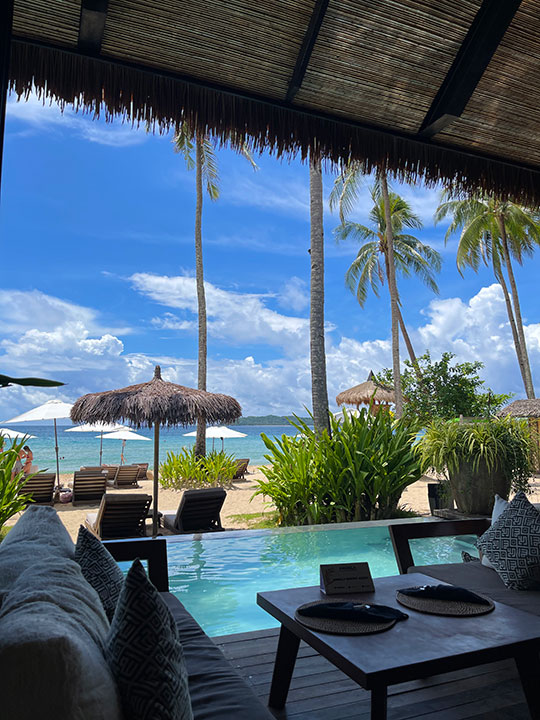
The real estate goldmine lies in tourism

In 2024, Ninoy Aquino International Airport (NAIA) exceeded 50 million passengers, marking an 11 percent increase driven by heightened flight activity and strong domestic travel demand. This surge in air traffic aligns with broader industry gains; according to a related report from the Department of Tourism, the Philippines generated approximately P760 billion in tourism revenue from inbound travel expenditures, reinforcing the sector as a vital economic pillar.

Further supporting this growth, tourist behavior has shifted notably. Visitors now stay an average of 11 nights, up from 9 nights in 2019, and an impressive 70 percent of tourists are repeat visitors — clear indicators of the country’s rising appeal. With ongoing infrastructure improvements at NAIA and other regional airports, coupled with expanding commercial activity, the Philippines is well-positioned to sustain and strengthen its tourism rebound in the years ahead.

This upward trajectory in travel and infrastructure has not gone unnoticed. Savvy real estate investors with a sharp sense for emerging locations and evolving trends have long recognized the power of property as a vehicle for tourism. Rental-ready, operationally streamlined, and designed for passive returns, these investments consistently outperform underutilized projects, proving that strategic tourism-focused real estate presents game-changing opportunities.

Ventura expounds, “Tourism-focused investments are no longer a niche, but a strategic play for long-term value creation and vigorous yields, offering owners a chance to capitalize on the growing preference for stay-and-play environments.”

Real estate thrives on market foresight and mastery of evolving dynamics 

The inherently cyclical real estate market requires a strategic, data-driven approach to effectively match buyers with the right property at the right time. Understanding the nuances of local economies, demographic trends, and evolving lifestyle preferences helps in making informed decisions and also positions properties to thrive throughout different market conditions.

“As tourism shapes the future of real estate, properties must not only reflect this trend but also be built to sustain it. A standout district embracing this future-forward mindset is Bay City Manila. With rising visitor traffic and enhanced accessibility, it is establishing itself as an essential destination for business, wellness, and leisure travel,” concludes Ventura.

Discover modern and smart real estate solutions in prime locations at www.anchorland.com.ph.


Spotlight is BusinessWorld’s sponsored section that allows advertisers to amplify their brand and connect with BusinessWorld’s audience by publishing their stories on the BusinessWorld Web site. For more information, send an email to online@bworldonline.com.

Join us on Viber at https://bit.ly/3hv6bLA to get more updates and subscribe to BusinessWorld’s titles and get exclusive content through www.bworld-x.com.

Brazil police foil bomb plot targeting packed Lady Gaga concert in Rio

PEOPLE GATHER to attend Lady Gaga’s open concert at Copacabana Beach in Rio de Janeiro, Brazil, May 3, 2025. — REUTERS

BRASÍLIA — Brazilian police said on Sunday that they had thwarted a bomb attack planned for Lady Gaga’s historic concert that drew over 2 million people to Copacabana Beach in Rio de Janeiro on Saturday.

The Civil Police of Rio de Janeiro state, working in coordination with the Justice Ministry, said the plot was orchestrated by a group promoting hate speech and the radicalization of teenagers, including self-harm and violent content as a form of social belonging.

According to the Rio city hall, 2.1 million people attended the concert of the American pop icon.

“The suspects were recruiting participants, including minors, to carry out coordinated attacks using improvised explosives and Molotov cocktails,” the police said in a statement.

The Justice Ministry said the recruiters identified themselves as members of Gaga’s global fan base, known as the “Little Monsters.”

The operation was based on a report by the ministry’s Cyber Operations Lab following a tip-off from Rio state police intelligence, which uncovered digital cells encouraging violent behavior among teenagers using coded language and extremist symbolism.

A man described as the group’s leader was arrested in the southern state of Rio Grande do Sul for illegal possession of a firearm, while a teenager in Rio de Janeiro was detained for storing child pornography.

Authorities carried out over a dozen search and seizure warrants across the states of Rio de Janeiro, Mato Grosso, Rio Grande do Sul and São Paulo. — Reuters

Wilcon expects recovery in second half after lower Q1 profit

LISTED home improvement and construction finishing supply retailer Wilcon Depot, Inc. expects to recover in the second half of the year following a decline in first-quarter (Q1) net profit.

“Despite the drop in net earnings, which was mainly driven by lower sales in the first two months of the year, we are expecting a turnaround especially in the second half given the encouraging average daily sales right before and right after the long Easter holidays in April,” Wilcon President Lorraine Belo-Cincochan said in a regulatory filing on Monday.

“Should this sales trend continue and especially if it improves further, we expect to reverse the decline in net earnings in this quarter later in the year,” she added.

Wilcon posted a 27.5% decline in its first-quarter net income to P536 million from P740 million a year earlier.

Gross profit fell by 1.7% to P3.26 billion due to a lower margin rate across non-exclusive, exclusive, and in-house brand categories.

Operating expenses, including lease-related interest expense, rose by 7.8% to P2.66 billion, primarily due to depreciation from new store buildings and lease-related interest expenses for new branches.

Net sales increased by 1.2% to P8.41 billion from P8.31 billion in the same period last year, driven by contributions from new stores.

Wilcon now operates 102 branches after opening two new stores in the first quarter — one depot in North Luzon and one smaller-format Do-It-Wilcon (DIW) store in Metro Manila.

“We are also encouraged by the performance of our below-one-year-old stores, which generated positive earnings as a whole, after quarterly negative results all of last year and despite a very soft market during the first two months of the year,” Ms. Belo-Cincochan said.

“We are hoping that this indicates a growing sales trend that will be sustained from here on,” she added.

Net sales from depot branches rose by 1.8% to P8.12 billion, accounting for 96.5% of total sales.

DIW branches posted an 11.1% increase in net sales to P258 million, equivalent to 3.1% of total sales.

Project sales, which made up the remaining 0.4% of total sales, declined by 67.2% as the company did not serve any new major projects.

“Should project sales’ contribution stay below 1%, we shall be integrating project sales with our depot sales subsequently,” Wilcon said.

On Monday, Wilcon shares fell by 4.35% or 30 centavos to close at P6.59 apiece. — Revin Mikhael D. Ochave

Bank of Commerce to hold 2025 Annual Meeting of Stockholders via remote communication on May 27

NOTICE OF ANNUAL STOCKHOLDERS’ MEETING
April 30, 2025

The Annual Meeting of the Stockholders of Bank of Commerce (the Bank) will be held on Tuesday, May 27, 2025 at 2:00 P.M. As permitted by its By-laws, the Bank will conduct the annual meeting via remote communication using Pro Version License Zoom Application and livestreaming as authorized by the Board of Directors on March 25, 2025.

The Agenda of the Meeting is as follows:

  1. Call to Order
  2. Certification of Notice and Quorum
  3. Approval of the Minutes of Annual Stockholders’ Meeting held on 30 April 2024
  4. Presentation of the Annual Report
  5. Ratification of Acts and Proceedings of the Board of Directors and Corporate Officers
  6. Confirmation of Bank’s Significant Transactions with its DOSRI and Related Parties
  7. Approval of 2024 Performance Bonus of Directors
  8. Election of the Board of Directors
  9. Appointment of External Auditor
  10. Adjournment

Stockholders who would like to attend the meeting must advise the Bank on or before Wednesday, May 21, 2025, by sending the following information to stockholders@bankcom.com.ph: (1) Name; (2) E- mail address; (3) Contact number; (4) Postal address; and (5) scanned copy of any valid government-issued ID with photo of the stockholder, to obtain the link for the 2025 Annual Stockholders’ Meeting.

Stockholders may visit the Bank’s website at https://www.bankcom.com.ph/disclosure to download copies of (a) the Minutes of the Annual Stockholders’ Meeting held on 30 April 2024 and (b) the proxy form/ballot.

Electronic copies of the Information Statement and Management Report shall be available on the Company’s website and the PSE Edge.

Ballots and proxies may be submitted via email to stockholders@bankcom.com.ph, which submission shall be duly acknowledged and validated by the Bank’s stock transfer agent, SMC Stock Transfer Service Corporation. For an individual, the submission must be accompanied by a copy of a government-issued ID with photo, as proof of identification. For a corporation, the submission must be accompanied by a certification from its Corporate Secretary stating the corporate officer’s authority to represent the corporation in the meeting. In case of an event that restricts the movement of persons and makes submission of the originally signed ballots, proxies, and notarized Secretary’s Certificate difficult, these documents shall be submitted to the SMC Stock Transfer Service Corporation within a reasonable time after the Annual Stockholders’ Meeting.

During the meeting, the Bank shall entertain questions and comments from the stockholders after the presentation of the Annual Report. Questions and comments must be submitted either in advance by email to stockholders@bankcom.com.ph or during the meeting by posting the questions and comments in the feedback box that will be made available. Priority will be given to questions sent in advance. Questions which are not answered during the meeting shall be forwarded to the Office of the Corporate Secretary for the appropriate response.

The deadline for submission of the proxy and ballot is on May 21, 2025. Validation of proxies and ballots will be on May 22, 2025 at 10:00AM at the SMC Stock Transfer Service Corporation Office, 2nd Floor, SMC Head Office Complex, No. 40 San Miguel Ave., Mandaluyong City, Philippines. Only stockholders who have notified the Bank of their intention to participate through remote communication as above described and have been validated by the Office of the Corporate Secretary to be stockholders of record of the Bank as of May 7, 2025 will be considered in computing stockholder attendance at the meeting together with the stockholders attending through proxies.

(Original Signed)
EVITA C. CABALLA
Corporate Secretary


Spotlight is BusinessWorld’s sponsored section that allows advertisers to amplify their brand and connect with BusinessWorld’s audience by publishing their stories on the BusinessWorld Web site. For more information, send an email to online@bworldonline.com.

Join us on Viber at https://bit.ly/3hv6bLA to get more updates and subscribe to BusinessWorld’s titles and get exclusive content through www.bworld-x.com.

T-bill yields inch up on dovish Fed bets

BW FILE PHOTO

THE GOVERNMENT made a full award of the Treasury bills (T-bills) it offered on Monday even as rates rose across all tenors after stronger-than-expected US jobs data dampened expectations of an early cut by the US Federal Reserve.

The Bureau of the Treasury (BTr) raised P25 billion as planned from the T-bills it auctioned off on Monday as total bids reached P74.225 billion, almost thrice the amount on offer but lower than the P80.265 billion in tenders recorded on April 28.

Broken down, the Treasury borrowed the programmed P8 billion via the 91-day T-bills on Monday as tenders for the tenor reached P23.48 billion. The three-month paper was quoted at an average rate of 5.573%, 2.7 basis points (bps) higher than the 5.546% seen in the previous auction. Tenders accepted by the BTr carried yields of 5.5% to 5.596%.

The government likewise made a full P8-billion award of the 182-day securities as bids amounted to P27.835 billion. The average rate of the six-month T-bill was at 5.667%, 1.2 basis points (bps) higher than the 5.655% fetched last week, with accepted rates ranging from 5.644% to 5.678%.

Lastly, the Treasury raised P9 billion as planned via the 364-day debt papers as demand for the tenor totaled P22.91 billion. The average rate of the one-year T-bill inched up by 0.9 bp to 5.697% from 5.688% previously, with bids accepted having yields of 5.68% to 5.718%.

At the secondary market before Monday’s auction, the 91-, 182-, and 364-day T-bills were quoted at 5.5146%, 5.6713%, and 5.7183%, respectively, based on PHP Bloomberg Valuation Service (BVAL) Reference Rates data provided by the Treasury.

The BTr said it made a full award of the T-bills as the offer went oversubscribed.

“Demand was within expectations because the market is cautious due to uncertainties regarding the US tariffs,” a trader said in a phone interview. “But the US is dialing back, possibly reaching an agreement with China.”

The trader added that T-bill rates rose due to the better-than-expected US nonfarm payrolls data released on Friday, which means there is less pressure on the Fed to cut rates despite the US economy’s contraction in the first quarter.

Federal Reserve policymakers on the alert for possible cracks in the labor market as businesses adjust to President Donald J. Trump’s erratic trade policy got some reassurance on Friday that so far there’s little weakness, and no reason to rush on rate cuts, Reuters reported.

US employers added a more-than-expected 177,000 jobs in April, the Labor department reported, and the unemployment rate was unchanged at 4.2%. Both are signs the labor market remains in balance during a month when Trump announced the steepest tariffs in a century, sending stocks downward and convulsing the bond market before the administration paused many of those levies until July.

With the job market holding up and inflation still running above their 2% target, Fed policymakers are expected to stick to their plan to leave short-term borrowing costs where they are while they wait to see how the tariffs affect prices and economic growth. Hourly earnings rose 3.8% from a year earlier, the jobs report showed, the same pace as in March and in the range of what the Fed considers to be consistent with its 2% inflation target.

Traders are now betting the Fed will wait until July to start cutting interest rates; earlier they had thought a June move was more likely. And they now see the Fed delivering a total of three quarter-point interest rate cuts by year-end, one fewer than previously.

Shortly after the report, Mr. Trump reiterated his own call for the Fed to lower rates.

Fed policymakers, who say it will be the economy’s needs not the president’s desires that will dictate their moves, want to be sure that inflation won’t resurge. With the tariffs expected to drive prices higher, at least temporarily, they have signaled they’ll keep the policy rate in the current 4.25%-4.5% range to keep downward pressure on inflation, as long as the job market doesn’t crumble.

Meanwhile, Rizal Commercial Banking Corp. Chief Economist Michael L. Ricafort said in a Viber message said that T-bill rates rose to track the increase in comparable secondary market yields after the BTr’s P300-billion issuance of new 10-year fixed-rate Treasury note late last month that siphoned off some liquidity from the financial system.

On Tuesday, the government will offer P30 billion in reissued 10-year Treasury bonds (T-bonds) with a remaining life of seven years and four months.

The Treasury is looking to raise P260 billion from the domestic market this month, or P100 billion via T-bills and P160 billion through T-bonds.

The government borrows from local and foreign sources to help fund its budget deficit, which is capped at P1.54 trillion or 5.3% of gross domestic product this year. — Aaron Michael C. Sy with Reuters

Manila Bay’s comeback: Hope rises from the water

PHILIPPINE STAR/EDD GUMBAN

On April 23, the Environment Committee of the Management Association of the Philippines (MAP), in partnership with the Department of Environment and Natural Resources (DENR), held its fourth Webinar on the Manila Bay Rehabilitation Program. The featured speakers Jacob F. Meimban, Jr., Executive Director of the DENR’s Manila Bay Coordinating Office, shared interesting updates on what may be one of the country’s most ambitious environmental turnarounds.

The Webinar, part of a 2024 MAP-DENR MOU, marks MAP’s growing commitment to supporting environmental awareness among business leaders. And the message is clear: Manila Bay isn’t just being cleaned — it’s being reborn.

Spanning three regions and 187 local government units (LGUs), Manila Bay isn’t just the strip of coastline along Roxas Boulevard; it’s a lifeline for nearly 40 million Filipinos. Fed by 17 major rivers — including the storied Pasig River — the bay had long been burdened by pollution, informal settlements, and mismanaged waste.

Once synonymous with pollution and neglect, Manila Bay is now at the heart of an ambitious environmental transformation. The effort to rehabilitate Manila Bay is underpinned by a landmark Supreme Court ruling known as the “Mandamus Order,” which directed 13 government agencies to clean up and rehabilitate the bay to make it safe for recreational use, such as swimming and skin diving. To accelerate this mandate, Administrative Order (AO) No. 16, s. 2019 was issued, formally creating the Manila Bay Task Force (MBTF). This body coordinates all rehabilitation initiatives and ensures accountability across participating agencies.

The Manila Bay Rehabilitation Program is structured around several key components:

1. Liquid Waste Management

To address the rampant water pollution affecting Manila Bay, the government has prioritized the construction of sewage treatment plants (STPs) in strategic urban areas, particularly within the National Capital Region (NCR). These facilities play a crucial role in filtering wastewater before it reaches the bay.

Private sector partners, especially Maynilad Water Services and Manila Water Co., have significantly supported this initiative. Both concessionaires have invested heavily in advanced wastewater treatment technologies and infrastructure, aiming to expand sewer coverage and reduce untreated discharge into waterways. Their efforts include:

• Participating in DENR’s Adopt-an-Estero program, where water is being cleaned before discharging it to Manila Bay.

• Expanding and modernizing sewage and septage treatment facilities to comply with environmental standards.

• Introducing innovative technologies, such as biological nutrient removal systems and automated monitoring systems, to improve efficiency and water quality outcomes.

• Deploying experts and technical teams to support system upgrades and operations.

These investments are aligned with the General Effluent Standards under AO No. 2016-08, which the DENR strictly enforces to ensure compliance from both private and public sector stakeholders.

2. Solid Waste Management

Solid waste is another persistent issue, tackled through desilting operations in critical rivers and esteros, as well as trash mitigation projects. These include the deployment of 24 backhoes to retrieve submerged waste and the use of trash boats and traps to capture floating debris. Regular clean-up drives involving government agencies and local communities bolster these efforts, enhancing public awareness and participation.

It is also important to mention that LGUs play a critical role in the success of the Manila Bay Rehabilitation Program. With 187 LGUs traversing the Manila Bay watershed, their commitment to sustainable practices, local enforcement, and community engagement is essential.

To recognize and incentivize these efforts, the Galing Pook Foundation — in partnership with the Department of the Interior and Local Government (DILG) — has included Manila Bay-related programs in its prestigious Galing Pook Awards. These awards honor LGUs that have demonstrated innovative, inclusive, and sustainable practices aligned with the goals of the rehabilitation program.

These award-winning initiatives not only showcase model practices but also inspire replication across other cities and municipalities in the Manila Bay Region.

3. Informal Settlers and Illegal Structures Management

One of the most challenging issues is the relocation and resettlement of informal settler families (ISFs) living along waterways. Once cleared, these areas are being transformed into linear parks to prevent the re-emergence of illegal structures and promote green public spaces. However, this entails an estimated budget of P500,000 to resettle each ISF.

4. Habitat and Ecosystem Restoration

Efforts to rehabilitate ecosystems within Manila Bay include the protection and reforestation of mangrove areas and the development of ecotourism sites. The Department of Agriculture’s Bureau of Fisheries and Aquatic Resources (DA-BFAR) also actively monitors fish catch in eight designated landing sites, providing data on marine life health and supporting sustainable fishing practices.

5. Manila Baywalk Dolomite Beach

Among the most visible symbols of change is the Manila Baywalk Dolomite Beach. Though initially controversial, it has become a destination for over 4 million local and foreign visitors. Director Meimban’s presentation highlighted the stark difference of the Manila Bay Boardwalk from 2019 to 2024, where the 2019 picture showed a sea of trash while the 2024 picture showed a clean, beautiful beach with tourists. It was indeed a pleasant surprise to know that marine life has returned, and the beach now hosts environmental tours, coastal clean-ups, and research activities, transforming it into a platform for public engagement.

LOOKING AHEAD
The Manila Bay Rehabilitation Program is a herculean endeavor that illustrates the challenges and possibilities of environmental restoration in a densely populated urban setting. It emphasizes the importance of strong inter-agency and public-private sector collaboration, legal mandates, and community involvement. While much work remains, the progress to date — evidenced by cleaner waters, returning marine life, and growing public engagement — shows that Manila Bay is on the path to renewal.

As the program continues, the dream of a swimmable, sustainable, and vibrant Manila Bay is slowly but surely becoming a reality.


Reza Dadufalza-Goyeneche is the co-vice-chair of the MAP Environment Committee. She is also the head of Trade of the Royal Danish Embassy, Manila.

map@map.org.ph

rezgoy@um.dk

OceanaGold, BSP extend gold purchase agreement

OCEANAGOLD.COM

LISTED OCEANAGOLD (Philippines), Inc. (OGP) has renewed its gold-buying agreement with the Bangko Sentral ng Pilipinas (BSP) for another three years.

Under the agreement, which was renewed in March and will run until March 2028, OGP is required to offer for purchase no less than 25% of its annual gold doré production — an alloy or solid mixture of gold and other metals such as silver — to the BSP.

The initial agreement between OGP and the BSP was executed in May 2022.

In 2024, OGP sold a total of 6,628 ounces of gold doré — or 29% of its gold doré output — to the BSP. Of this, 5,356 ounces were sold under the BSP’s gold-buying guidelines after the expiration of the previous purchase agreement in May 2024, the company said.

OGP sold 9,045 and 12,865 ounces — or 28% and 27%, respectively — of its gold doré production to the BSP in 2022 and 2023.

The central bank uses its gross international reserves, including gold, to manage foreign exchange liquidity and market stability.

In February, the BSP said that, like other central banks, it maintains a portion of its reserves in gold primarily to hedge against market volatility in other reserve assets.

“Gold prices tend to move in the opposite direction of other assets. Therefore, central banks hold some gold as a hedge against price declines in other assets in the reserves,” it said.

“However, gold can be volatile, earn little interest, and entail storage costs, so central banks don’t want to hold too much.”

Data from the BSP showed that its gross international reserves reached US$107.9 billion as of end-August 2024, up from US$103.8 billion as of end-December 2023 — equivalent to 7.8 months’ worth of imports of goods and payments for services and primary income.

The figure also represents about 6.0 times the country’s short-term external debt based on original maturity, and 3.8 times based on residual maturity. — Kyle Aristophere T. Atienza

ABS-CBN closes down film restoration project

AFTER restoring over 200 films over the past 14 years, the ABS-CBN Film Restoration Project has officially ended its run. This was announced by its chair, Leo Katigbak, in a social media post on May 1.

“ABS-CBN Film Restoration ended its 14-year run last March 31, 2025, with April mostly turnover and sampling the last works we completed as the final day loomed,” he wrote on Facebook.

Mr. Katigbak added that the project, also known as Sagip Pelikula, was “a casualty of efforts to close down ABS-CBN in 2020 by a man who wrought havoc and killed dreams as well.” The broadcast network lost its congressional franchise that year, which led to a multitude of changes in the business, including, now, the closure of the film restoration unit.

“For the last few months, we barreled through as much as we can with what meager resources were available to us and until our very last day, we gave it our all,” he said.

The restoration project managed to scan, enhance, restore, remaster, and reintroduce over 240 movies, some from as early as 1939. Mr. Katigbak ensured that “many aspects of what the unit used to do will be handled by other departments,” beginning this month. The Sagip Pelikula advocacy will be taken on jointly by Star Cinema and Cinemo.

Writing about the importance of the restoration project in a Facebook post, film critic Noel Vera wrote: “[I]f we forget the masterpieces of the past — and trust me they are disintegrating as we speak — we will lose a huge part of our identity, a huge part of our selves. We were a great filmmaking nation near the start of the last century up to now, and if we don’t know that how can we even begin to start? If Santayana said ‘those who forget the past are condemned to repeat it,’ I propose a corollary; ‘those who can’t remember their past are condemned to never exceed it.’”

Mr. Katigbak thanked many people who supported the project, most notably ABS-CBN executives Gabby Lopez and Charo Santos-Concio for their vision for film restoration, and Carlo Katigbak for delaying the department’s closure for five years with “a scaled-down group.”

Also mentioned were actor Piolo Pascual and National Artist for Film Ricky Lee, along with government institutions, universities, and malls that helped promote and screen the restored films of Sagip Pelikula.

The first film the ABS-CBN Film Restoration project restored was Himala in 2011, while the last film it screened was Tatlong Ina, Isang Anak — both starring National Artist Nora Aunor, who passed away in April.

“Preserving the past to inspire the future is a never-ending quest and we hope we were able to encourage many including a new generation to take up the challenge,” Mr. Katigbak said. “Sa mga tumangkilik, naniwala, nanaginip… maraming salamat po (To those who supported, believed, and dreamed, thank you).”

Here are some of the films that ABS-CBN’s Sagip Pelikula restored:

Ibong Adarna (1941)

Badjao (1957)

Nukso Nang Nukso (1960)

Ang Mahiwagang Daigdig ni Pedro Penduko (1973)

Banaue (1975)

Ganito Kami Noon, Paano Kayo Ngayon? (1976)

Tatlong Taong Walang Diyos (1976)

Minsa’y Isang Gamu-Gamo (1976)

Kung Mangarap Ka’t Magising (1977)

Mga Bilanggong Birhen (1977)

Kakabakaba Ka Ba? (1980)

Langis at Tubig (1980)

Sa Init ng Apoy (1980)

Kasal? (1980)

Oro, Plata, Mata (1982)

T-Bird at Ako (1982)

Tinimbang ang Langit (1982)

Haplos (1982)

Moral (1982)

Karnal (1983)

Bulaklak sa City Jail (1984)

Shake, Rattle, & Roll (1984)

Kailan Ka Magiging Akin (1991)

May Minamahal (1993)

Sana Maulit Muli (1995)

Madrasta (1996)

Magic Temple (1996)

Bata, Bata… Pa’no Ka Ginawa? (1998)

Labs Kita… Okey Ka Lang? (1998)

Magandang Hatinggabi (1998)

Dekada ’70 (2002)

Tanging Yaman (2000)

Anak (2000)

Markova: Comfort Gay (2000)

Milan (2004)

— Brontë H. Lacsamana

IC places pre-need company Caritas Financial Plans under liquidation

BW FILE PHOTO

THE INSURANCE COMMISSION (IC) has placed Caritas Financial Plans, Inc. (CFPI) under liquidation due to its inability to pay its obligations.

This comes over a year after the pre-need firm was placed under receivership and issued a notice of stay order on April 25, 2024.

The stay order, which suspends all payments of claims, will remain effective until the termination of the liquidation proceedings of CFPI or until further notice, the IC said in a public notice published on May 5 (Monday).

The regulator previously said CFPI is suffering from liquidity problems, which resulted in continuous delay and difficulty in paying its obligations.

The IC placed the pre-need company under in August 2023, which stopped it from doing business as it was unable to comply with regulatory requirements due to its parent firm Caritas Health Shield, Inc.’s (CHSI) ongoing financial woes.

CFPI had a capital deficiency of P118.685 million and a trust fund deficiency of P36.196 million as of Dec. 31, 2023, based on its unaudited financial statements, the IC earlier said.

It had assets worth P1.146 billion and liabilities amounting to P1.206 billion as of end-2023, it added.

In the May 5 notice, the IC emphasized that CFPI is separate and distinct from CHSI and Caritas Life Insurance Corp.

CFPI’s parent firm CHSI, a health maintenance organization, has been under receivership and a similar stay order since Aug. 1, 2023 due to its inability to comply with the IC’s solvency requirements, as the company had a net worth deficiency of P6.48 billion as of 2018.

CHSI’s other subsidiary, life insurer Caritas Life Insurance, has been under conservatorship since the same date and was likewise told to cease and desist from conducting business. — AMCS

Let us be stirred by the words of Pope Francis

PHILIPPINE STAR/EDD GUMBAN

Six days from today, citizens will troop to the polling places to cast their vote for 12 senators, the representative of their district, and the head of their local government. The citizens’ choices for senators will determine to a large extent the state of the nation in the next few years.

Seven incumbent senators — Bong Revilla, Lito Lapid, Pia Cayetano, Francis Tolentino, Imee Marcos, Bong Go, and Bato dela Rosa, — are seeking re-election to the Senate. Five former senators — Tito Sotto, Ping Lacson, Kiko Pangilinan, Bam Aquino, and Manny Pacquiao — are asking voters to return them to the Senate. A number of other public officials like Makati Mayor Abby Binay, Las Piñas Rep. Camille Villar, Party-list Rep. Erwin Tulfo, and former Mandaluyong Mayor Benhur Abalos are also running for senator.

The late Pope Francis said, “Every man, every woman who has to take up the service of government must ask themselves two questions: ‘Do I love my people in order to serve them better? Am I humble and do I listen to everybody, to diverse opinions in order to choose the best path?’ If you don’t ask those questions, your governance will not be good.”

No candidate will say anything negative about himself. We, the voters, should ask ourselves if those who aspire for a place in the Senate really want to serve the people better because they truly love them, that they are humble enough to listen to the pleas of the people.

It will be recalled that when Pope Francis visited our country in January 2015, he called on President Noynoy Aquino and political leaders to root out widespread corruption in the country, to support struggling families, and to “hear the voice of the poor.”

“As many voices in your nation have pointed out, it is now, more than ever, necessary that political leaders be outstanding for honesty, integrity, and commitment to the common good.”

Reminding the president that the bishops in the Catholic-majority country had designated 2015 as the “Year of the Poor,” the Pope said the country needed to reform social structures “which perpetuate poverty and the exclusion of the poor.”

“I hope that this prophetic summons will challenge everyone, at all levels of society, to reject every form of corruption which diverts resources from the poor,” he said.

Many of those now running for senator were senators or in high places in government in 2015. Were they outstanding for honesty, integrity, and committed to the common good? Did they reform the social structures which Pope Francis said “perpetuate poverty and the exclusion of the poor.” Did they reject every form of corruption?

Senator Bong Revilla’s stint in the Senate is remembered more for his involvement in the Napoles pork barrel scam, which led the Sandiganbayan to issue an arrest warrant against him. While he was acquitted of plunder, he was required to return to the government P124.5 million in civil liability, which he has not done.

Senator Lito Lapid was accused of involvement in the 2004 Fertilizer Fund scam when he was governor of Pampanga, although the case was dismissed due to “inordinate delay” in the investigation.

In February 2022, Senator Richard Gordon, chairman of the Senate Blue Ribbon Committee, released the report that recommended the filing of plunder, graft, and other criminal charges against high-ranking government officials for their use of pandemic funds to purchase from Pharmally Pharmaceutical overpriced and substandard quality of goods, such as face shields. Pharmally Pharmaceutical was established only at the beginning of the COVID-19 pandemic with a small paid-up capital yet received contracts worth billions of pesos from the government.

The members of the Senate Blue Ribbon Committee who did not affix their signatures to the report were Senators Pia Cayetano, Bong Go, Francis Tolentino, Imee Marcos, Lito Lapid, and Bong Revilla.

Senator Pia Cayetano is the principal author and the main sponsor of the POGO Law and her co-author is Imee Marcos.

Those who voted in favor of the POGO Law were Tito Sotto, Manny Pacquiao, Ronald Bato dela Rosa, Bong Go, and Bong Revilla. The Anti-Money Laundering Council Report indicated that POGOs have been identified as susceptible to money laundering, fraud, and other illicit financial activities.

Senator Francis Tolentino, along with his brother Abraham, was charged by his former executive assistant of amassing some P500 million in ill-gotten wealth in the form of real estate properties, business, vehicles, and bank deposits when he was mayor of Tagaytay City. Tolentino said, “This is political. When I was mayor there were no cases filed against me.”

Plunder complaints against Senator Bong Go were filed by former Senator Antonio Trillanes in connection with the alleged anomalous award of 184 government contracts worth more than P6 billion. Trillanes alleged that President Rodrigo Duterte and Bong Go facilitated corrupt practices in the awarding of contracts exceeding their allowable project cost limits to companies owned by Go’s father and brother. Senator Go downplayed Trillanes’ allegations, describing them as “black propaganda.”

It will be recalled that during the impeachment trial of President Joseph Estrada, then Senator Tito Sotto voted “No” to the opening of an envelope believed to contain damning evidence that would have led to Estrada’s conviction of illegally accepting payoffs from jueteng as well as from the government price subsidy for the tobacco farmers’ marketing cooperative.

During the Senate Blue Ribbon Committee investigation in August 2017 of the P6.4 billion worth of shabu smuggled into the country, Davao Rep. Paolo Duterte, son of Rodrigo Duterte, was mentioned as being behind the shipment. Then Senator Manny Pacquiao quickly dismissed the allegation as hearsay as he himself admitted to just hearing talk about the so-called group behind the shipment.

In 2018, Tourism Secretary Wanda Teo placed about P60 million worth of advertisements on PTV4 that ended up in her brothers’ (Ben and Erwin Tulfo) program Bitag. The Commission on Audit flagged the deal for conflict of interest. Ms. Teo claimed she did not know that the P60-million ad was placed in her brothers’ show. But she eventually resigned because of that audit report.

The advertising expenses of Imee Marcos and Camille Villar breached the P1 billion mark sometime back. The TV coverage of the basketball game between San Miguel and TNT Sunday night looked at times a contest between Marcos and Villar as every commercial break in the coverage of the basketball game was filled up with either a Marcos or a Villar advertisement. Oh, Benhur Abalos was able to sneak in his new commercial.

Francis Tolentino and Abby Binay, already big advertising spenders, have also stepped up their ad efforts lately. When candidates spend enormous amounts to win a place in the Senate, one cannot help but think the monetary rewards of winning a government post are more enormous than the advertising expenditure.

Willie Revillame has become a billionaire through his television shows. Yet, he has given up his show to run for the Senate. He admits he knows nothing about governance, he just wants to do good and help others. Well, he has done good and helped others as he has entertained millions and given lots of money and jackets through his shows. He can continue to do so by keeping his show. But he has decided to win a seat in the Senate. Why?

The impeachment of Vice-President Sara Duterte in the House of Representatives brought out the sordid details of some of the charges against her. Evidence of anomalies committed by VP Sara was so preponderant that 240 out of 318, or 75%, of the members of the House signed the impeachment complaint against her. Las Piñas Rep. Camille Villar and Party-list Rep. Erwin Tulfo were among those who did not sign the impeachment complaint.

It is not enough that we reject the crooks, opportunists, singers, dancers, and clowns at the polling places, we have to campaign against them. We should tell the bobotantes* in our employ and in our sphere of influence the true character of their idols.

You might say that is engaging in politics. Well, Pope Francis also said, “Politics is a noble activity. We should revalue it, practice it with vocation and a dedication that requires testimony, martyrdom, that is, to die for the common good.”

*A portmanteau of the Filipino words “bobo” and “botante” or “stupid” and “voter.”


Oscar P. Lagman, Jr. has been a keen observer of Philippine politics since the 1950s.

Century Properties names Jose Carlo Antonio as new CFO

JOSE CARLO R. ANTONIO

LISTED property developer Century Properties Group, Inc. (CPG) has appointed Jose Carlo R. Antonio as its new chief financial officer (CFO), effective May 31.

Mr. Antonio will succeed Ponciano S. Carreon, Jr., who will retire on the same date, CPG said in a regulatory filing on Monday.

Mr. Carreon has served as CPG’s CFO since August 2018.

Mr. Antonio, who is also the company’s managing director, is the son of CPG Executive Chairman Jose E.B. Antonio and the brother of CPG President and Chief Executive Officer Jose Marco R. Antonio.

Before joining CPG in 2007, Mr. Antonio worked in the investment banking divisions of Citigroup and Goldman Sachs.

He graduated magna cum laude with a bachelor’s degree in Economics, major in Finance, from the University of Pennsylvania’s Wharton School in 2005.

For 2024, CPG grew its net income by 31% to P2.44 billion, as revenue rose by 15% to P14.64 billion, driven by its premium residential and affordable housing segments.

CPG shares increased by 1.52% or one centavo to 67 centavos apiece on Monday. — Revin Mikhael D. Ochave

Thunderbolts* kicks off moviegoing summer with $162 million worldwide

LOS ANGELES — Marvel movie Thunderbolts* brought in $162 million at theaters around the world over the weekend, providing a solid start to the summer movie season that is key to Hollywood’s year at the box office.

Thunderbolts*, the story of a ragtag group of heroes who unite to fight a supervillain, earned $76 million of its total in the United States and Canada, distributor Walt Disney said on Sunday.

The returns were in line with pre-weekend forecasts, though below the $88.8 million domestic opening of Marvel’s Captain America: Brave New World in February.

“This is about what we’ve come to expect from Marvel movies in the recent marketplace,” said Jeff Bock, senior box office analyst at Exhibitor Relations Co. It was a decent start, he said, for a movie with lesser-known characters that have played sidekicks in other Marvel stories.

Starring Florence Pugh and Sebastian Stan, Thunderbolts* sets the stage for Marvel’s July release Fantastic Four and next summer’s Avengers: Doomsday. “This is a prelude to something much bigger,” Mr. Bock said.

Thunderbolts* had a slow opening of $10.4 million in China, where it was the first test of Chinese appetites for Hollywood films since authorities pledged to limit movie imports as part of a trade war with the Trump administration.

The figures from the rest of the world were positive, Mr. Bock said, considering Thunderbolts* doubled last year’s dismal start to summer with The Fall Guy.

Hollywood brings in about 40% of the year’s box office receipts during the summer season, which the industry measures from the first weekend in May through Labor Day in September. Theaters are still trying to climb back to pre-pandemic ticket sales levels.

Through Sunday, year-to-date ticket sales in the United States and Canada were running 15% above 2024 but 31.8% below 2019. The summer of 2019 benefited from Avengers: Endgame, which had a record opening of $357.1 million at domestic theaters.

Thunderbolts* had the strongest reviews for a Marvel Cinematic Universe film since 2021’s hit Spider-Man: No Way Home, said Andrew Cripps, head of global theatrical distribution at Disney. On the Rotten Tomatoes website, 88% of critics and 94% of moviegoers gave it positive marks.

“I think word of mouth will be really strong and people will continue to discover it,” Mr. Cripps said of Thunderbolts*.

Also this weekend, spring smash Sinners finished the weekend in second place on domestic charts behind Thunderbolts*, collecting $33 million and bringing its total to $179.7 million. Family film A Minecraft Movie landed third with $13.7 million. Its domestic total reached $398.2 million.

The coming summer slate is filled with sequels including Jurassic World Rebirth and Mission: Impossible – The Final Reckoning, plus a new Superman movie. — Reuters