Home Blog Page 106

PHL ‘has moved closer’ to threshold of upper middle-income status — World Bank

REUTERS

By Justine Irish D. Tabile, Senior Reporter

THE World Bank said the Philippines is approaching the gross national income (GNI) per capita threshold that would lead to its reclassification as an upper middle-income country (UMIC).

“The Philippines is projected to be close to the upper middle-income threshold based on current GNI per capita trends,” the World Bank said in an e-mail late Tuesday in the wake of the approval of an $800-million loan for the Philippines.

The bank greenlit the $800-million Philippines Growth and Jobs Development Policy Loan last week, which will help the country strengthen its fiscal resilience, attract higher-quality private investment, and upskill its workforce.

“This support comes as the Philippines’ GNI per capita has moved closer to the threshold of upper middle-income countries, on the back of inclusive GDP growth since 2010 that has enabled the economy to double in size every 13.5 years,” the World Bank said in a statement that was updated on March 17.

“Yet, the country today faces domestic and external shocks that underscore the value of ongoing fiscal and structural reforms to reach higher, more job-rich growth, and to reduce vulnerability to shocks,” it added.

Last year, the World Bank classified the Philippines as a lower middle-income country after it missed the threshold for UMIC status by $26. GNI per capita was $4,470, while the GNI per capita requirement for UMIC classification was $4,496-$13,935.

The bank is scheduled to release its updated annual thresholds and GNI per capita lists in July.

Earlier this year, the Department of Economy, Planning, and Development (DEPDev) said the Philippines is still on track to achieve UMIC status this year, despite posting weaker-than-expected 4.4% gross domestic product (GDP) growth in 2025.

DEPDev issued its assessment before the latest round of fighting broke out in the Persian Gulf. Asked to comment on Tuesday, Economy Secretary Arsenio M. Balisacan said: “The updated data in the July 1 publication of the WB covers the GNI per capita in 2025. The ongoing crisis in the Middle East will not affect the 2025 numbers.”

Ateneo Center for Economic Research and Development Director Ser Percival K. Peña-Reyes told BusinessWorld that “slow growth from last year” makes it “not likely” that the Philippines will cross the threshold this year.

He also cited “inflation, which could further dampen growth” and “stagflation … if this war drags on” as risks to achieving UMIC status.

He said it is possible that the World Bank lowers the threshold, “but it is not something I would consider reassuring.”

Last year, the World Bank lowered the GNI per capita requirement for UMIC to $4,496-$13,935 from between $4,516 and $14,005 in 2024.

China Banking Corp. Chief Economist Domini S. Velasquez said that the “slowdown in growth, coupled with higher inflation, could delay or even reverse  progress toward UMIC status.”

“Higher inflation does two things: reduces real purchasing power (hurting households directly), and it can weaken the currency, which lowers GNI per capita in US dollar terms — the metric that matters for UMIC classification,” she said via Viber.

However, she said that the focus should not be on the UMIC label itself but on “improving lives through stable jobs, stronger incomes, and better resilience.”

“While we may be approaching the World Bank’s upper middle-income threshold, what matters is sustaining it — not just reaching it,” she added.


Tourism seen taking severe hit from war; recovery to be slow

BW FILE PHOTO

THE Philippine tourism industry, a Southeast Asia laggard, is expected to be among the worst-hit by the war in the Middle East, an economist said.

At the “Advancing Sustainable Tourism for Inclusive Growth in the Philippines” forum on Wednesday, John Paolo R. Rivera, a senior research fellow with the Philippine Institute for Development Studies (PIDS), described tourism as especially vulnerable during crises.

“War, whether indirectly or directly (affecting us) will have cascading and medium- to long-term effects on tourism. Other than oil prices, tourism is always one of the first sectors to be affected in times of conflict and also the last to recover,” he said.

“The war in the Middle East is far from us, (but any travel is risky) because of disruptions,” he added, eroding confidence among travelers.

He said that the government should look at its messaging and product development to assure that the Philippines can always deliver on its tourism offerings even in the face of possible unanticipated fallout from the war.

Richard G. Daenos, regional director at the Department of Tourism, said that the war would definitely bring economic strain and declines in tourism due to safety concerns.

“We really need… to strengthen our preparedness before the crisis escalates,” he said.

He said the war reinforces the lesson that the Philippines should develop a healthy domestic tourism segment and gear any international offerings to short-haul travelers.

“We have to have alliances with resilient markets like South Korea and Japan,” he added.

Cherry Lyn S. Rodolfo, advisory board member at the Dr. Andrew L. Tan Center for Tourism at the Asian Institute of Management, said that the Philippines will need to monitor markets such as the UK, Germany and France.

“These are actually European markets that have been growing quite well, very robust in the past years, that actually depend significantly on Middle East connectivity,” she said.

“The channel is already missing at this point, and although there are other channels that they can use, it would require deliberate route development efforts for airlines to move some of their capacity more to this side of Asia,” she added.

However, she said that the Philippines is still heavily dependent on the Asia and Oceania market, where connectivity is well-developed.

“If we invest more of our resources for marketing and promotions in these short-haul markets … this is already economic resilience as well,” she said. “We really have to start mobilizing and reallocating resources to these markets.”

Christina G. Aquino, a member of the technical panel for tourism and hospitality management at the Commission on Higher Education, said the Philippines needs to optimize for domestic travel for the time being, while also being ready for the eventual return of international visitors.

“We have to make sure that we continue developing or promoting our destinations because on the off chance that the war will stop, we will have products ready,” she said.

“We need to make sure that we do not stop inventing … because that would be a good way of ensuring that there is consistency,” she added.

The forum was anchored on a PIDS study released in December which in part recommended updating the Tourism Act (2009).

Mr. Rivera said that the priority amendments include infrastructure financing for tourism gateways and destinations, stronger and usable tourism enterprise zone incentives, digital and data governance for tourism, and clear local government unit-national coordination mechanisms.

If realized, these amendments, he said could result in growing investment, clear governance, bankable tourism zones, and stronger private sector confidence by 2028. — Justine Irish D. Tabile

Agri data push seen narrowing gap between farmgate, retail prices by 30%

Customers are seen buying goods at Quinta Market in Quiapo, Manila. — PHILIPPINE STAR/EDD GUMBAN

THE Department of Agriculture (DA) said it is seeking to reduce by about 30% the gap between farmgate and retail prices of major agricultural commodities by strengthening its use of real-time data.

Agriculture Secretary Francisco P. Tiu Laurel, Jr. said the DA hopes to complete within six months a more comprehensive system for monitoring prices, covering rice, corn, and high-value crops.

The DA currently provides daily retail price monitoring through its Bantay Presyo platform, but farmgate price data remain incomplete.

“The farmgate prices are what we are working on right now. We don’t have real-time data on farmgate prices nationwide. But I’m hopeful that after six months, we can complete that,” Mr. Laurel said at the Makati Business Club’s Agriculture and Food Security Summit late Tuesday.

Mr. Laurel said the DA has started compiling data on rice, corn, onion, and carrots, and is working to expand the system to cover farmgate prices of other commodities.

Mr. Laurel said real-time data will help the department ensure that farmers and consumers both benefit from the narrowing of the price gaps.

“If we see the trend in farmgate and retail prices, and the gap in between, we will be able to determine what should go to farmers and what should go to consumers,” he told reporters on the sidelines of the summit.

Citing onions as an example, Mr. Laurel said farmgate prices are between P35 and P50 per kilo in major producing areas such as Mindoro and Nueva Ecija, with retail prices at between P100 to P120.

He said improved data could help correct price distortions across the supply chain, like those observed in onions, which could eventually lead to lower retail prices and higher farmgate prices. 

The DA recently completed a command center in February which consolidates information on crop production, imports, weather, and livestock inventory to help with planning and coordination.

It added that the center will help anticipate shortages, minimize instances of oversupply, and guide interventions across regions.

The DA is also exploring artificial intelligence tools to generate insights, simulate crop scenarios, and monitor price distortions. — Vonn Andrei E. Villamiel

Fertilizer supply 80% sufficient; price volatility remains a risk

REUTERS

THE Department of Agriculture (DA) said it has orders and inventory sufficient to meet 80% of Philippine fertilizer needs, which are expected to last until September, but prices are likely to be volatile for synthetic fertilizer types that depend on natural gas and petroleum because of fighting in the Persian Gulf.

In a statement on Wednesday, the DA said that surging prices could yet disrupt deliveries, and the government is negotiating with China, Russia, and India to cover its bases should the supply outlook from the Gulf become even more uncertain.

Agriculture Secretary Francisco P. Tiu Laurel Jr. was quoted as saying that there are plans to also engage Belarus to ensure steady delivery of petroleum-based inputs.

He added that the Chinese reaffirmed plans to continue with its agricultural cooperation with the Philippines.

The DA said it is also exploring low-input farming techniques developed by China and boosting domestic fertilizer production.

The DA said global fertilizer prices are rising, with urea possibly reaching $800 per metric ton if disruptions to Gulf shipping continue. — Vonn Andrei E. Villamiel

Lowering corn tariff expected to mitigate impact of surging fuel prices

REUTERS

THE Foundation for Economic Freedom (FEF) said reducing the tariff on corn imports to 5% for shipments exceeding the minimum access volume (MAV) will help cushion the blow from the ongoing fuel crisis, by lowering the cost of animal feed and making meat products cheaper.

“Now is the right time to act on this to mitigate the impact of the recent rise in oil prices, driven by the Iran-Israel-US conflict, on food prices brought about by higher transport costs,” FEF President Calixto V. Chikiamco said during the Management Association of the Philippines’ General Membership Meeting on Wednesday.

Philippine corn imports are subject to an MAV quota of 216,939 metric tons, which is admitted at a 5% tariff. Volumes exceeding the quota are charged 15%. The FEF proposal would effectively equalize the tariff treatment of all shipments, regardless of whether they fall within the MAV quota or not.

Yellow corn is a key component of animal feed, which constitutes a major proportion of the cost to raise animals.

Mr. Chikiamco said imports of corn will add to the supply of meat and poultry, thereby addressing the protein needs of the population and reduce malnutrition and stunting.

As of 2023, about 23.6% of Filipino children under five years were classified as stunted, with 15% underweight, the Department of Science and Technology’s Food and Nutrition Research Institute reported last year.

About 17.9% of children between five to 10 years and 20.7% of adolescents are stunted.

“Stunting is driven not only by calorie deficiency but also by chronic lack of quality protein and essential nutrients,” Mr. Chikiamco said.

The Department of Agriculture estimates that corn accounts for up to 55% and 65% of livestock and poultry feeds, respectively. It is also a key ingredient in fish feed.

Reducing the tariff for shipments exceeding the MAV quota to 5% would raise pork production by 2.6% and chicken production by 2.2%, Mr. Chikiamco noted, citing a 2025 study by the Philippine Institute for Development Studies.

The lower tariffs would also reduce the retail price of pork by 2% and chicken by 1.7%, Mr. Chikiamco said.

Charging a single tariff for corn imports would also help “address inefficiencies in the administration of the MAV and reduce graft and rent-seeking opportunities,” he added.

To cushion its impact on corn farmers, Mr. Chikiamco said the government can provide direct subsidies from tariff revenue.

Philippine corn imports are expected to hit 1.85 million MT in the 2025-2026 production season due to a decline in domestic production, the US Department of Agriculture said in December.

Asked to comment, Trade Undersecretary Allan B. Gepty said proposals to liberalize imports must consider the impact on domestic farmers.

“When it comes to our sensitive products, particularly agriculture products, we have been very mindful of the need to protect our farmers,” he told reporters on the sidelines of the event. — Beatriz Marie D. Cruz

Polish investors pitched on PHL shipbuilding opportunities

HANJIN FACEBOOK PAGE

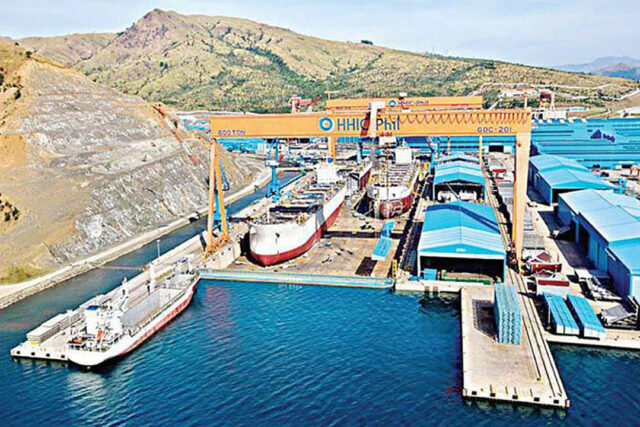
THE PHILIPPINES received a business delegation from Northern Poland to explore possible collaboration in maritime investments, including shipbuilding, the Philippine Economic Zone Authority (PEZA) said.

“The participation of the West Pomeranian delegation — representing shipbuilding, maritime logistics, industrial engineering, and construction — underscores Poland’s growing interest in the Philippines as a strategic investment hub in the region,” PEZA Director General Tereso O. Panga said in a statement on Wednesday.

At a March 13 meeting with the Polish Investment and Trade Agency, Mr. Panga touted the Philippines’ strategic location, expanding shipbuilding industry, and emerging priority industries.

“With West Pomerania’s maritime-driven economy and expertise in shipbuilding and port operations, this mission underscores high-potential synergies for the Philippines’ maritime, industrial, and infrastructure sectors,” PEZA said.

The delegation consisted of representatives from eight companies involved in marine and industrial electrical systems; maritime logistics; heavy concrete and specialized engineering; construction; ship repair and marine services; and industrial metal fabrication.

Chargé d’Affaires Katarzyna Wilkowiecka called on the need to strengthen bilateral ties.

“I hope Polish businesses will return home with a positive view of the Philippine market, and I also encourage our Filipino partners to help create a more open and enabling environment for our exporters and investors,” she was quoted as saying.

The Philippines is negotiating a free trade agreement (FTA) with the European Union (EU), which the government is hoping to finish by the middle of the year.

“The anticipated EU-PHL FTA, coupled with robust bilateral collaboration, is poised to unlock greater trade and investment flows, positioning the Philippines as a premier gateway for European businesses and reinforcing its role in fostering inclusive and sustainable economic growth,” Mr. Panga said.

The Philippines could potentially access additional exports of about $12 billion once the FTA is finalized, the Trade department has said. — Beatriz Marie D. Cruz

German-funded ‘blue economy’ program expected to generate 3 million jobs, DoF’s Go says

PHILSTAR FILE PHOTO

THE Department of Finance (DoF) said €200 million in funding provided by Germany’s KfW Development Bank (KfW) is expected to generate 3 million jobs in the so-called “blue economy,” the sustainable use of ocean and coastal resources.

“By strengthening the foundations of the blue economy, we are securing livelihoods, raising incomes, and reinforcing a vital engine of national growth, today and for the future,” Finance Secretary Frederick D. Go said in a statement on Wednesday.

The funding, which supports the Marine Ecosystems for Blue Economy Development Program, Subprogram 1 (MEBED1), “aims to enhance regulatory capacities for the protection, restoration, and sustainable management of marine and coastal resources.”

“The program is expected to generate increased and sustainable livelihoods for more than three million people — fisherfolk, aquaculture operators, and tourism workers — boosting national income and strengthening the resilience of coastal communities,” the DoF said.

The program will build on the gains achieved under the MEBED Program and is expected to address core development in coastal and marine ecosystems through supporting key government reforms and operations.

The funding stems from the agreement signed by Mr. Go and KfW Management Committee Member for Europe and Asia Stephan Opitz.

“The partnership with KfW reflects a shared commitment to ensuring that environmental protection, climate resilience, and economic growth advance together,” Mr. Go said. — Justine Irish D. Tabile

Construction of second Clark runway expected to start by next year — LIPAD 

PHILSTAR FILE PHOTO

THE construction of Clark International Airport’s second runway is likely to begin next year, according to airport operator Luzon International Premiere Airport Development (LIPAD) Corp., with the design work possibly completed this year.

“I think the Bases Conversion and Development Authority (BCDA) is now bidding out the detailed engineering design (for the project). The bidding is still ongoing,” LIPAD Chief Executive Officer Noel F. Manankil told reporters.

The second runway at Clark International Airport is a project of the BCDA, which controls the land occupied by the former US Air Force base.

LIPAD has been pushing for a second, or alternate, runway to support operations, providing redundancy for cargo and passenger flights.

At present, Clark International Airport’s single runway, can handle up to 40 aircraft movements per hour.

This year, LIPAD said it is expecting a 15% increase in passenger volume to 3.1 million mainly driven by the transfer of turboprop operations from Ninoy Aquino International Airport.

However, it may trim its passenger forecast for the year if the war in the Middle East continues.

Since the start of the Iran crisis, which led to cancellation of flights to the Middle East, he said LIPAD is expecting a reduction of 20,000 passengers a month.

LIPAD logged 2.75 million passengers in 2025, up 15%.

LIPAD is composed of Filinvest Development Corp., JG Summit Holdings, Inc., Philippine Airport Ground Support Services, Inc., and Changi Airports Philippines (I) Pte. Ltd., a wholly owned subsidiary of Changi Airports International. — Ashley Erika O. Jose

Fish imports, aquaculture counted on to provide price relief to consumers

PHILIPPINE STAR/ MICHAEL VARCAS

THE Department of Agriculture (DA) said it is boosting aquaculture and considering fish imports to stabilize prices of fisheries products, as fisherfolk face the risk of limited production due to the high price of fuel.

Agriculture Secretary Francisco P. Tiu Laurel, Jr. said fish supply remains sufficient, but rising fuel costs due to the war in the Middle East and the upcoming lean season could reduce availability.

“Fisheries is directly affected by oil prices. For now, however, it is in season. The catch is abundant,” he told reporters during a market visit in San Juan City on Wednesday.

While prices of fishery commodities have been rising, Mr. Laurel said they have eased compared to recent months due to improved supply arising from the ongoing harvest.

“I’ve noticed that the price of galunggong (round scad) is around P200 per kilo. Before, it was P350. It means that the harvest has started,” he said.

Mr. Laurel said, however, that a continued surge in fuel prices going into the lean season could reduce commercial fishing.

“Right now, our fishermen are still earning. But if fuel prices remain high by May or June, our fishermen may not be able to fish, which could lead to a shortage,” he said.

As a contingency, Mr. Laurel said the DA is prioritizing aquaculture, particularly tilapia and bangus (milkfish) production, to provide alternatives.

“We are pushing our aquaculture industry to seed more fingerlings this summer so that hopefully, by that time, May or June, we will have an ample supply of fish,” he said.

Mr. Laurel also cited the prospect of imports covering any shortfall in supply. The DA has approved the import of 250,000 metric tons of fish starting August.

However, Mr. Laurel said imports could be limited by global supply constraints.

“The problem is we might not be able to get supply because the situation of our fishermen here is the same problem for the fishermen in other countries,” he said. — Vonn Andrei E. Villamiel

Digital work, real taxes

Remote work, freelancing, and platform‑based businesses have reshaped how we earn our living. Enabled by technology and global connectivity, professionals can now provide services to foreign corporations, manage social media accounts, sell products through online marketplaces, or earn income from content creation — often without stepping into a traditional office, and instead, working from their own homes. This has expanded opportunities for many and improved economic participation, but it has also exposed some confusion about taxation for these arrangements.

A common misconception that seems to be circulating online is that income earned digitally, especially from foreign clients or platforms, is not taxable in the Philippines. Others assume that if no tax is withheld at source, or if the payment is received through digital wallets or in foreign currency, the income somehow falls outside the Philippine tax system. It is easy to see how these assumptions arise, particularly in arrangements that feel distant from traditional employment. However, Philippine tax laws also apply to digital work. If left unaddressed, these misconceptions can lead to costly penalties, interest, or registration issues later in the future.

For Philippine residents, the rule is straightforward: we are taxed on our worldwide income. This applies wherever income is earned, whether online or offline. The location of the employer or client does not change this. Likewise, the form of payment does not affect taxability. A resident earning income from services or employment is subject to Philippine taxes, even if the client is abroad and payment is in dollars through an online platform. For reporting purposes, income received in foreign currency must be converted to pesos using prevailing exchange rates.

Another frequent misunderstanding is the belief that tax obligations disappear when a client or employer does not withhold tax. In reality, the lack of withholding does not mean there is no tax due. For locally employed individuals, withholding tax simply functions as an advance collection mechanism that shifts much of the compliance burden to the employer, making tax payment simpler for the employee. Where no tax is withheld, or where income is earned from various sources (such as in many remote or offshore arrangements), the responsibility to file the returns and pay taxes rests more directly with the individual. In all cases, income must still be reported and the appropriate tax paid, regardless of whether tax was withheld at source.

What if taxes were already paid abroad? If the income has already been taxed in another country, Philippine tax rules generally allow that foreign tax to be taken into account when computing local taxes, if certain conditions are met. To be clear, the income still needs to be declared in the Philippines, but the taxes paid overseas may help reduce what is ultimately owed.

Expense deductions are another area of frequent confusion. Some assume they are not allowed to deduct any expenses at all, while others assume that all work‑related costs are automatically deductible. In practice, the rules depend on the nature of the work arrangement. Self‑employed individuals, freelancers, and online business owners may generally deduct ordinary and necessary business expenses, either as itemized deductions or as a standard deduction. Employees, however, are typically taxed on their gross compensation income and are not allowed to deduct work‑related expenses (whether working for a local company or remotely for a foreign employer).

To its credit, the Bureau of Internal Revenue has made notable efforts in recent years to bring digital earners into the formal tax system. Rules covering online sellers, platform‑based withholding, and guidance for influencers and content creators have sent a clear signal that digital income is not exempt. These measures reflect an acknowledgment that new work arrangements have been created, and the BIR continues to adapt accordingly.

Digital earning reflects a change in how many Filipinos work and earn income. While tax rules already exist, uncertainty around how those rules apply in practice can make compliance difficult — particularly for freelancers and small online businesses working through the system on their own. Many freelancers and micro‑entrepreneurs struggle with registration requirements, filing procedures, and the treatment of foreign or irregular payments. Questions around VAT thresholds, withholding obligations, and documentation requirements can discourage voluntary compliance or lead to errors.

When expectations are unclear, some choose not to register at all, while others risk making mistakes that could have been avoided with clearer guidance. In this sense, consolidated guidance, along with simplified processes and better alignment between digital platforms and reporting systems, may help reduce errors and lower the burden on small taxpayers. This would also allow the BIR to focus enforcement on higher risk areas.

For individuals, tax compliance is more than a legal requirement — it is a professional asset. Registered and compliant freelancers signal credibility and reliability to clients. Proper reporting and bookkeeping reduce exposure to penalties or audits, while a clear understanding of allowable deductions can help legitimately maximize net income. Compliance is not punitive — it is professional and protective.

In sum, consistent tax treatment helps keep things fair as the way we work continues to change. When digital earners are subject to the same basic tax principles as salaried employees and traditional businesses, competition is not distorted simply because of how income is earned. Clear rules reinforce confidence in the system. In this way, tax compliance is less about categorizing work as “old” or “new,” and more about ensuring that long‑standing rules continue to apply sensibly in a changing economy.

The views or opinions expressed in this article are solely those of the author and do not necessarily represent those of Isla Lipana & Co. The content is for general information purposes only and should not be used as a substitute for specific advice.


Olivia Erika R. Susa is a senior manager at the Tax Services department of Isla Lipana & Co., the Philippine member firm of the PwC network.

olivia.erika.susa@pwc.com

ACT warns against ‘potential displacement’ of private school teachers

RUBEN RODRIGUEZ-UNSPLASH

The ACT Teachers Party-list said on Tuesday that private school teachers could be displaced as the full implementation of the Strengthened Senior High School (SHS) curriculum rolls out nationwide.

“The lawmakers are warned of its direct threat to the job security of thousands of private school teachers who have specialized degrees and licenses that may not align with the newly combined subjects and tracks,” the group said in Filipino in a statement.

“The precarious situation of private school teachers – who already face lack of tenure and lower wages – puts them at greater risk amid sudden policy changes,” it added.

Under the new SHS curriculum, the four tracks were reduced to two: Academic and Technical Professional (TechPro), while core subjects were also cut from 15 to five to decongest learning content.

The five core subjects under the new curriculum are Effective Communication / Mabisang Komunikasyon, Life and Career Skills, General Mathematics, General Science; and Pag-aaral ng Kasaysayan at Lipunang Pilipino.

The Department of Education (DepEd) said the reform aims to foster mastery of foundational skills and improve students’ workforce readiness, both of which were criticized in the previous curriculum.

The new SHS curriculum was piloted in School Year (SY) 2025-2026 for Grade 11 students across 891 schools.

However, ACT noted that some private school teachers, along with other education stakeholders, claimed that DepEd did not conduct “genuine consultations” before and during the pilot implementation.

“They just created a week-long online survey and distributed a “consultation packet,” which denied stakeholders a meaningful opportunity to be heard and to provide feedback,” the group said.

Party-list Representative Antonio L. Tinio on Tuesday filed House Resolution No.836 urging the House Committee on Basic Education and Culture to investigate the “potential massive displacement”.

The full implementation of the revised SHS curriculum is scheduled in June 2026, as classes begin for SY 2026-2027. — Almira Louise S. Martinez

Eala faces Germany’s Siegemund in second round of Miami Open

ALEX EALA — FACEBOOK.COM/MIAMIOPENTENNIS

IT IS SHOWTIME for the Filipina tennis star in Miami.

Alexandra “Alex” Eala, at the jaws of an enormous pressure to protect her spot inside the Top 30, tussles with German ace Laura Siegemund in Round 2 of the Miami Open at the Hard Rock Stadium on Thursday in Florida.

The 20-year-old wunderkind faces a daunting task of replicating a final four finish she achieved last year or lose the precious rankings points of up to 390 for a projected drastic, free fall in the Women’s Tennis Association (WTA) list.

Ms. Eala currently sits at No. 29 with 1525 points for her new career-best following a Last 16 finish in the Indian Wells Open and 390 of those will expire at the close of the tourney as per WTA’s one-year ruling on ranking points.

Standing in between Ms. Eala and the retention of those points is a total of four wins to get into the semifinals starting against the 38-year-old German, WTA No. 53, following her 6-4, 6-4 sweep of No. 76 Petra Marcinko of Croatia, at a still to-be-determined game time on Thursday (Manila time).

Ms. Siegemund is a doubles specialist with career-high ranking of No. 4 laced by two WTA titles and three Grand Slam crowns (women’s and mixed). She’s also a quarterfinalist in the Tokyo Olympics.

And that should be enough warning on how steep the climb it would be for Ms. Eala, despite being ranked higher and seeded at No. 31 with a first-round bye.

It’s a full circle for the left ace, playing in the main draw right away with a bye after rising from being a wildcard qualifier last year to final four marked by wins against Grand Slam champions Iga Swiatek of Poland, Jelena Ostapenko of Latvia and Madison Keys of the United States to collect the said massive points — and more importantly barge into world’s Top 100.

At stake for Ms. Eala in Round 2 is only 35 ranking points plus 10 in Round 1, which would still be a far cry from the 390-point needed to stay in the Top 30.

To reach that, Ms. Eala has to score three more wins projectedly against world No. 3 Ms. Swiatek by the third round, No. 14 Karolina Muchova of Czechia or No. 16 Clara Tauson of Denmark by Round 4 and then either world No. 9 Victoria Mboko of Canada or No. 10 Mirra Andreeva of Russia in the quarterfinals.

A total of 65, 120 and 215 points are up for grabs in Rounds 3, 4 and quarterfinals, respectively.

And that’s the only time Ms. Eala could reach 390, regardless of the result in the semifinals against possibly her good friend and world No. 4 Coco Gauff or No. 6 Amanda Anisimova of the United States to complete the lower bracket.

Either reigning champion and world No. 1 Aryna Sabalenka of Belarus or No. 2 Elena Rybakina of Kazakhstan are expected to come out of the upper bracket for a slot in the finale.

Otherwise, Ms. Eala is projected to fall all the way to 1135 points, good at around Top 50-60 for a scratch at an unfortunate time when she’s about to crack Top 20.

It’s a long shot for Ms. Eala and as titanic is the hurdle is with the presence of Top 10-20 players and Grand Slam champions in her way, she’s ready now more than ever.

“I know that I belong here,” she beamed.

“It doesn’t matter if I win the tournament in Miami or if I lose in the first round. I know I’m here and I’m here to stay.” — John Bryan Ulanday