Home Blog Page 1035

Country-by-Country Report: Bridging borders with the Philippines

More than a year has passed since the Philippines became part of the OECD BEPS Inclusive Framework. While the tax authorities here had issued several transfer pricing regulations prior to this, at this time, the country has yet to completely formalize its alignment with some of the requirements provided under the BEPS package. One such requirement is the Country-by-Country Report (CbCR), as outlined in BEPS Action 13, which is a tool that aims to enhance transparency in the global tax reporting systems.

CbCR is a component of the OECD’s three-tiered transfer pricing documentation approach, along with the Master File and Local File. The main objective of CbCR is to provide tax authorities a high-level overview of how profits, revenue, taxes paid, and economic activity are distributed among the jurisdictions where a multinational group operates. By requiring large multinational enterprises (MNEs) to disclose this information, tax administrations can better assess transfer pricing risk, detect profit shifting, and determine whether a company’s tax strategies align with its real economic footprint.

CbCR is required for MNEs with annual consolidated revenues of at least 750 million euros or the equivalent local currency. The report is generally not made public and is exchanged between tax administrations under international agreements, although some jurisdictions such as the European Union and Australia may require qualified MNEs to file a public CbCR.

In the model template provided under the OECD guidelines, CbCR is structured into three main tables:

• Table 1: Presents aggregated financial and tax information of the MNE group by jurisdiction. This includes revenue (from related and unrelated parties), profits before tax, income tax paid and accrued, stated capital, accumulated earnings, number of employees, and tangible assets other than cash or equivalents.

• Table 2: Lists all constituent entities within the MNE group, their jurisdiction of tax residence, and the main business activities performed in each jurisdiction.

• Table 3: Allows the MNE to provide any additional context or explanations needed to understand the information in Tables 1 and 2.

The report must be submitted in a prescribed format, typically using an OECD-compliant XML schema, and filed with the tax authority of the Ultimate Parent Entity’s (UPE) jurisdiction. In case the country where the UPE is located does not require CbCR, has no automatic exchange of information agreement in place, or there has been a systemic failure in the UPE’s jurisdiction, then a subsidiary may be required to file locally. Alternatively, the MNE group may also designate a Surrogate Parent Entity that will file the CbCR on behalf of the group with the tax authority of its jurisdiction where CbCR is mandatory to avoid multiple local filing obligations.

As of now, CbCR implementation in the ASEAN region shows a diverse spectrum of readiness and enforcement. Indonesia, Malaysia, Singapore, Thailand, and Vietnam have integrated CbCR into their transfer pricing frameworks, each tailored to their local tax systems while adhering to the OECD guidelines. These countries are likewise signatories of the Multilateral Competent Authority Agreement (MCAA) on the Exchange of CbCR, which facilitates the automatic exchange of information between tax authorities.

In contrast, countries such as Laos, Myanmar, Cambodia, Brunei and the Philippines are still in various stages of development and policy formulation. Laos and Myanmar are in the developmental phase with their transfer pricing regulations. Cambodia has existing transfer pricing rules and Brunei is a member of the OECD BEPS Inclusive Framework, but both have yet to introduce a local CbCR legislation.

The Philippines has taken initial steps toward compliance with the BEPS initiative. At this time, the CbCR is not yet formally required and no Philippine-based UPEs are currently required to file a CbCR locally.

Nonetheless, the BIR requires the filing of an Information Return on Related Party Transactions or BIR Form No. 1709. This requirement is not limited to UPEs but is mandatory for Philippine taxpayers with related party transactions that qualify per the criteria set out under Revenue Regulations No. 34-2020. The form includes detailed, entity-level disclosures about each related party, the nature and value of their transactions, and other corporate business information.  While both the CbCR and Form No. 1709 aim to improve transparency in the disclosures of related party arrangements, the CbCR template offers context on the MNE group’s business activities which could assist in jurisdictional-level risk assessment across multiple countries, whereas currently, the RPT Form already serves as the domestic, transaction-level audit aid for the BIR.

For MNEs, understanding the nuances of each country’s CbCR regime is important for compliance and risk mitigation. Tax authorities continue to strengthen transparency standards; hence, companies must remain vigilant and adapt their reporting strategies to meet both current and forthcoming obligations. The evolving local filing requirements across countries create uncertainty and compliance burdens — one major challenge is consistency in data collection, as CbCR requires financial and operational data across multiple entities which may use different accounting systems, currencies, and standards. In addition, companies face concerns over data confidentiality especially if sensitive business information is shared with multiple tax authorities.

Unlike advanced economies with established digital systems and skilled personnel, tax authorities in many developing countries have limited IT infrastructure and technical capacity to process, validate, and utilize CbCR data. Moreover, incomplete information-sharing networks limit the effectiveness of automatic exchanges, particularly in jurisdictions that are not signatories to the MCAA or do not have bilateral agreements for the exchanges. For countries to fully benefit from CbCR, international support is needed in the form of technical assistance, knowledge sharing, and digital infrastructure investment to close the gap in accessing cross-border information.

In view of these challenges, and considering the limited number of large UPEs in the Philippines, the adoption of the CbCR requirement may not have been the priority of the tax administration. However, as our economy continues to grow in the future, I hope the Philippines, as part of our commitment to the BEPS Inclusive Framework, will also keep up with the evolving global tax standards and improve our competitiveness, transparency and credibility in the international tax landscape.

The views or opinions expressed in this article are solely those of the author and do not necessarily represent those of Isla Lipana & Co. The content is for general information purposes only, and should not be used as a substitute for specific advice.


Angelika Kristina S. Montejo is an assistant manager at the Tax Services department of Isla Lipana & Co., the Philippine member firm of the PwC network.

angelika.kristina.montejo@pwc.com

PSEi retreats as Marcos eyes Cabinet revamp

BW FILE PHOTO

By Revin Mikhael D. Ochave, Reporter

PHILIPPINE STOCKS fell on Thursday, weighed by President Ferdinand R. Marcos, Jr.’s move to revamp his Cabinet and assert his authority after his allies failed to win a majority of Senate seats in the midterm elections.

The bellwether Philippine Stock Exchange Index (PSEi) declined 1.09% or 69.98 points to 6,305.37, while the broader all-share index lost 0.79% or 29.76 points to 3,708.18.

“The PSEi corrected lower amid some wait-and-see stance in the markets on the new Cabinet appointments,” Michael L. Ricafort, chief economist at Rizal Commercial Banking Corp., said in a Viber message.

The President asked his Cabinet secretaries to resign so he could evaluate the performance of each department and “determine who will continue to serve in line with his administration’s recalibrated priorities,” the presidential palace said in a statement.

Mr. Marcos said government projects would not be affected by the overhaul.

“Investor caution was further heightened by domestic political uncertainty after Mr. Marcos’ call for the courtesy resignation of his Cabinet secretaries, seen by some as a possible shift in policy direction,” Luis A. Limlingan, head of sales at Regina Capital Development Corp., said in a Viber message.

The local market also plunged on the back of negative cues from Wall Street caused by the rise in long term Treasury yields, Japhet Louis O. Tantiangco, a senior research analyst at Philstocks Financial, Inc., said via Viber.

“This comes amid concerns over the sustainability of the US fiscal position as the budget deficit is seen to widen further,” he said. “Investors also dealt with Mr. Marcos’ move to call for the resignation of his Cabinet secretaries.”

Almost all sectoral indexes fell. Properties fell 1.31% or 29.37 points to 2,206.93, while holding firms declined 1.22% or 66.85 points to 5,380.79.

Financials retreated 1.19% or 28.5 points to 2,348.18, while industrials fell 1.1% or 99.69 points to 8,929.97. Services shed 0.57% or 12.17 points to 2,098.46.

On the other hand, mining and oil rose 1.12% or 106.11 points to 9,559.56.

Emperador, Inc. was the top index gainer, climbing 1.02% to P13.80, while China Banking Corp. was the worst performer, dropping 4.58% to P73, Mr. Tantiangco said.

Value turnover fell to P6.39 billion with 572.35 million shares traded from P7.63 billion and 712.07 million stocks traded on Wednesday.

Lowers beat winners 112 to 66, while 57 shares were unchanged. Net foreign selling rose to P519.7 million from P287.34 million on Wednesday.

Peso climbs as US fiscal woes weigh on dollar

BW FILE PHOTO

THE PESO climbed on Thursday as concerns over the US economy continued to weigh on the greenback.

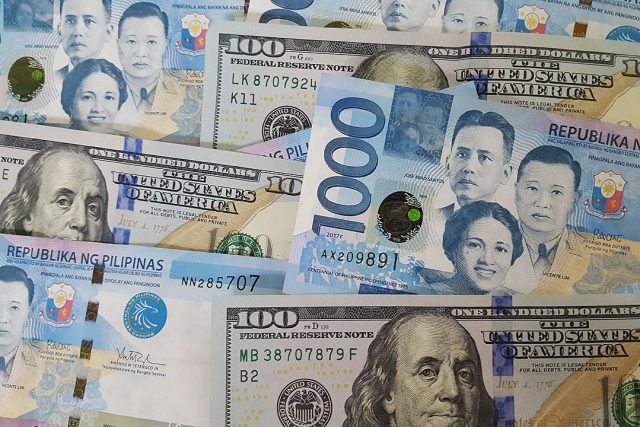
The local unit closed at P55.585 versus dollar, strengthening by 7.5 centavos from its P55.66 finish on Wednesday, Bankers Association of the Philippines data showed.

The peso opened the session a tad stronger at P55.65 against the dollar. It dropped to a low of P55.70 intraday, while its best showing was its closing level of P55.585 versus the greenback.

Dollars exchanged went down to $1.41 billion on Thursday from $1.51 billion on Wednesday.

“The dollar-peso traded sideways, still within range, tracking dollar movement amid growing concerns on the US economy following Moody’s credit rating downgrade and trade policy developments,” a trader said in a phone interview.

The peso rose as oil prices fell following reports that the Organization of the Petroleum Exporting Countries and its allies (OPEC+) are looking to hike their output in July, Rizal Commercial Banking Corp. Chief Economist Michael L. Ricafort said in a Viber message.

For Thursday, the trader expects the peso to move between P55.40 and P55.80 per dollar, while Mr. Ricafort sees it ranging from P55.50 to P55.70.

US fiscal concerns and a tepid auction of Treasury bonds kept the dollar pinned near a two-week low on Thursday, while the US Congress moved closer to passing President Donald J. Trump’s bill for massive cuts in taxes and spending, Reuters reported.

The lackluster 20-year bond sale reinforced the “Sell America” narrative, weighing not just on the dollar but on Wall Street as well, with traders already jittery after Moody’s cut the triple-A US credit rating last week.

Mr. Trump’s sweeping tax bill cleared a crucial hurdle on Thursday as the House of Representatives voted roughly along party lines to begin a debate that would lead to a vote on passage later in the morning.

House passage would set the stage for weeks of debate in the Republican-led Senate.

The nonpartisan Congressional Budget Office estimates the bill will add $3.8 trillion to the $36.2 trillion in US debt over the next decade.

The dollar slipped 0.5% to 142.94 yen, its weakest level since May 7.

The dollar index, which measures the US currency against six peers, was last down about 0.1% at 99.51, just above Wednesday’s two-week low of 99.333.

Meanwhile, oil prices fell 1% on Thursday after a report that OPEC+ is discussing a production increase for July, stoking concerns that global supply could exceed demand growth.

Brent futures fell 64 cents, or 1%, to $64.27 a barrel by 0800 GMT. US West Texas Intermediate crude dropped 59 cents or 1% to $60.98.

The OPEC+ countries are discussing whether to make another large output increase at their meeting on June 1, Bloomberg News reported.

An increase of 411,000 barrels per day for July is among the options under discussion, though no final agreement has been reached, the report said, citing delegates. — A.M.C. Sy with Reuters

NLEX eyes share of the lead against Converge FiberXers

NLEX ROAD WARRIORS — FACEBOOK.COM/PBAOFFICIAL

Games on Friday
(PhilSport Arena)
5 p.m. – NLEX vs Converge
7:30 p.m. – Blackwater vs Ginebra

IT’S BEEN a well-oiled run so far for NLEX, which has racked up five straight victories after an opening stumble, very much on track for the coveted Top Four spot in the PBA Philippine Cup playoffs.

And with the fall of erstwhile spotless Magnolia recently, the Road Warriors now find themselves with a shot at a tie for No. 1 — something they can achieve on Friday if they can stretch their hot streak and go 6-1 against Converge (5-3).

The 5 p.m. tiff at the PhilSports Arena actually marks the start of a killer three-day stretch for the Road Warriors, who after battling the dangerous FiberXers will immediately face defending champion Meralco on Sunday night.

First up are the fifth-running FiberXers, whose Twin Towers Justine Baltazar and Justin Arana are a handful to opponents, especially ones lacking his size and length like NLEX.

“Converge is playing well. Two big men na dominating talaga si Balty (Baltazar) and Arana,” said Mr. Uichico, whose team will also have to deal with the explosive Alec Stockton and Schonny Winston.

Size advantage or not, Converge mentor Franco Atienza expects NLEX to be a tough customer.

“They’re one of the top teams now because they’re playing as a team, there’s no one (particular player) we can single out,” said Mr. Atienza, whose crew is gunning for its third consecutive W to boost its bid for the Magic Four and twice-to-beat quarterfinal incentive.

Meanwhile, Barangay Ginebra (4-2) seeks to catch up with idle San Miguel Beer (5-2) at third as it takes on embattled Blackwater (1-5) at 7:30 p.m.

The Gin Kings look to strike while riding on their first back-to-back wins of the conference and with the Bossing reeling from their three-game skid. — Olmin Leyba

OKC Thunder’s Shai Gilgeous-Alexander collects first NBA Most Valuable Player award

OKLAHOMA CITY (OKC) Thunder All-Star Shai Gilgeous-Alexander is the NBA Most Valuable Player (MVP), the league announced on Wednesday night.

Gilgeous-Alexander led the league in scoring (32.7 points per game) for the first time and joined Michael Jordan as the only players in NBA history to average at least 30 points per game on 50% shooting with per-game averages of at least five rebounds, five assists, 1.5 steals and one block in a season.

Jordan did it twice, and each time was named NBA MVP (1988, 1991).

Gilgeous-Alexander received 71 first-place votes and 913 total points in balloting of 100 voters on a global media panel for his first Michael Jordan Trophy.

“You try so hard throughout the season to not think about it and just worry about playing basketball and getting better and trying to win games,” Gilgeous-Alexander said on TNT. “But as a competitor, as a kid dreaming about the game, it’s always in the back of your mind, and I am very grateful to be on this side of the ballot.”

Denver’s Nikola Jokic, who was the NBA MVP last season for the third time in his career, finished second with 787 points and had the other 29 first-place votes cast. Milwaukee’s Giannis Antetokounmpo was third (470 total), Boston’s Jayson Tatum was fourth (311) and Cleveland’s Donovan Mitchell was fifth (74) of 12 players receiving votes. — Reuters

Świątek’s clay empire on shaky ground ahead of French Open

PARIS — Iga Świątek arrives at Roland Garros this month under a cloud of uncertainty, with the Pole enduring one of the toughest stretches of her career just before the defense of her French Open title.

The 23-year-old Świątek, who has won four titles on the clay courts of Paris, has slipped out of the world’s top three for the first time since March 2022 after back-to-back defeats in Madrid and Rome.

A 6-1, 6-1 humbling by Coco Gauff in Spain and a straight-sets defeat by Danielle Collins in Italy have exposed uncharacteristic frailties in the game of a player seen as virtually untouchable on clay after she clinched her third Suzanne Lenglen Cup in a row last year.

Adding to the weight on Świątek’s shoulders is the lingering shadow of Aryna Sabalenka, who seized the world number one ranking from the Pole late last season.

While Świątek has largely remained within touching distance, the rivalry has unsettled her dominance, and she has struggled to recapture the ruthless consistency that defined her meteoric rise.

“I think I wasn’t really present on court, not there to fight or compete,” Świątek said after her loss to Collins in Rome. “I focused on my mistakes — that was my error. I wasn’t doing things properly. I was concentrating on the wrong things.”

It marks a stark contrast to this point last season, when Świątek swept the Madrid, Rome and Roland Garros titles in dominant fashion.

Now, the question is whether Świątek, who served a one-month doping ban last August, can rediscover the mental steel and aggressive precision that made her a four-time French Open champion.

Asked in Rome about her ambitions for the Paris Grand Slam, she struck an uncertain note.

“It would be stupid to expect too much because right now, I’m not able to play my game,” she said.

Her remarkable track record on Court Philippe-Chatrier might suggest she is still the player to beat in Paris, but Świątek herself was quick to dismiss the weight of history. — Reuters

Anthony Edwards fined $50,000 by NBA for profanity

THE NBA announced on Wednesday evening that it has fined Minnesota Timberwolves guard Anthony Edwards $50,000 for using profane language in a media interview.

Edwards dropped the profanity on Tuesday in his postgame news conference following the Timberwolves’ 114-88 loss to the Oklahoma City Thunder in Game 1 of the Western Conference finals.

Edwards, an All-Star each of the past two seasons, was held to just 18 points — five in the second half — and made just 13 shots in the Game 1 loss. His comments aired live on ESPN.

This is not the first time Edwards has been fined by the league this season. He has been fined for various other infractions, including inappropriate gestures toward officials and fans. — Reuters

East Finals

Given the longtime rivalry between the Knicks and the Pacers, not a few quarters believed the 2025 Eastern Conference Finals would be as tightly fought as their other playoff encounters. Considering that the series has just started, time will tell before the contention is proven right. If Thursday’s match is any indication, however, conventional wisdom looks likely to find validation.

In a postseason already replete with spectacular play, Game One of the East Finals took the proverbial cake. It certainly had all the ingredients fans invariably deemed critical to the concoction of a delectable set-to. No love lost between the protagonists, just about every possession hotly contested, physicality on overdrive, even controversial whistles. Above all else, the outcome was secured only in the very last second, and in overtime to boot.

For a while there, the Knicks appeared to be firmly in control of the encounter. They took the lead a third into the second quarter, and ostensibly for good. So dominant were they in front of a capacity crowd of 19,812 at the Garden that they carried a double-digit lead with under three minutes left in regulation. Victory looked to be theirs — until, that is, the Pacers managed to mount a monumental comeback off outstanding defense and unconscious three-point shooting. And had supposedly “overrated” Tyrese Haliburton not gotten his right foot to straddle the arc, they would have lost outright on the last-second shot that found the net only after an extremely high bounce.

Redemption for the Knicks seemed at hand when they scored the first two baskets in extra period, but the Pacers would not be denied. On the strength of relentless coverage, fortunate bounces, and astute decision-making on the fly, the latter finally claimed the triumph. Superlative shot-making under pressure produced lead changes in the last five minutes, and only after an uncharacteristic breakdown from Tom Thibodeau’s charges on an inbounds play by the visitors was the contest decided.

The Knicks will, no doubt, ruminate on how they wound up snatching defeat from the throes of triumph, but they also know enough to move on, and pronto. On Saturday, they have a chance to even the series, and they’ll be keen to translate homecourt advantage into their first win in a conference finals series since the turn of the millennium. As they prep for the challenge, they would do well to keep up their intensity from opening tip to final buzzer lest they see a repeat of Thursday’s result.


Anthony L. Cuaycong has been writing Courtside since BusinessWorld introduced a Sports section in 1994. He is a consultant on strategic planning, operations and human resources management, corporate communications, and business development.

Trump confronts South Africa’s Ramaphosa with false claims of white genocide

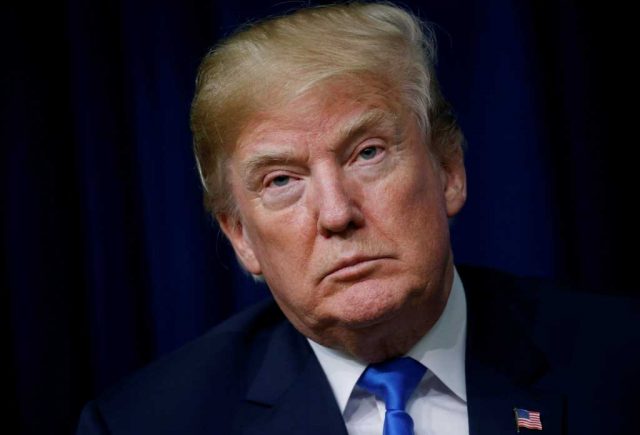
U.S. President Donald Trump — REUTERS/LEAH MILLIS/FILE PHOTO

WASHINGTON — U.S. President Donald Trump confronted South African President Cyril Ramaphosa on Wednesday with explosive false claims of white genocide and land seizures during a tense White House meeting that was reminiscent of his February ambush of Ukrainian leader Volodymyr Zelenskiy.

South Africa has one of the highest murder rates in the world, but the overwhelming majority of victims are Black.

Mr. Ramaphosa had hoped to use Wednesday’s meeting to reset his country’s relationship with the U.S., after Trump canceled much-needed aid to South Africa, offered refuge to white minority Afrikaners, expelled the country’s ambassador and criticized its genocide court case against Israel.

The South African president arrived prepared for an aggressive reception, bringing popular white South African golfers as part of his delegation and saying he wanted to discuss trade. The U.S. is South Africa’s second-biggest trading partner, and the country is facing a 30% tariff under Mr. Trump’s currently suspended raft of import taxes.

But in a carefully choreographed Oval Office onslaught, Mr. Trump pounced, moving quickly to a list of concerns about the treatment of white South Africans, which he punctuated by playing a video and leafing through a stack of printed news articles that he said proved his allegations.

With the lights turned down at Mr. Trump’s request, the video – played on a television that is not normally set up in the Oval Office – showed white crosses, which Mr. Trump asserted were the graves of white people, and opposition leaders making incendiary speeches. Mr. Trump suggested one of them, Julius Malema, should be arrested.

The video was made in September 2020 during a protest after two people were killed on their farm a week earlier. The crosses did not mark actual graves. An organizer of the protest told South Africa’s public broadcaster at the time that they represented farmers who had been killed over the years.

“We have many people that feel they’re being persecuted, and they’re coming to the United States,” Mr. Trump said. “So we take from many … locations, if we feel there’s persecution or genocide going on,” he added, referring specifically to white farmers.

“People are fleeing South Africa for their own safety. Their land is being confiscated, and in many cases, they’re being killed,” the president added, echoing a once-fringe conspiracy theory that has circulated in global far-right chat rooms for at least a decade with the vocal support of Mr. Trump’s ally, South African-born Elon Musk, who was in the Oval Office during the meeting.

South Africa, which endured centuries of draconian discrimination against Black people during colonialism and apartheid before becoming a multi-party democracy in 1994 under Nelson Mandela, rejects Mr. Trump’s allegations.

A new land reform law, aimed at redressing the injustices of apartheid, allows for expropriations without compensation when in the public interest, for example if land is lying fallow. No such expropriation has taken place, and any order can be challenged in court.

South African police recorded 26,232 murders nationwide in 2024, with 44 linked to farming communities. Eight of those victims were farmers.

Mr. Ramaphosa, sitting in a chair next to Mr. Trump and remaining poised, pushed back against his claims.

“If there was Afrikaner farmer genocide, I can bet you, these three gentlemen would not be here,” Mr. Ramaphosa said, referring to golfers Ernie Els and Retief Goosen and billionaire Johann Rupert, all white, who were present in the room.

That did not satisfy Mr. Trump.

“We have thousands of stories talking about it, and we have documentaries, we have news stories,” Mr. Trump said. “It has to be responded to.”

‘THERE IS JUST NO GENOCIDE’
Mr. Ramaphosa mostly sat expressionless during the video presentation, occasionally craning his neck to look at the screen. He said he had not seen the material before and that he would like to find out the location.

Mr. Trump then displayed printed copies of articles that he said showed white South Africans who had been killed, saying “death, death” as he flipped through them, eventually handing them to his counterpart.

Mr. Ramaphosa said there was crime in South Africa, and the majority of victims were Black. Mr. Trump cut him off and said: “The farmers are not Black.”

Mr. Ramaphosa responded: “These are concerns we are willing to talk to you about.”

The South African president cited Mandela’s example as a peacemaker, but that did not move the U.S. president, whose political base includes white nationalists. The myth of white genocide in South Africa has become a rallying point for the far right in the United States and elsewhere.

“I will say: apartheid, terrible,” Mr. Trump noted. “This is sort of the opposite of apartheid.”

The extraordinary exchange, three months after Trump and Vice President JD Vance upbraided Ukraine’s Zelenskiy inside the same Oval Office, could prompt foreign leaders to think twice about accepting Trump’s invitations and risk public embarrassment.

Unlike Mr. Zelenskiy, who sparred with Mr. Trump and ended up leaving early, the South African leader kept his calm, praising Mr. Trump’s decor – the president has outfitted the Oval Office with gold accessories – and saying he looked forward to handing over the presidency of the Group of 20 next year.

Mr. Trump declined to say whether he would attend the G20 meeting in South Africa in November.

Later in the meeting, Mr. Rupert, the business tycoon, stepped in to back up Mr. Ramaphosa, saying that crime was a problem across the board and many Black people were dying too.

Following the meeting, Mr. Ramaphosa sought to focus on trade, telling reporters the two countries had agreed to discuss critical minerals in South Africa. His trade minister said the government had submitted a trade and investment proposal that included buying liquefied natural gas from the U.S.

But the president also flatly denied Mr. Trump’s allegations about a wave of racial violence against white farmers.

“There is just no genocide in South Africa,” he said. — Reuters

North Korean leader Kim Jong Un condemns warship accident as ‘criminal’

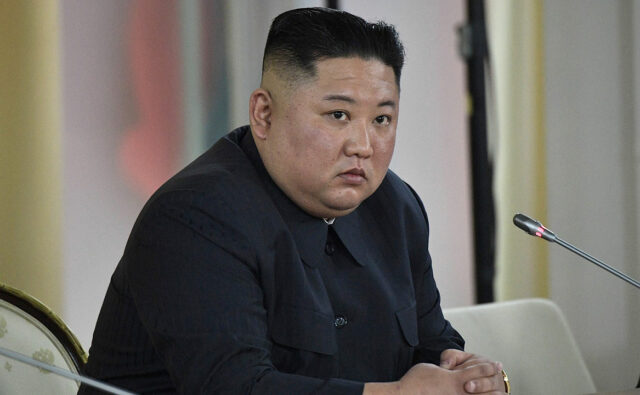
KREMLIN.RU/EVENTS/PRESIDENT/NEWS/60363/PHOTOS-COMMONS.WIKIMEDIA.ORG

SEOUL — A serious accident occurred on Wednesday during the launch of a new North Korean warship while leader Kim Jong Un was attending the event, with him calling it a “criminal act” that could not be tolerated, state media KCNA reported.

Mr. Kim, who witnessed the failed launch of the 5,000-ton destroyer, excoriated the accident as caused by “carelessness” that tarnished the country’s dignity, and ordered the ship to be restored before a key ruling party meeting in June, KCNA said on Thursday.

The report did not mention whether there were any casualties.

KCNA said the incident at the eastern port of Chongjin was caused by a loss of balance while the vessel was being launched and it said sections of the bottom of the warship were crushed, but it did not give more details of damage sustained.

“Kim Jong Un made stern assessment saying that it was a serious accident and criminal act caused by absolute carelessness, irresponsibility and unscientific empiricism which is out of the bounds of possibility and could not be tolerated,” KCNA reported.

Mr. Kim said the accident “brought the dignity and self-respect of our state to a collapse”, adding an immediate restoration of the destroyer was “not merely a practical issue but a political issue directly related to the authority of the state.”

The rare public disclosure of an accident follows a report of the launch of another destroyer of a similar size in April attended by Mr. Kim at the west coast shipyard of Nampho.

North Korea has previously experienced accidents such as space launch vehicle failures and civilian disasters that have subsequently been used to promote the role of the leadership and the ruling Workers’ Party in correcting the problems.

The 5,000-ton destroyers launched by North Korea this year are the country’s largest warships yet.

In a report last week on preparations for the launch of the accident ship, U.S.-based 38 North said it appeared the ship would be side-launched from the quay, a method not previously observed in North Korea.

“The use of this launch method could be one of necessity, as the quay where the ship is being built does not have an incline,” the 38 North report said.

Commercial satellite imagery of the shipyard the day before the launch showed the destroyer positioned on the quay with support vessels by its side. — Reuters

Vietnam says more tariff negotiations with United States needed

REUTERS

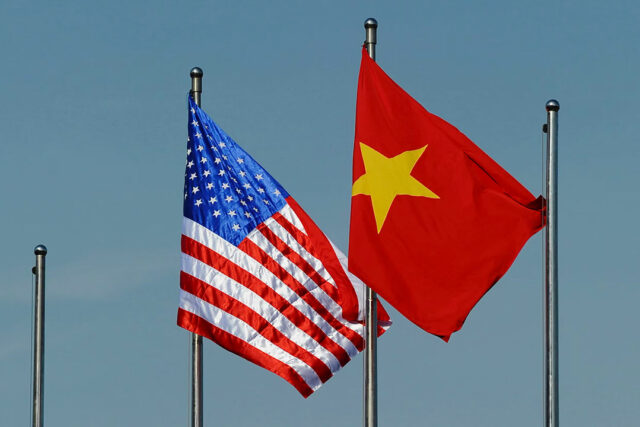
HANOI — The United States and Vietnam have concluded a second round of trade negotiations on tariffs and agreed to continue the talks to address unresolved issues, Vietnam’s trade ministry said in a statement on Thursday.

The second round of talks took place in Washington on May 19-22 involving Vietnam’s Trade Minister Nguyen Hong Dien and the US Trade Representative (USTR) Jamieson Greer, the Vietnamese ministry said on its website showing pictures of meetings.

“At the end of the negotiation round, Vietnam and the United States made positive progress, identifying groups of issues on which consensus was close, and groups of issues that needed further discussion to reach consensus in the coming time,” the statement said, without elaborating.

It noted that talks will need to continue in early June.

The USTR did not immediately reply to a request for comment outside of US business hours.

Vietnam heavily relies on exports to the United States and faces one of the highest “reciprocal” tariff rates set by the White House at 46%.

Those duties have been paused globally by Washington until July. — Reuters

Torrential rain ravages Australian towns, thousands brace for isolation

SYDNEY — Torrential rain pummeled Australia’s southeast on Thursday, triggering flash flooding and forcing officials to issue fresh evacuation orders, while 50,000 residents were warned to prepare to isolate with more downpours expected over the next 24 hours.

Major flooding hit several rural towns in the Hunter and Mid North Coast regions of New South Wales, Australia’s most populous state, with most of the Mid North Coast region facing further heavy rainfall through Thursday.

Police said the body of a 63-year-old man was found in a flooded home near Taree, more than 300 kilometers (186 miles) north of Sydney. The rural town is one of the worst-hit by the floods, which have washed away farms and destroyed homes, roads and bridges.

“We’re bracing for more bad news in the next 24 hours. This natural disaster has been terrible for this community,” New South Wales Premier Chris Minns said during a media briefing.

“There’s 140 flood warnings, 50,000 people are in the range where they have been asked to prepare to evacuate and could be isolated, and there’s been 9,500 properties in the direct vicinity. So, we’re far from out of the woods here.”

Two men and one woman have been reported missing in separate incidents, authorities said.

More than 100 schools were closed on Thursday, while thousands of properties remained without power.

Cundletown in the Mid North Coast has been entirely cut off by floods, said Nicole Sammut, a nurse caring for 67 elderly residents at an aged care home, which is also being used as a shelter by emergency teams.

“I came to work on Tuesday and haven’t left,” Ms. Sammut told Reuters.

“We are up on a hill but behind us is all water. We are isolated. I’ve never seen the water this high.”

MORE HEAVY RAIN
A slow-moving coastal trough has dumped about four months of rain over the past two days, cutting off entire towns and stranding residents on roofs and the second floors of their homes, as rescuers struggle to access the area by boat or air.

Mr. Minns apologized to people who had to wait for several hours for rescue crews, but assured efforts had been ramped up with 2,500 emergency services personnel being deployed.

Television images showed a woman winched to a helicopter from a flooded property, while several people were seen being rescued on boats.

Australia’s Bureau of Meteorology forecast that some areas could receive up to 200 millimeters (8 inches) of rain through Friday, triggering life-threatening flash flooding, before the weather system is expected to weaken and track south towards Sydney. — Reuters