Home Blog Page 1030

Cocolife partners with PayMongo to power seamless in-app payments

From L to R: Erwin Talaue, Cocolife Digital Business Analyst Manager; Atty. Elmore Ornelas, Cocolife Senior Vice-President, Chief Communications Officer, and Head of the Branding and Corporate Communications Division; Jojo Malolos, Paymongo CEO; and Jordan Jacinto, Paymongo Chief Sales and Business Development Officer

Cocolife, the largest Filipino-owned stock life insurance company in the Philippines, reaffirms its commitment to service excellence through digital innovation with its partnership with PayMongo, a leading financial technology company providing secure and scalable payment infrastructure for businesses.

This partnership was formalized during a Partnership Contract and Memorandum of Agreement (MoA) signing ceremony held on June 9, 2025, at the PayMongo Head Office in Bonifacio Global City, Taguig.

Representing Cocolife at the event were Atty. Elmore Ornelas, Senior Vice-President and Chief Communications Officer, and Erwin Talaue, Digital Business Analyst Manager. On behalf of PayMongo, CEO Jojo Malolos and Chief Sales and Business Development Officer Jordan Jacinto took part in the ceremonial signing.

The partnership supports Cocolife’s broader initiative to upgrade digital services, specifically the enhancement of the myCocolife App’s online payment capabilities. “The myCocolife App serves as an all-in-one platform that empowers users to manage their insurance policies, make payments, explore and purchase new products, and book appointments for personalized consultations — all from their mobile devices,” shared Atty Ornelas.

The Partnership Contract and Memorandum of Agreement signing ceremony was held on June 9, 2025, at the PayMongo Head Office in Bonifacio Global City, Taguig.

Beyond the ceremonial signing, both organizations held strategic discussions on the possible implementation of future digital initiatives designed to streamline payment systems, enhance customer experience, and expand access to financial services using PayMongo’s secure and intuitive platform.

“Our mindset has always been about service — all of our systems, process improvements, and even our constant desire to achieve excellent corporate governance, are really meant to serve our people better,” said Cocolife President and CEO Atty. Jose Martin A. Loon.

“We’re excited to support Cocolife’s digital journey with the right tools to make financial services more accessible, secure, and efficient for Filipinos,” said Jojo Malolos, CEO of PayMongo. “This partnership is aligned with our mission to help institutions modernize how money moves — one integration at a time.”

With this collaboration, myCocolife App users and policyholders can look forward to even more seamless, reliable, and secure in-app payment experiences, marking another step forward in Cocolife’s digital transformation journey.

Explore more about Cocolife on our official website: https://www.cocolife.com/.


Spotlight is BusinessWorld’s sponsored section that allows advertisers to amplify their brand and connect with BusinessWorld’s audience by publishing their stories on the BusinessWorld Web site. For more information, send an email to online@bworldonline.com.

Join us on Viber at https://bit.ly/3hv6bLA to get more updates and subscribe to BusinessWorld’s titles and get exclusive content through www.bworld-x.com.

US to give $30 million to Gaza aid operation despite violence concerns

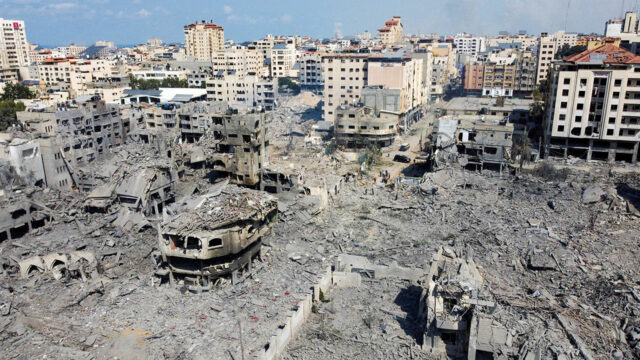
A view shows houses and buildings destroyed by Israeli strikes in Gaza City, Oct. 10, 2023. — REUTERS

 – The United States is giving $30 million to a controversial humanitarian group delivering aid in war-torn Gaza despite concern among some U.S. officials about the month-old operation and the killing of Palestinians near food distribution sites, according to four sources and a document seen by Reuters.

Washington has long backed the Gaza Humanitarian Foundation diplomatically, but this is the first known U.S. government financial contribution to the organization, which uses private U.S. military and logistics firms to transport aid into the Palestinian enclave for distribution at so-called secure sites.

A document reviewed by Reuters showed that the $30 million U.S. Agency for International Development grant to GHF was authorized on Friday under a “priority directive” from the White House and State Department. The document showed an initial $7 million disbursement had been made.

The United States could approve additional monthly grants of $30 million for the GHF, said two of the sources, all of whom spoke on condition of anonymity.

The White House referred questions about the matter to the State Department. The State Department did not immediately respond to a request for comment. The Gaza Humanitarian Foundation declined to comment on the U.S. funding or the concerns of some U.S. officials about the operation.

Israel’s embassy did not immediately respond to a request for comment on the $30 million U.S. grant.

In approving the U.S. funding for the GHF, the sources said the State Department exempted the foundation, which has not publicly disclosed its finances, from an audit usually required for groups receiving USAID grants for the first time.

Such an audit “would normally take many, many weeks if not months,” said one source, who is a former senior U.S. official.

The GHF also was exempted from additional vetting required for groups supplying aid to Gaza – ruled by Iran-backed Hamas militants – to ensure that there are no links to extremism, the sources said.

The GHF is working in Gaza with a for-profit logistics firm, Safe Reach Solutions, headed by a former CIA officer, and its security contractor, UG Solutions, which employs armed U.S. military veterans.


VIOLENCE CONCERNS

Reuters reported this month that U.S. ally Israel had asked President Donald Trump’s administration to give $500 million to the Gaza Humanitarian Foundation. Sources said the money would come from the U.S. Agency for International Development, which is being folded into the State Department.

Some U.S. officials opposed giving any U.S. funds to the foundation over concerns about violence near aid distribution sites, the GHF’s inexperience and the involvement of the for-profit U.S. logistics and private military firms, said the four sources.

Since Israel lifted an 11-week aid blockade on Gaza on May 19, allowing limited U.N. deliveries to resume, the United Nations says more than 400 Palestinians have been killed seeking aid from both the U.N. and GHF operations.

“The majority of the casualties have been shot or shelled trying to reach U.S.-Israeli distribution sites purposefully set up in militarized zones,” said senior U.N. aid official for the occupied Palestinian territories, Jonathan Whittall, on Sunday.

“Others have been killed when Israeli forces have fired on Palestinian crowds waiting for food along routes,” he said. “Some people have also been killed or injured by armed gangs.”

In response, the Gaza Humanitarian Foundation said on Tuesday that it had so far delivered 40 million meals in Gaza but that the U.N. and other groups were having difficulty distributing aid due to looting of their trucks and warehouses.

A GHF spokesperson said none of the group’s trucks had been looted.

“Bottom-line, our aid is getting securely delivered. Instead of bickering and throwing insults from the sidelines, we would welcome the U.N. and other humanitarian groups to join us and feed the people in Gaza. We are ready to collaborate and help them get their aid to people in need,” a GHF spokesperson said.

Earlier this month it halted aid deliveries for a day as it pressed Israel to boost civilian safety near its distribution sites after dozens of Palestinians seeking aid were killed. It says there have been no incidents at its sites.

The U.N. has long described its aid operation in Gaza as opportunistic – hindered by Israel’s military operation, access restrictions by Israel into and throughout Gaza, and looting by armed gangs. The U.N. has stressed that when people know there is a steady flow of aid, the looting subsides. – Reuters

Trump pushes Congress to pass his ‘big beautiful bill’ as debate clouds path forward

REUTERS

 – President Donald Trump urged fellow Republicans in the U.S. Senate on Tuesday to advance his sweeping tax-cut and spending bill, as party hardliners and moderates squabbled over proposed spending cuts.

Republican leaders are pushing to get what Mr. Trump calls his One Big Beautiful Bill Act through Congress and to his desk before the July 4 Independence Day holiday. The bill would add trillions to the $36.2 trillion national debt.

Senate Republicans are at odds over the bill’s details. Some want to make fewer cuts to social programs including Medicaid healthcare for lower-income Americans while hardliners want deep spending cuts to limit growth of the federal deficit.

Some lawmakers have said it could take until August to pass the bill.

“This rural hospital thing is really becoming a drag,” Republican Senator Josh Hawley of Missouri told reporters. He was referring to provisions that rural hospitals fear would reduce their funding and perhaps cause some to cease operations.

Republican Senator Thom Tillis of North Carolina, who faces a potentially difficult reelection 2026 campaign, told reporters a possible proposal to create a $100 billion rural hospital fund wouldn’t be enough to keep those facilities fully operating.

Another influential Republican, Senator Susan Collins of Maine, who also is up for reelection next year, told reporters she still has concerns about the bill’s funding for Medicaid generally.

“To my friends in the Senate, lock yourself in a room if you must, don’t go home, and GET THE DEAL DONE THIS WEEK. Work with the House so they can pick it up, and pass it, IMMEDIATELY. NO ONE GOES ON VACATION UNTIL IT’S DONE,” Mr. Trump said in a post on social media.

Treasury Secretary Scott Bessent, who attended a Senate Republican lunch on Tuesday, said afterward that Congress is on track to meet the July 4 deadline.

“I am confident that what the Senate passes over to the House will move through the House very quickly,” Mr. Bessent said.

The emerging Senate legislation would extend expiring provisions of Trump’s 2017 tax cuts, fund his crackdown on immigration and boost military spending.

The Senate bill would also raise the federal debt ceiling by another $5 trillion, adding pressure for action as the government heads toward an “X date” for a potentially catastrophic default this summer.

“We’re getting close to the warning track,” Mr. Bessent told reporters.


‘DEBT BUSTER’

The version passed last month by the House of Representatives could increase the federal deficit by at least $2.8 trillion, despite a boost in economic activity, the nonpartisan Congressional Budget Office said last week.

Independent analysts predict the Senate version would cost more.

“Republicans know their plan is a debt buster but they don’t seem to care,” Senate Democratic leader Chuck Schumer of New York told reporters. “They’re actually putting this country in the debt with the tax cuts,” he added. “They know that.”

Senate Majority Leader John Thune has said his chamber is on track to pass the bill this week. House Speaker Mike Johnson said his chamber would then take the legislation up quickly. Republicans control both houses of Congress.

“Hopefully, when push comes to shove and everybody has to say ‘yes’ or ‘no,’ we’ll get the number of votes that we need,” said Mr. Thune, citing the legislation’s sweeping number of Republican priorities.

The debate has been compounded by a string of opinions from the nonpartisan Senate parliamentarian, who is ruling on what elements of the bill comply with the procedure Republicans are using to bypass the Senate’s 60-vote filibuster. The bill cannot pass without bypassing the filibuster because solid opposition by Senate Democrats will not allow it to garner 60 votes in the 100-seat Senate.

The parliamentarian has blocked provisions that would cut spending for financial watchdogs, allow offshore gas and oil projects to skirt environmental reviews and glean savings from food assistance programs for the poor and the elimination of green tax credits.

Those decisions have caused alarm among House Republican hardliners, who could block the legislation if it returns to their chamber with those provisions absent.

“It looks to me like the parliamentarian is killing the bill. She’s taking out all of the conservative spending cuts that we very carefully, with a razor’s edge, passed in the House,” said Representative Keith Self, a prominent hardliner.

Thune has repeatedly ruled out the possibility of overruling the parliamentarian, whose role is widely viewed by lawmakers as vital to the integrity of the Senate.

But Republicans have been able to win the parliamentarian’s approval by revising the language of some previously blocked provisions. – Reuters

Britain must lower power prices to meet climate goals, advisors say

UNSPLASH

 – Britain must cut its electricity prices to speed up the adoption of emission curbing technology, such as electric vehicles and heat pumps, to meet its climate targets, the country’s climate advisers said in a progress report on Wednesday.

Britain aims to reach net zero emissions by 2050, which will require the electrification of sectors such as heat and transport, now mostly powered by fossil fuels, while it is also grappling with high electricity costs.

“By far the most important recommendation we have for the government is to reduce the cost of electricity both for households and businesses,” Piers Forster, interim chair of the Committee on Climate Change said, in a briefing on the annual report.

“If we want the country to benefit from the transition to electrification, we have to see it reflected in the utility bills,” he said.

Britain’s energy regulator Ofgem, which sets a cap on domestic energy prices, reduced the limit by 7% from July. However it remains around 50% above levels in the summer of 2021, before Russia’s invasion of Ukraine sent gas prices soaring and sparked an energy crisis in Europe.

The Committee publishes annual reports about the government’s progress towards its climate targets.

With more action, Britain can achieve a 68% reduction in emissions between 1990 and 2030, it has pledged under the Paris climate agreement, the report said.

It made 43 priority recommendations including lowering energy costs, speeding up grid connections for new clean power projects, introducing regulations mandating only low-carbon heating systems for new homes, and publishing a net zero skills action plan.

Britain’s emissions have already fallen around 54% from 1990 thanks to increased renewable power capacity and the closure of its coal-fired power plants. – Reuters

NATO leaders set to back Trump defense spending goal at Hague summit

North Atlantic Treaty Organization/Flickr

 – NATO leaders gather in The Hague on Wednesday for a summit tailor-made for U.S. President Donald Trump, with European allies hoping a pledge to hike defense spending will prompt him to dispel doubts about his commitment to the alliance.

The summit is expected to endorse a higher defense spending goal of 5% of GDP – a response to a demand by Mr. Trump and to Europeans’ fears that Russia poses an increasingly direct threat to their security following the 2022 invasion of Ukraine.

NATO officials are hoping the conflict between Israel and Iran, and the U.S. bombing of Iranian nuclear sites at the weekend, will not overshadow the gathering, hosted by alliance Secretary General Mark Rutte in his home city.

Mr. Trump has threatened not to protect NATO members if they fail to meet spending targets and he raised doubts about his commitment again on his way to the summit by avoiding directly endorsing the alliance’s Article 5 mutual defense clause.

Speaking to reporters aboard Air Force One, he said there were “numerous definitions” of the clause. “I’m committed to saving lives. I’m committed to life and safety. And I’m going to give you an exact definition when I get there,” he said.

The new target – to be achieved over the next 10 years – is a big increase on the current goal of 2% of GDP, although it will be measured differently. It would amount to hundreds of billions of dollars in extra annual spending.

Countries would spend 3.5% of GDP on core defense – such as troops and weapons – and 1.5% on broader defense-related measures such as cyber security, protecting pipelines and adapting roads and bridges to handle military vehicles.

All NATO members have backed a statement enshrining the target, although Spain declared it does not need to meet the goal. Madrid says it can meet its military commitments to NATO by spending much less – a view disputed by Mr. Rutte.

But Mr. Rutte accepted a diplomatic fudge with Spanish Prime Minister Pedro Sanchez as part of his intense efforts to give Mr. Trump a diplomatic victory and make the summit go smoothly.


UNUSUAL INSIGHT INTO SUMMIT DIPLOMACY

Mr. Trump gave an unusual insight into those efforts on Tuesday by posting a private message in which Mr. Rutte lavished praise on him and congratulated him on “decisive action in Iran”.

“You will achieve something NO American president in decades could get done,” Mr. Rutte told Trump.

“Europe is going to pay in a BIG way as they should, and it will be your win.”

To satisfy Mr. Trump, Mr. Rutte has also kept the summit and its final statement short and focused on the spending pledge.

The text is expected to cite Russia as a threat and reaffirm allies’ support for Ukraine but not dwell on those issues, given Mr. Trump has taken a more conciliatory stance towards Moscow and been less supportive of Kyiv than his predecessor, Joe Biden.

Ukrainian President Volodymyr Zelenskiy had to settle for a seat at the pre-summit dinner on Tuesday evening rather than a seat at the main meeting on Wednesday, although Mr. Trump said he would probably meet with Mr. Zelenskiy separately.

Mr. Zelenskiy’s plans for a meeting with Mr. Trump in Canada last week were dashed when the U.S. president left a G7 summit early, citing a need to focus on the crisis in the Middle East.

Mr. Zelenskiy and his aides have said they want to talk to Mr. Trump about buying U.S. weapons including Patriot missile defense systems and increasing pressure on Moscow through tougher sanctions.

The Kremlin accused NATO of being on a path of rampant militarization and portraying Russia as a “fiend of hell” in order to justify its big increase in defense spending. – Reuters

Policymakers often ignore forest regeneration in fight against climate change, research finds

STOCK PHOTO | Image from Freepik

Naturally-regenerating forests are often ignored by policymakers working to curb climate change even though they hold an untapped potential to rapidly absorb planet-warming carbon from the atmosphere, scientists found in a research paper published Tuesday.

These so-called secondary forests, which have regenerated themselves after being razed, often for agriculture, can help bring the world closer to the net-zero emissions target needed to slow global warming, the research published in the journal Nature Climate Change shows.

That is because these young forests, which are made of trees between two and four decades old, can remove carbon from the atmosphere up to eight times faster per hectare than forests that were just planted, they found.

It comes as companies worldwide are raising millions of dollars to regrow forests from scratch to generate carbon credits they can sell to polluting industries seeking to offset their greenhouse gas emissions.

Secondary forests, on the other hand, are often not allowed to regenerate themselves for long enough to benefit the climate, either because they are cleared or because they fall prey to fires or pests.

Across the tropics, they found, only 6% of secondary forests reach two decades of regrowth.

“It’s a constant cycle of deforestation,” said Nathaniel Robinson, one of the authors and a scientist at the Center for International Forestry Research and World Agroforestry. He added that their vulnerability “is likely tied to policy loopholes.”

Robin Chazdon, a research professor at the Forest Research Institute of the University of the Sunshine Coast, in Australia, who was not involved, said the refined evaluation of the global carbon mitigation potential of regrowing forests had important implications that could shape new climate policy.

Last week, Reuters revealed how a loophole in the Amazon Soy Moratorium, an agreement signed by the world’s top grain traders that they would not buy soy grown on recently deforested land, has allowed Brazilian farmers to market soy grown in razed secondary forests as deforestation-free.

The Moratorium, like many conservation policies around the world, protects old-growth rainforests, but not regrown ones. In the Brazilian Amazon, half of secondary forests are cleared within eight years of regrowing, the scientists found.

“The most rapid and largest carbon removal comes from these young secondary forests,” said Susan Cook-Patton, a reforestation scientist at The Nature Conservancy, and one of the authors. But, she added, these forests “just aren’t often appreciated.” – Reuters

GDP likely picked up in 2nd quarter

BUILDINGS are seen in Metro Manila’s business district. — PHILIPPINE STAR/RYAN BALDEMOR

PHILIPPINE ECONOMIC GROWTH likely picked up in the second quarter, supported by stable inflation and improved labor market conditions, the University of Asia and the Pacific (UA&P) said.

In its latest The Market Call released on Monday, UA&P said economic indicators have turned “slightly more positive,” and expects the gross domestic product (GDP) to expand by 5.6% in the second quarter from the 5.4% growth in the first quarter.

Year on year, this would be slower than 6.5% in the second quarter of 2024.

It would also be below the government’s target range of 6-8% for this year.

“Below floor (2%) year-on-year inflation from March to May, acceleration in infrastructure spending and higher employment should enable consumers to spend more,” it said.

Inflation cooled to an over five-year low of 1.3% in May, as utility costs rose at a slower pace. This brought the five-month average to 1.9%, slightly below the Bangko Sentral ng Pilipinas’ (BSP) 2-4% target band.

Data from the Philippine Statistics Authority showed around 650,000 new jobs were created in April, bringing the number of employed Filipinos to 48.67 million. However, the unemployment rate increased to 4.1% in April from 3.9% in April 2024.

UA&P noted consumer spending likely strengthened in the second quarter despite a negative consumer outlook.

The latest BSP Consumer Expectations Survey showed Filipino consumers turned pessimistic for the second quarter but kept an optimistic outlook for the next 12 months.

UA&P said ongoing infrastructure projects likely accelerated spending by the National Government in May.

“The external outlook showed signs of modest improvement and should not pull down domestic demand expansion,” it added.

FURTHER EASING
UA&P expects the BSP to deliver another 25-basis-point (bp) rate cut in the third quarter.

“Another BSP cut is likely in Q3 if crude oil prices prove transitory or moderate,” it said.

Last week, the Monetary Board cut the target reverse repurchase rate by 25 bps to 5.25% from 5.5% amid a moderating inflation outlook and weaker growth.

UA&P said the US Federal Reserve may delay its own rate cuts to later this year.

“We expect peso depreciation as BSP’s and Fed’s policy rate decisions diverge, along with the worsening Israel-Iran conflict,” it said.

BSP Governor Eli M. Remolona, Jr. earlier signaled that a rate cut in August was on the table depending on the data and a further escalation in the Middle East conflict.

Meanwhile, GlobalSource Partners Country Analyst Diwa C. Guinigundo said the BSP was “well-justified” in its decision to cut rates as inflation continues to slow.

“Its decision to reduce its policy rate for the second time not only reflected its large monetary space but also its assessment that risks have yet to materialize,” he said in a report dated June 23.

He also noted the weaker-than-expected growth in the first quarter “could be supported by dovish monetary policy.”

“With its nimble performance in terms of assessment and appropriate action, the BSP is expected to deliver another rate cut in the second half of 2025, actual data permitting,” he added.

Mr. Guinigundo also noted that the possible impact of rising oil prices triggered by the escalating war in the Middle East was “too real to ignore.”

“Another point to consider is what could happen to the differential between the BSP’s policy rate and the US Fed Funds rate. Current dynamics seems to suggest that if the differential falls below a hundred basis points, some capital outflow could ensue and lead to a weakening of the peso,” he said. — Aubrey Rose A. Inosante

S&P hikes PHL growth forecasts until 2027

The Philippine economy is expected to grow by 5.9% this year, according to S&P Global Ratings. — PHILIPPINE STAR/MIGUEL DE GUZMAN

By Aubrey Rose A. Inosante, Reporter

S&P GLOBAL RATINGS expects the Philippines to be the second fastest-growing economy until 2027, as it raised its growth projections.

In its Economic Outlook for Asia-Pacific, S&P Global Ratings said Philippine gross domestic product (GDP) will likely expand by 5.9% this year from 5.7% previously.

For 2026, it expects Philippine GDP to grow by 6% from 5.9% previously.

S&P Global Ratings now projects Philippine GDP growth at 6.6% in 2027 from 6.4% previously.

Based on S&P’s latest projections, the Philippines and Vietnam will post the second-fastest expansion in Asia-Pacific this year until 2027.

India is expected to lead the region, as its GDP is projected to grow by 6.5% this year, 6.7% in 2026 and 7% in 2027.

For 2028, S&P Global Ratings said Philippine GDP will likely expand by 6.5%, the third-fastest in the region after India (6.8%) and Vietnam (6.6%).

“(The) upward revision from our forecasts published in May was driven by the sharp reduction of bilateral tariffs between the US and China, which came after the pause in the country-specific ‘reciprocal’ tariffs by the US. These somewhat reduced the downsides around global trade and growth,” S&P Global Ratings Senior Lead Economist Vincent Conti told BusinessWorld in an e-mail.

US President Donald J. Trump announced higher reciprocal tariffs on most of the country’s trading partners, with Philippine goods facing the second-lowest rate in Southeast Asia at 17%.

However, the reciprocal tariffs have been paused for 90 days until July. A baseline 10% tariff remains in place.

“We nevertheless expect global trade uncertainty to be substantially higher than before January, and that would in turn provide a key headwind for investment in the Philippines,” Mr. Conti added.

S&P Global Market Intelligence Principal Economist Harumi Taguchi said the direct impact of the US tariffs on the Philippine economy is still “relatively smaller” compared with other Asia-Pacific economies.

“The magnitude of impact, including the indirect impact, depends on these scenarios. In any case, this tariff will slow global economic growth and disrupt the supply chain,” she said on Money Talks with Cathy Yang on One News.

Meanwhile, S&P Global Ratings sees the Philippines’ benchmark rate ending at 5% this year, which implies another 25-basis-point (bp) cut by the central bank this year.

“With inflation not a major risk, more focus on growth risks and external factors unlikely to significantly constrain monetary policy easing, we expect Asia-Pacific central banks to continue to cut policy rates,” it said in a report.

Last week, the Bangko Sentral ng Pilipinas (BSP) reduced the target reverse repurchase rate by 25 bps to 5.25% from 5.5% amid a moderating inflation outlook and weaker growth.

The Monetary Board’s remaining policy meetings this year are scheduled for Aug. 28, Oct. 9, and Dec. 11.

S&P Global also expects Philippine inflation to average 2.3% this year, within the 2-4% target. It also projects inflation to settle at 3.2% in 2026, 3.3% in 2027 and 3% in 2028.

The BSP forecasts inflation to average 1.6% this year, 3.4% in 2026 and 3.3% in 2027.

Oil prices may drop if Israel-Iran ceasefire holds

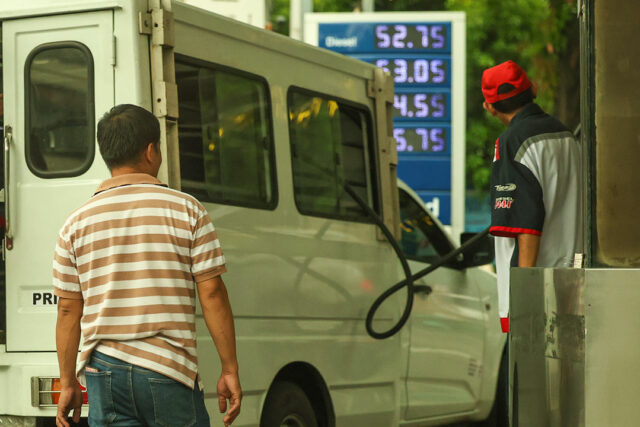
A gas station attendant fills up the tank of a vehicle in Manila, June 23, 2025. — PHILIPPINE STAR/NOEL B. PABALATE

By Sheldeen Joy Talavera, Reporter

GLOBAL OIL PRICES may continue to decline if the Middle East conflict de-escalates, an industry player said.

“Following announcement by US President Trump that Israel and Iran have agreed to a ceasefire, prices fell sharply in early Asian trading,” Jetti Petroleum, Inc. President Leo P. Bellas said in a Viber message on Tuesday.

“Should this trend continue, we could see prices making an abrupt U-turn to easing down,” he added.

Based on the one-day trading of the Mean of Platts Singapore (MOPS), a benchmark used for refined oil products, diesel price is projected to go up by P0.75 to P0.95 per liter; and gasoline by P1.45 to P1.65 per liter, Mr. Bellas said.

Mr. Bellas said a decrease in MOPS “will help bring down this week’s average and could equate to a lower increase for next week, or potentially to a rollback in pump prices if the low MOPS prices are maintained throughout this week.”

During a Palace briefing, Department of Energy Officer-in-Charge Sharon S. Garin said the government is in talks with oil firms to potentially hold off the second installment of the price hikes this week, given the recent drop in global crude prices after a ceasefire between Iran and Israel was announced.

On Tuesday, several local oil companies implemented a hike in gasoline prices by P1.75 per liter, diesel by P2.60 per liter, and kerosene by P2.40 per liter.

Oil firms will implement a second round of price hikes either Thursday or Friday.

Reuters quoted US President Donald J. Trump as saying that a ceasefire was accepted by Iran and Israel and was in effect, after Iran’s strikes on US bases in Qatar on Monday ramped up fears of an escalation in the conflict.

However, some caution remained after Israel ordered new strikes on Tehran in response to alleged attacks, violating the ceasefire, which were denied by Iran.

Noel M. Baga, co-convenor of think tank Center for Energy Research and Policy, said that the Philippines must prioritize energy security by establishing a strategic petroleum reserve and diversifying oil imports beyond the Middle East.

“The Middle East conflict shows that real solutions come from reducing import dependence, not managing prices. The Philippines must build a resilient energy system that protects against future geopolitical shocks,” he said in a Viber message.

However, Mr. Bellas said that “the best source” of crude oil for the country’s sole refinery is still in the Middle East.

“Importation from other sources can be an option if Middle East crude becomes inaccessible. But the cost to bring the crude oil from those other sources will definitely be higher vis-a-vis Middle East. The quality of crude oil varies depending on the source and can also be a factor if such can be used as feedstock by the refinery in the Philippines,” he said.

For refined fuel products, the country mostly sources from refineries within the Asian region, he said.

Analysts said that accelerating the country’s transition to renewable energy and expanding public transportation would be a better long-term solution.

“In the longer term, the government must hasten the country’s transition to indigenous renewable energy and prioritize the development of mass transportation. Without this, Filipinos will remain forever vulnerable to global political tensions and market disruptions,” said Gerry C. Arances, executive director for Center for Energy, Ecology, and Development.

Mr. Arances said that the government should revisit the Downstream Oil Industry Deregulation Act of 1998.

“As an immediate action, the government needs to exercise its power to cushion consumers from impacts of soaring fuel prices. We need to revisit the Oil Deregulation Law, which removed government controls on petroleum products,” he said.

However, Mr. Baga said that rather than revising the law, the government should focus on structural reforms such as boosting domestic biofuel production, improving fuel efficiency standards, and investing in local energy sources.

“Emergency price controls may provide temporary relief but often create supply shortages,” he said. — with inputs from Chloe Mari A. Hufana and Reuters

Gov’t sees little impact from Middle East conflict

MINIATURES of oil barrels and a rising stock graph are seen in this illustration. After surging on Monday, oil prices fell after US President Donald J. Trump announced a ceasefire between Iran and Israel. — REUTERS/DADO RUVIC/ILLUSTRATION

THE ONGOING Middle East conflict has had a “minimal” impact on the Philippine economy, the government said on Tuesday.

On the other hand, analysts said that another surge in global oil prices may trigger a renewed spike in inflation in the Philippines.

“The impact is so minimal on our economy that it doesn’t seem alarming as of now, as long as [global oil prices] don’t increase or the conflict worsens,” Department of Energy Officer-in-Charge Sharon S. Garin said, quoting the assessment of Department of Economy, Planning, and Development Secretary Arsenio M. Balisacan.

President Ferdinand R. Marcos, Jr. on Tuesday held a meeting with economic managers to discuss the ongoing Middle East conflict.

“The President’s order is still that we make sure that we protect the Filipino people from the impact of the oil price hike, meaning, most especially those who use public utility vehicles, our farmers, and our fishermen,” Ms. Garin added.

The Philippines, a net importer of oil, is highly sensitive to sharp fluctuations in global oil prices.

“Oil prices are a significant contributor to inflation in the Philippines. Our analysis suggests that a 10% oil price shock contributes 0.3-0.4 percentage point (ppt) to headline consumer price index, all else equal,” Krisjanis Krustins, Asia-Pacific Sovereign Ratings director at Fitch Ratings told BusinessWorld.

However, the “final impact” of the war will rest on the duration and size of the oil price shock, Mr. Krustins said.

After surging on Monday, oil prices fell after US President Donald J. Trump announced a ceasefire between the Iran and Israel. Reuters reported that oil prices duly slumped almost 3% on Tuesday, on top of an almost 9% tumble overnight as the immediate threat to the vital Strait of Hormuz shipping lane appeared to have lessened.

US crude futures are back at $66.80 per barrel, about the lowest since June 11 before Israel’s attacks on Iran began.

“Likely to speed up inflation, as we import oil primarily. Oil, being a production input that links to many other industries, can trigger price increases down the line,” Ateneo Center for Economic Research and Development Director Ser Percival K. Peña-Reyes told BusinessWorld.

Inflation cooled to an over five-year low of 1.3% in May, as utility costs rose at a slower pace. This brought the five-month average to 1.9%, slightly below the BSP’s 2-4% target band.

S&P Global Market Intelligence Principal Economist Harumi Taguchi said inflation could settle to 2.3% in the second half and less than 2% for the full year.

“The situation is still uncertain, but assuming the oil prices stay around the current $75 per barrel and the peso remains at the current level through this end of the year,” Ms. Taguchi said in an interview on Money Talks with Cathy Yang on One News on Tuesday.

If oil prices surge to over $100 per barrel, inflation will likely accelerate to over 4% in the first half of 2026, she said.

The Bangko Sentral ng Pilipinas (BSP) last week slashed its inflation forecast to 1.6% for this year from 2.4% but noted that higher oil prices could add to inflationary pressures.

BSP Governor Eli M. Remolona, Jr. earlier warned that rising global oil prices and the weakening peso could bring inflation to 5%, breaching the 2-4% target range.

Rizal Commercial Banking Corp. Chief Economist Michael L. Ricafort projected a 0.5-0.7-ppt increase in inflation if crude oil prices remain elevated.

“The resulting higher local fuel pump prices would lead to higher prices of other goods and services, passing the effects of higher world crude oil prices and weaker peso recently, thereby could lead to some pickup in overall inflation,” he said in a Viber message.

Local fuel retailers implemented the first tranche of the oil price hike on Tuesday, while some firms are implementing the second tranche either on Thursday or Friday.

The total price increase for the week is P3.50 per liter for gasoline, P5.20 per liter for diesel, and P4.80 per liter for kerosene.

ANZ Research said the Philippine inflation will likely see a 0.1% uptick in the near term, citing oil’s relatively low weight in the Philippine CPI basket at 2.4%.

“While the Philippines and mainland China have seen a larger rise in pump prices, vehicle fuels make up a smaller share of their inflation basket,” it said in a note.

Mr. Ricafort also warned that the biggest risk for global crude oil supply is the disruption in the Strait of Hormuz, where 20% of the world’s supply passes through.

GlobalSource Partners Country Analyst Diwa C. Guinigundo said a sharp increase in petroleum prices could trigger higher prices for food and nonfood commodities.

“If JPMorgan’s oil price forecast of between $120 and $130 per barrel materializes over a prolonged period, it’s likely that we see a breach of the 2-4% inflation target,” Mr. Guinigundo told BusinessWorld.

The former BSP deputy governor also said second-round effects may be felt such as higher wages and transport fares.

Pantheon Macroeconomics Chief Emerging Asia Economist Miguel Chanco said the crude oil price trend is “not yet explicitly inflationary,” noting Brent crude remains 9% lower year on year.

“Reassuringly as well, oil futures still point to prices starting to calm down from September onwards,” he said.

He also said the risks to inflation globally, and not just the Philippines are now skewed to the upside.

“The good news from the Philippines’ standpoint is that it can arguably tolerate a rise in oil prices and, by extension, transport prices (etc.), given how low headline inflation has sank this year,” he said.

The Philippine Statistics Authority is set to release June inflation data on July 4, but analysts said the impact of the latest oil price spike will likely to be felt in the next two months.

‘WORSE’ THAN RUSSIA-UKRAINE WAR
Mr. Peña-Reyes warned that the inflationary impact could be similar or “possibly worse” compared to the Russia-Ukraine war, which started in 2022.

During the onset of the war in late February, Philippine inflation spiked to 4% in March followed to 4.9% in April. It further stretched to 8% levels in November and December.

“It’s possible to see a similar situation that we saw during the Russia-Ukraine if this war is escalated with both the participation of Europe aside from the US as well as those more sympathetic to Iran like China and Russia,” Mr. Guinigundo said.

He also anticipated some retaliation that may set off a “train of global uncertainties and volatilities.”

“The 35% increase in global prices in 2022 took place over five months and was from a higher base of around $80/barrel,” IBON Foundation Executive Director Jose Enrique “Sonny” A. Africa said.

“Even though we’re starting from a lower base now, the current situation is, however, many times more alarming because the turmoil from the US-Israel-driven conflict is escalating in the major oil-producing region of the Middle East.”

Mr. Africa also recalled that oil prices doubled during past regional conflicts, such as the Iran-Iraq War, the Gulf War, and the US invasion of Iraq.

“If the week-long surge extends into months because of continued US-Israeli aggression, it is not unlikely to see another doubling of oil prices to $130 or more with huge effects on domestic inflation and further second-round effects from greater global economic turmoil,” Mr. Africa said.

He criticized short-term government measures like fuel subsidies as insufficient, urging structural reforms to reduce dependence on imported oil and food. — Aubrey Rose A. Inosante with Chloe Mari A. Hufana


New ecozones seen boosting property demand

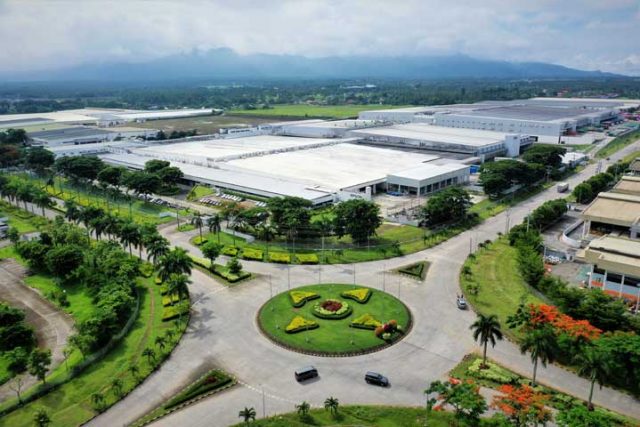
LIMA Estate in Lipa, Malvar, Batangas - ABOITIZLAND.COM

By Beatriz Marie D. Cruz, Reporter

THE RECENTLY approved economic zones (ecozones) in Batangas, Bohol, and Bacolod are expected to spur demand for office, residential, and retail developments in surrounding areas, driving land appreciation and income growth, according to property consultants.

“The announcement of new IT (information technology) parks or the expansion of existing ones introduces new job markets to the area and encourages the emergence of complementary developments,” Jamie Dela Cruz, research manager at real estate agency KMC Savills, Inc., said in an e-mail.

The increasing employment opportunities in these ecozones will raise demand for new residential, commercial, and retail developments, she said.

“People will gravitate to where the jobs are located, as long as the support services are available for business and residential locators,” Roy Amando L. Golez, Jr., director for research and consultancy at Leechiu Property Consultants, said in an e-mail.

“With the increased population, land around the ecozones will naturally start to develop, especially as income grows,” Mr. Golez added.

President Ferdinand R. Marcos, Jr. approved four new ecozones in the first half of the year, with projected investments totaling P3.2 billion, the Philippine Economic Zone Authority (PEZA) said last week.

Two of these ecozones are expansions of a manufacturing zone in Batangas, while the other two are new IT parks in Tagbilaran City and Bacolod City in the Visayas.

Ecozone developments are also likely to attract foreign investors and new locators due to improved procedures and incentives in the area, Ms. Dela Cruz said.

“They facilitate easier business operations by offering incentives and streamlining processes, helping attract BPOs (business process outsourcing) firms and foreign investments. This is evident in the leasing commitments seen in IT parks, even as their PEZA registrations are still underway,” she noted.

“The sustained demand from the IT-BPM sector in key provincial cities such as Bacolod and Bohol indicates that office rental rates are likely to remain stable, with the potential for moderate increases.”

The government also stands to benefit from the new ecozones through higher tax collections amid improved land values, Mr. Golez said.

To accommodate the increased need for land and space, local government units must improve their land use zoning near these ecozones, Mr. Golez noted.

“That means there is a need to create communities for commercial, logistics, residential, retail, and some institutional facilities to ensure long-term organized growth,” he said. “Ultimately, this will push up land values and rental rates in the area.”

A total of 32 ecozones have been proclaimed under the Marcos administration, generating around P13.41 billion in investments.

Grab tests drone-powered logistics in Metro Manila

STOCK PHOTO | Image by User6702303 from Freepik

GRAB PHILIPPINES has launched a pilot test of drone-powered delivery services in Metro Manila to evaluate how the technology can enhance logistics operations and reach underserved areas.

“We are constantly exploring new technologies that could help us serve our communities better, such as drone-powered deliveries,”  Grab Philippines Managing Director Ronald Roda said in a media release on Tuesday.

“This pilot is an opportunity for us to learn and understand how drone deliveries might work in the Philippine context, from dense urban neighborhoods to underserved areas,” he added.

Grab Philippines partnered with property developer Megaworld Corp., the Department of Transportation, and the Department of Information and Communications Technology (DICT) to pilot drone-powered delivery services in the National Capital Region.

The parties signed a memorandum of understanding to pursue a collaborative effort to explore drone technology for delivery use.

The partnership will examine possible use cases and promote public awareness of drone-enabled services.

The program also aims to determine whether unmanned aerial vehicles can help improve urban logistics in highly dense areas, Grab Philippines said.

The pilot will test a hybrid delivery model, where Grab delivery partners handle pick-ups and drop-offs from designated drone landing stations, while drones manage the middle leg of trips for faster and more seamless service, it said.

Initial tests will be conducted between two Megaworld properties in Metro Manila to evaluate the operational, technical, and regulatory aspects of drone deployment. Access will initially be limited to select consumers and merchant partners, Grab said.

“If we want to solve traffic and improve connectivity in a meaningful way, we have to think beyond roads. Drone logistics is one of the tools that can help us move faster, smarter, and more sustainably,” Transportation Secretary Vivencio B. Dizon said.

Grab said that if the initiative proves feasible, it plans to expand drone delivery services to more locations nationwide.

“We see this as an opportunity to guide the responsible use of drone technology. Our role is to ensure that it benefits people while also supporting the nation’s digital transformation agenda,” DICT Undersecretary for Special Concerns Christina Faye Condez-de Sagon said. — Ashley Erika O. Jose