





Making Philippine tourism compete at higher levels
By Andrew J. Masigan
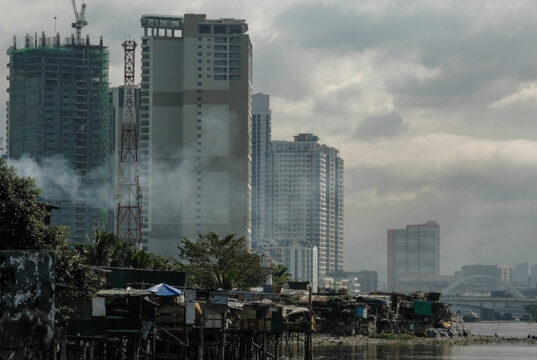
Last week, the Department of Tourism (DoT) announced that foreign arrivals breached the 4.1 million mark in the first semester of the year, an 11.43% increase from last year. It expressed confidence that it would meet its whole year target of 8.2 million visitors.
Mandating public ownership
By Amelia H.C. Ylagan
Last week Commissioner Ephyro Luis B. Amatong announced that the Securities and Exchange Commission (SEC) is now looking at mandating a 20-25% Minimum Public Offering (MPO) range for listed companies, against the November 2017 order for these public companies to hit 15% MPO within three years, then another two years for the final 20% MPO.
The politics of hate
By Luis V. Teodoro
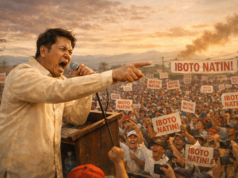
Every tyranny has used fear and hate to take power and to keep it. Coercion and the use of force have never been enough. A gun can only kill, but fear can make entire nations tremble, and hate lead them into committing the worst of crimes.
A legal education at cross purposes
By Jemy Gatdula
Just guessing: there are probably between 16,000 to 20,000 students that annually want to enter law school. That’s before the PhilSat (Philippine Law School Admission Test). The PhilSat in 2018 cut that down to roughly 10,000 to 12,000.
A matter of perception
By Maria Victoria Rufino
One’s perspective and attitude determines the way things appear. A glass of water is either half-full or half-empty. The donut is a pastry with a hole. The pessimist looks at the hole instead of the whole sweet treat. On another level, a persistent problem could be a situation -- according to the optimist. It can be solved. It’s matter of perception.
Checking lifestyle for unexplained wealth
IN ECONOMICS, one can look at any issue from either the demand or supply side. In case of unexplained wealth, for example, one way to check its existence is to see how it is spent. Lifestyle checks are premised on a simple assumption. A person, especially in public service, is expected to live within his known legitimate income which includes his monthly salary, net of taxes and the practice of some other profession, like boxing, property development, and TV hosting.
Rule of law and property rights, Hong Kong vs China
By Bienvenido S. Oplas, Jr.
“... the rules must apply to those who lay them down and those who apply -- that is, to the government as well as the governed -- and that nobody has the power to grant exceptions.” -- Friedrich Hayek, Chapter 10, The Constitution of Liberty (1960)
Government relocation to Central Luzon
By Marvin Tort
Should we relocate the National Government and its agencies outside of Metro Manila to decongest the metropolis? Should we take note of the claim of the state-run Bases Conversion and Development Authority (BCDA) that its New Clark City in Tarlac -- about 100 kilometers outside of Metro Manila -- is ready to become the new government center by 2030?
Towards inclusion
By Patrick Adriel H. Aure
How do we understand and develop inclusive organizations?
The role of special economic zones in nationwide progress
By Ariel F. Nepomuceno
If we are to become an economic tiger finally, we have to optimize the strategic contribution of the special economic zones to our nationwide progress. Metro Manila must not be the sole beneficiary of the economic improvements that we are now witnessing. In fact, it is imperative that the provinces and other cities outside the National Capital Region must compete in terms of investments and growth. President Rodrigo Duterte, on June 17, actually ordered a moratorium on eco-zone applications in Metro Manila.
Smart regulations to save agriculture
By Ren de los Santos
Agriculture has long been the backbone of civilizations, nations, and communes. Empires are built on the foundations of food security and access to livestock, poultry, and grains. Modern society would interpret this as the common foundation of developing nations whose industries rose from the shadows of farmers cultivating crops and livestock by developing the necessary value chains that fuel communities. From the Indus Valley to the Mekong Delta, the world would not have progressed the way it did if it weren’t for agriculture.
Understanding the Filipino voter
By Teresa S. Abesamis
It has become fashionable to wring our hands and acknowledge that the atrocious kind of leaders we have today is the fault of the Filipino voter. Assuming that the elections have been honest (though this is also under question), here is an attempt at understanding why we seem to elect so many undesirables.