Defense and security: Mutually reinforcing pillars of resilience
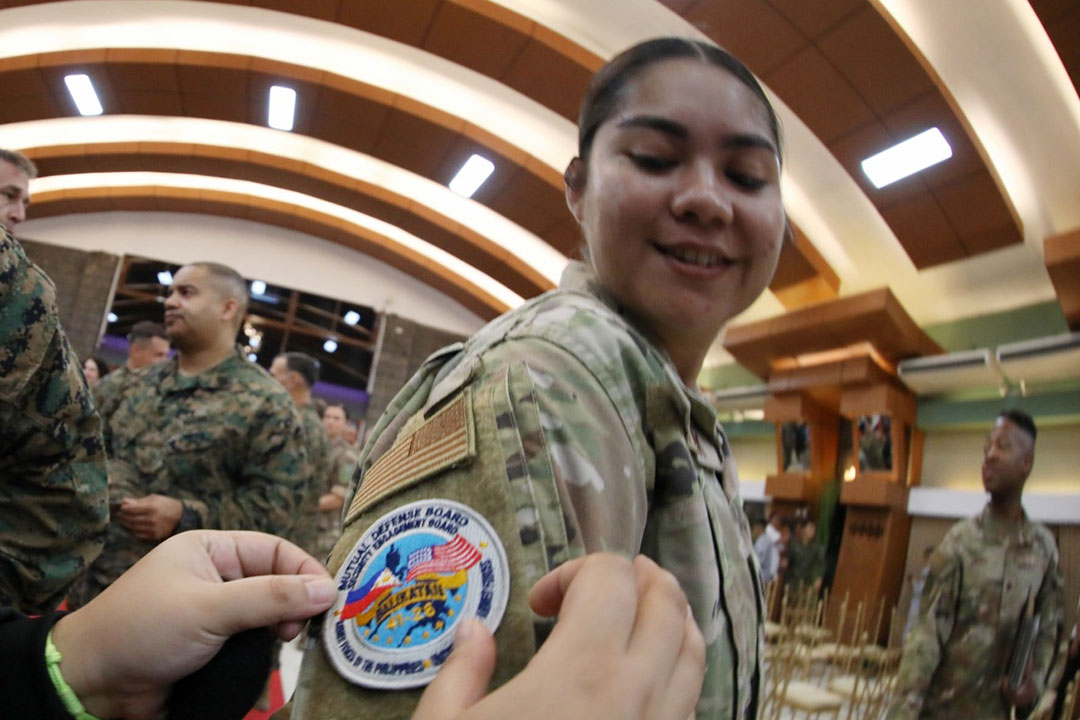
Over the years, the Balikatan Exercises — which this year began on April 20 — has taken on an evolving meaning. Initially involving only troops from the Philippines and the United States, the current Balikatan, now in its 41st iteration, is participated in by 17,000 personnel from various partner nations, including Australia, Canada, France, Japan, and New Zealand.
Additionally, 13 nations are participating under the International Observers Program.
The scale alone reflects the growing importance of the Philippines within the Indo-Pacific security landscape, as well as the increasing willingness of partners to invest in long-term defense engagement. What was once a purely bilateral activity between the Philippines and the US now involves other countries that believe in and commit to the same values that we do.
But this is not just about the higher number of participating nations, or that of troops involved.
The strategic significance of the Balikatan has also expanded in light of the dynamic global security scenario.
Each participating nation, for instance, brought advanced military assets, specialized capabilities, and operational expertise. These, in turn, show stronger operability and enhanced collective deterrence. They showed how defense partnerships are becoming more integrated, enabling allied and like-minded states to coordinate more effectively in responding to shared security challenges.
Balikatan 2026 also highlighted the growing importance of multi-domain operations in modern defense cooperation. The exercise extended beyond conventional land-based training to include coordinated activities across maritime, air, cyber, and information domains.
This reflects how contemporary security environments increasingly demand the ability to operate seamlessly across multiple theaters, where technological coordination, intelligence-sharing, and joint command structures are essential.
The effective integration of these domains shows how Balikatan demonstrates not only military readiness but also the evolution of partnerships toward more comprehensive and adaptive forms of security cooperation. Indeed, modern deterrence is no longer measured solely by troop numbers or military hardware; it also depends on how effectively partners can coordinate across multiple domains in real time.
PAX SILICA
A few days earlier, on April 17, the Philippines joined Pax Silica as its 13th member. It joined fellow signatories Australia, Finland, India, Israel, Japan, Qatar, the Republic of Korea, Singapore, Sweden, the United Arab Emirates, the United Kingdom, and the United States. Additional signatories are expected to follow.
Under Pax Silica, a historic 4,000-acre Economic Security Zone will be built in the Luzon Economic Corridor, its first AI-native industrial acceleration hub.
“This purpose-built platform will secure inputs vital to American supply chains and transform how allies manufacture together,” said US Undersecretary of State for Economic Affairs Jacob S. Helberg.
The initiative seeks to “build a secure, resilient, innovation-driven technology ecosystem” and to “reduce coercive dependencies,” said the US State Department.
We see more clearly now that our traditional defense partners are also our staunch economic partners, helping the Philippines move up the value chain while contributing to more secure and diversified regional supply chains.
For the Philippines, this development is a natural consequence of its key capabilities and human talent in technology, manufacturing, particularly in semiconductors and electronics. These advantages are also supported by its geostrategic location, abundant natural resources, and large, young workforce.
Pax Silica demonstrates how alliance cooperation is evolving beyond traditional military engagements to include trade, investment, and supply chain resilience. Indeed, economic security is inseparable from national security.
EVOLVING PARTNERSHIPS
Taken together, both the Balikatan and the Pax Silica Initiative reflect an important shift in how partnerships are evolving. Defense cooperation is now being complemented by deeper economic cooperation — not as separate tracks, but as mutually reinforcing pillars of resilience.
Countries work together to strengthen deterrence, interoperability, and regional security. They are also building shared economic foundations through trade, investment, technology, and supply chain partnerships.
For the Philippines, this approach offers a pathway toward more enduring partnerships with like-minded states. As the Philippines nears the 10th anniversary of the 2016 Arbitral Award, the lesson is clear: legal victories must be reinforced by military readiness, resilient supply chains, and reliable partnerships. The challenges that our country faces have to do with defending our sovereignty and territorial integrity — clearly the province of our military’s friends. They help provide the technology, the know-how, and the advanced skills necessary to boost our own military capabilities.
At the same time, we are also beset by economic difficulties. Domestically, we are at the mercy of weather disturbances that threaten to wipe out our agricultural produce in one fell swoop. Our governance practices that are meant to encourage investments are, at best, uneven across geographic locations and administrations.
And, as we know too well, we are vulnerable to disruptions in global trade and supply chains. We saw this during the early months of the COVID-19 pandemic, when the world economy practically ground to a halt. Today, the Middle East conflict is affecting us in numerous ways, starting from the displacement of our overseas Filipino workers and the sharp rise in the price of goods, leading to subsequent increases in the prices of everything else.
By integrating defense cooperation with economic engagement, the country is not only enhancing its security posture but building a resilient supply chain and boosting technological competitiveness. With this shift in mindset and the continuous expansion of our cooperation, the Philippines is positioning itself within a broader network of trusted partners capable of navigating an increasingly complex geopolitical and geoeconomic landscape.
Victor Andres “Dindo” C. Manhit is the president of the Stratbase ADR Institute.