Anti-Filipino propagandists, to rally support for China’s illegal territorial claims, make much of the latter as the Philippine’s biggest trading partner. Unfortunately, they pass over the fact that most of that trade goes one way. Suffice to say, the Philippines suffers from a huge trade deficit with China and while such is blithely dismissed in theoretical, classroom reality fashion — supposedly giving benefits in terms of efficiency, openness and consumer welfare — the imbalance actually presents a profound national security concern.
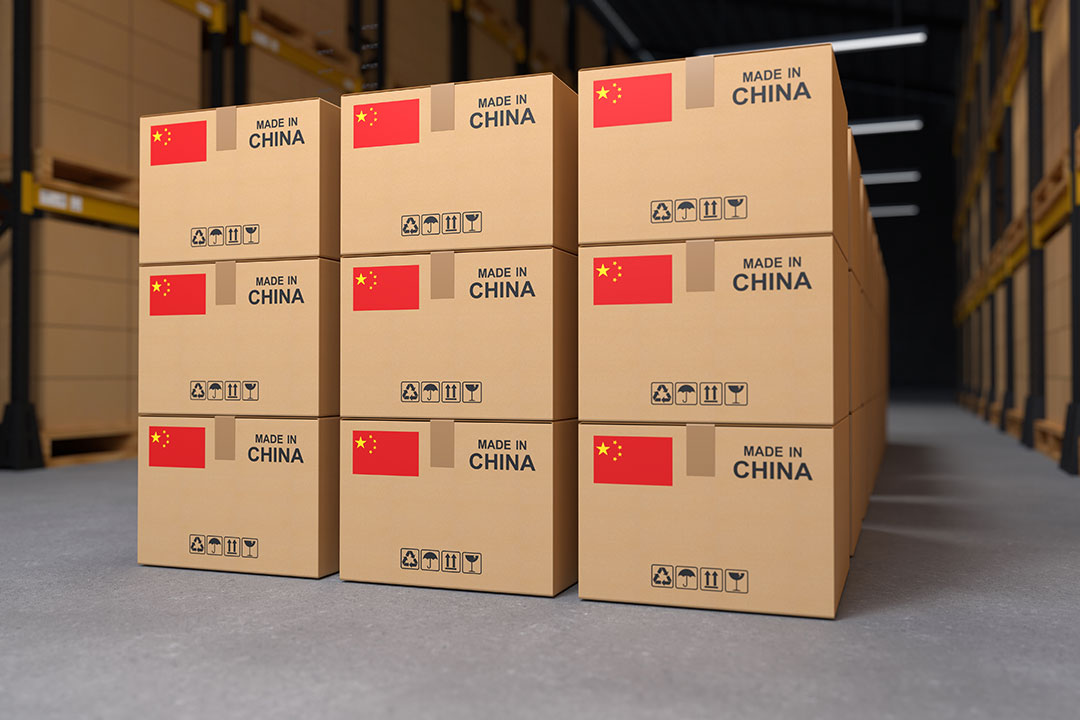
As of 2025, the Philippines posted a total trade deficit of approximately $49.7 billion. China accounts for the largest share of that imbalance ($28.9 billion), with imports from China exceeding $38 billion. That’s roughly 25% to 30% of total Philippine imports. Or to put it another way: one out of every $3 or $4 the Philippines spends on imports goes to the country hostilely trying to grab our territories.
Unfortunately, this trade imbalance is not only a one-time snapshot. Monthly figures reveal a disconcerting structural dependence: China consistently dominates as the Philippines’ top import source, often approaching or exceeding 28% share in any given period. “Trade deficits can create substantial problems in the long run. The worst and most obvious problem is that trade deficits can facilitate a sort of economic colonization. If a country continually runs trade deficits, citizens of other countries acquire funds to buy up capital in that nation,” according to Investopedia.
To be clear, trade deficits are not inherently bad. Unfortunately, for the Philippines, its widening trade deficit with China is partly financed by debt. As of late 2025, the Philippines’ outstanding external debt stood at $147.65 billion. Admittedly, 14.3% of this is short-term debt, which is generally used to finance trade and imports. Nevertheless, the point remains that the Philippines is vulnerable to “economic colonization,” where Chinese entities are enabled to buy critical assets, natural resources and infrastructure.
That circumstance is aggravated by Philippine dependence on products it precisely needs to survive a war: electronic products, machinery and transport equipment, textiles, telecommunication-related inputs, industrial raw materials and mineral fuels. Electronics alone accounts for roughly a quarter of total imports. Machinery and transport equipment follow closely. Together, they form the backbone of infrastructure, communications, manufacturing and other defense-related logistics.
Hence why the trade deficit with China is the terrifically troubling weak link in our national defense strategy. Its size, concentrated in high-value sectors, reflects an economy that generates demand without the means to supply but also very much willing to go its own way regardless of the national security needs of the country.
While indeed, national security is economic security, it’s also the other way around: an economy composed of few manufacturing firms, limited industrial upgrading and individual income constrained by the absence of high-productivity sectors bleed into our strategic geopolitical needs. As mentioned, our ridiculous dependence on China for critical goods (i.e., electronics, machinery and industrial inputs) is an obvious vulnerability. Because ultimately, national defense is defined by military capability and supply chain resilience. General Dwight Eisenhower puts it this way: “Amateurs talk tactics, professionals talk logistics.”
If the Philippines cannot secure access to essential components for a considerable period, safeguard infrastructure or guarantee communication integrity, it cannot sustain its economy when subjected to stress. And war, to put it mildly, is a monstrous stressor.
Tragically, our economic dependence narrows our security options. The ability to assert national interest becomes conditioned by the need to maintain economic flow. Interestingly, one sees that in the political surveys and in the national conversation: no matter how much our struggle with China is framed in existential terms, our people rightly still see the priority as economic.
For decades, Philippine economic policy emphasized openness without corresponding emphasis on capability. The assumption has been that integration into global markets will, over time, generate domestic strength. But data suggests otherwise. Integration without industrial strategy produces dependence, not resilience.
To address it requires more than marginal adjustment. It requires a shift in orientation: from passive participation in global trade to active development of domestic capability. This includes targeted industrial policy, diversification of supply sources and investment in sectors that underpin both economic growth and national security. A move to decouple away from China is a good forward step.
While obviously imposing economic costs, even likely at shock levels, nevertheless, there are benefits: national security (reducing reliance on China for critical goods, such as semiconductors, pharmaceuticals, rare earths mitigates risks from geopolitical tensions, such as potential conflicts over Taiwan); supply chain diversification (a more diversified, less concentrated supply chain); and local innovation (increased domestic patenting and technological independence, though with significant short-term productivity costs).
Because the question is not whether the Philippines benefits from trade. It does. The question is whether the current structure of that trade enhances or constrains the country’s ability to act in its own interest.
Jemy Gatdula is the dean of the UA&P Law School and is a Philippine Judicial Academy lecturer for constitutional philosophy and jurisprudence. The views expressed here are his own and not necessarily of the institutions to which he belongs.
https://www.facebook.com/jigatdula/
Twitter @jemygatdula