
The entrepreneurial playbook as a guide for times of crisis
How do we survive the oil crisis? How can businesses continue to thrive when confronted with the unprecedented challenges we face today? These questions have been weighing on my mind lately, as they have likewise been with many Filipino entrepreneurs.
For business owners, it can be easy to lose hope, scale down on projections, or even call it quits as the peso plummets and inflation soars. And yet, as I regularly speak to entrepreneurs in the RJ Ledesma Podcast, I remain bullish about our prospects for the future. The reason is the entrepreneurial skillset — sometimes called the entrepreneurial playbook.
With this skillset, successful entrepreneurs are uniquely equipped to build something from nothing, rally people to a common purpose, and together, achieve the impossible. And I believe it is this entrepreneurial skillset that can help guide us through the rough seas of economic upheaval to emerge stronger with blue skies ahead.
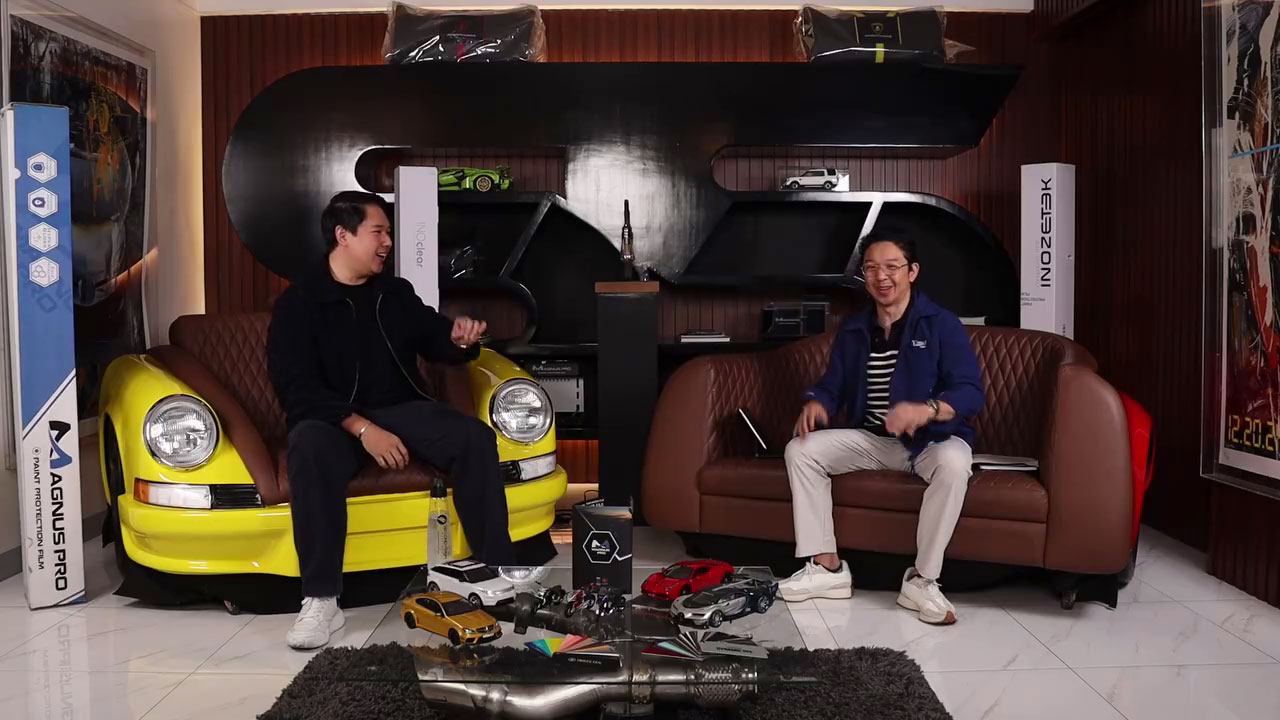
Recently, I spoke to Archie Chiang, founder and CEO of Second Skin Industries, who reminded me that every successful entrepreneur is armed with this exceptional skillset. I chose Archie Chiang as the subject of this week’s column not because he is resilient or crisis-proof, but because he is an entrepreneurial every-man. He started business with a small cellphone and laptop vinyl wrapping service and grew it to become a wildly successful car wrapping service with two premium showrooms in Alabang and Katipunan, a supercar clientele, and more than a hundred employees. But in many ways, he could be you or me.
I’ve summarized our conversation from the podcast here with three important points that can help entrepreneurs through today’s crisis:
1. Stay agile. Almost every entrepreneurial story begins with a great opportunity. Successful founders are able to spot this opportunity and just run with it. Sometimes, they start small and gradually expand the business until they reach scale. Other times, they may start with another business completely and pivot their business model towards the opportunity they discovered. It’s called entrepreneurial agility.
For Mr. Chiang, Second Skin Industries began when he was still in college. A hobby, which began when he wanted to change the color of his MacBook laptop, turned into a small business.
“I came across this material,” he recounts. “It’s called vinyl, which you can use to wrap the laptop. So being a DIY guy, I borrowed my mom’s hair dryer. I borrowed the laptop. And then, [an] X-Acto knife. And then the laptop became black.”
Later this would lead him to automotive wrapping until, after working with a partner for nine years, Mr. Chiang decided to put up his own shop in a 25-square-meter space in a carwash along White Plains.
He said, “Initially, I started with just three people. So, it was two staff and me. And then, of course, through the demand, it had to grow, grow, grow. And now we’re over 100 employees already. So, it’s no joke. My operational expense is in the millions already.”
His plans don’t stop there. He sees the business expanding significantly, saying “Now my vision is: let’s grow that 100 to 1,000. And maybe more eventually after that.”
Today, prices may balloon beyond our control, but at the same time, new opportunities will be revealed. Clearly, electric vehicles are one area that is ready to boom, as is solar energy. And we need entrepreneurs like Archie Chiang to find these opportunities and have the courage and passion to doggedly pursue them.
2. Stay positive. We’ve been through crises before. Almost every entrepreneur has a pandemic story. Depending on when you founded your business, by now, you’ve probably survived the COVID-19 pandemic, the subprime mortgage financial crisis, the Asian financial crisis, or all of the above.
Mr. Chiang decided to grow Second Skin at the worst possible time: during the pandemic.
“In my 25-square-meter space,” he tells us, “I can only fit two cars, right? But at that time, in the area, I already had 10 [cars to service]. So, that’s when I saw that it’s time to grow.”
Placing a hefty deposit on a space that was over 40 times larger, he prepared to move the business. And then the lockdown happened. Travel was restricted, retail plummeted, and no one could predict what the future of Second Skin would be.
As luck would have it, the pandemic turned out to be an advantage for Second Skin as they served a premium market.
“Everyone started buying cars,” he remembers. “Everyone started taking care of their houses and their cars, right? So, my 1,000-square-meter warehouse, at that time, only had four or five cars. We filled it up. There were already 30 cars coming in every time.”
He had the good fortune of serving a market that was happy to spend money during the crisis. But the lesson for entrepreneurs is that sometimes we just have to continue moving forward when the future is uncertain.
He took a big risk by expanding during the pandemic, and it paid off. But it’s hard to overstate how he had to keep going out of necessity. For him, as it is with many entrepreneurs, failure is not an option. We need to survive crises for our shareholders, our business partners, our employees, and our families.
He explains, “I have to start professionalizing the business. Because if I don’t grow this well, I’ll feel sorry for the people I feed. Because 100 families is no joke.”
3. Never lose focus on your customer. The oil crisis has many deep-reaching effects on prices of goods, consumer behavior, and more. Some businesses will be affected more than others, but, regardless, focusing on your customers’ needs and solving their problems is always the answer.
Mr. Chiang shares advice from his first mentor, the owner of the wrap shop he worked with before striking out on his own. He says, “The way he did business is, he always tries to make the client happy. My greatest lesson from him was that. Because I used to think, why do we always have to please the client even though it’s already outside of our boundary? Outside of our scope. Why are you going that extra step? And then he said, that’s how you get them to keep coming back.”
Archie Chiang gives this advice to other entrepreneurs who may just be starting out.
“Always take care of your client,” he tells them. “Even if you’re losing money because of this certain client, take care of him because it will come back 10 times, all the time… If you make that client happy, it’s going to turn into two. That two will turn into two, four, six, eight. And that’s how it will spread naturally.”
RJ Ledesma (www.rjledesma.com) is a Hall of Fame Awardee for Best Male Host at the Aliw Awards, a multi-awarded serial entrepreneur, motivational speaker, and business mentor, podcaster, an Honorary Consul, and editor-in-chief of The Business Manual. Mr. Ledesma can be found on LinkedIn, Facebook and Instagram. The RJ Ledesma Podcast is available on Facebook, Spotify, Google and Apple Podcasts. Are there entrepreneurs you want Mr. Ledesma to interview? Let him know at ledesma.rj@gmail.com.