
For a government that’s cash-strapped, I cannot understand why Congress is abolishing the travel tax as well as reducing the tax on nicotine juice for vaping products. Both actions will erode revenue collections. Worse, in the case of nicotine juice, a lower tax can make vaping more accessible to the youth.
This is a tax gamble. In the case of nicotine juice, a lower tax is an attempt to beat smuggling and boost tax compliance. As for the travel tax, removing it aims to encourage travel and tourism. In both cases, Congress is attempting to provide a fiscal incentive to grow consumption.
The siren song of “tax rationalization” is always enchanting. But sirens, in ancient folklore, were not exactly charming, beautiful creatures but terrifying monsters. This dual attempt by Congress to win points with the public may prove just as terrifying in its unintended consequences.
Vaping products make use of “vape juice” derived from either freebase nicotine in liquid form, or nicotine salts in powder form, mixed with acid. Vape juice from nicotine salts is taxed about P60 per mL, while freebase nicotine is taxed around P7 per mL. This discrepancy is pushing importers to “smuggle” the more expensive nicotine salts as cheaper freebase nicotine.
To curb illicit trade and encourage tax compliance, Congress is proposing a unitary rate of P10 per mL for both freebase nicotine and nicotine salts.
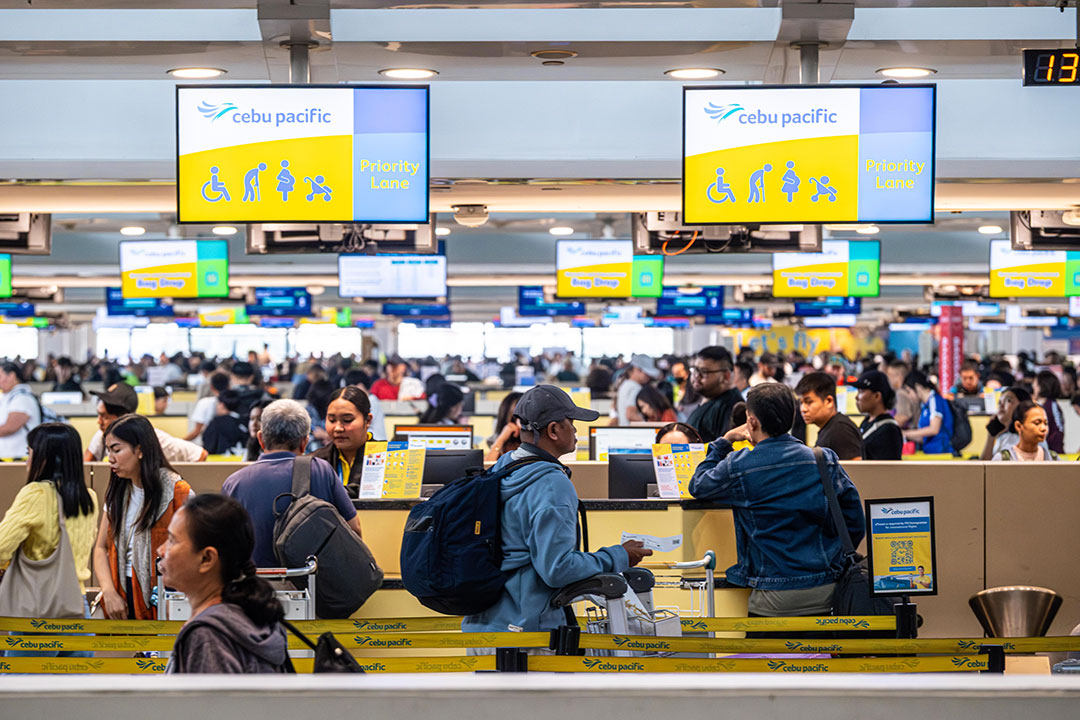
At the same time, it wants to abolish the travel tax, currently P1,620 for economy tickets and P2,700 for first and business class.
We should be honest about what we are risking. Travel tax collections reached about P8 billion in 2024 and almost P9 billion in 2025. Of the total, 50% goes to Tourism Infrastructure and Enterprise Zone Authority for tourism facilities and infrastructure, 40% to the Commission on Higher Education for education programs, and 10% to the National Commission for Culture and the Arts for culture and heritage work.
On the vape side, Finance data presented to the House show excise collections from freebase vape juices rising to almost P900 million in 2024 and to almost P2 billion in 2025. Excise taxes on nicotine products were designed not only to deter use but also to help fund health programs that will eventually carry the burden of addiction.
If Congress weakens or removes these revenue streams without a credible replacement, scholarships, tourism projects, and health financing stop being self-funded and become annual budget fights, where delay, dilution, or quiet non-funding becomes the default outcome.
Proponents of the tax cuts cite them as necessary to administrative efficiency, and, as a way to kill smuggling and stimulate the economy in one fell swoop. But this is a dangerous fiscal gamble. By favoring “administrative ease” over “social deterrence,” the government is effectively abdicating its police power to protect the public.
I am quite open about my call for a ban on vaping, and more curbs against cigarette smoking. But by cutting the tax on vape juice, I believe Congress is trading the health of our youth for a theoretical boost in compliance that may never materialize.
I believe the choice should not be binary between a broken high-tax system and a reckless low-tax surrender. Tax policy should not be driven by the path of least resistance when there is a middle way: a two-year, data-driven trial period that treats these measures as experiments rather than permanent surrenders.
The Bureau of Internal Revenue (BIR) is currently fighting a losing battle against misdeclaration. Because nicotine salt is taxed at roughly P60 per mL while freebase nicotine sits at just around P7 per mL, importers have found a massive arbitrage opportunity. They label the former as the latter to save 90% in duties. And physically, it is difficult to tell the two products apart. So, for the sake of tax compliance, Congress’s solution is to unify the rate at P10 per mL.
From where I sit, that is not tax policy but a white flag. We should view vaping as a significant public health threat. I truly believe it warrants a total ban to protect the youth, in particular, from a new generation of nicotine dependency. But barring a total ban, higher taxes can be a deterrent.
But reducing the tax from P60 to P10 is a step in the opposite direction. This is a massive tax cut on a product with a negative impact on the youth. Data from the Department of Health (DoH) shows a staggering 1,100% spike in youth vaping over the last five years, reaching nearly 40% among nicotine users aged 10 to 19 years of age.
Unlike adult smokers, whose demand is relatively inelastic, teenagers are highly price-sensitive. By slashing the tax to P10, the government is effectively subsidizing an addiction and inviting more of our youth to take up the habit. The argument that we must lower the tax to P10 to ensure compliance is a false dilemma that rewards the vaping industry for its own evasion.
If the objective is truly to curb the negative externality of addiction, a unified tax of, say, P25 per mL serves as a far more logical compliance threshold. Why drop it all the way to P10? At P25, the profit from lying is narrowed enough to make large-scale smuggling less attractive for importers, yet the retail price of vaping products remains high enough to limit youth access.
Parallel to the vape tax debate is the push to abolish the travel tax, a move championed by those who argue it will stimulate P22 billion in new economic activity. Proponents suggest that removing the P1,620 fee will trigger a surge in passenger volume so massive that the resulting corporate income taxes from airlines and hotels will more than replace the lost revenue.
While this multiplier effect makes for an interesting narrative, fact is, the travel tax generated about P8.7 billion in 2025, up from P7.8 billion in 2024. And this tax is a critical source of funding for higher education, tourism infrastructure, and the promotion of culture and the arts.
Abolishing it immediately puts the scholarships of over 5.4 million students at the mercy of the annual national budget process. In a country where education funding is already a perennial battleground, removing a dedicated, self-sustaining revenue stream for a theoretical economic boost is reckless.
Furthermore, the stimulus argument fails the test of price elasticity. For an average international flight costing P25,000, the P1,620 travel tax represents only about 6.5% of the total cost. Some studies suggest that leisure travelers only react significantly to price changes of 10% to 15%. A 6% reduction is easily swallowed by seasonal airline fare hikes or fluctuating fuel surcharges, meaning the traveler barely feels the savings, while the state loses billions in guaranteed revenue.
A middle way, a two-year data-driven trial of calibrated taxes, is an option, to avoid these fiscal and social pitfalls. Congress can propose a tiered trial framework so that we do not permanently erode revenues or public health without empirical proof of success.
For the vape juice tax, instead of a deep cut to P10, we can try a unified P25 per mL for a mandatory two-year trial period. A further reduction to P10 should be done only if, after 24 months, BIR vape tax collections increase significantly, proving that the industry has chosen honesty over technical smuggling.
More importantly, any further reduction should be blocked if DoH data shows that youth vaping rates have increased over the same period. If usage spikes, then the tax should automatically go back to the higher tier of P60 per mL. This treats the tax code as a dynamic feedback loop for public safety.
As for the travel tax, rather than full abolition, the government should implement a pilot reduction for two years to test the elasticity of the travel market. Reduce the travel tax for Economy Class passengers to P800 while maintaining the current rate of P2,700 for First and Business Class. This provides relief to the price-sensitive middle class while preserving a revenue base from luxury travelers.
At the same time, legislate that the collection must be earmarked for education as well as tourism infrastructure. We must ensure that even if the stimulus fails to attract more flyers, our students and our tourism facilities aren’t the ones paying the price. Meantime, over the two-year trial period for calibrated taxes, the government can gather real-world Philippine data.
Bottom line, we shouldn’t be quick to trade away the state’s power to curb negative externalities in exchange for the convenience of tax collectors. Even travel has negative externalities: more jet fuel use, higher aircraft emissions, and a larger carbon footprint from air travel.
Let the data justify the tax cut, not the promise of it. The health of the next generation and the education of our students, and the improvement of our tourism infrastructure, should not be put at risk. It is time to test, verify, and govern based on results, backed by data, and not just rhetoric.
Marvin Tort is a former managing editor of BusinessWorld, and a former chairman of the Philippine Press Council.