
Missing in the final EdCom II Report: Devolution of basic education
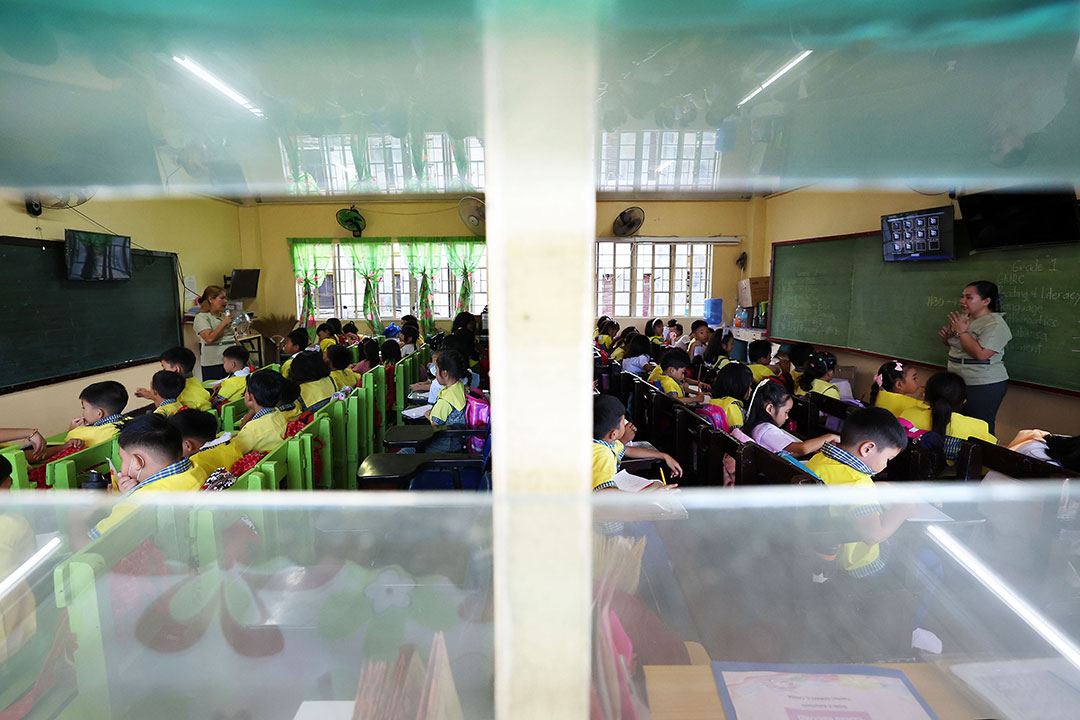
On Jan. 26, the final report of the Second Congressional Commission on Education (EdCom II), entitled, “TURNING POINT: A Decade of Necessary Reform (2026-2035),” was released.
With respect to basic education, the situation is quite dire:
“Department of Education (DepEd) data on the results of the standardized assessments conducted from 2023-25 for Grades 3, 6, 10, and 12, highlight worrying declines in proficiency. At Grade 3, the Early Language, Literacy, and Numeracy Assessment or ELLNA depicts at least 30.5% considered proficient to highly proficient, compared to 69.5% non-proficient (or those scoring 74 and below)… However by the time they finish Grade 6, steep declines are observed, with only 19.56% considered proficient. This further worsens in Grades 10 and 12, with only 0.74% and 0.4% reaching proficiency as they progress in secondary schooling.”
Unfortunately, the report provides no comparable statistics on student performance in prior years, giving us no idea when the decline in performance started. However, the Final Report of EdCOM I issued in 1991 noted:
“Pupils on average learn only 55% or even less of what must be learned at every grade level. Children who complete the sixth grade on average learn only what they should have after the first three to four years of elementary schooling. Underachievement at the elementary and secondary levels indicates that the objectives of basic education have not been attained.”
This is an indication that the situation of basic education has been dire for the past 35 years. But it was only when the Program for International Student Assessment or PISA results of 2018 were published that we were forced to confront this problem.
The report also makes no distinction between the performance of public schools and private schools. Other studies have shown that students in private schools have performed much better than students in public. This is important as there are lessons to be learned from their success.
In a column we wrote for BusinessWorld which came out on March 11, 2024, entitled, “EdCom II Year One Report: Misreading the Philippine education situation,” we stated:
“We do not have a crisis in Philippine education. We have a crisis in Philippine public education. Philippine private education is doing fine. Per the studies of Drs. Vicente Paqueo and Aniceto Orbeta, Filipino private school students performed above par in the PISA 2018 Survey compared to other countries of the same economic level. It is Filipino public-school students who have performed abysmally. The Education Sector Team of the Ateneo Economics Department reports that in PISA 2022, the gap in performance between private and public-school students widened.”
In a succeeding column we wrote, “EdCom II Year Two Report: Persistent misreading of the Philippine basic education situation” (BusinessWorld, March 3, 2025), we explained why the private schools have performed better than the public schools:
“DepEd regulates the private schools while other groups operate them. In the case of public schools, DepEd is both the regulator and operator. When asked why private schools perform better than public school, a private school president replied, ‘DepEd imposes strict standards on us but does not impose them upon itself.’ DepEd the regulator does not impose on DepEd, the operator strict standards such as optimal class sizes, well-maintained classrooms, well-stocked teaching materials, empowered teachers and ever-present principals. The prescription is simple. Remove the operating function from DepEd while retaining its regulatory authority over the public schools.”
Comparing the Final Reports of EdCom I and EdCom II, we note that EdCom I is primarily a policy paper, hence it consists of only 80 pages and was completed in only one year. EdCom II is both a policy paper and a consultant report, hence it consists of 634 pages and was completed in three years.
When an organization, public or private, engages the services of a consultant, the aim is to review the effectiveness and efficiency of the organization, in this case the DepEd, among others. The presumption is that the consultant, with his expertise and objectivity, will be able to undertake this task, something that the organization cannot do by itself.
This EdCom II did that, gathering a constellation of experts taking the posture of an interested but unbiased party.
With respect to the Department of Education, EdCom II, the consultant arrived at 10 major findings such as DepEd must end “mass promotion” practices without delay, and amend its policies to ensure genuine support for vulnerable learners.
Usually consultants pinpoint the officers in the organization who should be held accountable for such poor performance. EdCom II did not.
However, as with all consultants, EdCom II identified 20 Priority Areas where reforms must be undertaken. The question then becomes who is responsible for undertaking these reforms?
If the performance of the present management is dismal, there is a strong argument that the present management will most likely be unable or unwilling to undertake the proposed reforms. As a result, the board of directors will usually undertake a sweeping revamp, firing the Chief Executive Officer and his management team, and then bringing in fresh management, unburdened by the past and ready to implement the proposed reforms.
DepEd II makes no such suggestion, which is understandable considering that DepEd officials are protected by Civil Service regulations.
With this course of action closed, a consultant usually recommends a restructuring of the organization, such as shifting responsibility to the lower levels of management or decentralization and, in extreme cases, devolution, transferring the responsibility to another organization.
Interestingly, EdCom I has a Chapter on “Making Education Manageable.” In this chapter, EdCom I recommended the trifocalization of Philippine education into DepEd, the Commission on Higher Education (CHED), and the Technical Education and Skills Development Authority (TESDA).
In terms of administrative operations, EdCom I stressed:
“The school must be the focal point, the base and common denominator institution of formal education. The classroom is where teaching-learning takes place and we must make sure that this indeed goes on most efficiently and effectively.
“The school principal shall function as an instructional leader and manager. As an instructional leader, he will see to it that the conditions for effective teaching are met: the teacher is well trained and motivated; adequate instructional materials are provided; the teacher isn’t distracted by many nonteaching activities and is well supervised and given a voice in improving the teaching-learning environment.
“The principal ensures that both teacher and pupil are externally assessed and evaluated at Grade 4 for functional literacy, at Grade 6 for elementary scholastic achievement, at second-year high school for aptitude, and after high school for achievement of basic education as well as for vocational preparation.”
We note that 50% of public schools have no principals.
In terms of field operations, EdCom I strongly recommended decentralization.
Thirty-five years later, EdCom II confirms that the recommendation on decentralization has not been realized:
“Despite long-standing policy frameworks, decentralization in Philippine basic education remains largely unrealized. Republic Act No. 9155’s vision of ‘shared governance’ has not materialized, as DepEd continues to function through highly centralized, memo-driven decision-making that limits initiative across regions, divisions, and schools. School-Based Management has become compliance-oriented, with schools spending most of their MOOE (Maintenance and Other Operating Expenses) on utilities, leaving little room for innovation. LGUs (local government units) also face restrictive interpretations of SEF (Special Education Funds) rules, constraining their role as partners in system improvement.”
In a testimony before Congress in October 2025, Department of Public Works and Highways (DPWH) Secretary Vince Dizon revealed that only 22 classrooms had been completed, far below the target of 1,700 for 2025.
In response, DepEd Secretary Juan Edgardo “Sonny” Angara recommended and President Ferdinand Marcos, Jr. approved the devolution of the responsibility for the construction of the classrooms to the LGUs and to the private sector through the Public-Private Partnership or PPP scheme. If devolution can solve the problem of school buildings, why not that of school administration?
EdCom II does not devote a significant section on devolving the operations of the DepEd schools to the local government units. However, “The Synergia Foundation, in partnership with the Second Congressional Commission on Education (EDCOM II), implemented a Proof of Concept (POC) Education Reform program in 11 pilot areas in the province of Iloilo. The initiative aimed to demonstrate how strengthening Local School Boards (LSBs), enhancing community participation, and decentralizing certain education delivery functions can directly improve learning outcomes, school leadership performance, and accountability mechanisms.”
Senator Bam Aquino visited and praised the project:
“Sen. Bam Aquino cited Iloilo province for its Proof of Concept education reform program that improved literacy rates.
“‘When they started, the literacy rate of Grade 3 students was only at 30% and it is now at 90%,’ said Aquino who added the program hopes to improve basic education with real and doable solutions.
“An initiative of the administration of Gov. Arthur ‘Toto’ Defensor, Jr., the POC is a devolution program that gives local government units (LGUs) in 11 towns of Iloilo and Iloilo City the responsibility in handling basic education programs.”
In addition to this project, several case studies of successful reforms by local government units were cited:
1.) Municipality of Manolo Fortich, Bukidnon: Demonstrating Strong Nutrition Governance and Holistic Family Support
2.) Municipality of Bacnotan, La Union: Strengthened Nutrition Governance Through Community and Multisectoral Action
3.) Pasig City’s Program Contracting Scheme: Expands Access to Early Childhood Care and Development
4.) Valenzuela City’s Education 360° Investment Program – Addressing Classroom Decongestion Through Strategic Infrastructure Planning
5.) Norzagaray’s Project Bright as a Local Model for Effective Early Literacy Remediation
6.) Beyond Inclusivity: Valenzuela City Special Education Center
Given this proof of concept as well as the cases cited above, Congress should consider the devolution of basic education to the local government units.
Dr. Victor S. Limlingan is a retired professor of AIM and a fellow of the Foundation for Economic Freedom. He is presently chairman of Cristina Research Foundation, a public policy adviser and Regina Capital Development Corp., a member of the Philippine Stock Exchange.
Dr. Victor S. Limlingan is a retired professor of AIM and is a fellow of the Foundation for Economic Freedom. He is presently chairman of Cristina Research Foundation, a public policy adviser, and Regina Capital Development Corp., a member of the Philippine Stock Exchange.