
Same roads, shared rules, shared accountability
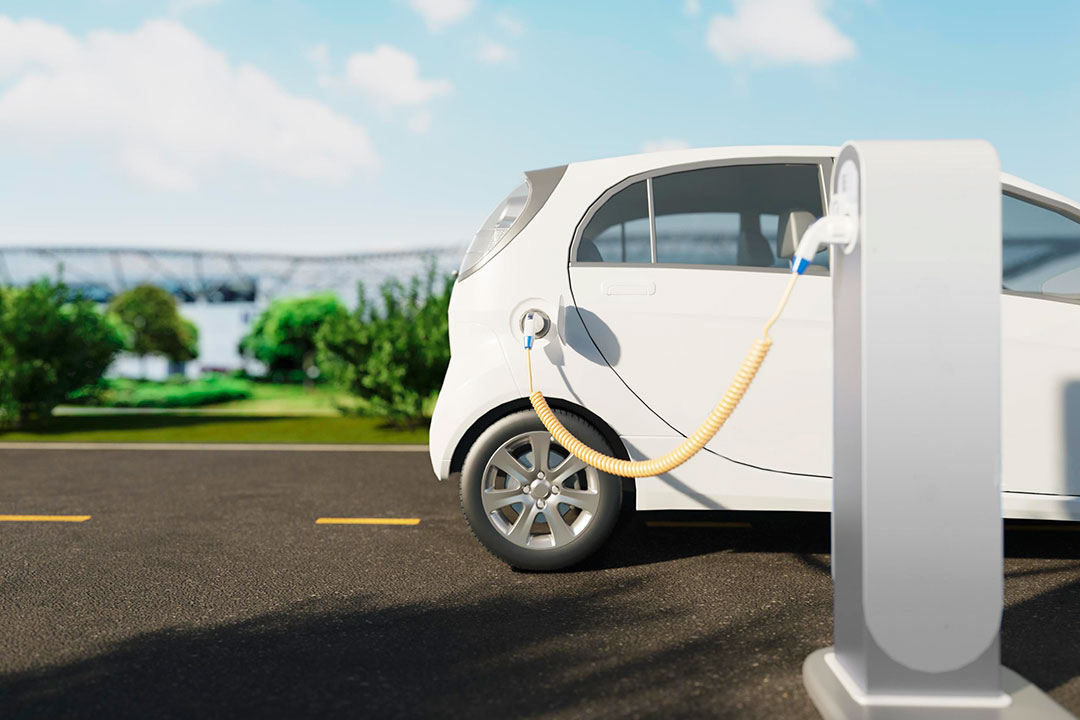
The situation on our roads has moved from confusion to outright chaos. At the center of the issue now are light electric vehicles (LEVs), the mobility savior of the poor and the marginalized but, to an extent, also the bane of public safety and traffic management.
If I recall correctly, last April authorities started restricting LEVs from major roads in Metro Manila. Then came a “grace period.” Then a suspension of some rules. Then a warning-only phase. Now we are witnessing yet another “deferral” of strict enforcement to January 2026.
The Land Transportation Office (LTO) threatens impoundment. Legislators threaten congressional probes. The Metro Manila Development Authority (MMDA) stands in the middle of a traffic jam that is as much legal as it is physical, with no clear untangling in sight.
The government insists a ban is necessary to curb what it claims is a spike in LEV-related accidents since before the pandemic. Legislators and civil society groups counter that banning e-bikes and e-trikes from national roads without first building proper infrastructure hits the poor hardest.
What makes things more difficult is our penchant for responding to issues piecemeal. One rule for tricycles. Another rule, then suspension, for e-trikes. A “warning only” period for December. Different treatment for the same vehicle as it crosses from Quezon City into Manila. The result is confusion and chaos in the streets.
The regulatory environment should not change constantly with the wind or with every administration. We need to step back and check if some basic principles still apply: If it is on the road, then it should be in the system. And if it can hurt people, then it should not be invisible to the law.
The premise is that anything used on a public, shared road should have some form of legal identity, with its user or operator having some degree of accountability. In this line, anything that uses the same road should also be covered by the same rules, or at least similar ones.
It will help if we update the Land Transportation and Traffic Code, or Republic Act 4136, which is already 61 years old. We cannot continue to referee a modern game using rules written in 1964. Its logic is too simplistic: if it is not powered by muscle, then it is a “motor vehicle.” And if it is using a public road, then it must be registered. If it is not registered, then it is illegal on the road.
From a safety perspective, this is an acceptable argument. If an e-bike or e-trike is propelled by a motor and is running on a public road, then why should it be treated differently from a motorcycle or a tricycle? In this regard, perhaps the LTO has a point, some basis, in restricting or banning LEVs from national roads.
But a newer law, the Electric Vehicle Industry Development Act (EVIDA) of 2022, promotes electric mobility by exempting certain LEVs for “exclusive private use” from LTO registration. It also requires the government to provide segregated lanes for LEVs on major and local national roads.
Unless this legal deadlock is untangled, and unless we clarify whether a later, special law repeals or modifies an older, general one, our streets will remain dangerous and the public will remain confused. How do we resolve this tug-of-war between public safety and sustainability? Is it fair to have the same rules apply to everybody?
Early on, the LTO tried to clear matters up with Administrative Order 2021-039, which classified EVs into categories based on speed and configuration. Some categories required registration and licensing, others did not. It was not perfect, but it was a starting point. However, even that order was eventually suspended.
Rather than choosing safety or inclusivity, perhaps we should consider a new, unified national framework that reconciles all existing laws and gives clear guidance to authorities and road users alike. Such a framework should not deprive the poor and the marginalized of accessible mobility options. Improving road safety should not come at the expense of people’s mobility.
The safety argument is real. Physics matters. A flimsy, open-frame e-trike moving at 20 kilometers per hour is structurally incompatible with a bus or SUV moving at 60 kph on EDSA. The speed difference alone is a recipe for catastrophe.
At the same time, since low-speed LEVs currently do not require registration or licensing, many riders, including minors, are on the road with no formal knowledge of traffic rules, signals, or right of way. Viral videos of e-trikes counter-flowing, swerving across lanes, or driving on sidewalks have fed the perception that these vehicles are dangerous and their users undisciplined.
But for thousands of Filipinos, e-bikes and e-trikes are survival tools. They fill the “mobility vacuum” left by an unwieldy public transport system. The combination of transport shortages, high fuel prices, and crowded rail lines pushes many ordinary workers into LEVs because they are cheaper and more reliable.
So, if we prohibit e-bikes or e-trikes from crossing or traversing national roads, we create what researchers call “mobility islands.” A mother living on one side of EDSA may not legally cross to the market on the other side using the only vehicle she can afford. A delivery rider using an e-bike may be forced to detour through side streets to avoid apprehension, resulting in fewer deliveries and less income.
As I have written previously, the crux of the matter is that necessity heeds no law. If policy makers ignore the economic reality that these LEVs are a lifeline for the poor, then any ban will simply be observed in breach. Obviously, enforcers cannot monitor all roads all the time, and LEVs will win the cat-and-mouse game.
We should consider a clear and concise national standard that defines what LEVs are, where they can go, how they should be equipped, and what obligations their users must meet. Local governments can then add layers to address local conditions, but they should align with a clear national baseline.
Congress has proposed a national bicycle law. But the conversation has already moved on. We now have e-scooters, pedal-assist bikes, cargo e-trikes, stand-up scooters, skateboards, and other personal mobility devices of varying speeds and weights, all on our roads alongside LEVs and other vehicles.
In this line, we urgently need a unified land transport code that reflects the world we live in now, not the world as it looked in 1964 or even 10 years ago. The central questions are still basic: Who is allowed on the road? Under what conditions? Who is responsible when something goes wrong? How do we make people accountable? How do we ensure public safety? How do we efficiently use limited road space?
For anything on the road other than pedestrians, I believe the basic expectations for public road use should be the same. If something occupies space on a public road at significant speed, it presents risk, and that risk must be managed. But can we actually apply “no training (license), no plates (registration), no insurance (CTPL), no travel” to all types of mobility options on the road?
The problem is that almost every day, motorists encounter e-trikes or e-bikes counter-flowing, swerving across lanes, squeezing between cars and sidewalks, or riding on pedestrian paths. Many of these riders are minors. Most are unlicensed. If these LEVs get hit by a registered, insured vehicle, then the vehicle owner is liable. But if LEVs cause an accident, they are often anonymous, unregistered, and uninsured.
This is not about discriminating against the poor. It is about accountability and fairness. Poor road design and hostile conditions are a given. All road users must be made accountable for behavior that endangers anyone. The reality is that an untrained rider on an unregulated vehicle in mixed traffic is a danger to themselves and to others.
When I say same roads, shared rules, this does not mean we treat an e-bike exactly like an SUV. It means anyone who uses a vehicle that can injure others should be visible to the system and should meet a basic threshold of responsibility. We need fair rules on safety and accountability.
Bicycles and LEVs should all be treated as serious vehicles. If they are given space, then they should also have rules. Users should be made responsible and accountable for how they behave on the road. And we can do this only if we have a unified, harmonized law and set of rules to govern all types of land transport.
We should also take into consideration existing laws or initiatives that mandate the government to build segregated lanes for electric vehicles, including LEVs, and bicycles on major and local roads. Government should not penalize the public for its own failure to do this, or to provide efficient mass transit systems.
Until a new land transport code is in place, perhaps a system of segregation and regularization will work. Designated roads and lanes for bicycles, LEVs, and personal mobility devices (PMDs) should be a must, with safe crossings and proper signals. The LTO can also consider a simplified, low-cost registration or tagging tier for bicycles, LEVs, and PMDs, perhaps with matching third-party liability coverage. The goal is not to burden the poor, but to bring them into the legal system so that everyone is better protected.
More than anything, cities should, first and foremost, be walkable. The rights of motorists, LEV users, cyclists, and PMD users should not take priority over those of people on foot. Pedestrians are the most vulnerable in any collision. They deserve the strongest protection in both law and design.
In the same manner, pedestrians must use crossings where available, obey signals, and avoid sudden jaywalking that puts both themselves and motorists at risk. This requires stronger local enforcement and some degree of liability on the part of jaywalkers.
I go back to what I still believe is the fairest arrangement: all types of land transportation should be subject to the same basic expectations because they all enjoy the same basic privilege, which is to use public roads. If it is on the road, it should be registered or at least recognized. And if we expect safety, we must demand responsibility and accountability from everyone, including pedestrians.
We share the same roads. It is time we also shared clear, consistent, and fair rules on how to use them.
Marvin Tort is a former managing editor of BusinessWorld, and a former chairman of the Philippine Press Council