TikTok Philippines, in partnership with the Department of Education (DepEd), launched TikTok Galing, a digital literacy training program to boost media and information literacy (MIL) of teachers nationwide.
“The purpose of this program is to make sure that we equip teachers with the skills that they need to empower their own students to be more responsible and discerning digital citizens,” TikTok Philippines Public Policy Manager Peachy A. Paderna told reporters in an interview on Saturday.
“We recognize the Department of Education is doing a lot of work around building its MIL curriculum and we decided that it would be wonderful to partner with them,” she added.
MIL, initially introduced as a new subject upon the integration of the senior high school (SHS) curriculum, has created a literacy gap among teachers.
In the revised K to 10 and SHS curriculum, MIL has evolved from a core subject in SHS to an integral topic discussed across various subjects, aligning with the UNESCO Media and Information Literacy Framework recommendation.
“Some teachers were bemused with the media and information literacy because there was no such subject before,” DepEd National Educators Academy of the Philippines Quality Assurance Division Mark Alvin M. Cruz said in an interview.
University of the Philippines College of Mass Communications Associate Dean Rachel E. Khan echoed the same concern, underscoring that MIL teachers have insufficient knowledge about the subject.
“We noticed that a lot of MIL teachers are whoever is available. Ideally, the ones who teach will come from those who have training in at least English courses or preferably masscom (mass communication),” she said.
“Without that, it will be really teaching from ground zero,” she added.
Ms. Khan noted that she hopes that literacy training programs, such as TikTok Galing, can help address the issue and educate Filipino teachers.
“There is really a need to help the MIL teachers on how to teach it, because even if they know it by themselves, it’s the teaching part that they weren’t really trained for back in their college days.”
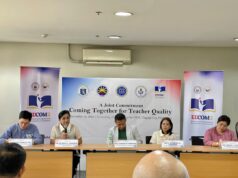
The program, launched in Biñan, Laguna, was attended by around 100 teachers from Region 4A and Metro Manila. It will roll out to Visayas and Mindanao in 2026 and aims to educate about 300 teachers across the country.
Each session covers five topics that tackle issues related to digital safety, content creation, basics of information disorder, identifying fake news, and techniques for combating fake news.
“Our intent is to ensure that scaling this doesn’t end next year, that we can look beyond and really sustain this partnership with the Department of Education,” the TikTok executive said.
“(We) continue to evolve our modules as the times go by so that we’re fully responsive to the demands of the misinformation disorder, as it were,” she added. — Almira Louise S. Martinez